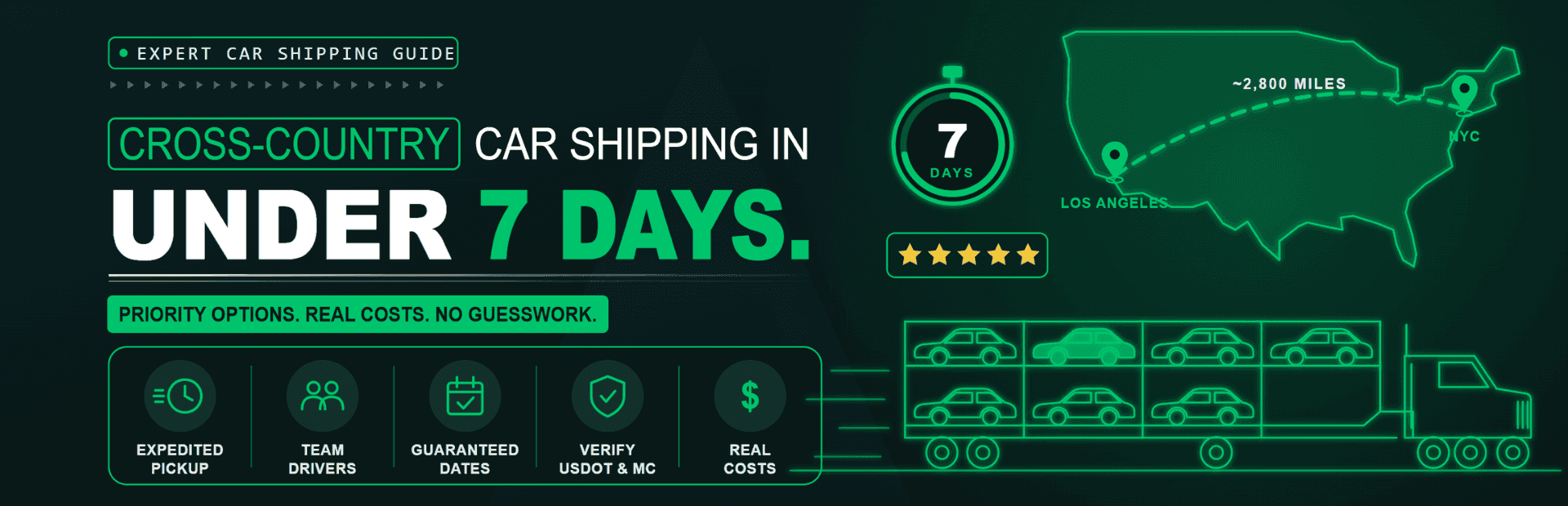

Only 27.5% of light-duty vehicles on U.S. roads are front-wheel drive, according to Experian's Q2 2026 Automotive Market Trends Report. That's the drivetrain a tow dolly is built for. All-wheel drive alone makes up 39.4%.
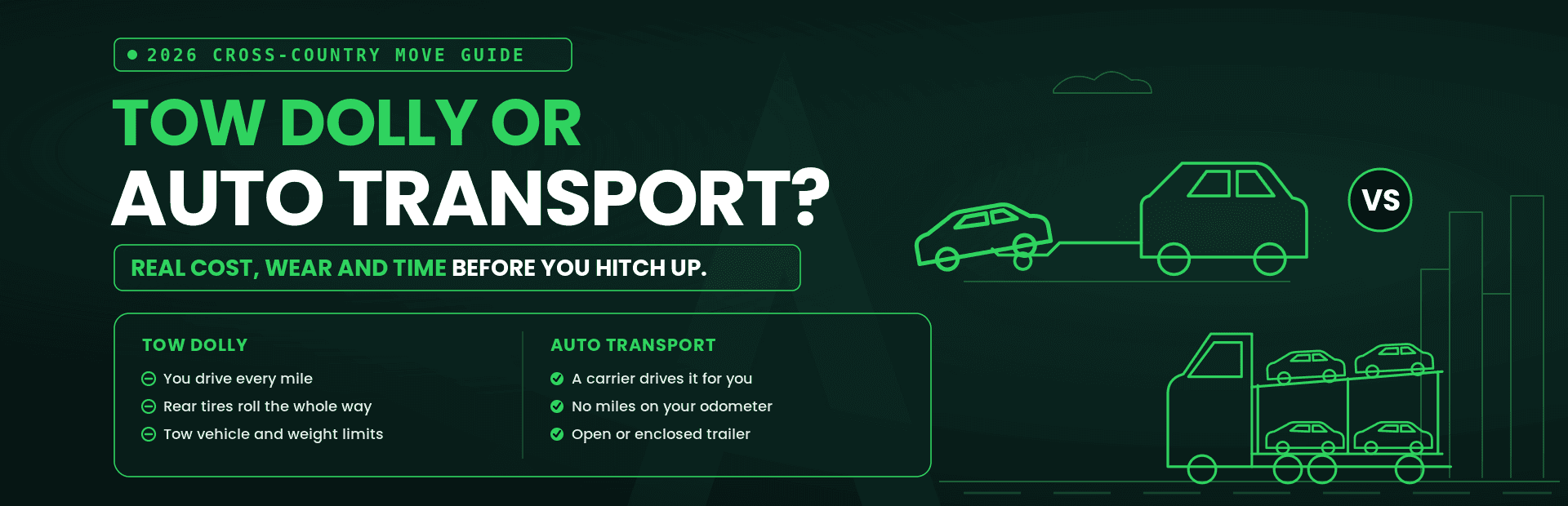
So before you rent a dolly to save money, check what's parked in your driveway. The tow dolly vs auto transport decision comes down to your drivetrain, your distance, and the full cost of the trip, including the fuel, hotels and wear that never show up on a rental quote.
Not sure which way to go? Get free quotes for your route and see what shipping actually costs before you reserve a dolly or install a hitch.
Tow Dolly vs Auto Transport: The Short Answer

A tow dolly is the cheaper choice for a front-wheel-drive car on a short move, as long as you already have a capable tow vehicle. Auto transport costs more upfront, but it takes almost any drivetrain, adds no miles to your car, and spares you a long drive capped at 55 mph. On cross-country moves, the real price gap is usually much smaller than the rental fee makes it look.
|
Factor |
Tow Dolly (You Drive) |
Auto Transport (A Carrier Drives) |
|---|---|---|
|
Upfront cost |
Rental fee, quoted by pickup, drop-off and date |
1,000– |
|
Costs people forget |
Extra fuel, hotels, meals, hitch and wiring |
Non-running surcharge (150–300), rural pickup fees |
|
Cars it fits |
Front-wheel drive. Rear-wheel drive only with the driveshaft disconnected |
Almost any car, SUV or pickup |
|
Speed cap |
55 mph (U-Haul's posted maximum) |
Not your problem |
|
Wear on your car |
Rear tires and bearings turn every mile |
Car rides strapped down, wheels still |
|
Your time |
You drive every mile |
7–10 days in transit cross-country while you fly or drive separately |
|
Best for |
Short FWD moves with a tow vehicle you already have |
Long moves, AWD and 4WD, EVs, high-value cars |
Shipping average: FreightWaves Checkpoint car shipping calculator, updated May 2026. Non-running surcharge and transit time are Transportvibe house figures.
There's a middle option too. In the tow dolly vs car trailer comparison, the trailer (U-Haul calls it an auto transport trailer) lifts all 4 wheels off the road, so it accepts AWD and rear-wheel-drive cars a dolly can't take. The catch is weight. It's about 3 times heavier than a dolly when empty, so it needs a bigger tow vehicle.
And when a car can't have any wheel on the pavement, as with many AWD models and most EVs, a flatbed or a carrier is the only safe way to move it. That's the real line in the tow dolly vs flatbed debate.
If shipping already looks like the better fit, you can compare FMCSA-checked auto transport companies by TrustScore and reviews. Our guide to cheap car shipping covers how to bring a carrier's price down before you book.
What Each Option Really Costs for a Cross-Country Move
When people hunt for the cheapest way to move a car across country, the rental fee is the number everyone quotes. It's rarely the number that decides the budget.
What a Tow Dolly Trip Costs Beyond the Rental Fee
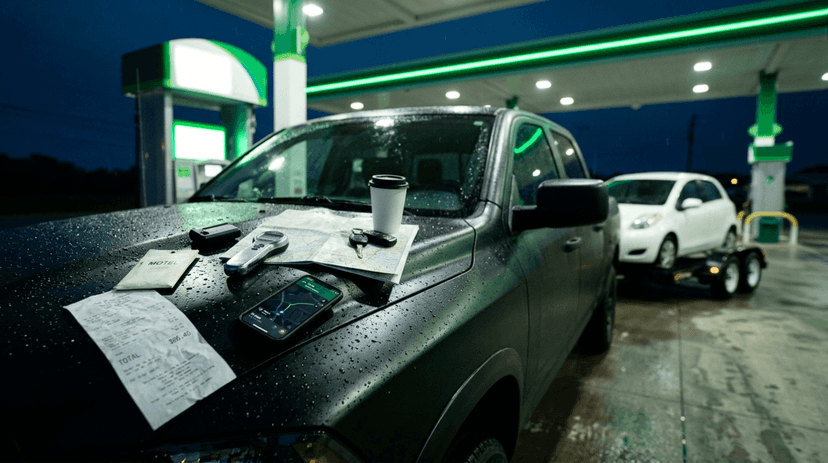
The u-haul tow dolly rental cost isn't published as a flat rate. U-Haul quotes each rental by pickup location, drop-off location and date, then adds taxes and any damage coverage you choose. The only reliable number is the one you pull for your own route.
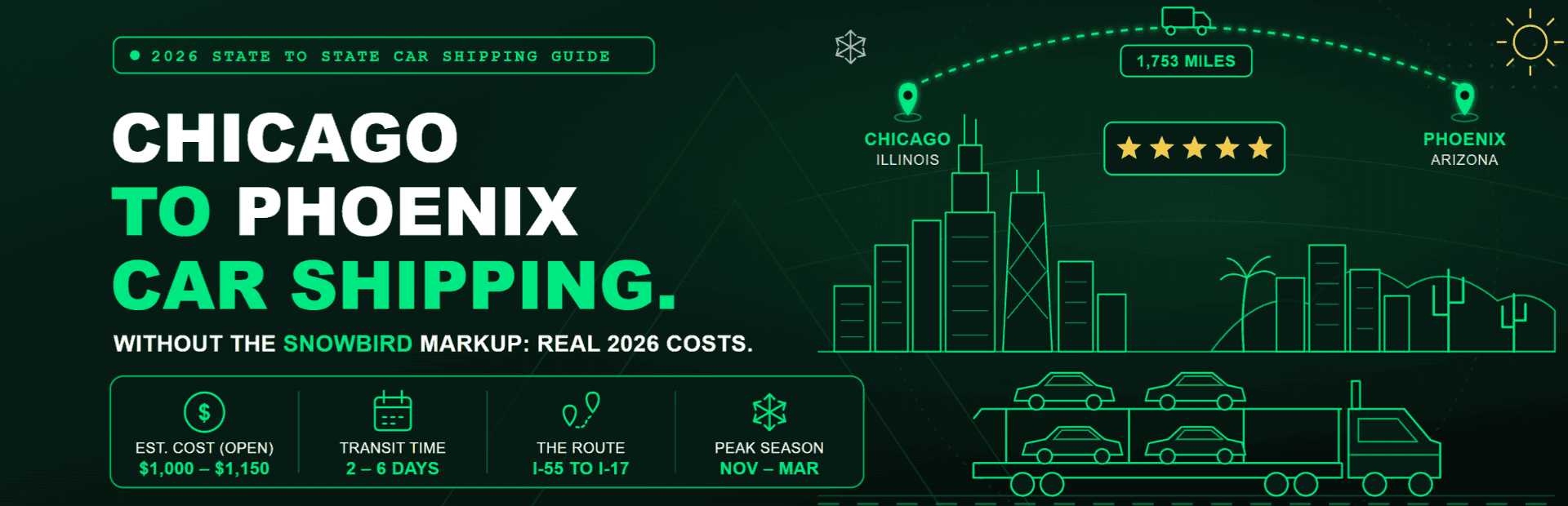
Everything else on the trip costs money too. Take a sample move from Chicago, Illinois to Phoenix, Arizona, about 1,750 miles. The gas, hotel and meal rates below come from FreightWaves' ship-or-drive cost guide (February 2026). The 15 mpg towing figure is an example, so swap in your own tow vehicle's real number.
|
Cost Item |
How It's Figured |
Estimate |
|---|---|---|
|
Fuel |
1,750 miles ÷ 15 mpg ≈ 117 gallons × 3.00–3.25 |
350–380 |
|
Hotels |
3 nights × 100–150 |
300–450 |
|
Meals |
4 days × 30–50, one person |
120–200 |
|
Dolly rental |
Your U-Haul quote for the route |
Varies |
|
Total before the rental |
770–1,030 |
|
Then add the setup costs if your tow vehicle isn't ready. U-Haul requires a 2" hitch ball and a working 4-way flat light connector, and a hitch install is a separate bill. Your tow vehicle also burns through tires and brakes faster with an extra 740 lb dolly and a car behind it.
There's one case where the math flips in the dolly's favor. If you're driving a moving truck to the same city anyway, the hotels and meals happen no matter what. The dolly's true cost then shrinks to the rental, the extra fuel and the slower pace. For a front-wheel-drive car, that's often the cheapest way to move a car across country.
Car Shipping Cost per Mile by Distance
Carriers price by the mile, and the car shipping cost per mile drops as the trip gets longer. Fixed costs like loading and dispatch get spread across more miles on a long haul.
|
Distance |
Typical Cost Range |
Typical Cost per Mile |
|---|---|---|
|
Under 500 miles |
540–1,100 |
1.25–2.00 |
|
500–1,500 miles |
700–1,800 |
0.65–1.20 |
|
1,500+ miles |
1,050–3,000+ |
0.55–0.95 |
Source: FreightWaves Checkpoint, 2026 estimates for an operable standard sedan on an open carrier.
At 1,500 miles and up, open-carrier shipping runs about $0.55 to $0.95 a mile.
Now line the two up. Our Chicago to Phoenix route guide puts open-carrier shipping on that lane at $1,000 to $1,150. The dolly trip costs $770 to $1,030 before you've paid U-Haul a cent. Once the u-haul tow dolly rental cost lands on top, the two options sit close together, and only one of them puts 4 days of driving on your calendar.
For a broader look at national pricing, see how much it costs to ship a car in 2026.
Want your own number? Run your route through our price estimator to Check Your Price and compare open and enclosed carrier prices against your tow dolly math before you rent anything.
Tow Dolly Limits: Weight, Speed, and Distance
A dolly that looks cheap can still be the wrong tool. U-Haul publishes hard limits, and the counter agent will check them before handing you the keys.
Tow Dolly Weight Limit and Tow Vehicle Rules
The tow dolly weight limit is 4,080 lb, per U-Haul's tow dolly spec page. The dolly itself weighs 740 lb empty.
In practice, your tow vehicle sets a lower ceiling. U-Haul's user instructions say the tow vehicle must weigh at least 750 lb more than the car being towed. Their own example: a 2,750 lb car can tow no more than a 2,000 lb car.
Rule of thumb: tow vehicle curb weight ≥ towed car weight + 750 lb.
Run that on your own vehicles. A 3,300 lb sedan needs a tow vehicle of at least 4,050 lb. Plenty of midsize SUVs come in under that, which is why many people find out at the rental counter that their plan doesn't work. U-Haul sets the maximum towed weight for your exact tow vehicle during the reservation, and you can't swap in a different car later.
The tow vehicle also has to meet these requirements from the same spec page:
-
A 2" hitch ball rated for at least 3,500 lb
-
A hitch ball height of 25" or less
-
Mirrors on both sides
-
Working lights, day and night
-
A hard top if it's an SUV or select Jeep model
The towed car has size limits as well: a body no wider than 6'6" and an outside tire width of 6'4" or less. Most sedans and small crossovers fit. Wide trucks often don't.
Tow Dolly Speed Limit and How Far You Can Tow in a Day
The tow dolly speed limit is 55 mph. That's U-Haul's posted maximum, and you still have to follow any lower limit posted on the road.
How far can you tow a car with a tow dolly? No federal rule caps the total distance. The real limit is the driver.
Do the math on a long move. At 55 mph tops, with fuel and rest stops, a realistic average is closer to 50 mph. That turns a 1,750-mile trip into roughly 35 hours behind the wheel, or about 4 days at 9 hours a day. A coast-to-coast run of about 2,800 miles stretches past 56 hours.
So how far can you tow a car with a tow dolly in one day? Around 400 to 450 miles is a sane target for one driver. Push beyond that and fatigue starts making the decisions.
U-Haul's on-the-road rules matter more on day 3 than on day 1:
-
Load the car facing forward, front wheels on the dolly
-
Leave the towed car empty, because cargo inside can cause sway
-
Recheck the tire straps at every stop
-
If the rig starts to sway, ease off the gas and hold the wheel straight
Plan fuel and hotel stops before you leave with our route guide tool. If the drive is starting to look long, our breakdown of long-distance car shipping vs short-haul shows where shipping starts to pay off.
Which Drivetrains Work on a Tow Dolly
Front-wheel drive is the dolly's home turf. Everything else needs a hard look at the owner's manual before you load it.
|
Drivetrain |
Tow Dolly Allowed? |
What You'd Have to Do |
Safer Option |
|---|---|---|---|
|
Front-wheel drive (FWD) |
Yes |
Front wheels on the dolly, parking brake fully released |
The dolly works |
|
Rear-wheel drive (RWD) |
Sometimes |
Disconnect the driveshaft first (U-Haul's rule) |
Car trailer or carrier |
|
All-wheel drive (AWD) |
Usually no |
Follow the manual, and most require all wheels off the ground |
Car trailer or carrier |
|
Four-wheel drive (4WD) |
Usually no |
Check the manual and transfer case rules |
Car trailer or carrier |
|
Electric vehicle (EV) |
Usually no |
Many makers require all 4 wheels off the ground |
Carrier |
Can you tow an AWD car on a tow dolly? For most models, no. Hyundai's 2026 owner's manual towing instructions say AWD vehicles must be towed with a wheel lift and dollies or on a flatbed "with all the wheels off the ground." A tow dolly leaves the rear wheels on the road, so it fails that test. In the tow dolly vs flatbed choice for an AWD car, the flatbed wins by the manufacturer's own rules.
That rule now covers most of the fleet. AWD and 4WD together make up 62.6% of light-duty vehicles on U.S. roads in Experian's Q2 2026 data. Some AWD systems have a neutral tow mode, and a few manuals allow it. But rules change by model year, so check the manual and any service bulletin for your exact car.
A tow dolly rear wheel drive car setup is possible, but there's a cost. U-Haul requires the driveshaft to be disconnected so the transmission doesn't spin without lubrication. For most owners, that's a mechanic job at both ends of the trip, which eats a big chunk of the dolly's savings. Price that labor in before you decide a tow dolly rear wheel drive car move is the budget option.
Electric vehicles are stricter still. Their motors generate power whenever the wheels turn, and Tesla's transport instructions call for all 4 wheels off the ground. Our complete guide to shipping an electric vehicle covers charge levels and carrier prep, and the how to ship a Tesla guide walks through Tow Mode step by step.
One more detail people miss: if your car has an electronic parking brake, it must be fully released before it goes on a dolly. Some cars need a specific procedure to do that with the engine off.
If your drivetrain rules the dolly out, our car shipping checklist covers everything to prep before a carrier picks it up.
Does a Tow Dolly Put Miles or Wear on Your Car?
Does a tow dolly put miles on your car? On the odometer, usually not, at least for front-wheel-drive cars. The front wheels sit on the dolly and don't turn, and most FWD cars read speed from the drivetrain or front wheels.
The rear wheels are another story. They roll every single mile.
Wear that still happens on a dolly tow:
-
Rear tires and wheel bearings cover the full distance
-
Road debris kicked up by the tow vehicle hits the towed car's front end and windshield
-
Backing up can damage the rig. U-Haul's tow dolly user instructions say plainly: "DO NOT BACK UP." That rules out a lot of gas stations and hotel parking lots on a 4-day trip
-
Tight turns can push the towed car into the dolly fender, so U-Haul also warns against U-turns and sharp corners
So does a tow dolly put miles on your car if it's RWD or AWD? It can. Some of those cars take speed readings from the rear wheels, which keep turning on the road. Odometer behavior varies by electronic system, so test it. Tow the car one mile on a local loop, check the reading, and you'll know before the long haul.
With auto transport, the car is driven onto the trailer, strapped down and stays still for the trip. The odometer moves only the few yards it takes to load and unload. You inspect it with the driver at both ends, which our guide on what to expect at pickup and delivery explains in detail. For the full booking process from quote to keys, see how Transportvibe works.
How Auto Transport Works: Open vs Enclosed, Timing, and Carrier Checks
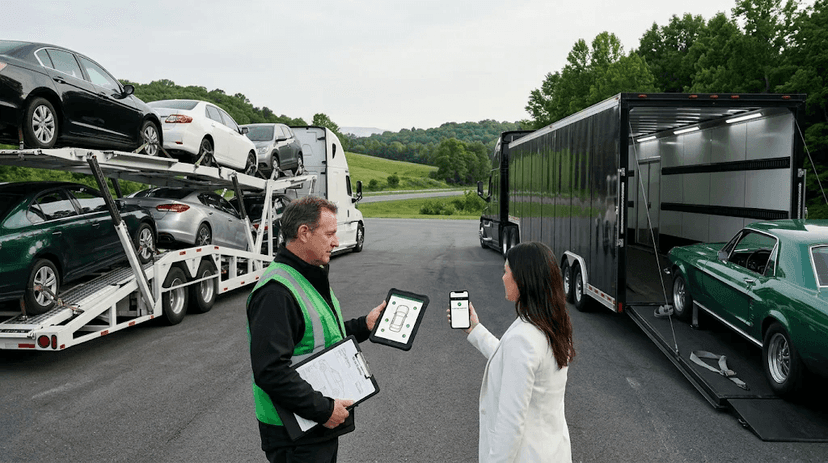
You book through a broker or directly with a carrier. A driver loads your car onto a hauler up to 75 ft long, and you sign a Bill of Lading at pickup and again at delivery. That document is your condition record, so every existing scratch belongs on it before you sign.
The first choice is the trailer. Open vs enclosed auto transport comes down to protection and price.
|
Factor |
Open Auto Transport |
Enclosed Auto Transport |
|---|---|---|
|
Price |
Baseline |
Usually 40–60% more |
|
Cars per trailer |
Typically 7 to 9 |
Typically 2 to 6 |
|
Protection |
Exposed to weather and road debris |
Covered from weather and debris |
|
Truck availability |
Many trucks, faster pickup |
Fewer trucks, book earlier |
|
Best for |
Daily drivers, most moves |
Classic, exotic, low-clearance or show cars |
In open vs enclosed auto transport, most cars ship open. It's the same type of truck that delivers new cars to dealerships. Enclosed is worth the premium when a stone chip or a hailstorm would cost more to fix than the price difference. Our breakdown of open vs enclosed transport cost shows real 2026 route prices for both.
How long does auto transport take? Cross-country moves take 7 to 10 days in transit once the car is picked up. Most companies also need a pickup window of 1 to 5 business days to assign a driver, so budget for both.
How long does auto transport take on shorter routes? Trips under 500 miles usually run 1 to 2 days in transit. Enclosed shipments and rural addresses can add days to the pickup window because fewer trucks serve them.
Before you book, verify who's moving your car. Every broker needs an MC number, and every interstate carrier needs a USDOT number with active operating authority. Look both up on the FMCSA SAFER Company Snapshot and check 3 things:
-
The legal name matches the company you're talking to
-
The operating authority shows as active
-
The phone number matches the one you were given
Our explainer on what an MC number is covers what each status means. If a quote feels off, run it through the Red Flag Checker before you hand over a deposit.
Who Should Tow and Who Should Ship: 9 Real Situations
Is it worth shipping your car when moving? It depends on the car, the distance and what your time is worth. Here's how the decision usually plays out.
|
Who You Are |
Main Worry |
Better Pick |
Why |
|---|---|---|---|
|
Individual owner, FWD sedan, under 500 miles |
Lowest cost |
Tow dolly |
Short trip, no extra hotel nights, car fits the dolly |
|
Relocating for a job or college, cross-country |
Time |
Auto transport |
You can fly while the car ships |
|
Car dealership moving several units |
Volume and paperwork |
Auto transport |
One multi-car hauler beats several rentals |
|
Snowbird heading south for winter |
Two trips a year |
Auto transport |
No 2-way drive at 55 mph every season |
|
Classic or exotic car owner |
Paint and value |
Enclosed auto transport |
A dolly leaves rear wheels on the road and the car exposed |
|
Car show organizer moving several show cars |
Delivery timing |
Enclosed auto transport |
Covered trailers, lift gates for low cars |
|
Military member on PCS orders |
Tight report date |
Auto transport |
If you're flying to the new duty station, there's nothing to tow with |
|
Senior owner |
Safety and strain |
Door-to-door auto transport |
No hitching, no long drive, no backing restrictions |
|
Motorcycle owner |
Bike security |
Motorcycle trailer or motorcycle shipping |
A car dolly isn't built for a bike |
A few of these deserve more detail.
Job and college moves. A cross-country drive costs 4 to 5 days you may not have before a start date. Shipping lets you fly and have the car arrive about when you do. Our guide on how to ship a car during a move covers timing it around the rest of your household move.
Snowbirds. A seasonal run from New York to Florida means the same long tow twice a year. Fall southbound demand pushes prices up, so book early. Our snowbird car shipping guide covers the best booking windows.
Owners set on doing it themselves with an AWD car. Can you tow an AWD car on a tow dolly and skip the extra cost? For most models, no. Rent a car trailer instead. U-Haul's auto transport trailer carries up to 5,290 lb with all 4 wheels off the road, but it weighs 2,210 lb empty and has the same 55 mph cap. In the tow dolly vs car trailer choice, that extra weight usually means you need a full-size pickup or large SUV to pull it.
So is it worth shipping your car when moving? For 7 of these 9 people, yes. The honest exception is the short, front-wheel-drive move where you're already renting a truck. There, the dolly is hard to beat on price.
Still stuck between the two? Describe your car and route to ShipAdvisor AI and get a recommendation in plain language.
Tow or Ship: Your Decision in 4 Questions
Answer these honestly:
-
Is the car front-wheel drive? If not, ship it or rent a car trailer.
-
Does your tow vehicle weigh at least 750 lb more than the car? If not, the tow dolly weight limit rules it out before the speed does.
-
Is the move under about 500 miles? Past that, extra hotel nights eat most of the savings.
-
Is a multi-day drive at the 55 mph tow dolly speed limit worth the money you save?
Four yeses point to the dolly. One no points to shipping.
In the tow dolly vs auto transport decision, the rental price is the smallest part of the math. Add up fuel, hotels, meals and your time first, then compare it with a real carrier quote for your route.
Rather hand off the whole thing? We choose the broker, lock the price in writing, and manage any claim for you. Get Full Service and fly while your car ships.