

How to Prepare Your Car for Shipping
To prepare a car for shipping, compare at least 3 quotes and check the company’s FMCSA authority, then wash the car, photograph it, remove personal items and leave about a quarter tank of fuel. At pickup and delivery, inspect the car with the driver and record any damage on the Bill of Lading before you sign.
The steps below explain each stage in order. When you’re ready, use the interactive checklist further down to tick them off as you go.
Before Shipping: Choose a Company and Prep the Car
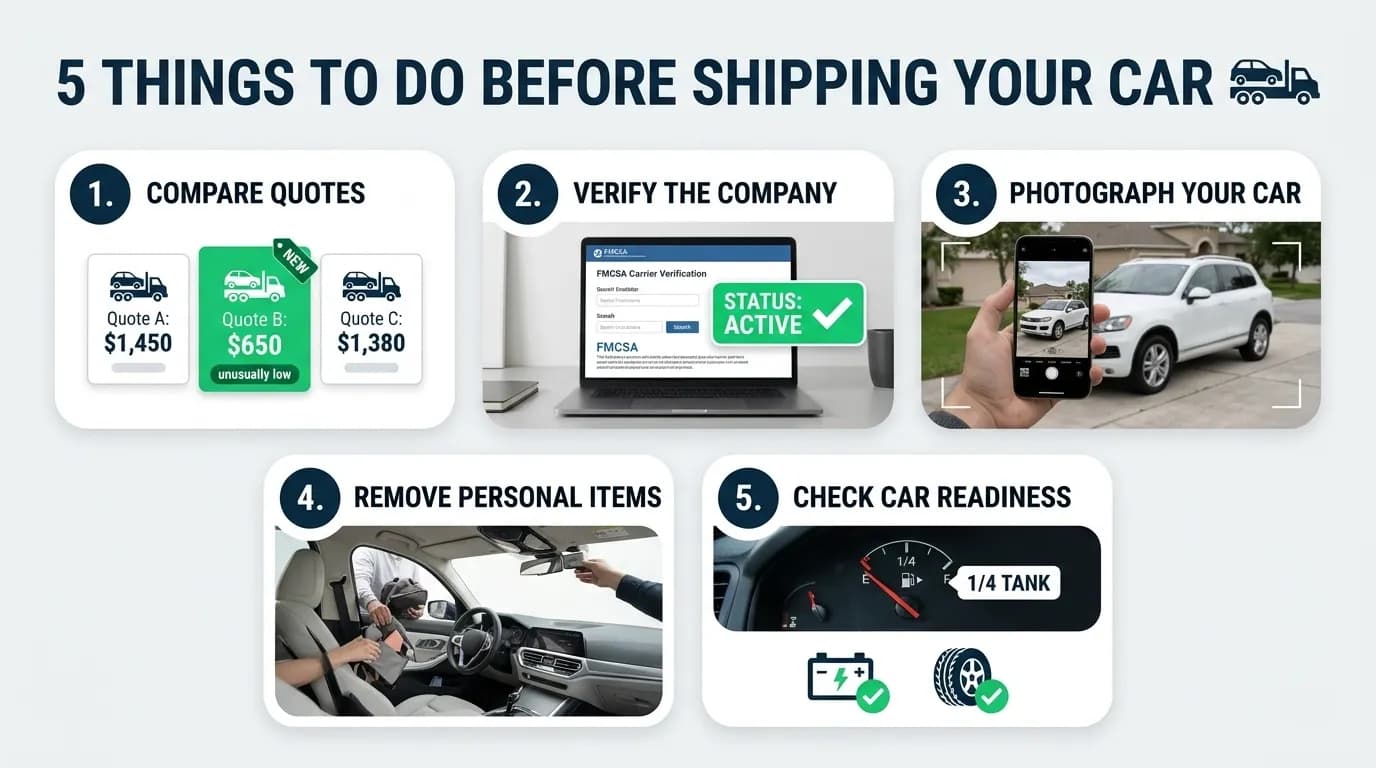
Most problems with car shipping start before the truck arrives, with a rushed booking or an unprepared car. These five steps cover both.
1. Compare at least 3 quotes
Request quotes from 3 to 5 companies so you can see the real market price for your route. A quote far below the others is a warning sign, because low quotes often rise after booking or never get a truck.
2. Check the company before you pay
Look up the company’s USDOT or MC number on FMCSA SAFER and make sure its authority shows as Active. Then check its TrustScore and reviews on Transportvibe, and get the price, pickup window and cancellation terms in writing.
3. Wash the car and photograph every side
A clean car makes existing scratches and dents easy to see. Take dated photos and a short video of the front, back, both sides, roof, wheels, interior and odometer on pickup day.
4. Remove personal items and toll tags
Carrier insurance doesn’t cover belongings left in the car, and many carriers allow little or nothing inside. Take out valuables, chargers and paperwork, and remove your toll transponder so it isn’t charged along the route.
5. Check fuel, battery and alarm
Leave about a quarter tank of fuel, make sure the battery is charged and the tires are inflated, and turn off or explain the alarm. If the car doesn’t run, say so when you book: it needs a winch, which usually adds $150 to $300.
At Pickup: Inspect the Car With the Driver
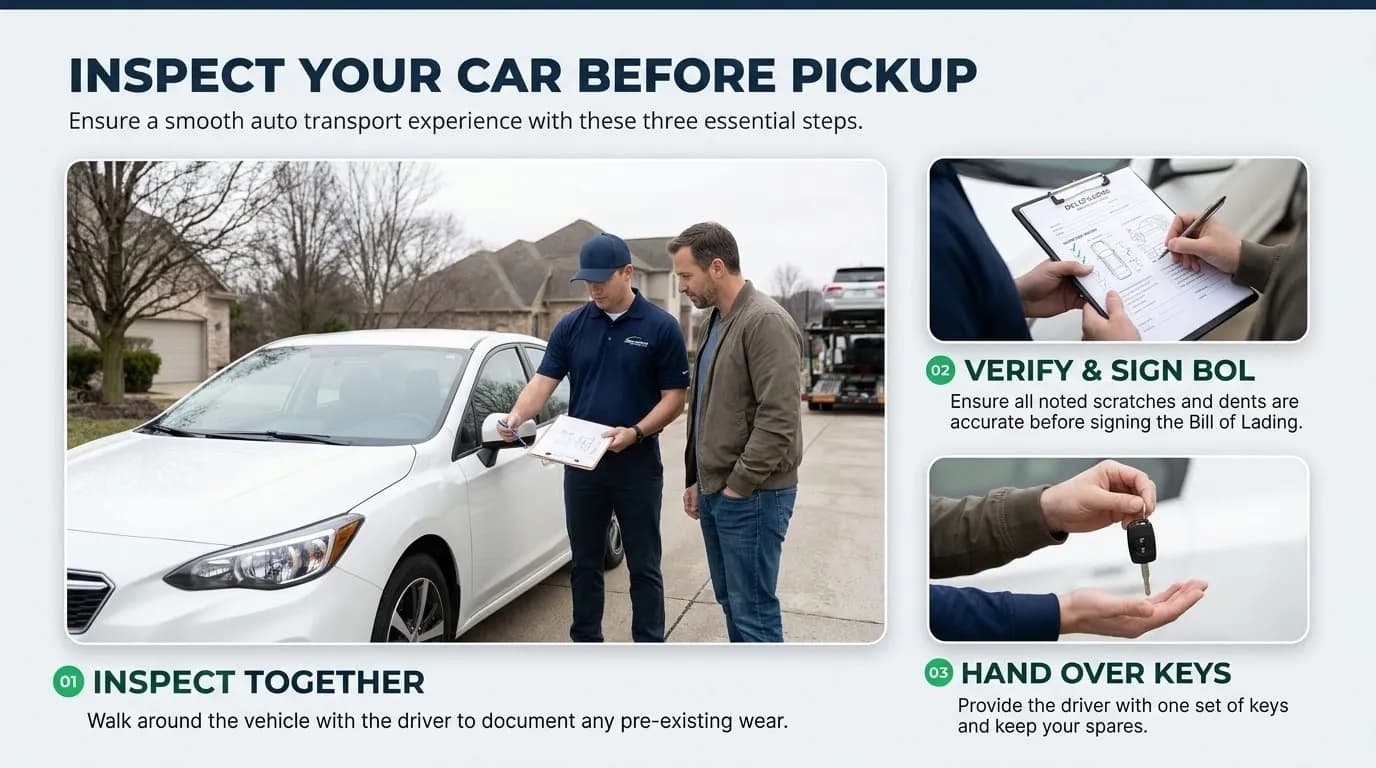
Pickup is when the car’s condition is officially recorded, so stay with the driver until the paperwork is done. These steps protect you if anything changes in transit.
6. Walk around the car together
Walk around the car with the driver and point out every existing mark. Make sure each one is written on the Bill of Lading, the inspection report that records your car’s condition.
7. Check the Bill of Lading before you sign
Read the Bill of Lading carefully, and don’t sign it if the damage notes are missing or wrong. Keep a copy or a photo of the signed form, along with the driver’s name and phone number.
8. Hand over the keys
Give the driver one set of keys and keep the spare. Confirm the delivery window and how the driver will contact you before they leave.
At Delivery: Inspect Before You Sign
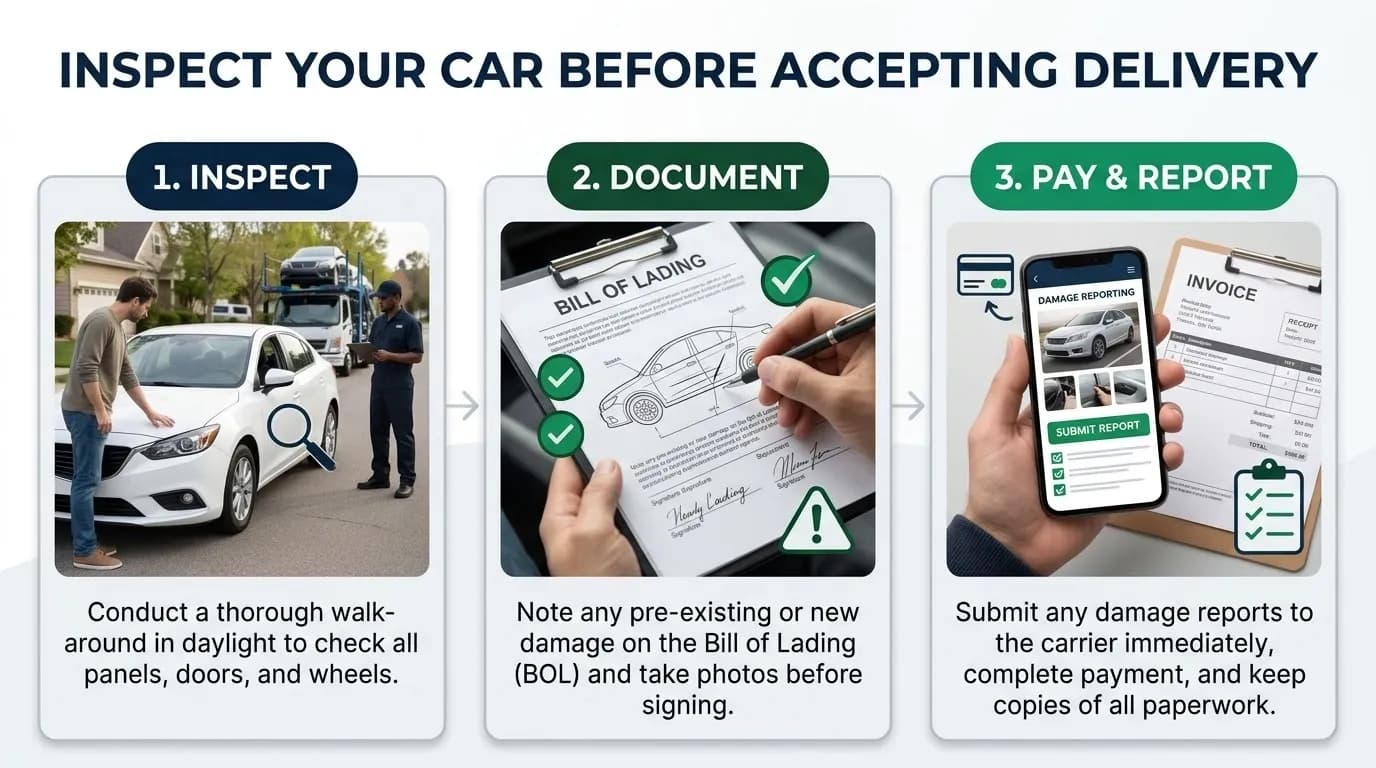
Delivery is your last chance to note damage before you accept the car. Take your time, even if the driver is in a hurry.
9. Inspect the car in good light
Check the car against your pickup photos and the Bill of Lading, ideally in daylight. Look at every panel, the roof, the wheels and underneath the bumpers.
10. Record new damage on the Bill of Lading
Write any new damage on the Bill of Lading and have the driver sign it before you pay or sign yourself. Signing a clean Bill of Lading can cost you the right to file a claim.
11. Pay the balance and report problems right away
Most carriers collect the balance at delivery in cash or certified funds, so have it ready. If there’s damage, report it to the company straight away. Some companies require notice within 24 to 48 hours, so check the deadline in your contract.
For more on who pays for damage, see our car shipping insurance guide.
Preparing a Car for Shipping: FAQs
These are the questions people ask most when getting a car ready to ship.
How much gas should be in a car for shipping?
About a quarter tank. That’s enough for the driver to load and unload the car, without adding extra weight to the trailer.
Can I leave personal items in my car when shipping it?
Usually very little, and some carriers allow nothing. Items left in the car aren’t covered by the carrier’s insurance, so remove valuables and ask the company about its limit before you pack anything.
Should I wash my car before shipping?
Yes. A clean car makes existing scratches and dents visible in your photos and on the Bill of Lading, which is your best proof if you need to file a damage claim.
What documents do I need to ship a car?
Usually just your booking confirmation, a photo ID and the Bill of Lading the driver gives you at pickup. Some companies also ask for the registration or proof of insurance, so check before pickup day.
What should I do if my car arrives damaged?
Write the damage on the Bill of Lading before you sign, photograph it and have the driver sign the note. Then report it to the company right away, since some require notice within 24 to 48 hours.