



Car Shipping Cost Calculator Explained: What Affects Your Final Quote?

Car Shipping Cost Calculator Explained: What Affects Your Final Quote?

Transportvibe
August 11, 2025
20 min read

Using a car shipping cost calculator should be a straightforward process, not a guessing game. It's a convenient tool that simplifies the complex task of estimating your car's shipping cost.  A car transport cost calculator is a reliable tool that demystifies the factors affecting your final quote. It provides a clear and trustworthy vehicle shipping cost estimator, ensuring you can plan your car shipment without any stress.  Understanding these elements is key to getting an instant car shipping quote you can trust. Whether you're a first-time shipper or a seasoned pro, we'll break down the nuances behind your car shipping rates per mile so you can plan with confidence. Ready to see how much your move will cost? Get a quick and transparent quote from Transportvibe for your vehicle now.

How Do Car Shipping Cost Calculators Work?
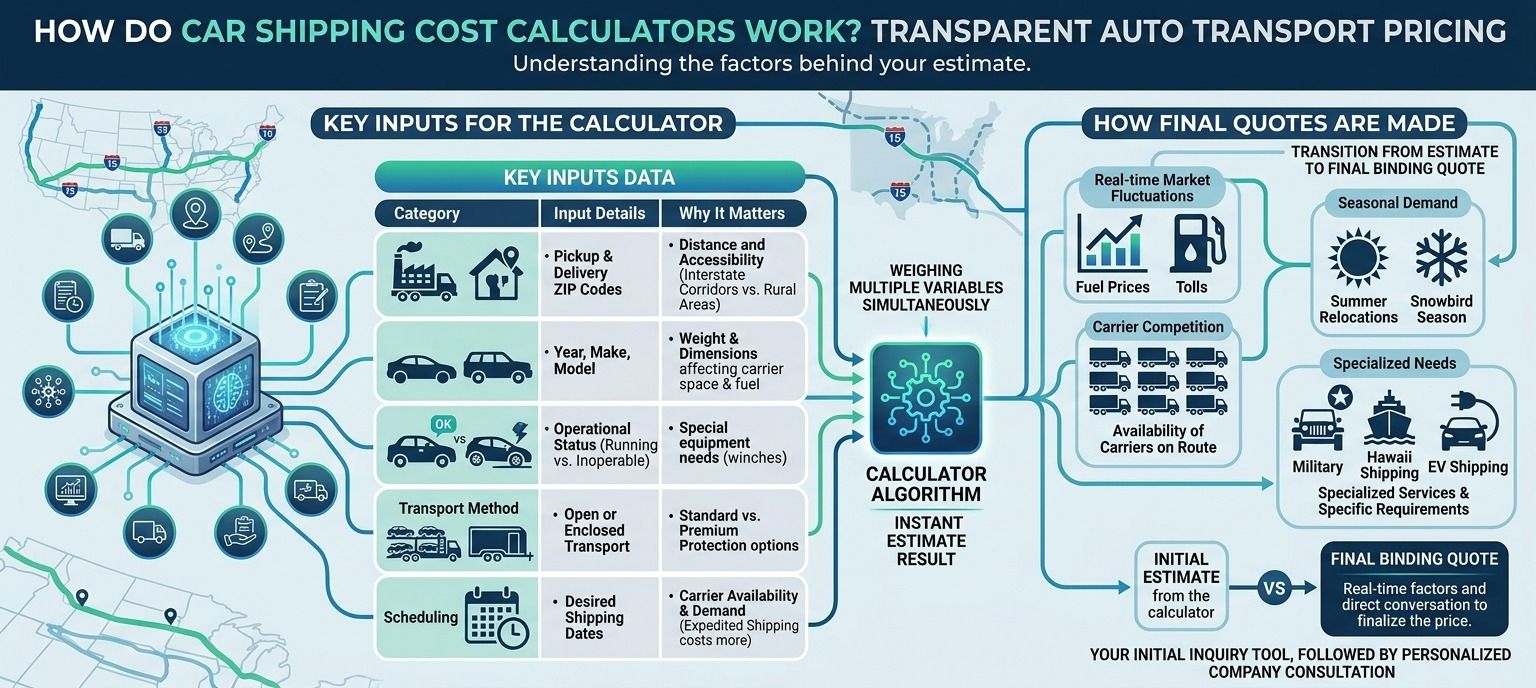
A car shipping cost calculator is designed to give you a transparent and reliable auto transport costing to determine the potential price for your shipment. The magic of these tools lies in how they weigh multiple variables simultaneously, creating a nuanced picture of your specific needs. While the exact formulas are proprietary to each company, they all rely on the same fundamental data points.

Key Inputs for the Calculator

To get an accurate car shipping quote calculator result, you need to provide the following information. This data acts as the "fuel" for the calculator's algorithm, allowing it to generate a precise estimate.

Category Input Details Why It Matters
Route & Location Pickup and Delivery ZIP Codes: Specific locations where the car will be picked up and dropped off. The distance between these two points is the single largest factor. The route and location also determine whether the trip is along a major interstate corridor or in a rural, hard-to-reach area, impacting carrier availability and fuel costs.
Vehicle Information Year, Make, and Model: The specific details of your car. The vehicle's dimensions (length, width, height) and weight determine how much space it takes on a carrier and its impact on fuel consumption. A large SUV or pickup truck will cost more to ship than a compact sedan.
Vehicle Condition Operational Status: Is the vehicle running and able to drive? An inoperable vehicle requires special equipment like a winch to load and unload, adding extra time, labor, and a higher cost to your quote.
Transport Method Open or Enclosed Transport: Your preference for how the car is transported. Open carrier car shipping cost is significantly lower as it's the industry standard, but it exposes the car to the elements. Enclosed car shipping cost is a premium option, offering full protection from road debris and weather, which is often chosen for luxury, classic, or custom vehicles.
Scheduling Desired Shipping Dates: The timeframe for your move. The calculator checks for carrier availability and demand on those specific dates. Urgent or expedited car shipping will result in a higher quote, as it requires a carrier to adjust their route and schedule for your needs.


How Final Quotes Are Made

It's crucial to understand the difference between the initial car shipping price estimator and your final binding quote. While the calculator provides a solid starting point, the final price is often a firm offer that takes into account real-time market data. 

  • Real-time Market Fluctuations: The calculator's algorithm is constantly updated with current market rates, including the price of fuel, tolls, and the availability of carriers on popular routes. The cost of cross country car shipping can change weekly based on these factors.
  • Seasonal Demand: Demand for auto transport services peaks during specific times, such as summer when many people are relocating, or during the "snowbird" season when people move south for the winter. These fluctuations directly impact your average cost to ship a car.
  • Carrier Competition: The number of available carriers on a given route directly affects pricing. On a highly competitive route between major cities, you'll likely see a more favorable car shipping rates per mile.
  • Specialized Needs: The calculator's base price may not include all specialized services. For example, a military car shipping cost calculator might have special discounts, while a Hawaii car shipping cost calculator will factor in the added complexity of a sea journey, and an EV car shipping cost calculator may account for specific charging and handling requirements.

Ultimately, a car shipping cost calculator USA serves as an indispensable tool for an initial inquiry. Still, a final, detailed conversation with a transport company will provide the most accurate price for your specific needs.  

The Core Factors That Determine Your Car Shipping Cost

Understanding your car shipping cost calculator means recognizing the variables that influence the final price.  This comprehensive breakdown will explain why your auto transport cost calculator quote is based on more than just distance.

1. Distance and Route Factors
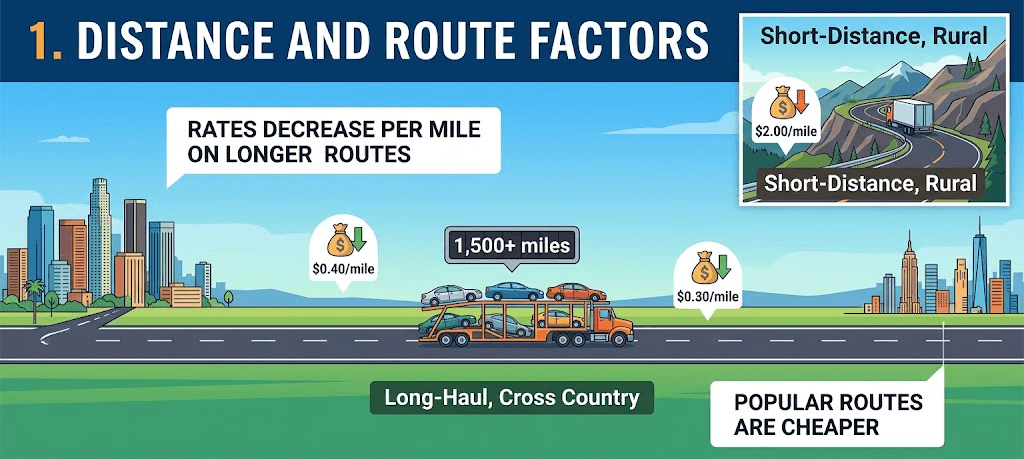
The most significant variable in any car shipping quote calculator is the total distance your vehicle needs to travel. However, the price is not a simple flat fee per mile. In fact, car shipping rates per mile decrease as the distance increases.  A short-distance move might have a higher per-mile rate (e.g., $2.00 per mile) compared to a long-haul, cross country car shipping cost of over 1,500 miles (which might be around $0.40 per mile). The reason for this lies in the economics of fuel and driver time.  A driver's fixed costs for pickup and delivery are spread out over more miles on a longer trip, making it more cost-effective for them.

  • Short-Distance vs. Cross-Country Shipping: While the total cost for a cross-country move will be higher, the efficiency of these longer routes often results in a lower overall cost to ship a car by distance.
  • Popular Routes vs. Remote Locations: Shipping between major cities like Los Angeles and New York is typically cheaper than shipping from a remote, rural town in Idaho. High-traffic routes have more carriers and greater competition, driving down the average cost to ship a car.
  • Seasonal Route Availability and Price Variations: Some routes are only available during certain times of the year. For example, some northern states become more expensive to ship to during winter due to harsh weather and decreased demand. For those who frequently move with the seasons, our services page for seasonal car relocation can provide valuable insights.

2. Vehicle-Related Variables
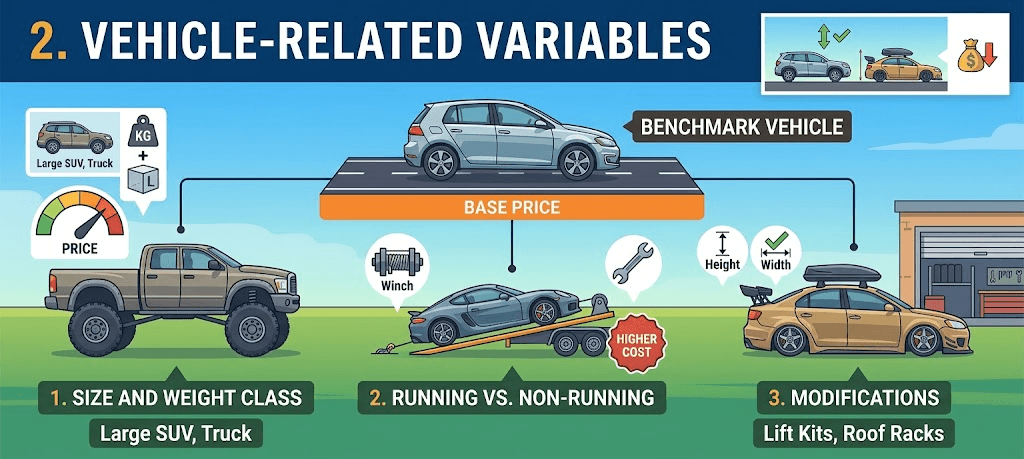
The specifics of your vehicle play a critical role in your car shipping price estimator. A standard mid-size sedan is the benchmark for most quotes, but any deviation from this standard will affect the price.

  • Vehicle Size and Weight Class: A large SUV, pickup truck, or heavy-duty vehicle takes up more space on the carrier and adds significant weight, increasing fuel consumption. This is why the cost to ship a car by vehicle type is a key factor.
  • Running vs. Non-Running Vehicles: An inoperable vehicle requires a specialized winch and additional time to load, which adds to the final cost to ship a car calculator quote. If you're shipping a non-running vehicle, it's essential to disclose this upfront to avoid unexpected fees. For a detailed guide on this process, see our article on how to ship a non-running vehicle.
  • Modifications and Special Handling Needs: The calculator's base estimate assumes a stock vehicle. Aftermarket modifications like lift kits, oversized tires, roof racks, or lowered suspensions can change a vehicle's dimensions and require special handling, increasing your car shipping cost calculator quote.

3. Transport Method Choices
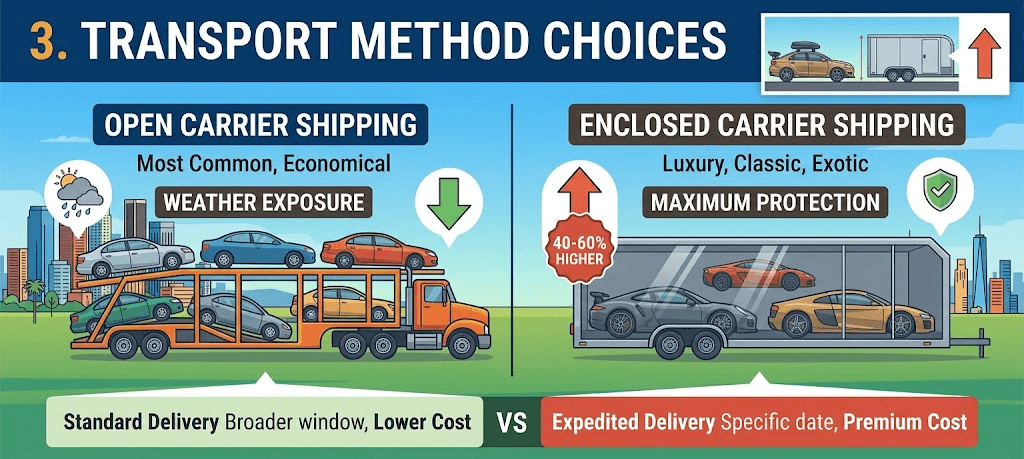
Your choice of carrier is one of the most significant decisions affecting your instant car shipping quote. Each method offers a different level of protection and price point.

  • Open Carrier Shipping: This is the most common and budget-friendly option, making up over 90% of all vehicle transports. Your vehicle is loaded onto a multi-car, open-air trailer. This method is the primary driver of open carrier car shipping cost and is generally safe, though your car will be exposed to weather and road debris. It's the go-to for standard vehicles and is a great way to find a cheap car shipping rates calculator. Learn more about open carrier shipping.
  • Enclosed Carrier Shipping: For vehicles requiring extra protection, such as luxury, classic, or exotic cars, an enclosed carrier is the best choice. This method shields your vehicle from all external elements, but the enclosed car shipping cost is typically 40-60% higher than open transport. The premium price covers the added security and limited space on the trailer. Our luxury and exotic car shipping service provides top-tier protection for your high-value assets.
  • Expedited vs. Standard Delivery: If you need your vehicle delivered by a specific date, you may need to opt for an expedited service. This often comes with a higher price tag, as the transport company must adjust its schedule to accommodate your needs. Standard delivery, which offers a broader pickup and delivery window, is a great way to find a lower vehicle shipping cost estimator price.

4. Timing and Seasonality
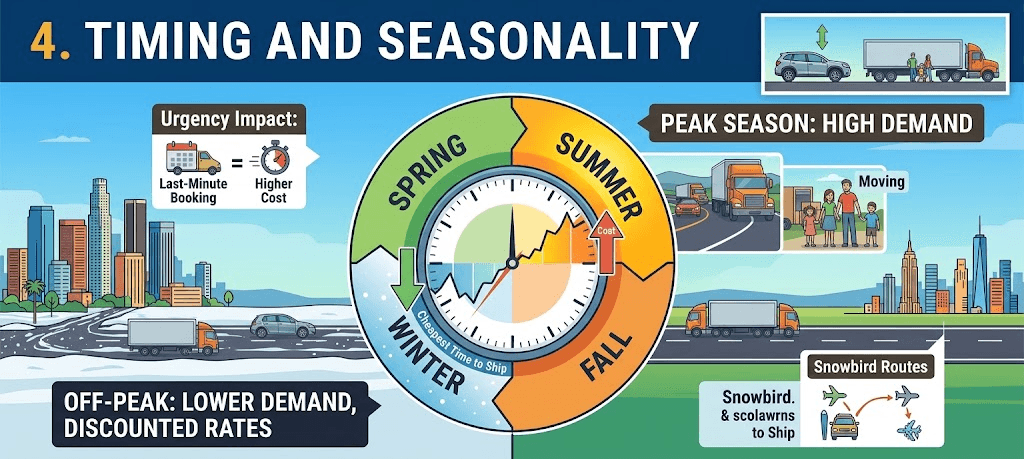
The time of year and the urgency of your shipment are major determinants of your auto transport cost calculator results. This is all about supply and demand.

  • Peak Season (Summer) Pricing: The highest demand for auto transport occurs during the summer months (May through September) when many people are relocating. During this time, carrier availability decreases and prices increase, raising the average cost to ship a car.
  • Off-Peak Discounts: The winter months (November through February) are typically the cheapest time to ship a car, as demand is lower. This is the best time to look for a cheap car shipping rates calculator. The only exceptions are specific routes, like the "snowbird" migration, where demand for shipping from northern states to Florida or Arizona increases.
  • Impact of Urgency on Costs: Needing a last-minute pickup is a key driver of higher prices. A carrier will charge a premium to deviate from its planned route to accommodate an urgent request. Booking your shipment a few weeks in advance is the best way to get a lower quote for car shipping in the USA.

5. Pickup and Delivery Specifications
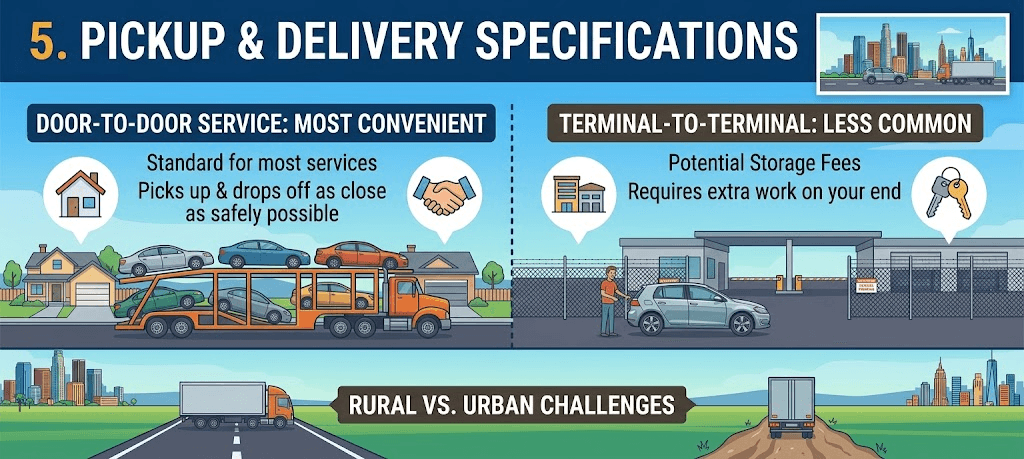
The logistics of where and how your vehicle is picked up and dropped off are integral to your cost to ship a car calculator quote.

  • Door-to-Door Service: This is the most convenient option, where the carrier picks up and drops off your vehicle as close to your specified addresses as legally and safely possible. This is the standard for most transport services.
  • Terminal-to-Terminal Shipping: In this less common option, you drop your car off at a designated terminal and pick it up at another terminal near your destination. While potentially a bit cheaper, it requires extra work on your end and adds the risk of potential storage fees.
  • Rural vs. Urban Pickup Challenges: Picking up a vehicle in a major city is usually easier and cheaper for a carrier. Navigating a large truck to a remote, rural location with limited access and poor road conditions can add to the car shipping cost by distance and overall quote.

6. Insurance and Liability Coverage
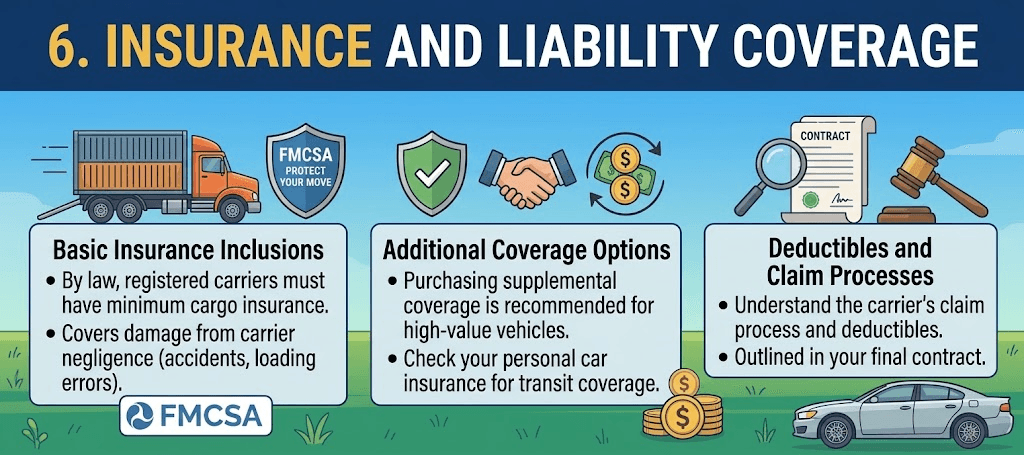
Understanding the insurance that comes with your shipment is crucial. Your car shipping price estimator includes a level of liability coverage, but you should always understand its extent.

  • Basic Insurance Inclusions: By law, all registered carriers must have a minimum level of cargo insurance. This covers any damage caused by carrier negligence, such as damage from a road accident or a loading error.
  • Additional Coverage Options: For high-value vehicles, you should purchase supplemental coverage. It's important to check if your personal car insurance policy provides coverage while your vehicle is in transit, as this can affect your decision.
  • Deductibles and Claim Processes: In the unlikely event of damage, it's vital to know the carrier's claim process and any deductibles that may apply. This information should be clearly outlined in your final contract.

7. Carrier Reputation and Service Level
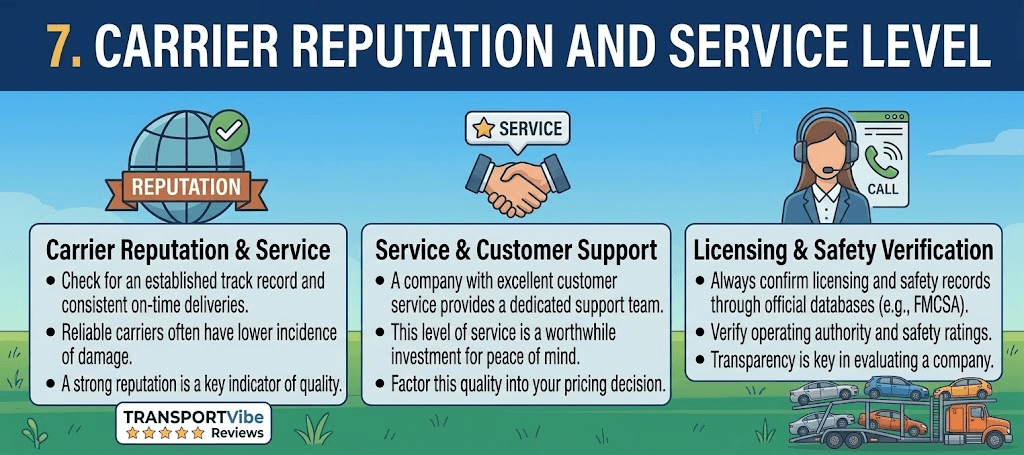
The reputation and service level of your chosen carrier or broker can influence both the price and the quality of your experience.

  • Experienced vs. New Operators: An established, reliable carrier with a strong reputation may have a slightly higher cost to ship a car calculator quote, but they often have a proven track record of on-time deliveries and a lower incidence of damage.
  • Customer Service Quality and Price Impact: A company with excellent customer service and a dedicated support team might factor this level of service into its pricing. This can be a worthwhile investment for peace of mind.
  • Reliability, Damage Rates, and Cost Influence: Choosing a company based solely on finding a cheap car shipping rates calculator can be risky. Cheaper quotes can sometimes lead to delays, poor communication, or a higher risk of damage. 

When evaluating a company, always confirm its licensing and safety record. You can use the official database from the Federal Motor Carrier Safety Administration (FMCSA) to verify a company's operating authority and safety rating. At Transportvibe, we believe in transparency and empowering consumers with reviews to help them find a reliable company. Read our in-depth article on how broker vs. carrier pricing differs to learn more.

8. Geographic and Economic Influences
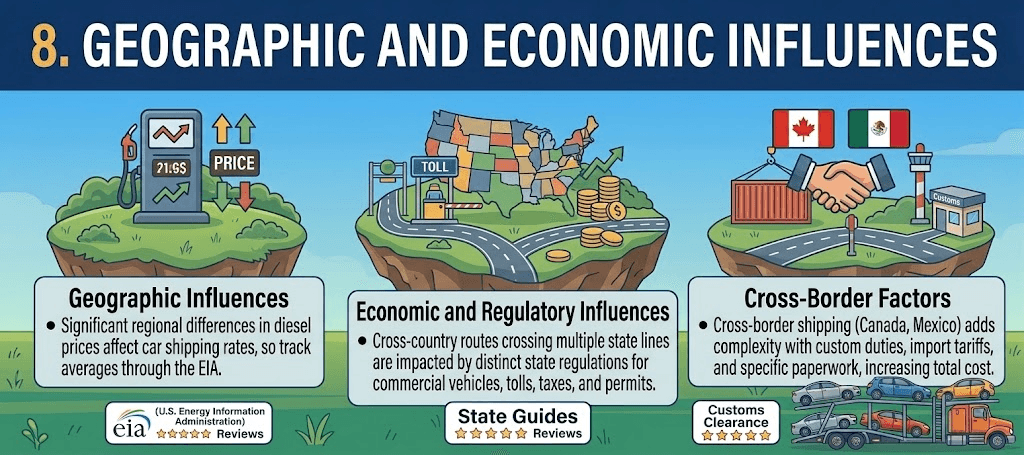
Geographic and macroeconomic factors play a significant, if less obvious, role in determining your auto transport cost calculator quote.

  • Regional Fuel Price Differences: Fuel prices are a major cost for carriers. Significant regional differences in gas or diesel prices can affect the car shipping rates per mile for specific routes.

Fluctuations in fuel prices are a major cost for carriers. You can track the latest national and regional diesel price averages directly from the U.S. Energy Information Administration (EIA) website here.

  • State Regulations and Fees: Each state has its own regulations regarding commercial vehicles, tolls, and taxes. These can contribute to the overall car shipping cost by distance, particularly for cross-country car shipping routes that cross many state lines.
  • Cross-Border Shipping Costs (Canada, Mexico): Although the car shipping cost calculator USA is designed for domestic moves, cross-border shipping adds complexity due to factors such as customs duties, import tariffs, and specific paperwork, ultimately increasing the cost.

9. Special Cargo Considerations
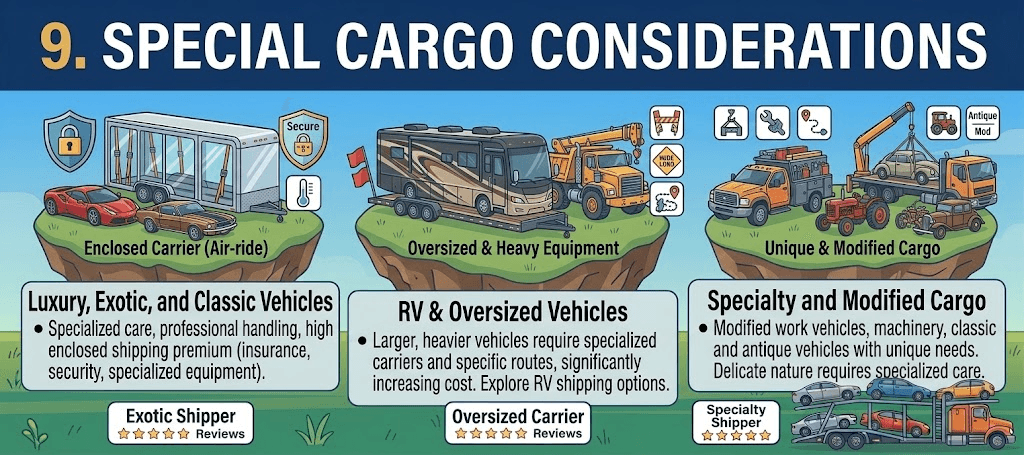
Not all vehicles are created equal, and some require special attention that will be reflected in your vehicle shipping cost estimator.

  • Luxury and Exotic Cars: These vehicles often require specialized care, from professional handling to the use of an enclosed carrier. The enclosed car shipping cost for these vehicles is a premium due to the added insurance, security, and specialized equipment required. 
  • Classic and Antique Vehicles: Similar to luxury cars, these vehicles often have unique needs. Their delicate nature means they are typically shipped in enclosed carriers to protect them from road debris and weather. For a specialized move, consider our classic vehicle shipping options.
  • Oversized Vehicles and Specialty Equipment: Shipping a vehicle that is larger or heavier than a standard truck—such as an RV or a modified work vehicle—will significantly increase the car shipping price estimator. These require specialized carriers and specific routes, adding to the overall cost. For these unique needs, explore our RV shipping services.

Understanding Your Quote and Avoiding Hidden Fees

It's frustrating to receive a great instant car shipping quote only to find hidden fees later.  As a team dedicated to transparency at Transportvibe, we've heard countless stories from customers who faced this exact issue. Your car shipping price estimator should be a true representation of the final cost, not a starting point for negotiations. Be wary of quotes that seem too good to be true, as they often are.  A trustworthy car shipping cost calculator from a reputable provider will give you an all-inclusive price, detailing every cost upfront. Always confirm whether the quote includes fuel surcharges, taxes, and all fees related to the pickup and delivery of your vehicle. A low-cost to ship a car calculator doesn't always mean a better deal. The cheapest quote might come from a less-than-reputable company that adds on charges for things like extra mileage or wait times. Before you commit, get a full breakdown.  We believe an informed consumer is a happy consumer, which is why we're committed to helping you understand every detail of your quote.

Case Studies: Breaking Down Real-World Shipping Scenarios

To truly understand how a car shipping cost calculator works, it’s helpful to look at real-world examples. These scenarios illustrate how the core factors we’ve discussed directly impact your final auto transport cost calculator quote.

Case Study 1: Shipping a Sedan Cross-Country (e.g., California to New York)

This is the classic cross country car shipping cost scenario, and it perfectly demonstrates the principle of a lower car shipping rates per mile for longer distances. Let's say a customer needs to ship a standard sedan from Los Angeles, CA, to New York City, NY. This route is roughly 2,800 miles.

  • Distance: At 2,800 miles, this is a prime example of a long-haul trip. While a shorter trip might cost $1.50 per mile, the rate for this journey would likely fall to around $0.60 per mile, making the total cost to ship a car 1000 miles a key component in the overall calculation.
  • Route: The I-40 and I-80 corridors are among the most popular and efficient in the country. This high-traffic route means there is high carrier availability and competition, which helps keep the average cost to ship a car competitive.
  • Vehicle: The vehicle is a standard sedan, which fits easily on an open carrier. This keeps the quote low, as it doesn’t require specialized handling.
  • Result: A vehicle shipping cost estimator for this trip would likely generate a quote in the range of $1,500 - $1,800 using an open carrier, depending on the time of year.

Want to learn more about a cross-country move? Our guide on how to ship a car across the USA breaks down the logistics and costs.

Case Study 2: Shipping an EV to Hawaii

This scenario highlights the impact of specialized vehicles and non-standard routes on your car shipping quote calculator. A customer needs to ship their new electric vehicle from a West Coast port (e.g., Los Angeles) to Honolulu, HI.

  • Destination: The journey to Hawaii is a complex logistical challenge. It involves land transport to the port, a sea journey, and then pickup on the island. The Hawaii car shipping cost calculator must factor in port fees, customs, and the transit time for the ocean voyage.
  • Vehicle: An electric vehicle (EV) presents unique challenges. The EV car shipping cost calculator needs to account for the car's heavier weight due to its battery and the requirement to ship it with a specific battery charge (typically between 25-50%). Some carriers have specific safety protocols and handling requirements for EVs.
  • Transport Method: The trip is a mix of open carrier transport to the port and then a container ship for the ocean leg. There is no single carrier that can offer a direct door-to-door service to the islands.
  • Result: The cost for this type of shipment is significantly higher than a domestic, mainland move. An estimated car shipping price for this route would likely range from $2,000 to $3,000 or more, taking into account all the specialized requirements.

For a deeper dive into these unique challenges, check out our guides on shipping electric vehicles and shipping a car to Alaska or Hawaii. Ready to ship a car that requires special handling? Get an estimated quote for your unique shipping needs today!

5 Tips to Get the Best Possible Price

Securing the best car shipping quote calculator result is all about being strategic. Here are five simple ways to find a more affordable auto transport cost calculator quote without sacrificing quality.

  1. Be flexible with your pickup and delivery dates to get a lower car shipping price estimator.
  2. Choose open-air transport over an enclosed carrier to reduce your enclosed car shipping cost.
  3. Book your shipment well in advance to avoid expedited fees and find better rates.
  4. Request terminal-to-terminal shipping if you're not in a major city to reduce your car shipping rates per mile.
  5. Inquire about potential discounts for students, military members, or seniors to lower your average cost to ship a car.


FAQs about Car Shipping Costs


How is the cost to ship a car 1000 miles different from a longer or shorter trip?

The cost to ship a car 1000 miles is typically more efficient per mile than a shorter trip, but less so than a cross-country journey. Car shipping companies often charge a higher per-mile rate for short distances to cover fixed costs, while long-distance rates are lower per mile but have a higher total cost.

What is the average cost to ship a car by vehicle type, and how do larger vehicles affect the quote?

The cost to ship a car by vehicle type is a major factor. Larger vehicles like SUVs, trucks, and vans take up more space and weight on the carrier, which increases fuel consumption and reduces the number of other vehicles that can be transported. This results in a higher final quote compared to a standard sedan.

Is there a specific car shipping cost calculator USA for military members or specific states?

Yes, some companies offer a specialized military car shipping cost calculator that may include discounts for service members. Similarly, routes to non-contiguous states like Hawaii require a specific Hawaii car shipping cost calculator to factor in unique logistics such as port fees and ocean freight.

What is the difference in price between an open carrier car shipping cost and an enclosed car shipping cost?

The open carrier car shipping cost is the most affordable option, as it is the industry standard. The enclosed car shipping cost is a premium service, typically 40-60% higher, offering enhanced protection from weather and road debris for luxury, classic, or exotic vehicles.

How do I find a cheap car shipping rates calculator, and what should I be aware of when using it?

To find a cheap car shipping rates calculator, you should look for companies that provide instant quotes online and compare multiple options. However, be cautious of quotes that are significantly lower than the average cost to ship a car, as they may indicate hidden fees, poor service, or an unreliable carrier.

Do electric vehicles (EVs) have different shipping costs? What is an EV car shipping cost calculator?

Yes, an EV car shipping cost calculator accounts for the specific requirements of transporting electric vehicles. These cars are often heavier due to their batteries, which can increase the cost. They also have specific battery charge requirements and handling protocols that can affect the final price.

How does the time of year affect my instant car shipping quote?

Seasonal demand significantly impacts your instant car shipping quote. Prices are highest during peak relocation seasons, such as summer and early fall. Conversely, the off-season, particularly winter, can offer the most affordable rates, making it the best time to find a great deal using a car shipping cost calculator.  

Making an Informed Decision About Your Final Quote

Navigating the world of auto transport doesn't have to be overwhelming. By understanding the core factors behind your car shipping quote calculator, you empower yourself to make a confident decision. Your final quote is more than just a number; it’s a reflection of the distance, vehicle type, and service level you choose.  Whether you need a simple vehicle shipping cost estimator or a detailed breakdown for cross-country car shipping, knowing what affects the price is key. Avoid the stress of unexpected costs by always looking for transparent pricing and comparing quotes from reputable companies. Ready to find the perfect carrier for your vehicle? Get a free, instant car shipping quote from top-rated companies now.

Related articles

AUG 15, 2025
Hawaii Car Shipping Made Easy: Understanding Car Transporting Ways, Port Locations, and Pricing Structures

Hawaii Car Shipping Made Easy: Understanding Car Transporting Ways, Port Locations, and Pricing Structures

TRANSPORTVIBE

Moving your vehicle across 2,400 miles of the Pacific Ocean costs less than buying a comparable car in Hawaii. Hawaii car shipping has become the smart choice for thousands of mainland residents relocating to the islands, with shipping car to Hawaii typically saving $5,000-15,000 compared to purchasing locally. The process involves more than simply loading your vehicle onto a cargo ship. Car shipping hawaii requires understanding port locations, carrier options, and pricing structures that vary significantly between companies. Matson car shipping dominates the market, but alternative car shipping companies offer competitive car shipping rates and service levels. Whether you're researching car shipping costs for a standard sedan or need specialized transport for luxury vehicles, the key lies in understanding your options. From car shipping quotes to final delivery, each step impacts your total investment and timeline for shipping a car to hawaii. Ready to compare Hawaii car shipping options? Get personalized quotes from verified transport companies and discover which service fits your needs and budget. How to Ship a Car to Hawaii: Transport Methods Explained When considering hawaii car shipping, you have several key transport methods available. Understanding each option is essential for finding the right balance of car shipping cost, speed, and security for your vehicle. The Roll-on/Roll-off (RoRo) Method This is often the most cost-effective way to get your car to Hawaii. With RoRo shipping, your car is driven directly onto a specialized ship and secured for the sea voyage. This method is efficient because it requires less handling, which helps reduce car shipping rates. A primary benefit is the lower shipping a car cost compared to other methods. However, no personal belongings can be left inside the vehicle. For a deeper look at the RoRo process, you can find a good resource on the Hoegh Autoliners website. Pros: Cost-effective: It is the most affordable option for car shipping to Hawaii. Efficiency: The process is straightforward and fast, with cars simply driven on and off the vessel. Less handling: This method reduces the risk of damage from cranes or other heavy lifting equipment. High volume: RoRo vessels can transport a large number of vehicles at once, making it a reliable and frequent service. Cons: Less protection: Your vehicle is exposed to the elements on the ship's open deck. No personal items: You cannot ship any belongings inside the car. Port-to-Port only: This method is typically limited to major ports, so you may need to arrange separate transport to and from the port. This option is a solid choice for those prioritizing budget over a full-protection, fully enclosed experience. Container Shipping For maximum protection and flexibility, a container is a top choice. Your car is secured inside a fully enclosed shipping container, protecting it from weather and other elements. Container shipping is ideal for luxury, classic, or custom vehicles. This method also allows you to ship other personal goods inside the container with your car, a major benefit if you are also moving your household. For more details on this, you can check out this guide on shipping cars in containers. Pros: Superior protection: The container shields your car from all external factors. Security: Your vehicle is sealed and locked, providing a high level of security. Flexibility: You can ship other items alongside your vehicle inside the container. Privacy: No one has access to your car once the container is sealed. Cons: Higher cost: This is significantly more expensive than the RoRo method. More complex logistics: It requires more coordination and handling to load the car into a container. Slower process: Consolidating and preparing the container for shipping can take longer. Choose container shipping for the peace of mind that comes with knowing your car is completely protected and securely stowed away. Enclosed Shipping: Best for Protection Enclosed shipping is a premium service designed for high-value vehicles. Your car is transported in a fully covered truck trailer, shielding it from road debris and weather. This option is often used for the mainland portion of your journey to the port. It provides peace of mind and is preferred for rare, exotic, or antique vehicles. Although the car shipping prices are higher, the added security can be a worthwhile investment. For additional information on why this is the best option for special vehicles, you can check this resource. Pros: Complete protection: Your car is fully protected from weather, dirt, and road hazards. Security: Vehicles are transported in a secure, covered trailer, reducing the risk of theft or vandalism. Peace of mind: This is the ideal option for expensive, custom, or classic cars. Professional handling: Carriers who offer enclosed transport are often more specialized and experienced. Cons: Higher cost: This is one of the most expensive ways to transport a car. Limited availability: There are fewer enclosed carriers, which can lead to longer wait times. Less flexibility: The route and schedule may be less flexible than with open transport. If you have a luxury, classic, or custom car, the added expense of enclosed shipping is an investment in its safety. Open-Air Shipping: Best for Budget Open-air shipping is the standard and most common method for mainland transport. Your vehicle is loaded onto an open trailer with other cars. This is the cheapest way to transport a car to a port. The main benefit is the lower shipping a car cost. While exposed to the elements, this method is still safe and reliable for most standard sedans, trucks, and SUVs. Most car shipping companies use this method due to its efficiency and availability. Pros: Most affordable: This is the most popular choice for someone looking for cheap car shipping. Widely available: There are many open-air carriers, making it easy to book a shipment on a flexible schedule. Faster service: Carriers often have routes that cover most areas, allowing for quicker pickup and delivery. Efficient: Open carriers can transport a large number of cars at once, making the process very efficient. Cons: Exposure to elements: Your car is vulnerable to rain, sun, dust, and other weather conditions. Vulnerability to road debris: The car is at risk of damage from rocks, dirt, and other road debris. Less security: The car is exposed to public view during transport. For a standard, everyday vehicle, open-air shipping offers an unbeatable combination of affordability and convenience. The Step-by-Step Car Shipping Process Once you have chosen your transport method, a clear process makes hawaii car shipping simple. Here is a step-by-step guide to navigate your shipment from start to finish. Getting Your Car Shipping Quotes The process begins with finding the right car shipping company. It’s crucial to shop around to get the best car shipping rates. Most reputable companies offer free, no-obligation quotes online or by phone. To get an accurate estimate, you'll need to provide specific information about your vehicle and your shipping needs. For a detailed guide on getting quotes, check out this article on finding the right car shipper. Vehicle details: Provide the make, model, year, and a VIN. Origin and destination: Specify your pickup location and the Hawaii port you want your car delivered to. Shipping dates: Be flexible with your dates to find lower car shipping prices potentially. Shipping method: Choose between open, enclosed, RoRo, or container shipping. Getting quotes from several car shipping companies helps you compare not just the price, but also the services offered. Preparing Your Car Proper preparation is key to a smooth hawaii car shipping experience. This step ensures your car is safe for transport and meets all regulations. A well-prepared car prevents delays and potential damage. Clean your car: Wash your car thoroughly, both inside and out. Take detailed photos of any existing dents or scratches for your records. Empty the car: Remove all personal items, valuables, and non-factory accessories. The shipping company is not responsible for these items. Check fluid levels: Ensure the gas tank is no more than a quarter full. Check all other fluids, including oil and coolant. Check the battery and tires: Make sure the battery is fully charged and the tires are properly inflated. Disable the alarm: Inform the carrier if your car alarm is sensitive and how to disable it. Following this checklist will ensure your car is ready for its journey across the ocean. Required Documents for Hawaii Car Shipping Having the correct paperwork ready is a critical step in shipping a car to Hawaii. These documents prove ownership and authorization to ship the vehicle. Failure to have them can cause significant delays. If you're wondering what to do about a vehicle that doesn't run, check out our guide on How to Ship a Non-Running Vehicle . Proof of ownership: This can be your vehicle title or a lien authorization letter from your bank if the car is leased or financed. Vehicle registration: A current, valid registration is required. Photo ID: A government-issued photo ID, such as a driver's license or passport. Keys: You must provide a full set of keys to the transport company. Keep copies of all your documents, and be sure to provide the originals when dropping off your car at the port. Drop-off and Pick-up This is the final stage of the process. Your car's journey to Hawaii involves two key checkpoints: drop-off at the mainland port and pick-up in Hawaii. A smooth handover at both ends is essential. Drop-off: At the mainland port, a representative from the matson car shipping company or their partner will inspect your car. You will both sign a Bill of Lading, which details the car's condition. This is your receipt. Pick-up: Once the car arrives in Hawaii, you will be notified. You must pick up your car at the designated Hawaii port. You'll perform a final inspection to confirm its condition matches the Bill of Lading. Completing the paperwork and inspection on both ends ensures your vehicle's safe and confirmed delivery to the islands. Hawaii Car Shipping Destination Ports Choosing your destination port is a critical step in the hawaii car shipping process. Your choice depends on which island you are moving to. Each major island has a key port that serves as the entry point for vehicles coming from the state. Honolulu, Oahu: The Main Hub The Port of Honolulu is the largest and most active port in Hawaii. It is the primary gateway for all goods and vehicles entering the state. Most mainland shipments arrive here first before being transferred to other islands via barge. Location: Sand Island, Honolulu, Oahu. Significance: Handles the majority of vehicle shipments. Convenience: Offers the most frequent sailings from mainland ports like Los Angeles and Oakland. Kahului, Maui: The Valley Isle's Port The Port of Kahului is the main port for the island of Maui. Vehicles destined for Maui are offloaded here, avoiding the need for additional inter-island transport from Oahu. Location: Kahului Harbor, Maui. Significance: The primary destination for all car shipping to Hawaii residents on Maui. Service: Provides direct shipping routes that are convenient for Maui residents. Hilo & Kona, Big Island: Serving Both Sides The Big Island has two key ports that handle vehicle shipments. This allows you to choose the port closest to your final destination, reducing overland travel on the island. Hilo Port: Located on the eastern side of the Big Island, serving the Hilo community. It is a major commercial hub. Kona Port: Located on the western side of the Big Island, near Kailua-Kona. It provides a convenient option for those on the Kona coast. Nawiliwili, Kauai: The Garden Isle Port The Port of Nawiliwili serves as the sole deep-water port for Kauai. All vehicle shipments for the island of Kauai are delivered here. Location: Lihue, Kauai. Significance: It is the primary gateway for all goods and vehicles to Kauai. Service: All major car shipping to Hawaii companies use this port for deliveries to the island. Understanding each port's role helps you make an informed decision and can impact the final car shipping cost and overall delivery time. We have a dedicated page for Hawaii locations to provide you with more local insights. Choosing the right transport company should not be stressful. By understanding the process, you can make a well-informed decision that fits your budget and timeline. Get a free, transparent quote now and let Transportvibe help you find the best deal for your Hawaii car shipping needs. Factors That Influence Your Car Shipping Costs The final car shipping prices are not a single, fixed number. They are calculated based on a variety of elements that are unique to your specific shipment. We've broken down some of the most common factors so you can understand your car shipping estimate. For a deeper dive into how broader market forces affect rates, read our blog on How Gas Prices Affect Car Shipping Costs . Vehicle Size and Weight: This is the primary factor. Larger, heavier vehicles like trucks and SUVs take up more space and weigh more, leading to higher car shipping rates. A standard sedan will always be cheaper to ship than a large pickup truck. Origin and Destination Ports: The distance from your home to the mainland port and the specific Hawaiian port you choose will affect the cost. Shipping from a West Coast port like Los Angeles is far cheaper than shipping from the East Coast. Shipping Method: As we explained earlier, RoRo is the most economical method, while container shipping offers enhanced protection for a higher fee. Your choice here significantly impacts your total shipping a car cost. Time of Year: The demand for hawaii car shipping fluctuates seasonally. Prices can be higher during peak moving seasons, like summer, compared to winter. Additional Services: Any special requests, such as enclosed mainland transport or shipping a non-running vehicle, will add to the final car shipping prices. Getting an Accurate Port-to-Port Estimate The most direct way to get a baseline for your car shipping cost is to look at port-to-port rates. This is the cost to transport your car from a major mainland port to a Hawaiian port, without any door-to-port service. As of 2025, here are some average price ranges: West Coast to Honolulu: Shipping from major ports like Los Angeles or Oakland to Honolulu typically costs between $1,500 and $1,800 for a standard vehicle using the RoRo method. San Diego to Honolulu: A common route for those in Southern California, shipping a car from San Diego to Hawaii will generally run you about $1,650 to $1,900 for a sedan, port-to-port. Midwest/East Coast to Hawaii: Shipping from further away includes the cost of overland transport to the West Coast port, bringing the total car shipping estimate to a range of $2,000 to $2,700. Remember, these are estimates. To get a precise quote, you should contact a reputable company directly. For example, you can use the Matson online quote tool to see their current pricing. Finding Cheap Car Shipping to Hawaii Finding cheap car shipping is about being strategic. While you can't control fuel prices or your car's size, you can make choices that help you save money. Choose RoRo: This is the most affordable method for car shipping to Hawaii. Compare Multiple Quotes: Don't settle for the first car shipping quote you receive. Comparing prices from several reputable car shipping companies is the best way to find a great deal. Book in Advance: Scheduling your shipment well in advance can help you lock in a better rate before prices increase. Be Flexible: If your schedule is flexible, you may be able to book your shipment during a less busy time of year to get a better rate. By being a smart shopper, you can secure the best possible car shipping cost for your move to the islands. Ready to find the best deal for your vehicle? We can help you compare car shipping companies and get the most competitive rates. Visit Transportvibe to get a free, no-obligation quote today and find the best fit for your Hawaii car shipping needs. Car Shipping to Hawaii Regulations: What You Need to Know Navigating the regulations for shipping a car to Hawaii is a crucial step that can prevent delays and extra costs. Due to its unique ecosystem, the state has strict rules, particularly regarding biosecurity. Understanding these requirements will ensure a smooth hawaii car shipping process. Hawaii's Strict Biosecurity and Agricultural Inspection Hawaii has some of the most stringent agricultural regulations in the United States to protect its native flora and fauna from invasive species. Every vehicle entering the state is subject to inspection by the Hawaii Department of Agriculture's Plant Quarantine Branch. This is why thorough cleaning is a mandatory part of the preparation process. Vehicle Cleaning: Your car must be meticulously cleaned, both inside and out. Pay special attention to the undercarriage, wheel wells, and engine compartment, where dirt, mud, and seeds can accumulate. It's recommended to have your car professionally detailed or pressure-washed before drop-off. Documentation: You must be able to prove that your vehicle is free of any prohibited agricultural materials. While the shipping carrier will handle the formal inspection, your preparation is what ensures a successful outcome. Standard Carrier and Safety Regulations In addition to agricultural rules, shipping carriers and federal law have their own set of regulations to ensure the safety of your vehicle and the vessel it's traveling on. Fuel Levels: For safety reasons, the fuel tank must be no more than a quarter full. This is a U.S. Coast Guard regulation that all carriers strictly enforce. No Personal Items: You cannot ship any personal belongings, valuables, or household goods inside your vehicle. Items such as loose electronics, personal documents, and clothing must be removed. Only factory-installed equipment is permitted. Operational Condition: For Roll-on/Roll-off (RoRo) services, your vehicle must be in safe, drivable condition with a working emergency brake. It should have no leaking fluids and be able to start and steer on its own. Post-Arrival Requirements Once your car has passed inspection and arrives in Hawaii, there are a few final steps you must take to make it road-legal. Vehicle Registration: If you are moving to Hawaii, you must register your car with the state within 30 days of its arrival. This involves presenting your shipping receipt, proof of ownership, and valid insurance. Safety Inspection: All vehicles in Hawaii must pass a safety inspection. This is a separate process from the agricultural inspection and is required to obtain your new Hawaii license plates. Adhering to these regulations is crucial for a successful and trouble-free shipping a car to Hawaii experience. For a comprehensive overview of all rules, check the official Pasha Hawaii guide for preparing your vehicle. Finding the Right Car Shipping Company When you're ready to ship your car, choosing the right partner is the most important step. With so many car shipping companies to choose from, knowing what to look for can make all the difference in having a stress-free experience. Finding the best car shipping companies involves looking beyond the initial car shipping quotes to evaluate their reliability and service. What to Look for in a Reputable Company A trustworthy car shipping company will be transparent, professional, and well-regarded in the industry. As you research your options, focus on these key factors to ensure your vehicle is in good hands. Licensing and Insurance : The most critical step is to verify the company’s credentials. A legitimate auto transport company must be registered with the FMCSA (Federal Motor Carrier Safety Administration) and have a USDOT number. This ensures they meet federal safety and operational standards. Transparent Pricing : Be cautious of a car shipping quote that seems too good to be true. Reputable companies provide a detailed, written estimate with no hidden fees. They should be able to explain exactly what is included in your total car shipping cost. Positive Reputation and Reviews : Check online reviews on independent platforms like the Better Business Bureau (BBB) and Trustpilot. Look for consistent patterns in customer feedback, paying attention to comments about communication, on-time delivery, and the condition of the vehicle upon arrival. Customer Service: A reliable car shipping company will be responsive and easy to reach. They should have a clear communication process, provide updates on your shipment, and be willing to answer all your questions. How Transportvibe Can Help At Transportvibe, choosing a transport company should be simple, transparent, and informed. Our mission is to help you navigate the complex world of auto transport. We've dedicated ourselves to providing honest, unbiased reviews of transport companies across the nation. Our platform allows you to: Read Real Reviews: See real experiences from other customers to help you avoid common pitfalls. Compare Companies: Our extensive database covers everything from large carriers to specialized niche transporters, allowing you to easily compare services and ratings. Find the Right Fit: Whether you need a company specializing in luxury vehicle shipping or a budget-friendly option for open-air car transport, our platform helps you find the perfect match. We aim to empower you with the right information, enabling you to make a confident decision about your hawaii car shipping needs. What to Avoid: Red Flags and Warning Signs As you search for the best car shipping companies, be on the lookout for red flags that could signal a scam or poor service. Lowball Quotes: An initial car shipping estimate that is dramatically lower than all others is a major red flag. It often indicates a "bait-and-switch" tactic, where hidden fees are added later. Large Upfront Payments: Be wary of a company that demands a large, non-refundable deposit before a carrier has even been secured. Lack of Verifiable Information: If a company doesn't have a physical address, a professional website, or a valid USDOT number that you can verify, it's best to steer clear. By doing your due diligence, you can avoid these pitfalls and choose a professional, reliable company. Don't leave your vehicle's safety to chance. Use Transportvibe to find a reputable, transparent company for your shipping a car to Hawaii journey. Frequently Asked Questions about Shipping a Car to Hawaii We know that car shipping to Hawaii comes with a lot of questions. Here are some of the most common ones to help you feel confident about your move. What is the average car shipping cost to Hawaii? The average shipping a car cost to Hawaii typically ranges from $1,500 to $2,500. However, this is just an estimate. The final price depends on factors like your car's size, the mainland port of origin, and your chosen shipping method (RoRo is cheaper than container shipping). For a detailed cost breakdown and to get a precise car shipping estimate, we highly recommend using a free quote tool. How long does shipping a car to Hawaii take? From the time your car departs the mainland port, the sailing time to a Hawaii port is generally 7 to 10 days. However, the total transit time, including the time it takes to get your car from your home to the mainland port and for it to clear customs in Hawaii, can be between 2 to 4 weeks. Weather and port congestion can sometimes cause minor delays. For an official transit schedule, you can check a major carrier like Matson's website . Can I put personal items in my car when shipping it to Hawaii? No, for overseas shipping, it is a strict regulation to remove all personal belongings from the vehicle. This is due to maritime and state laws, as well as liability and customs regulations. Any personal items found in the car could cause significant delays or even confiscation. Your car should be empty except for factory-installed equipment. Is my car insured during transit to Hawaii? Yes, your car is insured during transit. The shipping carrier is required to carry liability insurance that covers damage to your vehicle. The level of coverage can vary, so it is crucial to carefully read your contract. For additional peace of mind, you can also contact your personal auto insurance provider to see if they offer coverage during transit. For more on this, you can read our blog on Car Shipping Insurance: What's Covered? . What documents do I need to ship my car? You will need to provide the following essential documents to the car shipping company: Proof of ownership (vehicle title or a lien holder authorization letter). Current and valid vehicle registration. A government-issued photo ID (driver's license or passport). A full set of keys for your vehicle. Can I ship a non-running car to Hawaii? Yes, you can ship a non-running car, but it will come at an additional shipping a car cost. Not all car shipping companies have the necessary equipment to handle inoperable vehicles, so you must inform them upfront. The vehicle will likely be moved using a winch or forklift, which can add $200 to $500 to the total price. How do I track my vehicle? Most reputable car shipping companies provide a tracking service, especially for long-distance shipments like to Hawaii. You can typically track your vehicle's progress using a booking number or the VIN on the carrier’s website. You can also contact your car shipping company for updates. For example, both Pasha Hawaii and Matson have robust tracking systems for their shipments. Your Final Guide to Hawaii Car Shipping Successfully navigating the Hawaii car shipping process depends on being prepared and making informed decisions. By understanding the different transport methods, knowing the step-by-step process, and familiarizing yourself with key regulations, you can ensure a smooth and predictable shipment. Finding a reliable car shipping company that provides transparent car shipping quotes is the key to a stress-free move. At Transportvibe, we are committed to helping you make that confident decision. Our platform provides the reviews and information you need to compare options and find the perfect partner for shipping a car to Hawaii. Don't let the complexities of vehicle transport overwhelm you. Start your journey today by getting a free, transparent quote and finding the ideal company for your car shipping needs.

AUG 10, 2025
5 Key Signs You're Dealing with a Car Transport Broker

5 Key Signs You're Dealing with a Car Transport Broker

TRANSPORTVIBE

When it comes to shipping your car, have you ever felt like you're playing a guessing game? You're not alone. The auto transport industry can be confusing, filled with jargon and a mix of companies that operate in different ways. This is where understanding the difference between a car transport broker and a direct auto transport carrier becomes essential. Knowing who you're working with can mean the difference between a smooth, transparent experience and unexpected delays or hidden costs. This guide will walk you through the 5 key signs you're dealing with a car transport broker, so you can confidently make the right choice for your vehicle. We'll help you spot the red flags and navigate your options with clarity. Choosing the right company is the most important part of your car transport journey. Don't leave it to chance. Discover honest, unbiased customer reviews on Transportvibe to make a confident decision. Car Transport Broker vs Carrier Differences Navigating the world of car shipping starts with a fundamental understanding of the two main players: the car transport broker and the auto transport carrier. While both are integral to the process, their roles, responsibilities, and how they operate are distinctly different. Grasping these differences is key to making an informed decision that aligns with your priorities, whether that's cost, speed, or direct communication. What is a Car Transport Carrier? An auto transport carrier is the company that performs the actual, physical transportation of your vehicle. Definition: A carrier is an entity that owns and operates its own fleet of trucks, drivers, and logistical infrastructure. They are the ones who pick up your car, load it onto their truck, and drive it to its destination. Licensing: Carriers are required to have a Motor Carrier (MC) number and a USDOT number from the Federal Motor Carrier Safety Administration (FMCSA). These licenses are specific to their role as a hauler. Pricing: Their pricing is typically based on their internal costs, including fuel, driver wages, insurance, and truck maintenance. While their quotes may sometimes be higher than a broker's initial bid, they are often more stable and less likely to change last minute. Communication: When you work directly with a carrier, your communication is with the company that is physically handling your vehicle. This can lead to more direct and immediate updates on your car's location and status. Fleet Size: Carriers can range from small, owner-operated businesses with a single truck to large corporations with hundreds of vehicles. What is a Car Transport Broker? A car transport broker is a licensed intermediary, acting as a matchmaker between you (the customer) and a network of carriers. Definition: A broker does not own any trucks. Their business is built on logistics and communication. They find a carrier who can service your specific route, negotiate a price on your behalf, and manage the booking and payment process. They essentially sell you a service and then find the best company to fulfill it. Licensing: Brokers are also licensed and regulated by the FMCSA, but they hold a different type of license specifically for brokering. This allows them to legally connect shippers with carriers. Pricing: Brokers are known for their competitive pricing. They often use a vast network to find a carrier who can transport your vehicle for the lowest price. However, this can sometimes lead to an initial quote that is an estimate, which a carrier may not accept. If a low bid isn't accepted, the price may need to be raised to get a carrier to take the job. Communication: A reputable broker serves as your single point of contact. They handle all communication with the carrier, saving you the hassle of coordinating with multiple drivers. They are responsible for keeping you updated, but the information they provide is dependent on the carrier's communication with them. Key Advantage: Their primary value lies in their extensive network. While a single carrier might not have a truck available for your route for weeks, a broker can quickly search hundreds of potential carriers to find an available spot, often leading to a faster pickup time. How Pricing and Costs Differ The most significant difference for many customers lies in the pricing models. A carrier’s price is often a direct reflection of their operational costs for a specific route. A broker’s price, on the other hand, is a bid placed into a market. This can lead to pricing volatility. For a deeper dive into the financial aspects while choosing between car shipping broker and direct carrier, be sure to read our detailed guide on How Broker vs Carrier Pricing Differs (and Why) . Quick Comparison: Broker vs. Carrier Feature Car Transport Broker Auto Transport Carrier Primary Role Connects customers with carriers Physically transports the vehicle Vehicle Ownership Does not own trucks or equipment Owns and operates the transport fleet Pricing Often provides initial competitive bids, which may be subject to change Quotes are typically more direct and stable Communication Your single point of contact manages all logistics Direct communication with the company transporting your car Network Size Has a vast network of carriers to choose from Limited to their fleet and availability Pros Can find transport quickly, simplifies logistics, and offers competitive pricing Direct oversight of your vehicle, fewer communication layers Cons Quotes can be subject to change, have potential for miscommunication, and rely on third parties May have limited availability on specific routes, less flexibility in pricing Ultimately, both brokers and carriers can provide excellent service. The key is to understand their function and choose a company—broker or carrier—that is transparent, highly-rated, and trustworthy. Key Signs You’re Working with a Car Transport Broker Knowing who you’re talking to is the first step toward a seamless car shipping experience. Here are five clear signs that the company you’re dealing with is a licensed broker. Sign #1: They Don't Own Their Fleet of Trucks This is the most definitive way to distinguish between a carrier and a broker. A carrier's business is built on its physical fleet—the trucks and trailers that do the actual hauling. A car transport broker, on the other hand, operates as a logistics company, not a physical transport company. How to Spot It: When you ask, a representative may be vague or refuse to give specifics about the trucks they own. Their website might show generic stock photos of car carriers instead of their own branded fleet. What It Means for You: It confirms you are working with a broker. This isn't a red flag in itself, but it means you're trusting them to find a reliable third-party carrier to handle your shipment. Sign #2: You're Quoted a Price That Seems Too Good to Be True Unrealistically low pricing is one of the biggest auto transport broker red flags. Some brokers use a practice called "lowballing," where they provide a price that is significantly below the current market rate to secure your business. How to Spot It: Your quote is much lower than all other quotes you've received, and the representative pressures you to book immediately. They may mention that the price is an "estimate" or "subject to change." What It Means for You: A price that's too low often means the broker will struggle to find a carrier willing to take the job. This can lead to long delays, or a last-minute price increase as they attempt to "buy" a spot on a truck. Ready to move your vehicle without the stress of hidden fees and last-minute price changes? Get a realistic quote from our trusted network of carriers and brokers today. Sign #3: Communication is Vague, Delayed, or Non-Existent A lack of clear, proactive communication is a classic sign you’re working with a car transport broker who is not operating in your best interest. While a good broker will be your dedicated point of contact, a bad one will leave you in the dark. How to Spot It: The company representative can’t give you direct answers about your pickup or delivery timeline. You have to repeatedly call for updates, and they seem unable to contact the actual driver directly. What It Means for You: You are dealing with a company that is not prioritizing communication. This can lead to unnecessary stress and a feeling of powerlessness over your vehicle’s journey. Sign #4: They Lack Key Information or Avoid Providing Carrier Details When you're trying to figure out how to spot a car shipping broker, a key indicator is their unwillingness to provide transparency about who will actually be moving your car. How to Spot It: The company representative refuses to provide the name of the actual carrier, their USDOT number, or proof of their insurance coverage. They might say this information will be provided "after the driver is dispatched." What It Means for You: A reputable company, whether a broker or a carrier, will provide you with this information upfront. This allows you to perform due diligence and verify the carrier's credentials on the FMCSA website , ensuring they have a safe driving record and proper insurance. Sign #5: Their Reviews Reveal Bait-and-Switch Tactics or Last-Minute Cancellations Customer reviews are one of the most powerful tools for spotting warning signs of unreliable auto transport brokers. Pay close attention to what past customers are saying. How to Spot It: Look for a pattern of reviews where customers mention a sudden price hike after the car has been picked up, or a job being canceled at the last minute because the company couldn't find a carrier at the promised low rate. What It Means for You: This behavior indicates a broker whose business model is built on securing customers with low bids, rather than on honest pricing and a reliable network. These tactics lead to frustration, delays, and a broken promise. Have you had an experience with a car transport company? Your feedback is invaluable. Submit a review and help other consumers make smarter, more confident decisions. Not All Brokers are Bad: The Value of a Vetted Network You're absolutely right. Not all brokers are created equal, and a reputable one can be an invaluable asset. While the industry has its share of "bad apples," a quality auto transport broker can offer a level of service and convenience that is difficult to match. The key to a positive experience lies in choosing a broker with a truly vetted network. These are the trustworthy car transport companies in the USA that don't just find the lowest bidder; they work with a select group of reliable, licensed, and insured carriers with proven track records. The value of this approach is immense. A good broker acts as your single point of contact, managing the complex logistics so you don't have to, and using their extensive network to find the best carrier for your specific needs. They are your advocate, ensuring a smooth process from start to finish. Choosing the Right Option for Your Needs Choosing the right company for your car transport needs is the most critical step in the entire process. After understanding the distinct roles of a car transport broker and a carrier, it's time to apply that knowledge to make a confident decision. This isn't about one option being definitively better than the other, but rather about which option is the best fit for your specific situation. The key is to evaluate all potential providers—whether they are a carrier or a broker—based on a few essential parameters. Parameters to Choose the Right Option Transparency and Communication: A reputable company will be upfront about their business model. Ask them directly if they are a broker or a carrier. They should also provide clear and consistent communication from the moment you get a quote until your vehicle is delivered. Pricing Clarity: Be wary of quotes that are drastically lower than the market average. Get quotes from multiple companies and ask for a breakdown of all costs. A transparent company will provide an all-inclusive price with no hidden fees. Licensing and Insurance: Every legitimate auto transport broker and carrier is required to be licensed and insured by the FMCSA. Always ask for their USDOT and MC numbers and verify their credentials on the FMCSA website to ensure they are a legal and safe operation. Customer Reviews and Reputation: The best way to vet a company is to hear from other customers. Look for patterns in feedback—do people consistently praise their communication and reliability, or are there recurring complaints about delays and unexpected charges? Ready to find a trustworthy car transport company in the USA? Don't leave it to chance. Explore our curated list of reputable companies and read real customer reviews to make a truly informed choice. Frequently Asked Questions (FAQs) What is the main difference between a car transport broker and a carrier? A carrier is a company that physically transports your car using its own trucks and drivers. An auto transport broker acts as a licensed intermediary, connecting you with a network of carriers who will perform the actual transport. Are all car transport brokers bad or unreliable? No, absolutely not. The industry has many highly reputable car transport brokers who provide excellent service. They add value by vetting carriers for you, managing logistics, and acting as your single point of contact. The key is to distinguish a good broker from a bad one through research and reviews. How can I verify if a company is a licensed broker or a carrier? You can verify their status on the Federal Motor Carrier Safety Administration (FMCSA) website. All legitimate brokers and carriers must be registered and will have a USDOT and MC number. Searching for their company name or these numbers will reveal their official status. Why might a broker's quote be much lower than a carrier's? A broker's initial quote is often a bid to secure a carrier in a competitive market. Some unreliable brokers offer a low price to get your business, then struggle to find a carrier to accept that rate. This can lead to last-minute price increases or shipment delays. What are the key benefits of using a reputable car transport broker? A reputable auto transport broker saves you time and stress by handling all the logistics. They can find a carrier for your specific route more quickly, negotiate competitive rates on your behalf, and provide a single point of contact for updates throughout the entire shipping process. What should I do if a broker cancels my shipment at the last minute? If a broker cancels your shipment, it's often because they couldn't find a carrier to take the job at the quoted rate. You should immediately contact them to get a full refund of any deposit you've paid. For more detailed information on your rights and next steps, read our guide on Your Rights if a Car Shipping Company Cancels Last Minute . Making an Informed Decision with Transportvibe Your vehicle is a significant asset, and its transport should be handled with care and transparency. By learning to identify the crucial signs of an auto transport broker, you've empowered yourself to navigate the market with confidence. Ultimately, understanding the core distinction between a broker vs carrier in auto shipping explained here, is your greatest asset in making a confident and informed decision.The goal isn't just to avoid a bad experience, but to find a truly trustworthy car transport company that meets your needs. Use this knowledge to make an informed decision every time. The power to choose wisely is in your hands. Explore our database of companies and read real customer reviews to find the perfect match for your next shipment.