



Nearly one in four crashed vehicles now gets written off. Total loss frequency hit a record 23.1% of claims in the latest CCC Crash Course report. Every one of those cars still has to go somewhere, and most cannot drive there on their own.
That is where Non-Running Car Shipping Fees come in, and where the first quote jumps the moment you admit the car won't start.
This guide breaks down what those fees cover, why a dead car costs more to move, how a carrier loads one, and what to budget in 2026. Totaled daily driver, salvage buy, stalled project, or non-running motorcycle, the logic is the same once you see it.
Get a free, no-pressure quote built around your exact vehicle and its real condition, so you know the all-in number before you book.
What "Non-Running" Actually Means to a Carrier (and Why It Costs More)
Here is the part most people get wrong before they even request a quote. A carrier does not price your car by whether the engine turns over. It prices by how the car gets onto the trailer. So the real question behind does a non-running car cost more to ship is simpler than it sounds. Can the driver load it safely, and how much extra gear does that take.
That is why "non-running" is not one thing. It is a spectrum, and where your car sits on it sets the fee.
|
Condition |
What It Means |
Loading Method |
Fee Impact |
|
Runs but not safely |
Starts, but overheats, stalls, or fails inspection |
Drive-on with care |
Little to none |
|
Rolls, steers, and brakes |
Dead engine, but wheels turn and it stops |
Winch onto the trailer |
Modest surcharge |
|
No brakes or steering |
Wheels roll, but you can't guide or stop it |
Winch plus extra crew, or specialty load |
Higher surcharge |
|
Fully seized or salvage |
Won't roll at all, missing parts, heavy damage |
Forklift or specialized carrier |
Largest fee |
A car that rolls, steers, and brakes can be winched for a modest fee. One that won't do all three can force a forklift or a specialty load, and the charge climbs fast. The gap between those two situations is bigger than the gap between a running car and a rolling dead one.
The hardest tier is worth naming early. Shipping a car with no brakes or steering changes the whole plan, because the driver cannot guide the car onto the ramps or stop it once it is moving. Salvage buyers and project-car owners live in this tier most often. It is also the honest starting point for the non-running car carrier requirements we cover further down, since the crew has to know what they are walking into.
There is a broader reason these shipments keep growing. The average car on U.S. roads is now a record 12.8 years old, according to S&P Global Mobility. Older cars break down, get parted out, and change hands more often, which means more of them travel by truck instead of under their own power. If you are new to how any of this works, our guide on how car shipping works covers the basics before the non-running layer gets added on top. So does a non-running car cost more to ship than a running one? Yes, almost always. The size of that "more" is what the rest of this guide is about.
Non-Running Car Shipping Fees: The Real Numbers in 2026
Let me be direct about the money, because vague ranges help no one. Non-Running Car Shipping Fees are really two numbers added together. Your normal transport rate for the route, plus an inoperable surcharge for the extra work. Put plainly, the cost to ship a non-running car is your standard rate with that surcharge stacked on top. The surcharge is tied to loading difficulty, not distance, which is why two cars on the same route can quote hundreds of dollars apart.
On top of a standard rate, a rolling, steering, braking non-runner commonly adds somewhere in the low hundreds. A car that won't roll and needs a forklift can add several times that, and sometimes it needs a specialty carrier billed separately. These are practical ranges, not a fixed price list. The only number that counts is the one tied to your exact car and pickup spot, which is why a real quote beats any estimate on a page.
The Winch Fee, Forklift Fee, and Other Add-Ons
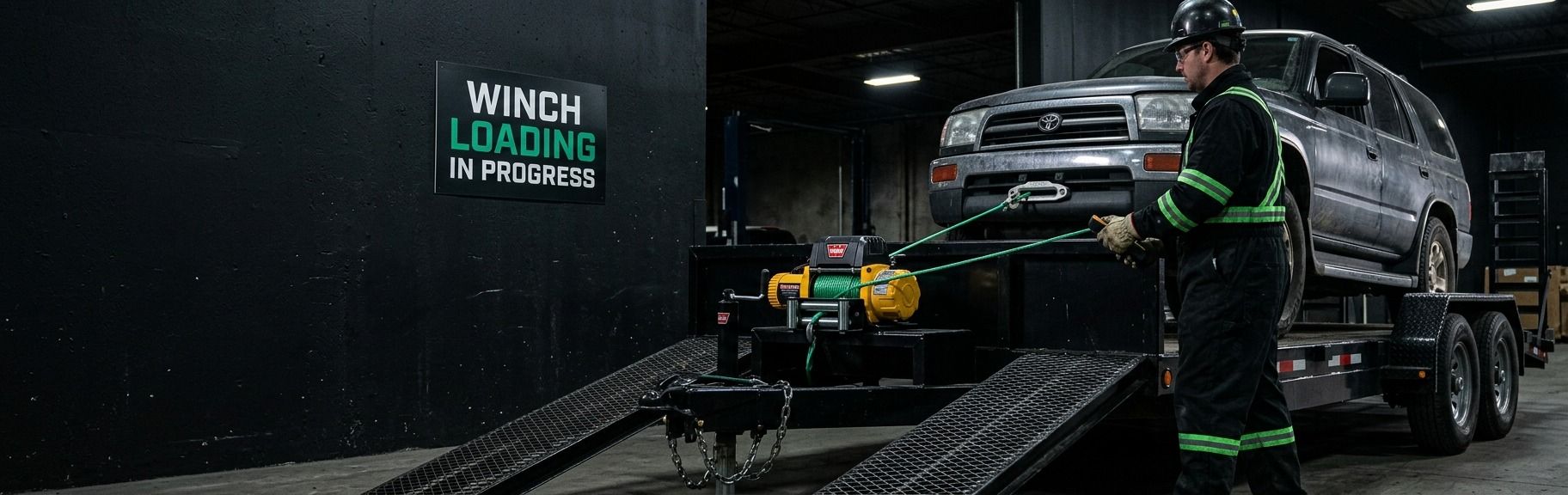
Most of the surcharge comes from one or two specific line items. Knowing them lets you read a quote instead of guessing at it.
|
Fee Type |
When It Applies |
What Drives the Cost |
|
Winch fee |
Car rolls, steers, and brakes but won't drive |
Powered winch plus 20 to 30 extra minutes to load |
|
Forklift or specialty-load fee |
Car won't roll or steer, or has heavy damage |
Different equipment, more crew, often a terminal |
|
Non-standard pickup |
Tight driveway, gravel lot, behind a fence or gate |
Extra time and difficulty positioning the truck |
|
Storage |
Car isn't ready when the driver arrives |
Holding the vehicle until it can load |
The winch fee car shipping charge is the one most non-runners hit. It covers the truck's powered winch and the added time to pull a dead car up the ramps by cable instead of driving it on. It is the smallest of the add-ons for a reason. The car is still doing half the work by rolling and steering. The winch fee car shipping line is also the easiest to plan for, since almost any open carrier can do it.
A forklift or ramp-truck fee is a different animal. It is bigger because it needs equipment the average car hauler does not carry, and the car often has to move to a terminal where that gear lives.
How Much Extra a Dead Car Really Adds
Here is the honest comparison. The inoperable vehicle shipping cost for the same car on the same route runs above what a running version would cost, and the spread depends entirely on the tier from the section above. A winch-ready non-runner sits near the bottom. A no-roll salvage car sits at the top.
-
Rolls, steers, brakes: expect a modest winch surcharge on top of the base rate.
-
No brakes or steering: expect a larger add-on, plus a possible move to a terminal.
-
Won't roll at all: expect a forklift or specialty fee that can rival the base transport cost itself.
The single biggest jump in inoperable vehicle shipping cost is not running versus non-running. It is rolling versus not rolling. That one factor decides whether a standard truck can take your car or whether you need special equipment. So when you ask how much extra to ship an inoperable car, the real answer starts with a different question. Does it roll.
Two guides worth a look before you compare quotes. Our breakdown of hidden car shipping fees shows the charges that hide in the fine print, and how much it costs to ship a car in 2026 sets the baseline rate the surcharge stacks on top of. Read both and you will know how much extra to ship an inoperable car is fair versus padded.
How a Carrier Loads a Car That Won't Start
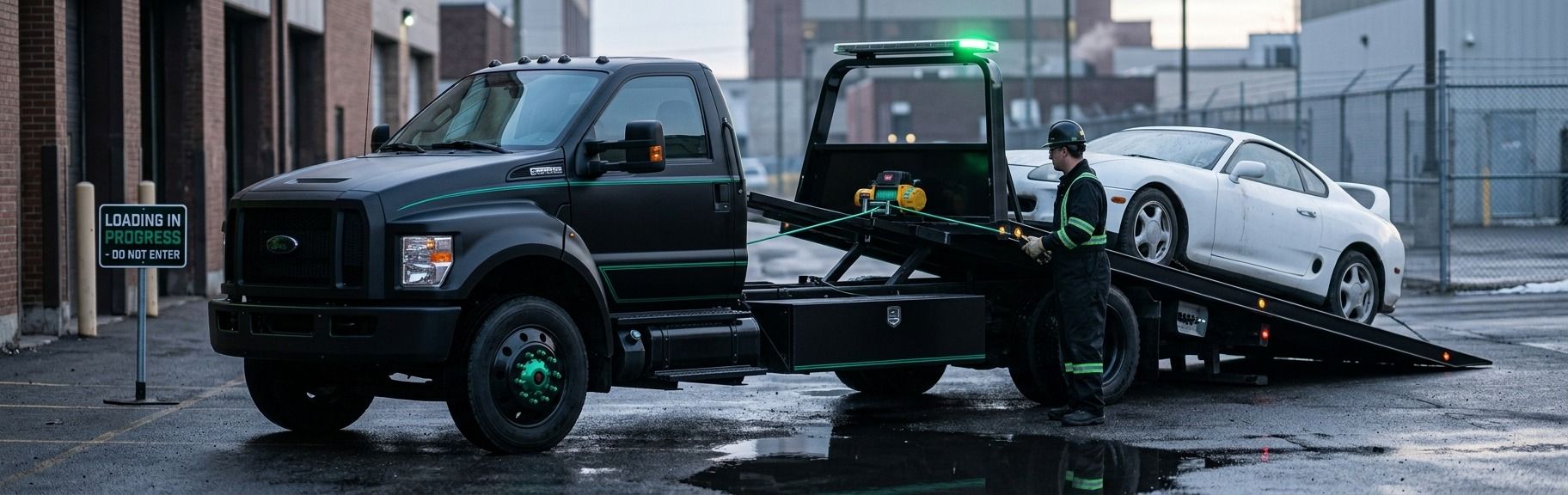
This is the section that makes every fee make sense. Once you see how the car gets on the trailer, the charge stops feeling like a random markup. How to ship a car that won't start comes down to one question. Can the crew get it up onto the deck safely.
There are three real ways to do it, and your car's condition picks the method for you. Getting this right up front is most of what a smooth pickup takes, since loading a non-running car onto a carrier is where the whole shipment either goes clean or goes sideways.
Winch Loading and Rollback Trucks
The most common method for a dead car is a winch load. The driver hooks a powered steel cable to the frame and pulls the car up the ramps while it rolls. It is the cleanest way of loading a non-running car onto a carrier, as long as the car rolls freely, steers so it tracks straight up the ramp, and brakes so it can be stopped on the deck. This is the whole reason a rolling non-runner is cheap to load. The car is still steering and stopping itself.
When a car is lower to the ground or the angle is tricky, a rollback truck for non-running car pickup solves it. The flatbed tilts down to meet the pavement, the car is winched onto the flat bed, and the bed levels back out. It is common for single-car moves, salvage pickups, and low-clearance vehicles that would scrape on standard ramps.
-
The car rolls freely on all four tires.
-
The tires hold air so the wheels turn under load.
-
The steering is unlocked so the car tracks straight.
-
Someone can release the parking brake or wheel lock.
Miss one of those and a simple winch load turns into a bigger job. That is often the moment a rollback truck for non-running car gets called in, or the fee jumps to the next tier. Our walkthrough of auto transport from start to finish shows where loading fits in the larger process, from booking to the driver pulling away.
Forklift Loading for No-Roll and Salvage Cars
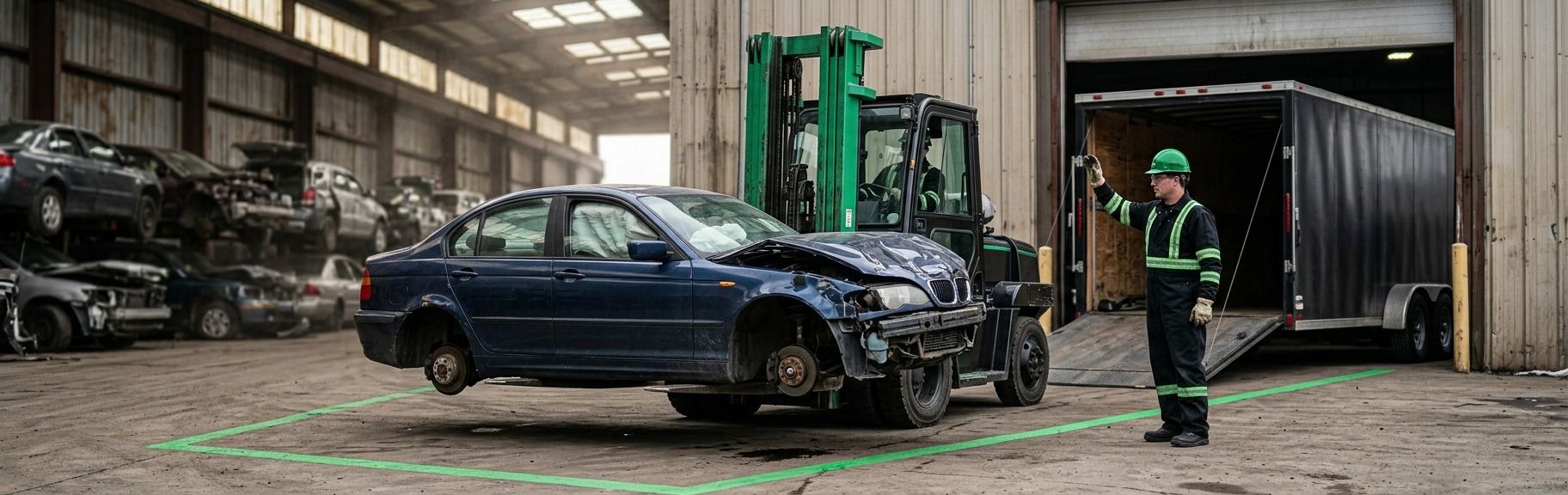
When the car won't roll or steer at all, the winch is off the table and forklift loading auto transport takes over. A forklift lifts the car bodily onto the trailer or into a container. This is how fully seized cars, salvage units with locked or missing wheels, and heavily damaged vehicles get moved. It costs more because it needs a machine the average hauler does not carry, more hands on site, and usually a terminal or yard with the right footprint.
Forklift or specialty loading is the single biggest reason one non-running quote dwarfs another. It is equipment and labor, not padding. A quote that looks suspiciously low for a no-roll car usually means the company has not accounted for how it will physically lift the thing, and that gap tends to reappear later as a re-quote.
This is also where shipping a car with no brakes or steering lands most often. No steering means no winch, because the car cannot be guided up the ramps. Once forklift loading auto transport is in play, the honesty of your description matters even more, which brings us to what the carrier needs from you.
What the Carrier Needs From You: Requirements Before Pickup
By now the mechanics of how to ship a car that won't start are clear. The last piece is on you, and it is the part people skip. The fastest way to blow up your own quote is to under-report the car's condition. Every set of non-running car carrier requirements starts with plain honesty about what the driver is going to find. Get this right and the price you were quoted is the price you pay.
Tell every company these things before pickup, not when the truck is idling in your driveway.
-
Does it roll on all four tires?
-
Does it steer?
-
Does it brake and hold on the ramp?
-
Do the tires hold air?
-
Is there a key, or none at all.
-
Where exactly is it parked, and how tight is the access?
Handle the key question directly, because it makes people panic for no reason. Shipping a dead car without keys is doable more often than owners expect. A carrier can still winch or forklift a car with no key, but the crew has to know in advance so they bring wheel dollies or schedule the right equipment. Spring it on them at pickup and you risk a refused load or a same-day re-quote. So put shipping a dead car without keys on the order from the start, right next to the roll-steer-brake answers that shape the rest of the non-running car carrier requirements.
A car listed as "runs and drives" that won't start when the driver arrives is the number-one cause of a re-quote or a refused pickup. Drivers plan their whole route and equipment around what the order says. An honest "it won't start and won't steer" costs you a little more upfront and saves you a wasted trip.
Service members have their own timing pressure here. If you are moving under orders and the car won't run, our military vehicle relocation service is built around PCS deadlines and the documentation that comes with them, so a non-running car does not derail a hard report date.
Open, Flatbed, or Enclosed: Picking the Right Carrier for a Dead Car
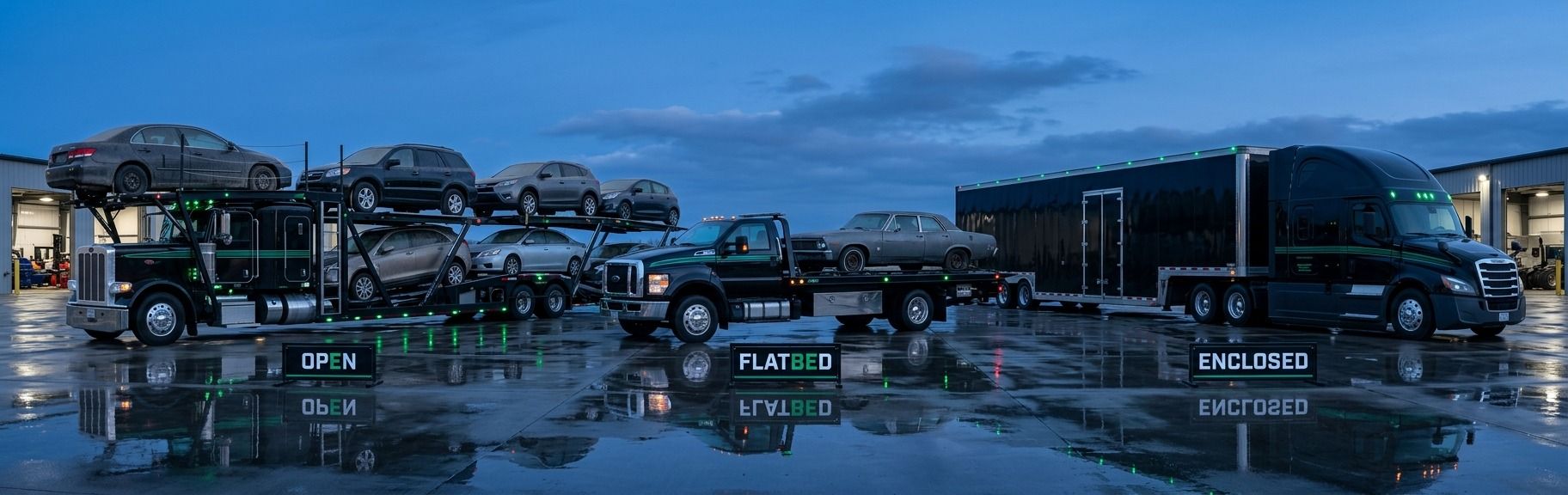
Most non-runners move fine on a standard open carrier. The decision shifts when the car is valuable, fragile, or something you would not leave in an open parking lot. That is the real question behind flatbed vs enclosed for non-running car transport. It is less about the engine and more about what the car is worth to you.
|
Option |
How the Non-Runner Loads |
Relative Cost |
Best For |
|
Open multi-car carrier |
Winched onto an open deck |
Lowest |
Rolling daily drivers, salvage buys, budget moves |
|
Flatbed or rollback |
Winched onto a single tilting bed |
Middle |
Low-clearance cars, single-car pickups, tight sites |
|
Enclosed carrier |
Winched or forklifted, fully covered |
Highest |
Classics, exotics, restored or high-value builds |
For a rolling dead car with everyday value, open transport is the sane choice, and it pairs with open car shipping to keep the whole move affordable. The flatbed vs enclosed for non-running car question really only gets interesting at the top of the value range.
That top range is where enclosed earns its price. Enclosed transport for inoperable cars is the only sane call for a non-running classic car transport job, a barn find, or a half-finished restoration you cannot risk on an open deck through highway grit and weather. If you organize a show or move a feature vehicle, this is not a luxury, it is protection. A non-running classic car transport move pairs careful winch or forklift loading with a fully covered trailer, which is exactly why those quotes sit at the top of the range. To see where the extra spend does and does not pay off, our breakdown of open vs enclosed transport cost lays it out plainly. The short version. For a daily non-runner, open is smart. For anything you would call irreplaceable, enclosed transport for inoperable cars is cheap insurance.
Salvage and Project Cars: The Special Cases and What They Cost
Two kinds of non-runners search differently and load differently, so they deserve their own section. Salvage cars and project cars.
Salvage car shipping cost covers auction buys and totaled vehicles moving out of a Copart or IAA yard, often with damage that complicates the load. Wheels can be locked, panels can be crushed, and the car may not roll at all. Salvage cars ship heavily out of auction states like Texas, Florida, and Georgia, where the big yards cluster, so those lanes stay busy and competitive.
A salvage car with body damage or missing wheels can push loading from a simple winch into forklift territory, and the fee follows the equipment. That is the recurring theme. Damage that stops the car from rolling is what moves the price, more than the salvage title itself. Because origin drives the ground leg on these moves, our Texas auto transport cost guide is a useful reference if your salvage car shipping cost starts from a Texas yard.
Project cars are their own case. A project car shipping cost is usually about a car that is mechanically apart. No exhaust, no seats, sometimes no working brakes. It prices like a no-roll job even if the car "used to run" before the teardown. If you are hauling a build home, describe its current state, not its former one. A non-running motorcycle is a cousin of this problem. It loads differently again, usually crated or strapped to a pallet, and the motorcycle crowd should quote it as its own item rather than assume it rides like a car.
-
Missing, locked, or seized wheels.
-
No working brakes to hold it on the ramp.
-
Loose parts and panels that need securing.
-
Pickup from a home garage instead of a terminal.
Each of those raises a project car shipping cost, and all of them trace back to the same root. Can it roll and be controlled. If cost is your sticking point, our guide to the cheapest way to ship a car applies to project and salvage moves too, as long as you are honest about the car's condition when you shop the rate. Enclosed protection is the one upgrade worth the money on a rare or half-restored build, and our enclosed vehicle shipping service is set up for exactly that kind of vehicle.
How to Get an Accurate Non-Running Car Shipping Quote (and Not Get Re-Quoted)

An accurate non-running car shipping quote lives or dies on how precisely you describe the car. Vague in, vague out. The companies that give you a firm number are the ones you told the whole truth to.
Have this ready before you request a single quote.
-
The exact condition tier. Rolls, steers, brakes. Or which of those it fails.
-
Key or no key.
-
Pickup surface and access. Paved driveway, gravel, gated lot, or auction yard.
-
The vehicle's value, so open versus enclosed gets priced right.
-
Whether it needs open, flatbed, or enclosed.
A non-running car shipping quote that comes back far cheaper than the rest usually means the surcharge got left off, and it will reappear before delivery. That is not a deal. It is a delay waiting to happen. A fair non-running car shipping quote names the inoperable fee upfront and puts it in writing. If you want to sanity-check the base rate under that surcharge, weigh it against a realistic cost to ship a non-running car on your route rather than a bare-bones number with no equipment plan behind it.
The other half of an accurate quote is trusting who gave it to you. Before a deposit leaves your account, confirm the company is a real, insured, authorized operator. Check the USDOT and MC number on the FMCSA SAFER company snapshot, then read recent reviews for the pattern of how the company handles problems, not just the star average. Weight the last year of reviews over anything older. A firm quote from a carrier you cannot verify is not worth much.
Best Companies for Shipping a Non-Running Car in 2026
Now the part you came for. Not every hauler is set up to load a dead car, and fewer still handle the no-roll and salvage tier. The ones worth your money have real inoperable capability, they name the winch or forklift fee before you book, and they support you through the disclosure instead of springing a re-quote on pickup day.
These four are ranked on reliability, inoperable capability, and verified customer feedback, not on who paid for placement. Montway is left off on purpose so strong, lesser-covered names get air. Verify any MC number free on FMCSA before you pay a cent.
|
Company |
Best For |
Open / Enclosed / Heavy |
Standout Strength |
|
Bargain Auto Transport |
Budget movers with a rolling dead daily driver or salvage buy |
Open |
Straightforward inoperable quoting and low-cost winch loading |
|
Auto Transport 123 |
First-timers and seniors who want the process explained |
Open and Enclosed |
Responsive, single-contact support that walks you through the condition disclosure |
|
We Will Transport It |
No-brakes, no-steering, salvage, and forklift loads |
Open and Heavy-haul |
Equipment and network for the hard tier that won't roll |
|
Plycar Transportation Group |
Non-running classics, exotics, and project cars |
Enclosed specialist |
Premium enclosed handling and careful documentation for high-value builds |
Here is the honesty note. Every one of these has a one-star review somewhere. So does any company at scale. Read the pattern of how they answer problems, not the average alone. There is no single "best" here, only the best fit for your car's condition, its value, and your budget. Enclosed transport for inoperable cars narrows the field fast, which is why a specialist like Plycar earns its spot on a rare build, while a rolling salvage car on a budget points straight at the first two names.
To build your own shortlist, match the carrier's equipment to your car's tier, confirm the FMCSA record, read recent reviews, and get the surcharge locked in writing. Our roundups of the most affordable car shipping companies and the best enclosed car shipping services are good starting points, one for the budget end and one for the high-value end. For collectors and exotic owners shipping something that won't start, our luxury and exotic car shipping service matches you to enclosed specialists who handle non-runners with care.
What Non-Running Car Owners Ask Most
A few quick, straight answers to the questions that come up once the reality of moving a dead car sets in.
Does my auto insurance or the carrier's cargo coverage protect a non-running car during transport?
The carrier's cargo insurance covers your non-running car while it rides the truck, not your personal auto policy. Ask for the certificate of insurance before pickup and confirm inoperable vehicles are included.
Is it worth getting my car running before shipping just to skip the winch fee?
Usually not. Getting the car to roll, steer, and brake matters far more than starting it, since that is what drops the inoperable surcharge. Only fix it if the repair costs less than the winch fee.
Do I pay the winch or forklift fee upfront or when the car is delivered?
It depends on the company. Most fold the winch or forklift fee into your total, with a deposit at booking and the balance due on delivery. Get the full amount in writing first.
Can a carrier ship a non-running motorcycle the same way it ships a dead car?
Not quite. A non-running motorcycle usually ships crated or strapped to a pallet, not winched like a car. Quote it as its own item so the carrier brings the right loading equipment.
What happens if I list my car as running and it won't start when the driver arrives?
Expect a re-quote or a refused pickup. The driver planned the equipment around your description, so a surprise non-runner means added winch fees or a rescheduled load. Disclose the real condition upfront.
Making the Call on Your Non-Running Car Move
Strip away the noise and shipping a dead car comes down to one honest sequence. Figure out the condition tier first, because rolling versus not rolling sets the fee more than distance ever will. Expect an inoperable surcharge on top of the base rate, and treat it as part of the budget from day one. Pick open for a budget non-runner and enclosed for a classic or a project you cannot replace. Disclose everything up front so the quote holds. And verify any company on FMCSA before you pay.
The people with the smoothest non-running moves are simply the ones who described the car honestly, matched it to a carrier with the right equipment, and got the winch or forklift fee in writing before pickup. Do those three things and a car that won't start stops being a problem and becomes a scheduling task.
Ready to see your real all-in number? Get a free quote built around your exact car, its condition, and your timing, so you can decide with facts instead of guesses.