


How Car Shipping Works: Complete Auto Transport Guide With Open vs Enclosed Options

How Car Shipping Works: Complete Auto Transport Guide With Open vs Enclosed Options

Transportvibe
November 06, 2025
18 min read

A simple auto transport process that moves your vehicle from one place to another using a specialized carrier truck, like a car hauler is exactly how car shipping works. Most people think shipping a car is a confusing hassle, but the truth is, the entire vehicle shipping steps only take a few days of your time. You just need to know what happens when you book your transport.

We break down the entire car delivery explained, showing you exactly what the car moving process looks like, from getting a quote to the final drop-off. We cover the main differences, like open vs enclosed car shipping, so you know which option is right for you. 

Whether you're moving across state lines or just down the coast, understanding the step by step car shipping process gives you back control.

Ready to see your options and costs right now? Find your perfect auto transport solution today and get a free, transparent quote tailored to your car shipping needs.

How Car Shipping Works - At A Glance
Car shipping means moving your vehicle using specialized companies instead of driving it yourself. This service, often called auto transport, involves two main players: the carrier or car hauler, who physically moves the car, and the broker, who organizes the job, finds the carrier, and manages the booking for you.

You might be asking, how does auto transport work in USA? The whole thing is surprisingly straightforward. Once you decide to ship your car, the auto transport process begins with a few key steps that take the guesswork out of moving a vehicle long distances.

It starts when you book the service and ends when the vehicle is dropped off. Knowing these vehicle shipping steps helps you stay in control.

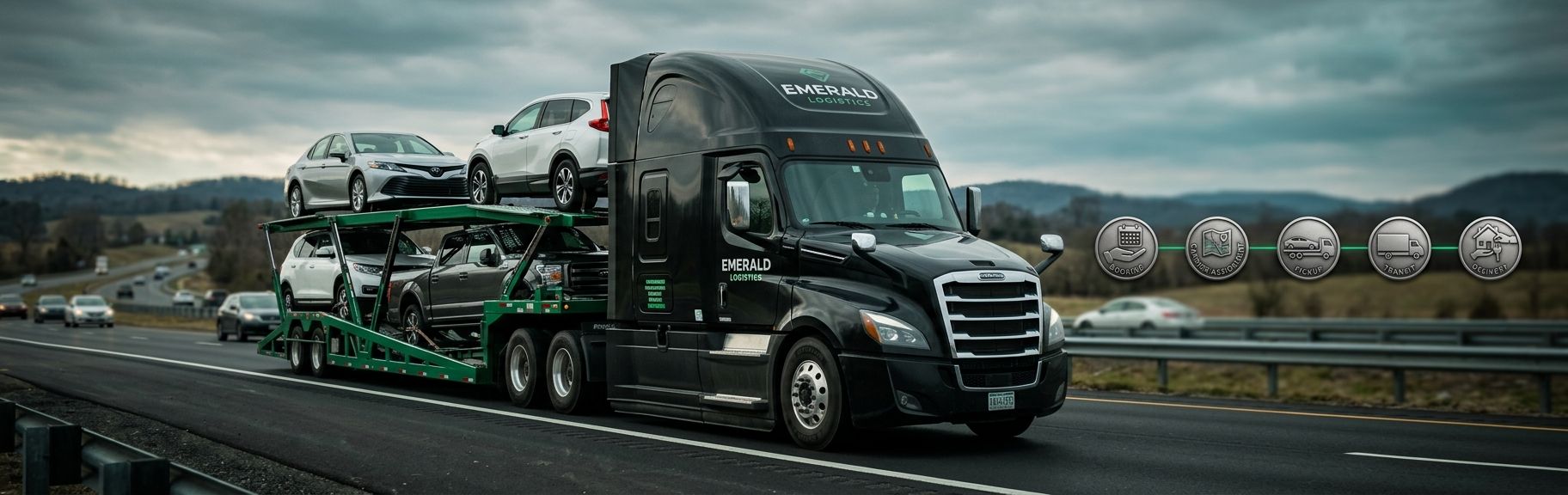
Here is a quick look at the main stages of the car moving process:

Stage What Happens
Booking You get a quote and confirm your order with a transport broker or carrier.
Carrier Assignment The broker finds a licensed car hauler going along your route.
Pickup The driver inspects and loads your vehicle. You sign the inspection report.
Transit Your car is safely shipped, traveling either on an open or enclosed trailer.
Delivery The driver calls you for drop-off. You inspect the car and sign the final paperwork.

The first step is always booking, but to get a fair price, you should know what affects your final number. For a deep dive into the costs, read our guide on 5 factors that determine your car shipping quote and how to influence them.

Once booked, the carrier is assigned. This is when the car hauler process truly begins, and the driver gets in touch to coordinate the exact time and place for pickup. 

After pickup, your car is in transit. Most people wonder, "will my car be safe on the road?" 

The industry is regulated, and carriers must follow federal safety standards, which you can read more about at the Federal Motor Carrier Safety Administration (FMCSA) website. The final part of the car delivery explained is the drop-off, which should go smoothly if you follow the pre-delivery inspection tips.

Understanding these simple auto transport steps lets you relax, knowing your vehicle is in good hands.

Step By Step Car Shipping Process In USA

If you're wondering how car shipping works, this guide breaks down the full step by step car shipping process. We explain exactly what happens after booking your transport and cover the crucial vehicle pickup and drop-off car shipping guide. 

Understanding these core auto transport steps helps you confidently manage your vehicle's journey, from when the car hauler arrives to when your car moving process is complete.

Step 1 – What Happens After Booking Car Shipping?

Once you decide to ship your car, you need to choose who handles the move. You have a few options for how to book car shipping: you can work directly with a carrier (the company that owns the truck), a broker (a middleman who finds the carrier), or an online marketplace. Most people choose a broker because they can quickly compare quotes from many different carriers.

To get the most accurate quote, you must provide specific information upfront. This required info includes:

  • Your Car Type: The year, make, and model, as size and weight affect the price.
  • Locations: The exact pickup and delivery addresses.
  • Delivery Timeline: Your preferred shipping window, which impacts the quote.

After you approve the quote, you receive a confirmation. The two most important documents you get are:

  • Bill of Lading (BOL): This acts as your contract. It details the service, cost, and agreed-upon dates.
  • Dispatch Notice: This confirms that a specific carrier has been assigned to your order. This is the moment your car hauler process officially starts.

Sometimes life changes, and you need to adjust the schedule. Policies for cancellation or rescheduling depend heavily on the company you book with and how close you are to the pickup date. 

Generally, if you cancel before a carrier is assigned, you may get a full refund. But if you cancel after the carrier is assigned, you will likely face a non-refundable fee. This is why you should always ask about cancellation policies before you commit. To feel more confident in your choice, check out our guide on 7 key factors for choosing the best vehicle shipper.

Ready to start planning your transport? Find transparent reviews and ratings for transport companies across the nation to make an informed choice for your next move.

Step 2 – Vehicle Pickup and Inspection Explained

The pickup is a key point in the auto transport process. A common question is, do I need to be present for pickup? While it's best if you are there, it's not always required. If you can't be present, you must assign an authorized representative—a friend, family member, or colleague—who can act on your behalf. This person needs to be ready to meet the driver and sign the paperwork.

The most critical thing that happens at pickup is the inspection. Before your car is loaded onto the car hauler, the driver conducts a thorough inspection. This involves:

  • Vehicle Condition Report: The driver notes all existing dents, scratches, and damage on a diagram of the vehicle.
  • Photos: The driver often takes timestamped photos of the car from all angles.
  • Paperwork: You, or your representative, must review the BOL carefully. Check the documented condition of the car against the diagram. Sign only after you agree with the report. This signed BOL protects you during the journey.

Sometimes, your street isn’t accessible for a large truck. A fully loaded car hauler can be up to 75 feet long, which makes navigating narrow residential streets, cul-de-sacs, or low-hanging trees difficult. If your location is a challenge, you have two options:

  • Curbside Pickup: The driver meets you at the nearest large, easily accessible lot, like a grocery store parking lot or highway exit. This is the most common solution.
  • Terminal Pickup: You drop your car off at the transport company's designated storage yard. This is less common for domestic moves but offers more flexibility.

Pro Tip: How to prepare your car for shipping:

  • Maintain the fuel tank at about a quarter full (but no more).
  • Remove all personal valuables and anything that is not factory-installed.
  • Disable any non-factory alarms to prevent them from going off during transit.

For a deeper dive into preparation and preventing issues, read our article: Avoid 10 car shipping mistakes.

Step 3 – How the Car Hauler Process Works During Transit

Once your car is loaded and secured, the car moving process enters the transit phase. Car movers operate by following pre-planned, optimized routes that minimize empty miles and maximize efficiency. They don't typically drive straight through like you would on a family road trip. 

The route includes strategic stops for rest, refueling, and picking up or dropping off other vehicles. Many companies offer GPS tracking, which is a great way to monitor your car’s progress, as explained in our guide on 6 smart ways to track car during shipping.

Several factors affect the car shipping timeline explained:

  • Distance: The main factor, of course. A cross-country trip takes longer than a short-distance move.
  • Season: Busy times, like the "snowbird" season when many people ship cars to Florida or Arizona, can slow things down.
  • Route Popularity: Shipping between major cities (e.g., LA to NYC) is usually faster because trucks travel those routes constantly. Rural or remote areas take more time.

This table shows a typical estimate for transit time after the pickup date:

Distance Typical Transit Time (After Pickup)
Short-distance (Under 500 miles) 1 – 3 days
Medium-distance (500 – 1,500 miles) 3 – 5 days
Cross-country (Over 1,500 miles) 5 – 9 days

A very common question is: Can I put personal items inside the car? The quick answer is that the industry rule is NO

Legally, carriers are only licensed to transport vehicles, not household goods. If you choose to put items in the car, the weight limit is usually around 100 lbs, and you do it at your own risk. This means your items will not be covered by the carrier's insurance. 

If you need to ship personal items, read this article first: What to Know About Car Shipping with Personal Items: Allowed vs. Prohibited.

Step 4 – How Car Shipping Delivery Works

The final stage is delivery, which is where how does car shipping delivery works becomes important. The driver will call or text you 12–24 hours before the estimated arrival time to confirm the drop-off window. This is usually the same "curbside" scenario as pickup, meaning the driver gets as close to your location as is safely possible.

You might wonder what happens when my car arrives? Things can go like - 

  1. Final Inspection: This is the most critical moment. You must inspect your vehicle thoroughly for any new damage before the driver leaves. Check the paint, roof, bumpers, and undercarriage.
  2. Signature: Compare the car’s current state to the original BOL you signed at pickup. If you see new damage, note it clearly on the final BOL.
  3. Payment: You typically pay the remaining balance to the driver at this time, usually with certified funds (cash or money order).

Now, to answer common questions like “Do I need to be present at delivery?” - Yes, you should be and that the bestt thing to do. 

Unlike pickup, where you can often use a representative, you should always be present for the delivery inspection. If damage occurred during transport, you must note it on the BOL to file an insurance claim successfully. If you don't note the damage at the time of delivery and sign a clean BOL, it is much harder to prove the damage happened while the carrier was responsible.

What if there is damage during transport? If you spot damage:

  1. Note it on the final BOL before signing.
  2. Take clear, detailed photos of the damage.
  3. Contact the company immediately to start the insurance claim process.

Insurance claim processes can be tricky. It helps to be prepared. For more information on handling damage, see our guide on What to Do if You See Car Damaged During Shipping.

Finally, you might ask the carrier - can I change the delivery location? 

Changes are possible, but they cost money and can cause delays. Once the carrier is on the road, their route is set. If you need to change the drop-off city or state, you should contact your broker or carrier immediately. The change will be treated as a re-route, and you will get a new quote reflecting the extra mileage and time.

To find official and updated information about motor carrier safety and rules for your peace of mind, visit the Federal Motor Carrier Safety Administration (FMCSA) website. The official US government website is a reliable source for regulations that govern the car hauler process in the USA. 

Want to know how other people's shipments went? See authentic experiences from customers just like you by checking out our comprehensive company reviews and honest customer ratings today. 

Open vs Enclosed Car Shipping – Which Option Is Right for You?

When reviewing the different auto transport steps, a critical choice you face is selecting the type of carrier. Deciding between open vs enclosed car shipping directly impacts the cost, protection, and timeline of your car delivery explained.

What Is Open Car Shipping?

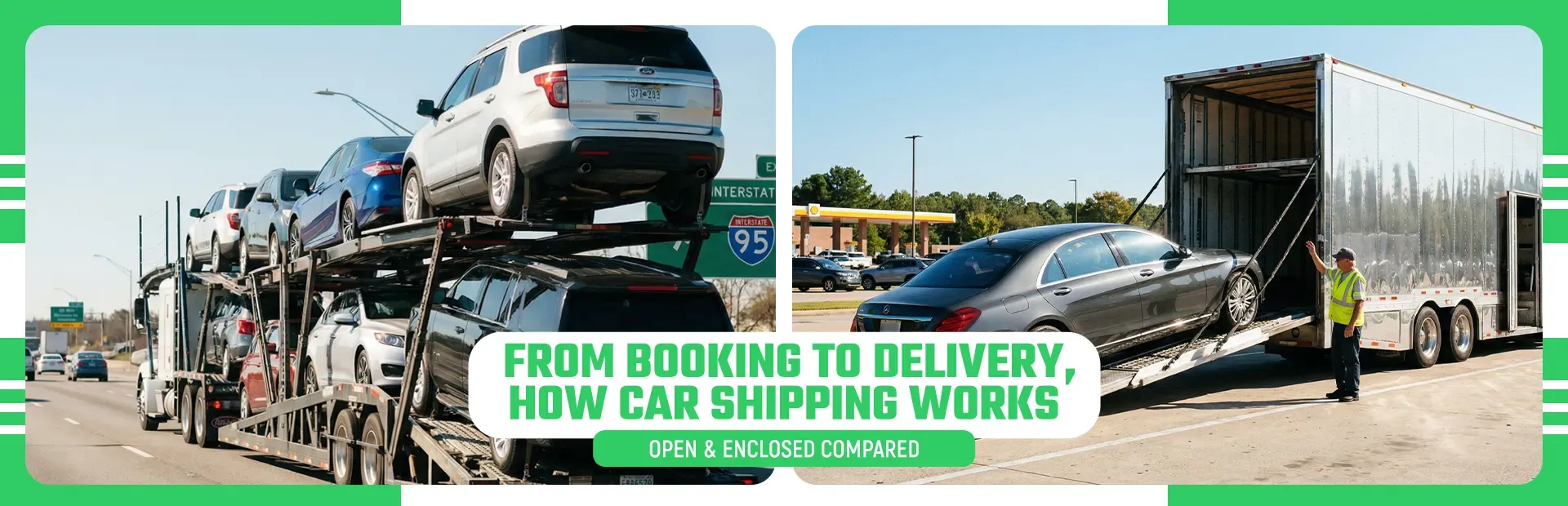
Open car shipping is the most common method in the USA. Your car is secured on a trailer that is open to the elements, just like the trucks you see on the highway carrying multiple vehicles.

  • Cost-Effective: This is the most budget-friendly way to move a vehicle. Since carriers can load more cars, they charge less per vehicle.
  • High Availability: Open carriers constantly run all major routes, making them easier and faster to book.

Most standard vehicles, like sedans, SUVs, and everyday trucks, travel this way. It’s a reliable, widely used part of the how car shipping works system.

What Is Enclosed Car Shipping?

Enclosed car shipping means your vehicle travels inside a fully covered trailer. This option provides four-wall and roof protection from road debris, dust, and bad weather.

  • Ultimate Protection: It is the best choice for high-value vehicles, classics, luxury cars, and motorcycles.
  • Higher Cost: Because these trailers are specialized and carry fewer cars, the cost can be 40-60% higher than open transport.

If you are shipping a new Ferrari or a rare muscle car, the extra cost for this level of security is worth the peace of mind. For collectors, it's often the only acceptable choice for their auto transport process.

Which Option Should I Choose?

Your choice depends on your budget and the value of your vehicle. For a standard vehicle where saving money is the priority, open transport is the clear winner. If you are shipping a vintage collector car or a brand-new luxury model, the investment in enclosed transport provides essential protection. Understanding this difference is key to a smooth car moving process.

This table gives you a simple comparison:

Feature Open Carrier Enclosed Carrier
Cost Much lower (Standard Price) Higher (Premium Price)
Protection Basic (Road debris/weather exposure) Full (Maximum security, no exposure)
Availability High (Easier to book) Lower (Can take longer to schedule)

To see more information about shipping premium cars, check out our service page: Luxury Exotic Car Shipping.

Practical Tips to Make the Car Moving Process Smooth

Making the car moving process easy comes down to being prepared and knowing where you can save time and money. While the step by step car shipping process is simple, a few extra steps on your end guarantee a smooth experience.

Here is a checklist to follow right before the car hauler arrives:

  • Prep the Car: Clean the car inside and out. This makes the initial inspection clear and accurate.
  • Paperwork: Have your keys and copies of your insurance and registration ready.
  • Communication: Confirm the exact pickup time with the driver 24 hours ahead.

You don't need to spend a fortune just to understand how car shipping works. You can save money if you are flexible with the details of your auto transport process:

  • Be Flexible: Choosing flexible pickup and delivery dates often leads to lower prices. If a carrier has a sudden empty spot, they offer a discount to fill it.
  • Choose Open Carrier: As we discussed, an open carrier is always cheaper than an enclosed one.
  • Consider Terminal Pickup: If you live far from a major highway, dropping the car at a terminal yourself can cut the final cost.

The last thing you want is a delay or an issue with your car delivery explained. Avoiding a few common mistakes prevents headaches later:

  • Don't Wait to Book: Last-minute booking costs significantly more. Start your research and reserve your spot at least two weeks out.
  • Never Skip the Inspection: Always be present for the pickup and delivery inspections. Compare the condition notes on the Bill of Lading (BOL) carefully. Skipping this step means you lose proof if damage occurs. For more details on avoiding issues, read our guide on 5 car shipping contract tips.
  • Don't Hide Facts: Be honest about your car's condition (e.g., if it’s non-running) or any modifications. This prevents delays and unexpected fees later.

Ready to find out exactly what your move should cost? Learn more about Car Shipping Costs by State to plan better and budget accurately for your vehicle transport.

Queries You Should Know Answers To Understand Car Shipping Process

Readers often have specific, practical questions about the auto transport explained process that relate to their unique situation. Here are simple answers to some of the most common things people ask when figuring out how car shipping works.

How long does auto transport take in the USA for a cross-country move?

A coast-to-coast transport across the USA usually takes about seven to ten days after the initial pickup date. The final timeline depends on the exact route, the time of year, and weather conditions. Rural pickups and deliveries can also add a couple of extra days since the car hauler must go off the major highways.

Can I ship a car that doesn't run, and will it cost more?

Yes, you can absolutely ship a non-running vehicle. Most companies have carriers equipped with winches to load a disabled car safely onto the trailer. It will cost more, however, usually an extra $100 to $250. This extra fee covers the specialized equipment and additional time the driver needs for loading and unloading your car. For a detailed breakdown of this service, check out: How to ship a non-running vehicle: a step-by-step guide.

What is the process of shipping a car to a military base for a PCS move?

Shipping a car for a Permanent Change of Station (PCS) move follows the same step by step car shipping process, but you must have your military documents ready. You need to verify if the carrier is authorized to access the specific military base for pickup or delivery. Many companies offer special military discounts, so make sure you ask your transport broker about those savings before you book.

What is the difference between a car transport broker and a carrier?

A broker acts as your agent, finding the best price by connecting your vehicle shipment with a network of actual car movers. A carrier is the truck company that physically loads and transports the vehicle. Working with a broker gives you more options and usually a better price, while booking directly with a carrier can sometimes offer more direct communication.

Is my car fully covered by insurance during the vehicle shipping steps?

Every licensed car hauler in the USA carries cargo insurance, which covers damage that occurs during the actual transit. This insurance is included in your price. However, the coverage limits vary by carrier, so always ask to see the carrier's proof of insurance and confirm that the coverage limit is enough to repair or replace your vehicle if the worst happens.

How does car shipping delivery work if I am not available when the driver arrives?

If you can't be there for the delivery phase of the auto transport process, you must designate an authorized representative. This person needs to be present to perform the final inspection of the car, compare its condition to the initial Bill of Lading, and sign the final release paperwork. If they sign without noting damage, you lose your ability to file a claim later.

What are the main factors that make car moving process pricing change unexpectedly?

The biggest factors that cause price changes are timing and location. Prices are higher during peak moving season (spring and summer) due to high demand. Also, prices often spike for shipments going to or from remote, rural areas because the car hauler has to drive extra miles just for your single pickup or delivery.

Making Your Next Auto Transport Easy

Understanding how car shipping works truly simplifies your next big move. We’ve broken down the entire auto transport process, from your initial quote to the final delivery inspection. Whether you select budget-friendly open transport or premium enclosed car shipping, the core vehicle shipping steps remain straightforward. 

The keys to success are simple: prepare your car properly, stay in close contact with your car hauler, and always, always inspect your car carefully at both ends of the journey.

Don't let the idea of moving a vehicle feel overwhelming. You now have the knowledge to handle the entire car moving process like a pro.

Ready to take the first step toward stress-free transport? Start your vehicle’s journey today by getting a transparent and free auto transport quote from top-rated carriers now!

Related articles

NOV 12, 2025
How Much Does Car Shipping Cost in 2025? Hidden Auto Transport Expenses Exposed!

How Much Does Car Shipping Cost in 2025? Hidden Auto Transport Expenses Exposed!

TRANSPORTVIBE

The car shipping cost in 2025 typically ranges from $600 to $2,000 for cross-country moves, with the shipping cost per mile decreasing for longer trips. If you're wondering, "How much does car transport cost per distance?" you're not alone. Most people focus on the first quote, but that initial number is rarely the final one. What many US consumers don't realize is that hidden auto transport expenses can quickly add hundreds of dollars to their final bill. You need to know precisely what you are paying for when you receive those auto transport quotes from the USA. We're here to expose those extra fees, so you understand the real cost of vehicle shipping and find the cheapest way to ship a car long distance. Get ready to learn how to lock in a genuinely affordable auto transport quote and avoid unexpected charges. Ready to see real-time vehicle delivery rates and discover your actual car relocation cost? Compare reliable options today! Find out your average cost to move a car and get a personalized quote now! What Is the Average Car Shipping Cost in 2025? When you look for auto transport quotes USA, the distance is the biggest factor determining your final price. The car shipping cost per mile changes dramatically depending on whether you are moving your car across town or across the country. The typical cost of vehicle shipping in 2025 ranges from about $600 to $2,000. However, to truly understand the car transport service rates, you need to break it down by mileage. This gives you a clear picture of the actual average cost to move a car. The general rule is simple: the shorter the trip, the higher the shipping cost per mile. Short Distance (0–500 miles): For a short-haul trip, like moving your car interstate, expect to pay the highest per-mile rate. This distance has an average price to move car interstate between $1.40 and $2.00 per mile. Your total cost typically falls between $550 and $800. Medium Distance (500–1500 miles): As the mileage increases, the carrier can spread their fixed costs over a longer route. The rate drops significantly to between $0.85 and $1.20 per mile. You look at a total cost of roughly $800 to $1,200. Cross-Country Car Shipping Prices (1500+ miles): This is where you see the lowest per-mile rate. For long distance car shipping prices, expect to pay between $0.60 and $0.85 per mile. Total car relocation cost usually lands between $1,200 and $1,800. You can see that a long haul trip, even with a higher total, is much more efficient for the carrier. Use a cross-country car shipping calculator to see this difference clearly. We look at open transport averages here, which are the most common rates. Distance Average Cost Range (Open Carrier) Price Per Mile Short (0–500 mi) $550 – $800 $1.40 – $2.00 Medium (500–1500 mi) $800 – $1,200 $0.85 – $1.20 Long (1500+ mi) $1,200 – $1,800 $0.60 – $0.85 These numbers provide a solid estimate of your car shipping cost. But remember, these are just starting points. The type of carrier you choose completely changes the final quote. For instance, enclosed vs open car shipping cost is a major decision point. We encourage you to read more about maximizing your value, especially by understanding the quotes you receive. Learn the 5 essential questions to ask before hiring a car transport company . Knowing the factors that drive these vehicle delivery rates helps you secure a better deal. Ready to find a top-rated, reliable service for your move? Discover trusted companies and read honest, verified customer reviews to make a confident decision about your next vehicle shipment. Find Your Transport Company Now! What Factors Influence Car Shipping Cost? You now know the car shipping cost per distance—but why do auto transport expenses still vary so wildly between companies? The quick answer is that pricing depends on four core logistical elements. These elements determine the carrier's effort and cost, which they pass to you. Understanding them helps you find the most affordable auto transport quotes. Route, Location, and Demand The route dictates your overall car relocation cost. Shipping between major US cities, like New York to Miami, is often cheaper per mile because these are high-demand, high-volume lanes. Urban vs Rural: Moving a car to or from a rural area increases the rate. Carriers charge more because the driver must detour from major highways, consuming extra time and fuel for a single vehicle delivery. Seasonality: Car transport service rates fluctuate dramatically throughout the year based on "snowbird" migration and moving seasons. Season Typical Price Trend Demand Driver Summer (May–Sept) Highest (+15% to 25%) Peak family relocation and student moves. Winter (Dec–Feb) Moderate (Excluding Snowbird routes) Bad weather delays and low general demand. Spring/Fall Moderate/Lowest Optimal booking windows with balanced demand. Vehicle Type and Size The size and weight of your vehicle directly impact your car shipping cost. Simply put, bigger cars mean higher fuel consumption and take up more valuable space on the trailer. Cost of Shipping SUV vs Sedan: Shipping a standard sedan is the most economical choice. Larger vehicles, like SUVs, trucks, or vans, often cost $100 to $300 more than a sedan for the same route. Condition: Inoperable or non-running vehicles require specialized equipment like a winch, adding a $150 to $300 surcharge to the final price. Carrier Type and Protection Your choice of carrier determines the level of protection and is a major auto transport expense. Enclosed vs Open Car Shipping Cost: Open auto transport is the industry standard and the cheapest way to ship a car long distance. Enclosed shipping protects your vehicle from road debris and weather. It adds 40% to 60% to the cost but is necessary for luxury, classic, or customized cars. Find out if enclosed vs open car shipping is worth the extra price for your vehicle. Pickup and Delivery Flexibility Your personal convenience has a price tag. Carriers prefer flexibility to optimize their route planning and fuel consumption. Door-to-Door: This premium service means the carrier attempts to get as close to your exact address as legally and safely possible. It is the most convenient option but costs more. Terminal-to-Terminal: This is usually cheaper, but you deliver and pick up your car from a central hub. This option works best if you need flexible dates and are comfortable driving to and from the terminal. When you use a car shipping cost estimator, you must consider these four factors. They are the keys to understanding the true nationwide auto transport pricing. How Much Does Car Shipping Cost Per Mile? Understanding your car shipping cost per mile is the key to mastering nationwide auto transport pricing. While the total price is higher for longer journeys, the core principle of affordable auto transport is the economy of scale. The Economy of Scale: Long Routes are Cheaper Per Mile Is cost per mile cheaper on long routes? Yes. This is a crucial concept to grasp. A long-haul carrier has fixed operational expenses—labor, administration, and initial loading—regardless of whether they drive 300 miles or 3,000 miles. Shorter Routes: The fixed costs are spread over fewer miles, resulting in a higher per-mile rate (e.g., $1.50 to $2.00/mile for 500 miles). Longer Routes: The fixed costs are absorbed over thousands of miles, dramatically reducing the per-mile rate (e.g., $0.50 to $0.75/mile for 2,500 miles). This is why cross-country car shipping offers a lower rate per mile than shipping within state lines. To illustrate this, here is an average breakdown of car transport service rates per mile for standard open carrier service: Distance Range (Miles) Cost Per Mile (Approx.) Total Cost Example 0 - 500 $1.40 - $1.95 $560 - $975 501 - 1,500 $0.90 - $1.35 $900 - $2,025 1,500+ $0.50 - $0.75 $1,200+ The Impact of Pickup/Delivery Flexibility Beyond the mileage, your choice of delivery service significantly alters the price. This brings us back to the level of convenience you are willing to pay for. Door-to-Door: This is the most popular method for vehicle delivery. It is convenient but can be slightly more expensive. The carrier gets your car as close as legally possible to your specified addresses. Terminal-to-Terminal: This service is generally $100 to $200 cheaper as the carrier delivers to a central hub, avoiding the extra time and fuel required for residential routes. This is one of the cheapest ways to ship a car long distance. Car Shipping Cost Estimator Accuracy To get an initial baseline for your car relocation cost, you can use one of the many car shipping cost estimator tools available online. But how accurate are they? Accuracy is High for Estimates: These tools are typically accurate for providing a reliable range based on distance, vehicle type, and the current fuel market. Final Quotes Differ: They cannot factor in carrier availability on your specific dates, unique routing challenges, or last-minute demand spikes. Always compare at least three car shipping quotes before booking to secure the best rate. How Much Does It Cost to Ship SUVs vs. Sedans? The answer to “Does vehicle size affect auto transport expenses?” is a resounding yes. The physical dimensions and weight of your vehicle are among the most significant factors influencing your final car shipping quote. The Premium for Larger Vehicles Transport carriers operate under strict weight and space limits. A smaller vehicle, like a standard compact car (sedan or hatchback), is the industry’s base rate. Compact Cars (Sedans/Hatchbacks): These vehicles are the cheapest way to ship a car because their size allows the carrier to maximize the number of vehicles per load, leading to lower costs for everyone. SUVs and Trucks: Larger and heavier vehicles, such as an SUV, trucks, and oversized vehicles (e.g., dually trucks or large vans), occupy more surface area and add more weight to the load. This reduced efficiency—fewer cars per truck and higher fuel consumption—translates directly into a higher price for the customer. Expect to pay an additional $100 to $300 over the price of a standard sedan for auto transport services. Vehicle Delivery Rates by Size (2025) The size differential remains consistent whether you are arranging shipping within state lines or planning an expensive cross-country car shipping journey. The percentage increase for a larger vehicle applies across all distances. Vehicle Type Size Differential (Approx.) Open Transport Average Sedan/Coupe Standard Base Rate $0.60–$1.50 per mile Mid-Size SUV/Small Truck 15%–25% Increase $0.70–$1.80 per mile Full-Size SUV/Large Truck 25%–40% Increase $0.80–$2.00 per mile Cost of Shipping Oversized Vehicles For vehicles like lifted trucks, customized vans, or those with significant modifications, the vehicle delivery rates can rise further. These oversized vehicles might require special placement on the trailer and may limit the carrier’s route options due to bridge and tunnel restrictions. Always be upfront about your vehicle’s exact dimensions when requesting your car relocation cost to avoid unexpected fees. For those shipping valuable or modified vehicles, consider the enhanced protection of enclosed auto transport.. What’s the Cheapest Way to Ship a Car Long Distance? The cost of long distance car shipping is a primary concern for anyone relocating across state lines. Fortunately, a few strategic decisions can significantly lower your overall car relocation cost. It boils down to maximizing efficiency for the auto transport company, which in turn offers you better rates. The Foundation of Savings The most impactful choices relate to timing and location. By optimizing these factors, you can tap into the most budget-friendly options available in the auto transport market. Savings Strategy Description Typical Impact Book in Advance Avoid last-minute, expedited service fees by scheduling your shipment 2-4 weeks ahead of your first available ship date. This gives brokers ample time to secure a carrier on their regular route. Avoids $100–$300+ in premium fees. Flexible Pickup Dates Carriers prioritize filling their trailers efficiently. Offering a flexible date range (e.g., 3-5 business days) allows them to slot your vehicle into the most cost-effective route, lowering your vehicle shipping price. Can save 10–20% on the total quote. Optimize Your Service Type The next major area for savings is how and where your vehicle is picked up and delivered. Convenience comes at a price, so a small sacrifice in time can translate into tangible savings on your car shipping quote. To reduce the carrier's logistical overhead, consider this key alternative: Choose Terminal-to-Terminal over Door-to-Door: While door-to-door car shipping offers maximum convenience, carriers prefer terminal-to-terminal service. By dropping off and picking up your vehicle at a major metro terminal, you eliminate the need for the driver to navigate residential streets, saving fuel and time. This efficiency is passed on to you. To learn more about the pros and cons, see our guide on Door-to-Door vs. Terminal-to-Terminal Auto Shipping . The Non-Negotiable Step: Compare Quotes No single car transport company has the lowest rate for every single route. To secure the most affordable car shipping rate, you must embrace comparison shopping. Compare Multiple Car Shipping Cost Estimators: Utilize free online car shipping quote calculators from at least three different, reputable auto transport providers. This helps you establish a realistic market price for your specific route and avoids falling for quotes that are suspiciously low (a common sign of hidden fees). Comparing rates from multiple sources is the definitive way to ensure you are getting the best deal on your cross-country shipment. These combined strategies—from smart timing to choosing an efficient service method—are the best practices for minimizing your car transport service expenditure. What Hidden Auto Transport Expenses Should You Know About? A common question for customers seeking long distance car shipping is: Are there costs not included in quotes? The unfortunate truth is that some less transparent companies use low initial car shipping quotes to lure you in, only to apply unexpected surcharges later. Being aware of these potential hidden fees is crucial to getting an accurate and final vehicle shipping price. Surprising Charges Based on Your Vehicle and Location Certain characteristics of your vehicle or the pickup/delivery location can trigger legitimate, yet often undisclosed, fees. Reputable auto transport brokers will always confirm these details upfront to prevent unexpected bills. Non-Operable Vehicle Fee: If your car is inoperable, meaning it cannot be driven, it requires special equipment—a winch—for safe loading. This extra labor and equipment typically incurs an additional charge of $150–$300. Oversized Vehicle Surcharge: Quotes are generally based on standard sedans. If you are shipping a large truck, full-size SUV, or a vehicle with non-standard modifications (like a lift kit), it occupies more space on the carrier, resulting in a higher auto transport fee. Rural Location/Inaccessibility Fee: Carriers operate most efficiently on major highways and in metropolitan hubs. If your chosen address for door-to-door car shipping is in a remote, rural area or on a street inaccessible to a large carrier truck, the driver may charge an accessibility fee. Fees Related to Time, Policy, and Payment Beyond the physical logistics, other charges can arise from scheduling decisions or company policies, directly affecting your total car transport service expense. Hidden Charge What It Is How to Avoid It Expedited Service Fee A premium charge for rush-shipping your vehicle or guaranteeing an exact pick-up/delivery date. Book your shipment at least two weeks in advance. Fuel Surcharge An added charge intended to offset volatile diesel prices, often applied after the booking. Only work with companies that guarantee all-inclusive pricing. Storage Fees Charged in terminal-to-terminal transport if you fail to pick up your vehicle from the terminal within the allowed grace period (usually 24–48 hours). Communicate closely with the terminal and your driver. (For guidance on this, check out our piece on Choosing a Car Shipper .) Cancellation Fee A penalty if you cancel your shipment after a carrier has been assigned or dispatched. Carefully review the company's cancellation policy before booking. To avoid these pitfalls, always insist on an all-inclusive car shipping quote that details every potential charge, ensuring complete transparency for your cross-country car shipping needs. Top Considerations When Booking Auto Transport Here are some of the most common queries and essential details to ensure a smooth vehicle shipping experience, so you have all the necessary information before booking. What is the difference between an auto transport broker and a carrier? A carrier is the actual truck driver or company that physically owns the truck, hauls your car, and is responsible for the transport from start to finish. A car shipping broker acts as a logistics specialist, managing a vast network of vetted carriers to find the best available rate and service for your specific route and timeline, saving you considerable time and effort. This allows for greater flexibility. Will my car be safe on an open auto transport carrier for long-distance shipping? Yes, for the vast majority of vehicles, open car shipping is a perfectly safe and economical choice for cross-country car shipping. Carriers are fully licensed and insured, protecting your vehicle from significant damage. Although your car will be exposed to the elements, this is the industry-standard method used for over 90% of all vehicle shipments. Is the initial car shipping deposit refundable if I have to cancel my order? The policy on whether your initial car shipping deposit is refundable varies significantly by company. Most reputable brokers offer a full refund if they have not yet assigned a carrier to your order, meaning your booking is still technically pending. However, a deposit often becomes non-refundable once your vehicle has been dispatched or a truck has been scheduled specifically for your shipment. How long does it take to ship a car across the country right now? The transit time for a long distance car shipping typically depends on the mileage between the pickup and delivery locations. Generally, you can expect the duration to range from 2–5 days for trips under 1,000 miles to 7–14 days for a full cross-country car shipping journey (for instance, coast to coast). Unexpected weather or heavy traffic can sometimes cause minor delays in the estimated arrival window. Should I choose open or enclosed auto transport for my high-value classic car? For a high-value, classic, or exotic vehicle, you should definitely opt for enclosed auto transport. This service shields your vehicle from all external hazards, like road debris, dust, and inclement weather. While it costs about 40–60% more than standard open car shipping, the increased protection and peace of mind for an irreplaceable asset is well worth the investment. Can you ship a car with personal items inside the vehicle? Most auto transport companies will allow you to ship a small amount of personal items—typically up to 100 lbs—in the trunk. However, the Federal Motor Carrier Safety Administration ( FMCSA ) prohibits carriers from transporting household goods. Any items left inside are not covered by the carrier's insurance, so for the safety of your belongings, it is strongly recommended that you remove all valuable or essential items before pickup. What insurance is included when I book a vehicle shipping service? Federal law mandates that all licensed car transport service carriers must maintain comprehensive cargo insurance, which covers any damage to your vehicle resulting directly from carrier negligence during the transit process. Be sure to ask your broker for the carrier's certificate of insurance prior to shipping, and to understand the deductible and coverage limits, especially if you have an extremely valuable vehicle. Making the Right Call on Your Auto Transport Service Choosing the right auto transport service boils down to a clear understanding of your vehicle's needs and the logistics of your move. Whether you opt for cost-effective open carrier transport or the premium protection of enclosed shipping, knowing the difference between a broker and a carrier ensures a transparent process. For a stress-free experience, always confirm details like insurance coverage, personal item restrictions, and the estimated time frame for your long distance car shipping. We are committed to providing you with reliable service and transparent pricing for your upcoming relocation. Get a quote today!

NOV 05, 2025
How Much Does Car Shipping Cost per State and Is It Really Worth It?

How Much Does Car Shipping Cost per State and Is It Really Worth It?

TRANSPORTVIBE

You need to know: the final car shipping cost per state generally ranges from $600 to over $2,000, and for most people, state to state car shipping is absolutely worth the price. That is the honest answer. Here is the surprising part: for a cross-country trip like shipping a car from California to New York, paying a carrier can actually save you money compared to driving. Planning a move across the USA means facing a daunting array of auto transport costs. Whether you are relocating for work or need interstate car shipping for a car you purchased online, the process can feel complex. It is easy to stress over the final vehicle shipping price. But what if you skip the long drive, avoid the hotel stays, and keep the miles off your odometer? We break down the average cost car moving rates, looking at routes and factors that influence the total. You will learn the cheapest way to ship a car between states(eg- ship a car from California to New York) and how to quickly estimate your own long distance car shipping cost per state estimates. Stop worrying about the drive. Find reliable auto transport and get your precise state car shipping quotes today. What Is the Average Car Shipping Cost per State? The total car shipping cost depends heavily on how far your vehicle travels. Most people pay between $600 and $1,800 to ship a standard sedan across the country. Expect the overall cost of vehicle transport to rise with distance, but the price you pay per mile actually decreases significantly the farther your car goes. This is an important detail for long distance car shipping cost per state. What is The National Average Car Transport Per Mile The national average car transport per mile rate shows this inverse relationship clearly. This figure typically ranges from about $0.55 to over $2.00 per mile. Short hauls cost more per mile because the carrier needs to cover operating costs and driver time over a shorter period. A 300-mile trip might cost you close to $1.50 per mile. In contrast, a cross-country route like shipping a car from California to New York offers a better value. The longer trip allows the carrier to spread fuel and labor costs over thousands of miles. This brings your rate down to the lower end, often around $0.60 per mile for long distance car shipping cost per state. You can use the lower end of the $0.60−$1.10 range as a strong benchmark for state-to-state car shipping over medium to long distances. You can check various companies pricing and their informations in FMCSA website and verify the credibility in the verification portal . What is The Average Auto Transport Costs by Distance To understand the full price for auto transport, look at the total mileage. Long-haul shipments naturally have a higher overall price tag, even with a lower per-mile rate. This table provides reliable averages for open auto transport services across the USA. This should give you a solid idea of your estimated transport cost. Distance Range Average Cost Cost Per Mile Example Route 0–500 miles $450–$700 $1.00–$1.40 Texas (TX) to Oklahoma (OK) 500–1,000 miles $700–$1,100 $0.80–$1.00 Florida (FL) to North Carolina (NC) 1,000–1,500 miles $1,100–$1,500 $0.75–$0.90 Illinois (IL) to Florida (FL) 1,500+ miles $1,500–$1,900 $0.50–$0.75 California (CA) to New York (NY) The cost difference between the short 500-mile route and the 1,500-mile route is noticeable. You pay more than twice the total price for the longer haul, but you save on the per-mile cost. Keep in mind that these averages assume you select the most affordable option: open car transport carriers . Choosing enclosed auto transport for a high-end or classic car adds about 40% to 60% to these rates. You pay extra for the protection and peace of mind. Understanding these tiered prices is the first step in finding your actual car shipping cost per state. Use a reputable online car shipping calculator USA to get an instant price for your specific route and vehicle type. This gives you a clear look at where your money goes. Knowing the average cost helps you quickly spot an inflated vehicle shipping price when you shop around. You should always compare multiple quotes for the best value. What Factors Affect State-to-State Car Shipping Costs? When planning for state-to-state car shipping, numerous variables combine to determine your final vehicle shipping price. The total car transport cost is dynamic, influenced by everything from the journey’s length to the type of truck that moves your vehicle. Understanding these factors is key to getting an accurate car shipping quote and budgeting effectively for your move. We'll break down the six most critical components that influence the price of interstate car shipping cost per state across the USA, helping you find the most cost-effective auto transport solution. Distance and Mileage Ranges (Short-Haul vs. Cross-Country) The most fundamental element affecting your car shipping cost per state is the total distance the carrier must travel. This factor directly dictates fuel consumption, driver wages, and transit time, making it the primary determinant in any auto transport calculation. Short-Haul Trips (Under 500 Miles): For shorter distances, such as transporting a car from Louisiana to Texas , the per-mile rate is often at its highest. Carriers need to charge more per mile—sometimes up to $1.50 or $2.00—to cover the fixed costs of pickup and delivery. Since the total mileage is low, the price per mile must be higher to make the short trip financially viable for the trucker. Medium-Haul Trips (500–1,500 Miles): As the distance increases, the rate of car transport per mile begins to decrease. The fixed operational costs are spread over more miles, making the trip more efficient. This is where you see the common average rate of around $0.75 to $1.10 per mile. Long-Distance and Cross-Country Shipping (1,500+ Miles): This is where you find the best value on a per-mile basis. Moving a vehicle cross-country, perhaps from California to New York , typically yields the lowest per-mile rate, often falling below $0.70. This bulk-shipping efficiency is critical for affordable long distance car shipping estimates. However, remember that the total vehicle shipping price for a cross-country car shipping journey will still be the highest overall due to the sheer mileage. Remote Areas: Destinations in remote or rural locations can drive up the cost, as carriers must deviate significantly from their main routes, adding time and expense. The simple rule of thumb for state-to-state car shipping is that while the total price rises with distance, the cost-effectiveness per mile improves. If you're comparing a long distance car shipping option with driving yourself, remember to factor in gas, lodging, food, and wear-and-tear on your vehicle. Route Demand and Popularity (e.g., CA ↔ NY vs. Rural Areas) The law of supply and demand plays a massive role in setting your car transport cost. Routes with high demand and frequent traffic are almost always cheaper than less popular routes, where carriers rarely travel. High-Demand Corridors: Major routes connecting metropolitan hubs are called "primary routes." These routes, such as I-95 along the East Coast (e.g., Florida to Massachusetts ) or I-80 (California to New York), are constantly serviced by multiple carriers. The high supply of available trucks leads to lower and more competitive vehicle shipping prices. Carriers can quickly fill their trailers, reducing the distance traveled with empty space, which keeps your individual car shipping cost down. This is the sweet spot for budget-friendly interstate car shipping. Low-Demand and Rural Locations: Shipping a vehicle to or from a remote area, such as certain parts of Montana or Wyoming , often results in a higher auto transport quote. Carriers must intentionally venture off their main, profitable routes to handle these unique pickups or deliveries, making the trip less time- and fuel-efficient. This added effort is reflected in a higher vehicle shipping price to incentivize the driver. Directional Flow: Even on popular routes, the direction matters. For instance, the demand for shipping cars from North to South often peaks during "snowbird season" (fall/winter), making northbound shipping slightly cheaper during that time. The market is constantly in flux, which is why your car shipping quote can vary from week to week. If your route falls outside a major corridor, you may consider a terminal-to-terminal shipping option. While it requires you to drop off and pick up the vehicle, it saves the carrier the hassle of a rural drive, potentially lowering the total car transport cost. This flexibility can be a powerful cost-saving measure for how to save money on state-to-state car transport. Learn how to find the best rates even on less common routes by reading our guide on 5 factors that determine your car shipping quote . Vehicle Size & Weight (Sedan vs. SUV vs. Truck) The dimensions of your vehicle are a straightforward but crucial component of the car shipping cost. Simply put, the larger and heavier your car is, the more space it occupies and the more fuel it consumes during auto transport. Standard Vehicles (Sedans): Shipping a standard sedan, like a Toyota Camry or Honda Civic, is the cheapest option for interstate car shipping. These vehicles are compact, lightweight, and fit easily on a standard open car carrier. Mid-Size Vehicles (SUVs, Small Trucks): Shipping a larger vehicle, such as a full-size SUV or a pickup truck, will cost more. They take up more space on the trailer and their extra weight increases the carrier's fuel consumption, raising the total vehicle shipping price. Oversized or Dually Trucks: Extra-large vehicles, dually trucks, or vehicles with modifications require specialized attention and space. These are often difficult to load and sometimes count as two spots on a standard carrier. This dramatically increases your car transport cost. Inoperable Vehicles: A vehicle that doesn't run, known as an inoperable vehicle , will also incur an extra fee. Carriers require specialized equipment like winches to load non-running cars, adding to the effort and complexity of the state-to-state car shipping process. Summary of Vehicle Type Cost Impact: Vehicle Type Size & Weight Cost Impact Sedan Standard, low weight Lowest car shipping quote Standard SUV/Truck Larger footprint, more weight Moderate increase Oversized/Dually Takes multiple spaces, heavy Significant cost increase Inoperable Vehicle Requires specialized handling Added fee regardless of size If you are shipping a specialty vehicle, like a classic or exotic model, you will also need to consider luxury, exotic car shipping options, which typically use enclosed transport. Carrier Type – Open vs. Enclosed Auto Transport The method you select for auto transport is one of the most significant choices influencing your total car shipping cost. The two main options are open car shipping and enclosed auto transport, each offering a distinct level of protection and price. Open Car Shipping: This is the industry standard and the most affordable option for state-to-state car shipping. Your vehicle is transported on an open trailer, exposed to the elements, just as it would be if you were driving it. Carriers who offer open car shipping can fit more vehicles on their trailers (up to 10 cars), making the logistics cheaper and the service more widely available. This is ideal for common vehicles and budget-conscious clients looking for the lowest car transport cost. Enclosed Auto Transport: This premium service involves shipping your vehicle in a fully covered, hard-sided trailer. It provides maximum protection from road debris, weather, and theft. The benefit of this protection, however, comes with a significantly higher vehicle shipping price. Enclosed vehicle shipping is typically 40% to 60% more expensive than open carrier options. It is generally reserved for high-value automobiles, collector cars, classic vehicle shipping , or luxury vehicles. Cost-Benefit Analysis: When deciding between the two, consider the value of your vehicle. For a standard commuter car, the cost savings of an open carrier are usually worth the minimal risk. For an expensive or irreplaceable automobile, the investment in enclosed auto transport is a form of enhanced insurance and peace of mind. Transport Type Protection Level Cost Difference Ideal For Open Carrier Standard (Exposed) Lowest car shipping cost Everyday cars, budget shipping Enclosed Carrier Maximum (Fully Protected) 40–60% increase Luxury car shipping, classics, exotic vehicles To ensure you make an informed choice, our detailed comparison, Open vs Enclosed Car Shipping , can guide you further. Seasonal Demand – Snowbird Routes, Summer Moves Timing your state-to-state car shipping can lead to significant savings or unexpected cost increases. The demand for auto transport services fluctuates throughout the year, primarily due to seasonal weather patterns and major holidays. Snowbird Routes: The most prominent seasonal fluctuation is the "snowbird" migration. Every fall and early winter (October–December), demand for northbound to southbound vehicle shipping from states like New York or Michigan to Florida or Arizona spikes dramatically. The high demand for seasonal car relocation during this period forces the car transport cost up. Conversely, during the spring and early summer (April–June), the flow reverses, and southbound to northbound shipments become more expensive. Summer Peak Season: The summer months (May–August) are generally the busiest time for interstate car shipping. Families are moving for job relocations, students are moving for college or work , and carriers face peak demand. More requests for auto transport mean carriers can command a higher car shipping quote, raising the average vehicle shipping price. Winter Weather: Shipping during deep winter, particularly to or from snowy states like Colorado or the Northeast, can also increase the car shipping cost. Icy roads and snow delays slow down carriers, forcing them to charge more for the extra time and risk. Best Time to Ship: The cheapest times for state-to-state car shipping are typically during the "shoulder seasons"—mid-January to March and early September to mid-October—when demand is lowest and weather is less severe. If you have the flexibility, booking during these periods can significantly reduce your car transport cost. Review our Best Time of Year to Ship a Car guide to strategically time your shipment and minimize your vehicle shipping price . Pickup & Delivery Flexibility – Terminal vs. Door-to-Door The final determinant of your car shipping cost relates to the convenience you require for pickup and delivery. The two primary options are terminal-to-terminal shipping and door-to-door auto transport. Door-to-Door Auto Transport: This is the most common and convenient method for interstate car shipping. The carrier aims to pick up your vehicle as close to your specified pickup location and drop it off as close to your delivery address as possible. While highly convenient, this may result in a slightly higher car transport cost. Drivers must navigate residential areas, which can be time-consuming and challenging with a large rig, particularly in dense urban areas like New York City. Terminal-to-Terminal Shipping: This method involves you dropping off and picking up your car at a central storage facility (terminal) used by the carrier. Because the driver only handles transport between two easily accessible terminals, they save time and effort. This reduction in logistical complexity translates to a lower car shipping quote and is a great way to save money on your vehicle shipping price. The main drawback is the inconvenience of arranging transportation to and from the terminals and the potential storage fees. Comparison of Convenience vs. Cost: Service Type Convenience Cost Impact Door-to-Door Maximum, pick up at home Slightly higher car shipping cost Terminal-to-Terminal Less convenient (self-drop-off/pickup) Lower vehicle shipping price For most people, the minor price difference makes the added convenience of door-to-door auto transport worth the extra cost, especially for long distance car shipping. However, if you are shipping from or to a rural location where carrier access is difficult, terminal-to-terminal shipping may be the only practical and cost-effective option for state-to-state car shipping. For a deeper dive into the logistics and pros and cons of these options, check out our guide on Terminal-to-Terminal vs. Door-to-Door Car Shipping . What Are Example Costs for Popular State-to-State Routes? Understanding the precise car shipping cost for your specific move requires a personalized quote, but examining popular state-to-state car shipping corridors provides a crucial baseline for budgeting your auto transport expenses. These sample route estimates are based on the standard use of an open car carrier for a mid-sized sedan, demonstrating the typical price ranges for the most common long distance car shipping journeys across the USA. Knowing these average figures is the first step in finding an affordable vehicle shipping price. Cross-Country Car Shipping: California to New York The journey from California to New York represents the ultimate cross-country car shipping effort, covering roughly 2,800 miles. This distance is a logistical feat, taking a substantial amount of time and fuel, making it one of the most expensive routes overall. However, because this is a primary, high-volume corridor, the car transport cost per mile is exceptionally low, offering great efficiency for your interstate car shipping. Sample Route Estimate: California to New York → $1,600–$2,000 (approx. 2,800 miles) The price variation is usually tied to specific pickup/delivery locations—shipping from Los Angeles to a major terminal in New Jersey might be on the lower end, while shipping from a rural part of Northern California to Manhattan (requiring door-to-door auto transport flexibility) would be at the higher end. You should also be aware that the total time-in-transit is significantly longer for this route, typically 7-15 days, which impacts the overall car shipping quote. Coast-to-Coast Movement: Texas to Florida Moving a vehicle from the Lone Star State of Texas to the Sunshine State of Florida is a frequent long distance car shipping route, covering approximately 1,100 miles. This is a major high-demand corridor, particularly for open vehicle shipping, which keeps the cost highly competitive. Unlike coast-to-coast, this trip is shorter, resulting in a quicker delivery time and a lower total price for your auto transport. Sample Route Estimate: Texas to Florida → $900–$1,200 (approx. 1,100 miles) The average car shipping cost here reflects the balance between a considerable distance and the route’s popularity, which ensures a steady supply of carriers. Prices typically fall toward the high end during peak moving months (summer) or when expedited car transport is requested. Getting multiple car shipping quotes is essential to locking in the best rate for this busy corridor. Midwest to East Coast: Illinois to New Jersey The Midwest-to-East Coast link, exemplified by shipping from Illinois to New Jersey , is another consistently active route in the national auto transport network. This journey covers a manageable distance of under 1,000 miles, placing it in the medium-haul category. Sample Route Estimate: Midwest to East Coast (Illinois to New Jersey) → $800–$1,100 This state-to-state car shipping option benefits from dense population centers at both ends (Chicago/Midwest and the major ports/cities of the Northeast). This high traffic volume ensures that open carrier space is readily available, translating into one of the best per-mile rates for this distance. However, shipping a larger vehicle, such as an SUV or truck, will inevitably push the final vehicle shipping price toward the top of this range. Seasonal Snowbird Migration: Florida to New York The Florida to New York route demonstrates the powerful impact of seasonal demand on car shipping costs. This corridor is famous for the "snowbird" traffic, where retirees and seasonal residents move their vehicles in predictable waves. Sample Route Estimate: Florida to New York (snowbird route) → $1,000–$1,400 The crucial factor here is the direction and time of year. During the Fall (October–December), when demand for Southbound seasonal car relocation is at its highest, the price for a Northbound shipment can be significantly lower. Conversely, the peak price of $1,400 is common during the Spring (April–June) when everyone ships their vehicles back north. This interstate car shipping route is a prime example of why timing your shipment can save hundreds of dollars. To receive an accurate and current car shipping quote tailored to your exact vehicle size, desired carrier type (open vs. enclosed auto transport), and flexible scheduling needs, we recommend contacting a trusted provider. You can find detailed information on what affects your rates by visiting our resource on how much does car shipping cost in the USA . Ready to get started with your state-to-state car shipping? Get your fast, free quote today and let us simplify your transport needs. How Do Seasonal Trends Impact Auto Transport Cost? The dynamic nature of the auto transport market in the United States is heavily influenced by seasonal trends, causing significant fluctuation in your final car shipping cost. Understanding these annual shifts is vital for securing the most competitive interstate car shipping rates per distance. Peak Season (Late Spring through Summer) is the busiest time for vehicle shipping. This surge is primarily driven by family relocations during school breaks and college student moves. The high demand for carrier space means drivers can charge premium rates, often resulting in a car shipping quote that is 15-25% higher than the yearly average. The Snowbird Season creates another notable demand spike on specific routes. In the Fall (October–December), prices increase for Southbound shipments (e.g., New York to Florida) as retirees flee the cold weather. The reverse occurs in the Spring (March–May), with high demand and costs for Northbound transport. This cyclical migration dictates the pricing of long distance car shipping along the I-95 corridor. Conversely, the Off-Peak Season (Mid-January to Early March and September/October) generally offers the best value. Demand dips significantly after the holidays and the main summer moving rush, leading to a surplus of available carriers. This is typically the most affordable time to book your state-to-state car shipping, offering flexibility and lower rates, especially if you opt for open car carrier service. However, even in the off-season, severe winter weather in northern states can raise prices due to slower transit times and hazardous driving conditions. For a high-value or classic car, many people opt for year-round for maximum protection, though this always comes at a higher cost regardless of the season. Planning your shipment during these quieter periods is the most effective strategy to ensure the lowest vehicle shipping price. What’s the Cheapest Way to Ship a Car Between States? Finding the most cost-effective solution for state car shipping requires strategic planning and flexibility. The primary goal is to align your shipment with carrier convenience, which significantly lowers your vehicle shipping price. How can you save money on car transport USA services? The most substantial savings on your car transport USA journey come from choosing the industry standard and maximizing carrier efficiency: Use Open Carriers Instead of Enclosed: The single biggest way to reduce cost is to choose open auto transport over enclosed. Open trailers can haul more vehicles, dividing operational costs among more customers. Compare Carriers with a Car Shipping Calculator USA: Use an online car shipping calculator USA to obtain and compare multiple state car shipping quotes. This transparency is crucial for finding a carrier offering the lowest competitive rate for your specific route. Tips for Lowering Vehicle Shipping Price Beyond the transport type, your booking strategy and service choices directly impact the final price: Book in Advance to Lock in Quotes: Scheduling your shipment at least two to three weeks ahead gives carriers time to organize efficient routes, allowing you to lock in favorable car shipping quotes before demand drives prices up. Be Flexible with Pickup/Delivery Dates: Providing a flexible window—instead of a guaranteed exact date—gives the carrier leeway to combine your vehicle with others traveling a similar route, reducing your vehicle shipping price. Consider Terminal-to-Terminal Delivery: Opting for this service means you drop off and pick up your car at a main terminal. This avoids the logistical difficulty and premium fee of residential (door-to-door) service, offering a cheaper alternative for long distance car shipping. How Does State-to-State Car Shipping Compare to Driving? While driving initially appears cheaper, professional auto transport often becomes the financially smarter choice for long-distance, state-to-state car shipping. The Hidden Costs of a DIY Road Trip The cumulative expenses of a cross-country drive quickly eclipse the carrier rate. You must budget for high fuel costs, overnight hotel stays, and three meals daily. Driving also exacts a significant toll on your time and vehicle, adding considerable wear-and-tear and unnecessary mileage, which directly impacts its resale value. Expense Category 1,500-Mile Drive (Approx. 3 Days) Hiring a Transporter Fuel, Hotel, Food ∼$700−$1,000 $0 (for the car) Time Off Work 3-4 days lost wages/vacation Minimal time for pickup/delivery Wear-and-Tear ∼1,500 added miles, maintenance risk 0 added miles, reduced risk Transporter Rate $0 ∼$900−$1,400 Convenience and Value For a 1,500-mile journey, the cost of car shipping across USA can be roughly comparable to a basic open car transport service. However, professional transport offers unmatched convenience and a significant return on investment. You save days of stressful driving and can fly to your new home, arriving refreshed. Shipping your vehicle protects your investment, avoiding the hazards of the road and preserving your car's condition. How Can You Estimate Your Car Shipping Cost Quickly? A fast, reliable estimate for your car shipping cost is just a few clicks away, thanks to modern online tools. The quickest method is utilizing an instant Car Shipping Calculator on a company’s website. These calculators are designed to give you a baseline quote in mere seconds by only requiring three key pieces of information: the pickup location (usually a zip code), the delivery location, and the make and model of your vehicle. This instant quote provides a solid starting point by factoring in the distance and general size/weight of your car. Keep in mind that this figure is an estimate—final pricing is also influenced by critical variables like the type of transport ( open vs. enclosed ), whether the vehicle is operable, and the current market demand. For the most precise price, we always recommend following up with one of our specialists after receiving your quick estimate. Common Traveler Queries About Auto Transport These are the most common and important questions people ask us when planning their vehicle shipment. We want to ensure you have all the information for a seamless process. What happens if my vehicle isn't running or is a non-operable car? Shipping a non-running or "inoperable" vehicle is definitely possible, but it requires special handling and equipment. You must inform us immediately if your car doesn't start, roll, or steer, as the carrier will need a winch to safely load and unload it onto the trailer. Because of the extra equipment and labor involved in moving an inoperable car, there will typically be an additional fee added to your transport quote. Clear communication upfront about the car's exact condition is crucial to avoid any delays or issues during pickup. Is there a safe way to ship my personal belongings inside the car when moving across country? While it might seem convenient, the official recommendation is not to place personal items in your vehicle during transport. Federal regulations for auto transport carriers generally restrict them from moving household goods. Although some carriers may allow a single box or a small amount of lightweight items (usually under 100 lbs) stored securely in the trunk, any personal belongings are not covered by the carrier's insurance. For high-value items or substantial household goods, it is always safer and more compliant to arrange for a separate professional moving service. How far in advance do I really need to book car shipping to get the best rate and dates? We recommend booking your auto transport service at least two to four weeks ahead of your desired pickup date. This lead time is vital for securing a spot on a reputable carrier's route and helps you lock in a more favorable rate before last-minute surcharges apply. If you are shipping during peak moving season (like summer) or near a major holiday, booking closer to the four-week mark is highly advisable to ensure scheduling flexibility and availability. Do I have to be physically present when the car is picked up and delivered to its final destination? You are not required to be the one physically present for both the pickup and the delivery of your vehicle. You can designate any responsible adult (who is over 18) to represent you. This person must be available to meet the driver, conduct the thorough inspection of the vehicle, confirm the details on the Bill of Lading, and sign the necessary paperwork on your behalf. Simply provide us with their contact information when you book your transport. What kind of insurance coverage is included when I hire an auto transport company? All licensed auto transport carriers are legally required to carry a minimum amount of liability insurance. This coverage, which is included in your transport quote, is designed to protect your vehicle against damage caused by carrier negligence, road debris, and accidents during transit. However, the total coverage is often divided among all vehicles on the trailer, so we always recommend checking with your personal auto insurance provider to see if you have any supplemental coverage that would apply. What is the actual difference between open and enclosed auto transport services? The primary difference between these two services is the level of protection provided to your vehicle during its journey. Open transport is the most common and affordable option, but your car is exposed to the elements like sun, rain, and road dust, similar to driving it yourself. Enclosed transport uses a fully covered trailer, which provides maximum protection from weather and road debris. This premium service is strongly recommended for classic, luxury, vintage, or custom vehicles that require special care. What is the process for transporting a car purchased from a dealership out of state? The process for shipping a car from an out-of-state dealership is streamlined and quite common. After you finalize the purchase, you will provide us with the dealer's contact information and the vehicle's specific location. We will coordinate directly with the dealership's team to schedule the pickup. You must ensure the dealer has all the necessary release documents ready for the carrier upon arrival. The car will then be delivered to your chosen address, concluding your remote purchase. Making Smart Choices in Interstate Auto Transport Choosing a professional auto transport service means opting for safety, convenience, and peace of mind. By entrusting your vehicle to experts, you avoid the cost and wear-and-tear of a long-distance drive, ensuring your car is shielded from unnecessary road risks and mileage accumulation. A reliable car shipping company handles all the logistics, from transparent pricing to guaranteed insurance coverage, whether you select open or premium enclosed transport. Don't let moving your vehicle be a source of stress; our dedicated service is designed to make your cross-country move as smooth as possible. Take the first step toward effortless vehicle delivery today. Ready to ship your car? Get a quote today.