

Around 85 to 90% of cars moved between states in the U.S. ride on open carriers, according to ConsumerAffairs. That one number tells you something useful. Most auto transport is routine. The hard part was never the truck. It's picking the company that puts your car on it.
A few days into researching, most people hit the same wall. Eight quotes, all different. Two companies that never call back. A pickup date creeping closer, and no one explaining why the price keeps moving.
This guide clears that up. You'll learn how the business actually works, what shapes your quote, how to tell a real company from a fake one, and the exact questions that save you money before you sign anything.
Want real numbers for your exact route? Get a free, no-pressure quote and hold it up against everything you read below. It takes about two minutes.
Broker or Carrier: Know Who You're Actually Hiring
Here's the thing almost nobody tells you upfront. The company quoting you may never touch your car.
Auto transport runs on two kinds of players. A broker arranges the shipment. A carrier owns the truck and does the driving. When you search for car shipping, most of the companies you find are brokers. They keep a network of vetted carriers and match your car to whichever one fits your route, timing, and budget.
That's not a bad thing. Brokers give you reach. A single carrier owns a handful of trucks running fixed lanes. A broker can pull from thousands. For an odd route or a tight window, that network is often what gets your car moving at all.
The tradeoff is margin and accountability. Broker margins usually land between 15 and 30%, which is baked into your quote. And when something goes sideways, you're talking to the broker, who then talks to the carrier. One extra link in the chain.
|
Feature |
Broker |
Carrier |
|
Who moves the car |
Arranges it with a carrier |
Owns the truck, drives it |
|
Network size |
Large, many routes |
Limited to their own fleet |
|
Pricing flexibility |
High, shops multiple carriers |
Fixed to their lanes |
|
Who you call for problems |
The broker (relays to carrier) |
The carrier directly |
|
Best for |
Odd routes, tight timing, choice |
Simple, popular routes |
The takeaway: neither is automatically better. What matters is that you know which one you're hiring, and that both carry active licensing and insurance. Ask straight out, "Are you a broker or a carrier?" A good company answers in one sentence. If the pricing logic still feels murky, this breakdown of how broker and carrier pricing differ is worth five minutes. You can also start with the plain-English car transport guide if the whole process is new to you.
The 7 Signs of a Genuinely Good Auto Transport Company
A slick website proves nothing. Scammers have great websites. What separates a real car transport service from a costly mistake comes down to seven things you can actually check.
-
Active FMCSA authority. Every legitimate broker and carrier has a USDOT or MC number on file. No number, no deal.
-
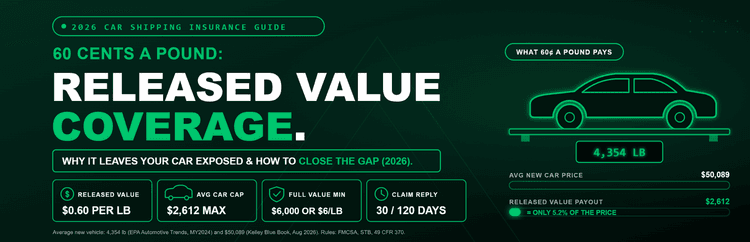
Real insurance you can verify. Ask for the carrier's cargo insurance and confirm coverage before pickup, not after.
-
Transparent pricing. A fair quote comes with a breakdown. A lowball quote with no detail is bait, and it usually climbs later.
-
Reviews across more than one platform. One glowing page is easy to fake. A track record on Google, BBB, and independent review sites is not.
-
Clear cancellation terms in writing. You should know exactly what you owe if plans change.
-
A real human on the phone. If you can't reach a person before you pay, you won't reach one after.
-
A written contract before any deposit. No signed agreement, no money. This single rule stops most fraud.
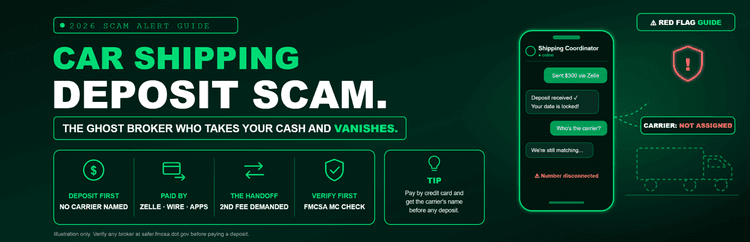
That last point matters more than people think. Consumer reporting from FreightWaves shows scammers commonly quote 30 to 50% below the market rate, take a deposit, then pile on fake "fuel surcharges" once they have your money. Victims typically lose between $500 and $5,000. The written contract, the verified insurance, and the licensing check are what keep you out of that statistic.
What Auto Transport Actually Costs, and What Moves the Price
Cost is the real question behind most searches, so let's give it a straight answer instead of a fake single number.
The nationwide average to ship a car sits around $1,215, based on thousands of shipments at a median of about 987 miles, which works out to roughly $1.23 per mile (FreightWaves). Most moves fall between $600 and $2,500. A long cross-country haul of 2,000 miles or more usually runs $1,100 to $1,600. Per-mile rates drop as distance grows, so a short 300-mile move can cost more per mile than a coast-to-coast run.
The 6 Factors That Shape Your Quote
Two people can request the same route and get quotes hundreds of dollars apart. Here's why.
-
Distance. More miles, higher total cost, but a lower rate per mile.
-
Vehicle size and weight. An SUV or truck takes more space and fuel than a sedan, so it costs more to transport.
-
Open vs enclosed. Enclosed protection carries a real premium, covered in the next section.
-
Timing and season. Snowbird season and summer moves push demand and prices up.
-
Pickup location. Big-city pickups are cheap and frequent. Rural addresses cost more because carriers detour for them.
-
Operability. A running car loads easily. A non-running one needs a winch and costs extra.
How to Use That Knowledge
You can't change distance. You can change timing, flexibility, and transport type. Booking a week or two ahead, staying flexible on pickup dates, and meeting the truck at a nearby lot instead of a tight residential street all shave dollars off. For the full picture, this complete cost breakdown and this guide to the 5 factors that determine your quote go deeper than most.
Route matters too. Popular corridors are competitive and cheaper. Here's a rough sense of common long-distance runs:
|
Route |
Distance |
Open Transport |
Enclosed Transport |
Typical Transit |
|
~1,150 mi |
$900–$1,300 |
$1,400–$1,900 |
2–4 days |
|
|
California to Texas |
~1,400 mi |
$950–$1,400 |
$1,500–$2,100 |
3–5 days |
Treat these as ballparks, not promises. Fuel prices and demand move them weekly, and any honest company will tell you the same.
Open vs Enclosed: Picking the Right Service for Your Vehicle
This is the choice that trips people up, and it's simpler than it looks. It comes down to the value of your car and how much risk you're willing to carry.
Open transport is the standard. Your car rides on a two-level trailer, exposed to weather and road grime, alongside eight or nine others. It's cheaper, faster to book, and perfectly safe for the vast majority of vehicles. Most cars on the road were shipped this way. If you're moving a daily driver or dealer inventory, open car shipping is almost always the smart call.
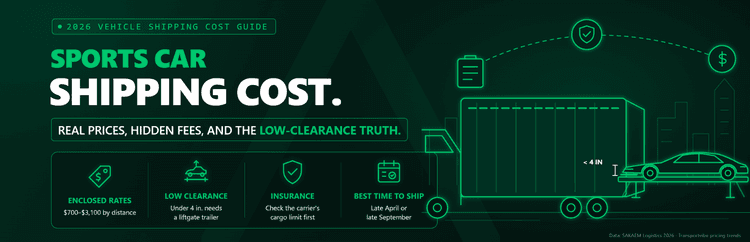
Enclosed transport puts your car in a sealed trailer. No weather, no debris, fewer cars per load, more hands-on care. It costs more, and for the right vehicle it's worth every dollar. According to iDrive, enclosed runs 30 to 60% more than open. For a classic, exotic, luxury, or low-clearance car, that premium buys real peace of mind. This is where enclosed vehicle shipping earns its keep.
|
Factor |
Open Transport |
Enclosed Transport |
|
Cost |
Lower |
30–60% higher |
|
Protection |
Exposed to weather |
Fully sealed |
|
Availability |
Wide, easy to book |
Fewer trucks, book early |
|
Best-fit vehicle |
Daily drivers, standard cars |
Classic, exotic, luxury, rare |
|
Typical buyer |
Individuals, dealers, movers |
Collectors, high-value owners |
A quick gut check. If losing sleep over a rock chip sounds like you, go enclosed. If your car sees rain every week anyway, open is fine. If you want the money side spelled out, this comparison of open vs enclosed transport cost lays it out clearly.
Match the Service to Your Situation
The "best" auto transport service isn't one company. It's the one that fits your specific situation. A retiree heading south in October needs something different from a dealer moving ten cars a month. Find yourself in this table.
|
Your Situation |
What Matters Most |
Service to Ask For |
|
Individual car owner |
Fair price, clear communication |
Standard open transport |
|
Relocating for job or school |
Timing around a move-in date |
Door-to-door, flexible pickup |
|
Dealership owner |
Volume rates, reliability |
|
|
Snowbird |
Seasonal timing, early booking |
|
|
Classic or exotic owner |
Protection, careful handling |
|
|
Car-show organizer |
Coordinated multi-car delivery |
Enclosed, scheduled windows |
|
Military PCS move |
Firm dates, discount options |
|
|
Senior |
Simple process, real support |
|
|
Motorcycle owner |
Secure loading, right equipment |
Two situations cause the most stress, so plan ahead for them. Military PCS moves run on hard timing windows, and the paperwork rewards early coordination. The military car shipping guide covers the discounts and documents most people miss. Snowbirds face the opposite problem, which is a rush of demand every fall and spring that spikes prices and books trucks solid. This snowbird car shipping guide explains when to lock in. The rule for both is the same. Book early, and don't wait for the perfect price.
Verify Before You Trust: The Two-Minute Check
Every honest company survives this check. The bad ones don't. It takes two minutes, and skipping it is how people get burned.
How to Check a Company's DOT and MC Number
Ask the company for its USDOT or MC number. Then look it up yourself using the free FMCSA company snapshot tool. Confirm the authority is active and that the company is who they claim to be. It's public, it's free, and it takes less time than reading a single review. A real company hands over its number without hesitation. Hesitation is your answer.
Red Flags That Should End the Conversation
Some signals mean "walk away," full stop.
-
No DOT or MC number, or a number that doesn't check out
-
A deposit demanded before any carrier is assigned to your car
-
A quote far below every other company you contacted
-
No written contract offered before payment
-
Pressure to "book right now" or lose the rate
-
Payment demanded by wire, Zelle, prepaid card, or crypto
That last one is the sharpest tell. Untraceable payment is the scammer's favorite tool. Pair this check with a read through how to avoid auto transport scams and the essential questions to ask before hiring, and you've closed the door on nearly every trap out there.
Before You Sign: Questions That Save You Later
Five minutes on the phone prevents most of the horror stories you read online. Before you hand over a deposit, ask these.
-
Is this quote all-in, or can it change before pickup?
-
When is payment due, and what methods do you accept?
-
Are you a broker or a carrier, and who insures my car in transit?
-
What's your cancellation policy, in writing?
-
What's the real pickup window, not just the estimate?
Write the answers down. A company that gives clear, consistent answers is one you can trust with your car. One that dodges or keeps "checking with a manager" is telling you something. For sharper follow-ups, this guide to mastering your car shipping quotes shows you how to read a quote like someone who's done this before.
Making the Call
Strip away the noise and choosing an auto transport service comes down to four moves. Verify the company's license before anything else. Match the service type to your vehicle and situation, open for most, enclosed for the ones you'd hate to scratch. Get quotes from two or three real companies and compare the full breakdown. Then lock the number in writing before any money changes hands.
Do those four things and you've already avoided the mistakes that cost most people time and cash. The truck is the easy part. The company you choose is the whole game.
Ready to see what your move really costs? Get a free quote now and compare honest, verified numbers side by side before you commit to anyone.