



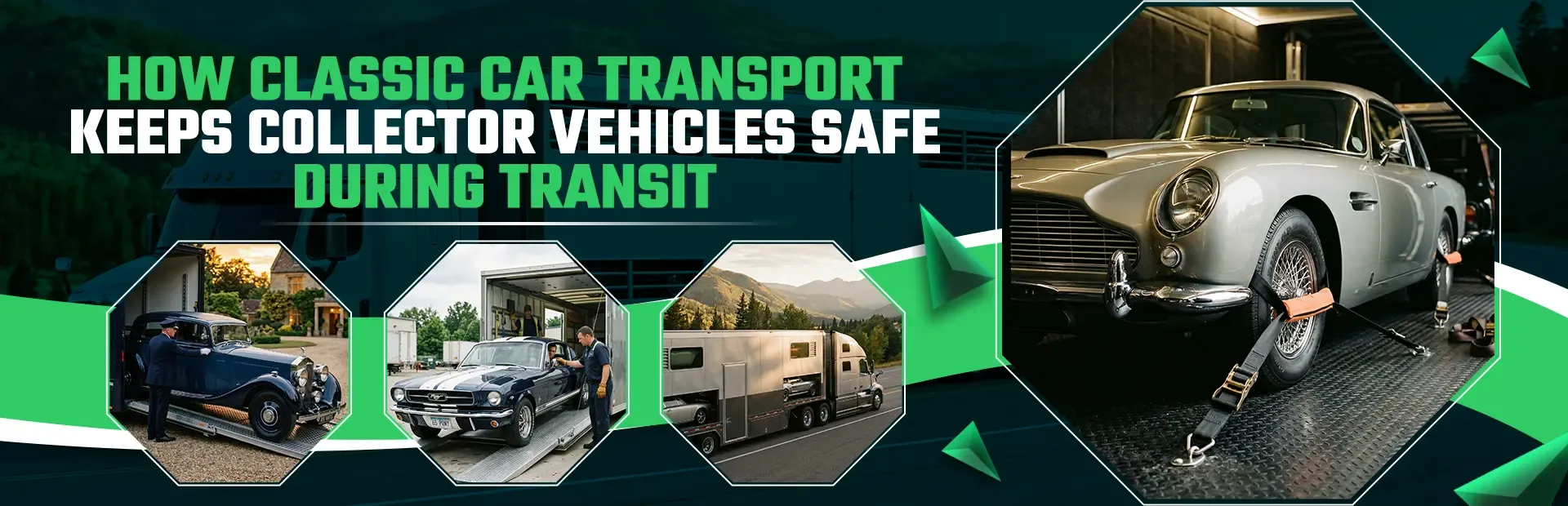
Owning a vintage ride means more than just having a car. When you invest in classic car transport, you are moving a piece of history that often carries a six or seven-figure price tag. Standard shipping won't cut it here. A single hairline scratch during transit can instantly erase thousands in resale value, often costing far more than the classic car auto transport itself.
So, what separates high-end classic car transport services from your run-of-the-mill towing company?
It comes down to specialized equipment and a higher standard of accountability from classic car transport companies. This guide breaks down the specialized tech, the insurance nuances, and the vetting process used by top-tier classic car transporters.
Ready to move your investment with peace of mind? Use our classic car auto transport services to get a transparent, reliable quote from the most trusted carriers in the industry today.
Why Classic Cars Need Specialized Transport — Not Standard Auto Shipping
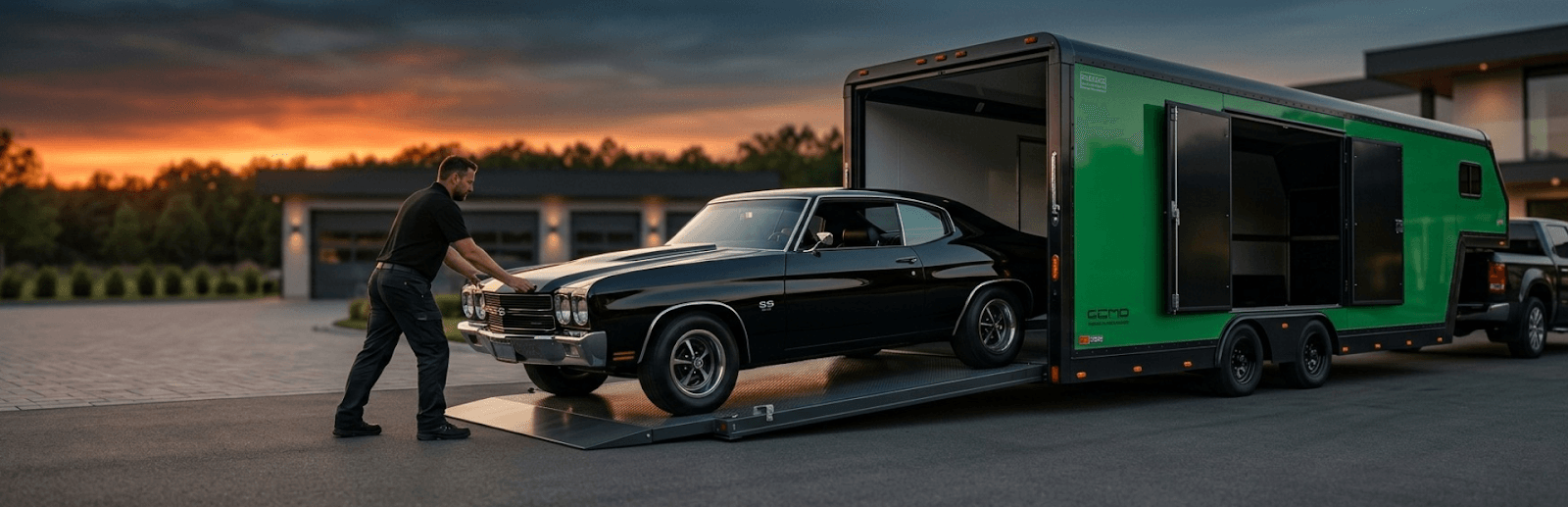
Your daily driver is built to handle the commute, but a vintage masterpiece is a different breed. Age makes seals brittle, and rarity means a single body panel might be irreplaceable. Original nitrocellulose paint or custom hand-rolled bodywork can’t just be "touched up" at a local shop.
Furthermore, many performance classics feature incredibly low ground clearance. Standard transport classic car methods often fail here because steep loading ramps can easily crack a front splitter or scrape the undercarriage. It’s not just a car; it's a piece of history with immense sentimental value.
When you choose classic car transportation services, you are opting out of the high-risk environment of standard auto shipping. Standard open-air trailers expose your investment to several hazards:
-
Road Debris: High-velocity pebbles and salt can sandblast original finishes.
-
Weather Exposure: UV rays, acid rain, and hail are constant threats on open decks.
-
Loading Angles: Traditional ramps are often too steep for low-slung exotic frames.
-
Tie-down Damage: Using generic chains can easily dent fragile floor pans or warp suspension components.
-
The Cost of "Cheap" Shipping: A single paint chip on a classic can cost $500–$3,000 to restore correctly, depending on the vehicle's finish type.
To understand why premier services for classic car auto transport are necessary, look at how the process changes at every stage:
|
Feature |
Standard Auto Shipping |
Classic Car Auto Transport |
|
Carrier Type |
Multi-car Open Trailer |
|
|
Loading Method |
Steep Metal Ramps |
Hydraulic Lift-gates (Level Loading) |
|
Protection |
Exposed to Elements |
Climate-controlled & Dust-proof |
|
Securing |
Frame Chains/Axe Straps |
Soft Over-the-tire Nylon Straps |
|
Inspection |
Basic Bill of Lading |
Comprehensive Photo Reports |
Choosing best classic car transport companies means ensuring your vehicle is handled by classic car transporters who understand that "good enough" isn't an option. Whether you need classic car transport near me for a local show or classic car covered transport across the country, specialized care is the only way to preserve your investment.
Our classic car transport company focuses on trusted solutions for classic car transportation to ensure your vehicle arrives in concours-ready condition. Don't risk the "standard" route when transport classic car services like ours offer the precision your collection deserves.
The Equipment That Actually Protects Your Vehicle in Transit
Choosing the right classic car transporters isn't just about finding a truck. It is about selecting a mobile vault.
When you transport classic car inventory, the gear used determines if your car arrives as a masterpiece or a project. High-end classic car transportation requires more than a hitch and a prayer.
Enclosed Trailers vs. Open Carriers
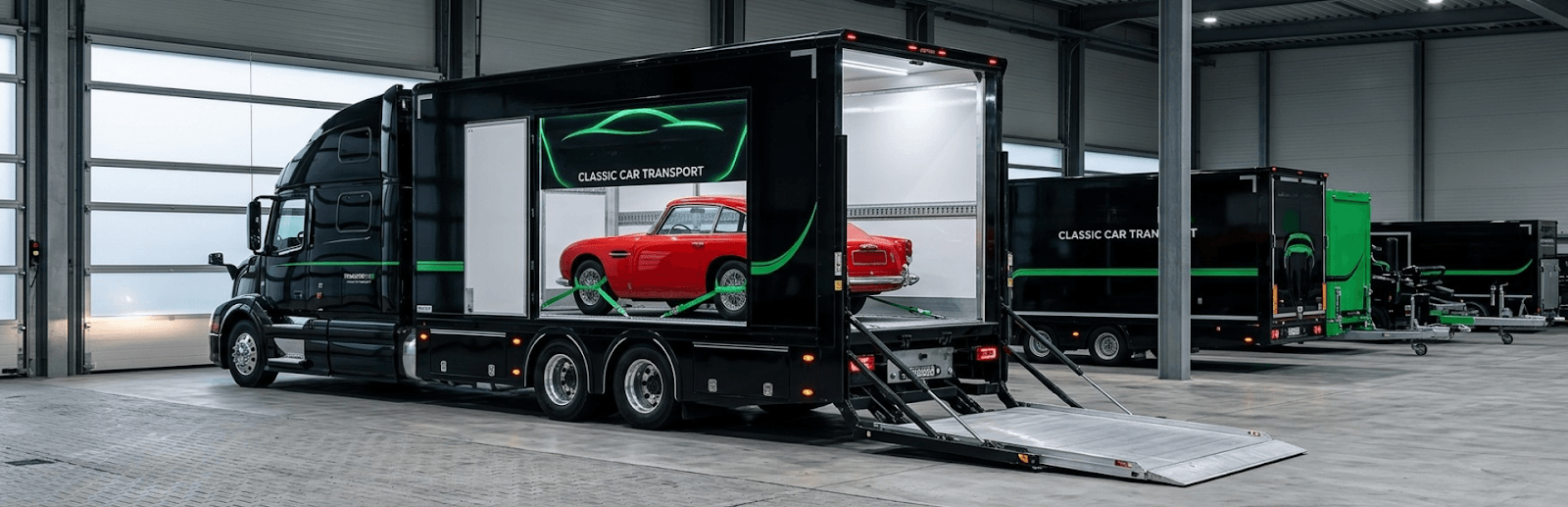
Most daily drivers move on open racks. You’ve seen them on the interstate—stacked high, braving the elements. But for classic car auto transport, an open trailer is a gamble.
Rocks, road salt, and UV rays don't care about your vintage paint job. Enclosed classic car transport seals the vehicle away from every external threat, from hail to prying eyes.
It is a mechanical suit of armor for your investment. You should opt for classic car covered transport when:
-
Your vehicle is traveling over 500 miles through varying climate zones.
-
The car features original nitrocellulose lacquer paint that chips easily.
-
You are heading to a high-stakes auction or a Concours d'Elegance event.
-
The car is a "brass era" or pre-war model with exposed mechanical components.
|
Transport Type |
Average Cost Range |
Best For |
Risk Level |
|
Open Carrier |
$600 – $1,200 |
Daily drivers, projects |
Moderate (Weather/Debris) |
|
Enclosed Trailer |
$1,000 – $2,500+ |
Muscle cars, exotics |
Low (Full Protection) |
The price gap exists because classic car transport companies using enclosed trailers carry higher insurance limits and specialized loading gear like hydraulic lift gates. This prevents the undercarriage damage common with steep ramps.
Climate-Controlled Carriers — What They Do and When You Need One
If you are looking for the premier services for classic car auto transport, climate control is the ceiling. This isn't just a fan in a box.
Classic car transport companies with climate-controlled carriers use HVAC systems to regulate both temperature and humidity. It creates a stable environment regardless of whether the truck is crossing the Mojave Desert or the Rockies in mid-winter.
This level of classic car transportation services is vital for:
-
Interior Preservation: Italian leather and wood veneers can shrink or crack in extreme dry heat.
-
Paint Integrity: Rapid temperature swings cause metal to expand and contract, which can lead to "checking" in older paint.
-
Mechanical Health: Rare gaskets and seals remain supple when the air isn't bone-dry or freezing.
Pro Tip: Rubber seals and gaskets on pre-1970 vehicles can begin to degrade in temperatures above 90°F or below 20°F—conditions common in open or unregulated trailers.
If you own a six-figure survivor or a fresh rotisserie restoration, this is the only classic car transport service that makes sense. For a driver-quality 1960s Mustang, standard enclosed is usually enough. For a museum-grade HEMI Cuda, you want the thermostat set to 70 degrees.
Before you book, check the carrier's credentials on the FMCSA Company Data portal to ensure they are authorized for high-value hauls. Finding the right classic car transport near me starts with verifying who actually owns the equipment.
Real-Time Weather Monitoring — The "Invisible" Safety Gear
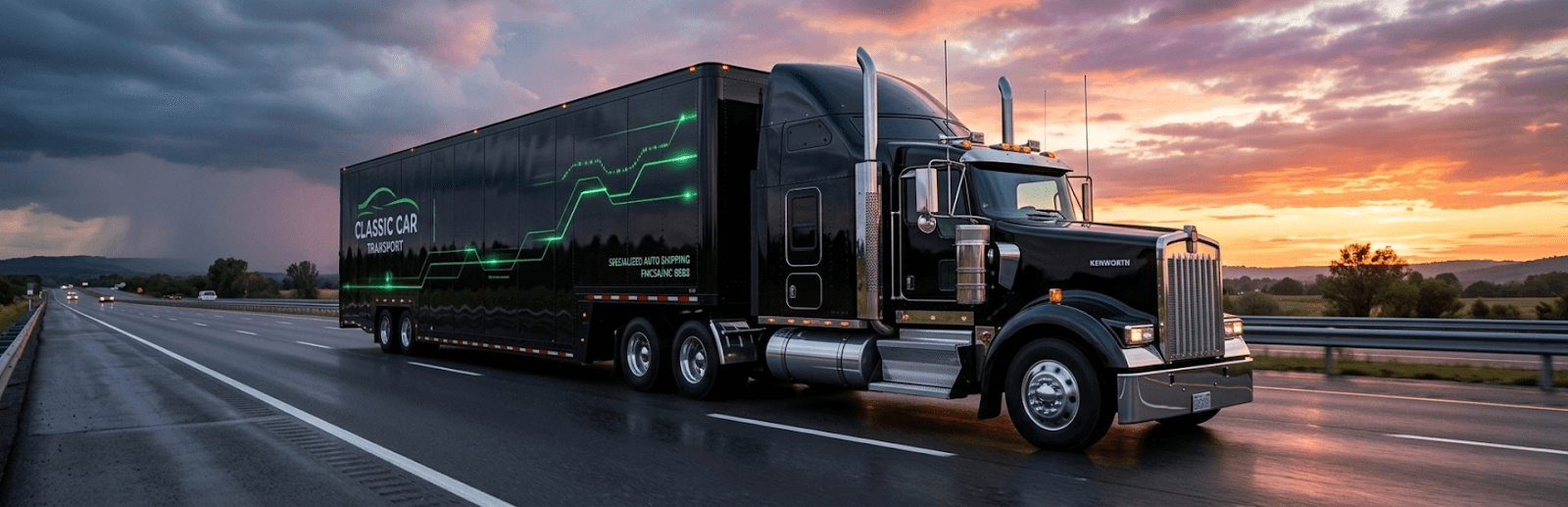
A professional classic car transport company doesn't just drive; they navigate. When you transport classic car investments across the country, the biggest threat is often the sky.
While an enclosed trailer protects against physical debris, a massive storm system can cause delays or create road conditions that compromise a driver's ability to stay on schedule.
The best classic car transport companies use sophisticated meteorological tracking to reroute their classic car transporters away from severe hail or flooding.
High-end classic car transportation services often coordinate with the National Oceanic and Atmospheric Administration (NOAA) to monitor atmospheric changes that could affect loading or unloading.
For example, a classic car transport service moving a 1950s convertible from Florida to New York must account for sudden humidity spikes that can lead to condensation inside a trailer.
-
Hail Protection: Even inside a trailer, a truck parked in a golf-ball-sized hail storm is a liability.
-
Route Optimization: Avoiding "salt-spray" coastal roads during high-wind advisories keeps the chassis clean.
-
Thermal Stability: Knowing a cold front is hitting the Midwest allows a classic car transport team to prep climate-controlled units early.
You can learn more about how transit timelines shift during these events in our guide to car shipping time reasons.
If you are shipping a high-value asset, always ask classic car transport companies with climate-controlled carriers how they handle extreme weather alerts during the trip.
How Reputable Classic Car Transport Companies Handle Loading, Securing, and Delivery
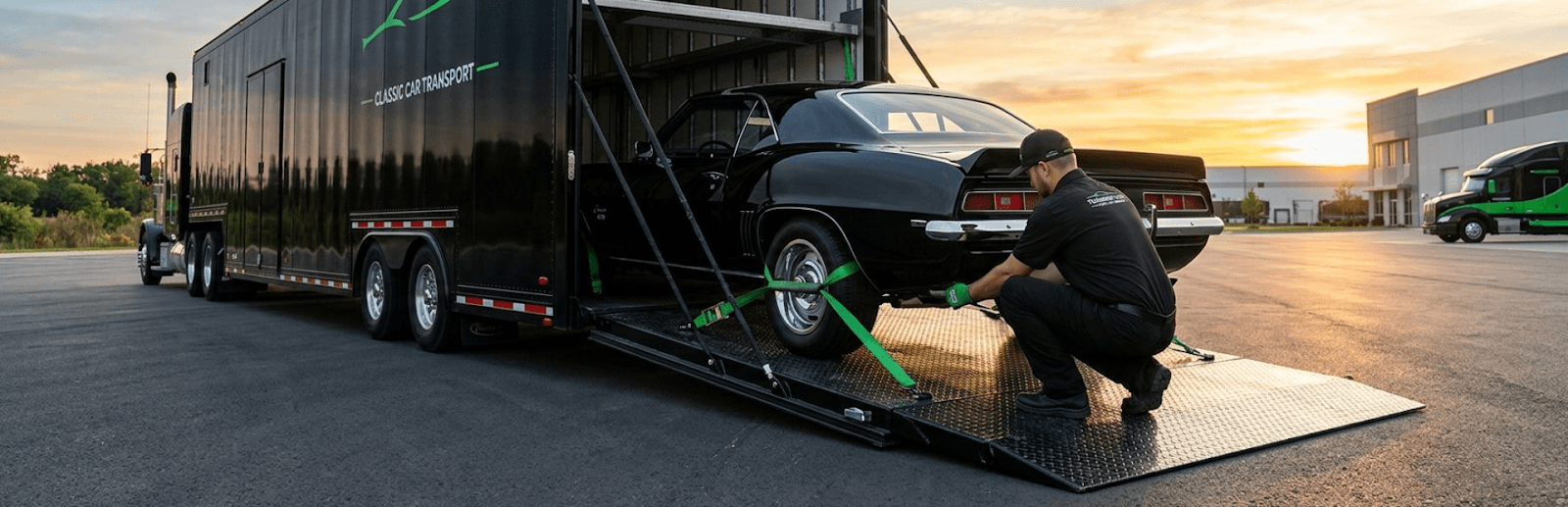
The most expensive equipment in the world won't save a vehicle if the person operating it is careless. While the highway miles feel long, the real danger starts the moment the tires touch the ramp.
Loading and unloading are the highest-risk moments in the entire classic car transport process. Gravity, tight clearances, and human error converge here; if a car isn't handled with surgical precision, a bumper or undercarriage can be ruined in seconds.
Pro Tip: Most damage claims in classic car shipping occur during loading or unloading—not during the drive itself.
When you hire premier services for classic car auto transport, you aren't just paying for a driver; you are paying for a specialist who follows a rigid protocol.
Here is what best classic car transport companies do differently during the crucial loading phase:
-
Hydraulic Lift Gates: They use level-lift platforms that stay flat to the ground, eliminating the steep angles of traditional ramps that scrape low-clearance headers or oil pans.
-
Soft Tie-Downs: Instead of metal chain hooks that can scar a chassis, they use nylon wheel nets or soft "over-the-tire" straps.
-
Strategic Positioning: Vehicles are spaced to avoid any possible contact with trailer walls or other high-value inventory.
-
Documented Inspections: A professional classic car transport company performs a 360-degree digital inspection with high-resolution photos before the car even enters the trailer.
Once the car is inside, the securing method is what keeps your investment stationary during sudden stops. Reputable classic car transporters utilize E-track systems—built-in steel rails—that allow for multi-point tension without putting stress on the car's suspension.
This is a hallmark of trusted solutions for classic car transportation. By using wheel cradles rather than frame-pulling hooks, the car "rides" on its own tires, preventing the alignment issues common in budget shipping.
You can see how this differs from standard hauling in our auto transport from start to finish guide.
The process doesn't end when the truck pulls up to your driveway. A professional classic car transport service delivery is a formal event that ensures your car arrived exactly as it left.
-
Final Lighting Check: The driver should use a high-lumen flashlight to inspect the paint in your presence, even if it's dusk.
-
Condition Report Comparison: You will review the original bill of lading against the current state of the vehicle.
-
Documentation Sign-off: Only after you are 100% satisfied with the classic car transportation results do you sign the final release.
Before you book your next move, always verify the carrier's safety record via the Check DOT and an MC number tool. It is the best way to ensure your classic car auto transport services are being handled by a legitimate, insured professional.
Moving a piece of history shouldn't be stressful. If you want a team that treats your car like their own, contact us today to discuss your specific classic car transportation services needs with our experts.
How to Find and Vet the Right Classic Car Transport Company

Not every company claiming to offer classic car transport is actually equipped for the job. Many are standard auto haulers who simply added a label to their website to snag higher-paying leads without investing in the specialized gear required for a six-figure investment.
True classic car transport services require a level of precision and liability coverage that general carriers simply don't provide. If a company can't explain the mechanical difference between their loading ramps and a standard flatbed, they aren't the right classic car transport company for you.
Before you book, you need to verify their professional standing through the FMCSA. Here is your checklist for vetting best classic car transport companies:
-
Registration Check: Verify their MC number and active FMCSA status to ensure they are legally authorized to operate.
-
Insurance Specifics: Does the policy cover "Agreed Value" or just "Actual Cash Value"? For a collector car, market value often falls short of the true replacement cost.
-
Niche Experience: Ask if they have handled your specific vehicle type, whether it’s a delicate pre-war brass era car or a low-slung modern exotic.
-
Asset Ownership: Confirm if they own their equipment or if they are a broker using subcontractors. You want to know exactly who is touching your keys.
-
Unbiased Reviews: Look at third-party platforms like Trustpilot or Transportvibe rather than just the curated testimonials on their own site.
Once you have a shortlist of classic car auto transport providers, get them on the phone. A direct conversation reveals more than a flashy website ever could.
Ask these questions before signing a contract:
-
Who is the driver? Is the person you are speaking to the one who will physically drive the truck and handle the loading?
-
What is the claims process? If a scratch happens, what is the step-by-step procedure to get it resolved?
-
How are delays handled? Transporting vehicles is complex; you need a company that communicates proactively about weather or traffic setbacks.
-
Will I get a condition report? A documented inspection at both pickup and delivery is non-negotiable for trusted solutions for classic car transportation.
Pro Tip: Hagerty classic car transport partners with specific providers. If you are already a policyholder with them, checking their recommended classic car transporters is a smart move.
Watch for red flags that scream "amateur." Vague answers about insurance, a lack of a physical office address, or unusually low quotes compared to the market average are signs of trouble. If a classic car transport service doesn't offer a pre-transport inspection, hang up the phone.
You can learn more about avoiding these pitfalls in our guide on how to avoid 10 car shipping mistakes. Choosing a provider based solely on price is the fastest way to turn a dream car into a nightmare.
Instead, look for premier services for classic car auto transport that prioritize safety over speed. If you are ready for a transparent experience, check our about page to see how we verify the carriers we review.
What to Do Before and After Transport to Protect Your Classic Car
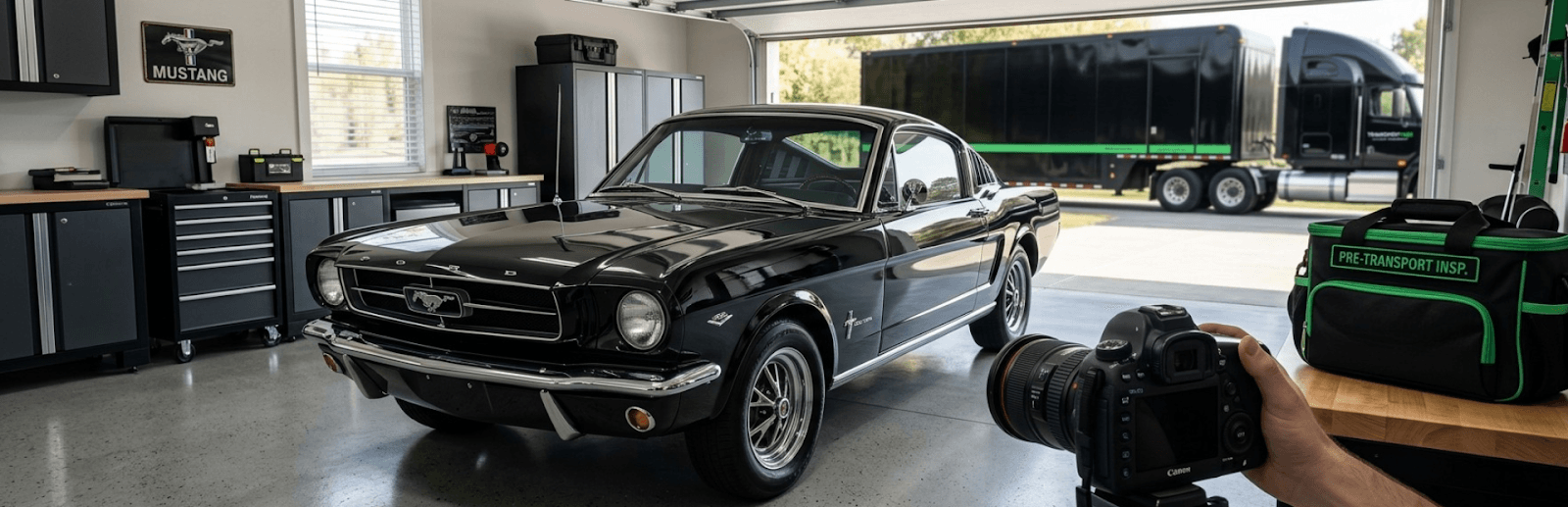
Preparation isn't just a suggestion; it is your primary defense. While you are paying for premier services for classic car auto transport, the safety of your vehicle begins in your own garage before the truck ever arrives.
Many owners assume the classic car transport company handles everything, but not all "specialists" are created equal. Some are just standard haulers with a new decal. Taking control of the preparation process ensures your car is ready for the rigors of classic car transportation.
A well-prepared vehicle is easier to load, secure, and inspect. Here is your essential pre-transport checklist to ensure a smooth classic car auto transport experience:
-
Comprehensive Documentation: Take high-resolution photos and video of all four sides, the undercarriage, and the interior. This is your baseline evidence.
-
Leak Check: Inspect for active fluid leaks. Many classic car transporters will refuse a car that drips, as it can damage other vehicles in the trailer.
-
Disable Alarms: Electronic anti-theft systems can be triggered by the motion of the trailer, draining your battery before the car reaches its destination.
-
Clear the Cabin: Remove all loose items, paperwork, and spare parts from the interior and trunk to prevent shifting damage.
-
Tire Pressure: Ensure all tires are properly inflated. Low pressure makes it difficult to secure the car safely on ramps or lift gates.
-
Fuel Level: Keep the tank at roughly 1/4 full. This reduces weight and complies with safety regulations for classic car transportation services.
The moment of delivery is where your due diligence pays off. Once the classic car transport service arrives, you must be methodical. Do not let the excitement of seeing your car again rush your final inspection.
-
The 360 Inspection: Walk around the vehicle with the driver and inspect it thoroughly before signing the Bill of Lading.
-
Compare Evidence: Pull up your pre-transport photos on your phone and compare them directly against the current condition of the paint and trim.
-
Written Records: If you find new damage, you must note it clearly in writing on the delivery receipt before the driver leaves the premises.
-
Insurance Notification: If damage is found, contact your personal provider and the best classic car transport companies' insurance representative immediately.
Understanding how insurance layers work is critical for trusted solutions for classic car transportation. Your personal collector car policy often acts as a secondary layer to the carrier’s cargo insurance.
While classic car transport companies with climate-controlled carriers carry high-limit cargo insurance, your own policy might provide "gap" coverage or better terms for "agreed value" claims. You can read more about these nuances in our auto transport insurance guide.
For more localized tips, such as 6 car shipping Virginia tips, it helps to know state-specific regulations. Ready to get started with a pro? Visit our locations page to find classic car transport near me that fits your high standards.
Strategic Insights for Your Most Pressing Transport Inquiries
Moving a high-value asset naturally brings up specific logistical concerns. These brief breakdowns address the critical details often overlooked during the initial booking process for your vintage vehicle.
Can I include spare parts or personal items when I transport classic car models?
Generally, no. Most classic car transport companies prohibit personal items due to weight restrictions and insurance liability. However, some classic car transporters allow a single set of spare parts if they are secured in the trunk.
Is it better to choose open vs. enclosed car shipping for short-distance moves?
Even for short trips, enclosed classic car transport is the standard. Surface damage from road debris doesn't care about mileage. For any high-value investment, classic car auto transport in a sealed trailer remains the only logical choice.
How do I find the most reliable classic car transport near me?
Start by verifying carriers through Transportvibe reviews and the FMCSA database. Look for best classic car transport companies that own their fleet rather than brokered services to ensure direct accountability for your vehicle.
Are there specific classic car transport services for non-running vehicles?
Yes, but you must notify the classic car transport company in advance. They will need a specialized winch to load the vehicle safely into the trailer without causing undercarriage or frame damage during the process.
What defines the premier services for classic car auto transport today?
Beyond enclosed trailers, top-tier classic car transportation services include GPS tracking, hydraulic lift gates, and climate-controlled environments. These features distinguish a classic car transport service from a standard high-volume hauler.
Securing Your Automotive Legacy with Professional Classic Car Transport
At the end of the day, successful classic car transport isn't about luck; it is a calculation of equipment, process, and accountability. Choosing a classic car transport company that prioritizes specialized trailers over high-volume turnover ensures your investment remains a masterpiece, not a repair project.
The key takeaways for a stress-free move are simple:
-
Enclosed classic car transport is non-negotiable for rare or high-value vehicles to shield them from road debris and weather.
-
Vetting classic car transporters via FMCSA data and third-party reviews is more critical than finding the absolute lowest price.
-
Your preparation—from documenting condition to clearing the cabin—is the only variable you fully control during classic car auto transport.
Don't rush the decision to save a few dollars. Ask the hard questions about insurance and loading protocols before you sign. If you are ready for a transparent, professional experience, Get a Quote from our vetted partners and move your vehicle with total confidence.