



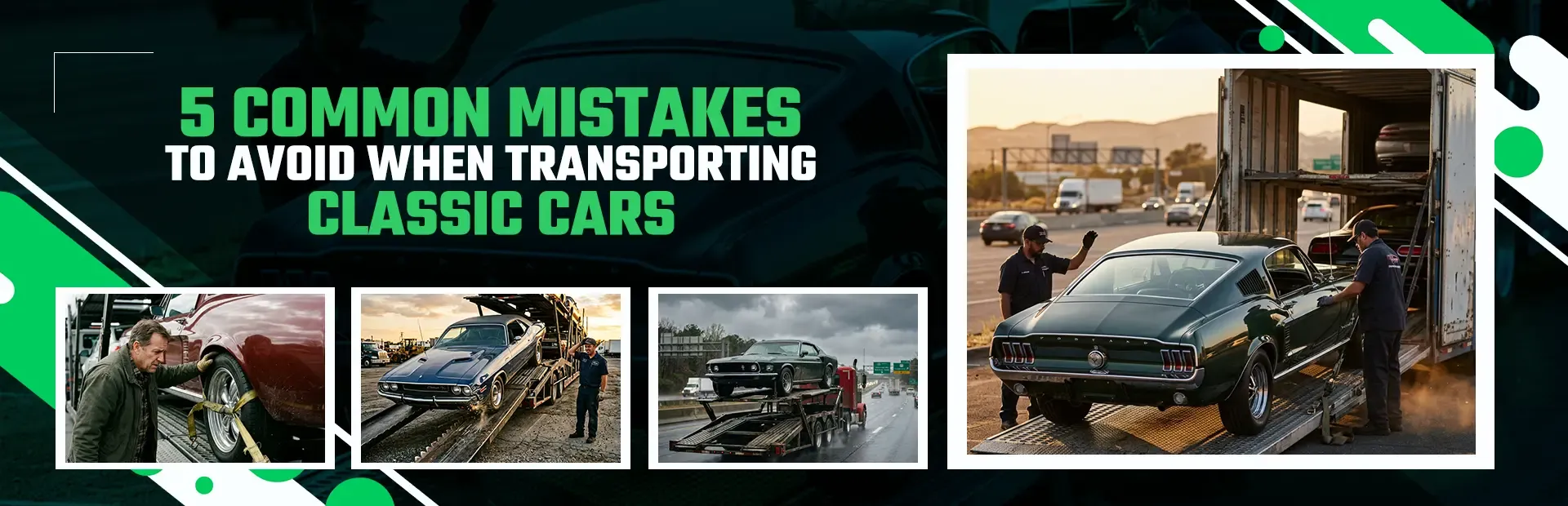
You finally found it.
That 1967 Mustang is yours, and you have booked classic car transport to bring it home.
But when the trailer drops the gate, there is a deep scratch on the fender because the straps were wrong. It is a nightmare scenario that happens more often than you think when people settle for the first classic car transportation services they find online.
For many owners, these vehicles are not just cars—they are significant financial investments. According to data from Hagerty, a full frame-off restoration for a vintage model can easily exceed $60,000, making every mile in transit a high-stakes move. Selecting the wrong classic car auto transport provider can lead to damage that costs more than the shipping itself.
We have compiled the five most common mistakes owners make. Most are not due to laziness, but because the transport industry can be confusing. Here is how to avoid the pitfalls.
Ready to move your investment safely? Get a transparent quote from Transportvibe for classic car shipping or any high-end vehicle moves. We connect you with top-rated carriers so you can ship with total peace of mind.
Choosing the Wrong Transport Type for Your Classic Car
Most owners default to open transport because the price tag looks friendlier. It is the standard way cars move across the country, but for a vintage investment, that "savings" is a gamble.
When you choose an open trailer, your vehicle is exposed to every rock chip, rainstorm, and bird dropping between the pickup and delivery points. For a daily driver, that is manageable; for a classic, it is a liability.
|
Transport Type |
Cost Range |
Weather Protection |
Road Debris Risk |
Best For |
|
Open Transport |
$0.40 – $0.60 per mile |
None (Exposed) |
High |
Daily drivers, projects |
|
Enclosed Transport |
$0.90 – $1.20 per mile |
100% Shielded |
Non-existent |
Show cars, investments |
Experienced classic car transporters do not suggest enclosed classic car transport as a hidden upsell. They recommend it because it is the only way to ensure a pristine finish remains pristine during classic car transport services.
Certain vehicles should never see the back of an open trailer:
-
Pre-war vintage models with wood frames or delicate trim.
-
Concours-level show cars with flawless paint.
-
Fully restored models where every bolt is documented.
-
Convertibles with older soft tops that can’t handle 70 mph wind buffeting.
Enclosed transport typically costs 30% to 40% more than open carrier options, but it provides the specialized insurance and protection required for cars valued from $20,000 to over $500,000.
When Open Transport Is (and Isn't) Acceptable
There are rare moments when open classic car transportation makes sense. You might consider it if:
-
You are moving a "survivor" car that already has a worn patina.
-
The distance is short (under 100 miles) and the weather forecast is clear.
-
The vehicle is a project car currently awaiting a full body restoration.
Before you book, ask yourself: "Would I be okay if this car arrived with a fresh rock chip or a permanent water stain?" If the answer is no, then open trailers are not for you.
To see how these costs break down in the current market, check out our guide on open vs. enclosed transport cost.
Not Vetting Classic Car Transport Companies Properly

Booking a generic shipper for a vintage masterpiece is like hiring a house painter to restore a Van Gogh. You might save a few dollars upfront, but the lack of specialized expertise usually ends in a costly disaster.
Most owners mistakenly use general auto transport brokers who treat every vehicle like a used sedan. These brokers often flip your contract to the lowest bidder, regardless of whether that driver understands the nuances of classic car auto transport.
When you are evaluating classic car transport companies, you must look past the five-star Google reviews. You need to verify the mechanical and legal foundation of their operation:
-
FMCSA Registration and MC Number: Every legitimate transporter must have active authority from the federal government.
-
Carrier-Specific Insurance: Ensure the insurance covers the cargo specifically, as broker-level liability won't protect your vehicle in a total loss scenario.
-
Classic Specialization: Look for classic car auto transport companies that explicitly list vintage or collector cars as their primary cargo.
-
Driver Experience: Ask if the drivers are trained to handle low-clearance vehicles or delicate winching for non-runners.
-
Targeted Reviews: Search for feedback where customers mention specific makes and models similar to yours.
The Federal Motor Carrier Safety Administration (FMCSA) logs thousands of auto transport complaints annually. A significant portion of these disputes stems from consumers using unvetted brokers who lack accountability.
There are glaring red flags that signal a provider is not ready for classic car transportation. If you encounter these, walk away immediately:
-
They cannot give you a direct answer on who the actual carrier is.
-
They refuse to provide a written certificate of cargo insurance.
-
They offer an "unbelievably low" quote that sits hundreds of dollars below the market average.
-
Their website lacks any specific mention of trusted solutions for classic car transportation.
Questions to Ask Before Booking Any Classic Car Transport Service
Before you sign a contract or pay a deposit for a classic car transport service, put the representative on the spot. Selecting the best classic car transporters requires getting these answers in writing:
-
Are you a broker or a direct carrier?
-
What is your cargo insurance limit per vehicle?
-
Can you provide references for high-value or vintage hauls?
-
What is the specific protocol if damage is discovered during delivery?
-
What is your FMCSA MC number so I can verify your safety record?
The answers to these questions matter far more than the initial price. A "cheap" move is the most expensive mistake you can make if the company isn't equipped to handle your legacy. For a deeper look at the industry's top players, see our list of the 10 best car shipping companies.
Skipping Pre-Transport Documentation and Insurance Checks
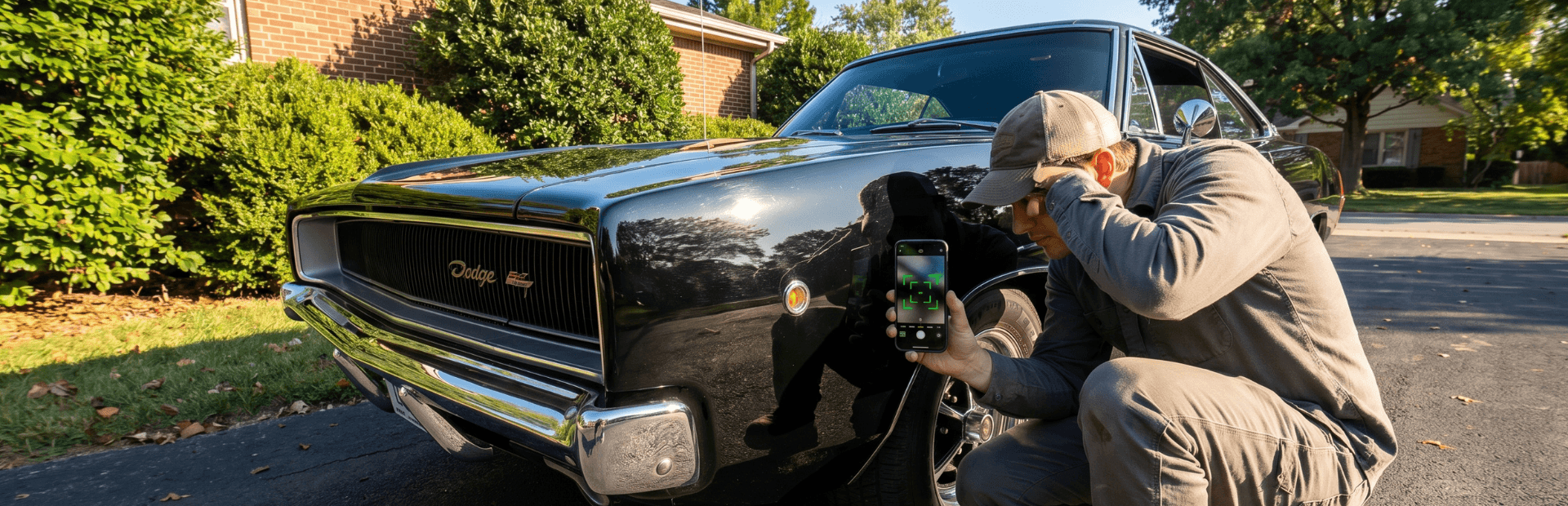
You’re standing on the curb, watching the carrier pull away with your pride and joy. It’s a moment of relief, but for many owners, it’s the start of a nightmare because they skipped the paperwork.
Most people treat classic car transportation services like a standard Uber ride. They hand over the keys and hope for the best, forgetting that without a baseline, you can't prove a single scratch happened on the road.
The core problem is simple: if you don’t have a detailed record of the car’s state before it leaves your driveway, you have no legal leg to stand on. Documentation is your only shield against "it was already like that" excuses.
A professional pre-transport process isn't just a quick glance. It requires a methodical approach to ensure classic car transportation goes off without a hitch:
-
360-degree photo documentation: Capture every angle of the exterior, the entire interior, and the undercarriage.
-
Video walkthrough: Record a continuous clip with timestamps to prove the car’s operational condition.
-
Signed condition report: Ensure both you and the driver sign off on the car’s state at the exact moment of pickup.
-
Odometer reading: Record the mileage to ensure no "joyrides" occur during transit.
-
Detailed damage log: Explicitly note every pre-existing chip, scratch, or dent, no matter how small.
Dispute resolution in auto transport almost always comes down to the Bill of Lading. If you didn't document it, it didn't exist.
Beyond the physical car, there is a massive insurance gap that catches owners off guard. Standard carrier cargo insurance often only covers the depreciated value of a vehicle.
For a vintage investment, that’s a disaster. You need to account for special considerations for classic car transport by verifying your own policy details before the trailer arrives.
-
Transit Coverage: Does your current classic car policy actually cover the vehicle while it is in the hands of a third party?
-
Agreed vs. Actual Value: Is your coverage based on a fixed agreed value or the "actual cash value," which could be significantly lower?
-
The Coverage Gap: Is there a financial bridge between what the carrier’s insurance pays and what your car is actually worth?
If a gap exists, you must close it by purchasing a supplemental rider or ensuring the carrier increases their cargo limit for your specific haul. Understanding car shipping insurance in the USA is the only way to ensure you aren't left holding a massive bill after an accident.
To verify a carrier's official safety and insurance records, always check their FMCSA Company Data before signing any contracts.
Misunderstanding Classic Car Transport Cost — and What's Actually Included

When you see a quote that looks too good to be true, it usually is. Classic car transport cost fluctuates far more than standard vehicle moves because you are paying for specialized equipment and lower-volume routes.
Understanding the variables is the only way to avoid bait-and-switch pricing that leaves your car sitting in a lot while you wait for a carrier who will actually take the job.
|
Cost Factor |
Why It Matters |
Typical Impact on Price |
|
Transport Type |
Enclosed provides a hard-shell protective barrier. |
Increases cost by 30%–50% |
|
Vehicle Condition |
Non-runners require special winches and labor. |
Adds $100 – $500 surcharge |
|
Route Popularity |
High-traffic lanes (e.g., NY to FL) are cheaper. |
Rural pickups increase rates |
|
Seasonality |
Snowbird season or major car shows drive demand. |
Can spike prices by 20% |
The classic car transport cost per mile typically ranges from $0.60 to $1.50+. For premier services for classic car auto transport using enclosed trailers, cross-country routes often average between $1,000 and $2,500.
You should also clarify if the quote covers "door-to-door" service. Many cheap providers move your car terminal-to-terminal, meaning you have to drive your vintage investment to a dusty industrial lot rather than having it picked up from your driveway.
Before you commit to any classic car auto transport services, ask about these common hidden fees:
-
Fuel Surcharges: These can fluctuate weekly and are often added at the last minute.
-
Expedited Pickup: If you need the car moved by a specific date for a show or auction.
-
Storage Fees: Charged if you aren't there the moment the truck arrives at the destination.
-
Lift Gate Fees: Essential for low-clearance luxury transport options like classic cars.
Comparing quotes requires looking at the "scope of work," not just the bottom line. Ensure you are comparing identical protection levels and timelines. For a detailed breakdown of how these prices change based on your location, see our car shipping cost per state guide.
Ignoring Special Considerations Unique to Classic Car Transportation

A vintage engine doesn't behave like a modern sedan, and the equipment required to transport classic car models safely is just as unique. Standard shippers often overlook the mechanical quirks that can lead to rejected pickups or damage on the ramp.
You need to prepare your vehicle for the specific rigors of a long-haul move. These special considerations for classic car transport are non-negotiable if you want your investment to arrive in the same condition it left.
-
Fuel Level: Keep the tank at ¼ or less. This reduces weight and minimizes fire risks during transit.
-
Battery Health: Ensure the battery holds a charge so the driver can move it, or disconnect it once loaded to prevent drainage.
-
Fluid Leaks: Check for oil or transmission leaks. Many classic car transporters will refuse a leaking car to protect other vehicles on the trailer.
-
Soft Tops and Trim: Secure convertible tops and retract or remove fragile mirrors and antennas that could catch the wind.
-
Alarms: Disable all anti-theft systems or provide the driver with clear, written instructions on how to disarm them.
-
Personal Items: Remove all loose items from the cabin. Carrier insurance strictly excludes personal property left inside the vehicle.
Ground clearance is perhaps the biggest hurdle for classic car auto transport. Many vintage sports cars or customized builds have low-hanging components that will scrape on a standard loading ramp.
If your car is lowered or features a delicate body kit, you must ask if the company uses "lift-gate" loading or specialized tilt-bed trailers. This is where luxury transport options paris private drivers classic cars and high-end US carriers differ from the budget haulers who only use steep metal ramps.
Non-running vehicles or those with ground clearance under 4 inches often require specialized hydraulic equipment. Failing to confirm this before booking will lead to a failed pickup and a lost deposit.
Before the driver arrives, walk through your mechanical checklist one last time. If you’re shipping something particularly rare, like a modified pickup, read our guide to shipping a pickup truck to see how dimensions impact the haul.
Expert Insights on Protecting Your Automotive Legacy
Moving a vintage investment is a high-stakes operation. These are the most common details owners need to clarify before their vehicle ever touches a trailer.
How Do I Find The Best Classic Car Transport Companies?
Finding the best classic car transport companies requires looking beyond basic star ratings and deep into their mechanical authority. You should verify their classic car auto transport services by checking their safety record on the FMCSA website and confirming they have experience with your specific make and model.
What Are The Special Considerations For Classic Car Transport?
The special considerations for classic car transport focus on mechanical preparation and protection. You must maintain a fuel level of ¼ tank, check for fluid leaks that could damage other vehicles, and ensure the battery is secured. Additionally, documenting the car's condition with high-resolution photos is essential for any classic car transportation move.
How Much Does Classic Car Transport Cost Per Mile?
The classic car transport cost per mile typically ranges from $0.60 to over $1.50, depending on the distance and equipment used. While a standard classic car transport cost might seem lower for open trailers, the premier services for classic car auto transport using enclosed trailers command a higher rate to cover specialized insurance and climate protection.
Should I Choose Enclosed Classic Car Transport For My Vintage Vehicle?
You should almost always choose enclosed classic car transport for any vehicle with high financial or sentimental value. This method provides a hard-shell barrier against road debris and weather, which is why most classic car auto transport companies recommend it as the industry standard for investment-grade assets.
What Defines A Trusted Solution For Classic Car Transportation?
A trusted solution for classic car transportation is defined by transparency and specialized equipment. This includes having a clear cargo insurance policy that covers the "Agreed Value" of the car and utilizing drivers who understand the nuances of transport classic car operations, such as low-clearance loading.
How Do I Go About Selecting The Best Classic Car Transporters?
Selecting the best classic car transporters involves interviewing potential carriers about their loading technology and driver training. You should prioritize classic car transporters who offer door-to-door service and can provide an MC number to verify their registration through the Check DOT and an MC number database.
Are There Luxury Transport Options For Classic Cars Involving Private Drivers?
Yes, luxury transport options paris private drivers classic cars and similar high-end white-glove services cater to collectors who require dedicated trailers and constant communication. These classic car transportation services often include single-car trailers and specialized GPS tracking so you can monitor your vehicle's progress in real-time.
Securing Your Investment for the Long Haul
The most expensive mistakes in classic car transportation are rarely the result of bad luck. They happen when owners skip the vetting steps that seem optional until a scratch appears at delivery. By prioritizing enclosed classic car transport and verifying insurance details, you eliminate the variables that lead to transit disasters.
If a classic car auto transport provider cannot explain their low-clearance loading protocol or provide an MC number, they aren't the right fit. Use these five points as your pre-booking checklist to ensure you are selecting the best classic car transporters for your vehicle’s specific needs. Your legacy deserves a carrier that values the car as much as you do.
Planning your next move? Get a Quote from Transportvibe to see how our premier services for classic car auto transport can protect your vehicle during its next cross-country journey.