



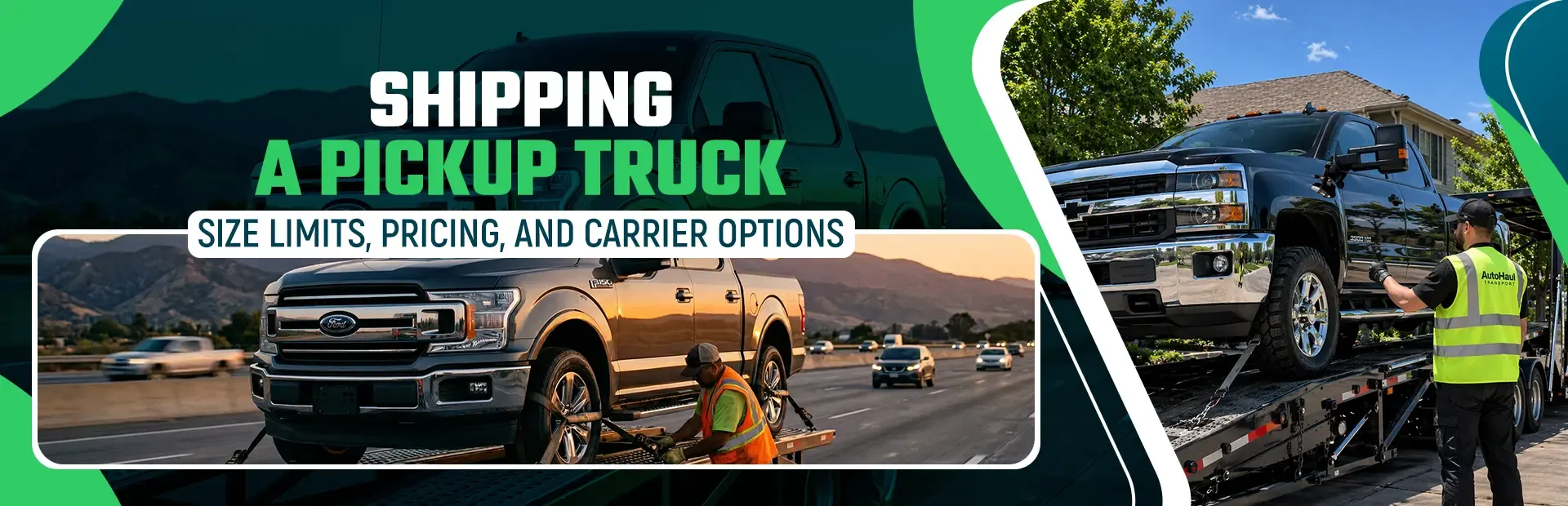
Trying to ship a pickup truck isn't quite the same as moving a standard sedan. Because of the cost to ship a pickup truck, size and weight play a massive role in your final quote. While most cars fit into standard slots, a truck often requires more "real estate" on a carrier.
People usually need to ship a pickup truck for residential relocation or job transfers, buying from a dealership or private seller in another state, military PCS moves, and seasonal transport for "snowbirds".
Unlike smaller cars, pickups bring unique challenges like heavy curb weights, extended beds, and aftermarket modifications like lift kits. These factors increase fuel consumption and limit carrier space. In fact, shipping a truck can cost 15% to 40% more than a sedan.
If you are ready to see the numbers for your specific move, you can get a free quote through our specialized transport service pages to ensure you're getting the most accurate rate for your vehicle's size.
Pickup Truck Shipping Basics: Size Limits, Weight, and What Carriers Accept
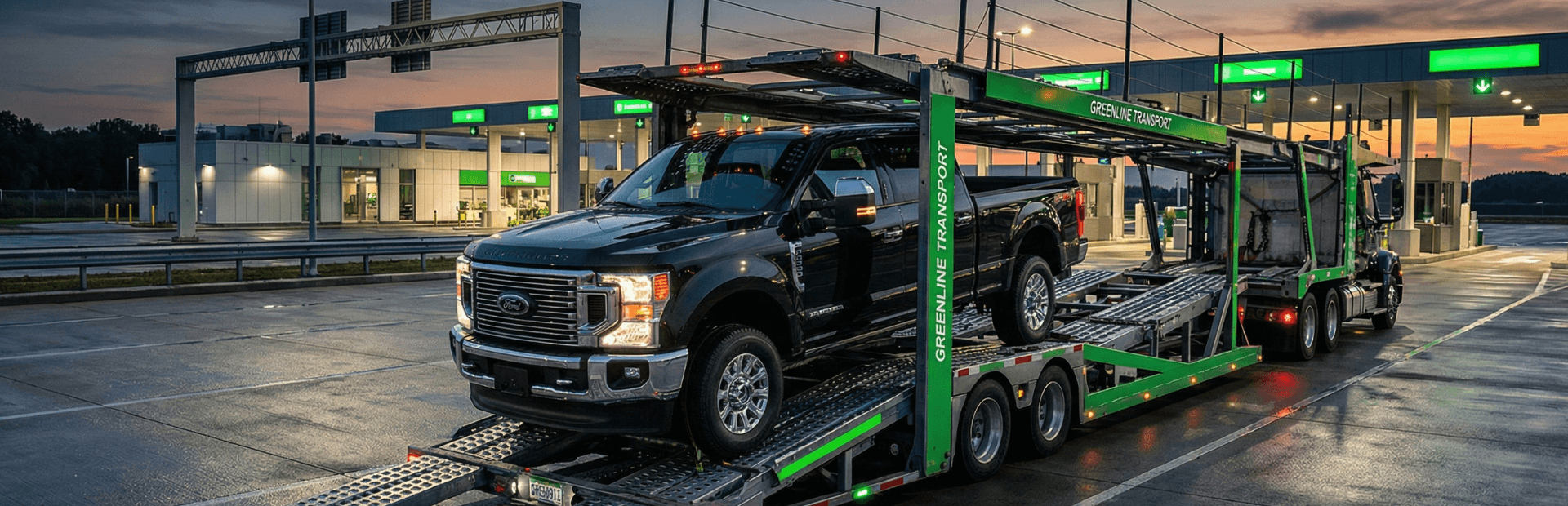
When you prepare to ship a pickup truck, dimensions aren't just numbers on a spec sheet. They are the deciding factor in whether your vehicle fits on a standard trailer or requires a custom solution.
Carriers look at your truck as a puzzle piece. If your "piece" is too tall or wide, it displaces other vehicles, which directly impacts the cost of shipping a pickup truck.
Here is how the industry typically categorizes your rig:
-
Mid-size pickups: Think Toyota Tacoma or Ford Ranger. These usually fit standard spots without much fuss.
-
Full-size pickups: The F-150 or Silverado 1500. These are the bread and butter of the industry but take up more physical "footprint."
-
Heavy-duty trucks: Your F-350s, duallys, or Ram 2500s. These often hit the upper limits of weight and width for standard open trailers.
Weight is the silent budget killer. Most open carriers have a gross weight limit for their entire load. If your heavy-duty truck pushes that limit, the driver has to leave another car behind.
|
Truck Type |
Avg Length |
Avg Weight |
Fits Open Carrier |
Needs Special Carrier |
|
Mid-Size |
17–18 ft |
4,000 lbs |
Yes |
No |
|
Full-Size |
19–20 ft |
5,000 lbs |
Yes |
Rarely |
|
Heavy-Duty |
21+ ft |
7,500+ lbs |
Tight Fit |
Often |
If you’ve added a 6-inch lift, oversized tires, or a bulky headache rack, you’re no longer shipping a "standard" vehicle. These modifications change the center of gravity and the total height.
You might be looking for shipping a pickup truck near me only to find that standard drivers won't touch a modified rig. Specialty trailers are required once you cross certain thresholds.
Trucks over 7 feet tall or heavily modified often require specialty transport, which can increase the cost to ship a pickup truck by 25% or more.
Before booking, check if your driver has the right clearance. You can find more details on how these specs influence rates in our auto transport from start to finish guide.
For those moving to the Northeast, remember that narrow roads can complicate things when you ship a pickup truck to pennsylvania, making local terminal drops a smarter, cheaper choice.
Cost of Shipping a Pickup Truck: Real Pricing Factors and Estimates
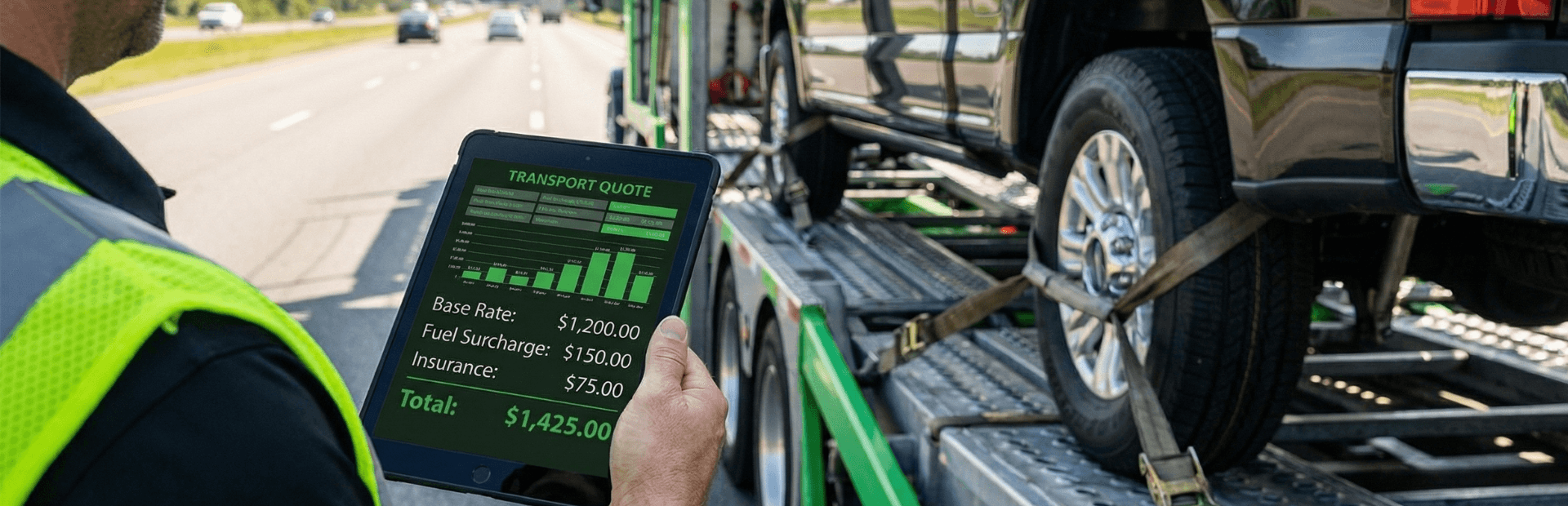
Distance is the baseline, but the cost of shipping a pickup truck involves a moving target of variables. Unlike a compact car, your truck’s "footprint" on the trailer determines how much the carrier loses in potential revenue from other vehicles.
If you are trying to ship a pickup truck, you need to account for these specific pricing drivers:
-
Distance and route popularity: Major interstates like I-10 or I-95 are cheaper because more carriers frequent those paths.
-
Pickup truck size and weight: A heavy-duty dually takes up more space and fuel than a mid-size Colorado, driving up the cost to ship a pickup truck.
-
Open vs. enclosed transport: Open carriers are the standard, but enclosed trailers offer more protection at a 30-50% premium.
-
Fuel prices and seasonal demand: Costs spike during "snowbird" season or when diesel prices fluctuate at the pump.
-
Pickup and delivery accessibility: Rural areas or narrow cul-de-sacs require a "meet me at the mall" approach or a smaller shuttle truck, which adds to the bill.
The price for the same route can change week to week based on carrier availability. If a driver has one spot left and needs to fill it, you might get a deal; if trucks are scarce, you’ll pay a premium.
|
Distance |
Open Transport Price |
Enclosed Transport Price |
Estimated Delivery Time |
|
0–500 Miles |
$450 – $750 |
$700 – $1,100 |
1–3 Days |
|
500–1,500 Miles |
$800 – $1,200 |
$1,200 – $1,800 |
3–5 Days |
|
1,500–3,000 Miles |
$1,300 – $1,900 |
$1,900 – $2,800 |
6–10 Days |
When shipping a pickup truck locally, you aren't just paying for the gas. You're paying for the driver's time spent loading and unloading, which makes up a larger chunk of the total.
Logistically, local moves often use smaller "hot shot" trailers. These are more nimble but have fewer vehicles to spread the operating costs across.
-
Higher per-mile rates: Shorter hauls cost more per mile because the fixed costs of pickup and delivery are the same regardless of distance.
-
Faster turnaround: You can often get same-day or next-day service when shipping a pickup truck near me.
Bold Stat: Short-distance (under 300 miles) shipments often have a higher cost per mile than long-haul routes due to the labor-intensive nature of loading and unloading.
Before you sign a contract, make sure you understand the hidden car shipping fees that can crop up if your truck is non-running or oversized. To ensure you aren't overpaying, you should always check DOT and an MC number to verify your carrier is a legitimate, bonded operation.
Carrier Options Explained: Open, Enclosed, and Rail Shipping
When you decide to ship a pickup truck, you aren't stuck with just one way to get it from A to B. The industry offers a few distinct paths, each balancing protection, speed, and your bottom line.
Most people prioritize the cost to ship a pickup truck, but saving a few bucks upfront can sometimes lead to headaches if you choose a carrier that isn't equipped for your specific rig.
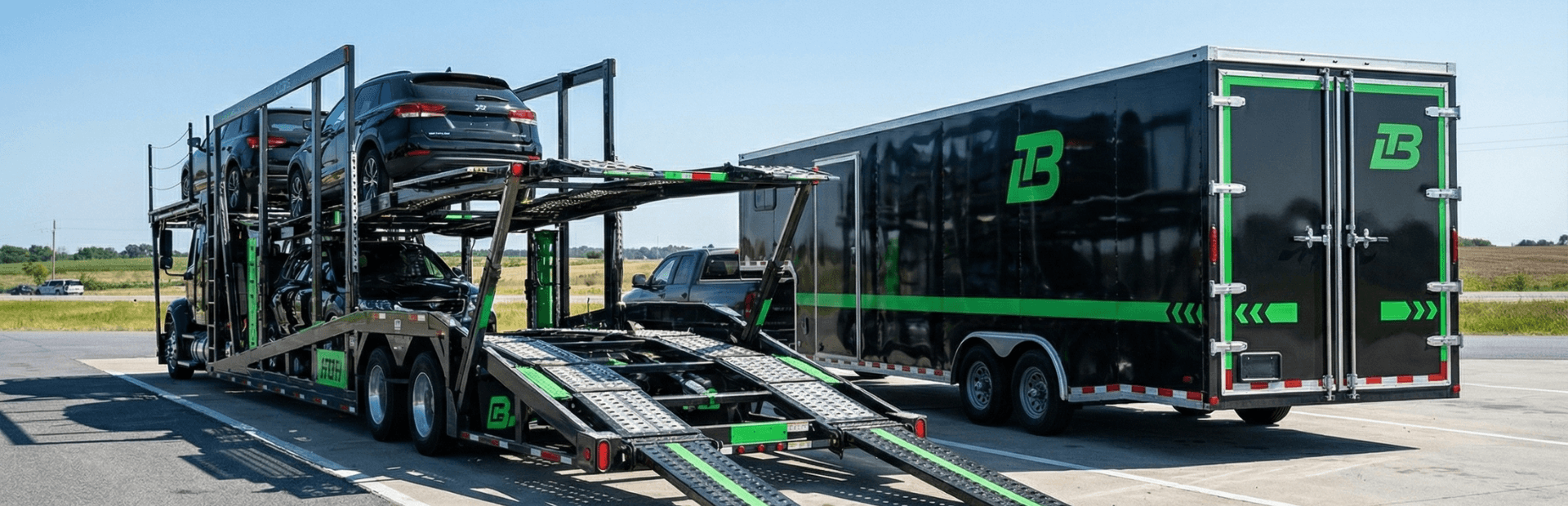
Open vs Enclosed Transport — What Actually Matters
Open transport is the backbone of the industry. It’s what you see on the highway every day—multi-car trailers with vehicles exposed to the elements.
-
High Availability: Since most carriers use open trailers, it's easier to find a spot for shipping a pickup truck near me on short notice.
-
Cost Efficiency: Because these trailers can carry up to 10 vehicles, the cost of shipping a pickup truck is split across several customers.
-
Visual Inspection: Drivers can easily keep an eye on the straps and the vehicle’s condition throughout the trip.
Enclosed transport is the "white glove" alternative. If you own a Raptor, a classic C10, or a truck with a custom paint job, the extra protection is worth every penny.
It shields your vehicle from road debris, rain, and hail. It’s also the preferred choice if you need to ship a pickup truck to pennsylvania during the winter when road salt becomes a major concern for the undercarriage.
|
Feature |
Open Carrier |
Enclosed Carrier |
|
Protection |
Exposed to weather/debris |
Fully shielded |
|
Availability |
Very High |
Lower |
|
Vehicle Type |
Daily drivers, work trucks |
Luxury, classic, modified |
|
Pricing |
Standard |
30%–50% Higher |
Can I Ship a Pickup Truck by Train?
One of the most common questions I hear is: Can i ship a pickup truck by train? The answer is yes, but it comes with a massive "if."
Rail shipping involves loading your truck into a specialized rail car. While it is incredibly efficient for moving thousands of vehicles at once, it is rarely geared toward the individual consumer.
-
Limited Routes: Trains run on fixed tracks. If you aren't near a major rail hub, you'll still need a truck to get it to the station.
-
Terminal-to-Terminal Only: Unlike trucking, you won't get a driver dropping the keys at your front door.
-
Less Flexibility: Trains don't leave until they are full. If you're on a tight deadline, the rail won't wait for you.
Rail can be a budget-saver if you are moving between two massive hubs, like Los Angeles to Chicago, but the logistics are often more trouble than they're worth for a single vehicle.
Rail shipping can be 10–20% cheaper than trucking, but only on specific high-volume routes with rigid schedules.
Choosing the Right Carrier for Your Situation
Matching your truck to the right carrier depends on three things: your budget, how fast you need it, and how much you care about a little road dust.
-
Budget First: Go with an open carrier. It is the most reliable way to ship a pickup truck without breaking the bank.
-
Tight Timeline: Stick to door-to-door trucking. It bypasses the delays found in terminal or rail shipping.
-
Custom Rigs: If you have oversized tires or a lift, ensure your carrier has the right ramp clearance.
Most owners still choose door-to-door trucking because the convenience of having a driver meet you at your home outweighs the slight savings of a terminal drop-off.
To ensure your chosen carrier is up to code, I always recommend checking the FMCSA Company Data before handing over your keys. You can also explore our guide to choosing the best auto transport service for more insider tips.
Special Cases: Beds, Local Moves, and State-Specific Shipping
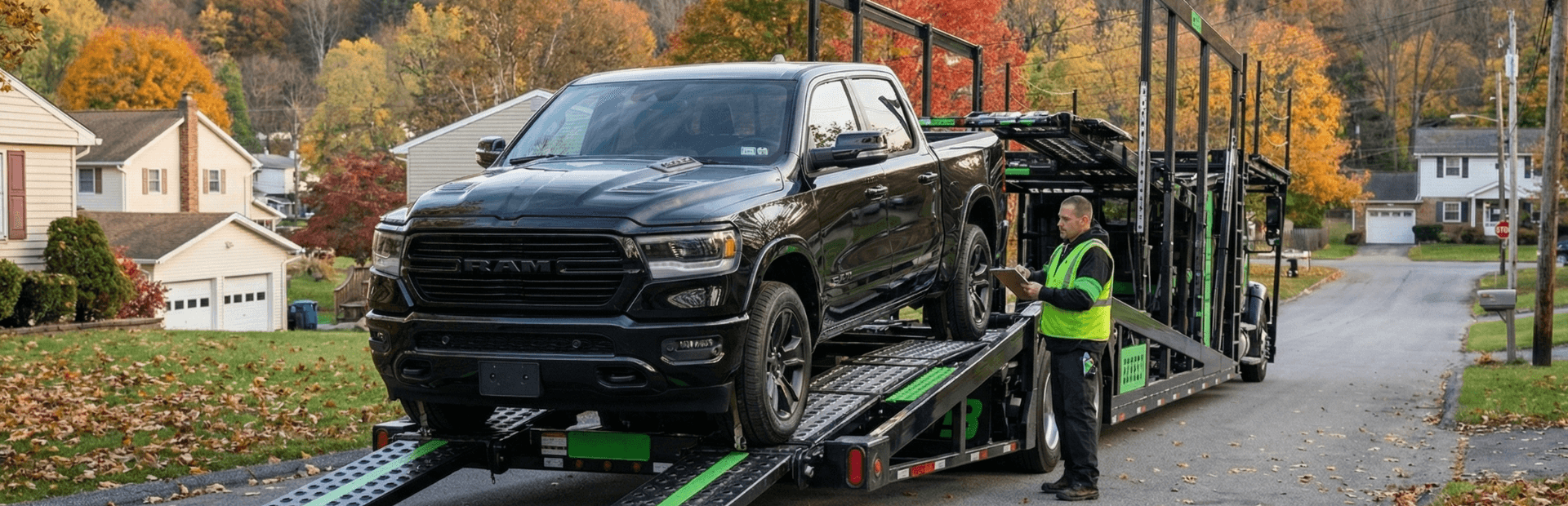
Sometimes you aren't moving the whole rig, just a piece of it. Shipping a pickup truck bed is common for restoration projects or specialized repairs where the chassis stays home.
Since a bed is an awkward, oversized part, standard car carriers won't touch it. You’ll need a different strategy for this specific logistics challenge.
-
Freight vs Standard Carrier: You’ll likely use an LTL (Less Than Truckload) freight provider rather than a car hauler.
-
Packaging Requirements: The bed must be palletized and securely crated to prevent warping or paint damage during transit.
-
Cost Differences: Freight is billed by weight class and dimension, often making the bed surprisingly expensive to move compared to the whole truck.
When you transition from parts to shipping a pickup truck locally, the game changes again. You aren't worried about cross-country fuel stops; you're worried about immediate availability.
If you are looking for shipping a pickup truck near me, you are going to see a mix of local "hot shot" owner-operators and national brokers.
-
Broker vs Carrier: Local moves are often handled by smaller carriers, while brokers help you find a slot on a truck already passing through your town.
-
Availability: Local spots fill up fast, so booking a few days out is better than a "right now" request.
-
Pricing Transparency: Expect a flat fee for short hauls rather than a complex per-mile breakdown.
The destination dictates the difficulty. For instance, if you ship a pickup truck to pennsylvania, the route matters. Delivering to Philadelphia is easy; a drop-off in the rural Alleghenies is not.
Northeast logistics are heavily influenced by the calendar. Narrow, winding roads and unpredictable lake-effect snow can turn a standard delivery into a multi-day ordeal.
-
Weather: Winter storms frequently shut down key passes, delaying your truck’s arrival.
-
Demand: High-volume areas like the Tri-State region keep carriers busy, which can actually lower prices due to competition.
Northeast routes (including Pennsylvania) often see higher seasonal pricing spikes in winter months due to increased insurance risks and slower travel times.
Whether you are moving a vehicle across town or clear across the country, check the FMCSA for carrier safety ratings. For those heading to the Northeast, our New York to Alabama car shipping guide offers great context on East Coast pricing.
Risks, Mistakes, and How to Avoid Overpaying

Getting a quote to ship a pickup truck is easy; getting the truck delivered without a surprise bill is where most people trip up. I have seen countless shippers lose money simply because they treated their truck like a small sedan.
To avoid a logistical nightmare, stay clear of these common blunders:
-
Not checking size restrictions: If your truck is wider than a standard dually, it might not even fit on the carrier you booked.
-
Ignoring modification disclosures: Failing to mention that 4-inch lift or those wide tires is a guaranteed way to get your vehicle rejected at the curb.
-
Choosing the lowest quote blindly: "Lowball" quotes often come from brokers who can’t actually find a driver to move a heavy vehicle at that price.
Pickups face more delays than cars because they are "heavy hitters." If a driver is close to their weight limit, a heavy-duty truck is the first vehicle to get bumped for a lighter load.
Even when you think you have a locked-in cost to ship a pickup truck, certain factors can trigger a price hike:
-
Oversized vehicle fees: These are standard for anything larger than a mid-size truck to cover the extra space used.
-
Remote delivery surcharges: If the driver has to go miles off the main interstate, you’ll pay for the extra diesel and time.
-
Expedited shipping charges: If you need it there yesterday, expect to pay a massive premium to jump the line.
Preparation is your best defense against damage and disputes. Clean your truck, document every scratch, and remove any loose items from the shipping a pickup truck bed area to avoid flying debris.
-
Wash the exterior: It is impossible to do a proper inspection on a mud-caked truck.
-
Take photos: Capture every angle in high resolution before the driver arrives.
-
Check the fluids: Ensure there are no leaks that could drip on vehicles below yours.
Improper vehicle prep is responsible for a majority of post-delivery disputes, often leading to denied insurance claims.
Before you commit, take a moment to avoid 10 car shipping mistakes that can cost you thousands. It is also smart to check DOT and an MC number for any carrier that seems too good to be true.
Quick Insights: Navigating Your Pickup Transport Queries
When you’re ready to move your truck, you usually have a few specific questions that need straight answers. Here is a breakdown of what most owners want to know before they book a carrier.
Can you tow a shipping container with a pickup truck?
Yes, but only if you have a heavy-duty truck with a sufficient towing capacity and the right hitch. You must ensure your truck’s GCWR can handle the weight of the container and the trailer combined.
How do i get a pickup truck shipping cost?
The most accurate way is to use an online calculator or contact a broker directly. You will need to provide your truck’s year, make, model, modifications, and your specific pickup and delivery zip codes.
How much does it cost to ship a pickup truck?
On average, the cost of shipping a pickup truck ranges from $500 for local moves to over $1,500 for cross-country trips. Prices fluctuate based on the total weight and the type of carrier you choose.
How much it takes to ship a pickup truck?
Most shipments take between 1 and 10 days. Local hauls under 500 miles usually arrive in 1 to 3 days, while shipping across the country typically takes at least a week to reach the destination.
How much to ship a pickup truck?
The total depends heavily on size. For a standard mid-size truck, expect to pay around $1.00 per mile for long distances. Larger, heavy-duty rigs will naturally push that rate higher due to their weight.
How much would it cost to ship a pickup truck?
If you are moving a full-size truck 1,000 miles, you should budget roughly $900 to $1,200. You can check the FMCSA to ensure your carrier is licensed for interstate transport before paying.
How to ship a pickup truck across the country?
The best way to ship a pickup truck cross-country is to book a door-to-door open carrier. This balances convenience and cost, ensuring your truck is picked up at your home and delivered directly to your new address.
Final Take on Securing Your Pickup Truck Transport
Successfully trying to ship a pickup truck comes down to being honest about your vehicle's footprint. Since size and weight are the primary drivers for the cost to ship a pickup truck, choosing a carrier that specializes in larger loads is more practical than simply hunting for the lowest price. Whether you need to ship a pickup truck to pennsylvania or are just shipping a pickup truck locally, providing full details about modifications prevents unexpected surcharges at the curb.
While the cost of shipping a pickup truck can fluctuate, prioritizing a reliable route and a verified driver ensures your rig arrives exactly as it left. If you are ready to move, you can get a quote from a verified carrier to see the current rates for your specific route and truck dimensions.