


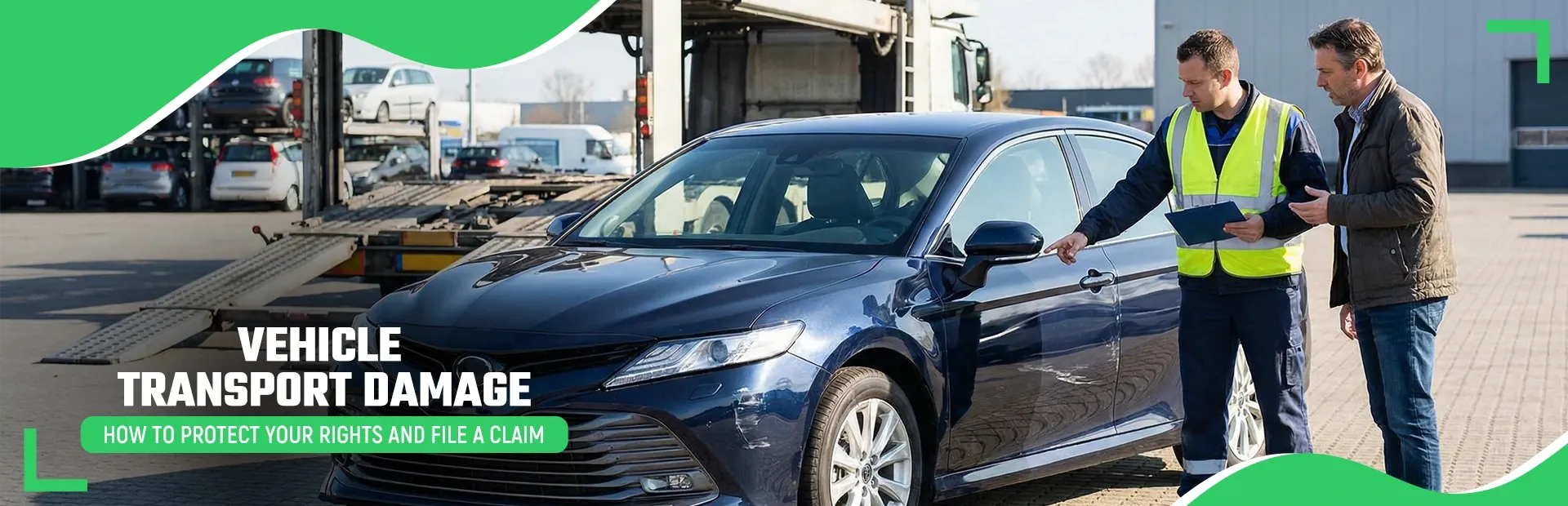
Car Insurance Claims: Your Rights When a Car Gets Damaged in Transit

Car Insurance Claims: Your Rights When a Car Gets Damaged in Transit

Transportvibe
May 21, 2025
5 min read

Shipping your car can be a convenient way to relocate, but what happens if your vehicle arrives with damage? Whether it's a dented bumper, a cracked windshield, or worse, knowing your rights—and how car insurance applies—is crucial to resolving the issue fairly and efficiently. At Transportvibe, we believe in empowering car owners with accurate, honest information about the auto transport industry—especially when things don’t go as planned. In this in-depth guide, we’ll break down your legal rights, insurance coverage expectations, claim procedures, and how to protect yourself before, during, and after car shipping within the USA.

Common Types of Auto Transport Damage

Car damage during shipping can occur due to:

  • Improper loading/unloading
  • Poorly secured straps or tie-downs
  • Weather-related issues (hail, debris, road salt)
  • Accidents during transit
  • Trailer malfunctions (e.g., hydraulic failures)

Typical damages include:

  • Scratches and dents
  • Cracked windshields
  • Paint scuffs
  • Undercarriage damage (less common but serious)

While major accidents are rare, minor damages are not uncommon. That’s why knowing your rights and understanding car insurance coverage matters.

Your Legal Rights as a Vehicle Owner

If your vehicle is damaged during transit, you have the right to file a car insurance claim and seek reimbursement. These rights are protected under federal regulations and the carrier’s insurance policy. Here’s what you are legally entitled to:

1. A Copy of the Bill of Lading (BOL)

This document serves as your contract and damage inspection record. It should:

  • Be filled out at pickup and delivery
  • Note the condition of the vehicle before/after
  • Include signatures from you (or your agent) and the driver

2. Full Disclosure of Insurance Coverage

All carriers must carry cargo liability insurance, typically between $100,000–$250,000 per load. You have the right to:

  • Request a Certificate of Insurance (COI)
  • Confirm whether the policy covers exterior and mechanical damages

3. Timely Response to Claims

Carriers are legally obligated to respond to car insurance claims within a reasonable time frame (usually 30 days). If they delay or ignore your claim, you can:

  • File a complaint with the Federal Motor Carrier Safety Administration (FMCSA)
  • Involve a lawyer or claims adjuster

4. Right to Third-Party Assessment

You can use a certified mechanic or auto body shop to assess damages. Their written report can support your insurance claim.

How to File a Car Insurance Damage Claim: Step-by-Step

At Transportvibe, we recommend following this precise timeline to ensure a smooth claims process:

Step 1: Document Damage Immediately

  • Take clear, timestamped photos
  • Record video if possible
  • Compare delivery condition to your pickup inspection photos

Step 2: Note Damage on the Delivery BOL

Do not sign a clean BOL if you notice any damage. Mark the issues clearly and make sure the driver acknowledges them.

Step 3: Request the Carrier’s Insurance Info

Ask the driver or dispatch for:

  • Insurance provider name
  • Policy number
  • Claim department contact

Step 4: Submit a Written Car Insurance Claim

Include:

  • Copy of the signed BOL
  • All photographic evidence
  • Third-party damage assessment (if available)
  • Your repair cost estimate

Send it via certified mail or email and keep records.

Step 5: Follow Up Within 2–3 Weeks

If there’s no response, escalate to the FMCSA or consider small claims court.

What Does Car Insurance Typically Cover During Transit?

Here’s what most auto transport insurance policies typically include:

Covered Not Covered
Exterior body damage Personal belongings inside vehicle
Scratches, dents, cracked glass Pre-existing damage
Vehicle theft or loss Mechanical failures unrelated to transit
Fire, collision, weather Undercarriage (sometimes excluded)

Transportvibe Tip: Always ask about deductibles and exclusions before booking. Some policies require you to pay the first $500–$1,000 of damage.

How to Protect Your Vehicle Before Shipping

  1. Take detailed pre-shipment photos
  2. Remove all personal items
  3. Disable alarms and toll passes
  4. Leave only 1/4 tank of gas
  5. Get a mechanic inspection if you’re shipping a luxury/classic car

Choose enclosed transport if you’re shipping:

  • High-value vehicles
  • Luxury brands (Tesla, BMW, Mercedes)
  • Classic or collector cars
  • Show cars

At Transportvibe, we list which carriers offer enclosed shipping and highlight their safety track record in verified reviews.

Real Customer Scenarios

Scenario 1: John shipped his 2020 Audi Q5 from Texas to Florida. Upon delivery, he noticed a cracked headlight. He had documented the vehicle before shipment and marked the damage on the BOL. He filed a car insurance claim and received $1,150 within 21 days. Scenario 2: Emily’s vintage Corvette arrived with paint scratches after an open transport trip. She hadn’t taken photos before pickup and the BOL was signed clean. Her claim was denied. Lesson: Always document and inspect—no matter how trusted the carrier seems.

Legal Recourse if Your Car Insurance Claim Is Denied

If the carrier refuses to cover your damages:

  • Escalate to the FMCSA using the National Consumer Complaint Database
  • File a complaint with the Better Business Bureau (BBB)
  • Pursue small claims court (for damages under ~$10,000)
  • Hire a transport lawyer for larger claims or bad faith handling

Transportvibe also tracks unresolved claim patterns across companies and flags high-risk providers on our review platform.

What to Look For in a Safe Carrier

To minimize the risk of damage:

  • Check the carrier’s FMCSA safety score
  • Read recent Transportvibe reviews
  • Ask about their claims ratio (how often damage occurs)
  • Choose companies that use soft straps and liftgates for exotic cars

You can compare carriers by these metrics directly at Transportvibe.com.

Final Thoughts

Vehicle damage during transport is rare—but it does happen. Knowing your rights, staying proactive, and choosing the right transport provider can make all the difference. With Transportvibe, you’re not just booking a shipping service—you’re partnering with a platform that prioritizes honesty, safety, and your peace of mind. From step-by-step car insurance claim support to transparent carrier reviews, we’re here to protect your vehicle—and your rights—every mile of the journey.  

Related articles

MAY 22, 2025
Top 7 Ways to Ship a Car Cheaply Across the USA

Top 7 Ways to Ship a Car Cheaply Across the USA

TRANSPORTVIBE

If you're searching for the cheapest way to ship a car across the USA, you're in the right place. Whether you're moving, gifting a car, or buying from another state, this comprehensive guide by Transportvibe helps you understand every factor that affects your shipping cost. In this blog post, you'll learn: How to choose between open vs enclosed shipping What routes are the cheapest How time of year affects pricing Tips to avoid hidden fees How to choose a reliable carrier And real case studies with savings Let’s dive into the top 7 ways to save on car shipping across the USA 1. Use Open Carrier Transport – The Budget Choice The cheapest way to ship a car across the USA is almost always via open carrier transport . These trailers move multiple cars at once, spreading the cost among customers. Open Carrier Pros: More affordable than enclosed Faster to schedule Widely available in most states Cons: Cars are exposed to weather and debris Risk of minor surface damage In contrast, enclosed carriers are more secure but come at a premium—typically 30% to 50% more. Unless you're shipping a luxury or vintage car, open carrier is your go-to for savings. 2. Compare Average Costs by Distance and Carrier Type To make informed decisions, understand the average market rates for car shipping: Distance Open Carrier Enclosed Carrier 500 miles $550–$750 $900–$1,200 1,000 miles $750–$1,000 $1,250–$1,500 2,000+ miles $950–$1,300 $1,400–$1,900 These prices vary based on several factors: Vehicle size and weight Origin and destination Seasonal demand Fuel costs Type of transport service To estimate your specific cost, use Transportvibe’s quote comparison tool and compare 3–5 providers before booking. 3. Go Terminal-to-Terminal to Cut Costs While most people prefer door-to-door shipping, terminal-to-terminal is a solid alternative when aiming for the lowest price. Advantages: Lower labor costs Easier for carriers to route pickups Avoids residential delivery restrictions Drawbacks: Not available in remote areas Extra storage fees if you're late to collect the vehicle This method is great if you live near a major metro area and have flexibility in vehicle pickup. 4. Ship During Off-Peak Seasons Seasonality has a major impact on your car shipping cost. Avoid high-demand months like June to August and late December . Best Times to Ship Cheap: January through March Late September through November Planning 3–4 weeks ahead and staying flexible with pickup windows of 3–5 days can reduce rates by up to 20%. 5. Maximize Savings With These Smart Tips Want to save more on your car shipment? Try these proven strategies: ✅ Book Early – Last-minute bookings are costly ✅ Use Open Carrier – Cheapest and fastest option ✅ Be Flexible – Let the shipper optimize pickup ✅ Use Discounts – Military, student, and first-time user codes ✅ Bundle Cars – Shipping 2+ cars lowers cost per vehicle ✅ Avoid Add-Ons – Extras like top-loading and expedited delivery add fees ✅ Compare Quotes – Always shop around using Transportvibe.com 6. Watch for Hidden Fees Some carriers bait customers with low base quotes, then tack on hidden fees. Here’s what to look out for: Fuel surcharges Non-operable vehicle handling Last-minute pickup changes Excess wait-time charges Storage fees for terminal pickup Always request an itemized all-inclusive quote before confirming. Reputable platforms like Transportvibe help filter shady operators by showing transparent, verified reviews . 7. Pick a Trusted Carrier With No Surprises Choosing a cheap carrier is easy—choosing a good cheap carrier takes research. Here’s what makes a shipper both affordable and reliable: Must-Haves: FMCSA-licensed (Federal Motor Carrier Safety Administration) Transparent pricing No cancellation penalties Insurance coverage of at least $50,000–$100,000 Verified customer reviews (read recent ones!) 💡 Use Transportvibe’s carrier lookup to verify FMCSA registration and insurance in one place. Sample Customer Success Stories 💬 John from New Jersey : Used Transportvibe to ship a Honda Civic from NJ to Texas. Saved $300 over other platforms. 💬 Sarah from California : Used terminal shipping to move her Toyota Corolla to Chicago for $780. 💬 David (Military Relocation) : Shipped a Dodge Charger enclosed with 15% military discount and saved $450. These real-life savings are possible with a bit of planning and the right tools. Cheapest USA Car Shipping Routes Certain routes are naturally more affordable because of demand and route volume. Here are a few of the cheapest car shipping routes : New York → Florida California → Texas Illinois → Arizona Washington → Nevada Georgia → Colorado Choosing major cities or highway corridors ensures better access to carriers and faster, cheaper delivery. What to Expect: Step-by-Step Shipping Process Get Quotes – Via form or phone Review Carriers – Check reviews, pricing, and service details Book the Job – Choose your carrier and confirm the order Inspection – Document vehicle condition before pickup Pickup & Delivery – Carrier transports to terminal or door Final Inspection – Check for damage before signing Use Transportvibe’s auto checklist tool to stay organized. Final Checklist Before Booking ✅ Confirm FMCSA license ✅ Check insurance terms ✅ Understand total cost (ask for breakdown) ✅ Know your delivery timeframe ✅ Review refund/cancellation policies Helpful Links ✅ FMCSA License Lookup ✅ Transport Reviews ✅ Better Business Bureau Conclusion: Informed = Affordable The cheapest way to ship a car across the USA isn’t about sacrificing quality—it’s about knowing your options. Use open carriers, flexible timing, and comparison tools like Transportvibe.com to find reliable carriers at the best prices. With verified reviews, transparent cost comparisons, and route planning tools, Transportvibe empowers you to take control of your car shipping experience from start to finish.

MAY 20, 2025
How Long Does International Car Shipping Take from the USA?

How Long Does International Car Shipping Take from the USA?

TRANSPORTVIBE

Shipping a car internationally from the United States is a complex yet increasingly common process. Whether you're relocating overseas, selling a car to an international buyer, or taking your prized vehicle abroad for a long stay, understanding how long international car shipping takes is essential for proper planning. At Transportvibe , we’ve helped thousands of car owners navigate cross-border auto transport. In this comprehensive guide, we’ll explore every factor that affects delivery times, from the port of origin to destination country, customs clearance delays, shipping methods, and more—so you know what to expect when shipping a car from the USA. Overview: Average Shipping Time from the USA to Major Regions The typical shipping duration for a vehicle from the U.S. to another country varies based on route, port traffic, and method of shipment. Here's a rough breakdown: Destination Estimated Transit Time Europe (e.g., Germany, UK) 2–4 weeks (roll-on/roll-off) Middle East (e.g., UAE, Saudi Arabia) 3–5 weeks Africa (e.g., Nigeria, South Africa) 4–6 weeks Asia (e.g., Japan, South Korea) 3–6 weeks Australia/New Zealand 4–7 weeks Latin America (e.g., Panama, Chile) 2–5 weeks Canada & Mexico (via ground) 5–14 days ⚠️ These estimates include ocean transit and customs clearance but not pickup delays or unexpected port congestion. Factors That Influence International Car Shipping Time 1. Shipping Method: Roll-On/Roll-Off vs. Container RoRo (Roll-on/Roll-off): Fastest and most affordable option. Vehicles are driven directly onto the vessel. Less secure and less flexible for destinations without RoRo port facilities. Container Shipping: Offers added protection and allows personal belongings to be shipped inside the vehicle. Container services usually take longer to arrange and load. 2. Port of Origin and Destination Ports with more frequent sailings and streamlined operations tend to offer quicker shipping: Popular U.S. export ports: Newark, Savannah, Miami, Houston, Los Angeles, Oakland Busy international receiving ports: Rotterdam (Netherlands), Bremerhaven (Germany), Jebel Ali (UAE), Durban (South Africa) 3. Documentation & Customs Clearance Delays Shipping time also depends on how fast you can provide the following: Vehicle Title & Bill of Sale Export Power of Attorney (POA) Government-issued ID or passport EPA/DOT compliance letter (for some countries) Import permit (destination country-specific) Customs clearance at the port of arrival may take anywhere from 3 to 10 business days , depending on the country. 4. Inland Transport Time to Port If your car is located far from a major export port, domestic transport time must be factored in: Truck transport within the U.S. takes 2–7 days , depending on the distance. Expect extra time for rural or remote pickup locations. 5. Time of Year / Seasonality International shipping can be impacted by: Peak seasons (June–August, November–December) Holiday delays in both USA and destination countries Bad weather and port congestion (especially winter storms or monsoons) Step-by-Step Timeline for Shipping a Car Overseas from the USA Here’s a typical international car shipping timeline: Get Quotes & Book Shipping – 1 to 3 days Vehicle Pickup and Delivery to Port – 2 to 7 days Customs Clearance (U.S. Export) – 2 to 5 days Vehicle Loading and Port Departure – 1 to 4 days Ocean Freight Duration – 7 to 30+ days (based on destination) Arrival and Import Customs Clearance – 3 to 10 days Final Delivery or Pickup Abroad – 1 to 5 days Total: 3 to 7 weeks on average Does Faster Shipping Cost More? Yes. If you're in a hurry, you can choose: Expedited container loading Direct port-to-port shipments Priority customs clearance (through an agent) However, expect to pay 20–40% more for urgent shipping. Planning in advance will always save money and reduce risk. How to Prepare for International Car Shipping Before shipping a vehicle abroad, ensure: The car is clean and empty (check with your carrier if personal items are allowed) Battery is charged, tires inflated, and gas tank under ¼ full You remove all toll tags, GPS devices, and valuables All documents are notarized and submitted to your carrier or freight forwarder What About Insurance? International car shipping typically includes basic carrier liability , but this may not cover: Natural disasters Theft or total loss Damage during loading/unloading We recommend purchasing marine cargo insurance valued at 100% of your car’s worth for peace of mind. Top U.S. Ports for International Car Shipping Port Region Notes Port Newark, NJ East Coast High volume, fast turnarounds Port of Houston, TX Gulf Coast Great for Latin America routes Port of Miami, FL Southeast U.S. Caribbean, Central America Port of Los Angeles West Coast Best for Asia, Australia Port of Oakland, CA West Coast Alternative to L.A. Choose a port closest to your location or most efficient for your route. Expert Tips from Transportvibe Get multiple international car shipping quotes to compare timelines and costs. Work with licensed NVOCCs and FMCSA-certified transporters. Choose container shipping for classic, exotic, or high-value vehicles. Plan for potential delays at customs or destination port. Track your shipment in real time using GPS or vessel tracking tools. Why Use Transportvibe? Transportvibe is your trusted source for: Verified international auto transport reviews Export/import guides by country Recommended carriers for international car shipping Quote comparison tools for container vs RoRo We’ve helped thousands of customers ship cars from the USA to Europe, Asia, Latin America, and the Middle East with confidence. Final Thoughts So, how long does it take to ship a car internationally from the U.S.? The answer depends on your shipping method, destination, and planning. On average, it ranges from 3 to 7 weeks , but with the right partner, it can be a smooth, stress-free process. Whether you're sending a Toyota to Tokyo or a Mustang to Munich, Transportvibe helps you ship smart—by providing verified shipping options, expert resources, and step-by-step support.