

The U.S. vehicle shipping industry pulled in $9.9 billion in revenue in 2023, and nearly every dollar of it starts with a contract most people never read. They compare quotes, pick the lowest number, sign, and move on. Then the invoice climbs, the pickup date slips, or the car shows up with a scratch nobody wants to own.
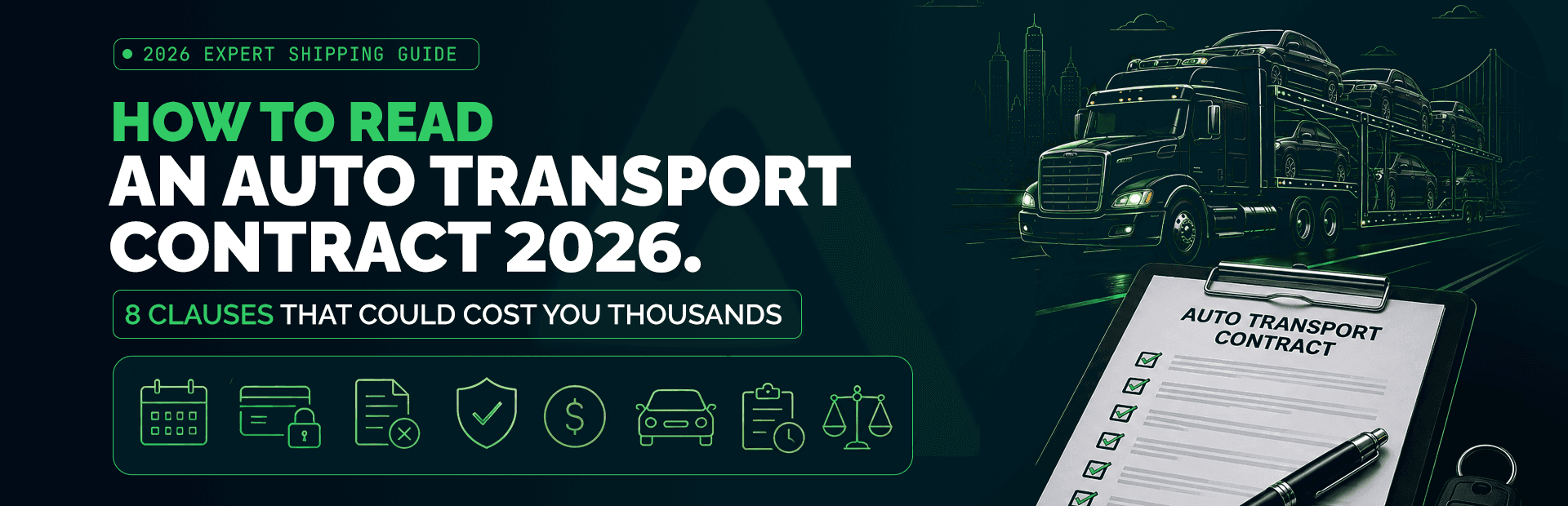
The gap between the quote and the pain lives in the auto transport contract clauses. Learn to read those eight clauses and you protect your money. Miss them and you end up funding someone else's loophole. This guide breaks down each clause in plain English, shows exactly how people get trapped, and hands you the way out.
Ready to ship with terms you can actually read? Get a free, no-obligation quote from vetted providers on TransportVibe and compare the fine print side by side before you commit to anyone.
Why the Contract, Not the Quote, Decides What You Pay
A quote is a sales number. A contract is the deal. The two are not the same, and the space between them is where most shipping money leaks out.
Start with the biggest source of confusion: the broker vs carrier car shipping contract question. Most people who ship a car sign with a broker, not the trucker who actually shows up at the curb. A broker arranges your shipment through a network of carriers. A carrier owns the truck and does the driving. The document you sign tells you which one you are dealing with, and that single fact changes who is responsible when something goes wrong. If you want the full money side of that split, this breakdown of how broker and carrier pricing differs is worth ten minutes.
Here is the part that pays you back later. The carrier's insurance is what covers your vehicle in transit, not the broker's marketing promise. Before you sign anything, run the assigned carrier's DOT and MC numbers through the FMCSA SAFER company snapshot to confirm the authority is active. Whether you book standard open car shipping or a more protected option, the name on the contract is the name on the hook. Read it first.
The 8 Auto Transport Contract Clauses at a Glance
Before the deep dive, here is the full map. This table is the fastest way to learn what to look for in an auto transport contract, one clause at a time. Print it, or keep it open in another tab, and hold your own car shipping contract sample against every row. Think of it as the car shipping terms and conditions explained on a single screen. If your paperwork is missing a clause or hiding it in dense language, that is your first signal to ask questions.
|
# |
Clause |
What It Controls |
Red Flag to Watch For |
|
1 |
Carrier vs Broker Designation |
Who you actually contract with and who insures the car |
No carrier name, DOT, or MC number listed |
|
2 |
Bill of Lading |
Your legal proof of the car's condition at pickup and delivery |
Driver rushes you to sign without a joint inspection |
|
3 |
Guaranteed Pickup and Delivery Dates |
Whether dates are promises or estimates |
The word "guaranteed" with no penalty for missing it |
|
4 |
Deposit and Refund Policy |
How much you pay upfront and when it is refundable |
Large non-refundable deposit before a carrier is assigned |
|
5 |
Cancellation Policy |
What it costs to back out and by when |
Vague or missing cancellation window |
|
6 |
Hidden and Added Fees |
Surcharges layered on after booking |
Prices described as "starting at" with no cap |
|
7 |
Insurance Coverage Limits and Liability |
How much damage is covered and what is excluded |
No coverage amount stated in the contract |
|
8 |
Damage Claim Process |
How you file, and the deadline to do it |
No written claim window or filing instructions |
Read these before you sign, in this order. Each one covers what the clause is, how people misread or skip it, and how to get out of the trap the smart way.
Clause 1: Carrier vs Broker Designation
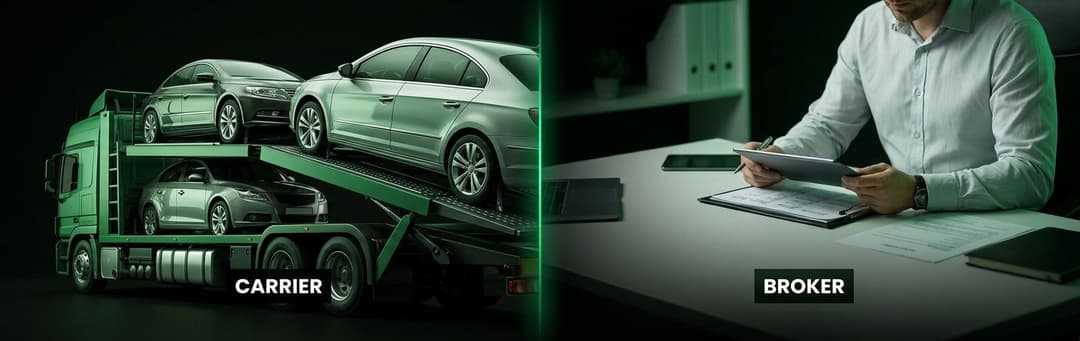
This clause names who you are actually signing with. In a broker vs carrier car shipping contract, the broker books the load and the carrier hauls it. Both are legitimate roles, but they carry different responsibilities.
How people get trapped: they assume the friendly voice that sold them the price will personally ship the car. It rarely works that way. Brokers assign your shipment to an independent carrier, and the price can shift while that carrier is being found.
How to escape it: ask, in writing, whether you are contracting with a broker or a carrier. Get the assigned carrier's legal name plus its DOT and MC numbers. That is the entity whose carrier liability car shipping coverage protects your vehicle, so you want proof it exists and is active before pickup day.
Clause 2: The Bill of Lading
The bill of lading is the single most important piece of paper in the whole process. Getting the auto transport bill of lading explained clearly can save you a claim later, because it is the legal record of your car's condition at pickup and again at delivery.
How people get trapped: the driver arrives, hands over a clipboard, and asks for a quick signature in fading light. People sign a "clean" delivery form, spot the dent the next morning, and lose the ability to prove the damage happened in transit.
How to escape it: treat the bill of lading like a home inspection. Walk the car with the driver at pickup, note every existing scratch, and photograph all four sides plus the roof. Do the same at delivery before you sign anything.
Key point: A damage claim is judged almost entirely against the bill of lading. If it is not marked on that document at delivery, proving it later is an uphill fight.
Clause 3: Guaranteed Pickup and Delivery Dates

So, are car shipping delivery dates guaranteed? In most standard contracts, no. What you get is an estimated window, not a fixed promise. That single misunderstanding causes more frustration than almost any other clause, which is why so many first-time shippers only ask are car shipping delivery dates guaranteed after the truck is already running late.
How people get trapped: a customer reads "estimated delivery: 3 to 5 days," treats it as a hard date, books a flight around it, and then eats a change fee when the truck runs a day late. Weather, routing, and carrier availability all move real timelines.
How to escape it: separate an estimate from a true auto transport guaranteed pickup date. A real guarantee is a paid, written service with a stated remedy if the company misses it. If a rep promises a firm date verbally, ask them to put the guarantee and the penalty in the contract. If they will not, treat the date as a window. For a deeper look at accountability, see who is responsible when a car is delayed in delivery.
Clause 4: Deposit and Refund Policy

This clause controls the money you hand over before the wheels turn. First, what is a car shipping deposit? It is a partial payment, often taken once a carrier commits to your load, with the balance due at delivery.
How people get trapped: the auto transport deposit refund policy usually flips at a specific moment. Refundable before a carrier is assigned, gone after. People cancel a day too late and watch a few hundred dollars evaporate because they never asked where that line sat.
How to escape it: get the refund trigger in writing. Ask one direct question. "At what exact point does my deposit stop being refundable?" A transparent company answers in one sentence. If the answer is fuzzy, that is a preview of how the rest of the relationship will go.
Clause 5: Cancellation Policy
The car shipping cancellation policy decides what it costs to walk away and by when. It is closely tied to the deposit clause but deserves its own read.
How people get trapped: they cancel after a carrier is already dispatched and get hit with a flat cancellation fee they never saw. Many contracts treat "before dispatch" and "after dispatch" as two very different worlds.
How to escape it: find the notice window and the exact fee. Cancel inside the free window whenever possible, and always get the confirmation in writing with a timestamp. If you are shipping on a tight timeline, this becomes critical. Your rights are stronger than most people realize, as this guide on what to do if a car shipping company cancels last minute lays out.
Watch the number: Once a carrier is assigned and dispatched, cancellation fees commonly land in the $100 to $250 range. Know your figure before you book, not after.
Clause 6: Hidden and Added Fees

Here is where the final invoice stops matching the quote. Most auto transport hidden fees do not live in the quote at all. They sit inside the car shipping terms and conditions explained section that people scroll right past.
How people get trapped: they compare two quotes, pick the cheaper one, and never read the fee schedule. Then the surcharges land at delivery.
Common fees buried in the terms:
-
Inoperable or non-running vehicle surcharge
-
Oversized, lifted, or modified vehicle fee
-
Extra weight from items packed inside the car
-
Remote or rural pickup and delivery charges
-
Terminal storage if you cannot receive the car on time
-
Expedited or "first available truck" upcharges
-
Payment-method or cash-on-delivery fees
How to escape it: ask for an all-in written price that names every possible add-on for your specific vehicle and route. If a company only quotes a "starting at" number, push for the ceiling. This closer look at hidden car shipping fees shows how fast the small ones add up. Snowbirds running the seasonal Florida-to-north route get hit with these most, since peak-season demand invites surprise surcharges.
Clause 7: Insurance Coverage Limits and Liability
This is the clause that fails people at the worst possible moment. Every carrier carries a set liability amount, and car shipping insurance coverage limits cap what they will pay. This is carrier liability in action, the coverage a carrier is legally required to hold, and anything above that ceiling is on you.
How people get trapped: they assume "fully insured" means everything is covered. It does not. Pre-existing damage, acts of nature, and the belongings you left in the trunk are common exclusions. On the belongings question specifically: does car shipping insurance cover personal belongings? In almost every case, no. Items inside the car are not covered by the carrier's cargo policy, and many contracts forbid loading the car with household goods at all. Worse, leaving personal belongings in the vehicle can void coverage on the car itself if they shift and cause damage.
How to escape it: request the carrier's certificate of insurance and read the actual coverage amount and exclusions. Match it against your car's value. Your transport type matters here too. Standard open car shipping exposes the vehicle to road debris and weather, while enclosed vehicle shipping shields it and usually carries higher coverage. For classic, luxury, and exotic owners, that difference is the whole ballgame. If you want the full picture of what a policy does and does not cover, this guide on car shipping insurance in the USA is the one to bookmark.
Clause 8: The Damage Claim Process

The final clause tells you what to do when the worst happens. A clear auto transport damage claim process is the difference between a paid claim and a shrug. It spells out how to file and, critically, how long you have.
How people get trapped: they sign a clean bill of lading at delivery, notice the damage later, and only then read the claim rules. By then the filing window may already be closing.
How to file a car shipping damage claim, step by step:
-
Inspect the car with the driver at delivery and mark every issue on the bill of lading before you sign.
-
Photograph all sides in daylight, plus close-ups of any damage.
-
Get the driver's signature acknowledging the noted damage.
-
File with the carrier's insurer inside the deadline stated in your contract.
-
If the carrier stalls or denies a valid claim, escalate. You can file a complaint through the FMCSA and reference your documented evidence.
How to escape the trap: never sign a clean delivery form for a car you have not walked around. Your photos and the marked bill of lading are your entire case. This walkthrough on what to do when a car is damaged during shipping shows how strong documentation turns a dispute into a payout.
Not sure whether the contract in front of you protects you or the carrier? Compare quotes and terms from vetted companies on TransportVibe, and book only after you have read every clause that matters.
Auto Transport Contract Red Flags to Catch Before You Sign

Every clause above shares the same warning signs. Once you learn them, spotting a bad deal takes about two minutes. These auto transport contract red flags tend to travel together, and seeing two or three in one contract is usually enough to walk away.
-
A large deposit demanded upfront, before any carrier is assigned
-
No written price lock, so the "quote" can climb at any time
-
Vague or missing cancellation language
-
The word "guaranteed" attached to dates with no penalty clause
-
Refusal to share a car shipping contract sample before you book
-
No carrier name, DOT, or MC number anywhere on the paperwork
-
Coverage described as "full" with no dollar amount stated
The pattern under all of it is simple. Honest companies write clearly because clarity protects both sides. Companies that profit from confusion write in fog. The Federal Trade Commission's consumer guidance reinforces the same rule for any service contract: if the terms are hard to find or harder to understand, slow down. For a tighter pre-signing routine, these car shipping contract tips give you a checklist to run every time.
Companies That Put Their Contract Terms in Writing
Reading clauses is half the job. The other half is choosing a company whose contract is built to be read. The table below highlights four providers known for putting terms in writing rather than in fog. Treat these as contract-clarity features to verify, not as a ranking, and always confirm the specifics in your own quote before you sign.
|
Company |
Contract Strength Worth Noting |
|
Sherpa Auto Transport |
Advertises a written price lock, so the quoted price is the final price with no surprise increases before pickup |
|
Ship A Car Direct |
Promotes a no-upfront-deposit model and a documented damage-free record built around photo inspections |
|
AmeriFreight |
Lists upfront, itemized pricing and offers added gap protection for out-of-pocket claim costs |
|
Easy Auto Ship |
Known for clear quotes and a no-hidden-fee stance, with terms stated before booking |
Notice what these four have in common. Each one competes on transparency, and each puts its promise in language you can point to later. That is exactly what you want in a contract. A car owner relocating cross-country from California, a dealership moving inventory to Texas, a military family on PCS orders, and a collector shipping an exotic all need the same thing: terms that read the same at delivery as they did at booking.
One honest limit worth stating. A strong reputation is a starting point, not a guarantee for your specific load. The assigned carrier, the route, and the season all shape the final experience. Verify the actual carrier and the actual clauses every time, even with a well-reviewed broker.
Before You Sign: Your 10-Minute Contract Check
Price wins the quote. Clauses win the shipment. That is the whole lesson.
The lowest number on a comparison page means very little if the contract behind it hides fees, weak coverage, and a deposit you can never get back. Reading these eight auto transport contract clauses takes about ten minutes. Skipping them can cost thousands, plus the headache of a fight you were never set up to win.
Run the same short check every time, because knowing what to look for in an auto transport contract is a skill you keep for every future move. Confirm who you are contracting with and verify their authority. Read the bill of lading rules. Treat dates as estimates unless a paid, written auto transport guaranteed pickup date says otherwise.
Understand what is a car shipping deposit, then pin down the auto transport deposit refund policy so you know the exact moment your money is safe. Hunt down the fee schedule for any auto transport hidden fees. Read the coverage amount and exclusions. Locate the claim window and learn how to file a car shipping damage claim before you ever need to. Do that, and you sign from a position of knowledge instead of hope.
The best shippers make all of this easy, because a clear contract is the first sign of a company that plans to keep its word.
Do it right from the start. Get a free quote on TransportVibe, read every clause before you commit, and ship your car with terms you fully understand and trust.