


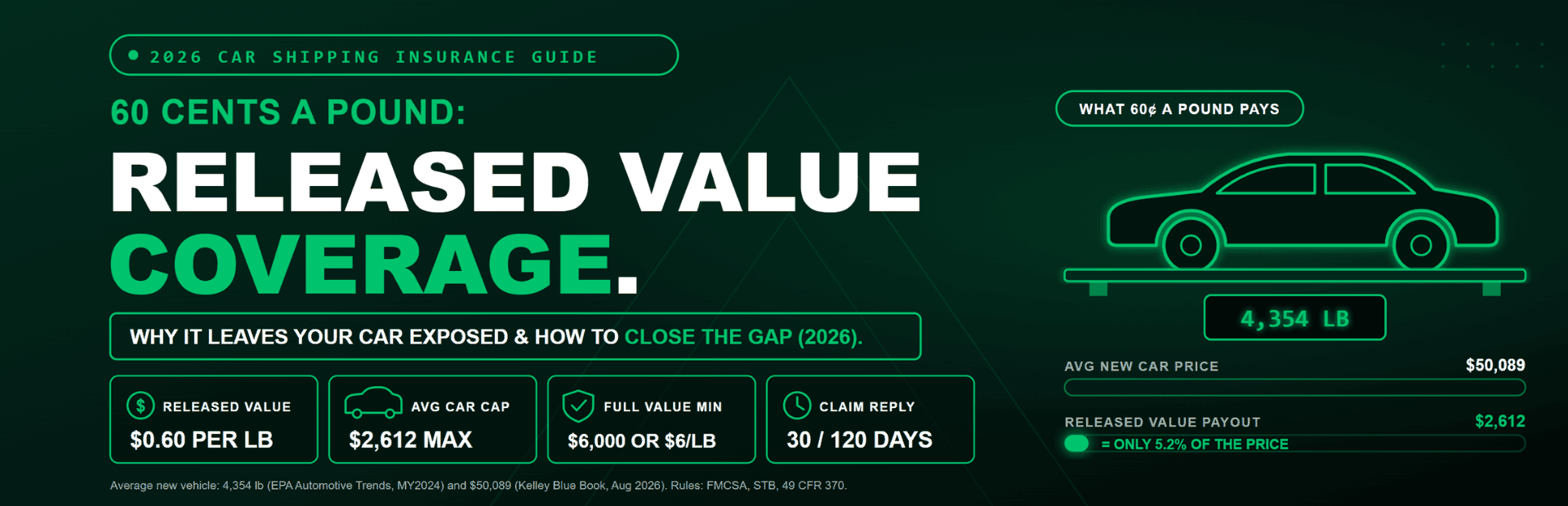
The average new vehicle sold in the U.S. in August 2026 went for $50,089, according to Kelley Blue Book. The average new vehicle weighs 4,354 pounds, per the EPA's Automotive Trends Report. Put that car under Released Value Coverage at 60 cents a pound, and the most you can collect is $2,612. That's 5.2% of what the average buyer paid.
That number hides in a valuation box on a bill of lading, or in a moving contract that bundles your car with the couch. And auto transport insurance doesn't always fill the gap.
Here's how the 60-cent rule works, where it shows up, and how to close the gap before pickup.
Want coverage you can read before you sign? Get a quote from carriers that share their insurance certificate upfront, with no valuation surprises at pickup.
What Released Value Coverage Actually Means
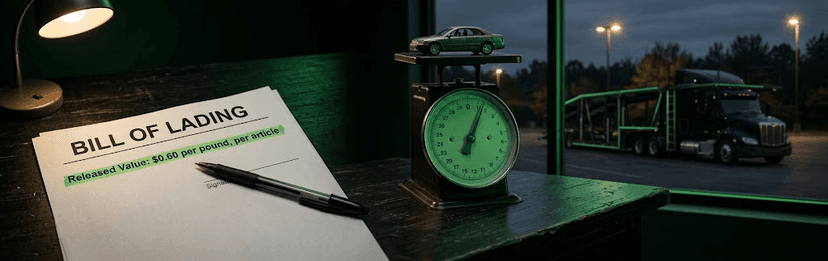
Released Value Coverage is the free, minimum level of liability a household goods mover offers. Under it, the mover pays no more than 60 cents per pound, per article, for anything lost or damaged, no matter what the item is worth.
That's the whole rule. Weight drives the payout. Value never enters the math.
FMCSA's Protect Your Move valuation guide uses a stereo as its example. A 10-pound component worth $1,000 gets you $6. Swap the stereo for a car and the logic doesn't change. It just gets more expensive.
FMCSA calls it released value protection, and it costs nothing for a reason. You also don't land in it by accident, at least on paper. To choose it, you have to sign a specific statement on the bill of lading. If you skip that signature, the mover must haul your shipment at Full Value Protection and charge you for it.
The released value liability cap is set by federal rule. A mover can't quietly push it lower. You can't argue it higher after the fact either. The only way up is to buy full value before the move.
Is Released Value the Same as Insurance?
No. Released value is a liability limit, the most the mover owes you by law. Insurance is a separate product sold by an insurance company. Plenty of people sign the released value line believing they just declined an "upsell," when they actually agreed to the lowest payout the law allows. Our guide to car shipping insurance in the USA breaks down the policies that sit on top of this floor.
The people most likely to sign without reading are the ones under the most pressure: first-time movers on a deadline and older adults handling a move alone. If a parent is relocating, a senior-friendly auto shipping option where someone walks through each page of paperwork is worth asking for.
The 60 Cents Per Pound Coverage Math on a Real Vehicle
The formula is simple: curb weight x $0.60 = the most you can collect. Here's what 60 cents per pound coverage pays on vehicles people actually ship, measured against a $4,000 body shop bill.
|
Vehicle (example weight) |
Max payout at $0.60/lb |
You still owe on a $4,000 repair |
|
Compact sedan (3,000 lb) |
$1,800 |
$2,200 |
|
Average new vehicle, MY2024 (4,354 lb) |
$2,612 |
$1,388 |
|
Midsize SUV (4,500 lb) |
$2,700 |
$1,300 |
|
Full-size pickup (5,500 lb) |
$3,300 |
$700 |
|
Classic muscle car (3,600 lb) |
$2,160 |
$1,840 |
|
Motorcycle (500 lb) |
$300 |
$3,700 |
Weights are rounded examples, except the EPA average. Check your door jamb sticker or owner's manual for your vehicle's curb weight and run the same math.
Two things jump out.
A 500-lb motorcycle maxes out at $300. Riders get the worst ratio of anyone because bikes are light and expensive. A cracked fairing and a bent lever can cost more than that. If you're shipping a bike, look at open air motorcycle shipping with a carrier that lists its cargo coverage, and read how open air vs enclosed motorcycle shipping changes the risk.
The second thing: heavier vehicles "earn" bigger caps, but they rarely close the gap. A pickup collects more than a sedan only because it weighs more. Weight also shapes your shipping price, which is covered in how vehicle size and weight impact car shipping cost.
The classic car row is the one that hurts. A restored muscle car can be worth many times the average new vehicle, and Released Value Coverage still pays it like a 3,600-pound lump of steel.
Released Value vs Full Value Protection: How They Compare
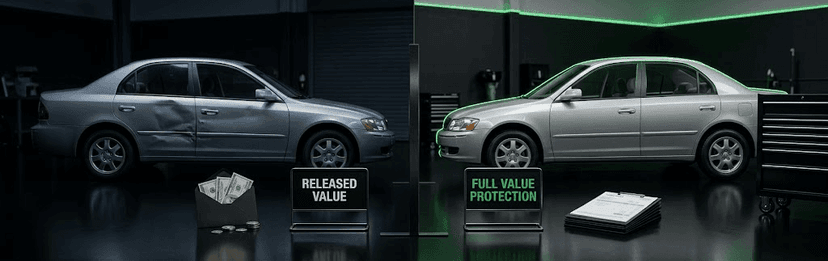
Released value vs full value protection is the one choice on a mover's paperwork that decides whether a damage claim pays pennies or pays the repair. Here's the side-by-side.
|
Factor |
Released Value Protection |
Full Value Protection |
|
Cost to you |
Free |
Extra valuation charge |
|
How payout is calculated |
60 cents x weight of the article |
Repair, replace, or cash for repair or current market replacement value |
|
Minimum liability |
Weight-based cap only |
If you don't declare a value: the greater of $6,000 or $6 per pound of the shipment |
|
Deductible |
None |
Mover may offer several deductible levels |
|
What you sign |
A specific waiver statement on the bill of lading |
Nothing extra, it's the default |
The $6,000 and $6-per-pound floor comes from the Surface Transportation Board's released rates order, which the STB explains on its household goods loss and damage page.
Released value protection looks like the obvious "save money" choice. On a box of paperbacks, it might be. On a vehicle, it's rarely the right call.
Full value has its own trap. Your declared value caps the whole shipment. Declare $20,000 for a three-bedroom house worth of furniture plus a $35,000 SUV, and the mover's liability tops out at $20,000 for everything. Declare a realistic total, and pick a deductible you can actually pay.
Dealership owners moving several units under one contract face this at scale. One declared figure can end up covering a whole load. A dedicated dealer vehicle transport setup, with per-vehicle values on the paperwork, avoids the problem. For a deeper look at policy types and limits, see our auto transport insurance guide.
Where Released Value Shows Up in Car Shipping
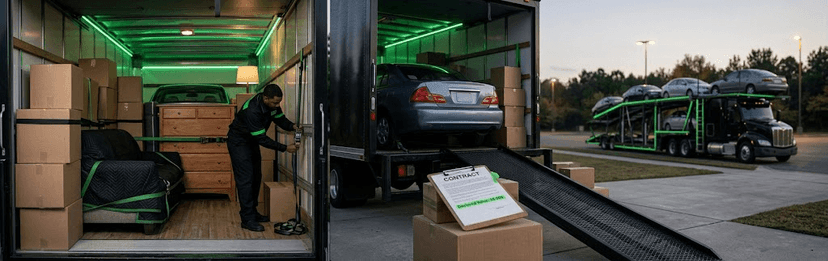
Here's the honest part. A dedicated auto carrier hauling your car on its own answers to federal cargo law and its own insurance policy. The household goods 60-cent rate doesn't apply to it.
So why does Released Value Coverage matter to car owners? Because two common situations put a cap on your car anyway.
When Your Car Moves With Your Household Goods
Full-service movers often offer to load your car with the furniture. It's convenient. One truck, one bill, one delivery date.
It also turns your car into one more "article" on a household goods bill of lading. If you signed for released value on that move, the 60-cent cap can apply to the car too.
Say you're moving for a new job from Illinois to Texas and the mover adds your sedan to the inventory. You initial the released value line to save on the quote. A forklift scrapes the bumper and door at the warehouse. Under released value, the payout is capped by the car's weight, whatever the repair bill says.
People who run into this most often:
-
Families on corporate relocations, where the mover is booked as a package deal
-
Students moving out of campus housing with a car in tow
-
Seniors downsizing who want one company to handle everything
-
Military families. Government-arranged moves follow their own claims rules, so check with your installation transportation office before you assume anything about car coverage.
If you're planning a full household move, compare home relocation services that ship the car separately with its own coverage. Our walkthrough on how to ship a car during a move covers the timing.
Declared Value Clauses in Auto Transport Contracts
The second situation lives inside regular auto transport paperwork. Under the Carmack Amendment, a carrier can limit its liability to a value the shipper declares in writing, as long as that value is reasonable. You can read the rule yourself in 49 U.S.C. § 14706(c).
In practice, declared value car shipping language shows up as:
-
A "declared value" or "shipment value" box near the signature line
-
A per-vehicle liability cap in the terms and conditions
-
A clause limiting liability to the carrier's insurance limit
The effect matches released value liability, even if the word "released" never appears. If you write "$5,000" in a declared value box on a $60,000 car, $5,000 can become the ceiling.
This is where classic and exotic owners, and car show organizers shipping several high-value cars at once, lose the most money. A rushed or blank declared value field is the most expensive mistake on the form. Before you sign, run through these car shipping contract tips and treat any declared value car shipping field as a number you write on purpose.
What Actually Pays When Your Car Gets Damaged
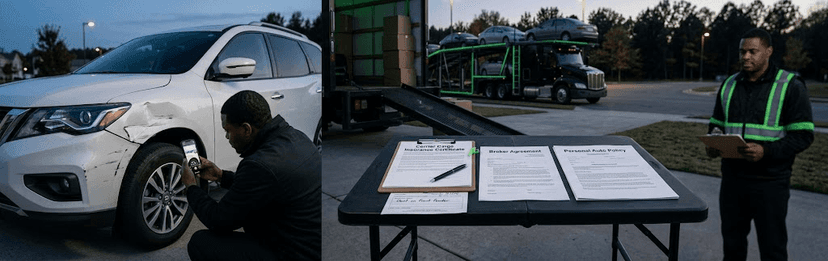
Car shipping insurance coverage comes in layers. Each layer pays first, second, or not at all, depending on who caused the damage and what you signed.
Does car shipping insurance cover damage? Yes, when the carrier caused it, you documented it at delivery, and the amount is above the deductible and under the policy limit. Every other case gets harder. Our breakdown of car shipping insurance in the USA, what's covered and what's not lists the common exclusions.
Broker vs Carrier Insurance in Car Shipping: Who Holds the Policy
Most people book through a broker. A carrier does the driving. That split confuses almost every damage claim.
|
Question |
Carrier |
Broker |
|
Who hauls your car? |
The carrier |
The broker never touches the car |
|
Who holds cargo insurance? |
The carrier (if it carries a policy) |
Usually no cargo policy. Some carry contingent coverage |
|
Federal requirement |
No federal cargo insurance minimum for general property carriers |
$75,000 bond or trust fund (49 CFR 387.307) |
|
What that money is for |
Paying for loss or damage to your car |
Covering the broker's failure to pay or perform under its contracts |
|
Who you file the claim with |
The carrier and its insurer |
Copy the broker so it pushes the carrier |
That middle row surprises people. FMCSA removed the cargo insurance minimum for most for-hire property carriers in a rule that took effect in 2011. Household goods carriers still have to carry it. Car carriers don't, at the federal level.
Most established car haulers carry a cargo policy anyway, because brokers and shippers commonly require one. But auto transport insurance on a carrier is a business choice, with limits and exclusions the carrier picked. That's why broker vs carrier insurance in car shipping is worth sorting out before booking. Carrier cargo insurance car transport policies are the money that actually pays a claim. The broker's bond exists mainly to protect carriers who don't get paid.
Does My Auto Insurance Cover Car Shipping?
Sometimes. It depends on your policy, your coverage types, and your insurer's rules about vehicles in transit. If your own policy pays, you'll usually owe your deductible first, and your insurer may then go after the carrier to recover what it paid.
So, does my auto insurance cover car shipping? Call your agent and ask this exact question: "If my car is damaged while loaded on a commercial carrier, which part of my policy applies, and what's my deductible?" Get the answer in an email. Our guide on whether auto transport is covered by your car insurance covers the follow-up questions.
What usually falls through every layer:
-
Personal items left inside the car
-
Damage that existed before pickup
-
Mechanical failures unrelated to loading or transit
-
Damage you didn't note on the bill of lading at delivery
Snowbirds feel this most. If you send a second car from New York to Florida every winter, that car may sit on a different policy, with different deductibles, than your daily driver. A seasonal car relocation plan should start with a call to that car's insurer.
Open vs Enclosed Car Transport Insurance: How Limits Change
Trailer type changes your coverage ceiling as well as your price.
A carrier's cargo policy usually has a per-vehicle limit and a per-load limit. On an open hauler with eight or nine cars, that per-load limit is shared. If a multi-car accident damages several vehicles, every owner draws from the same pool. So does car shipping insurance cover damage in that case? It does, up to the point where the pool runs dry.
|
Factor |
Open Transport |
Enclosed Transport |
|
Cars per load |
Typically more |
Typically fewer |
|
How the per-load limit is shared |
Across more vehicles |
Across fewer vehicles |
|
Main exposure risks |
Weather, road debris, multi-car incidents |
Loading and liftgate handling |
|
What to ask for |
Per-vehicle and per-load limits on the certificate |
Per-vehicle limit high enough for your car's value |
|
Who it suits |
Daily drivers, dealer inventory, budget moves |
Classics, exotics, show cars, high-value motorcycles |
Real policy limits vary widely between carriers, so the only number that counts is the one on the certificate of insurance for the truck picking up your car.
For daily drivers and dealership inventory, open car shipping is the standard. Just confirm the per-vehicle limit covers your car's value. For a car worth well above average, or a show organizer moving several high-value cars, enclosed vehicle shipping usually means fewer cars sharing the limit and less road exposure. Open vs enclosed car transport insurance is one of the few places where paying more buys you a measurably different safety net. Our comparison of enclosed vs open carrier costs helps you decide if the premium is worth it for your car.
Five Checks to Close the Coverage Gap Before Pickup
Everything above turns into five checks. Do them before you pay a deposit.
-
Look up the carrier's authority and insurance on FMCSA SAFER. Enter the DOT or MC number at the SAFER Company Snapshot. Confirm the authority is active and the legal name matches your contract.
-
Ask for the certificate of insurance. Read the per-vehicle and per-load limits. Carrier cargo insurance car transport certificates should name the carrier you're actually using, with dates that cover your shipping window.
-
Search the bill of lading and terms for "released," "declared value," or "limit of liability." If a cap sits below your car's value, ask the company to remove it or raise it in writing. If they refuse, walk.
-
Ask about exclusions for your vehicle type. Some policies exclude exotics, modified motorcycles, non-running vehicles, or cars above a set value. Classic owners should ask whether a classic vehicle shipping carrier offers agreed-value coverage.
-
Get the deductible in writing, and ask who pays it. Some carriers pass their cargo deductible to the customer. Find out now.
Every check here makes a future car transport damage claim easier to win. For more screening questions, see these 5 essential questions to ask before hiring a car transport company, and learn the warning signs in how to avoid an auto transport scam.
Before you trust anyone's coverage, compare company profiles and real customer reviews on Transportvibe, including how each company handled actual damage claims.
How to File a Car Shipping Damage Claim When Coverage Is Thin
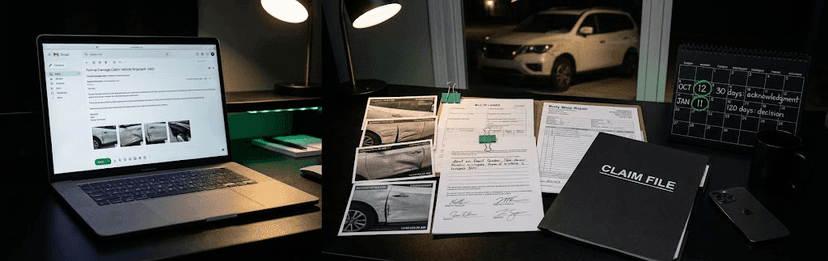
If the damage already happened, speed and paperwork decide what you get back. Here's how to file a car shipping damage claim step by step.
-
Inspect before you sign at delivery. Walk the car in daylight or under a flashlight. Check the roof, lower panels, bumpers, wheels, and glass.
-
Write every new mark on the bill of lading. Have the driver sign it too. A clean bill of lading is the carrier's best defense.
-
Photograph everything with timestamps. Match your delivery photos to your pickup photos, angle for angle.
-
Notify the carrier and the broker in writing the same day. Email works. A phone call doesn't leave a record.
-
Submit a formal written claim. Federal claim rules in 49 CFR Part 370 say a claim must identify the shipment, assert the carrier's liability, and demand a specific or determinable dollar amount. Attach repair estimates, photos, and both bills of lading.
-
Track the deadlines. Write down the date you filed.
Carriers must acknowledge your written claim within 30 days, then pay, decline, or make a firm settlement offer within 120 days. If they need longer, they owe you a status update every 60 days after that. Under the same Carmack statute covered earlier, carriers must give you at least 9 months after delivery to file and at least 2 years after a written denial to sue.
Every car transport damage claim runs into one hard limit: the process can't raise a cap you already signed. If your paperwork says released value or a $5,000 declared value, that's the ceiling the carrier will point to. That's why the checks in the section above matter more than the claim itself.
For high-value cars, get an appraisal-based repair estimate. A generic body shop quote can undervalue original paint or rare parts. Owners using luxury and exotic car shipping should keep a recent appraisal on file before every trip. Dealership owners filing several claims at once should log each VIN, filing date, and response date in one sheet. And seniors should copy a trusted family member on every email so nothing slips past the 9-month window.
If a carrier goes silent, our guide to what to do when your car is damaged during shipping covers escalation, and this explainer on car insurance claims in transit shows when to bring in your own insurer.
What Car Owners Ask Before They Trust a Carrier's Coverage
These are the coverage concerns that come up most often before pickup day. Short, straight replies, so you can check your paperwork with confidence.
Is released value coverage enough to protect my car during shipping?
No. Released value coverage pays 60 cents per pound, so a 4,000-pound car tops out at $2,400. That's far below the cost of serious body damage. Choose full value protection or a carrier with verified cargo insurance.
Do auto transport companies use the 60 cents per pound rule for cars?
Usually not when a dedicated auto carrier ships your car. The 60-cent rule applies to household goods movers. But if your car moves with your furniture, or your contract has a declared value cap, similar limits can apply.
Can I upgrade from released value to full value protection, and what does it cost?
Yes. With a household goods mover, full value protection is the default unless you sign a waiver. It costs extra, and the price depends on your declared value and deductible. Ask for the valuation charge in writing.
Does my personal auto insurance cover damage while my car is on a carrier?
Sometimes. Comprehensive or collision coverage may apply, depending on your policy and insurer. You'll usually pay your deductible first. Call your agent, ask how in-transit damage on a commercial carrier is handled, and get the answer by email.
Who pays for damage if I booked through a broker but the carrier damaged my car?
The carrier, through its cargo insurance. Brokers arrange the shipment but usually don't carry cargo coverage, and their $75,000 bond isn't damage insurance. File your car shipping damage claim with the carrier and copy the broker.
Weight or Worth: Pick Your Coverage Before the Truck Arrives
Released Value Coverage is fine for a box of books. For a car, it's the weakest protection the law allows.
Your decision comes down to how the car is moving:
-
Car riding with your household goods? Decline released value, or ship the car separately with its own carrier and certificate.
-
Using a dedicated auto carrier? Read the per-vehicle limit, the deductible, and every declared value line before you sign.
-
High-value, classic, or show car? Go enclosed, confirm the limit covers the car's real value, and get agreed value in writing.
-
Shipping a motorcycle? Never accept a weight-based payout. At 60 cents a pound, a bike is nearly uncovered.
Real car shipping insurance coverage is something you check, read, and get in writing before pickup day. Never sign a valuation line you haven't read.
Ready to ship with coverage you've actually read? Compare carriers through Transportvibe's car transport service and get insurance limits in writing before your car ever leaves the driveway.