



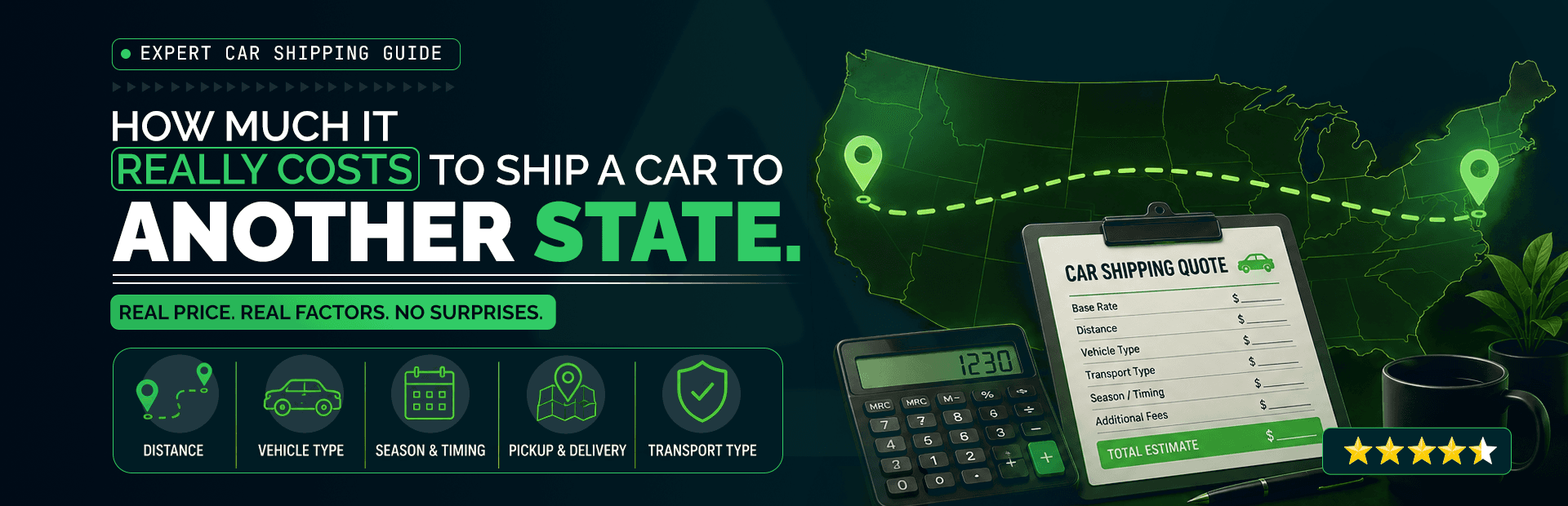
Roughly 25.87 million Americans moved in 2024, and about 19.3% of those moves crossed state lines, based on moving data compiled from the U.S. Census Bureau and the National Association of Realtors. Behind a lot of those moves sits one quiet question.
What is the real car shipping cost when your new address is three states away?
Prices swing hard. Two brokers can quote the same car, same route, and land hundreds of dollars apart. That gap is not random. It tracks distance, vehicle size, timing, and the carrier type you pick.
Want your actual number before you budget? Get a free, no-pressure quote built around your exact route and vehicle, then check it against the ranges below.
What Does It Cost To Ship A Car To Another State?
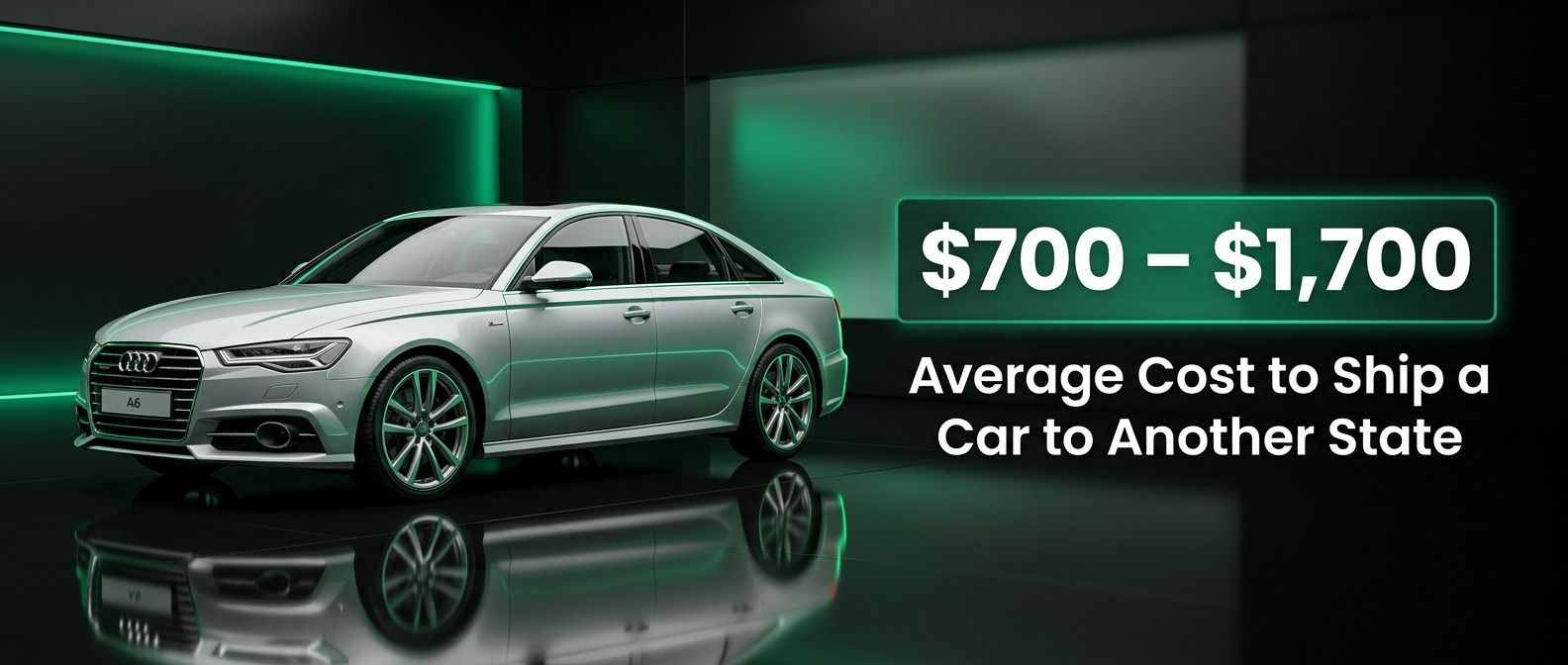
Here is the short answer most people are looking for. Shipping a car to another state usually runs between $700 and $1,700, with a national average near $1,150 for a typical open-carrier move, according to 2026 pricing data from FreightWaves. Cost per mile lands between about $0.61 and $2.00, and that spread is where the confusion starts.
The rule to remember is simple. Long hauls cost more in total but less per mile. A short 400-mile move can run near $1.50 to $2.00 a mile because the truck still has to route, load, and dispatch for a small trip. A 2,500-mile cross-country haul can drop below $0.70 a mile because the carrier spreads fixed costs across more distance.
|
Distance |
Typical Open-Carrier Cost |
Cost Per Mile |
|
Under 500 miles |
$600 – $890 |
$1.50 – $2.00 |
|
500 – 1,500 miles |
$800 – $1,400 |
$0.85 – $1.25 |
|
1,500 – 2,500+ miles |
$1,100 – $1,800 |
$0.55 – $0.75 |
Treat these as planning numbers, not promises. Your real quote depends on the details in the next sections. For a wider view of national pricing, our complete breakdown of U.S. car shipping costs and our state-by-state cost reference both go deeper than a single average can.
The Seven Factors That Decide Your Car Shipping Cost
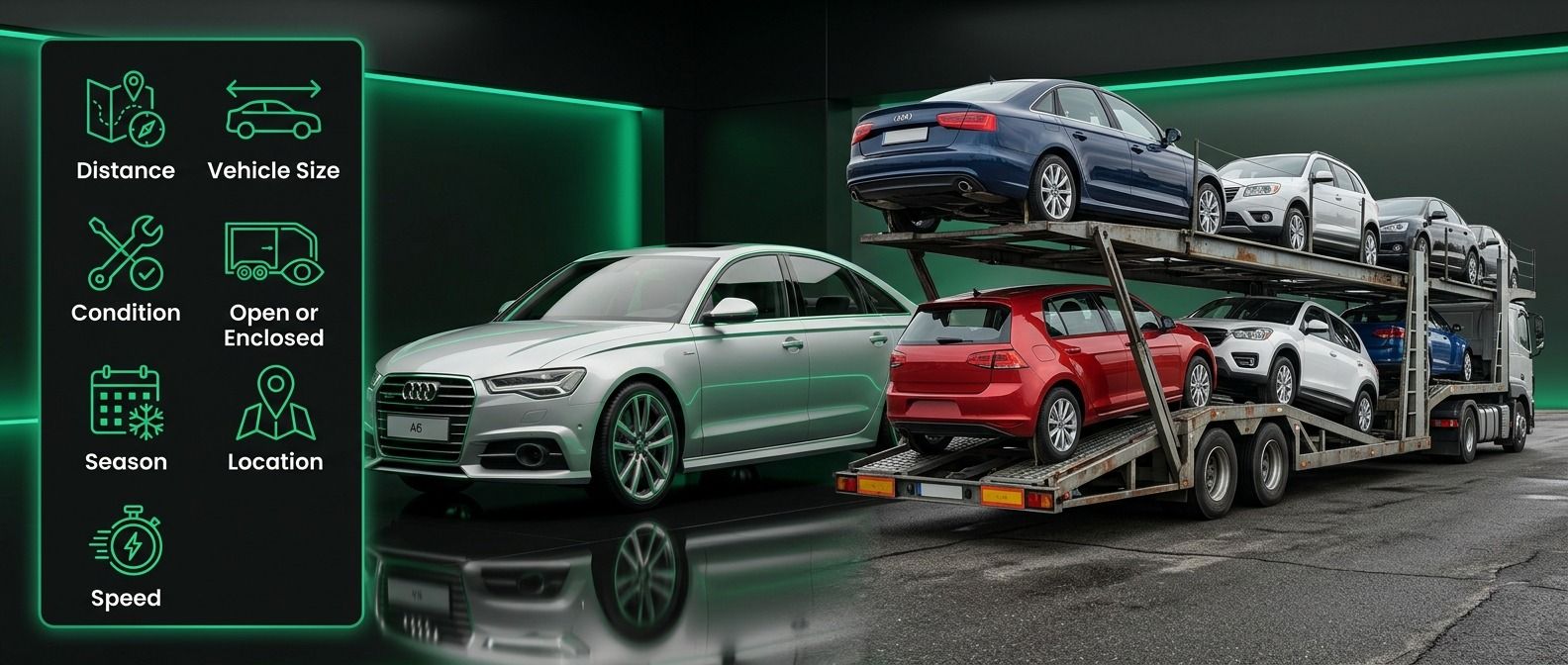
Every quote you get is really the sum of a few moving parts. Once you can name them, a confusing price starts to make sense. These are the seven that matter most:
-
Distance and route between pickup and delivery
-
Vehicle size and weight, which set how much space you take on the trailer
-
Vehicle condition, running or non-running
-
Transport type, open or enclosed
-
Season and timing, including how far ahead you book
-
Pickup and delivery location, city lane or rural detour
-
Delivery speed, standard or expedited
Two of these carry the most weight, so they earn a closer look.
Distance And Route Popularity
Distance sets the floor, but route popularity bends the price. A busy lane between two major metros has carriers running it daily, so a truck fills fast and the rate stays competitive. A pickup in a rural town off the main corridor is different. The driver burns extra hours and fuel to reach you, and that detour shows up in the quote. This is also why long-distance moves and short hauls price so differently per mile, even for the same car.
Vehicle Size, Weight, And Condition
Bigger vehicles take more trailer space and add weight, so they cost more to move. Based on 2026 cost data from Extra Space Storage, a sedan like a Camry runs about $800 to $1,100 on a mid-length route, an SUV or minivan runs $900 to $1,350, and a full-size truck like an F-150 runs $1,100 to $1,600. Condition matters too. A non-running car needs a winch and special loading, which adds roughly $150 to $300. Lowered, modified, or oversized builds can add more. Our guide on how vehicle size and weight shape your price and our size-by-size cost comparison for SUVs, sedans, EVs, and RVs show exactly where your vehicle lands.
Open Vs Enclosed Transport: What The Price Difference Buys You
This is the single biggest optional lever on your bill. Open transport is the standard. Your car rides on a two-level trailer, exposed to weather and road debris, alongside nine or ten other vehicles. It is safe, common, and the most affordable choice for a daily driver. Enclosed transport seals your car inside a covered trailer, away from rain, dust, and rocks.
The trade-off is money. Enclosed shipping can add 50% or more to your cost, according to Kelley Blue Book. For a standard commuter car, that premium buys peace of mind you may not need. For a classic, an exotic, a low-clearance build, or a high-value collector car, it buys real protection that is worth every dollar.
|
Transport Type |
Typical Cost Position |
Protection Level |
Best For |
|
Standard rate |
Weather-exposed, industry norm |
Daily drivers, most relocations |
|
|
50%+ higher |
Fully covered, limited load |
Classics, exotics, luxury, low-clearance |
Not sure which side you fall on? Our deep dives on open vs enclosed transport cost and choosing between open and enclosed car shipping walk through the math for your exact vehicle.
State-To-State Cost Examples: What Real Routes Run
Averages are useful, but you want to see your own lane. The table below shows representative open-carrier estimates drawn from 2026 route pricing reported by ConsumerAffairs. Real quotes shift with the exact cities, dates, and vehicle, so use these as a starting frame.
|
Route |
Approx. Distance |
Estimated Open-Carrier Cost |
Typical Transit |
|
~1,300 miles |
$900 – $1,300 |
3 – 6 days |
|
|
California to Texas |
~1,400 miles |
$1,000 – $1,600 |
3 – 8 days |
|
Texas to Florida |
~1,100 miles |
$850 – $1,250 |
2 – 5 days |
|
New York to California |
~2,800 miles |
$1,300 – $2,400 |
7 – 14 days |
A coast-to-coast move is the priciest common route, often $1,300 to $2,400, yet it is one of the cheapest per mile you will ever pay. That is the long-haul discount at work. For a full route planner, see our guide on shipping a car to another state.
The Fees Most Quotes Do Not Show You Upfront

A clean base rate can grow once the extras land. None of these are scams. They are real costs, and a good broker names them before you book. Watch for:
-
Expedited or guaranteed pickup, when you need a firm date instead of a flexible window
-
Non-running surcharge, roughly $150 to $300 for a car that cannot drive onto the trailer, per FreightWaves 2026 data
-
Oversized-vehicle fee for lifted trucks, large SUVs, and heavy builds
-
Remote-area surcharge when pickup or delivery sits far off the main corridor
-
Terminal storage if your dates do not line up with the carrier
Door-to-door service also costs more than terminal-to-terminal, since the driver brings the car to your street instead of a central lot. One more thing to expect. A quote can rise as your pickup date gets close, because fewer trucks are left to fill. We explain the timing trap in why car shipping prices climb near pickup, and we map the full add-on list in our guide to hidden car shipping fees. You can also match your move to the right level of care through our priority and standard transport options.
How Much You Will Pay Based On Who You Are
The word "average" hides a lot. Your situation moves your number as much as your zip code does. Here is where different drivers actually land.
Individuals, Relocations, Students, And Snowbirds
If you are one person shipping one car for a job or a new home, you sit right in the national range, and open transport is almost always the smart call. Students moving for school usually ship a single daily driver and benefit most from booking early and staying flexible on dates. Snowbirds face the sharpest seasonal swing. Prices on Florida and Arizona lanes spike when everyone heads south in fall and north in spring, so locking a rate weeks ahead saves the most. Our snowbird car shipping guide breaks down the timing, and seasonal car relocation is built for exactly these round-trip moves. Seniors often value door-to-door pickup that skips the terminal trip, and senior-friendly auto shipping is designed around that comfort.
Dealers, Collectors, Military, Seniors, And Motorcycle Owners
High-value and high-volume shippers play a different game. Dealers moving several cars at once can unlock volume pricing that a single shipment never sees, and dealer vehicle transport solutions are set up for that flow. Classic and exotic owners, along with car-show organizers timing a delivery to an event, should budget for enclosed transport and treat the premium as insurance, not waste. Luxury and exotic car shipping exists for that need. Military members on PCS orders often qualify for discounts and should confirm paperwork early, which our military car shipping guide and military vehicle relocation service both cover. Motorcycle owners pay less than car shippers overall but should ask about crating, handled cleanly through open-air motorcycle shipping.
How To Lower Your Car Shipping Cost Without Cutting Corners
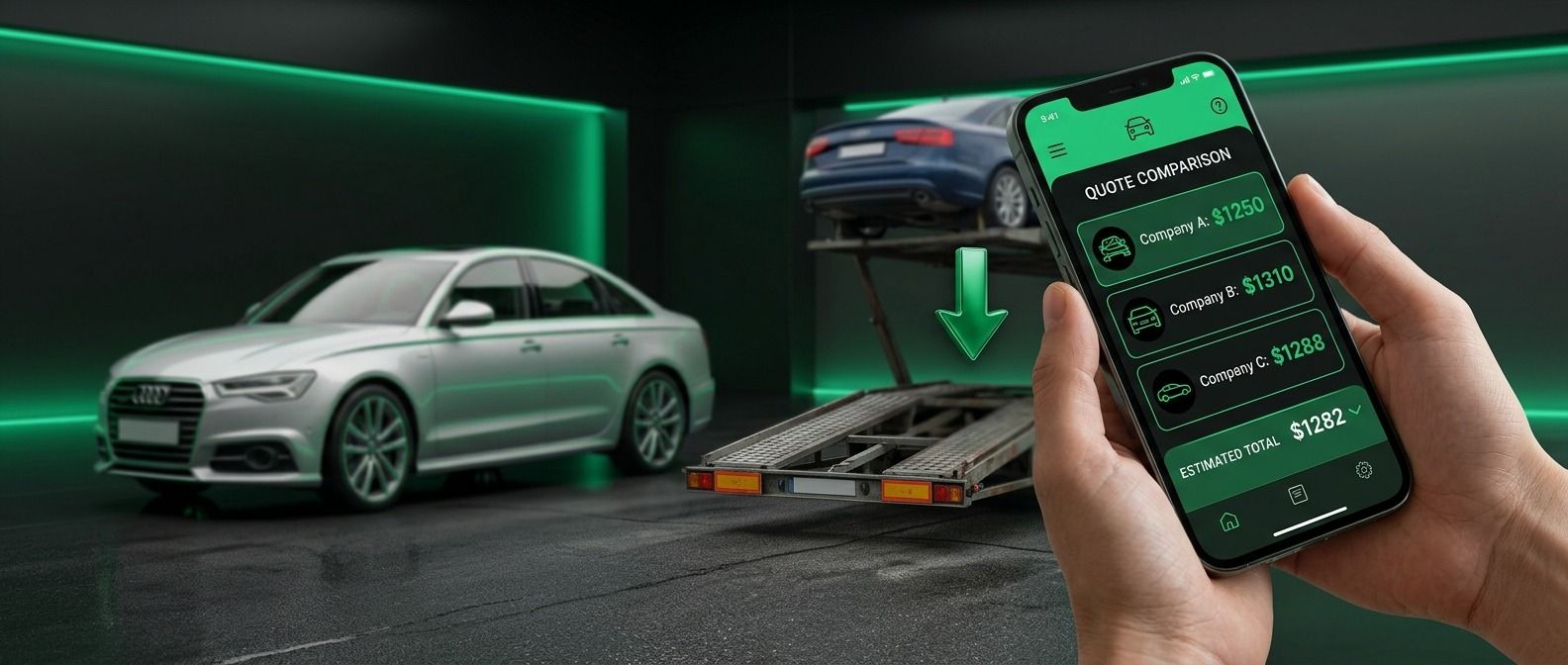
You can trim the bill without gambling on a bad carrier. The savings come from timing and smart choices, not from chasing the lowest number on the screen.
-
Book one to two weeks ahead. Early gives carriers time to fill the truck at a fair rate.
-
Stay flexible on dates. A firm pickup day costs more than a flexible window.
-
Choose open transport unless your vehicle truly needs cover.
-
Consider terminal-to-terminal if you can drop off and collect the car yourself.
-
Compare several verified quotes instead of grabbing the first one.
-
Skip the lowest bid. A rock-bottom quote often gets relisted, delayed, or renegotiated at pickup.
That last point deserves a warning. The cheapest quote is frequently the most expensive path once delays pile up. Before you sign, confirm the carrier is real and authorized by running its DOT and MC number through the free FMCSA SAFER company snapshot. Two minutes there can save a bad week. For more tactics, see our guides on the cheapest way to ship a car and seven ways to ship a car cheaply across the USA.
Premium Auto Transport Services Worth Comparing
Price is only half the decision. Support, tracking, and a clean claims process are what you remember if something goes wrong. A handful of well-established brokers have built strong reputations for exactly that. The table below is a starting point, not a ranking. Always check current reviews and verify each company's authority through the FMCSA before you book.
|
Company |
Best For |
Standout Strength |
Price Position |
|
AmeriFreight |
First-time shippers who want hand-holding |
Strong customer support and discount programs for military, students, and seniors |
Mid-range |
|
Easy Auto Ship |
Buyers who want a clear, upfront price |
Transparent quoting and consistent service reviews |
Mid-range |
|
Nexus Auto Transport |
Budget-focused cross-country moves |
Wide carrier network and competitive open-transport rates |
Budget-friendly |
|
RoadRunner Auto Transport |
Shippers who want visibility on a long haul |
Large national network with shipment tracking |
Mid-to-premium |
Read a company against your own route and vehicle, not just the headline number. A broker that shines on a busy metro lane may quote higher on a rural pickup, and the reverse happens too. For fuller rundowns, see our picks for the best car shipping companies in Q1 2026 and our ten best car shipping companies.
What Cross-State Shippers Ask Most
Quick, straight answers to the questions drivers search for most before they move a car across state lines.
How much does it cost to ship a car to another state on average?
Most drivers pay $700 to $1,700 to ship a car to another state, averaging around $1,150 for an open carrier. Your exact cost tracks distance, vehicle size, and season.
Is it cheaper to ship a car or drive it to another state?
For long moves, shipping often wins once you add gas, hotels, meals, and the miles you put on your car. For short trips under 500 miles, driving usually costs less.
How far in advance should I book to get the best car shipping cost?
Book your cross-state move one to two weeks ahead. Early booking lets carriers fill the truck at a fair rate and helps you ship in the cheapest season.
Does shipping a car to another state cost more for SUVs and trucks?
Yes. SUVs, vans, and full-size trucks weigh more and take extra trailer space, so they usually cost $150 to $500 more than a sedan on the same route.
Why did my car shipping quote go up before pickup?
Quotes climb near pickup when fewer trucks are open for your dates. Carriers price by supply and demand, so a flexible window booked early locks a lower cross-state rate.
Making The Call On Your Cross-State Move
Strip away the noise and four things set your final price. Distance, vehicle size, transport type, and timing. Nail those, verify your carrier, and the wild quote-to-quote gap you saw at the start shrinks to a range you can actually plan around.
For most drivers, a cross-state move lands between $700 and $1,700, and the difference between the low end and the high end is usually a decision you control. Book early, pick the right trailer, and compare real quotes side by side. If you want to sharpen your comparison, our expert guide to mastering car shipping quotes shows you how to read one like a pro.
Ready to replace guesswork with a real figure? Request your free car shipping quote now, tell us your route and vehicle, and see your true cost in minutes before you commit to anything.