



Shipping a car across the country costs 53 cents to more than $2.30 per mile, depending on distance, vehicle size, and booking timing, according to ConsumerAffairs' auto transport industry research. On the San Francisco to Chicago route, that math puts most sedans in the $900 to $1,400 range for standard open-carrier service, with SUVs and enclosed transport running higher.
If you're relocating for a new job, sending a car ahead of a move, or a dealership repositioning inventory, shipping a car from California to Illinois raises the same questions every time. San Francisco to Chicago car shipping cost is usually the first one, followed by transit time and which carrier to trust with a 2,100-mile haul. This guide covers both, the open vs. enclosed decision, and the paperwork you'll need at pickup.
Ready to see your number? Get a free quote for the San Francisco to Chicago route in minutes.
How Much Does It Cost to Ship a Car from San Francisco to Chicago?
Shipping a car from San Francisco to Chicago in 2026 typically runs $900 to $2,400, depending on vehicle size, carrier type, and how far ahead you book. At roughly 2,100 miles along I-80, this route sits in a per-mile sweet spot: long enough that the rate per mile drops compared to shorter regional hauls, but the total still climbs with vehicle size.
Open carrier from SF to Chicago: $900–$1,400 for sedans, $1,100–$1,700 for SUVs and full-size trucks. Enclosed runs $1,500–$2,400 depending on vehicle type.
Cost Per Mile and What Actually Moves It
A per-mile calculator is a useful sanity check on any quote you get for this route, and the rate itself shifts with distance.
|
Route Length |
Typical Per-Mile Rate |
Why |
|
Under 500 miles |
$0.90–$1.50+ |
Fixed dispatch costs spread over fewer miles |
|
500–1,500 miles |
$0.65–$0.95 |
Moderate carrier density and cost dilution |
|
1,500–2,500 miles (this route) |
$0.45–$0.65 |
Costs spread thin, strong corridor competition |
|
Over 2,500 miles |
$0.40–$0.55 |
Longest hauls, fewer carriers willing to run the full distance |
Per-mile rate drops as distance increases because fixed costs like dispatch, fuel planning, and driver time spread across more miles. For a route this length, expect roughly $0.45 to $0.65 per mile on open carriers. Treat a calculator estimate as a starting point, not a guarantee. Carrier availability on the day you need pickup usually moves the final number more than the math does.
Vehicle Size and What Pushes the Price Up
|
Vehicle Type |
Open Estimate |
Enclosed Estimate |
|
Sedan / Coupe |
$900–$1,200 |
$1,500–$1,900 |
|
SUV / Crossover |
$1,100–$1,500 |
$1,700–$2,100 |
|
Pickup Truck |
$1,200–$1,700 |
$1,800–$2,400 |
|
Minivan |
$1,000–$1,400 |
$1,600–$2,000 |
|
Motorcycle |
$500–$900 |
$800–$1,300 |
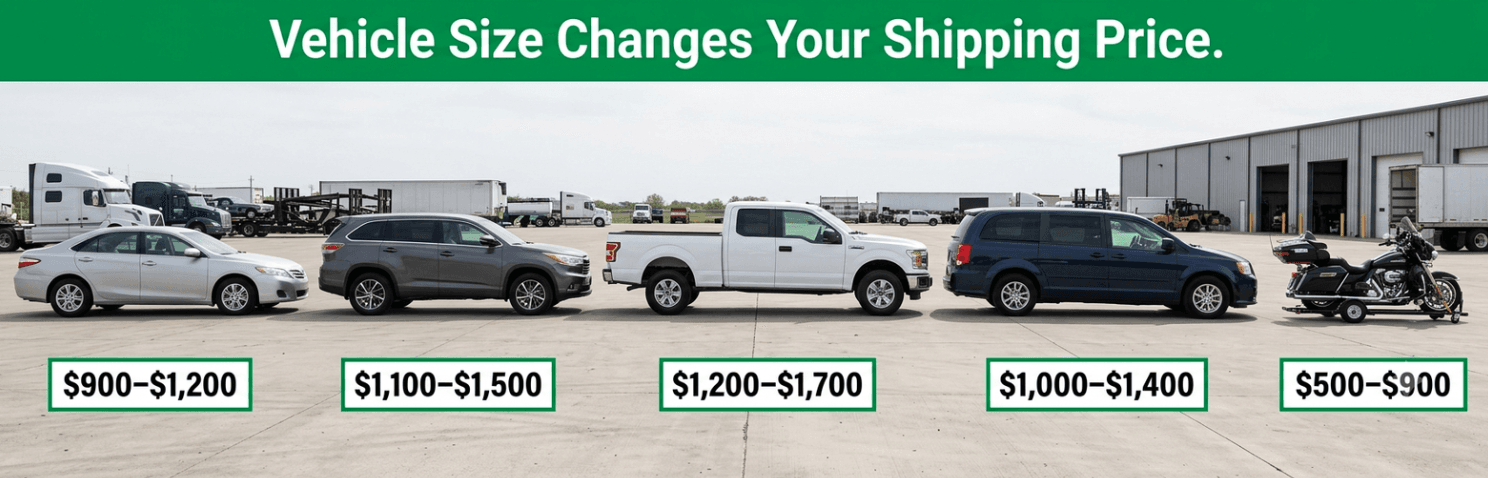
Larger vehicles take up more trailer space on a carrier built for seven to ten cars, so SUVs and trucks run higher than sedans. Motorcycles ship differently, usually crated or loaded on a dedicated motorcycle carrier rather than a standard auto hauler. If that's the vehicle in question, open-air motorcycle shipping is priced and scheduled separately from car transport.
How Long Does It Take to Ship a Car from San Francisco to Chicago?
Transit time and pickup window are two different clocks, and mixing them up is where most of the frustration on this route comes from.
Standard transit from San Francisco to Chicago runs 5 to 9 days once the car is actually picked up. That's separate from the pickup window, which typically runs 1 to 5 days from your requested date rather than a guaranteed hour. Most of what people call "shipping delays" are pickup-window delays, not time spent on the truck.
|
Service Type |
Typical Transit |
Typical Pickup Window |
|
Standard open carrier |
5–9 days |
1–5 days |
|
Expedited open carrier |
3–6 days |
Same-day to 2 days |
|
Standard enclosed |
6–10 days |
1–5 days |
|
Expedited enclosed |
4–7 days |
Same-day to 2 days |
Winter Delays into Chicago and How to Plan Around Them
Chicago's winter is the one variable this route has that a lot of cross-country hauls don't.
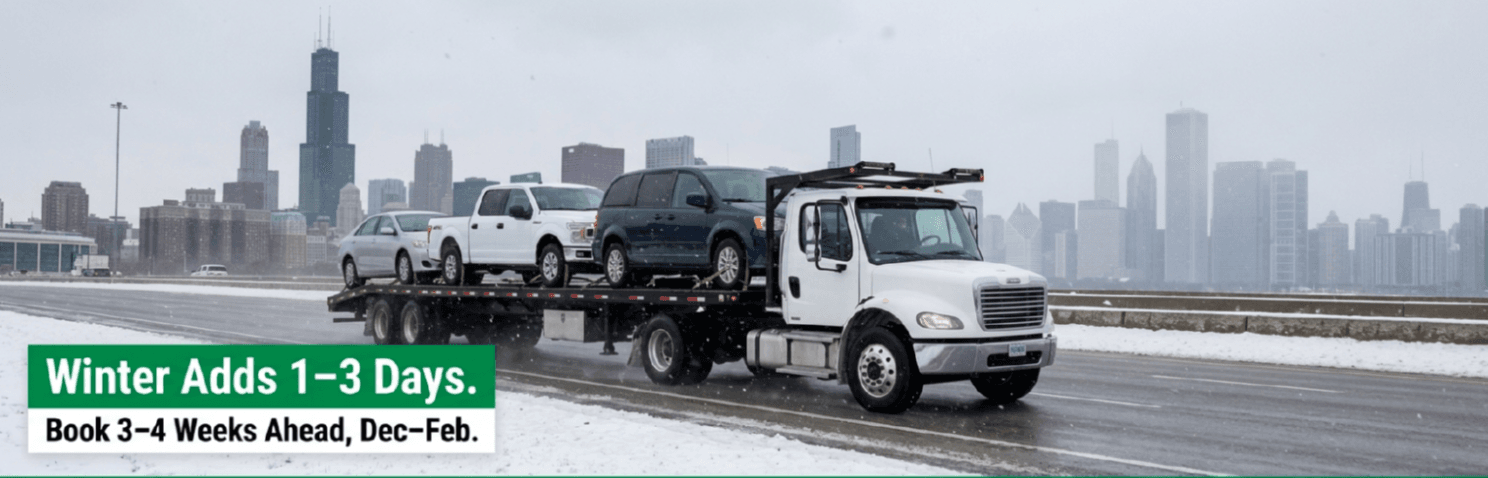
The Chicago area averages 36 inches of snow a year, according to National Weather Service climate normals for O'Hare, and lake-effect snow combined with I-80/I-90 slowdowns typically add 1 to 3 days to transit between December and February. Carriers often widen pickup windows in that stretch too, since their own schedules slip.
-
Book 3–4 weeks out during December through February instead of the usual 1–2 weeks
-
Ask the dispatcher directly whether winter routing changes your pickup window before you confirm
-
Road salt exposure on an open carrier is cosmetic, not mechanical, for a daily driver — weigh that against the enclosed premium rather than ruling shipping out altogether
If you're shipping the same vehicle seasonally rather than permanently, seasonal car relocation covers snowbird-style bookings that repeat in both directions.
Open vs. Enclosed Car Transport for This Route
Open carriers are the default for a reason: more of them run this corridor, in both directions, than enclosed carriers do.
Open transport costs less and moves faster to book because there's simply more equipment on the road. Enclosed transport carries fewer vehicles per trailer and protects against weather, road debris, and — specific to this route — the road salt and slush that come with a Chicago winter delivery. That protection carries a real premium, so the decision usually comes down to what the vehicle is worth versus what a cosmetic ding would cost to fix.
|
Factor |
Open Carrier |
Enclosed Carrier |
|
Typical cost (sedan) |
$900–$1,200 |
$1,500–$1,900 |
|
Typical cost (SUV) |
$1,100–$1,500 |
$1,700–$2,100 |
|
Weather/road salt exposure (winter) |
Direct exposure |
Fully protected |
|
Carrier availability |
High |
Lower, book further ahead |
|
Best for |
Daily drivers, dealer inventory |
Classic, exotic, and show-bound vehicles |
Read the full breakdown of open vs. enclosed transport cost for how the math changes by vehicle type and distance.
Enclosed is the right call for:
-
Classic or collector cars, especially ones heading to a Midwest car show
-
Exotic or luxury vehicles where road salt or debris damage is a real claim risk
-
Anyone shipping through Chicago in winter with a vehicle that can't take cosmetic exposure
Compare open car shipping and enclosed vehicle shipping side by side to see what's included with each service level.
Door-to-Door vs. Terminal-to-Terminal Shipping
Most people default to door-to-door without weighing the alternative, but the tradeoff is worth thirty seconds of thought before you book.
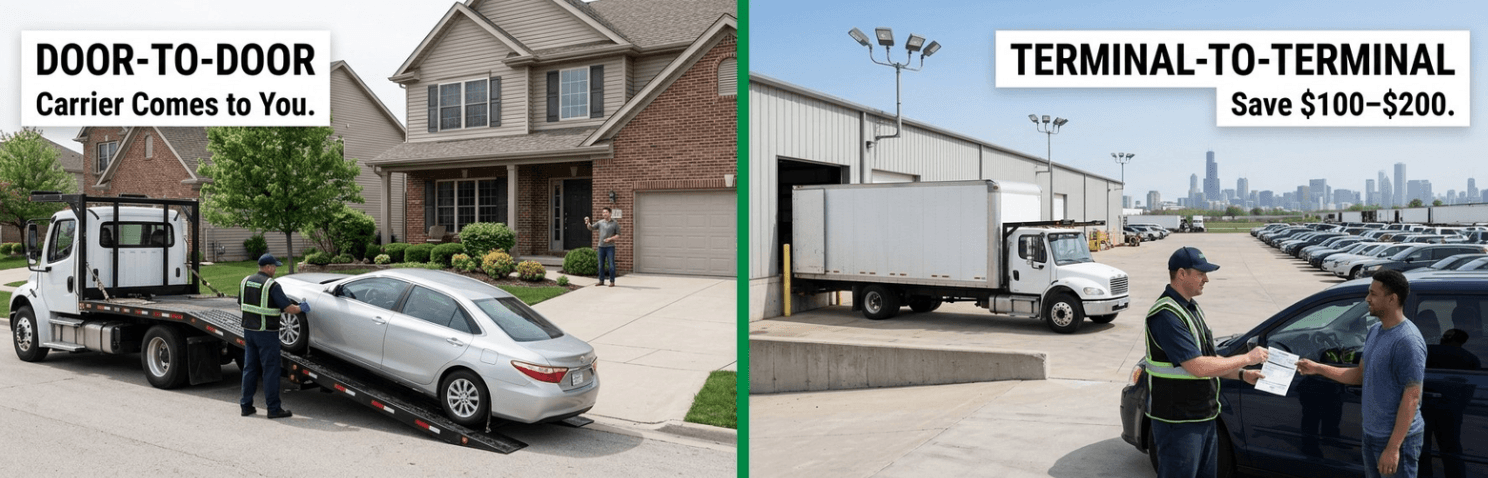
Door-to-door is the standard for most SF-to-Chicago shipments: pickup from your Bay Area address, delivery to your Chicago address or as close as the street allows. Dense Chicago neighborhoods with tight parking sometimes require a nearby drop point instead of your exact door, so confirm the delivery address in advance if you're in a tight urban block.
|
Factor |
Door-to-Door |
Terminal-to-Terminal |
|
Price difference |
Standard rate |
Typically $100–$200 less |
|
Convenience |
You wait at home |
You drive to a facility |
|
Who handles drop-off/pickup |
Carrier comes to you |
You bring/collect the car |
|
Best for |
Most shippers |
Renters, flexible schedules |
Terminal-to-terminal saves money but means you drop the car off and pick it up yourself at a facility. It's worth considering if you're already renting a car in San Francisco and don't need door service on either end. For a full comparison, see terminal-to-terminal vs. door-to-door car shipping. If you're coordinating a full household move alongside the vehicle, home relocation services can help line up both on the same timeline.
The Cheapest Way to Ship a Car from San Francisco to Chicago
The cheapest legitimate way to ship this route combines four things: a flexible pickup window, an open carrier, booking 2–3 weeks out, and avoiding the December-to-February demand-and-weather squeeze if your dates allow it. None of that means taking the lowest quote in your inbox. The lowest quote is often from a broker who hasn't actually secured a carrier yet, which turns into a rebooking headache closer to your pickup date.
Broker vs. Carrier: Who Actually Moves Your Car
A carrier owns the truck and physically moves your vehicle. A broker doesn't own trucks — they dispatch your shipment to a vetted carrier from their network. Most people booking this route work with a broker, because a broker's network gives you more carrier options on a 2,100-mile lane than any single carrier's fixed schedule can.
Whether you book through a broker or direct, ask for the assigned carrier's USDOT and MC number before pickup and confirm it's active at FMCSA's company snapshot tool. That single check catches most of the operators worth avoiding.
When Expedited Shipping Is Worth Paying For
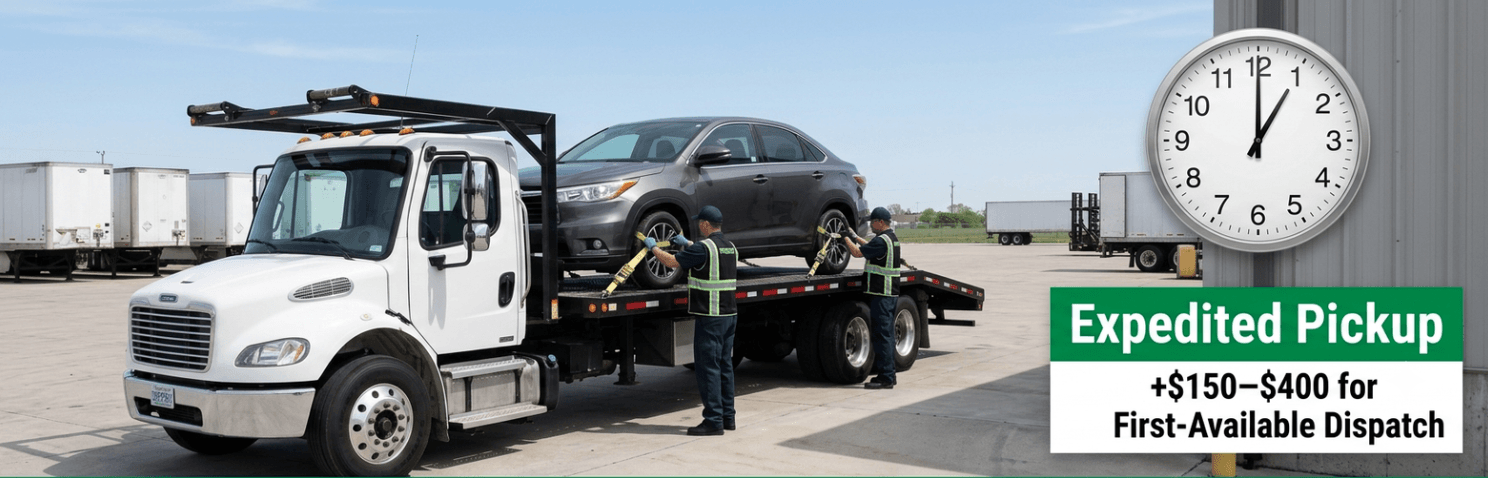
Expedited pickup guarantees first-available dispatch instead of the standard 1-to-5-day window, and typically adds $150 to $400 on top of the base rate for this route. It's worth it when your move-out date is fixed and non-negotiable, like a lease ending or a job start date. Priority auto shipping covers this tier of service if your timeline doesn't have any give in it. It's not worth the premium if your only goal is a slightly faster delivery with no hard deadline behind it.
Best Car Shipping Companies for the San Francisco to Chicago Route
Before comparing companies by name, verify any name on your shortlist at FMCSA's company snapshot tool. Active registration and a satisfactory safety rating are the floor, not the differentiator — after that, you're comparing network depth on this specific lane, communication quality, and how each one handles the winter stretch into Chicago.
|
Company |
Best For |
Notable Strength |
Transportvibe Review |
|
Reliable Carriers Inc |
Classic, exotic, and show-bound vehicles |
Enclosed specialist with a strong track record on high-value loads |
|
|
Ship Your Car Now LLC |
Individual owners and relocators |
Wide carrier network, clear communication through booking |
|
|
Dealers Choice Auto Transport |
Dealership owners moving inventory |
Built for volume and multi-vehicle scheduling |
|
|
Neptune Auto Transport |
Snowbirds, military PCS moves, seniors |
Flexible scheduling for seasonal and government-rate bookings |
These four cover different priorities on purpose. If your car is worth protecting from Chicago's winter road grime, start with Reliable Carriers. If you're a dealership moving multiple units on the same route, dealer vehicle transport solutions is built for exactly that volume, and Dealers Choice is worth a call.
Shipping from San Francisco to Chicago? Compare quotes from vetted carriers on this route in minutes.
How to Prepare Your Car and What Documents You'll Need
A little prep before pickup day prevents most of the disputes that come up at delivery.
Pre-Shipment Checklist
Handle these before the carrier arrives:
-
Photograph all four sides, the roof, and the undercarriage if accessible
-
Keep fuel at a quarter tank or less
-
Remove personal items from the interior
-
Disable or pause toll transponders — an active one racks up charges across every toll state on I-80
-
Check tire pressure and confirm there are no active leaks
-
Retract or remove loose exterior accessories
Military members shipping under PCS orders should also confirm which paperwork their move counts toward government reimbursement. Military vehicle relocation walks through PCS-specific documentation before you book.
Documents Needed to Ship a Car Interstate
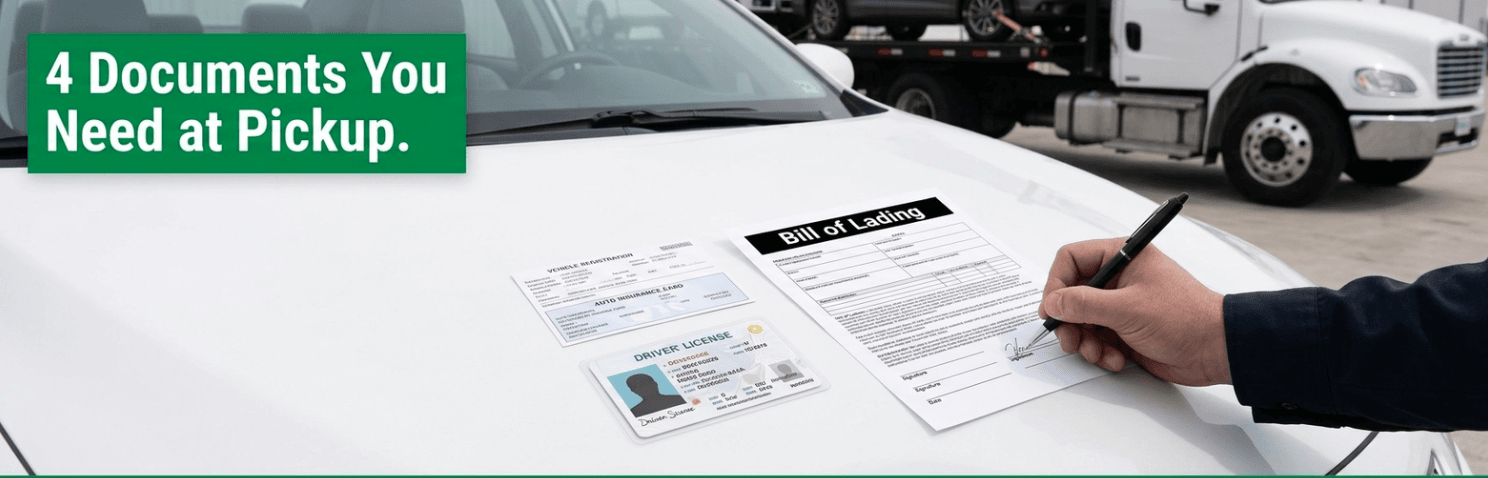
At pickup and delivery, have these ready:
-
Valid photo ID for whoever releases and receives the vehicle
-
Vehicle registration or title (some carriers require proof of ownership if you're not the registered owner)
-
Proof of insurance
-
The Bill of Lading — the carrier's inspection report, signed at both pickup and delivery
The Bill of Lading is the single most important document in the entire process. It records the car's condition at pickup and delivery side by side. Read it before signing, not after the carrier has already left.
What People Ask Before Booking This Route
These are the questions that come up most once someone actually starts comparing quotes for this specific route.
How much does it cost to ship a car from San Francisco to Chicago?
Most sedans cost $900 to $1,400 on an open carrier and $1,500 to $2,400 enclosed. SUVs and trucks run higher. Your San Francisco to Chicago car shipping cost depends on vehicle size, carrier type, and how far ahead you book.
How long does it take to ship a car from San Francisco to Chicago?
Standard transit runs 5 to 9 days once the carrier picks up your car, separate from the 1- to 5-day pickup window. Expedited service shortens transit to 3 to 6 days but adds $150 to $400 to the base rate.
Is it cheaper to ship a car open or enclosed on this route?
Yes. Open carrier transport runs $900 to $1,700 for most vehicles on this route, while enclosed transport costs $1,500 to $2,400. Enclosed protects against Chicago's road salt and winter debris, which is why classic and exotic car owners choose it.
Do winter delays affect car shipments arriving in Chicago?
Yes. Lake-effect snow and slower interstate traffic around Chicago typically add 1 to 3 days to transit between December and February. Book 3 to 4 weeks ahead during winter months, since carriers widen pickup windows when their own schedules slip.
Can I ship a car without being there for pickup or delivery?
Yes. You can authorize a friend, family member, or dealership employee to release or receive the vehicle for you. Just make sure that person's name and contact information appear on the Bill of Lading before the carrier arrives.
Car Shipping Insurance and Shipping Without Driving It Yourself
Two questions come up constantly for anyone who can't be at pickup or delivery in person: what's actually covered, and can someone else handle it.
Every licensed carrier operates under cargo insurance that covers damage caused during transport, not pre-existing damage. That's exactly why the pre-shipment photos from the checklist matter — they're the baseline your claim gets measured against if something arrives wrong.
Ask the carrier for their certificate of cargo insurance and the coverage limit before booking, not after something goes wrong.
Shipping a car without driving it yourself is the entire point of this service, and it works whether you're present or not. You can authorize someone else — a friend, a real estate agent, a dealership employee — to release or receive the vehicle on your behalf. Just confirm that person's name is on the Bill of Lading. This is a common setup for senior-friendly auto shipping, where a family member handles pickup or delivery on the owner's behalf.
Read more in car shipping insurance in the USA for what a standard cargo policy does and doesn't cover.