


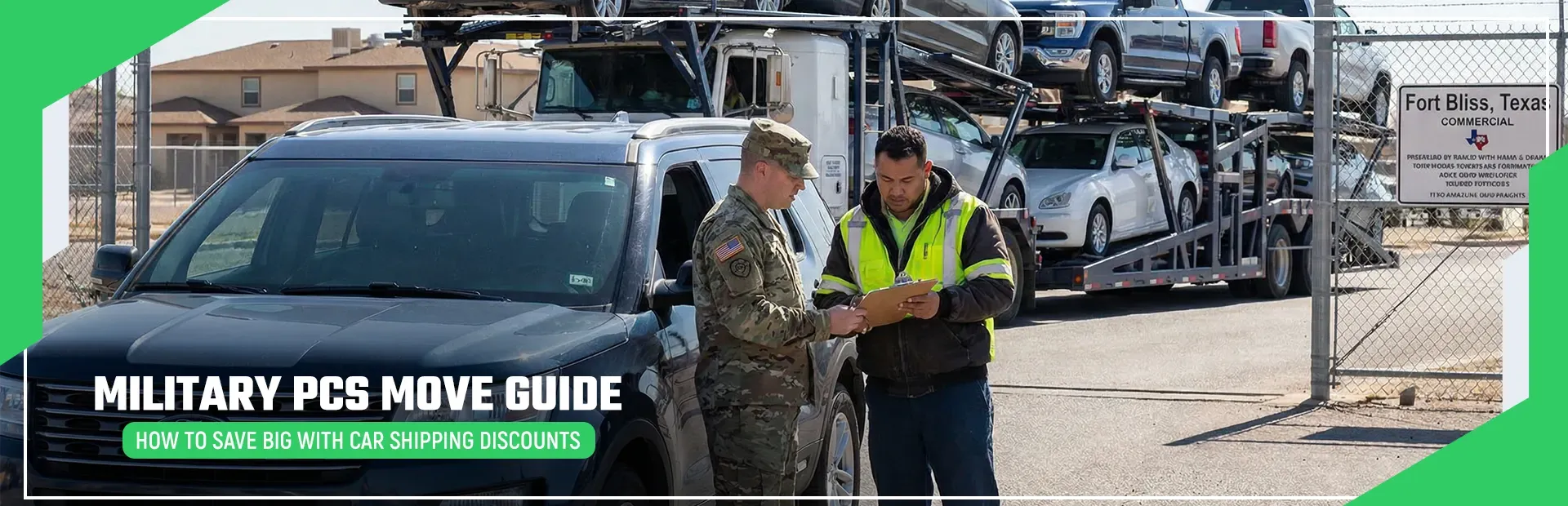
Maximizing Your PCS Move: 5 Best Strategies for Military Car Shipping Discounts

Maximizing Your PCS Move: 5 Best Strategies for Military Car Shipping Discounts

Transportvibe
September 01, 2025
16 min read

Did you know a military PCS move can cost thousands out of pocket, even with government assistance? Navigating military car shipping is complex. Finding a truly cheap car shipping option with accurate car shipping quotes to manage your total car shipping cost is a challenge. 

A Permanent Change of Station requires a reliable car shipping service. Whether you are shipping a car to another state or tackling a cross-country car shipping journey, you need a trusted car shipping company for a smooth transition.

Our guide helps you find the best car shipping companies and understand their car shipping prices. We aim to simplify your move. Find a trusted military vehicle relocation service that simplifies your move and gives you peace of mind. Explore your options today at Transportvibe’s Military Vehicle Relocation.

Understanding Your Military Car Shipping Options

Your military car shipping needs change with every Permanent Change of Station (PCS). The process for shipping your car is not always the same. It depends on your orders. It depends on your destination. Understanding your options is the first step to a smooth move. 

Government-Funded vs. Out-of-Pocket Shipping

A crucial first step in any military car shipping plan is knowing who pays for the service. The answer depends entirely on your PCS orders and destination. This difference dictates your entire process, from paperwork to choosing a company.

OCONUS Moves: When the Government Pays

For most overseas moves (OCONUS), the military pays to ship one privately owned vehicle (POV). This is an entitlement, not a reimbursement. The government uses a specific contract with an approved car shipping service. You cannot simply choose any company and get paid back.

  • The VPC System: You will be required to drop your vehicle off at a designated Vehicle Processing Center (VPC). The VPC inspects your car, handles all the logistics, and prepares it for shipment. This process is highly regulated. You can find detailed information on the official PCSmyPOV website.
  • Second Vehicle Shipping: If you have a second car, you are responsible for the entire car shipping cost. You will hire a commercial car shipping company yourself. You should explore companies that offer military discounts and understand the different car shipping rates for international moves. Be aware that shipping a second vehicle can be expensive, with costs often exceeding a few thousand dollars.  For more on this, check out our guide on How U.S. military members ship vehicles overseas.
  • Specific Rules: The government has strict rules about the type of vehicle that can be shipped. It must be a standard passenger vehicle, meet specific size limitations, and have no open safety recalls. You will need to provide proof of ownership and a power of attorney if someone else is dropping it off.

CONUS Moves: When You Pay

Moves within the continental United States (CONUS) are different. The military generally does not pay for your car shipping expenses. You will pay for this service out of your own pocket.

  • Dislocation Allowance (DLA): While the military provides a DLA for CONUS moves, this is not a specific car shipping reimbursement. The DLA is a lump sum designed to help with the general costs of moving a household. It may partially offset the car shipping cost, but it is not intended to cover the full expense. You can find the latest rates and information on the official Defense Travel Management Office website.
  • Your Freedom of Choice: Since you are paying, you have full control. You can shop around for the best car shipping companies. You can compare car shipping quotes from multiple providers to find the best deal. This gives you flexibility in choosing a service that fits your specific timeline and budget. You can decide between open transport car shipping and enclosed car shipping. For more on this, read our comprehensive guide to Military vehicle shipping services for PCS moves.

Knowing these differences early on saves you time and money. Do not assume any move is the same. Always review your PCS orders and speak with your local Transportation Office to confirm your specific entitlements.

Choosing Your Transport Method: Open vs. Enclosed

Choosing your transport method is a key decision when you handle your own car shipping. The choice is a balance between car shipping cost and the level of protection your vehicle receives. You have two main options: open transport or enclosed transport.

Open Transport Car Shipping: The Practical Choice

This is the most common and cost-effective way to ship a car. Your vehicle is transported on a multi-car, open-air carrier. This is the type of carrier you see on highways, with cars loaded on two decks.

  • How It Works: Your car is loaded and secured onto the carrier alongside several other vehicles. The cars are exposed to the same elements as they would be if you were driving them. This includes rain, sun, dust, and road debris.
  • Best For: Everyday vehicles, sedans, trucks, and SUVs. It is the best choice if you are on a budget and the cosmetic condition of your car is not your highest priority.
  • Pros:
    • Cost-Effective: It is significantly cheaper than enclosed transport.
    • Availability: Open carriers are more numerous. This means more flexible scheduling and faster pickup times.
    • Speed: Because open carriers fill up quickly, they can often get on the road sooner.
  • Cons:
    • Exposure: Your car is exposed to weather and road debris.
    • Risk of Minor Damage: While rare, minor dings or scratches from road elements are a possibility.

For a deeper dive into the benefits and drawbacks of this option, check out Open car shipping.

Enclosed Car Shipping: The Secure Choice

This method offers the highest level of protection. Your vehicle is transported inside a fully covered trailer. This shields it from all external threats.

  • How It Works: Enclosed trailers are like a mobile garage. They come in soft-sided and hard-sided options. Hard-sided carriers offer maximum security. Many enclosed carriers use a lift gate for loading, which is safer for low-clearance vehicles.
  • Best For: This service is ideal for high-value vehicles. This includes classic cars, luxury vehicles, sports cars, and new cars. It is also the right choice for custom or modified vehicles.
  • Pros:
    • Maximum Protection: Your car is fully protected from weather, road debris, and potential theft.
    • Peace of Mind: You can be confident your valuable asset will arrive in the same condition it was picked up.
    • Specialized Handling: Drivers often have more experience with high-end vehicles.
  • Cons:
    • Higher Cost: This service is often 40-50% more expensive than open transport.
    • Limited Availability: There are fewer enclosed carriers. This can lead to longer booking times and less flexible scheduling.

The choice is yours. Consider your vehicle's value, your budget, and how much protection you want. For a detailed breakdown of this option, visit enclosed vehicle shipping.

Key Documents You Need For Military Car Shipping

Documents are the foundation of a successful car shipping experience. They are your proof of ownership, your contract, and your insurance record. Having all your paperwork organized and ready before a PCS move prevents delays and protects you if a problem occurs.

PCS Orders

Your official orders are the most important document for a military move. They authorize the shipment and often determine your entitlements.

  • Purpose: They prove your military status and the validity of your move. For OCONUS moves, they are required to get government funding for the shipment.
  • What to Know: Ensure you have a complete, official copy of your orders, including any amendments. These documents contain key information about your start and end dates and authorized locations.
  • Tip: For CONUS moves, even if the government is not paying, having a copy of your orders can help you get military discounts from commercial car shipping companies.

If you need to access or print your official PCS orders, the Military OneSource Website is an excellent starting point with links to service-specific portals.

Vehicle Registration and Title

These documents prove you are the legal owner of the vehicle. Without them, no carrier will move your car.

  • Purpose: The title is legal proof of ownership. The registration shows the car is legally registered for road use.
  • What to Know: You must have the original title or a clear, legible copy. If your car is financed, you will need a lien holder authorization letter. This letter proves the lien holder gives you permission to ship the car.
  • Tip: If you need to ship a car without the title, the process is more complex and has legal implications. Our guide on Shipping a Car Without the Title can help you navigate this.

The Bill of Lading (BOL)

The Bill of Lading is more than a simple receipt. It is a legal document that serves three main purposes.

  • Contract: It is the legal contract between you and the carrier. It outlines the terms of the transport, including pickup and delivery locations.
  • Receipt: It acts as a receipt, confirming that the carrier has taken possession of your vehicle.
  • Condition Report: This is the most important part for you. The BOL includes a detailed inspection of your vehicle's condition at pickup. It notes all existing damage, scratches, and dings. When the car is delivered, you will perform a final inspection and sign off on the same document. Any new damage found upon delivery must be noted on this document before you sign.

For additional information on what is covered during transit, you can read our blog on Car Shipping Insurance in the USA.

Finding and Securing Military Car Shipping Discounts

Navigating your PCS move requires a solid plan, especially when it comes to saving money. Finding a cheap car shipping solution is possible. The key is knowing where to look and what to ask. You can significantly reduce your total car shipping cost.

Companies That Offer Military Discounts

Many car shipping companies recognize and appreciate military service. They offer discounts to service members. This is often the easiest way to save money.

  • Sherpa Auto Transport provides a $100 discount. It also has a "Price Lock Promise" so your quote is your final price.
  • Nexus Auto Transport also offers a $100 military discount. They provide tiered service options and real-time GPS tracking.
  • Montway Auto Transport has a discount of up to $50 for military members and dependents. They are known for their GPS-enabled carriers.
  • uShip is an online marketplace where you can compare bids here. They offer a military discount of up to $60.
  • AmeriFreight offers a $35 military discount and is known for its low average prices.

Always ask about a military discount upfront when you request a quote. Not all companies advertise their discounts, so you must ask.

How to Get the Best Car Shipping Quotes

To get the best price, you must be a smart shopper. Do not accept the first quote you receive. You need to compare offers.

  • Get Multiple Quotes: Contact at least three different car shipping companies. Get a quote from each. This gives you a clear picture of the market rate for your route.
  • Compare Details: Look beyond the final price. A lower car shipping estimate might hide something. Check if the quote is all-inclusive. Does it cover fuel surcharges, taxes, and insurance?
  • Check for Hidden Fees: Some companies add on fees later. Confirm the quote is a guaranteed price. Avoid companies that use low, non-binding quotes to bait you.

For a comprehensive breakdown of what affects the price, read our guide on How Much Car Shipping Costs in the USA.

5 Practical Strategies for a Smooth Military Car Shipping Process

Great car shipping services starts with you. We cover the best ways to prepare, from picking a trusted car shipping company with great car shipping reviews to handling pickup and delivery, whether you are shipping a car to another state or cross country.

Strategy 1: Pick the Right Company

The company you choose makes all the difference. Do not rush this decision. You want a partner you can trust.

  • Check for Licensing and Insurance: A legitimate company has a license number from the Federal Motor Carrier Safety Administration (FMCSA). Use their website to verify their license and safety record. The company must also have cargo insurance.
  • Read Customer Reviews: Go beyond the company's website. Look at independent review platforms like Transportvibe, Google, or the Better Business Bureau. Pay attention to the number of reviews and the average rating.
  • Ask for Proof: Do not be afraid to ask for proof of their insurance policy. Reputable companies will provide this without hesitation.

To understand more about what to look for in reviews, read our guide on How to Spot Trustworthy Reviews.

Strategy 2: Prepare Your Car for Transport

Proper preparation protects your vehicle and speeds up the shipping process. This is a crucial step.

  • Clean Your Car: Clean your car inside and out. This makes it easier to spot existing damage before transport.
  • Document Everything: Take high-quality photos and videos of your car. Capture every angle and detail, inside and out. Note any existing scratches or dents. This is your evidence if new damage occurs.
  • Remove Personal Items: Carriers are not licensed to transport household goods. All personal items must be removed from the car. An empty trunk is a must.
  • Fuel and Fluids: Leave only a quarter tank of fuel. This reduces weight and makes the car safer for transport. Check all fluids, like oil and coolant. Address any known fluid leaks.

Strategy 3: The Bill of Lading Is Your Contract

The Bill of Lading (BOL) is a legal document. It is your contract with the carrier.

  • Before You Sign: Before the driver leaves, inspect your car with them. The driver will note the vehicle's condition on the BOL. Do not sign if you disagree with their notes. Take a copy for your records.
  • At Delivery: When the car arrives, inspect it again. Use the BOL and your photos from pickup. If you find new damage, note it on the BOL before signing. This is the only way to file a claim.

Strategy 4: Stay in Communication

A good car shipping company keeps you informed. Communication is key to reducing stress.

  • Get Driver Contact Information: Ask for the driver's phone number. You will receive updates directly.
  • Confirm Pickup and Delivery: Be available on your scheduled dates. The driver will call you to coordinate a specific time. If you cannot be there, have a trusted person authorized to act on your behalf.

Strategy 5: Post-Delivery Inspection and Claim

The final step is the most important for protecting your investment.

  • Inspect Immediately: As soon as the car is off the truck, inspect it. Do this before the driver leaves. Check the roof, under the car, and all panels.
  • If There is Damage: If you find new damage, you must note it on the BOL. Take clear photos of the new damage. Contact the carrier and your insurance company immediately to begin the claims process.

The Federal Trade Commission (FTC) offers a guide on avoiding scams, which includes a useful checklist for preparing your vehicle.

Check our comprehensive guide on Vehicle Transport for Long-distance Relocation offers more tips for a smooth moving experience.

7 Final Pro Tips for Your PCS Move

Navigating a cross country car shipping or an overseas move has specific challenges. These tips go beyond the basics. They are direct, actionable insights to make your military car shipping journey smoother and more predictable.

  • Use the Official PCSmyPOV Website: For OCONUS moves, this is your primary source of truth. It provides direct access to all Vehicle Processing Center (VPC) locations, hours, and required documents. Do not rely on third-party sites for this crucial information.
  • Get Quotes Early: Start requesting car shipping quotes 6-8 weeks before your PCS date. This gives you time to compare car shipping prices and lock in a good rate with a reliable car shipping company.
  • The Transportation Office is Your Ally: Your on-base Transportation Office is the authority on military move entitlements. They can confirm your specific benefits and guide you through the process. They are your most valuable resource.
  • Confirm Your Final Price: Do not accept a non-binding quote. Ensure your final quote from the car shipping services is all-inclusive. Ask if fuel surcharges or other fees are included. Get it in writing.
  • Read the Reviews, Not the Stars: Look for patterns in car shipping reviews. Did the company communicate well? Were there hidden fees? Are the reviews specific about the experience, or are they vague?
  • Manage Your Timeline Expectations: The delivery date is an estimate. Do not schedule your life around it. Be prepared for delays due to weather, traffic, or mechanical issues.
  • Know Your Entitlements: Your orders are the final word. A car shipping company cannot make up for government benefits you do not have. Understanding your entitlements prevents frustration and financial surprises.

Ready to take the next step in your PCS move? Get a Quote from top-rated companies and start planning your stress-free vehicle transport today.

Rapid-Fire Answers on Your PCS Vehicle Move

Who pays for shipping a car to another state during a military PCS?

For moves within the U.S. (CONUS), you typically pay for your own shipping a car to another state. For overseas (OCONUS) moves, the military usually covers one vehicle.

How do I choose a good car shipping company?

Look for a licensed and insured car shipping company. Read independent car shipping reviews and get multiple quotes. Compare their services and final prices before you book.

What is the best way to save money on cross country car shipping?

Book early, be flexible with dates, and ask for a military discount. Comparing multiple quotes is the best way to ensure a cheap car shipping price.

How should I prepare my car before shipping it to another state?

Clean the car, remove all personal items, and take photos of its condition. Ensure the gas tank is only a quarter full for safe and easy transport.

What is the difference between open and enclosed transport?

Open transport is more affordable and common but exposes your vehicle to the elements. Enclosed transport offers complete protection and is more expensive.

When should I start planning to ship my car?

Start planning and getting quotes at least 4-6 weeks before your PCS date. This gives you time to choose a reliable car shipping company and secure your preferred dates.

Simplifying Your PCS Vehicle Move

Your PCS move is complex, but shipping your car doesn't have to be. By understanding your options, securing military discounts, and following a practical strategy, you can avoid common pitfalls.

The key is planning ahead and using reliable resources. With these strategies, you are empowered to make informed decisions for a seamless vehicle transport.Your seamless PCS move starts here.

Get instant, competitive quotes from trusted auto transport providers to find the perfect shipping solution for your vehicle.

Related articles

SEP 02, 2025
How to Avoid Common Auto Transport Scams in 2025

How to Avoid Common Auto Transport Scams in 2025

TRANSPORTVIBE

Every year, many Americans lose money to auto transport scams. These aren't random criminals, today's fraudsters create sophisticated operations that perfectly mimic legitimate car shipping companies. They steal real logos, display fake licensing numbers, and hire professional phone staff. Some operate for months before vanishing with customer deposits. The stakes of Auto Transport Scams are higher in 2025 with record vehicle values and increased transport demand. Scammers target everyone from students to luxury car owners. Avoiding common auto transport scams isn't about luck. It's about systematic verification of every company you consider using proven methods that best car shipping companies welcome. At Transportvibe - America’s trusted review platform for auto transport, we help you find reliable vehicle transport facilities - not auto transport scam stars. We understand your unique needs and offer customized solutions. We're here to help you avoid scams and serve as a trustworthy auto transport partner. Avoid Common Auto Transport Scams in 2025: Understanding the Industry Landscape The auto transport industry operates through two main players: carriers and brokers. Carriers own the trucks that physically move your vehicle whereas brokers connect customers with carriers, handling logistics and paperwork. Auto transporters are the professional drivers or carriers responsible for physically moving vehicles, ensuring safe and reliable delivery. Most of the best car shipping companies work as brokers. They maintain networks of vetted carriers to ensure reliable service. Unlike auto transport scam artists, professional auto transport providers are known for their reliability and customer-centric approach. This system protects consumers from dealing directly with potentially unreliable truckers. Legitimate operations require federal licensing. The Federal Motor Carrier Safety Administration (FMCSA) regulates all interstate vehicle transport. Companies need a US Department of Transportation (USDOT) and an MC number to operate legally. Pricing depends on distance, vehicle size, transport type, and seasonal demand. Open transport costs $1200 on average for cross-country shipping. Enclosed vehicle shipping adds more to base prices. Best car shipping services maintain transparent pricing structures. They provide detailed quotes explaining all fees upfront. Legitimate car transport companies never surprise customers with hidden charges. The industry handles over 4 million vehicle shipments annually. Each vehicle shipment involves careful coordination and professional handling to ensure safe delivery. Peak seasons (summer and fall) see 30% price increases due to demand. Winter shipping often offers better rates but longer transit times. Professional auto shipping companies offer secure, comprehensive vehicle shipping services, providing trusted solutions for customers' transport needs. Introduction to Vehicle Shipping Moving a car a long distance? Vehicle shipping is a key service. This could be for a cross-country move. Maybe you're relocating for a season. Or perhaps you bought a car out of state. Finding the best car shipping company can feel overwhelming. There are so many options available. When you choose a company, look for a good reputation. Check for positive customer reviews. Make sure their pricing is clear. They should also have full insurance coverage. The best companies make the process simple. They ensure your vehicle shipping is smooth and stress-free. This is true no matter how many companies you compare. Do you need to ship one car or many? Take time to research your options. This will help you find the best solution for your needs. Car Shipping Process The car shipping process starts with a key step. You need to pick a reliable auto transport company. Make sure it fits your needs and budget. Once you choose a company, you'll prepare your car. This means cleaning it. You also need to remove personal items. Don't forget to take photos of its current condition. This documents how it looks. Your chosen company will then arrange the car's pickup. You can choose open or enclosed transport. Staying in touch with your car shipping specialists is important. This helps ensure everything goes smoothly. Companies offer many different services. Options range from standard open carrier transport to premium enclosed transport. The enclosed option provides extra protection. A reliable auto transport company will keep you informed. They'll update you at every stage. This goes from pickup to delivery. Their goal is to make the entire car shipping process as easy as possible. Types of Transport You can choose from different ways to ship your car. These options depend on what you need and what you want to spend. Open carrier car shipping is the most popular choice. Your car travels on an open trailer with other vehicles. This method costs the least. It's used a lot by shipping companies for regular cars. Need more protection? Enclosed car shipping is a good choice. This is especially true for luxury, classic, or very valuable cars. Your vehicle stays safe inside a closed trailer. It's protected from rough weather and road hazards. Some car transport companies also provide flatbed transport. This is for cars that need special handling. Or, it's for vehicles that can't be loaded onto standard trailers. The 6 Most Common Auto Transport Scams (Detailed Analysis) Auto transport scams cost Americans over millions of dollars annually, with fraudsters targeting both experienced shippers and first-time customers. Scams can ruin the car shipping experience for customers, leading to stress, financial loss, and damaged trust. 1. Bait-and-Switch Pricing Schemes This classic scam starts with quoting a car shipping rate 30-50% below market rates. For example, Scammers offer $400 for routes where legitimate auto transport companies charge $650. After you sign contracts, they claim “unexpected circumstances” require price increases. Common excuses include fuel surcharges, carrier unavailability, or vehicle size miscalculations. The psychology is simple: they exploit your time investment. Once you’ve coordinated pickup details, most victims pay inflated prices rather than restart their search. Legitimate car shipping companies provide binding quotes with clear terms. Some also offer a price lock promise, ensuring customers are protected from unexpected price increases and enjoy transparent, reliable pricing. Be suspicious of contracts using vague language like “estimated pricing” or “subject to carrier approval.” Use Transportvibe’s car shipping cost calculator to estimate the price of shipping your vehicle. 2. Phantom/Ghost Companies Fake car shipping services create sophisticated websites that replicate established businesses. They invest in professional design, fake testimonials, and stolen company credentials to appear legitimate. They even copy logos, color schemes, and even company names with slight variations. They purchase fake reviews across multiple platforms and list fabricated addresses. Some display stolen USDOT numbers from legitimate carriers or generate fake licensing numbers. After collecting deposits, ghost car shipping companies vanish completely. Phone numbers disconnect, websites disappear, and email addresses bounce. Best car shipping companies maintain consistent contact information across all platforms. Legitimate firms have verified operating histories and insurance records. 3. Double Brokering Fraud You may have hired a broker who secretly sells your shipment to another broker without disclosure. The second broker may sell to a third party, creating a chain where nobody takes responsibility. Legitimate truck drivers unknowingly participate when accepting loads from fraudulent brokers. They’re often left unpaid, creating additional complications for everyone involved. Multiple handoffs increase theft opportunities. Each transfer point creates documentation gaps that scammers exploit, while insurance coverage becomes unclear with conflicting contracts. This practice damages relationships between honest brokers and carriers. To avoid such situations, ask your broker to identify the specific carrier assigned to your vehicle. It is crucial to thoroughly vet car shippers to ensure safe and efficient vehicle transport. Professional auto shipping companies provide carrier details, including driver contact information. 4. Upfront Payment Extortion Scammers demand full payment before assigning carriers or scheduling pickup. They create artificial urgency with "limited-time pricing" or claims that "carriers require full prepayment." They prefer untraceable payment methods like wire transfers, cash apps, and cryptocurrency. Credit cards offer consumer protections that fraudsters want to avoid. Professional car shipping companies never create false urgency or pressure immediate payment decisions. Legitimate car shipping companies understand industry cash flow. Carriers collect payment upon delivery, making upfront collection unnecessary. They sometimes require small deposits ($100-$200) for secure bookings, with the final payment due at the destination. 5. Hidden Fee Avalanche Fraudulent car shipping services attract customers with competitive base rates, then gradually add unexpected charges throughout the booking process. They often hide these fees in lengthy contracts with small print, allowing “additional charges as needed.” Final pricing often exceeds legitimate companies by 200-300%. To avoid hidden fees, always request a detailed and accurate quote for your car shipment before booking. Common fees include “processing” for paperwork, “listing” to post shipments, “fuel surcharges” for gas prices, “special handling” for standard vehicles, and “delivery fees” for door-to-door service. Best auto transport companies include all standard services in their quotes. Real additional fees are clearly explained and optional - like expedited service or enclosed transport upgrades. 6. Vehicle Theft Operations Fake vehicle transport services pose as legitimate transport companies to legally steal vehicles from unsuspecting owners. They create convincing pickup scenarios with professional-looking drivers and equipment. They often rush inspections or skip documentation entirely. They may claim “computerized systems” eliminate paperwork needs or refuse to show identification. By the time owners realize they’ve been scammed, stolen vehicles have often disappeared into illegal networks. Real drivers carry proper identification, insurance cards, and signed contracts. They complete thorough vehicle inspections with detailed documentation and provide immediate copies of all signed documents. A professional car transporter ensures that vehicles are handled and delivered safely, and their credentials should always be verified before handing over your car. Advanced Red Flag Detection System Smart consumers use a tiered approach to evaluate auto transport companies, categorizing warning signs by severity level. This system helps distinguish between legitimate car shipping companies and sophisticated scammers who exploit common industry practices. Level 1 Red Flags (Immediate Disqualifiers) No FMCSA Registration - Legitimate car shipping companies must have verifiable USDOT/MC numbers. Demands Full Upfront Payment - Professional auto shipping companies never require complete prepayment. Untraceable Payment Methods Only - Wire transfers, cash apps, or cryptocurrency demands indicate fraud. No Physical Address - Best car shipping companies maintain verifiable business locations. Refuses Written Contracts - All legitimate transactions require detailed written agreements. Level 2 Red Flags (Proceed with Extreme Caution) Prices 40%+ Below Market - Legitimate car transport companies can't sustain unrealistic pricing. High-Pressure Sales Tactics - Professional firms allow time for research and decision-making. Vague Communication - Evasive answers about licensing, insurance, or carrier assignments. Recent Company Formation - New businesses without established track records require extra verification. If you spot any of these red flags, move on and check Transportvibe for the reliable and best quotes . Complete Verification Guide: How to Identify Legitimate Companies This verification process separates legitimate car shipping companies from sophisticated scammers. Follow these steps to ensure you're working with licensed, insured professionals who will safely deliver your vehicle. Step 1: FMCSA Database Verification Visit the Federal Motor Carrier Safety Administration (FMCSA) website. Enter the company's USDOT number in the search field. What to Look For: Active operating status (not revoked or suspended) "Authorized For Hire" under operating authority Vehicle transport is listed in commodity classifications Recent safety inspection records Vehicle transport services that cannot provide MC number when requested - Such a company is likely to be a fake. Also, numbers belonging to different companies in database searches is another rag flag. Step 2: License and Registration Cross-Check Verify the company's Motor Carrier (MC) number matches their USDOT registration from the FMCSA database. Both numbers should appear on their website and marketing materials. Additional verification parameters: Check state-level licensing requirements for their headquarters location Confirm business registration with the Secretary of State database Verify any additional permits for specialized transport services Best car shipping companies display their licensing prominently and provide instant verification access. Step 3: Insurance Coverage Validation Request current insurance certificates directly from the company. Legitimate carriers maintain comprehensive coverage that exceeds federal minimums. Required Coverage Types: Auto liability insurance Cargo insurance for vehicle damage protection General liability for business operations Workers' compensation for employee coverage Verification Process: Contact the insurance company directly to confirm active policies Check coverage limits match the carrier's claims Ensure policy effective dates cover your shipping period Professional car shipping companies provide insurance documentation promptly and without hesitation. Step 4: Business Presence Investigation Scammers often use virtual offices or residential addresses as fake business locations. Verify the company maintains a legitimate physical business location. Use Google Maps for business verification. Also, manually confirm their listed addresses. Furthermore, do cross-reference the address with business registration records. Step 5: Financial Stability Assessment Research the company's financial health through multiple business databases and credit reporting services. Key Indicators: Years in business and consistent operating history Better Business Bureau accreditation and rating D&B ( Dun & Bradstreet ) business credit reports Court records for recent bankruptcies or judgments Also, don't forget to check recent bankruptcy filings or debt settlements. So, your poorly chosen car transport companies with financial instability disappear mid-shipment or fail to pay carriers. Step 6: Online Reputation Analysis Distinguish authentic customer reviews from fake testimonials using advanced verification techniques. Review Platform Analysis: Google Reviews: Check reviewer profiles and posting patterns Transport-specific sites: Transportvibe , Transport Reviews, Trustpilot , etc. Social media: Facebook, Twitter for customer interactions To find authentic reviews, look for detailed experiences with specific dates and locations from customers. Surely, you’ll find a mix of positive and negative feedback with company responses. Additionally, reviewers should have a history of reviews beyond single reviews. Step 7: Service Capability Verification Confirm the company can actually provide the services they advertise through a direct capability assessment. Operational Verification: Request specific carrier assignments for your route. Ask about their carrier network size and geographic coverage. Inquire about backup plans for carrier cancellations. Verify specialized service capabilities, including open and enclosed transport options. Equipment and Fleet Assessment: Request photos of typical transportation equipment. Confirm equipment meets safety and insurance standards. Legitimate car shipping companies provide detailed operational information and maintain transparent relationships with their carrier networks. Step 8: Contract and Pricing Transparency Analyze contract terms and pricing structures for professional standards and legal compliance. Contract Essential Elements: Clear service descriptions and delivery timelines. Detailed fee breakdown with no hidden charges. Insurance coverage explanations and claim procedures. Cancellation policies and refund terms. Dispute resolution procedures. Compare quotes from multiple verified companies to establish market baselines. Understand seasonal pricing variations and route-specific factors that affect legitimate costs. Confirm whether estimates are binding or non-binding before signing contracts. Verify that additional fees are clearly explained upfront with no surprise charges. Quick Verification Checklist ✓ FMCSA registration confirmed with active status ✓ Insurance certificates verified with carriers ✓ Physical business address confirmation through multiple sources ✓ Positive online reputation across multiple platforms ✓ Financial stability showing consistent operation ✓ Service capabilities match advertised offerings ✓ Contract terms are transparent and comprehensive ✓ Pricing aligns with market standards for similar services The car shipping company that checks all these marks is the one you should work with. What to Do if You've Been Scammed: Recovery Action Plan Discovering you've been victimized by auto transport scams requires immediate action to maximize recovery chances. This plan outlines your legal rights and essential recovery steps. Immediate Response (First 24 Hours) Contact your bank immediately to halt pending transactions. Place fraud alerts on all accounts used for payments. Cancel any scheduled automatic payments. Document all unauthorized transactions with timestamps and amounts. Change passwords for compromised accounts. Monitor credit reports for unauthorized activity or new account openings. Document everything, including all communications, contracts, and payment confirmations, before the evidence disappears. Print physical copies of digital documents. Photograph vehicles, equipment, or personnel if a physical pickup occurred. Record license plates and driver identification details. Financial Recovery Contact your credit card company within 30-60 days to dispute fraudulent charges. Credit cards offer stronger consumer protections than other payment methods. File formal chargeback requests with detailed documentation. Success rates will reach higher with proper evidence. Regarding wire transfers, contact the receiving banks immediately - recovery becomes nearly impossible after the withdrawal. Wire transfer recovery rates drop below 10% once funds are accessed. Report unauthorized debit transactions within 2 days for maximum federal protection. Close compromised accounts and open new ones. Legal Rights and Reporting The Fair Credit Billing Act protects credit card users from fraudulent charges. You have 60 days to dispute charges with zero liability during investigations. The Electronic Fund Transfer Act limits debit card liability to $50 when reported within 2 days. File with FMCSA for unlicensed operators. Report to FTC for consumer fraud investigations. Contact state attorneys' general offices for additional consumer protection remedies and potential criminal prosecution. File local police reports if vehicles were stolen. Report online fraud to FBI's IC3 for federal investigation. Obtain official report numbers for insurance claims and legal proceedings. Recovery Options File lawsuits for losses under state limits (typically $5,000-$10,000). These courts are designed for consumers without legal representation. Contact auto insurance for comprehensive coverage on stolen vehicles. Review credit card benefits for purchase protection beyond standard chargebacks. Consider attorneys for losses exceeding $5,000. Consumer protection lawyers often work on contingency for strong cases. Join class-action lawsuits against major scam operations for better recovery potential than individual suits. Ongoing Protection Avoid "recovery" schemes promising to retrieve lost funds for upfront fees. These are always fraudulent operations targeting previous victims. Enroll in monitoring services to detect identity theft. Consider credit freezes if extensive personal information was compromised. Recovery Expectations Credit card disputes succeed in 60-80% of documented cases. Criminal restitution varies widely but can provide partial compensation. Act quickly - most recovery options have strict time limits. Financial disputes typically resolve in 30-90 days, while criminal cases take 1-3 years. Focus on high-success recovery methods first: credit card disputes, regulatory complaints, and legitimate car shipping companies for future transport needs. Recovery from auto transport scams requires persistence across multiple approaches. While complete recovery isn't guaranteed, proper action prevents additional losses and helps shut down criminal operations. Queries That Make You A Pro To Avoid Scams What's the difference between binding and non-binding quotes, and which protects me from scams? Binding quotes guarantee final pricing with no changes, while non-binding estimates can increase based on actual conditions. Binding quotes from legitimate car shipping companies offer better scam protection by preventing surprise price increases. How do I verify if a car shipping company is legitimate and not a scam? Check their USDOT and MC numbers on the FMCSA database for active status. Verify their physical business address and confirm insurance coverage directly with their insurance provider. What contract terms are red flags in auto transport agreements? Avoid contracts with vague pricing language like "subject to change" or "estimated costs" without limits. Red flags include clauses allowing unlimited price increases or requiring full payment before carrier assignment. What are the warning signs that my vehicle might be stolen rather than legitimately transported? Drivers who refuse to show proper identification, insurance cards, or skip detailed vehicle inspections are major warning signs. Be suspicious of unusual pickup locations away from your address or missing company logos on transport equipment. How do I document my vehicle's condition to protect against scam damage claims? Take detailed photos from all angles with timestamps before pickup, focusing on existing scratches, dents, or damage. Keep copies of the signed inspection report and ensure the driver documents all existing conditions accurately. What's the single most important thing I can do to avoid auto transport scams? Verify the company's FMCSA registration and never pay full amounts upfront - reliable auto transport companies require minimal deposits with final payment due upon delivery. Never Again Fall for Auto Transport Scams Protecting yourself from auto transport scams requires vigilance, not paranoia. The verification methods in this guide create a strong defense against sophisticated fraudsters. Remember: legitimate car shipping companies welcome scrutiny and provide transparent verification information. Scammers create obstacles when customers ask detailed questions. Don't let artificial urgency or unrealistic pricing cloud your judgment. Real auto transport companies earn business through professionalism, not pressure tactics. For a truly worry-free experience, consider Transportvibe . We connect you with authentic, reliable car shipping companies. Our goal is to help you avoid becoming a victim of an auto transport scam and ensure a safe vehicle transport experience every time.

AUG 31, 2025
Open vs Enclosed Car Shipping: Which Option Is Best for Your Budget?

Open vs Enclosed Car Shipping: Which Option Is Best for Your Budget?

TRANSPORTVIBE

Choosing between enclosed car shipping and open transport car shipping is one of the biggest decisions when moving a vehicle. The car shipping cost and level of protection are key factors. At Transportvibe, we believe in making this choice simple, transparent, and informed. This comprehensive guide will help you understand the core differences, from car shipping prices and services to the pros and cons of each method. Whether you're moving a daily driver or a luxury vehicle, we’ll provide you with the information you need to find the best car shipping companies for your needs. Find out which option fits your budget and car type. Get a free car shipping quote from trusted providers today! What is Open Car Shipping? Open car shipping , also known as open transport car shipping, is the most common and economical way to transport vehicles. Your car is secured on a multi-level, open-air trailer, which typically carries 7 to 10 vehicles at once. Advantages of Open Transport Car Shipping: Lower Car Shipping Cost: With the ability to transport more vehicles, car shipping companies can offer a significantly lower car shipping quote compared to enclosed options. This makes it an ideal choice for a cheap car shipping solution. Widespread Availability: There are far more open carriers on the road, making it easier to book a shipment and often resulting in faster pickup times. Practicality: It's the most practical and cost-effective solution for standard sedans, SUVs, and trucks. Disadvantages: Exposure: Vehicles are exposed to weather, road debris, and dirt. Less Security: While secure, the vehicle is visible to the public. This method is the backbone of the auto transport industry, used by dealerships, manufacturers, and individuals for daily drivers. What is Enclosed Car Shipping? Enclosed car shipping offers the highest level of protection for your vehicle. Unlike open carriers, your car is loaded into a completely sealed trailer, shielding it from all outside elements. Benefits of Enclosed Car Shipping: Maximum Protection: Your car is fully protected from rain, snow, hail, road debris, and dirt. This is particularly important for pristine paint finishes and antique vehicles. Enhanced Security: The enclosed trailer provides an extra layer of privacy and security, keeping your vehicle out of public sight and minimizing the risk of theft or vandalism. Specialized Handling: Drivers often use hydraulic lift gates and soft straps for careful loading and unloading, making this the preferred method for low-clearance or non-running vehicles. Drawbacks: Higher Car Shipping Cost: This superior protection comes at a higher price. The car shipping prices for enclosed transport are typically 30-50% more than open transport. Limited Availability: There are fewer enclosed carriers, which can result in longer scheduling times and potential delays. This premium car shipping service is a top choice for high-value, luxury, exotic, and classic cars. 5 Key Differences Between Open and Enclosed Car Shipping Choosing between enclosed and open transport car shipping often comes down to these five key distinctions. Understanding these differences will help you make a confident decision, balancing car shipping cost, protection, and convenience for your specific vehicle and needs. Price and Car Shipping Cost The most significant difference between the two methods is the price. Open transport car shipping is the more affordable option because carriers can transport more vehicles at once, making their routes more fuel-efficient and profitable. This allows them to provide a lower car shipping quote. On the other hand, enclosed car transport is a premium car shipping service, with the added protection and specialized handling resulting in a higher car shipping cost. The price difference can be substantial, often 30% to 50% more for enclosed transport. For many, this is the primary deciding factor, making open transport the go-to for a cheap car shipping solution. If you want to compare costs, use a reliable car shipping cost calculator. Protection and Security When it comes to safeguarding your vehicle, there's no comparison. Open transport, by its nature, leaves your car exposed to the elements and road debris. While carriers take precautions, your vehicle is susceptible to dirt, dust, rain, and potential rock chips. Enclosed auto shipping, however, provides a fully sealed environment, protecting your vehicle from all of these hazards. This is why it's the preferred choice for high-value or classic cars. The enclosed trailer also offers greater security, keeping the vehicle hidden from view and reducing the risk of theft or vandalism. Transport Speed and Availability Open transport has a significant advantage in terms of scheduling and speed. Since there are many more open carriers on the road, it is much easier and faster to book a shipment. This makes it a great option for time-sensitive moves. Enclosed car transport, due to the limited number of carriers and specialized routes, can have longer scheduling times. While a carrier might be available, they may not be on a route that matches your specific timeline, requiring more flexibility on your end. Insurance Coverage All professional car shipping companies are required to have insurance. However, the coverage limits can differ significantly between the two types of carriers. Open carriers typically have a standard cargo insurance policy suitable for everyday vehicles. Because enclosed car shipping is used for higher-value cars, these carriers often carry higher insurance limits to provide adequate coverage for potential damage. It is crucial to read the terms of the policy and confirm the coverage details with any carrier you consider. To learn more about what's covered, see this guide on car shipping insurance . Vehicle Type and Value Your vehicle's type and value are the ultimate determinants. For a standard sedan or SUV, open transport car shipping is a practical and economical choice. However, if you are shipping a luxury, exotic, or antique vehicle , the added protection of enclosed car shipping is a worthwhile investment. The extra cost provides peace of mind that your valuable asset will arrive in the same condition it left in. For insights into costs for different vehicle types, you can check out this external resource on shipping costs for various vehicles . When to Choose Open Car Shipping Open transport car shipping is the most popular choice for a reason—it’s practical, affordable, and widely available. This option is perfect for the average vehicle owner who needs a reliable and budget-friendly solution without the premium cost of enclosed transport. Here’s when you should opt for open transport: You're on a budget: If a lower car shipping cost is your main priority, open transport is the clear winner. The cost-saving can be significant, making it the ideal solution for anyone looking for cheap car shipping. You have a standard vehicle: This method is perfectly suited for everyday cars like sedans, SUVs, and trucks. Since these vehicles are built to withstand daily road conditions, they handle the exposure of open transport without issue. For a comprehensive look at the benefits of this service, check out our car transport guide . Availability and speed are crucial: Because there are far more open carriers, you'll have greater flexibility with scheduling and faster pickup times, which is a major benefit for time-sensitive moves. The vehicle's value is not exceptionally high: For cars that are not luxury, classic, or collector's items, the risk of minor cosmetic wear from road debris is generally low and outweighed by the cost savings. For more information on open transport, check out our guide to open car shipping. For Shorter Distances: The length of your trip can also influence your decision. For shorter moves, the vehicle will spend less time exposed on the road, which further minimizes the potential for road debris or inclement weather damage. When to Choose Enclosed Car Shipping Enclosed car shipping is the premium choice for vehicle transport, offering unmatched protection and peace of mind. While the car shipping cost is higher, it is a necessary and worthwhile investment for certain types of vehicles. Here’s when you should opt for enclosed transport: You own a high-value or luxury vehicle: For exotic sports cars, classic automobiles, or custom builds, protecting your investment from weather, road debris, and potential damage is non-negotiable. The peace of mind alone often justifies the higher car shipping prices. You are shipping a show car or antique: If your vehicle needs to arrive in pristine condition for an exhibition or event, enclosed transport is the only way to ensure it stays spotless and free from any cosmetic blemishes. You’re shipping through harsh climates: If your route includes regions with heavy snow, rain, or dirt roads, enclosed car shipping shields your vehicle from all these elements. This is especially important for classic vehicles that may be more vulnerable to corrosion or damage. You value privacy and security: The enclosed trailer keeps your vehicle out of public sight, adding an extra layer of security and discretion that open transport car shipping cannot provide. To get an accurate car shipping quote for your high-end vehicle, be sure to use a specialized car shipping service. For more details on this option, read our guide to enclosed vehicle shipping . Cost Factors in Both Methods The final car shipping cost is a complex calculation influenced by several key factors that apply to both enclosed car shipping and open transport car shipping. Understanding these variables will help you better interpret your car shipping quotes and manage your budget effectively. Distance and Route Demand The distance your vehicle travels is a primary determinant of the car shipping prices. While longer distances generally cost more in total, the rate per mile often decreases for cross-country car shipping. Routes that are popular and frequently traveled by car shipping companies tend to be more affordable than those to remote or less-populated areas, where carriers may have to go out of their way. Vehicle Size and Weight Larger and heavier vehicles like SUVs, trucks, and oversized vehicles will always cost more to ship. They take up more space on the trailer, reduce the carrier’s overall capacity, and increase fuel consumption. This is a crucial factor to consider when getting a car shipping estimate, as the added fees for a larger vehicle can significantly impact your final car shipping cost calculator results. Time of Year and Seasonal Demand The time of year you ship your car has a major impact on car shipping rates. Demand surges during peak seasons, such as summer and the "snowbird" season (fall and spring), when many people are moving. This increased demand leads to higher prices. Shipping during the off-season, particularly in winter, can often result in lower rates. For more on this, check out our guide on the best time of year to ship a car . Additional Services While a standard car shipping service includes basic transport, extra services will raise your car shipping costs. Door-to-door delivery, while convenient, can be more expensive if your home is in a difficult-to-access area. Expedited shipping guarantees a faster pickup and delivery but comes with a premium fee. Many of the best car shipping companies also offer real-time tracking, which may be included or an add-on service. Tips for Choosing a Reliable Car Shipping Company Finding a trustworthy car shipping company is paramount to a successful move, whether you opt for open transport car shipping or enclosed car shipping. With so many providers available, it’s essential to do your homework to avoid potential scams or bad experiences. Check Licensing and Insurance A legitimate car shipping service must be registered with the Federal Motor Carrier Safety Administration (FMCSA) and have a valid U.S. Department of Transportation (DOT) number. This is your first and most important step. You can use the FMCSA’s website to verify a company’s credentials, safety record, and insurance status. Always ask for proof of insurance and understand the coverage limits. Read Reviews and Ratings Don’t just rely on a company’s website; look for honest, third-party car shipping reviews on platforms like Transportvibe, Google, or the Better Business Bureau . Pay attention to patterns in feedback, both positive and negative, and see how the company responds to customer complaints. This will give you a realistic idea of their customer service and reliability. Compare Multiple Quotes Use a car shipping cost calculator to get a baseline car shipping estimate from several providers. Be wary of quotes that are drastically lower than the industry average, as they often come with hidden fees or indicate a less-than-reputable service. Compare the services included in each quote, not just the final car shipping cost. Visit Transportvibe to explore vetted auto transport providers, compare quotes, and find answers to all your car shipping questions. Ask Detailed Questions A reputable company will be transparent and willing to answer all your questions about the shipping process, their insurance, and what to expect. Don't be afraid to ask for specifics. For more guidance on what to look for, visit the FMCSA website to check a company's safety rating before you book. Clearing Up the Confusion - Open or Enclosed? Is enclosed car shipping worth the extra cost? Yes, it is, for high-value, luxury, or classic cars. The added protection from weather and road debris justifies the higher car shipping cost to preserve the vehicle's pristine condition. How much more expensive is enclosed car transport compared to open? Enclosed car shipping typically costs 30% to 50% more than open transport car shipping due to lower carrier capacity and specialized equipment. Can I ship a motorcycle or specialty vehicle in an enclosed trailer? Yes, enclosed trailers are often the best choice for motorcycles and specialty vehicles due to the superior protection and handling they provide. For more on this service, visit our enclosed motorcycle shipping page. Does open car shipping include insurance? Yes, all reputable car shipping companies are legally required to carry cargo insurance, which is included in your car shipping quote. How long does it take to ship a car in either method? Shipping times vary by distance, but open transport is generally faster to book and can have quicker delivery times. A cross-country move typically takes 7-14 days. Can I pack personal items in my car during transport? Most car shipping services advise against this. Personal items are usually not covered by the carrier's insurance, and extra weight can impact your car shipping prices. What happens if my car gets damaged during shipping? You should document any damage on the Bill of Lading (BOL) before the driver leaves. This document is essential for filing a claim with the carrier's insurance. A good car shipping company will have a transparent claims process. Making Your Final Transport Decision Choosing between enclosed car shipping and open transport car shipping ultimately depends on your priorities. If your main concern is car shipping cost and you have a standard vehicle, open transport provides an affordable and efficient solution. However, for luxury cars, classics, or high-value vehicles, the premium protection of enclosed transport is a worthwhile investment. At Transportvibe, our goal is to empower you with the right information. We help you compare car shipping quotes from the best car shipping companies, so you can make a confident decision that fits your budget and needs. Don't leave your vehicle's journey to chance.Ready to find the right transport service for you? Get a free, no-obligation car shipping estimate today!