



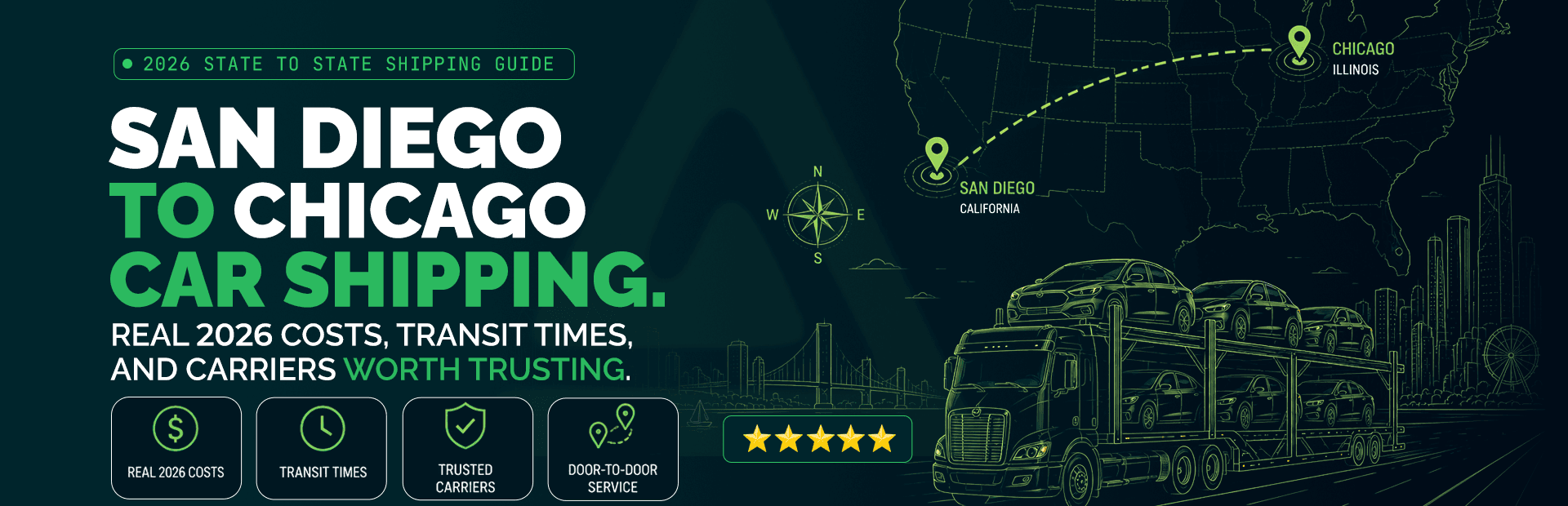
San Diego to Chicago is one of the longer hauls in the country. The actual driving distance runs about 2,077 miles across five states, close to 30 hours behind the wheel without stopping. That number alone explains why so many people moving between the two cities look into San Diego to Chicago car shipping instead of driving it themselves. Job relocations, college move-ins, snowbird routines, dealer transfers, the reasons vary, but the math usually lands in the same place.
This guide breaks down what the route actually costs, how long it really takes, and which companies handle it well. No rounded-up guesses, no vague ranges pulled from nowhere.
Get a quote for your San Diego to Chicago shipment and compare real carrier pricing for your exact vehicle before you commit to anything.
How Much Does It Cost to Ship a Car From San Diego to Chicago
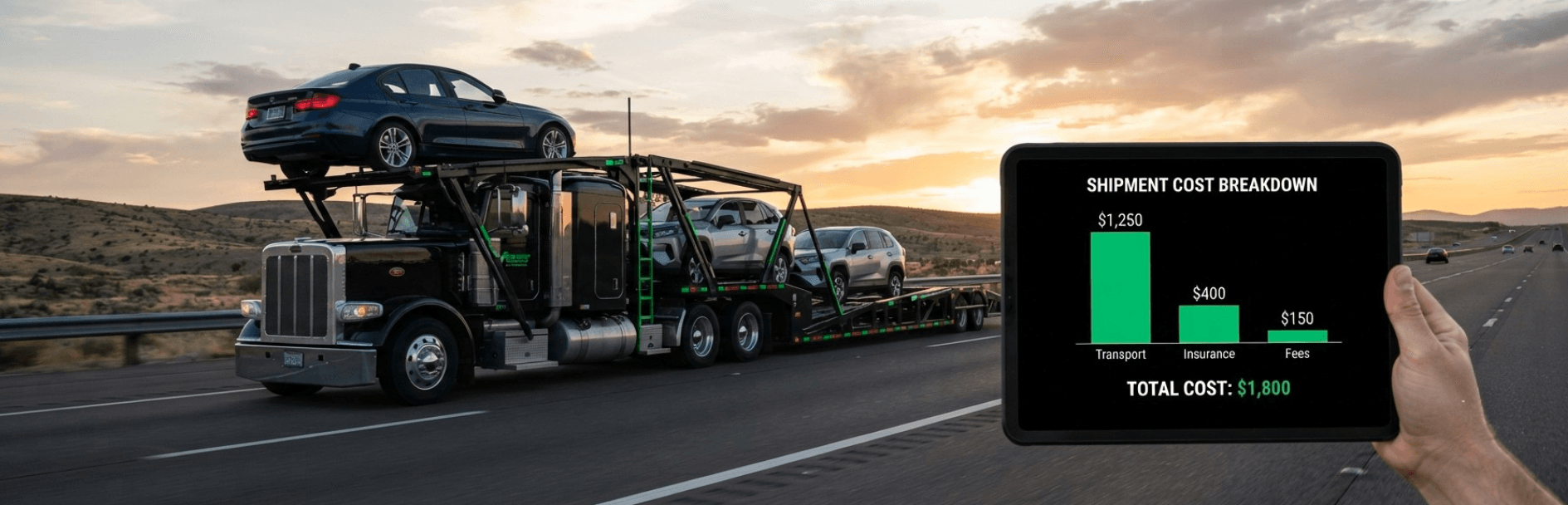
A route this long usually prices out more efficiently per mile than a short regional hop, since it's an easy fit for a carrier's cross-country schedule.
For a standard sedan, open-transport quotes on this corridor typically land between $900 and $1,400, depending on the season, how far out you book, and current fuel prices. Enclosed transport runs 40 to 60 percent higher. That premium buys a covered trailer and a lot less road debris exposure over 2,000-plus miles, which matters more than people expect once you're crossing the desert Southwest and the open plains of Kansas or Oklahoma.
|
Vehicle Type |
Open Carrier Estimate |
Enclosed Carrier Estimate |
Typical Transit Window |
|
Sedan |
$900–$1,400 |
$1,300–$2,200 |
5–8 days |
|
SUV / Truck |
$1,050–$1,650 |
$1,500–$2,500 |
5–8 days |
|
Non-running vehicle |
$1,050–$1,800 |
$1,600–$2,600 |
6–9 days |
SUVs and trucks generally run 10 to 20 percent above sedan pricing on this route. They take up more trailer space and add weight, both of which factor directly into what a carrier quotes. If you're weighing options for how much it costs to ship a car in 2026 more broadly, size is consistently one of the biggest swing factors, right alongside distance and season.
What actually moves the number on this specific route: vehicle size, open versus enclosed, how far in advance you book, and the season. Winter quotes tend to run a bit higher because fewer carriers want to route through mountain weather near Flagstaff or through sudden cold snaps in the Midwest.
How Long Does It Take to Ship a Car From San Diego to Chicago
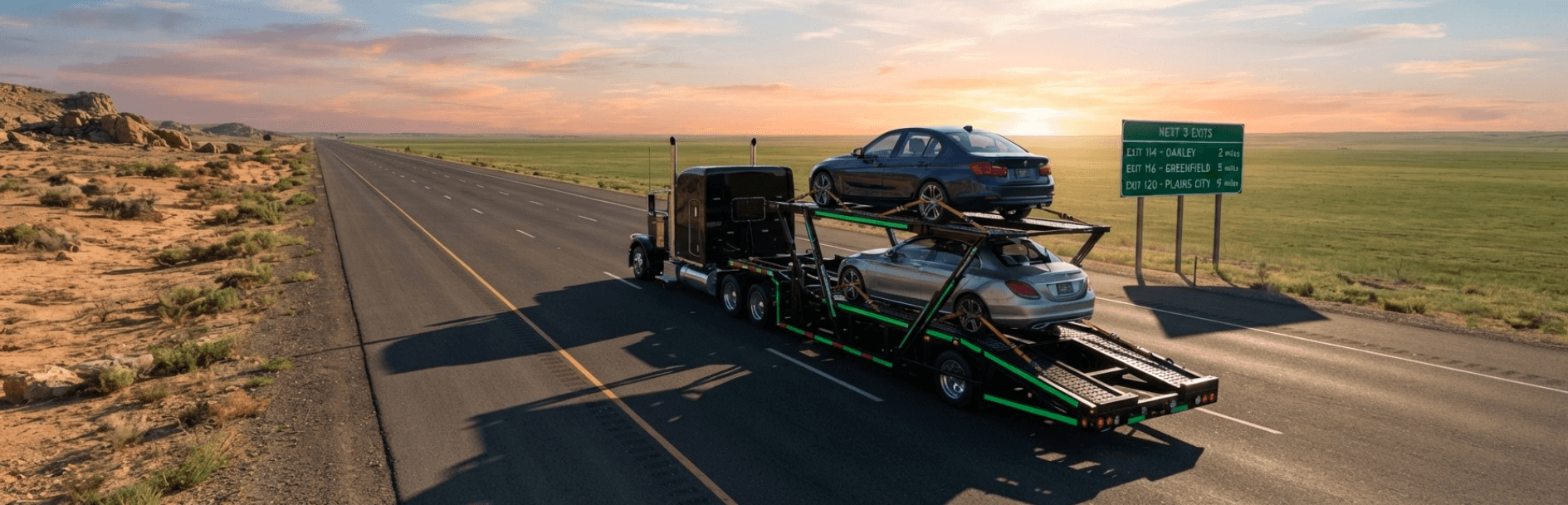
Transit typically runs 5 to 8 days after pickup on a standard multi-stop open carrier. That's the honest answer, and it's worth understanding why it's not a straight highway sprint.
Carriers running this corridor load and unload other people's vehicles along the way, not just yours. A truck might pick up in San Diego, add a car in Phoenix, drop one in Albuquerque, and pick up again before it ever reaches Chicago. That's normal. It's also why nobody can promise a same-week delivery on a route this long unless you're paying for expedited, single-load service.
For context, a dedicated single driver could legally cover 2,077 miles in about two driving days under federal hours-of-service rules, which cap commercial drivers at 11 hours behind the wheel per shift. But that's not how multi-vehicle auto carriers actually operate this route, and it's a useful benchmark for understanding why the real timeline looks the way it does.
Is It Cheaper to Ship Your Car or Drive It Yourself
The honest comparison isn't just the sticker price of a shipping quote versus a full tank of gas. It's shipping cost against gas, food, roadside lodging, tire and engine wear, and the value of three or four days you're not spending at your new job or apartment.
|
Cost Category |
Shipping |
Driving Yourself |
|
Direct cost |
$900–$1,400 (sedan, open) |
$350–$500 in fuel alone |
|
Time |
5–8 days, hands-off |
3–4 days of driving, plus rest stops |
|
Vehicle wear |
None added |
2,077 miles added to odometer |
|
Weather risk |
Carrier's problem |
Yours, desert heat leaving San Diego, possible winter conditions through Colorado or Kansas |
Once you add two to three nights of hotel stays, meals on the road, and the mileage piling onto your car's odometer, the total driving cost usually creeps close to what a shipping quote would run anyway.
For most single-driver trips, shipping wins on real cost, not just convenience. The cheapest way to ship a car from California to Illinois almost always comes down to two levers: booking with flexible pickup dates and choosing open transport over enclosed unless your vehicle genuinely needs the extra protection. If you're relocating from California, that flexibility matters even more, since carrier availability there shifts by season.
Driving only wins if the trip doubles as something else, a planned road trip, a visit to family along I-40, or a reason to see the country before starting a new chapter in Chicago.
Open vs. Enclosed, and Door-to-Door vs. Terminal-to-Terminal
Two decisions shape nearly every quote on this route: how your car rides, and how it gets picked up and dropped off.
Open vs. Enclosed Transport Cost Difference
Open transport covers roughly 90 percent of shipments nationwide, and it's the default for a reason. It costs less and gets the job done for the vast majority of standard vehicles making this cross-country run. Open car shipping means your car rides exposed on a multi-level trailer alongside several others, the same setup you see hauling new cars to dealerships.
Enclosed vehicle shipping adds that 40 to 60 percent premium mentioned earlier, but it's worth it for classic cars, exotics, or a brand-new vehicle you don't want picking up highway grit over 2,000 miles. For a deeper breakdown of where that price gap actually comes from, this open versus enclosed transport cost guide walks through the math carrier by carrier.
Door-to-Door vs. Terminal-to-Terminal Pickup
Door-to-door is the default on this route, and for good reason. The carrier comes as close as legally and physically possible to both your San Diego pickup address and your Chicago delivery address. Terminal-to-terminal shaves a little off the price, but it adds a drive to a depot on each end, which matters more if you're landing somewhere in downtown Chicago with narrow streets and limited truck access.
Three things decide which setup fits: how accessible your pickup and delivery addresses actually are for a 75-foot rig, how much budget flexibility you have, and whether a terminal happens to sit near where you're headed anyway. This door-to-door versus terminal-to-terminal comparison breaks down the tradeoffs in more detail if your address is a tight fit either way.
Shipping an EV, an SUV, or a Non-Running Car on This Route
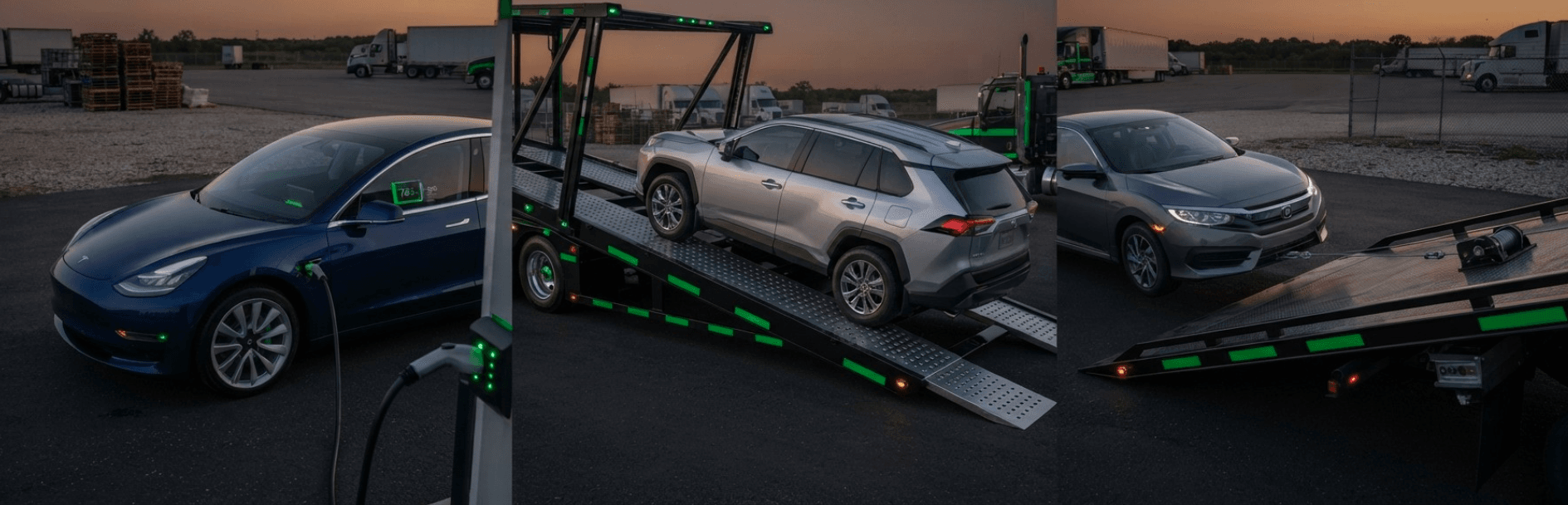
Not every vehicle ships the same way, and three categories come up constantly on a route this long.
Electric Vehicle Shipping Cross Country Cost
EVs typically cost slightly more to ship than a gas vehicle of the same size. The battery pack adds real weight, and some carriers prefer enclosed transport for higher-value EVs simply due to liability preferences, not because open transport is unsafe. One practical tip that actually matters: charge to roughly 50 percent before pickup. A fully drained or fully charged battery both carry small risk profiles that most carriers would rather avoid over a multi-day haul. For the full picture on prepping an EV for a move like this, this electric vehicle shipping guide covers the process step by step.
Shipping a Non-Running Car Cross Country
A non-running vehicle needs a winch-equipped carrier, and that typically adds $150 to $300 to the quote. The number one thing to get right here: confirm this upfront when you're booking, not at pickup. Surprise winch fees show up in complaint threads across this industry constantly, and they're almost always avoidable with one direct question during the quote call. This step-by-step guide to shipping a non-running vehicle covers exactly what a carrier needs to know in advance.
What Happens on Pickup and Delivery Day
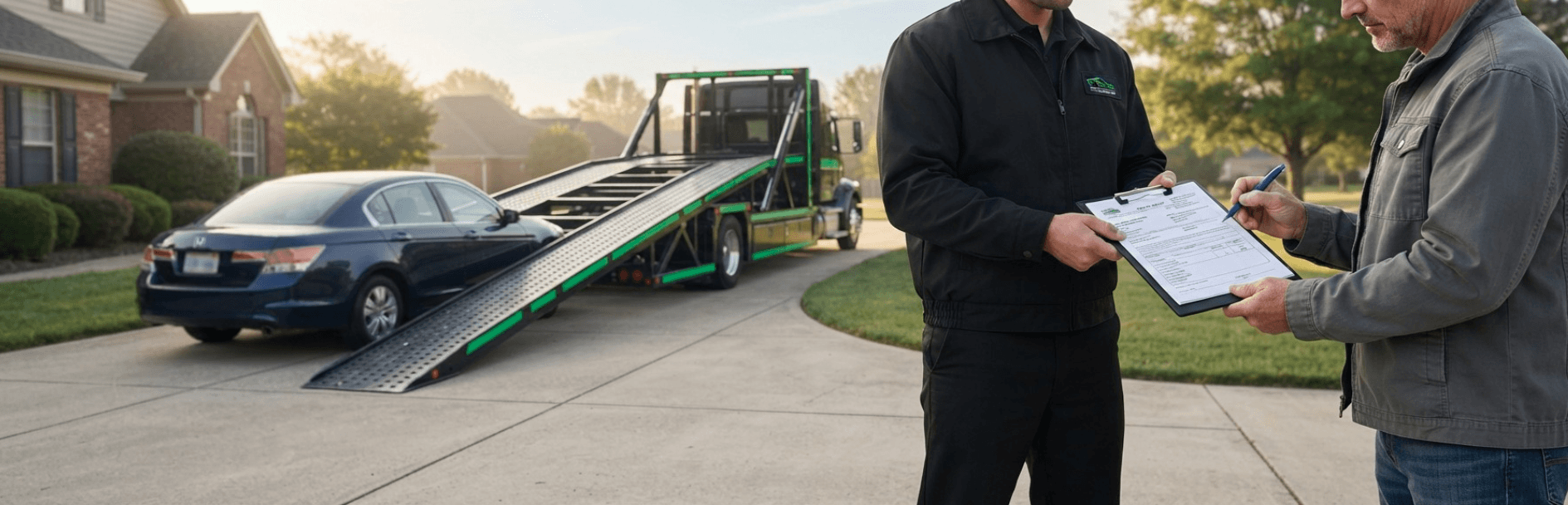
Someone 18 or older needs to be present at both ends, San Diego pickup and Chicago delivery, to hand off keys and sign the bill of lading. That's not optional. It can be you, a friend, a family member, or anyone you've designated in advance, but someone has to be there.
A few practical questions come up on nearly every shipment:
-
Tipping the driver. It's not required, but $20 to $40 is standard for a smooth cross-country delivery. Drivers handling a route this long, often solo, tend to remember good tips and good communication.
-
Damage during transit. Document everything on the bill of lading before you sign for delivery, not after. Photograph the car from all angles at pickup and again at drop-off. If there's damage, file with the carrier's insurance within 24 hours. Before booking, it's worth confirming a company's DOT and MC authority directly through FMCSA's Company Snapshot tool, since active authority and insurance status are public record.
-
Delivery into downtown Chicago. Large car carriers often can't navigate the Loop or narrow Lincoln Park side streets. It's common for a driver to call ahead and ask to meet at a nearby parking lot or wide side street instead of the exact address. That's not a red flag, it's just physics.
Best Auto Transport Companies for the San Diego to Chicago Route
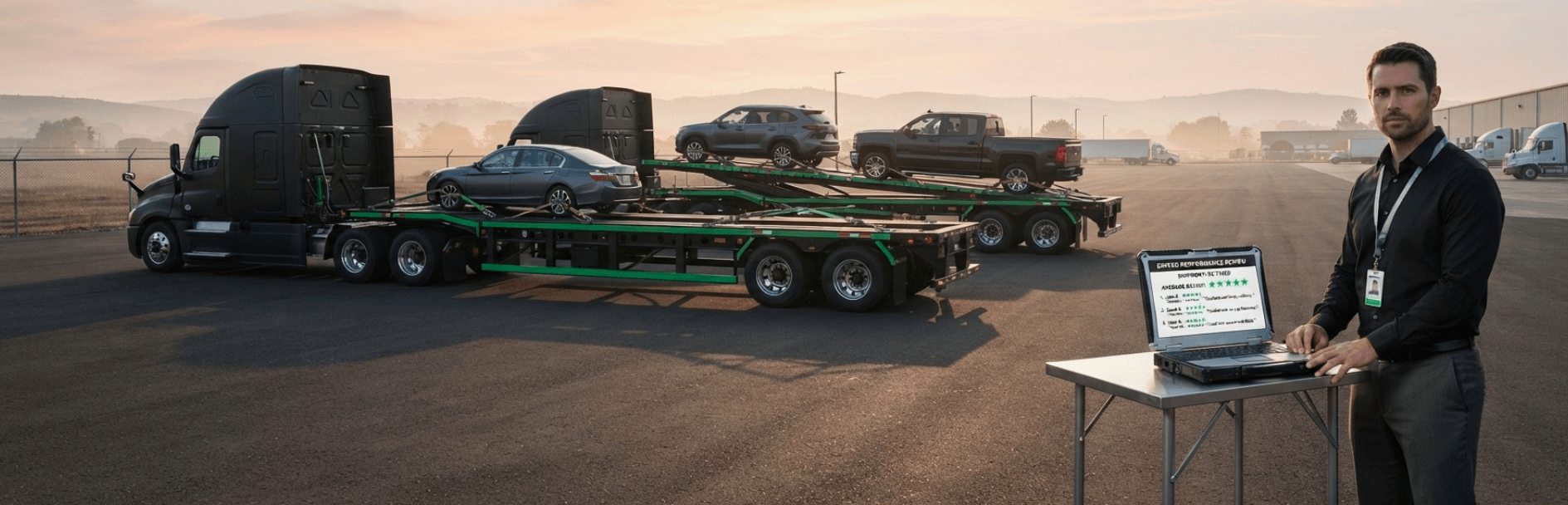
A few standards matter before picking anyone for a haul this long: active FMCSA authority, verifiable third-party reviews, and clear insurance terms in writing before any deposit changes hands.
|
Company |
Best Known For |
Best Fit |
|
Reliable Carriers Inc. |
Enclosed Transport Specialist, runs its own fleet of soft-side enclosed trailers |
Classic, exotic, or high-value vehicles making this run |
|
Acertus Automotive Logistics |
Dealer-grade logistics network, strong multi-vehicle handling |
Dealership owners, bulk or fleet moves |
|
Direct Express Auto Transport |
Long operating history, consistent nationwide coverage |
Standard cross-country moves without a niche need |
|
Nexus Auto Transport |
Responsive customer service track record, flexible scheduling |
First-time shippers or anyone working against a job-start deadline |
Even well-reviewed companies get occasional complaints over deposit timing or last-minute pricing adjustments. That's standard friction in a bid-based industry, not automatically a sign of a bad operator. What separates the reliable ones is how they handle that friction when it comes up, not whether it exists at all.
Get a real quote for this route and compare pricing from vetted carriers before you lock in a company for your San Diego to Chicago shipment.
When to Book, and Who This Route Serves Best
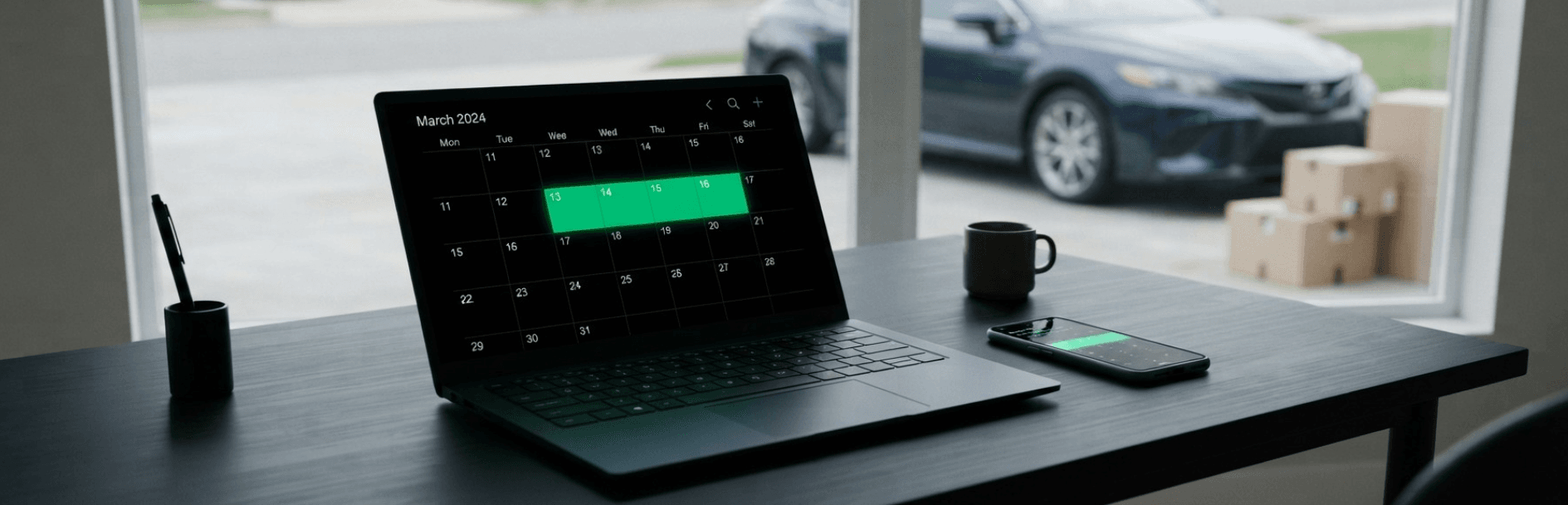
Two to three weeks out is the safe booking window for this corridor. Anything under a week narrows carrier availability fast and tends to push the price up, especially heading into the fall move season when demand spikes nationwide.
College students heading to Chicago-area schools should book right after housing gets confirmed, not the week before move-in. Late August and early September are peak demand windows across the entire industry, and this college student car shipping guide covers timing specific to that situation.
One more honest note worth knowing upfront: shipping the car doesn't register it. New Illinois residents generally need to register their vehicle and get an Illinois driver's license within a set window after establishing residency there, so it's worth checking the current Illinois Secretary of State requirements directly once you've moved, since registration rules are the kind of detail that changes and shouldn't be assumed from a shipping guide.
What People Search Before Booking This Route
These are the exact questions people type into Google right before they commit to a quote for this corridor.
How Much Does It Really Cost To Ship A Car From San Diego To Chicago In 2026?
Most sedans run $900 to $1,400 on open transport, SUVs and trucks run higher, and enclosed transport adds 40 to 60 percent. Vehicle size, season, and booking timeline drive the final quote more than anything else.
Can I Ship A Car To Chicago Without Being There For Pickup Or Delivery?
No. Someone 18 or older needs to sign the bill of lading at both ends, though it doesn't have to be you personally. A friend, family member, or designated representative works fine.
Is It Legal To Ship A Car Without The Title Present?
Yes, in most cases. Carriers typically need proof of ownership and registration, not the physical title. Requirements vary by state and company, so confirm the specifics before booking if you don't have the title in hand.
Do Car Shipping Companies Charge More In Winter For This Route?
Sometimes. Winter can add cost if carriers reroute around mountain weather near Flagstaff or Midwest cold snaps. Booking a few weeks ahead usually offsets any seasonal premium better than waiting.
What's The Difference Between A Broker And A Carrier, And Does It Change My Price?
A carrier owns the trucks and physically hauls your car. A broker arranges the shipment through its carrier network. Both can offer solid pricing, what matters more is how each one prices the job.
Picking the Right Setup for Your San Diego to Chicago Move
Budget movers should lean open transport and keep pickup dates flexible. Classic car owners, exotic owners, and dealers moving high-value inventory should book enclosed transport with a specialist built for it. College students and job relocators should book two to three weeks ahead of their real deadline, not the week before. And anyone shipping a non-running vehicle should confirm winch fees before booking, not after the truck shows up.
San Diego to Chicago car shipping isn't complicated once you know what actually drives the price and the timeline. The variables are the same every time: vehicle size, transport type, how far out you book, and who you book with.
Get your quote for this route now and see what a real carrier would charge for your specific vehicle, not a rounded-up estimate.