


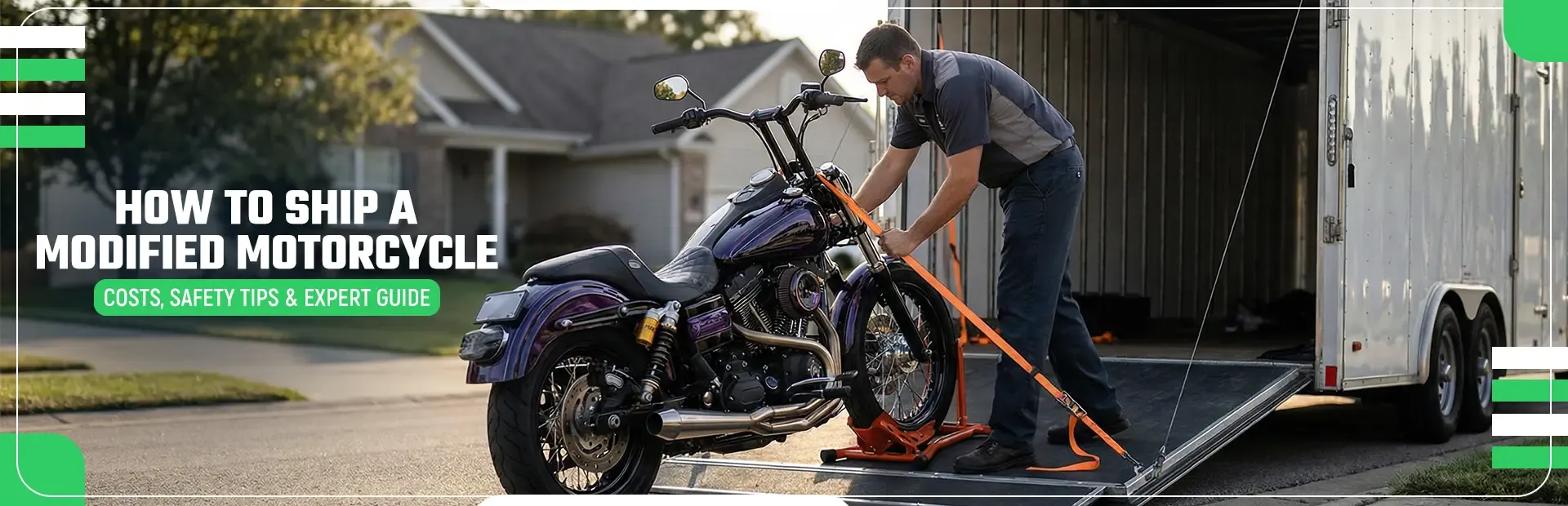
The Ultimate Guide to Shipping a Motorcycle with Modifications

The Ultimate Guide to Shipping a Motorcycle with Modifications

Transportvibe
August 06, 2025
12 min read

You’ve poured your heart and soul into building a custom motorcycle, making it a unique extension of yourself. Now, a new journey awaits, and you need to move your prized possession. 

If you are to ship modified motorcycle, it can be a source of worry, as standard transport services aren't always equipped for the unique challenges posed by custom bikes. This guide will walk you through every step, ensuring your custom bike transport is handled with the care it deserves so that you can focus on the road ahead.

Don't leave your custom bike's transport to chance. Visit Transportvibe today to explore honest reviews and find the perfect, reliable company for your specialized needs.

Understanding the Unique Risks of Custom Bike Transport

Shipping a modified motorcycle requires a different approach than moving a factory-standard bike. The unique features you've added—the custom parts and personal touches—can introduce unexpected challenges during transport.

A standard motorcycle is built with universal dimensions and secure points, making it easy for most motorcycle transport services to handle. But when you make significant alterations, those standard methods might not be safe anymore.

Here are some common modifications that can create logistical hurdles:

  • Extended or Lowered Suspension: This can make it hard to load your bike without scraping the undercarriage and requires special motorcycle tie-down techniques to avoid damaging components.
  • Aftermarket Fairings & Body Kits: Made from delicate materials, these are more vulnerable to scratches or cracks if not secured with extreme care. Their non-standard shapes can also make proper tie-down difficult.
  • Custom Exhaust Systems: These often protrude in unusual ways and are easily bent or dented if the bike isn't positioned correctly.
  • Unique Handlebars & Mirrors: Wider handlebars can make maneuvering tight, while custom mirrors are often more fragile than stock parts.

These examples show why custom bike transport demands more than just routine handling. To figure out how to ship a modified motorcycle, you need to be proactive and address these issues head-on. 

You should be asking potential carriers key questions like: How will they accommodate my bike’s unique dimensions? What specific tie-down techniques will they use? Getting clear answers to these questions will help you choose the best motorcycle shipping companies for the job.

How to Prepare a Modified Motorcycle for Shipping: The Pre-Transport Checklist

Meticulous preparation is the best way to ensure your motorcycle arrives in perfect condition. Before you even start looking for motorcycle shipping companies, a little time spent on your custom ride can save you a lot of headaches later on. Think of this checklist as your first and most important line of defense against any potential damage.

The "Before" Photos & Documentation

This is probably the single most important step you can take. Grab your phone or camera and take high-resolution photos and videos of your bike from every angle, making sure to highlight all of your custom motorcycle parts. This detailed documentation is your proof of condition and will be absolutely essential if you ever need to file an insurance claim.

The De-Modification Debate

Sometimes, the safest option is to temporarily remove fragile parts. If you have delicate mirrors, fairings, or other unique custom motorcycle parts that might be at risk, it's a good idea to take them off and box them up separately. Handle these components with care, wrap them securely, and label each box so you know exactly what’s inside.

Fuel & Fluids

Every carrier has its own rules about fuel levels for safety. Most companies require the tank to be no more than a quarter full, though some might ask for it to be nearly empty. Always check with your chosen motorcycle transport services to understand their specific policies on fuel and other fluids.

Battery & Electronics

To prevent any electrical issues or accidental activation during transit, it's wise to disconnect the battery. This also applies to any sophisticated alarm systems—make sure you discuss deactivation procedures with your carrier for safe motorcycle transport for altered bikes.

Cleaning & Inspection

Before the transport truck arrives, give your modified motorcycle a thorough wash. A clean bike not only looks great but also makes it much easier to spot any existing scratches or dings, which you should document in your "before" photos. This final inspection helps you confirm the bike's condition before it ships and gives you a clear baseline for when it arrives.

Finding a trustworthy carrier is the most important part of this journey. Use Transportvibe's trusted ratings and reviews to find a company with a proven track record of handling bikes like yours.

Finding the Best Carriers for Custom Motorcycles

When it comes to custom bike transport, not all motorcycle shipping companies are created equal. Entrusting your uniquely modified motorcycle to a generic transport service can lead to disaster, so you need a partner who truly understands the nuances of handling altered bikes.

Standard motorcycle transport services cater to a high volume of uniform bikes, and their equipment often isn't suited for the unique dimensions or delicate parts of a modified ride. You need a carrier with proven expertise, the right equipment, and a track record of successfully handling custom motorcycle parts transport.

Enclosed vs. Open Motorcycle Transport

This is a fundamental decision that significantly impacts the safety of your modified motorcycle.

  • Open Transport: Open transport is a good option for motorcycle transportation. While you can consider this like a more budget-friendly option, open transport exposes your motorcycle to the elements – rain, snow, sun – as well as road debris like rocks and dust. For a standard, less valuable motorcycle, this might be an acceptable risk. However, for a meticulously customized bike with potentially delicate finishes and unique parts, open transport is generally not recommended.
  • Enclosed Motorcycle Shipping: Enclosed motorcycle shipping is the gold standard for shipping a custom motorcycle safely. These trailers provide a secure, protected environment, using specialized loading ramps and sophisticated tie-down systems designed to minimize any risk of damage. While it might be a bit more expensive, the peace of mind and superior protection are well worth the investment for your modified bike.

To dive deeper into the pros and cons, we've broken down all the options for you in a separate post: Motorcycle Shipping Options: Enclosed vs open motorcycle transport.

Key Questions to Ask Potential Carriers

Before you hire a company, you should do your due diligence and ask them the right questions. This is crucial for making an informed decision about who will be handling your valued ride.

  • Experience with Custom Bikes: Ask specifically about their experience with motorcycle shipping with modifications and request testimonials from other custom bike owners.
  • Motorcycle Crating Services: For an extra layer of protection, ask if they offer professional motorcycle crating services and about the materials they use.
  • Tie-Down Techniques: Inquire about their specific motorcycle tie-down techniques, ensuring they use soft straps and wheel chocks to protect your bike.
  • Accommodation of Unique Dimensions: Be sure to communicate your bike's exact dimensions to ensure the carrier has the appropriate trailers and equipment for a safe fit.
  • Pickup and Delivery: Ask about their motorcycle pickup and delivery options, like door-to-door service and specific timeframes.

Reading Reviews and Testimonials

Don't just rely on the transport companies' word. Look for independent reviews and testimonials from other customers on websites like the Better Business Bureau and online forums. Pay close attention to reviews that specifically mention their experiences with custom bike transport.

Cost to Ship a Modified Motorcycle and Understanding Insurance Coverage

When you're ready to ship a modified motorcycle, understanding the financial side of things is just as crucial as preparing your ride. The cost to ship a modified motorcycle isn't a one-size-fits-all number, and securing proper insurance is the ultimate safeguard for your investment.

Deconstructing the Cost

Let's be upfront: the cost to ship a modified motorcycle will likely be higher than for a standard bike. This is because your unique machine often requires specialized handling and extra space. Several key factors influence the total price.

  • Vehicle Dimensions: A longer chopper or a bike with wide handlebars might take up more space, leading to a higher cost.
  • Transport Method: Opting for the superior protection of enclosed motorcycle shipping is naturally more expensive but highly recommended for custom bikes.
  • Specialized Services: Services like professional motorcycle crating services and door-to-door delivery will add to the final price.
  • Distance: The greater the distance your bike travels, the more you can expect to pay.
  • Carrier Specifics: Some carriers charge a premium for their expertise in handling motorcycle transport for altered bikes.

To get an accurate estimate, be completely transparent with potential carriers about your bike's modifications. Collect quotes from several reputable motorcycle shipping companies and don’t just focus on the lowest price. Instead, use genuine platforms to compare companies based on their track record and customer reviews, ensuring you choose a provider that offers the best value and reliability.

Motorcycle Shipping Insurance for Modified Bikes

This is a make-or-break part of the process, so you need to pay close attention. While most motorcycle transport services offer basic carrier liability, this coverage often falls short of protecting your customized bike's true value.

  • Limited Coverage: Standard policies usually have a low maximum payout and may only cover damages due to the carrier's negligence.
  • Depreciated Value: They often value your bike at a depreciated "book" price, completely ignoring the thousands you've invested in modifications.

This is why you must obtain specialized motorcycle shipping insurance for modified bikes. This coverage is designed to protect your full investment, including all your aftermarket parts. Don’t get stuck with a bad experience. Read genuine customer reviews on Transportvibe and select a company that delivers on its promises.

Insurance Coverage for Motorcycle Modifications

Never assume your standard policy will cover your custom parts—you need to be proactive. Talk to the insurance provider about adding a specific rider to your policy or obtaining specialized cargo insurance. This ensures your insurance coverage for motorcycle modifications is rock-solid. 

Your detailed photos and valuation from the preparation phase will be crucial for this step. If anything goes wrong during transit, this documentation will be your best friend, helping you get fair compensation for the repair or replacement of your unique custom parts.

The Shipping Process and What to Expect

Once you’ve selected your motorcycle transport services and prepped your custom bike, you're ready for the final leg of its journey. Understanding what happens during the shipping process will help you stay informed and confident every step of the way.

Motorcycle Pickup and Delivery

When the transport truck arrives, make sure your motorcycle is easily accessible and ready to go. You should also be present during the loading to ensure everything looks right and that the carrier is using proper motorcycle tie-down techniques for your modified bike.

Upon delivery, take your time to carefully inspect your motorcycle before signing any paperwork. Compare its current condition with the detailed photos and documentation you took before shipping it.

Motorcycle Transport Tracking

Most reputable motorcycle shipping companies offer a tracking system so you can monitor your bike's progress. This feature lets you stay updated on its location and provides peace of mind throughout the journey.

Final Inspection

This is the most critical step of the entire process. As soon as your motorcycle arrives, do a thorough check for any new scratches, dents, or damage. Pay special attention to your custom parts, as these are often the most vulnerable.

If you find any new damage, document it immediately with photos and detailed notes before you sign the final delivery receipt. Having your pre-shipping documentation on hand will be essential for reporting damage and starting the claims process with your motorcycle shipping insurance for modified bikes.

FAQs For Shipping a Modified Motorcycle


What's the best way to ship a modified motorcycle safely?

The safest method is enclosed motorcycle shipping, which protects your bike from weather and road debris.

Is standard insurance enough for my custom bike transport?

No, standard insurance is often limited. You need specific motorcycle shipping insurance for modified bikes.

How do I find the best carriers for custom motorcycles?

Look for motorcycle shipping companies with proven experience and positive reviews on platforms like Transportvibe.

What affects the cost to ship a modified motorcycle?

The cost to ship a modified motorcycle is influenced by its dimensions, the shipping method, and specialized crating needs.

How should I prepare my custom motorcycle parts?

Remove fragile custom motorcycle parts and pack them separately to avoid damage during transport.

What are the best tie-down techniques for my altered bike?

Carriers should use soft straps on the frame and wheel chocks to secure the bike without damaging motorcycle modifications.

Should I choose enclosed vs. open motorcycle transport?

For a modified bike, enclosed motorcycle transport is always recommended to ensure maximum protection and security.

Reach Your Destination With Modified Motorcycle

Shipping a modified motorcycle requires a more thoughtful and meticulous approach than transporting a standard bike. But with the right knowledge and preparation, it doesn't have to be a gamble. By diligently preparing your custom ride, choosing a specialized enclosed motorcycle shipping company, and securing comprehensive motorcycle shipping insurance for modified bikes, you can navigate the process with confidence.

Remember the importance of thorough documentation and clear communication every step of the way. Transporting your prized possession shouldn't be a source of stress. Use Transportvibe to make an informed choice and ensure your custom ride arrives safely, just as you envisioned it.

Related articles

AUG 09, 2025
Top 10 Tips for Hassle-Free Car Shipping from Coastal Areas

Top 10 Tips for Hassle-Free Car Shipping from Coastal Areas

TRANSPORTVIBE

Shipping a car from a coastal state brings a unique set of challenges beyond a typical cross-country move, especially when it comes to car shipping from coastal areas . From sea salt exposure to hurricane season, the journey requires extra preparation. Moving your vehicle from the beach doesn't have to be a stressful experience. With the right knowledge and a few key steps, you can ensure a smooth, hassle-free car shipping from the beach. Understanding the nuances of car shipping from coastal areas is essential for a successful transport . This guide provides the top 10 tips for hassle-free car shipping from coastal areas, designed to help you prepare your vehicle, choose the right carrier, and protect your investment in car shipping from coastal areas . These tips will enhance your understanding of car shipping from coastal areas and help you make informed decisions . Start your journey today by getting a transparent, no-obligation quote from our trusted network of carriers. The Top 10 Tips for Coastal Auto Transport Here are the top ten essential tips to help you navigate the process of coastal auto transport with ease and confidence. 1. Research and Vet Your Coastal Auto Transport Company When choosing a company for your coastal auto transport, thorough research is essential. A professional carrier with experience in coastal regions is better prepared to handle unique logistical challenges, from dense traffic to adverse weather like hurricanes. Start by verifying the company's legitimacy and track record. A reputable company should be registered with the FMCSA , and you can use their USDOT and MC numbers to check safety ratings, insurance, and complaint history. Beyond official records, read customer reviews, specifically looking for feedback on car shipping from coastal areas to gauge their expertise. The best car shipping companies for coastal areas have a proven track record, good communication, and a balanced mix of reviews. Be wary of those with excessive negative feedback or claims of poor communication, as a company's ability to navigate a coastal route can be the difference between a great and stressful experience. 2. Understand Unique Coastal Shipping Challenges Shipping a car from a coastal location presents unique challenges not found in inland shipments. The primary threat is saltwater corrosion, as high humidity and constant sea spray can damage a vehicle's finish, undercarriage, and electrical systems, accelerating rust. Beyond corrosion, coastal areas are known for unpredictable weather patterns. Hurricane season and tropical storms can cause significant delays and route changes, so it's crucial to be aware of these risks and discuss them with your carrier, who should have contingency plans. Operating in coastal cities also poses logistical challenges, including crowded roads and heavy traffic from tourism. An experienced transporter will be familiar with these hurdles and navigate them efficiently. Understanding these unique factors upfront, and partnering with a well-prepared carrier, is key to a smooth, hassle-free car shipping from the beach. 3. Prepare Your Vehicle for a Coastal Journey Preparing your vehicle for car shipping from coastal areas ensures its safety and integrity during transit . Properly preparing your vehicle is one of the most critical steps to ensuring a successful and damage-free journey. Since you're dealing with coastal auto transport, this preparation is even more important due to the risk of saltwater corrosion. Here's a step-by-step checklist to prepare your car: Wash and Wax: Start by giving your car a thorough wash to remove any existing salt, sand, or corrosive elements from the paint and undercarriage. A fresh coat of wax will provide an extra layer of protection against moisture and sea spray during transit. Mechanical Check: Perform a basic mechanical check. Top off all fluids, including oil, coolant, and brake fluid. Ensure your tires are properly inflated to the recommended pressure. Disable Electronics: Take the time to disable any car alarms or GPS systems that might activate on their own. This prevents battery drain, which could leave you with a non-starting car upon delivery. Secure Loose Parts: Remove any non-permanent parts like detachable spoilers, custom antennas, or roof racks that could be damaged or fall off during the journey. Document Everything: Finally, inspect the car’s interior and exterior thoroughly and take timestamped photos or a video. This documentation will be invaluable if you need to file an insurance claim after the delivery. Following these steps for preparing your vehicle for coastal auto transport will help in avoiding saltwater damage during car shipping and will give you peace of mind. Your vehicle's preparation is crucial in the context of car shipping from coastal areas, where saltwater damage is a major concern . 4. Choose the Right Shipping Method: Open vs. Enclosed While thinking how to ship a car from the coast safely, a key decision that needs to be make is choosing between an open or enclosed transport carrier. This choice affects both your vehicle's protection and the final cost. Open transport is the most common and affordable method. While suitable for most standard vehicles, it leaves your car vulnerable to road debris, rain, and corrosive saltwater spray. For high-value, classic, or new vehicles, the extra cost of an enclosed carrier is a worthwhile investment. An enclosed carrier provides complete protection from the environment, shielding your car from salt spray, hail, and debris, as well as offering a superior level of security and privacy. The final decision depends on your budget and the necessary level of protection for your vehicle. An open carrier works for an older car where minor damage isn't a concern, but for a new luxury vehicle shipping , an enclosed carrier offers invaluable peace of mind. Understanding your shipping options is vital for effective car shipping from coastal areas . Need to learn more about the best transport options for your vehicle? Read through our comprehensive guides on different shipping methods to find the perfect fit for your needs. 5. Time Your Shipment Wisely (Avoiding Peak Seasons) Timing your shipment is crucial for managing both cost and logistics. Coastal regions often have peak seasons that complicate shipping. A major consideration is hurricane season (June 1st to November 30th), which can cause unpredictable delays, route changes, and damage risks. Likewise, the "snowbird" migration season in the fall and spring drives up demand, prices, and limits carrier availability. To avoid these issues, schedule your shipment outside of these peak periods, like mid-winter or late summer. Planning ahead is the key to securing a good rate and a reliable carrier. For more in-depth advice on this topic, check out our guide on seasonal car shipping tips for snowbirds and vacationers. 6. Document Everything with a Detailed Inspection Documentation is your best defense for safe coastal auto transport. Before your vehicle is loaded, perform a detailed pre-shipment inspection with the driver. The driver will note existing damage on the Bill of Lading, which you must verify for accuracy. To protect yourself, take your own timestamped photos and videos of the car from all angles. This evidence provides an indisputable record of the car’s condition before shipment. The Bill of Lading is a binding legal document once signed. Through documenting your vehicle, you create a clear baseline for comparison upon arrival, providing necessary evidence to file a claim if any damage occurs. 7. Secure All Loose Items Inside Your Vehicle Most auto transport companies have a strict "no personal items" rule because their insurance doesn't cover personal belongings, meaning you won't be compensated for any loss or damage. Loose items can also shift during transport, damaging the car's interior. Additionally, since carriers aren't licensed to transport household goods, packing your car could lead to extra fees or a refusal of service. Before the driver arrives, remove all personal valuables, electronics, and documents. Also, secure loose permanent items like the spare tire or floor mats to prevent movement and damage. This is a crucial step for your safety and the integrity of your vehicle's interior. We believe in complete transparency. Learn more about our mission to provide transparent and informed decisions for all your auto transport needs by visiting us. 8. Verify Insurance Coverage and Understand Liability Before your car is loaded, understand the insurance and liability. By federal law, transport companies must have cargo insurance, but coverage details vary. It's crucial to know what is and isn't covered, as some policies may have exclusions for minor damage like paint chips. Check with your personal auto insurance provider, as many policies don't cover a vehicle during transit. Always request proof of insurance and a detailed explanation of the claims process from the transport company. The Bill of Lading is a key document; any new damage must be noted on it at delivery to be considered for a claim. This is a crucial step for your financial protection throughout the coastal auto transport process. For more on this, read our article, is auto transport covered by your car insurance? 9. Be Flexible with Pickup and Delivery Dates While transport companies provide estimated windows, delays are common and should be expected. This is especially true for coastal shipments due to weather events, such as storms or hurricanes. Other factors like traffic, truck breakdowns, or route delays can also impact the schedule. It's wise to build a buffer into your plans and not schedule your car's arrival on a day you absolutely need it. Stay in regular communication with your carrier and be patient, as a good driver prioritizes a safe journey over an unrealistic deadline. Expecting some flexibility reduces stress and avoids last-minute complications. A reputable company will keep you informed of any delays, so choosing a carrier with excellent communication is key to a stress-free experience. 10. Compare Quotes to Find Affordable Coastal Car Transport Services Don't forget, preparing for car shipping from coastal areas includes choosing the right carrier . When seeking to find a reliable coastal state car shipping guide, it is important to understand what influences the cost. The price of shipping a car is influenced by distance, vehicle size and weight, time of year, and transport method. To ensure a fair price, you should compare multiple quotes. Our platform, Transportvibe, simplifies this by allowing you to compare quotes from a network of pre-vetted carriers. This not only helps you get a clear picture of the market rate and negotiate a better price but also helps you spot suspiciously low quotes from unreliable companies, saving you money and stress. If you’re planning a major move, don’t leave your car behind. Explore our long-distance relocation services and let us handle the logistics. East Coast to West Coast: Specific Challenges Shipping a car from one coast to the other presents unique logistical challenges. This long-distance journey, often called cross-country car shipping, requires careful planning and a clear understanding of the obstacles involved. Here's a breakdown of the common challenges and how to overcome them. The challenges of car shipping from coastal areas include weather fluctuations and traffic congestion . Long-Distance Transit Cross-country car shipping typically takes 7-10 days, but this can vary. Coastal transport, especially from the East to the West Coast, is a long journey that requires detailed planning and communication with your carrier. The solution is to partner with a carrier that has a proven track record of handling long-distance routes and maintains clear communication throughout the process. High Demand These popular routes experience high demand, which can increase pricing and limit carrier availability. Planning ahead is key to securing a good rate and avoiding last-minute stress. Booking your shipment well in advance will give you a better chance of finding a reliable carrier at a competitive price. Diverse Route Conditions Carriers must navigate a wide variety of climates and road conditions, from humid coastal highways to arid inland routes and mountain passes. This diversity can impact travel time and requires an experienced transporter. To solve this, you need to choose a company with experience in these varied conditions, ensuring they have contingency plans for any unexpected weather or road issues. The Crucial Post-Delivery Inspection Checklist The moment your vehicle arrives, the most critical step is the post-delivery inspection. You must do this with the driver present before they leave the delivery location. This is your last opportunity to verify the condition of your car and document any new damage that may have occurred during coastal auto transport. In conclusion, thorough preparation aids in successful car shipping from coastal areas . Follow these car shipping tips for coastal states carefully - Review the Bill of Lading: Use the original Bill of Lading and your personal pre-shipment photos/videos to compare the vehicle's condition. Look for any new scratches, dents, dings, or other signs of damage that were not there before. Check Key Areas: Pay close attention to all sides of the vehicle, the roof, the hood, and the undercarriage, which may be susceptible to saltwater exposure. Also, check the interior for any signs of damage or items that may have shifted. Verify Documentation: Note the final mileage and fuel level, and compare them to the initial records. Any discrepancies should be addressed. Document Any New Damage: If you find any new damage, no matter how minor, it must be noted on the Bill of Lading. Be specific and take new photos. Both you and the driver must sign the updated Bill of Lading. This signed document is the primary evidence you will need to file an insurance claim. Filing a Claim: In the event of damage, contact the transport company and your insurance provider immediately. The signed Bill of Lading with the noted damage is your most important tool for a successful claim. Frequently Asked Questions (FAQs) How can I protect my car from saltwater damage? A thorough wash and wax before shipment is crucial. Additionally, choosing an enclosed carrier can offer maximum protection from sea spray and corrosive coastal air during transit. How much does it cost to ship a car from the coast? Prices vary based on distance, vehicle type, and the shipping method (open vs. enclosed). To get the most accurate price, we recommend getting a free quote. Should I choose an open or enclosed carrier from a coastal area? While open carriers are more affordable, an enclosed carrier is highly recommended for luxury, classic, or any vehicle you want to protect from coastal elements like salt spray, moisture, and potential road debris. What paperwork do I need for coastal auto transport? You will need a copy of your vehicle's registration and proof of ownership. The carrier will provide a Bill of Lading, which you should both sign. Can I pack personal items in my car? Most transport companies have a strict policy against personal items. For safety and insurance reasons, we strongly advise against packing any belongings in your vehicle. From Shore to Shore, Your Car Arrives Smoothly Shipping your car from the coast might seem daunting, but by following these key tips—from preparing your vehicle for saltwater to vetting the right transport company—you can ensure a smooth, worry-free experience. Our mission at Transportvibe is to make that process easier by providing transparent, reliable information every step of the way. When you're ready to make your move, don't settle for less. We emphasize the importance of planning when it comes to car shipping from coastal areas . Get a free, transparent quote from our network of vetted carriers and read real customer reviews today to start your journey with confidence. Don't hesitate to reach out for more information on car shipping from coastal areas .

AUG 04, 2025
How to Ship a Non-Running Vehicle: A Step-by-Step Guide

How to Ship a Non-Running Vehicle: A Step-by-Step Guide

TRANSPORTVIBE

Need to ship non-running vehicles but unsure where to start? You're not alone. Whether it's a classic restoration project, accident-damaged car, or auction purchase, transporting a non-running car presents unique challenges that standard carriers often can't handle. Shipping a non-running vehicle successfully requires understanding classification levels, specialized equipment needs, and proper preparation steps. This comprehensive guide walks you through every aspect of non-operational vehicle transport, from initial assessment and cost breakdown to finding qualified carriers and managing the entire shipping process. Transportvibe brings you a trusted review platform for auto transport across the states. We understand and analyze your unique needs, helping you find reliable vehicle transport facilities for shipping non-operational vehicles as a trustworthy auto transport partner. Understanding Non-Running Vehicles and Classifications When you need to transport a non-running car, understanding how the shipping industry defines "non-operational" is crucial. This isn't just about whether your engine starts. What Qualifies as Non-Running for Transport A non-running vehicle is any car that cannot be safely driven onto a transport trailer under its own power. This includes cars with dead batteries, brake failures, or expired registration that make driving illegal. Shipping a dead car involves more than mechanical issues. Safety regulations require vehicles to roll, steer, and brake during loading. If any of these functions fail, special equipment becomes necessary. Three Critical Classification Levels Level 1: Starts But Unsafe to Drive. These vehicles are operational but have safety issues, such as faulty brakes, broken lights, or expired tags. Standard winch equipment handles these easily. Examples include cars with minor electrical problems or lapsed insurance. Level 2: Won't Start But Mobile. The engine is dead, but the vehicle rolls freely and steers normally. This category includes cars with engine failure, transmission issues, or fuel system problems. Powered winch systems are required for loading. Level 3: Completely Immobile. These vehicles cannot roll or steer due to seized brakes, flat tires on rims, or structural damage. They require forklifts or specialized lifting equipment. This level costs significantly more to move non-running vehicles. Common Transport Scenarios Classic car restoration projects often need non-operational vehicle transport when moving barn finds or partially disassembled vehicles. Accident-damaged cars frequently require specialized handling, especially when structural damage prevents regular rolling. Auction purchases commonly involve immobile vehicles where buyers need reliable transport to their restoration facilities. Estate sales and military relocations often include vehicles that haven't run in years, requiring careful classification before transport. Understanding your vehicle's classification level helps carriers provide accurate quotes and ensures they bring proper equipment for safe loading. Cost to Ship a Non-Running Vehicle: Complete Breakdown How much does non-running vehicle shipping cost compared to operational cars? Non-running vehicles are typically more expensive because carriers must use specialized equipment and additional labor to load and secure immobile cars. You can expect to pay $650 to $1,200 to ship a non-running vehicle for most standard shipments, though costs vary significantly based on your specific situation. Key Factors Affecting Non-Running Vehicle Shipping Costs Distance and Route: Longer distances mean higher costs due to fuel and labor expenses. Cross-state transport for non-running cars typically ranges from $850-1,400, while inter-state moves under 500 miles cost $400-800. Transport Method Selection: Open carrier transport offers the most affordable option for most non-running vehicles. Enclosed carriers cost 30-40% more but provide superior protection for valuable or classic cars. Flatbed transport becomes necessary for severely damaged vehicles. Vehicle Size and Weight: Larger vehicles like SUVs and trucks consume more trailer space, increasing shipping costs by $100-300. Weight affects fuel consumption and equipment requirements for loading. Timing and Scheduling: Expedited shipping or guaranteed delivery dates add rush fees of $200-500 to your total cost to ship a non-running vehicle. Flexible scheduling reduces costs significantly. Vehicle Condition Level: Beyond being non-operational, specific problems impact pricing. Flat tires, extensive collision damage, or missing parts require specialized equipment, potentially adding $300-800 to standard rates. Seasonal Pricing Variations : The summer peak season increases costs by 15-25% due to high demand. Winter and spring typically offer the best pricing for non-running car shipping services. Avoid holiday periods when possible. Insurance Coverage: Standard carrier insurance may not fully cover your vehicle's value. Additional coverage costs $50-200 but provides peace of mind for valuable vehicles during shipping a non-operational vehicle. Here's a non-operational vehicle transport tip: Reliable non-running vehicle transport costs more than standard shipping due to specialized equipment and additional labor requirements. However, proper preparation and carrier selection can minimize these costs while maximizing protection for your vehicle. Ready to get an accurate quote for your non-running vehicle? Visit Transportvibe for competitive pricing from qualified carriers. Bonus: Planning a long-distance move with multiple vehicles? Check out our comprehensive vehicle transport guide for long-distance relocation to streamline your entire moving process. Best Way to Ship a Non-Running Vehicle: Transport Methods Choosing the right transport method for shipping a non-operational vehicle depends on your car's condition, value, and budget. Each option offers distinct advantages for different situations. 1. Open Carrier Transport Open carriers represent the most cost-effective solution for most non-running vehicles. These multi-car trailers use winch systems to load immobile vehicles safely onto upper and lower decks. However, open transport exposes vehicles to weather and road debris, making it ideal for project cars or vehicles with minimal cosmetic value. 2. Flatbed transport Flatbed transport for non-running cars works exceptionally well, especially when vehicles have low ground clearance or structural damage. The flat loading surface eliminates ramp angles that could cause scraping. 3. Enclosed Carrier Transport Enclosed carriers for non-running cars become crucial when transporting valuable or restored vehicles. Enclosed trailers provide complete protection from elements, theft, and prying eyes. Most enclosed carriers feature hydraulic liftgates, eliminating the need for steep loading ramps. This gentler loading process reduces stress on damaged suspension components. Expect to pay 30-40% more for enclosed transport, but the protection justifies the costs for classic cars, luxury vehicles, or pristine restoration projects. Here I am sharing the decision framework, which will help you select your transport method. Open Carrier Transport Flatbed transport Enclosed Carrier Transport Best to choose when Vehicle value under $15,000 Cosmetic condition isn't a priority Budget is the primary concern Distance is under 1,000 miles Ideal option for Severe structural damage exists Vehicle sits extremely low Missing wheels or suspension components Standard carriers cannot accommodate the vehicle Go for enclosed when Classic, luxury, or restored vehicles Long-distance transport over 1,000 miles Weather protection is essential Vehicle has sentimental or high monetary value How to Prepare a Non-Running Vehicle for Shipping: Complete Process Guide Proper preparation is necessary when you move a non-running vehicle. This comprehensive guide covers everything from initial planning through final delivery, ensuring your non-running car shipping process goes smoothly. 2-3 Weeks Before Transport Start your preparation early to secure the best rates and avoid complications. The preparation of a non-running vehicle for shipping begins with thorough documentation and carrier research. Document your vehicle's condition with comprehensive photos and video from every angle. Include close-ups of existing damage, missing parts, and mechanical issues affecting mobility. Assess and classify your vehicle's non-functionality level accurately. This determines equipment requirements and helps carriers provide precise quotes for reliable non-running vehicle transport. Research multiple non-running vehicle shipping companies during this period. Compare equipment capabilities, insurance coverage, and customer reviews to make informed decisions. 1 Week Before Pickup Complete all physical preparation tasks during this crucial week. Remove all personal belongings from the interior, trunk, and glove compartment - carriers aren't responsible for lost items. Secure or remove detachable parts like mirrors, spoilers, antennas, and loose trim pieces. These components can be damaged or lost during loading non-running vehicles for shipping. Check and inflate tires if possible. Properly inflated tires facilitate easier loading and reduce stress on suspension components during transport. Clean your vehicle thoroughly inside and out. This makes damage inspection easier and demonstrates care for your vehicle to the carrier. Day of Pickup Preparation Ensure all keys are available, including spare sets. Even non-running vehicles need keys for steering wheel locks, gear shifters, and electrical systems. Address fluid management based on carrier requirements. Some companies require minimal fuel levels, while others prefer tanks drained to quarter-full for safety. Prepare all required documentation including pre-transport photos, vehicle registration, insurance papers, and any special handling instructions. Clear access routes for carrier equipment. Loading non-running vehicles for shipping requires adequate space for winch operations and safety protocols. Finding Reliable Non-Running Vehicle Transport Companies When your car won't start or run, you need specialized non-running vehicle shipping companies that have the right equipment and experience. Standard auto transport services often can't handle inoperable vehicles, making it crucial to find qualified non-running car shipping services. Must Have Qualifications for Non-Running Vehicle Transport Start by checking that carriers have valid USDOT and MC/MX numbers with clean safety records. You can easily verify this information through the FMCSA database . The best companies invest in specialized equipment like heavy-duty winches, hydraulic loading ramps, and reinforced tie-down systems designed specifically for vehicles that can't be driven. Insurance coverage is equally important. Make sure any carrier you consider offers comprehensive vehicle transport insurance for non-running cars that covers your vehicle's full value throughout the entire transport process. Look for companies with proven experience handling different types of non-operational vehicles, from classic restoration projects to accident-damaged cars. Vetting Process for Shipping Companies Before hiring any carrier, verify they have the right equipment for your specific vehicle. Ask about winch capacity and loading capabilities. Check customer reviews on the Better Business Bureau , Google, and industry-specific platforms like Transportvibe , Transport Reviews , Trustpilot , etc., paying special attention to feedback about non-running vehicle experiences. Request detailed insurance information, including coverage limits and claim procedures. Professional companies will gladly provide this information and explain their process clearly. Pay attention to how responsive and knowledgeable they are during your initial conversations, as this often reflects their overall service quality. Red Flags to Avoid Be cautious of unusually low quotes, as reliable non-running vehicle transport requires specialized equipment and extra labor, which increases legitimate costs. Avoid companies that can't demonstrate they have proper equipment or those that give vague answers about their capabilities. For verified reviews and recommendations of qualified non-running vehicle shipping companies, visit Transportvibe . Our platform connects you with trusted carriers who specialize in non-running vehicle transport, helping you make an informed decision with confidence. The Non-Running Car Shipping Process: Loading to Delivery Professional carriers begin with thorough vehicle and equipment inspections. They assess your car's actual condition against your description, ensuring proper equipment is available. Route planning and access confirmation occur at this stage. Carriers verify adequate space for safe loading operations and identify potential obstacles. Loading Procedures for Non-Running Vehicles The actual loading non-running vehicles for shipping process varies by vehicle condition and carrier equipment. Winch system setup involves positioning cables or straps at designated attachment points. Professional drivers know proper connection locations to prevent damage. Proper positioning ensures balanced weight distribution on the trailer. This affects vehicle safety during transport and prevents shifting during transit. Securing methods include multiple tie-down points using chains, straps, or specialized restraints. Each vehicle receives individual securing based on its condition and trailer position. Documentation of the loading process includes noting any complications, equipment used, and final vehicle positioning on the trailer. During Transport Monitoring During non-operational vehicle transport, you should stay informed throughout the journey. GPS tracking systems provide real-time location updates and estimated arrival times. Carriers conduct scheduled inspection stops to verify load security and vehicle condition. These stops occur every 300-500 miles or as weather conditions require. Weather-related precautions may require route adjustments or extended stops. Professional carriers prioritize safety over schedule adherence. Delivery and Unloading Process Prepare your delivery location before the carrier arrives. Ensure adequate space for safe unloading operations and remove any obstacles from access routes. Towing a non-running vehicle off the trailer requires the same care as loading. Professional drivers use controlled winch operations to lower vehicles safely. Unloading procedures vary by vehicle condition but always prioritize preventing additional damage. Drivers position vehicles carefully to facilitate your next steps. Post-Transport Inspection Protocol Compare your vehicle's current condition with pre-transport documentation immediately upon delivery. Look for any new damage, missing parts, or changes from the original condition. Document any discrepancies with photos before signing the delivery receipt. This protects your interests if insurance claims become necessary. Complete all paperwork thoroughly, noting any concerns on the bill of lading. Your signature confirms delivery completion and condition acceptance. The non-running car shipping process concludes successfully when both parties agree on the vehicle's delivered condition and all documentation is properly completed. Following this comprehensive preparation and process guide ensures your non-running vehicle reaches its destination safely and without complications. 6 Common Mistakes to Avoid with Non-Operational Vehicle Transport When you need to transport non-running car, avoiding common pitfalls can save you time, money, and potential headaches. Many vehicle owners make costly mistakes during the shipping a non-operational vehicle process that could easily be prevented with proper planning. 1. Choosing the Wrong Carrier The biggest mistake is hiring standard auto transport companies that lack specialized equipment. Not every carrier knows how to ship a vehicle that doesn't run safely. Regular car haulers often don't have winches or proper loading ramps, leading to potential damage or refusal to transport your vehicle at pickup. 2. Inadequate Documentation and Preparation Failing to properly document your vehicle's condition before transport creates problems if damage occurs. Take detailed photos from multiple angles and note existing issues. Remove all personal belongings and ensure you have all necessary paperwork ready, including title and registration. 3. Ignoring Regulatory Requirements Many people overlook non-running vehicle shipping regulations that vary by state and transport method. Some carriers require specific documentation for inoperable vehicles, while certain states have restrictions on transporting vehicles without engines or major components. 4. Underestimating Costs and Timelines The cost to transport non-running car is more than standard shipping due to specialized equipment and extra labor. Don't fall for unusually low quotes that seem too good to be true. Also, allow extra time for pickup and delivery, as these shipments often require additional coordination. 5. Poor Communication with Carriers Failing to clearly communicate your vehicle's specific condition leads to problems. Be honest about exactly what's wrong with your car, whether it has flat tires, missing parts, or steering issues. This information helps carriers prepare appropriate equipment and avoid surprises. 6. Skipping Insurance Verification Don't assume your carrier's basic insurance covers all scenarios. Verify that their policy specifically covers non-running vehicle damage during loading, transport, and unloading. Consider additional coverage for high-value vehicles. At Transportvibe . We offer verified networks that help you avoid these common mistakes while ensuring safe, reliable transport. For professional assistance with shipping a non-operational vehicle and connecting with qualified carriers visit us. Frequently Asked Questions (FAQ) Q1: Can you ship a car that won't start using open carriers? Ans: Yes, open carriers can transport non-running vehicles if they have proper winches and loading ramps for safe loading and unloading. Q2: How much does it cost to ship a non-running vehicle? Ans: Non-running vehicle shipping typically costs $150-$300 more than standard transport due to specialized equipment and additional labor required. Q3: What's the best way to ship a non-running vehicle long distance? Ans: Use enclosed carriers with winch systems for maximum protection, or reputable open carriers with specialized non-running vehicle equipment and experience. Q4: How do I find reliable non-running vehicle transport companies? Ans: Verify DOT/MC numbers, check customer reviews, confirm specialized equipment availability, and use nationwide best review platforms like Transportvibe for verified carrier providers. Q5: What equipment is needed for loading non-running vehicles for shipping? Ans: Heavy-duty winches (3,000+ lb capacity), hydraulic loading ramps, reinforced tie-down systems, and sometimes dollies or skates for positioning. Q6: How long does the non-running car shipping process take? Ans: Typically 2-10 days weeks for cross-state transport, with potential delays due to specialized equipment scheduling and additional coordination requirements. Choose the Right Carrier To Ship Your Non-Running Vehicle To successfully ship non-running vehicles, you need careful planning, proper preparation, and selecting qualified carriers with specialized equipment. The key to successful non-operational vehicle transport lies in accurate vehicle classification, thorough documentation, and clear communication with your chosen carrier. Whether you're moving a classic restoration project or dealing with accident damage, understanding the process prevents costly surprises and ensures professional handling. When you're ready to move non-running vehicle, don't settle for carriers without proper equipment or experience. Your investment deserves professional handling from companies specializing in non-operational vehicle transport. Ready to get started with your non-running vehicle shipment? Get competitive quotes from qualified carriers at Transportvibe and ensure your vehicle receives the specialized care it deserves.