



Shipping a car often feels like a gamble between uShip vs SGT Auto Transport, two heavyweights that approach the logistics of nationwide auto transport from entirely different angles. Choosing the right auto transport company for your cross country auto transport needs depends on whether you prefer a hands-on bidding war or a managed professional service.
While both handle auto carrier transport, they operate on different models. uShip is an open marketplace where you list a job and wait for bids. SGT Auto Transport acts as a dedicated auto transport broker, vetting carriers on your behalf. According to data from the FMCSA, the average cost of shipping a vehicle in the U.S. ranges from $800 to $1,500, making the choice between these two vital for your wallet and sanity.
This guide breaks down uShip Auto Transport reviews, uShip Auto Transport BBB ratings, and SGT auto transport reviews to help you decide which fits your specific move.
Looking for a reliable way to move your vehicle? Explore our Enclosed Vehicle Shipping services to get an accurate quote and ensure your car reaches its destination safely and on time.
How uShip and SGT Auto Transport Actually Work — And Why the Difference Matters
Before you ship your vehicle, you need to understand that these two companies live in different worlds. uShip operates as an open marketplace, acting more like an eBay for car hauling than a standard shipping company.
When you use uShip, you post your shipment details and wait for freight brokers and carriers to bid on your job. While people often ask about the uShip Auto Transport broker status, it’s technically a platform where you do the heavy lifting of vetting bidders based on their uShip Auto Transport reviews and feedback.
SGT Auto Transport takes a more hands-on approach. If you are wondering, is SGT Auto Transport a broker, the answer is yes—and a highly structured one at that.
Unlike a marketplace, SGT provides you with a direct quote and then assigns a carrier from their private, vetted network to handle your auto carrier transport. They manage the logistics from pickup to delivery, acting as your single point of contact throughout the process.
This brings us to a fundamental question: what is an auto transport broker? Simply put, it is an intermediary that connects shippers with motor carriers. They don't own the trucks themselves but hold the legal authority to arrange the shipment.
An auto transport freight broker is essential because most carriers are small operations with only one or two trucks. These carriers don't have marketing departments, so they rely on brokers to fill their trailers.
-
Marketplace (uShip): You post, you vet, you choose.
-
Broker (SGT): They quote, they vet, they manage.
Understanding this distinction is the first step in mastering how to become an auto transport broker or simply a smarter consumer. For a deeper look at how these entities operate under federal law, you can check the FMCSA Company Data to verify their licensing credentials.
If you’re moving a high-value vehicle, you might want to skip the bidding wars. Check out our guide on how classic car transport keeps collector vehicles safe to see why a managed broker often beats a random marketplace bid.
The Broker Model Explained — What It Means for Your Shipment
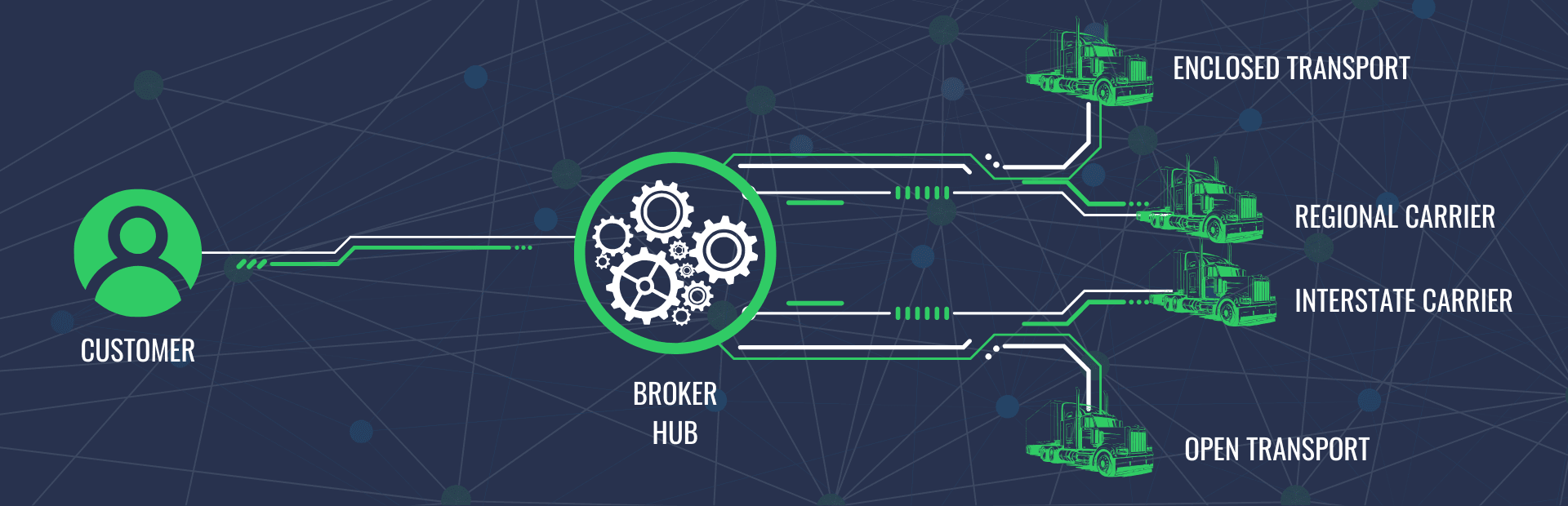
In the world of logistics, an auto transport broker acts as the architect of your move. The model isn't inherently "good" or "bad"—it simply functions as a bridge between you and the thousands of independent owner-operators that make up the U.S. auto freight hub.
Think of it like booking a flight through an aggregator versus a travel agent. A broker like SGT or even an AmeriFreight broker doesn't own the truck, but they own the responsibility of finding one that won't leave you stranded.
What a Broker Controls (and What They Don’t)
-
Carrier Vetting: They verify insurance and safety ratings via the SAFER System.
-
Pricing: They set a market-competitive rate, though the final nod often comes from the carrier.
-
Communication: They act as your single point of contact so you aren't chasing drivers at 2:00 AM.
-
Delivery Windows: They provide estimates, but road conditions and traffic remain under the carrier's control.
While SGT manages this entire cycle for you, uShip shifts the control—and the labor—into your hands. Below is how these two stack up when the rubber meets the road.
uShip vs. SGT: Operational Comparison
|
Feature |
uShip (Marketplace) |
SGT Auto Transport (Broker) |
|
Quote Generation |
Driven by active bidding from various carriers. |
Instant algorithmic quote based on current market data. |
|
Carrier Selection |
You review bids and choose the driver yourself. |
SGT selects a vetted carrier from their internal network. |
|
Communication |
Direct with the driver/company you hire. |
Managed through SGT’s dedicated support team. |
|
Pricing Flexibility |
High; you can wait for a lower bid if you have time. |
Fixed based on the initial quote and market availability. |
|
Customer Control |
Maximum; you are the final decision-maker. |
Minimal; you trust the broker’s expertise to vet. |
Choosing the right partner means deciding how much of the "heavy lifting" you want to do. If you prefer a hands-off experience, a managed broker is your best bet. If you have the time to hunt for a bargain, the marketplace model might serve you better.
For those moving to specific hubs, checking a guide to car shipping California can show you how these broker models perform in high-traffic corridors.
Pricing Breakdown — What uShip and SGT Auto Transport Actually Charge
Cracking the code on nationwide auto transport pricing is tricky because the sticker price is rarely the final price. Factors like fuel surcharges, route demand, and the weight of your vehicle type cause costs to fluctuate daily.
Whether you are booking a cross country auto transport or a short-haul move, you need to understand that you aren't just paying for mileage; you're paying for space on a trailer.
uShip works on a bidding system where you either "List and Wait" for bids or use their "Instant Book" feature. While the bidding process can lead to the lowest possible price, the uShip Auto Transport reviews often warn that the lowest bidder may lack the proper insurance or equipment.
uShip adds a service fee on top of the carrier’s bid, which is important to factor into your total budget.
On uShip, bids for a 1,000-mile open transport route typically range from $650 to $1,100, though Instant Book rates often run 15% to 20% higher for the convenience.
SGT Auto Transport uses a quote-based model where the price is determined by an algorithm. You’ll typically pay a small deposit upfront to secure the spot, with the remaining balance due to the driver at delivery. Unlike a bidding site, SGT tries to provide a "price-lock" feel, reducing the risk of a carrier demanding more money at the last minute.
The SGT average quote for a standard sedan traveling cross-country via open carrier usually lands between $900 and $1,400.
Side-by-Side Price Comparison by Route and Vehicle Type
|
Route |
Vehicle Type |
Transport Type |
uShip Avg. Price |
SGT Avg. Price |
|
Short Haul (<500 mi) |
Sedan |
Open |
$450 – $650 |
$500 – $700 |
|
Medium Haul (500–1,500 mi) |
SUV |
Open |
$850 – $1,100 |
$950 – $1,250 |
|
Long Haul (1,500+ mi) |
Sedan |
Enclosed |
$1,400 – $1,900 |
$1,550 – $2,000 |
Where Each Company Wins -
-
uShip: Best for flexible timelines where you can wait several days for a "backhaul" carrier to offer a rock-bottom bid.
-
SGT: More competitive for last-minute bookings where you need a guaranteed carrier assigned quickly.
-
uShip: Ideal for unique items like boats or non-running cars that require specialized equipment.
-
SGT: Often better for standard household moves where predictability and fixed deposits are preferred.

If you are serving in the armed forces, both companies understand the logistical stress of a PCS move. SGT is particularly vocal about providing an auto transport military discount, often knocking a fixed amount off the broker fee if you provide your military ID.
uShip doesn't have a universal discount, but many individual carriers on the platform will offer a lower bid if you mention you need a military vehicle shipping service.
When comparing these costs, keep an eye out for hidden car shipping fees that neither company might show you in the initial quote, such as terminal fees or residential delivery surcharges.
Delivery Timelines, Coverage, and What Happens When Things Go Wrong
Navigating the logistics of nationwide auto transport is more than just a matter of price; it’s about a commitment to your schedule and the safety of your assets.
While both uShip and SGT strive for efficiency, their operational models lead to different "typical" wait times. SGT offers a more predictable window because they actively manage a dedicated network, whereas uShip relies on whoever is currently browsing the board for your specific auto carrier transport route.
Standard Delivery Windows: uShip vs. SGT (2026 Benchmarks)
|
Shipment Type |
uShip Typical Window |
SGT Typical Window |
|
Open/Standard (500-1500 mi) |
5 – 9 Days |
4 – 7 Days |
|
Enclosed/Premium (1500+ mi) |
9 – 14 Days |
7 – 12 Days |
|
Expedited (Any Distance) |
Varies by Bidder |
1 – 3 Day Pickup |
|
Cross-Country (NY to CA) |
10 – 16 Days |
8 – 12 Days |
When the unexpected happens—and in this industry, it eventually does—uShip acts primarily as a mediator. If you encounter a delay or a dispute, you are essentially dealing with the individual carrier you hired.
uShip provides platform-level protections, but your primary leverage is through their feedback system and their "Ship with Confidence" guarantee. If you've been monitoring uShip Auto Transport Google reviews, you'll see that resolving a claim often requires you to do the heavy lifting with the carrier's insurance.
In contrast, SGT Auto Transport maintains a higher level of broker accountability. Because they vet every carrier for up-to-date insurance and safety records, they act as your advocate if a vehicle arrives damaged.
They don't just point you toward the driver; they intervene to facilitate the claim process. This managed approach is why many prefer a broker when arranging cross country auto transport, especially for high-value vehicles.
The Insurance Gap: A Veteran's Checklist

The reality is that approximately 1 in 10 auto transport customers report some form of delay or damage dispute annually. To protect yourself, follow this hard-earned veteran advice:
-
Verify the MC Number: Use the FMCSA to ensure the carrier is actually licensed to move your car.
-
Cargo Insurance Minimum: Never accept a carrier with less than $100,000 in cargo insurance.
-
The "Pre-Flight" Inspection: Take high-resolution photos of every panel and the odometer before the carrier arrives.
-
Get It In Writing: Verbal delivery dates mean nothing; ensure your contract clearly states the terms of delay compensation.
-
Understand "Door-to-Door": In reality, this means the truck will get as close as legally possible. Narrow residential streets in some states often require a meeting at a nearby parking lot.
Geographically, uShip’s marketplace model excels in remote "flyover" states where standard brokers might struggle to find a load. However, SGT’s vetted network is incredibly strong in high-volume corridors like Florida to New York.
Before you finalize your move, check out our car shipping Boston mistakes guide to see how local regulations can impact your delivery timeline.
Is your move time-sensitive? If you can't afford to wait for a bid, consider our Best Expedited Car Shipping Services to guarantee a carrier is on the road within 48 hours.
Which One Should You Choose — and When
Selecting between uShip vs SGT Auto Transport isn't about finding a "winner." It’s about matching a shipping model to your specific risk tolerance, budget, and schedule.

The decision hinges on whether you want to be the manager of your own move or hire a professional to handle the vetting for you. Below is the framework I use to decide which auto transport company gets the job.
|
Your Priority |
Better Choice |
Why |
|
Lowest Possible Price |
uShip |
Bidding wars often drive prices below standard market rates. |
|
Fastest Booking |
SGT |
They assign a carrier immediately from a pre-vetted pool. |
|
High-Value/Classic Vehicle |
SGT |
Managed oversight and strict insurance vetting reduce risk. |
|
Military Relocation |
SGT |
Reliable auto transport military discount and PCS experience. |
|
First-Time Shipper |
SGT |
Guided support prevents common rookie mistakes. |
|
Flexible Pickup Window |
uShip |
You can wait for a carrier to offer a "backhaul" discount. |
|
Remote Location |
uShip |
Marketplaces attract local drivers in low-volume areas. |
Where uShip Has a Real Edge -
-
Niche Shipments: If you are moving a boat, a non-runner, or heavy equipment, uShip's diverse carrier base is unparalleled.
-
Bargain Hunting: For those who aren't in a rush, you can let your listing sit until a carrier needs a "gap filler" load.
-
Direct Transparency: You can communicate directly with the owner-operator before a single dollar changes hands.
-
Feedback Loops: You can see specific historical data on the exact driver picking up your car, not just the company.
Where SGT Auto Transport Has a Real Edge -
-
Frictionless Logistics: SGT handles the entire lifecycle, from dispatch to delivery, which is ideal if you have a busy career.
-
Carrier Quality: They filter out the "bottom-tier" carriers that often plague open marketplaces.
-
Price Consistency: You avoid the "bait-and-switch" bids that occasionally appear in unmanaged marketplaces.
-
Dispute Resolution: If a car is late or damaged, you have a corporate entity with skin in the game to help you.
The broader industry, from an AmeriFreight broker to an Auto freight hub, operates on these same principles of mediation. If you've ever wondered how to become an auto transport broker, you'd find it’s a game of risk management and network building. Both uShip and SGT have mastered this, just from different angles.
Before you commit to either, take these final three veteran steps -
-
Get 3 Comparative Quotes: Use our car shipping cost guide to benchmark the bids you receive.
-
Verify the Insurance: Don't just take their word for it; check the carrier's active status on the FMCSA Company Data portal.
-
Read Recent Reviews: Look at the last 30 days of SGT auto transport reviews or uShip feedback to see how they are performing right now.
Still undecided on the carrier type? Read our breakdown of Open vs. Enclosed Car Shipping to see which trailer fits your vehicle’s protection needs.
What Shippers Are Asking: The Inside Track
The logistics of moving a vehicle can be confusing, especially when you’re caught between different business models. Here are the clear-cut answers to the specific technical queries that often trip up first-time and veteran shippers alike.
What Is An Auto Transport Broker?
An auto transport broker acts as a licensed intermediary between you and the carrier. They don't own the trucks but use their industry connections to find a vetted driver who has the right equipment and insurance for your route.
How To Become An Auto Transport Broker?
To enter the industry, you must register with the FMCSA, obtain a $75,000 surety bond, and secure process agents. It requires a deep understanding of the auto freight hub and building a reliable network of motor carriers.
Is Sgt Auto Transport A Broker?
Yes, SGT is a fully licensed auto transport freight broker. Unlike a marketplace, they take a managed approach by assigning a specific carrier from their pre-vetted network to handle your vehicle's journey from start to finish.
Does Uship Act As A Uship Auto Transport Broker?
Technically, uShip is a marketplace platform, not a traditional broker. While they provide the digital space for freight brokers and carriers to bid, the responsibility for vetting the driver often falls on you, the customer.
How Do I Find A Specialized Auto Transport Military Discount?
While many companies offer savings, you should ask your auto transport company directly for a PCS-specific rate. SGT frequently provides these discounts upfront, while on uShip, you may need to negotiate with individual carriers during the bidding phase.
Ready to get your vehicle on the road? Visit our Get a Quote page to compare real-time rates and secure your spot with a top-rated carrier today.
Balancing Control with Professional Logistics
Choosing between uShip vs SGT Auto Transport ultimately depends on how much of the logistics "heavy lifting" you want to handle. uShip offers a transparent marketplace where you can drive down costs through active competition, while SGT provides a streamlined, managed experience as a dedicated auto transport broker. Neither model is a universal winner; the right choice is the one that aligns with your specific budget and the value of the vehicle you are moving.
The smartest approach is to match the service to your risk tolerance. Whether you are arranging a nationwide auto transport or a complex cross country auto transport, remember that the average price often stays between $800 and $1,500. Knowing the difference between an open marketplace and a vetted auto transport freight broker puts you in a position of strength before you sign any contract.
-
uShip: Best for those seeking the lowest bid through a marketplace.
-
SGT: Best for those who want a broker to manage carrier vetting and insurance.
To find the best rate for your specific route and vehicle type, you can Get A Quote from a verified carrier to see exactly how much your move will cost today.