


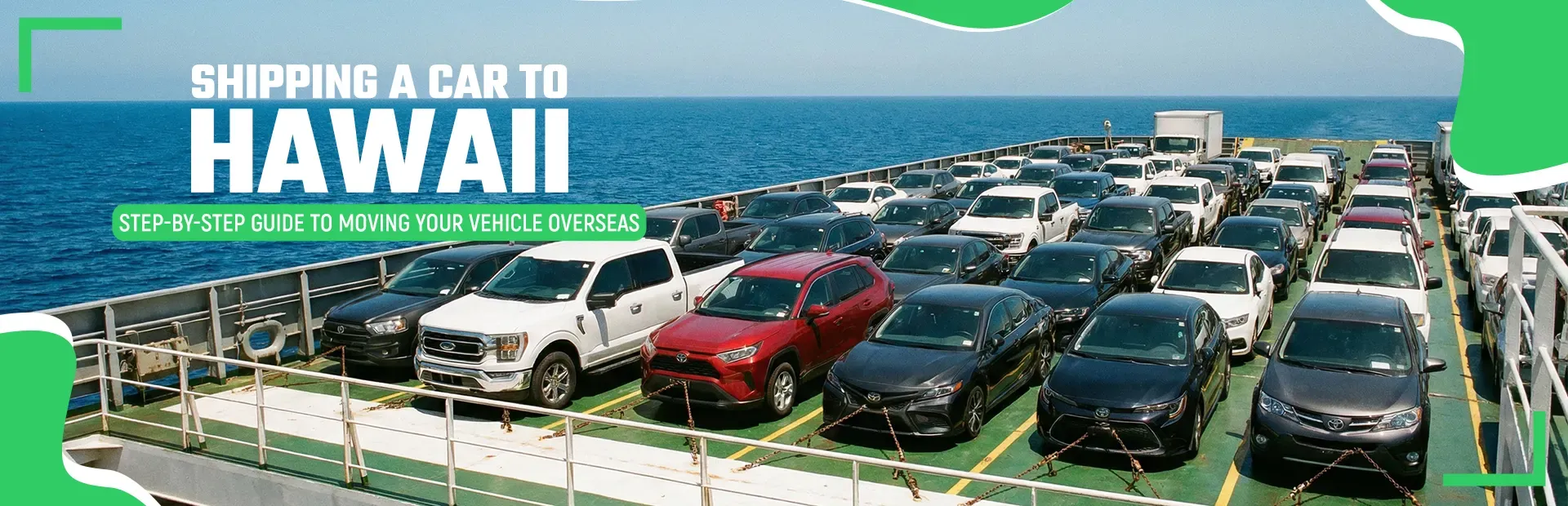
The Ultimate Guide to Car Shipping Hawaii: How to Move Your Vehicle Across the Ocean

The Ultimate Guide to Car Shipping Hawaii: How to Move Your Vehicle Across the Ocean

Transportvibe
November 04, 2025
19 min read

That dream island life comes with a big logistical challenge: car shipping Hawaii. Moving your vehicle across thousands of miles of ocean is probably the most complicated part of relocating to the Aloha State. You are not alone if you feel stressed about finding affordable auto shipping Hawaii. Trying to figure out the cost to ship a car to Hawaii, which port to use, and how to choose the right carrier adds up to a lot of headaches.

This ultimate guide breaks down everything you need to know about auto transport Hawaii. We cut through the confusion so you can safely ship car to Hawaii without overpaying. We cover everything from mainland prep to picking up your vehicle on the islands. When you are ready to move your car, you deserve a trusted partner.

Ready to see how simple it is to get your vehicle to the islands? Discover reliable vehicle shipping Hawaii and get your transparent quote now!

Understanding Car Shipping Hawaii

You might wonder if you should even bother with car shipping Hawaii. Buying a new car on the island seems easier. But think about the value of your current vehicle. New and used cars often cost much more in Hawaii due to shipping and import costs. You already know your car's history. Keeping it means avoiding a major purchase and the "island tax" on vehicles. For many, the cost to ship a car to Hawaii is a smarter long-term financial choice than dealing with inflated local prices. This is especially true if you own a luxury or classic vehicle.

The most common routes for auto transport Hawaii begin on the U.S. mainland. Carriers rarely drive directly onto the island. The process involves truck transport to a major West Coast port, then ocean freight to the islands.

Common Shipping Ports

Your journey to ship car to Hawaii usually starts at one of these four primary mainland ports:

  • Long Beach, California: This is the busiest and most frequent departure point.
  • Oakland, California: A popular northern California option.
  • Seattle, Washington: Serves as the main gateway for the Pacific Northwest.
  • Tacoma, Washington: Another key port in the Washington state area.

Once the ship crosses the Pacific, vehicles typically arrive at the main ports in Hawaii, most often Honolulu on Oahu. From there, inter-island transport handles vehicles heading to Maui, Kauai, or the Big Island. The process also works in reverse for people who need to ship car from Hawaii to California or other mainland states.

What Makes Car Shipping Hawaii Unique

What makes vehicle shipping Hawaii truly unique is the requirement of trans-oceanic transport. You are not just dealing with a standard interstate move. This is a multi-modal process involving land transport to the port, time-sensitive loading onto a cargo ship, and then ocean transit.

Because this is a major transition, the rules are stricter than a regular move. You have to remove all personal items from the vehicle. This is a non-negotiable Coast Guard and customs rule. The car must also be in operational condition with no leaks, and you can only have a small amount of fuel in the tank. If you are a military service member, you have specific benefits and rules. You can learn more about how to navigate your relocation with this guide to Military Vehicle Relocation.

Another major difference is the transit time. Hauling a car across the country might take a week. Moving your car across the ocean to Hawaii often takes between 7 and 14 days just for the water portion, plus additional time for drop-off, loading, and unloading. You need to plan for a total timeframe of three to four weeks.

Choosing a company that specializes in international or inter-island logistics matters greatly. Look for clear communication and transparent pricing to avoid surprises. Finding the best car shipping companies Hawaii means finding one with solid port relationships and a good track record. A good company explains the difference between roll-on/roll-off (RoRo) service and container shipping, which can affect the overall car transport Hawaii cost.

If you are shipping a classic or luxury vehicle, you might want to learn more about tips for shipping classic or luxury cars in the U.S.. These vehicles often require specialized services, such as enclosed auto transport Hawaii, for maximum protection during transit.

This whole process relies heavily on coordination. You are dealing with trucking schedules, port cut-off dates, and vessel departure times. This complex choreography is why using a dedicated auto transport Hawaii expert is smart. It saves you time and stress. For more detail on these requirements, check out the U.S. Customs and Border Protection requirements.

Cost to Ship a Car to Hawaii

Knowing the cost to car shipping Hawaii is the first step in your budget planning. This type of vehicle shipping is more complex and expensive than a mainland-to-mainland route because of the long ocean crossing.

The average cost to ship a car to Hawaii typically falls between $1,500 and $3,500 for a standard sedan. The lower end of that range is usually from a West Coast port like Los Angeles to the main Honolulu port. Shipping from the East Coast or Midwest will cost more because it adds a significant ground transport fee to get your car to the departure port.

Several factors drive your final quote:

  • Distance: The distance from your specific pick-up location to the mainland port matters.
  • Vehicle Size: Larger vehicles, like full-size trucks or SUVs, take up more space and cost more to ship.
  • Final Destination: Shipping to Honolulu (Oahu) is generally cheaper. Moving the car to other islands—like Maui, Kauai, or the Big Island—adds an inter-island transport fee.
  • Vehicle Condition: Non-running vehicles require special equipment for loading and unloading, increasing the price.

How Seasonality Impacts Pricing

Just like booking a flight, the time of year you choose for auto transport Hawaii affects the price. This fluctuation is purely due to supply and demand.

The peak season for moving is typically during the summer months, from May through September. Families relocate when school is out, and military PCS moves surge.

This high demand drives prices up and reduces scheduling flexibility. If you can wait, the off-peak season is your friend.

You will often find lower and more competitive prices during the late fall and winter months, specifically from October through March. The slight savings are worth planning for if your move date is flexible. You can read more about how this works in our guide: Best time of year to ship a car in the USA.

Comparing Open vs. Enclosed Auto Shipping Hawaii

When you get a quote, you will need to choose your transport method. The choice is often between open and enclosed auto transport Hawaii. This decision mainly affects the land-based portion of the journey to the port.

  • Open Auto Shipping Hawaii: This is the most common and cost-effective option. Your vehicle travels on an uncovered carrier with other cars. It is safe, reliable, and what most people use for their standard family vehicles.
  • Enclosed Auto Transport Hawaii: This provides full protection from weather, road debris, and dust. The car is sealed inside a trailer. You will pay a premium, often 30% to 50% more, but it is the right choice for high-value, classic, or luxury cars that need maximum care.

For the ocean crossing itself, carriers primarily use Roll-on/Roll-off (RoRo) service. This is where your car is driven onto the ship. It is the standard method for an affordable auto shipping Hawaii experience. Container shipping, where the car is secured inside a metal box, offers maximum protection but is far more expensive.

To understand all the factors influencing your final number, check out our in-depth article, How much does car shipping cost in the USA?.

How to Ship a Car to Hawaii Step-by-Step

Shipping a car to Hawaii is a major logistical undertaking that involves both over-the-road transport and ocean freight. Successfully navigating this process requires careful planning and partnering with the right professionals. 

The following guide breaks down the essential steps to ensure your vehicle makes the journey to the Aloha State smoothly and safely.

Booking with Trusted Car Carriers

The first, and arguably most critical, step is securing your auto transport service. Given the unique complexity of crossing the Pacific Ocean, you must find a reliable car carrier specializing in mainland-to-Hawaii routes.

You should aim to book your transport at least three to four weeks in advance, especially if you are shipping during the peak summer months.

  • Research and Vet Companies: Look for companies with excellent customer reviews, proven experience in car shipping Hawaii, and proper licensing. Verify their credentials with the Federal Motor Carrier Safety Administration (FMCSA).
  • Get a Detailed Quote: Your quote should be all-inclusive, covering the trucking to the port, the RoRo (Roll-on/Roll-off) or containerized ocean voyage, and destination port fees. Beware of any quote that seems significantly lower than the market average.
  • Select Your Method: Most standard vehicles utilize RoRo shipping, where the car is driven onto the ship and secured below deck. For luxury, classic, or non-running vehicles, enclosed container shipping offers a higher level of protection but at a premium cost.

Required Documents & Preparation Tips

Once your booking is confirmed, your attention must turn to preparing your vehicle and compiling the essential documentation. Failure to meet strict port and maritime regulations is the top cause of shipment delays.

To avoid being turned away at the mainland port—typically Long Beach or Oakland, California—have the following paperwork ready:

Document Category Key Items Required for Auto Shipping
Proof of Ownership Original Vehicle Title and Current Registration.
Identification Valid Government-Issued Photo ID (Driver's License or Passport).
Special Authorization Notarized Lienholder Authorization Letter if the car is leased or financed.

Your vehicle itself requires stringent preparation to meet USDA agricultural quarantine and maritime safety standards.

  • Cleanliness is Mandatory: The car must be thoroughly cleaned—inside, outside, and especially the undercarriage—to remove all foreign soil, which is crucial for passing Hawaii’s inspection.
  • Remove All Personal Items: Due to security regulations, the vehicle must be completely empty of all personal belongings. Only the spare tire, jack, and up to two child car seats are generally permitted.
  • Check Fuel and Mechanicals: Ensure the gas tank is no more than one-quarter (1/4) full (a safety requirement). The vehicle must be in good running order to be driven onto and off the vessel.

For a full guide on pre-shipment tasks, review our Hawaii Car Shipping Checklist.

Door-to-Door Car Shipping Hawaii vs. Terminal-to-Terminal

The final major decision impacting your car shipping Hawaii experience is the service level: door-to-door or terminal-to-terminal. This choice primarily affects convenience and cost.

Terminal-to-Terminal Shipping is the most budget-friendly option. You drive your car to the designated mainland shipping terminal and then pick it up at the Hawaiian port (e.g., Honolulu, Kahului, or Hilo).

  • Pros: Lower overall cost.
  • Cons: Requires you to manage the ground transportation logistics on both ends. You must also adhere to strict drop-off/pickup schedules.

Door-to-Door Car Shipping offers maximum convenience. An over-the-road carrier picks up your vehicle from your residence or any specified location and delivers it to the mainland port. In Hawaii, a carrier then picks it up from the port and delivers it right to your new island address.

  • Pros: Saves time and hassle; is ideal if you live far from a West Coast port.
  • Cons: Higher premium due to the added ground transportation fees.

While terminal-to-terminal saves you money upfront, many clients find the seamless, full-service coordination of door-to-door auto shipping to be well worth the investment for a stress-free move. Regardless of your choice, a trusted partner like Safeeds Auto Transport handles the intricate ocean leg, allowing you to focus on your relocation.

Popular Routes and Special Considerations

Moving a vehicle across long distances, especially overseas, requires specialized planning and execution. The logistics of international auto transport involve navigating complex maritime regulations, selecting appropriate shipping methods, and preparing your vehicle for a transatlantic or transpacific voyage. These routes, particularly those connecting the U.S. Mainland with car shipping Hawaii, are among the most frequently utilized and require a deep understanding of the carrier schedules and port operations.

Ship Car from Mainland to Hawaii

The route from the U.S. Mainland to car shipping Hawaii is a major artery for vehicle shipping and one of the most common moves for military personnel and relocating families. The journey is executed via a combination of ground transport to a West Coast port and subsequent ocean freight.

  • Primary Mainland Ports: Most shipments embark from key Pacific coast hubs like Long Beach, CA, Oakland, CA, and Seattle/Tacoma, WA.
  • Hawaii Destination Ports: Vehicles arrive at primary ports such as Honolulu (O’ahu), Kahului (Maui), Hilo (Big Island), and Nawiliwili (Kaua’i). Honolulu typically offers the most frequent sailings and competitive car shipping rates.
  • Transit Time: Ocean transit from the West Coast to Honolulu can take approximately 8 to 14 days, though the total door-to-port or port-to-port time, including loading and unloading, is often longer.
  • Key Carriers: The main providers for this Hawaii car transport service are major ocean transportation companies like Matson and Pasha Hawaii, who specialize in this specific route.

Ship Car from Hawaii to California

Shipping your vehicle in the opposite direction, from the islands back to the Continental U.S., follows a very similar structured protocol. This auto transport option is common for those completing military tours or moving back to the mainland.

  • Departure Logistics: You will drop off your vehicle at a major Hawaiian port (Honolulu being the most frequent departure point). Essential documentation, including the vehicle title and registration, must be thoroughly checked by the auto shipping company beforehand.
  • California Arrival Ports: The principal points of entry on the West Coast are generally Long Beach and Oakland, which serve as central terminals for distribution throughout the contiguous United States.
  • Inland Transport: Once the vehicle arrives at the California port, domestic carriers take over. Customers often choose between open car transport (more economical) or enclosed transport (premium protection) for the final leg of the journey to their specific mainland address.

How to Move Vehicles Across the Ocean Safely

The successful process of car shipping Hawaii across the ocean relies heavily on the chosen method and meticulous vehicle preparation. There are two primary maritime options for transporting vehicles.

  • Roll-on/Roll-off (RoRo) Shipping:
    • This is the most popular and cost-effective method for standard vehicles.
    • Cars are driven onto a specialized vessel, secured in the ship's internal, weather-protected decks, and driven off at the destination port.
    • Your car is secured using robust lashing and chocks to prevent any movement during the ocean crossing, ensuring safety against rough seas.
  • Container Shipping:
    • The vehicle is placed inside a 20-foot or 40-foot shipping container, offering maximum security and protection from external elements.
    • This method is recommended for luxury, classic, or non-running vehicles, or for combining a vehicle with household goods.
    • While more expensive, a private container guarantees dedicated space and maximum security.
  • Vehicle Preparation Protocol:
    • The vehicle must be completely clean for inspection, both inside and out.
    • Fuel must be kept low—typically under one-quarter tank—for safety regulations.
    • All personal items must be removed, as the shipping carrier’s insurance does not cover contents. This strict compliance is vital for a smooth process through port authority and customs.

For any specific questions on your car shipping needs, including a quote for a door-to-door auto transport service, please contact our experts. We manage all aspects of vehicle relocation to ensure a seamless experience.

Tips for a Smooth Car Shipping Hawaii Experience

Shipping a car to or from the Hawaiian Islands involves distinct steps not required for mainland auto transport. A proactive approach is key to securing your preferred sailing dates, avoiding port delays, and ensuring a seamless vehicle relocation.

Plan Your Shipment and Choose Your Carrier

The window of opportunity for ocean freight space is often limited, particularly during peak relocation season (summer).

  • Book Early: Secure your booking for car shipping Hawaii at least three to four weeks in advance. This lead time is crucial for securing competitive car shipping rates and preferred vessel space.
  • Vet Your Provider: Choose a reputable auto shipping company with verified experience in the Pacific market, often brokering with major ocean transportation carriers like Matson or Pasha Hawaii. You can check carrier schedules and services.
  • Understand Costs: Always request an all-inclusive quote to avoid hidden port fees, fuel surcharges, and terminal handling charges.

Meticulous Vehicle Preparation is Mandatory

Maritime and agricultural regulations for shipping to the state of Hawaii are exceptionally strict.

Requirement Detail Why It Matters
Cleanliness The vehicle must be spotless, inside, outside, and under the carriage, for USDA inspection. Prevents biological contamination and avoids a failed inspection, which results in significant delays.
Fuel Level Reduce the fuel to no more than 1/4 tank (some carriers require 1/8 to 1/4). A critical maritime safety regulation for all car carriers during ocean transport.
Personal Items Remove all personal belongings, including toll passes, car seats (exceptions apply, check carrier), and accessories. Federal law and liability insurance prohibit household goods inside the vehicle during vehicle shipping.
Mechanical Readiness Ensure the vehicle is drivable, has a working emergency brake, and no fluid leaks. It must be safely driven onto the RoRo (Roll-on/Roll-off) vessel and off again at the destination port.

Essential Documentation Checklist

Missing or incorrect paperwork is the most frequent cause of delays when transporting vehicles.

  • Proof of Ownership: You will need the vehicle's original title and current registration.
  • Lien Holder Approval: If your car is financed, you must present a notarized letter from the lien holder authorizing the auto transport out of the Continental U.S.
  • Photo ID: Have a valid government-issued photo ID ready for drop-off and pickup. 

What to Expect Upon Arrival

Once your vehicle reaches a Hawaiian port, like Honolulu or Kahului, your final steps are time-sensitive.

  • Prompt Pickup: Vehicles are subject to daily storage fees if not picked up promptly after the designated free time (typically 2-3 business days).
  • Final Inspection: Thoroughly inspect your vehicle before signing the final condition report to confirm no new damage occurred during the entire car shipping process.
  • Local Registration: You must complete the Hawaii state vehicle registration and safety check within a short period of your vehicle’s arrival on the island.

To get started with your door-to-door auto transport quote, or for clarification on any port-specific rule, contact our specialists directly.

Essential Queries for Your Car Shipping Hawaii

This section addresses the most common and critical questions shippers ask when planning the intricate logistics of moving a vehicle between the U.S. Mainland and the Hawaiian Islands.

How long does it actually take to ship a car from the East Coast to Hawaii?

The total transit time for auto transport from the East Coast to Hawaii is significantly longer than from the West Coast. This timeframe includes the initial ground transport across the contiguous United States to a Pacific port, which can take 7 to 14 days, followed by 8 to 14 days for the ocean freight journey itself. Total door-to-port service typically spans 3 to 6 weeks depending on carrier schedules and mainland pick-up location.

Can you ship a non-running or inoperable vehicle to Hawaii, and will it cost more?

Yes, it is possible to ship a non-running car, but not all auto shipping companies accept them. You must confirm that your carrier has the necessary specialized equipment, such as a winch or forklift, for safe loading onto the ocean transportation vessel. This extra handling required at both the mainland and Hawaiian ports generally adds a non-operational fee, which can increase the car shipping rates by several hundred dollars.

What are the tax or customs fees when importing a used car to Hawaii?

Since Hawaii is a U.S. state, you do not pay federal import taxes or customs duties on vehicles shipped from the Mainland. However, you will be subject to Hawaii’s state Use Tax (similar to sales tax) on the "landed value" of the vehicle, which must be paid to the Department of Taxation when you go to register the car. For exact tax rates, please consult the State of Hawaii’s official tax department website 

What happens if my vehicle fails the Hawaii safety and emissions inspection after it arrives?

Upon arrival, you have 30 days to complete the mandatory safety and emissions inspection for vehicle relocation. If your car fails, you will receive a failed inspection certificate detailing the necessary repairs. You must complete those repairs and pass a re-inspection within a specified timeframe to register the vehicle with the local authorities and avoid fines. Pre-shipment mechanical checks are strongly recommended.

Are there special regulations for military personnel shipping a POV to Hawaii?

Yes, military auto transport under a Permanent Change of Station (PCS) order allows service members to ship one privately-owned vehicle (POV) to Hawaii at the government's expense. You must process this through an approved Vehicle Processing Center (VPC) and provide full official orders, but the required documentation and preparation protocol are highly specific, including the need to resolve any open vehicle recalls.

Is it better to choose open car transport or enclosed transport for the Mainland portion of the journey?

The choice between open car transport and enclosed transport depends on your vehicle’s value and your budget. Open transport is the standard and most economical option for the ground transport to the West Coast port. Enclosed transport is recommended for luxury, classic, or highly valuable vehicles, as it offers maximum protection from road debris and weather exposure on the way to the ocean freight terminal.

Can I ship other types of motor vehicles, like a motorcycle or scooter, to Hawaii?

Yes, you can absolutely ship a motorcycle, scooter, ATV, or other motor vehicle to Hawaii. However, they are typically handled differently than standard cars. Most carriers require the motorcycle to be crated, secured to a pallet, or have its battery disconnected for safe ocean transport. Be sure to declare your vehicle type when requesting a car shipping quote to ensure proper handling and pricing.

Smooth Sailing for Your Vehicle Relocation

Car shipping Hawaii requires careful planning, but with a reliable auto transport partner, the process can be straightforward and stress-free. Whether you are shipping a family SUV or a classic car, understanding the logistics—from ground transport to island-specific requirements—is key to a smooth transition. 

Don't let the distance across the Pacific keep you from bringing your preferred transportation with you. We specialize in secure and efficient car shipping services, managing the entire journey from the Mainland to the Aloha State. Trust our expertise for your vehicle relocation and focus on settling into your new island life.Ready to start your journey? Get a Quote Today!

Related articles

NOV 05, 2025
How Much Does Car Shipping Cost per State and Is It Really Worth It?

How Much Does Car Shipping Cost per State and Is It Really Worth It?

TRANSPORTVIBE

You need to know: the final car shipping cost per state generally ranges from $600 to over $2,000, and for most people, state to state car shipping is absolutely worth the price. That is the honest answer. Here is the surprising part: for a cross-country trip like shipping a car from California to New York, paying a carrier can actually save you money compared to driving. Planning a move across the USA means facing a daunting array of auto transport costs. Whether you are relocating for work or need interstate car shipping for a car you purchased online, the process can feel complex. It is easy to stress over the final vehicle shipping price. But what if you skip the long drive, avoid the hotel stays, and keep the miles off your odometer? We break down the average cost car moving rates, looking at routes and factors that influence the total. You will learn the cheapest way to ship a car between states(eg- ship a car from California to New York) and how to quickly estimate your own long distance car shipping cost per state estimates. Stop worrying about the drive. Find reliable auto transport and get your precise state car shipping quotes today. What Is the Average Car Shipping Cost per State? The total car shipping cost depends heavily on how far your vehicle travels. Most people pay between $600 and $1,800 to ship a standard sedan across the country. Expect the overall cost of vehicle transport to rise with distance, but the price you pay per mile actually decreases significantly the farther your car goes. This is an important detail for long distance car shipping cost per state. What is The National Average Car Transport Per Mile The national average car transport per mile rate shows this inverse relationship clearly. This figure typically ranges from about $0.55 to over $2.00 per mile. Short hauls cost more per mile because the carrier needs to cover operating costs and driver time over a shorter period. A 300-mile trip might cost you close to $1.50 per mile. In contrast, a cross-country route like shipping a car from California to New York offers a better value. The longer trip allows the carrier to spread fuel and labor costs over thousands of miles. This brings your rate down to the lower end, often around $0.60 per mile for long distance car shipping cost per state. You can use the lower end of the $0.60−$1.10 range as a strong benchmark for state-to-state car shipping over medium to long distances. You can check various companies pricing and their informations in FMCSA website and verify the credibility in the verification portal . What is The Average Auto Transport Costs by Distance To understand the full price for auto transport, look at the total mileage. Long-haul shipments naturally have a higher overall price tag, even with a lower per-mile rate. This table provides reliable averages for open auto transport services across the USA. This should give you a solid idea of your estimated transport cost. Distance Range Average Cost Cost Per Mile Example Route 0–500 miles $450–$700 $1.00–$1.40 Texas (TX) to Oklahoma (OK) 500–1,000 miles $700–$1,100 $0.80–$1.00 Florida (FL) to North Carolina (NC) 1,000–1,500 miles $1,100–$1,500 $0.75–$0.90 Illinois (IL) to Florida (FL) 1,500+ miles $1,500–$1,900 $0.50–$0.75 California (CA) to New York (NY) The cost difference between the short 500-mile route and the 1,500-mile route is noticeable. You pay more than twice the total price for the longer haul, but you save on the per-mile cost. Keep in mind that these averages assume you select the most affordable option: open car transport carriers . Choosing enclosed auto transport for a high-end or classic car adds about 40% to 60% to these rates. You pay extra for the protection and peace of mind. Understanding these tiered prices is the first step in finding your actual car shipping cost per state. Use a reputable online car shipping calculator USA to get an instant price for your specific route and vehicle type. This gives you a clear look at where your money goes. Knowing the average cost helps you quickly spot an inflated vehicle shipping price when you shop around. You should always compare multiple quotes for the best value. What Factors Affect State-to-State Car Shipping Costs? When planning for state-to-state car shipping, numerous variables combine to determine your final vehicle shipping price. The total car transport cost is dynamic, influenced by everything from the journey’s length to the type of truck that moves your vehicle. Understanding these factors is key to getting an accurate car shipping quote and budgeting effectively for your move. We'll break down the six most critical components that influence the price of interstate car shipping cost per state across the USA, helping you find the most cost-effective auto transport solution. Distance and Mileage Ranges (Short-Haul vs. Cross-Country) The most fundamental element affecting your car shipping cost per state is the total distance the carrier must travel. This factor directly dictates fuel consumption, driver wages, and transit time, making it the primary determinant in any auto transport calculation. Short-Haul Trips (Under 500 Miles): For shorter distances, such as transporting a car from Louisiana to Texas , the per-mile rate is often at its highest. Carriers need to charge more per mile—sometimes up to $1.50 or $2.00—to cover the fixed costs of pickup and delivery. Since the total mileage is low, the price per mile must be higher to make the short trip financially viable for the trucker. Medium-Haul Trips (500–1,500 Miles): As the distance increases, the rate of car transport per mile begins to decrease. The fixed operational costs are spread over more miles, making the trip more efficient. This is where you see the common average rate of around $0.75 to $1.10 per mile. Long-Distance and Cross-Country Shipping (1,500+ Miles): This is where you find the best value on a per-mile basis. Moving a vehicle cross-country, perhaps from California to New York , typically yields the lowest per-mile rate, often falling below $0.70. This bulk-shipping efficiency is critical for affordable long distance car shipping estimates. However, remember that the total vehicle shipping price for a cross-country car shipping journey will still be the highest overall due to the sheer mileage. Remote Areas: Destinations in remote or rural locations can drive up the cost, as carriers must deviate significantly from their main routes, adding time and expense. The simple rule of thumb for state-to-state car shipping is that while the total price rises with distance, the cost-effectiveness per mile improves. If you're comparing a long distance car shipping option with driving yourself, remember to factor in gas, lodging, food, and wear-and-tear on your vehicle. Route Demand and Popularity (e.g., CA ↔ NY vs. Rural Areas) The law of supply and demand plays a massive role in setting your car transport cost. Routes with high demand and frequent traffic are almost always cheaper than less popular routes, where carriers rarely travel. High-Demand Corridors: Major routes connecting metropolitan hubs are called "primary routes." These routes, such as I-95 along the East Coast (e.g., Florida to Massachusetts ) or I-80 (California to New York), are constantly serviced by multiple carriers. The high supply of available trucks leads to lower and more competitive vehicle shipping prices. Carriers can quickly fill their trailers, reducing the distance traveled with empty space, which keeps your individual car shipping cost down. This is the sweet spot for budget-friendly interstate car shipping. Low-Demand and Rural Locations: Shipping a vehicle to or from a remote area, such as certain parts of Montana or Wyoming , often results in a higher auto transport quote. Carriers must intentionally venture off their main, profitable routes to handle these unique pickups or deliveries, making the trip less time- and fuel-efficient. This added effort is reflected in a higher vehicle shipping price to incentivize the driver. Directional Flow: Even on popular routes, the direction matters. For instance, the demand for shipping cars from North to South often peaks during "snowbird season" (fall/winter), making northbound shipping slightly cheaper during that time. The market is constantly in flux, which is why your car shipping quote can vary from week to week. If your route falls outside a major corridor, you may consider a terminal-to-terminal shipping option. While it requires you to drop off and pick up the vehicle, it saves the carrier the hassle of a rural drive, potentially lowering the total car transport cost. This flexibility can be a powerful cost-saving measure for how to save money on state-to-state car transport. Learn how to find the best rates even on less common routes by reading our guide on 5 factors that determine your car shipping quote . Vehicle Size & Weight (Sedan vs. SUV vs. Truck) The dimensions of your vehicle are a straightforward but crucial component of the car shipping cost. Simply put, the larger and heavier your car is, the more space it occupies and the more fuel it consumes during auto transport. Standard Vehicles (Sedans): Shipping a standard sedan, like a Toyota Camry or Honda Civic, is the cheapest option for interstate car shipping. These vehicles are compact, lightweight, and fit easily on a standard open car carrier. Mid-Size Vehicles (SUVs, Small Trucks): Shipping a larger vehicle, such as a full-size SUV or a pickup truck, will cost more. They take up more space on the trailer and their extra weight increases the carrier's fuel consumption, raising the total vehicle shipping price. Oversized or Dually Trucks: Extra-large vehicles, dually trucks, or vehicles with modifications require specialized attention and space. These are often difficult to load and sometimes count as two spots on a standard carrier. This dramatically increases your car transport cost. Inoperable Vehicles: A vehicle that doesn't run, known as an inoperable vehicle , will also incur an extra fee. Carriers require specialized equipment like winches to load non-running cars, adding to the effort and complexity of the state-to-state car shipping process. Summary of Vehicle Type Cost Impact: Vehicle Type Size & Weight Cost Impact Sedan Standard, low weight Lowest car shipping quote Standard SUV/Truck Larger footprint, more weight Moderate increase Oversized/Dually Takes multiple spaces, heavy Significant cost increase Inoperable Vehicle Requires specialized handling Added fee regardless of size If you are shipping a specialty vehicle, like a classic or exotic model, you will also need to consider luxury, exotic car shipping options, which typically use enclosed transport. Carrier Type – Open vs. Enclosed Auto Transport The method you select for auto transport is one of the most significant choices influencing your total car shipping cost. The two main options are open car shipping and enclosed auto transport, each offering a distinct level of protection and price. Open Car Shipping: This is the industry standard and the most affordable option for state-to-state car shipping. Your vehicle is transported on an open trailer, exposed to the elements, just as it would be if you were driving it. Carriers who offer open car shipping can fit more vehicles on their trailers (up to 10 cars), making the logistics cheaper and the service more widely available. This is ideal for common vehicles and budget-conscious clients looking for the lowest car transport cost. Enclosed Auto Transport: This premium service involves shipping your vehicle in a fully covered, hard-sided trailer. It provides maximum protection from road debris, weather, and theft. The benefit of this protection, however, comes with a significantly higher vehicle shipping price. Enclosed vehicle shipping is typically 40% to 60% more expensive than open carrier options. It is generally reserved for high-value automobiles, collector cars, classic vehicle shipping , or luxury vehicles. Cost-Benefit Analysis: When deciding between the two, consider the value of your vehicle. For a standard commuter car, the cost savings of an open carrier are usually worth the minimal risk. For an expensive or irreplaceable automobile, the investment in enclosed auto transport is a form of enhanced insurance and peace of mind. Transport Type Protection Level Cost Difference Ideal For Open Carrier Standard (Exposed) Lowest car shipping cost Everyday cars, budget shipping Enclosed Carrier Maximum (Fully Protected) 40–60% increase Luxury car shipping, classics, exotic vehicles To ensure you make an informed choice, our detailed comparison, Open vs Enclosed Car Shipping , can guide you further. Seasonal Demand – Snowbird Routes, Summer Moves Timing your state-to-state car shipping can lead to significant savings or unexpected cost increases. The demand for auto transport services fluctuates throughout the year, primarily due to seasonal weather patterns and major holidays. Snowbird Routes: The most prominent seasonal fluctuation is the "snowbird" migration. Every fall and early winter (October–December), demand for northbound to southbound vehicle shipping from states like New York or Michigan to Florida or Arizona spikes dramatically. The high demand for seasonal car relocation during this period forces the car transport cost up. Conversely, during the spring and early summer (April–June), the flow reverses, and southbound to northbound shipments become more expensive. Summer Peak Season: The summer months (May–August) are generally the busiest time for interstate car shipping. Families are moving for job relocations, students are moving for college or work , and carriers face peak demand. More requests for auto transport mean carriers can command a higher car shipping quote, raising the average vehicle shipping price. Winter Weather: Shipping during deep winter, particularly to or from snowy states like Colorado or the Northeast, can also increase the car shipping cost. Icy roads and snow delays slow down carriers, forcing them to charge more for the extra time and risk. Best Time to Ship: The cheapest times for state-to-state car shipping are typically during the "shoulder seasons"—mid-January to March and early September to mid-October—when demand is lowest and weather is less severe. If you have the flexibility, booking during these periods can significantly reduce your car transport cost. Review our Best Time of Year to Ship a Car guide to strategically time your shipment and minimize your vehicle shipping price . Pickup & Delivery Flexibility – Terminal vs. Door-to-Door The final determinant of your car shipping cost relates to the convenience you require for pickup and delivery. The two primary options are terminal-to-terminal shipping and door-to-door auto transport. Door-to-Door Auto Transport: This is the most common and convenient method for interstate car shipping. The carrier aims to pick up your vehicle as close to your specified pickup location and drop it off as close to your delivery address as possible. While highly convenient, this may result in a slightly higher car transport cost. Drivers must navigate residential areas, which can be time-consuming and challenging with a large rig, particularly in dense urban areas like New York City. Terminal-to-Terminal Shipping: This method involves you dropping off and picking up your car at a central storage facility (terminal) used by the carrier. Because the driver only handles transport between two easily accessible terminals, they save time and effort. This reduction in logistical complexity translates to a lower car shipping quote and is a great way to save money on your vehicle shipping price. The main drawback is the inconvenience of arranging transportation to and from the terminals and the potential storage fees. Comparison of Convenience vs. Cost: Service Type Convenience Cost Impact Door-to-Door Maximum, pick up at home Slightly higher car shipping cost Terminal-to-Terminal Less convenient (self-drop-off/pickup) Lower vehicle shipping price For most people, the minor price difference makes the added convenience of door-to-door auto transport worth the extra cost, especially for long distance car shipping. However, if you are shipping from or to a rural location where carrier access is difficult, terminal-to-terminal shipping may be the only practical and cost-effective option for state-to-state car shipping. For a deeper dive into the logistics and pros and cons of these options, check out our guide on Terminal-to-Terminal vs. Door-to-Door Car Shipping . What Are Example Costs for Popular State-to-State Routes? Understanding the precise car shipping cost for your specific move requires a personalized quote, but examining popular state-to-state car shipping corridors provides a crucial baseline for budgeting your auto transport expenses. These sample route estimates are based on the standard use of an open car carrier for a mid-sized sedan, demonstrating the typical price ranges for the most common long distance car shipping journeys across the USA. Knowing these average figures is the first step in finding an affordable vehicle shipping price. Cross-Country Car Shipping: California to New York The journey from California to New York represents the ultimate cross-country car shipping effort, covering roughly 2,800 miles. This distance is a logistical feat, taking a substantial amount of time and fuel, making it one of the most expensive routes overall. However, because this is a primary, high-volume corridor, the car transport cost per mile is exceptionally low, offering great efficiency for your interstate car shipping. Sample Route Estimate: California to New York → $1,600–$2,000 (approx. 2,800 miles) The price variation is usually tied to specific pickup/delivery locations—shipping from Los Angeles to a major terminal in New Jersey might be on the lower end, while shipping from a rural part of Northern California to Manhattan (requiring door-to-door auto transport flexibility) would be at the higher end. You should also be aware that the total time-in-transit is significantly longer for this route, typically 7-15 days, which impacts the overall car shipping quote. Coast-to-Coast Movement: Texas to Florida Moving a vehicle from the Lone Star State of Texas to the Sunshine State of Florida is a frequent long distance car shipping route, covering approximately 1,100 miles. This is a major high-demand corridor, particularly for open vehicle shipping, which keeps the cost highly competitive. Unlike coast-to-coast, this trip is shorter, resulting in a quicker delivery time and a lower total price for your auto transport. Sample Route Estimate: Texas to Florida → $900–$1,200 (approx. 1,100 miles) The average car shipping cost here reflects the balance between a considerable distance and the route’s popularity, which ensures a steady supply of carriers. Prices typically fall toward the high end during peak moving months (summer) or when expedited car transport is requested. Getting multiple car shipping quotes is essential to locking in the best rate for this busy corridor. Midwest to East Coast: Illinois to New Jersey The Midwest-to-East Coast link, exemplified by shipping from Illinois to New Jersey , is another consistently active route in the national auto transport network. This journey covers a manageable distance of under 1,000 miles, placing it in the medium-haul category. Sample Route Estimate: Midwest to East Coast (Illinois to New Jersey) → $800–$1,100 This state-to-state car shipping option benefits from dense population centers at both ends (Chicago/Midwest and the major ports/cities of the Northeast). This high traffic volume ensures that open carrier space is readily available, translating into one of the best per-mile rates for this distance. However, shipping a larger vehicle, such as an SUV or truck, will inevitably push the final vehicle shipping price toward the top of this range. Seasonal Snowbird Migration: Florida to New York The Florida to New York route demonstrates the powerful impact of seasonal demand on car shipping costs. This corridor is famous for the "snowbird" traffic, where retirees and seasonal residents move their vehicles in predictable waves. Sample Route Estimate: Florida to New York (snowbird route) → $1,000–$1,400 The crucial factor here is the direction and time of year. During the Fall (October–December), when demand for Southbound seasonal car relocation is at its highest, the price for a Northbound shipment can be significantly lower. Conversely, the peak price of $1,400 is common during the Spring (April–June) when everyone ships their vehicles back north. This interstate car shipping route is a prime example of why timing your shipment can save hundreds of dollars. To receive an accurate and current car shipping quote tailored to your exact vehicle size, desired carrier type (open vs. enclosed auto transport), and flexible scheduling needs, we recommend contacting a trusted provider. You can find detailed information on what affects your rates by visiting our resource on how much does car shipping cost in the USA . Ready to get started with your state-to-state car shipping? Get your fast, free quote today and let us simplify your transport needs. How Do Seasonal Trends Impact Auto Transport Cost? The dynamic nature of the auto transport market in the United States is heavily influenced by seasonal trends, causing significant fluctuation in your final car shipping cost. Understanding these annual shifts is vital for securing the most competitive interstate car shipping rates per distance. Peak Season (Late Spring through Summer) is the busiest time for vehicle shipping. This surge is primarily driven by family relocations during school breaks and college student moves. The high demand for carrier space means drivers can charge premium rates, often resulting in a car shipping quote that is 15-25% higher than the yearly average. The Snowbird Season creates another notable demand spike on specific routes. In the Fall (October–December), prices increase for Southbound shipments (e.g., New York to Florida) as retirees flee the cold weather. The reverse occurs in the Spring (March–May), with high demand and costs for Northbound transport. This cyclical migration dictates the pricing of long distance car shipping along the I-95 corridor. Conversely, the Off-Peak Season (Mid-January to Early March and September/October) generally offers the best value. Demand dips significantly after the holidays and the main summer moving rush, leading to a surplus of available carriers. This is typically the most affordable time to book your state-to-state car shipping, offering flexibility and lower rates, especially if you opt for open car carrier service. However, even in the off-season, severe winter weather in northern states can raise prices due to slower transit times and hazardous driving conditions. For a high-value or classic car, many people opt for year-round for maximum protection, though this always comes at a higher cost regardless of the season. Planning your shipment during these quieter periods is the most effective strategy to ensure the lowest vehicle shipping price. What’s the Cheapest Way to Ship a Car Between States? Finding the most cost-effective solution for state car shipping requires strategic planning and flexibility. The primary goal is to align your shipment with carrier convenience, which significantly lowers your vehicle shipping price. How can you save money on car transport USA services? The most substantial savings on your car transport USA journey come from choosing the industry standard and maximizing carrier efficiency: Use Open Carriers Instead of Enclosed: The single biggest way to reduce cost is to choose open auto transport over enclosed. Open trailers can haul more vehicles, dividing operational costs among more customers. Compare Carriers with a Car Shipping Calculator USA: Use an online car shipping calculator USA to obtain and compare multiple state car shipping quotes. This transparency is crucial for finding a carrier offering the lowest competitive rate for your specific route. Tips for Lowering Vehicle Shipping Price Beyond the transport type, your booking strategy and service choices directly impact the final price: Book in Advance to Lock in Quotes: Scheduling your shipment at least two to three weeks ahead gives carriers time to organize efficient routes, allowing you to lock in favorable car shipping quotes before demand drives prices up. Be Flexible with Pickup/Delivery Dates: Providing a flexible window—instead of a guaranteed exact date—gives the carrier leeway to combine your vehicle with others traveling a similar route, reducing your vehicle shipping price. Consider Terminal-to-Terminal Delivery: Opting for this service means you drop off and pick up your car at a main terminal. This avoids the logistical difficulty and premium fee of residential (door-to-door) service, offering a cheaper alternative for long distance car shipping. How Does State-to-State Car Shipping Compare to Driving? While driving initially appears cheaper, professional auto transport often becomes the financially smarter choice for long-distance, state-to-state car shipping. The Hidden Costs of a DIY Road Trip The cumulative expenses of a cross-country drive quickly eclipse the carrier rate. You must budget for high fuel costs, overnight hotel stays, and three meals daily. Driving also exacts a significant toll on your time and vehicle, adding considerable wear-and-tear and unnecessary mileage, which directly impacts its resale value. Expense Category 1,500-Mile Drive (Approx. 3 Days) Hiring a Transporter Fuel, Hotel, Food ∼$700−$1,000 $0 (for the car) Time Off Work 3-4 days lost wages/vacation Minimal time for pickup/delivery Wear-and-Tear ∼1,500 added miles, maintenance risk 0 added miles, reduced risk Transporter Rate $0 ∼$900−$1,400 Convenience and Value For a 1,500-mile journey, the cost of car shipping across USA can be roughly comparable to a basic open car transport service. However, professional transport offers unmatched convenience and a significant return on investment. You save days of stressful driving and can fly to your new home, arriving refreshed. Shipping your vehicle protects your investment, avoiding the hazards of the road and preserving your car's condition. How Can You Estimate Your Car Shipping Cost Quickly? A fast, reliable estimate for your car shipping cost is just a few clicks away, thanks to modern online tools. The quickest method is utilizing an instant Car Shipping Calculator on a company’s website. These calculators are designed to give you a baseline quote in mere seconds by only requiring three key pieces of information: the pickup location (usually a zip code), the delivery location, and the make and model of your vehicle. This instant quote provides a solid starting point by factoring in the distance and general size/weight of your car. Keep in mind that this figure is an estimate—final pricing is also influenced by critical variables like the type of transport ( open vs. enclosed ), whether the vehicle is operable, and the current market demand. For the most precise price, we always recommend following up with one of our specialists after receiving your quick estimate. Common Traveler Queries About Auto Transport These are the most common and important questions people ask us when planning their vehicle shipment. We want to ensure you have all the information for a seamless process. What happens if my vehicle isn't running or is a non-operable car? Shipping a non-running or "inoperable" vehicle is definitely possible, but it requires special handling and equipment. You must inform us immediately if your car doesn't start, roll, or steer, as the carrier will need a winch to safely load and unload it onto the trailer. Because of the extra equipment and labor involved in moving an inoperable car, there will typically be an additional fee added to your transport quote. Clear communication upfront about the car's exact condition is crucial to avoid any delays or issues during pickup. Is there a safe way to ship my personal belongings inside the car when moving across country? While it might seem convenient, the official recommendation is not to place personal items in your vehicle during transport. Federal regulations for auto transport carriers generally restrict them from moving household goods. Although some carriers may allow a single box or a small amount of lightweight items (usually under 100 lbs) stored securely in the trunk, any personal belongings are not covered by the carrier's insurance. For high-value items or substantial household goods, it is always safer and more compliant to arrange for a separate professional moving service. How far in advance do I really need to book car shipping to get the best rate and dates? We recommend booking your auto transport service at least two to four weeks ahead of your desired pickup date. This lead time is vital for securing a spot on a reputable carrier's route and helps you lock in a more favorable rate before last-minute surcharges apply. If you are shipping during peak moving season (like summer) or near a major holiday, booking closer to the four-week mark is highly advisable to ensure scheduling flexibility and availability. Do I have to be physically present when the car is picked up and delivered to its final destination? You are not required to be the one physically present for both the pickup and the delivery of your vehicle. You can designate any responsible adult (who is over 18) to represent you. This person must be available to meet the driver, conduct the thorough inspection of the vehicle, confirm the details on the Bill of Lading, and sign the necessary paperwork on your behalf. Simply provide us with their contact information when you book your transport. What kind of insurance coverage is included when I hire an auto transport company? All licensed auto transport carriers are legally required to carry a minimum amount of liability insurance. This coverage, which is included in your transport quote, is designed to protect your vehicle against damage caused by carrier negligence, road debris, and accidents during transit. However, the total coverage is often divided among all vehicles on the trailer, so we always recommend checking with your personal auto insurance provider to see if you have any supplemental coverage that would apply. What is the actual difference between open and enclosed auto transport services? The primary difference between these two services is the level of protection provided to your vehicle during its journey. Open transport is the most common and affordable option, but your car is exposed to the elements like sun, rain, and road dust, similar to driving it yourself. Enclosed transport uses a fully covered trailer, which provides maximum protection from weather and road debris. This premium service is strongly recommended for classic, luxury, vintage, or custom vehicles that require special care. What is the process for transporting a car purchased from a dealership out of state? The process for shipping a car from an out-of-state dealership is streamlined and quite common. After you finalize the purchase, you will provide us with the dealer's contact information and the vehicle's specific location. We will coordinate directly with the dealership's team to schedule the pickup. You must ensure the dealer has all the necessary release documents ready for the carrier upon arrival. The car will then be delivered to your chosen address, concluding your remote purchase. Making Smart Choices in Interstate Auto Transport Choosing a professional auto transport service means opting for safety, convenience, and peace of mind. By entrusting your vehicle to experts, you avoid the cost and wear-and-tear of a long-distance drive, ensuring your car is shielded from unnecessary road risks and mileage accumulation. A reliable car shipping company handles all the logistics, from transparent pricing to guaranteed insurance coverage, whether you select open or premium enclosed transport. Don't let moving your vehicle be a source of stress; our dedicated service is designed to make your cross-country move as smooth as possible. Take the first step toward effortless vehicle delivery today. Ready to ship your car? Get a quote today.

NOV 03, 2025
6 Best Car Shipping Virginia Options & Exclusive Tips For Stress-Free Service

6 Best Car Shipping Virginia Options & Exclusive Tips For Stress-Free Service

TRANSPORTVIBE

Did you know Virginia is one of the top five states for cross-country moves? That means a lot of people need reliable car shipping Virginia services every year. If you're planning to move or buy a vehicle, finding good auto transport Virginia can feel stressful. You worry about cost, damage, and delays. We get it. This guide gives you the facts. We skip the industry talk and focus on what you need: the six best options for vehicle shipping VA and clear tips to make your service stress-free. Whether you need an affordable car movers VA option or are looking into enclosed car shipping Virginia for your luxury vehicle, you will learn how to choose a trusted auto carriers in Virginia that works for your budget and timeline. Skip the guesswork. Get the expertise you need for smooth car transport Virginia. Ready to find the right service without the headache? Get a customized quote for door-to-door auto shipping and find the reliable car movers Virginia drivers trust now. Understanding Car Shipping Virginia When you decide to ship car from Virginia , you enter the world of auto transport. Knowing the language and the process makes everything simpler. This service involves a professional carrier picking up your vehicle and delivering it to a new location, often across state lines or the country. The process is straightforward. First, you get a quote. Then you book the service and prepare your car. A licensed carrier then loads the vehicle and drives it to the drop-off point. It’s an easy way to handle a move or a vehicle purchase without putting miles on your car. This is what people mean by vehicle shipping VA. It is the safe, legal movement of your car from one place to another using a licensed carrier. The carrier gives you an estimated pickup window and an expected delivery date. You inspect the car upon delivery and sign the final paperwork, also called the Bill of Lading. Common Types of Services The biggest choice you face when arranging car shipping Virginia is the trailer type. Your two main options are open or enclosed transport. Choosing between them is a simple trade-off: cost versus protection. Most people use open car shipping Virginia. Your vehicle sits on a trailer with seven to ten other cars, exposed to the elements, just like when you drive it on the highway. It’s the most common and cheapest way to ship. Open car shipping carriers are readily available, which means you often get faster pickup times. For standard daily drivers, open transport is the best balance of cost and reliability. However, if you have a high-end luxury car, a classic, or an antique, you might want more protection. This is where enclosed auto transport Virginia comes in. With enclosed transport, your car travels inside a fully covered trailer. It is safe from road debris, rain, snow, and sun. It offers maximum security and is worth the extra cost for vehicles where a scratch or a ding drastically lowers the value. Enclosed transport typically costs 30% to 50% more than open transport. You will also find fewer enclosed carriers than open ones. This can sometimes lead to a longer wait for a pickup date. Consider the value of your vehicle. For many drivers, the lower price of open transport is the winning factor. For others, the peace of mind that comes with maximum protection justifies the higher price tag. If you are shipping a specialty vehicle, like a classic sports car, consider checking out this guide on how to choose the best classic and luxury car shipping service . Door-to-Door vs. Terminal-to-Terminal After choosing your trailer type, you must select your service level: door-to-door or terminal-to-terminal. Door to door car shipping Virginia is the most convenient option. The carrier picks up your car as close to your home or office as possible. They also deliver it directly to your destination address. This service eliminates the need for you to drive anywhere except to move the car to the curb. It is faster because the truck is making fewer stops at centralized depots. However, "door-to-door" does not always mean the carrier can pull up exactly to your front door. If your street is narrow, too restricted, or illegal for a large carrier to navigate, the driver will ask you to meet them at a nearby, safe location like a large parking lot. Terminal-to-terminal transport works differently. You drive your car to a central storage facility, or "terminal," and pick it up from another terminal at the destination. This option is generally cheaper. You save money because the driver avoids residential routes and can schedule their trips more efficiently. The downside is the reduced convenience. You must account for the time and fuel needed to drop off and pick up the car. Also, your vehicle might sit at the terminal for a few days, waiting for a transport truck or for you to arrive. Leaving your car at a terminal for too long might also result in daily storage fees. For ultimate ease and speed, door-to-door auto shipping Virginia is the clear winner. For maximum savings, especially if you live near a major hub like Richmond or Norfolk, terminal-to-terminal can be a good choice. In either case, before you select a company for your car transport Virginia, check their record with the Federal Motor Carrier Safety Administration ( FMCSA ). It is important to know your carrier is legally compliant. You can verify any carrier's operating status and safety record directly on the FMCSA website. Choosing the right service for your auto transport Virginia needs depends entirely on your priorities: budget, speed, and level of protection. How to Spot Reliable Car Shipping Virginia Choosing the right partner for vehicle shipping VA is a critical decision. Whether you are moving to Arlington, Norfolk, or relocating your specialty car nationwide from the Commonwealth, securing trustworthy car movers Virginia requires diligence. You need to be able to sift through the noise, recognize legitimate service providers, and confirm their credentials. This comprehensive guide will equip you with the knowledge to identify an elite car shipping Virginia company and avoid common pitfalls. Red Flags vs. Trust Signals in Car Shipping Virginia Reviews Online reviews are a powerful resource, but they can be misleading. Learning to distinguish genuine feedback from fabricated content is the first step in finding reliable auto transport Virginia. A trustworthy company will have a consistent, verifiable online presence across multiple platforms. Red Flags to Watch Out For: Suspiciously Low Quotes: If an auto transport VA quote is significantly cheaper than all competitors, it's often a bait-and-switch scam. The price may increase drastically after your vehicle is picked up. Demands for Upfront Full Payment: Legitimate car shipping Virginia companies typically require a modest deposit once a carrier is assigned, not full payment via untraceable methods like wire transfers or gift cards before service. Vague or Aggressive Communication: Unprofessional communication, high-pressure sales tactics urging an immediate booking, or an unwillingness to provide details on the shipping process are major warning signs. Clustered, Vague Positive Reviews: A large number of perfect, generic 5-star reviews posted all at once, using similar phrasing, often indicates fake reviews. No USDOT Number Displayed: Federal regulations require commercial interstate carriers to display their USDOT number. A company hiding this information should be avoided. Trust Signals to Look For: Detailed, Consistent Feedback: Look for reviews that offer specific details about the driver, pickup/delivery timeline, and vehicle condition upon arrival. Consistency across platforms like the Better Business Bureau ( BBB ) and Google Reviews is key. Professional, Measured Responses: A reliable vehicle shipping VA company actively responds to all feedback, positive and negative, in a professional and constructive manner, showing a commitment to customer service and accountability. Clear, Guaranteed Pricing: A reputable car mover will offer a transparent, guaranteed rate upfront, detailing exactly what is included and clarifying their deposit and cancellation policy. Longevity and Volume: Companies with a history spanning several years and a high volume of reviews (even a few negative, which are inevitable) generally indicate an established, active business. Questions to Ask Before Booking a Vehicle Shipping VA Service Once you have identified a few promising candidates based on review analysis, a detailed conversation is essential. Asking the right questions will help you confirm their process, experience, and reliability as an auto transport company. Crucial Questions for Car Movers: Question Why It Matters for car shipping Virginia Are you a carrier or a broker? Carriers own the trucks; brokers coordinate shipments. Knowing this impacts your point of contact, pricing, and who is directly responsible for transport. What is the total, guaranteed price? Protects you from the dreaded bait-and-switch scam. Ensure the quoted price is locked and not just an 'estimate.' What is your insurance coverage? Request proof of cargo insurance. Clarify the deductible amount and what is specifically covered if damage occurs during auto transport Virginia. How do you handle a claim or delay? A reliable company has a clear, documented process for filing damage claims and managing unavoidable delays due to weather or traffic. Do you offer door-to-door or terminal service? Most car movers Virginia offer door-to-door auto transport. Confirm the specifics for your Virginia pickup or delivery location, especially in dense urban areas like Northern Virginia. Can I track my vehicle during transit? Transparency is a hallmark of good service. They should offer a tracking system or direct driver contact for updates. Licensing, Insurance, and USDOT Verification Verifying a car shipping Virginia company's credentials is not merely a formality—it is your most important defense against fraudulent operators. Federal and state requirements ensure a minimum standard of safety and financial responsibility for every vehicle shipping VA service. For interstate moves (across state lines), every commercial auto transport company must be registered with the Federal Motor Carrier Safety Administration ( FMCSA ). USDOT Number: This unique identifier allows the FMCSA to track a carrier's safety information, compliance reviews, and crash investigations. Every legitimate company will have and display this number. MC Number (Motor Carrier Number): This number grants the operating authority for a company to haul regulated commodities (like vehicles) for hire across state lines. How to Verify Credentials: Obtain the Numbers: Ask the car mover for their USDOT and MC numbers. Reputable companies will readily provide this on their website, quote, or upon request. Use the SAFER System: Navigate to the FMCSA’s portal . Enter the company’s USDOT number or name. Check Key Details: On the Company Snapshot, verify that the Operating Status is “Authorized” and that the Insurance information is "Active." Look for a minimum of $750,000 in Public Liability and active Cargo coverage. Confirm Business Identity: Ensure the company name, address, and phone number on the FMCSA's record exactly match the information you have. Discrepancies may indicate a scammer using a legitimate carrier’s identity. By following these structured steps—carefully scrutinizing reviews, asking precise operational questions, and conducting the necessary federal checks—you significantly increase your chances of partnering with reliable car movers Virginia for a stress-free vehicle shipping experience. Remember, a trusted partner provides clarity and confidence from the initial quote to the final delivery of your car. Safe car transport starts with a smart choice. 6 Best Car Shipping Companies in Virginia (2025 Edition) Relocating a vehicle to, from, or within the Commonwealth of Virginia requires finding a reliable car shipping company that offers a good balance of cost and service. Whether you're moving to Virginia Beach, transferring from a military base near Norfolk, or buying a classic car for your collection, connecting with a trustworthy auto transport broker or carrier is key. This 2025 edition reviews the leading options for long distance vehicle shipping and local car transport in Virginia, focusing on affordability, customer experience, and service reliability. We've compiled the essential details on pricing, pros and cons, and overall value to help you make an informed choice for your next Virginia auto transport need. 1. Direct Connect Auto Transport: Best Reliability Direct Connect is our top pick for Virginia residents prioritizing security and consistent performance in their vehicle shipping. This broker consistently delivers on its promises, earning high customer satisfaction scores for their dependable car transport service. They offer comprehensive coverage across all 50 states and provide a notable damage-free guarantee, ensuring peace of mind for your vehicle's journey. For more on protecting your shipment, see our Guide to Car Damaged During Shipping . Direct Connect stands out with a no-deposit policy until a carrier is assigned, reducing your upfront risk. They offer standard open transport, enclosed shipping, and specialty services like international moves. While their reliability scores are excellent, their pricing is not always the lowest in the market. A key point for customers is to understand the terms of their damage guarantee for added security. Pros Cons High reliability & customer recommendations. Not the lowest-priced broker on the list. Damage-Free Guarantee for repairs. No rental car compensation for delays. No initial deposit until carrier is secured. Sample pricing for open transport starts around $800, while enclosed transport is approximately $1,100. This makes them a premium but reliable option for long distance vehicle shipping. 2. Montway Auto Transport: Best for Customization Montway Auto Transport is built for maximum flexibility, catering to diverse auto transport needs across Virginia and beyond. With an expansive carrier network, they excel at offering customized service options, whether you need standard open car shipping or premium enclosed transport (learn more about Open vs. Enclosed Car Shipping ). Their service flexibility is evident in their offerings, which include international options and expedited delivery. Montway's customization extends to their payment options, with discounts potentially available for cash payments. Customers value their clear pricing tools and consistently positive arrival condition scores. They are a large broker with the resources to handle any type of long distance vehicle shipping job. Pros Cons Large carrier network for better scheduling. Full payment charged upon carrier assignment (if not paying cash). Expedited and international shipping available. Quotes may not be the absolute lowest in the industry. Cash payment discounts are often offered. Pricing for open transport begins around $839, with enclosed shipping ranging from $1,100 to $1,259. Prices can vary based on your customization choices, such as expedited delivery. For general advice on saving money, review our Top 7 Ways to Ship a Car Cheaply Across the USA . 3. AmeriFreight: Best Discounts AmeriFreight is the ideal solution for budget-conscious car shippers in Virginia, offering a generous line-up of discounts and flexible payment options. They consistently provide great value, often giving some of the lowest initial quotes for affordable car shipping before any special discounts are applied (for more, see How Broker vs. Carrier Pricing Differs ). They are known for their customer-friendly policy of only requiring payment once a carrier is confirmed. AmeriFreight provides savings for various groups, including military members, first responders, seniors, and students (check out Military Car Shipping Discounts ). They also offer the optional AFta gap coverage, which pays up to $2,000 toward your deductible for incidents not covered by the carrier. Their pricing structure offers a choice between economy and priority service tiers. Pros Cons Wide range of discounts for various groups. Initial estimates are non-binding (unless using First Class Rate). No upfront payment until carrier confirmation. Average final cost can be slightly above the industry mean. Optional AFta gap insurance coverage available. Sample open transport pricing starts at a very competitive $677, with enclosed options at about $1,151. Always consider how various factors affect your quote by reading 5 Factors That Determine Your Car Shipping Quote . 4. Transportvibe: Nation-Wide Service Transportvibe is a strong option for customers needing comprehensive, nation-wide vehicle shipping, particularly those with routes involving more distant or rural areas of Virginia. This broker focuses on extensive coverage, connecting customers to a large network of carriers for both short and long distance car shipping (discover the differences in Long Distance Car Shipping vs. Short Haul ). Their commitment is to streamline the logistics of door-to-door delivery across the USA. As a reliable broker, Transportvibe aims to simplify the car transport in Virginia process. They vet their carriers to ensure quality service for both open and enclosed transport methods. Their business model is highly focused on covering the entire contiguous US, making them a one-stop-shop for any cross-country move. Before you commit, learn How to Choose the Best Auto Transport Service in the USA . Pros Cons Extensive nation-wide coverage network. Carrier availability and final timing can vary. Reliable door-to-door service is standard. Not as many specialized services as larger competitors. Simple and quick online quoting process. Transportvibe's pricing is generally competitive and transparent for cross-country car shipping. The route will determine costs and your choice of carrier type (learn more about Terminal-to-Terminal vs. Door-to-Door Car Shipping ). They aim to provide balanced, fair quotes for your vehicle transport. 5. NX Automotive Transport: Best Customer Communication NX Automotive Transport excels at keeping customers informed, making them the top choice for car shipping in Virginia when consistent, clear communication is paramount. The company's high customer satisfaction scores are a direct result of their commitment to proactive updates and dedicated support, demonstrating why you should choose them as a reliable partner. NX offers the advantage of binding quotes, which eliminates price surprises—a significant factor given common industry issues with price transparency. They leverage a massive network of over 20,000 carriers to ensure prompt service. This combination of fixed pricing and superior communication provides exceptional certainty for your vehicle shipping budget and timeline. It's smart to ask Questions to Ask Before Hiring a Car Transport Company before booking any service. Pros Cons Superior customer communication and support. A $75 cancellation fee applies once a carrier is confirmed. Binding quotes available for fixed pricing. Some customers reported final costs being higher than the initial quote. No deposit required until carrier assignment. Open transport pricing starts around $840, while enclosed transport is approximately $1,225. Choosing a binding quote often costs slightly more but guarantees the price won't increase later. 6. A-1 Auto Transport: Best Pricing A-1 Auto Transport is consistently recognized for offering the most competitive and affordable car shipping rates, making them the leading option for value-driven customers needing long distance vehicle shipping. The company’s average cost is notably lower than the industry standard, and they support this affordability with a no-upfront-deposit policy. A-1 offers extensive services, handling everything from standard cars to RVs, motorcycles, and yachts, with international shipping to over 190 countries. Their quotes include full insurance coverage, and they boast high price accuracy scores, meaning customers typically pay exactly what they are quoted. Pros Cons Lowest overall pricing in the industry. Non-refundable $200 deposit after carrier booking. Extensive international shipping network. Does not seem to actively match competitor prices. Full insurance coverage included with quote. A-1's open transport pricing is exceptionally low, starting at $579 on some routes, with enclosed shipping at approximately $829. This makes them the top choice for cheap car shipping without sacrificing service. For a complete understanding of your costs, see How Much Does Car Shipping Cost in the USA: A Complete Breakdown . Special Car Transport Situations in Virginia The diverse landscape of Virginia—from military bases in Hampton Roads to college campuses in Charlottesville and Richmond—often requires more than a standard auto transport service. Whether you are conducting a military PCS move, shipping a car for college, or transporting a high-value vehicle, understanding the specialized options is crucial. This section delves into unique vehicle shipping needs in the Commonwealth, covering targeted discounts, premium protection, and affordable car shipping strategies for these specific long distance vehicle shipping scenarios. Find the best auto transport solution tailored to your situation in Virginia. Student car transport Virginia (affordable & flexible options) Moving to a Virginia campus like UVA, Virginia Tech, or VCU often involves students needing to ship a car affordably. Student car transport is characterized by strict timelines, budget constraints, and a need for flexibility around academic schedules. Auto transport brokers and carriers often recognize these challenges by offering dedicated student discounts to make affordable car shipping a reality. The key to saving money is choosing the right options. Most students opt for open car shipping because it is significantly cheaper than enclosed transport. Being flexible with your pickup and delivery dates—avoiding the start and end of major semesters—can further reduce your quote. See Best Time of Year to Ship a Car for seasonal savings. Many reputable companies offer door-to-door delivery, which is a huge convenience for students moving into campus housing, though sometimes arranging pickup at a well-known, accessible location near a major highway can save time and money. Affordable Shipping Strategies Details Opt for Open Carrier Standard and cheapest option for everyday vehicles. Use Student Discounts Ask every company if they offer a discount for current students. Flexible Scheduling Avoid peak moving months (May, August, December) for lower prices. Check Insurance Coverage Confirm the carrier's full insurance is included and sufficient. When preparing your vehicle, remember that the Department of Transportation (DOT) regulates what can be shipped. You typically cannot pack personal belongings beyond a small box (under 100 lbs) in the trunk. Learn about Car Shipping with Personal Items . Make sure your car is cleaned and its condition is documented before the carrier arrives. For more detailed guidance on logistics, check out our guide on How to Ship Your Car for College or Work . Military relocations in VA (discounts & reliability) With major military installations like Naval Station Norfolk, Joint Base Langley-Eustis, and the Pentagon nearby, military PCS moves are a regular occurrence for auto transport in Virginia. Service members and their families need maximum reliability, clear communication, and financial support during Permanent Change of Station (PCS) orders. Reputable companies offer significant military discounts as a thank you for service, often ranging from $50 to $100 off the total vehicle shipping cost. Many also provide flexible scheduling and expedited options—essential services given the often unpredictable nature of PCS deadlines. Choosing a broker or carrier with extensive experience in military vehicle shipping services for PCS moves ensures they are familiar with the necessary documentation and base access protocols. Military Shipping Must-Haves Why It Matters for a PCS Move Specialized Discounts Crucial for saving on out-of-pocket costs (view Maximizing Your PCS Move Discounts ). Flexible/Expedited Dates Allows for last-minute order changes and strict deadlines. Door-to-Door Delivery Simplifies logistics when moving onto or off-base housing. High Cargo Insurance Provides peace of mind that your vehicle is covered during transit. For many military families, the government covers the cost of shipping one Privately Owned Vehicle (POV) from an overseas duty station. However, for domestic, state-to-state moves, you will need to arrange for commercial car transport. Ensure you choose a company that is fully compliant with all Federal Motor Carrier Safety Administration (FMCSA) regulations. You can check a company’s registration and safety records on the FMCSA SAFER website . Luxury auto shipping Virginia (premium carriers & added protection) For owners of high-end, classic, or specialty cars—common among enthusiasts in Northern Virginia and coastal cities—luxury auto shipping demands the highest level of care and protection. This service is a premium experience that goes beyond standard open car shipping to ensure your valuable asset arrives in pristine condition. The main upgrade is using enclosed car shipping. An enclosed carrier shields the vehicle from road debris, weather, and theft, providing added protection that is non-negotiable for low-clearance sports cars or collectors' items. While the enclosed vs. open carrier costs are higher (often 40-60% more), the investment protects the value of your vehicle. You should specifically seek out carriers offering soft-tie downs and hydraulic lift gates to avoid any damage during loading and unloading. Luxury Transport Features Benefit to High-Value Vehicles Enclosed Transport Maximum protection from weather, dust, and road hazards. Hydraulic Lift Gate Safely loads low-clearance vehicles without scraping the chassis. Premium Cargo Insurance Ensures full replacement value coverage (check the policy details). Dedicated Customer Service White-glove service and constant, clear updates on location. Before booking, discuss the insurance claims in transit process with the broker to understand what is covered by the carrier's cargo insurance, which should be $1 million or more for high-value vehicles. For in-depth advice on securing this service, read our Guide to Shipping Classic Cars . Companies specializing in this niche should be vetted thoroughly—check for proper licensing and high-end client testimonials. Factors That Affect the Cost of Car Shipping Virginia The final quote for car shipping in Virginia is never a fixed number; rather, it's a dynamic price influenced by several key logistical and market factors. Understanding these variables is essential for customers looking for the most competitive auto transport rates and planning their budget effectively. From the length of the journey to the time of year, every detail plays a role in your final vehicle shipping expense. The foundational determinant of any interstate auto transport price is Distance and Routes. Distance & Routes Distance and route popularity have a dual effect on cost. While the total shipping cost increases as you move from short-distance to long-distance vehicle shipping, the cost per mile actually decreases significantly over longer hauls. This is because the carrier's fixed costs, like administrative fees and loading time, are spread out over more miles. For instance, shipping a car from Virginia to Florida (roughly 900-1,000 miles) is a popular, shorter haul along the I-95 corridor. This route is typically more saturated with carriers, making the service faster and generally more affordable car shipping. Conversely, a cross-country move from Virginia to California (over 2,500 miles) will have a much higher total cost but a lower per-mile rate. Route Comparison Approx. Distance Average Cost Trend Transit Time VA to Florida Short-to-Mid Range Lower overall cost, higher $ per mile 2-4 days VA to California Cross-Country Higher overall cost, lower $ per mile 6-9 days Immediately following distance, time of year drastically changes the market price. Seasonal Price Spikes in Virginia Interstate Auto Transport The auto transport industry is subject to sharp seasonal price spikes, dictated by the fundamental economic principle of supply and demand. Virginia, being a busy hub for military and student relocations, experiences distinct peak seasons. The summer months (May through August) are the most expensive time for long-distance vehicle shipping, as this is when most families relocate, students move for college, and military PCS moves occur. Increased demand combined with the typical summer holiday slowdown for drivers inflates prices, sometimes by 15-25%. For the lowest auto transport rates, aim for the off-peak seasons of late Fall (October/November) or mid-Winter (January/February), when carrier capacity is less strained. Beyond the market's timing, the object being shipped—your car—is the next crucial factor. Vehicle Type, Size, and Condition The physical characteristics of your vehicle directly impact the space and weight it adds to the trailer, thus affecting the final quote. A large vehicle, such as a full-size SUV or dually truck, will cost more than a standard sedan because it consumes more valuable trailer space and adds more to the overall fuel burn. Furthermore, the vehicle's operational status is key. Shipping a non-running vehicle is significantly more expensive than an operable one. An inoperable car requires a specialized carrier with a winch or a forklift for loading, demanding extra time and equipment from the driver, which translates into an unavoidable added cost on your car shipping quote. Always be transparent about your vehicle's condition when requesting quotes. Finally, the level of protection you choose dictates the final tier of pricing. Open vs. Enclosed Carrier Pricing The choice of carrier type presents the biggest variance in price versus protection. Open car shipping is the industry standard, highly available, and the most budget-friendly option for routine vehicles. Your car is exposed to the elements, but carrier damage rates are statistically very low. In contrast, enclosed car transport offers total protection from road debris, weather, and theft, making it the preferred choice for luxury auto shipping, classic cars, and high-end exotics. This premium protection comes at a cost, however; enclosed carrier pricing is typically 30% to 60% higher than the open transport alternative, due to lower trailer capacity and a smaller network of specialized carriers. For many customers, the added peace of mind justifies the higher expense for their investment. Top Queries When Booking Auto Transport Virginia Here are the most common questions our customers ask when arranging for reliable car shipping services to or from the state of Virginia, helping you feel confident and prepared for your own relocation. What is the typical transit time for shipping a car from Virginia across the country? The estimated transit time for a cross-country route, like moving a car from Virginia to a far-west state such as California or Washington, usually falls between 6 and 9 days. Shorter routes, like shipping to Florida or a neighboring state, are much quicker, typically taking only 2 to 4 days. These estimates can vary based on weather and how close the pick-up and drop-off points are to major interstate highways. How far in advance should I book my interstate car shipping to secure the best rate? To lock in the most competitive pricing for your interstate car shipping needs, we strongly recommend booking your transport at least two to three weeks before your desired pickup date. Early booking is especially important if your move falls during the busy summer season or around major holidays, as demand for reliable carriers can quickly outstrip availability. Does "door-to-door auto transport" mean the truck delivers right to my residential driveway in Virginia? Door-to-door auto transport is the industry standard for convenience, meaning the carrier will get as close to your specified pick-up and delivery address as is legally and safely possible. In residential areas of Virginia with narrow streets, low-hanging branches, or local restrictions for large trucks, the driver may ask you to meet at a nearby, accessible location, like a large commercial parking lot. What are the specific Virginia DMV requirements when titling a shipped vehicle from another state? If you are a new resident shipping a car to Virginia, you must have it titled and registered with the Virginia DMV within 30 days of moving. This process requires a Virginia Safety Inspection and proof of the state's minimum liability insurance coverage. Be sure to visit the official Virginia DMV website for the most up-to-date and complete list of required documentation before your appointment. Can I ship a vehicle that is not currently running for my move to or from Virginia? Yes, you absolutely can ship a non-running vehicle, but it requires special handling that will affect your total car shipping quote. You must inform your auto transport specialist that the car is inoperable, as the carrier will need a winch or specialized loading equipment to get the vehicle onto the trailer. The vehicle must at least be able to roll, steer, and brake for a standard winching process. What kind of insurance coverage is included by the auto transport company for my vehicle in transit? Reputable auto transport companies provide base cargo insurance coverage for your vehicle at no extra charge, which protects against carrier-caused damage during transit. The level of this insurance varies, so you must always request a certificate of insurance to verify the limits before booking. We encourage clients to also contact their personal auto insurer to see if their comprehensive policy offers any secondary coverage. Do auto transport companies offer short-term storage options near their terminals in major Virginia cities? While most brokers focus on direct door-to-door car transport, carriers that offer a terminal-to-terminal service may have secure storage facilities in major areas like Richmond or Virginia Beach. If your travel plans are delayed and you need temporary storage for your vehicle upon its arrival in Virginia, you must specifically inquire about this service when getting your initial quotes, as it will be an additional fee. Your Next Steps to Affordable Auto Transport Understanding the variables that influence your car shipping quote is the first step toward securing the best deal on your auto transport to or from Virginia. Whether you are planning a cross-country vehicle shipping route to California or a quick move to Florida, the core factors remain consistent. Remember that distance and the choice between open vs. enclosed carrier pricing will form the foundation of your cost. By planning your move around seasonal fluctuations and being transparent about your vehicle's size and condition, you can effectively manage your budget. Don't wait for last-minute price spikes. Ready to ship your car the smart way? Get A Quote today to receive a transparent rate for your dependable interstate auto transport service.