


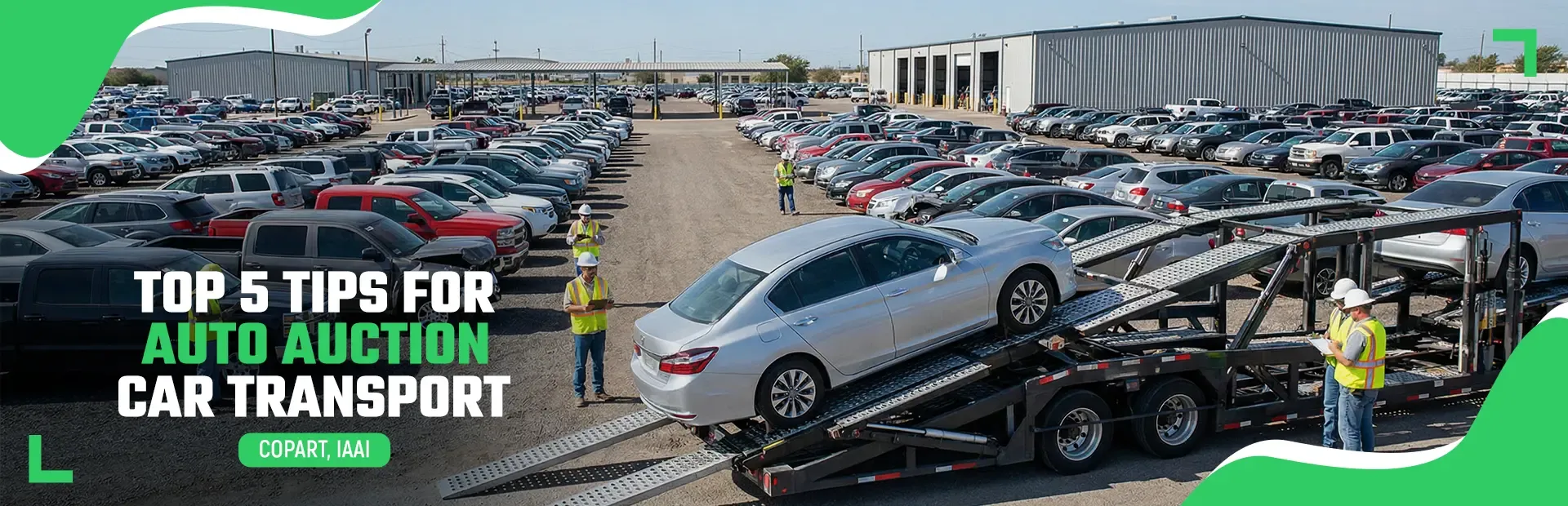
Top 5 Amazing Tips For Auto Auction Car Transport From Copart, IAAI & Manheim

Top 5 Amazing Tips For Auto Auction Car Transport From Copart, IAAI & Manheim

Transportvibe
September 22, 2025
17 min read

Imagine the perfect deal on a vehicle, only to find yourself stranded without a reliable way to get it home! 

Securing auto auction car transport is often the most critical step after winning a bid on sites like Copart, IAAI, and Manheim. These major auction houses present unique challenges, whether you're dealing with salvage titles from Copart or a dealer-only vehicle from Manheim. 

Navigating the logistics and understanding all your options is key to a seamless process. This guide provides five pro tips to ensure your auction car delivery is stress-free, helping you understand everything from Copart car shipping costs to the specific needs of a non-running vehicle.

Ready to secure a safe and efficient transport for your newly acquired vehicle? Get an instant quote for your auto auction car shipping needs now and see how easy vehicle delivery can be.

Overview of Major Auto Auction Houses

When navigating the world of auto auctions, it's crucial to understand the unique functions of the major players. Whether you're a professional looking for salvage cars, an individual seeking a repairable vehicle, or a dealer sourcing new inventory, knowing the landscape is key. 

This guide breaks down the primary, secondary, and long-tail keywords associated with each major auction house to provide clarity and help you find the best car shipping services.

Copart: The Salvage Specialist

Copart is the world's leading online auction platform for salvage and used vehicles. Its business model centers on the sale of vehicles from insurance companies, banks, charities, and rental car companies, with a significant portion of its inventory consisting of damaged, non-running, or totaled cars.

Copart is a hub for - 

  • Insurance companies (flood, hail, collision, etc.)
  • Rental fleets and financial institutions
  • Vehicle donation charities

Key logistical considerations -

Strict Pickup Deadlines: Copart locations have specific pickup windows, typically 2-5 business days after the sale, after which daily storage fees begin to accrue. This makes securing Copart car shipping a critical, time-sensitive task.

Inoperable Vehicles: Many vehicles sold on Copart are not in running condition. Transporting these requires specialized equipment, such as flatbed tow trucks, winches, or hotshot trailers. Be sure to inform your salvage car shipping service if the vehicle is inoperable to avoid delays and extra fees.

Buyer Responsibility: Winning bidders are responsible for all logistics. Vehicles cannot be driven off the lot due to safety and legal restrictions.

Ready to bid on a vehicle from Copart? Start your transportation planning early.

IAAI: Insurance Auto Auctions

IAAI (Insurance Auto Auctions) is another global leader in the salvage and wholesale vehicle space. Much like Copart, IAAI specializes in the sale of damaged, low-mileage, and clean-title vehicles on behalf of insurance companies, but they also have a strong focus on dealer and fleet sales.

IAAI is go-to place for - 

  • Insurance carriers (primary)
  • Dealerships and fleet lease companies
  • Vehicle consignors

Key logistical considerations - 

Timely Pickup is Essential: IAAI locations also have tight pickup windows, and they strictly enforce storage fees for vehicles left on the lot. Booking IAAI car shipping services immediately after winning the auction is highly recommended.

IAAI Transport Network: While IAAI offers its own transport solutions (IAAI Transport™), many buyers prefer to use independent auto auction transport carriers to save money and for more flexible pickup options.

Condition of Vehicles: Be prepared for a wide range of vehicle conditions, from light damage to severe wreckage. Always verify the vehicle's condition and title status (e.g., “wait title”) before bidding.

Don't let a tight deadline surprise you. Get a quote for your IAAI Auction Fees Calculator today.

Manheim: The Dealer's Marketplace

Unlike Copart and IAAI car shipping services, Manheim is primarily a wholesale auction platform exclusive to licensed auto dealers. It is the largest wholesale used vehicle marketplace in the world, focused on dealer-to-dealer transactions rather than salvage.

Manheim is great option for - 

  • Automotive dealerships
  • Fleet lease companies
  • OEMs (Original Equipment Manufacturers)

Key logistical considerations - 

Extensive Logistics Network: Manheim offers its own comprehensive transport solutions, including Ready Logistics. Their network is designed for high-volume, professional transport of running vehicles.

Vehicles are Typically Drivable: Since Manheim deals in wholesale used vehicles, the majority of the inventory is in running, drivable condition. This simplifies logistics and often makes open-carrier transport a viable, cost-effective option.

Central Dispatch: Many dealers also use third-party logistics marketplaces like Central Dispatch to find Manheim auto transport carriers at competitive prices.

Expand your dealer inventory with confidence. Learn more about Manheim's vehicle transport options.

A Quick Comparison

Feature Copart IAAI Manheim
Primary Focus Salvage & Used Salvage & Used Wholesale, Dealer-only
Typical Buyers Licensed Dealers, dismantlers, public Licensed Dealers, public Licensed Dealers only
Vehicle Condition Primarily non-running /damaged Non-running & clean-title Mostly drivable & running
Transport Challenge Strict deadlines & inoperable cars Strict deadlines & fees High volume, fast turnaround
Transport Solution Specialized tow trucks/carriers Independent carriers, IAAI Transport™ Ready Logistics, independent carriers

Top 5 Pro Tips for Auto Auction Car Transport

Securing a great deal at a public or dealer-only auction is just the first step. The true test of your purchase comes with seamless vehicle delivery. Navigating the complex world of auto auction car transport, including logistics from Copart, IAAI, and Manheim, requires expertise. 

This guide offers expert advice to help you manage the transportation process efficiently, saving you time and money.

Tip 1: Choose the Right Transport Type (Open vs. Enclosed)

Selecting between an open car shipping or enclosed auto auction shipping method is a critical decision that impacts cost, speed, and vehicle protection. While open transport is the most common and budget-friendly option, a higher-value car may justify the extra cost for enclosed shipping.

Transport Type Pros Cons Ideal For
Open Transport Cost-Effective: Up to 50% cheaper than enclosed shipping. Widely Available: Easier to book and often faster due to a larger network of carriers. Exposed to Elements: Vulnerable to rain, dust, and road debris. Risk of Minor Damage: Potential for rock chips or scratches. Salvage cars from Copart or IAAI, or standard, clean-title vehicles from Manheim where minor cosmetic risks are acceptable.
Enclosed Transport Maximum Protection: Shields your car from weather and road hazards. Enhanced Security: Ideal for high-value or delicate vehicles. Higher Cost: Significantly more expensive than open transport. Limited Availability: Fewer enclosed carriers means longer booking times. Luxury, rare, or classic cars (like a high-end vehicle from a Manheim dealer-only auction) or a project car from Copart that needs pristine delivery.

For more details on this, check out our guide on Enclosed vs. Open Carrier costs.

Tip 2: Verify Transport Insurance Coverage

Standard auto auction car transport insurance is often sufficient, but salvage and damaged cars from Copart and IAAI require a more careful review. These vehicles may be considered high-risk due to pre-existing damage, necessitating a clear understanding of your carrier's policy. Manheim’s dealer network often works with pre-vetted carriers who have robust insurance. For a deeper dive into what's covered, see our article on car shipping insurance.

Insurance coverage checklist before you ship - 

  • Is my vehicle covered for its current condition? Ensure the carrier’s policy extends to vehicles with salvage titles or existing damage.
  • What is the cargo insurance limit? Verify the coverage limit is sufficient to protect your vehicle’s total value.
  • Does the policy cover damages from forklift loading? Salvage yards like Copart and IAAI often use forklifts for loading, which requires specialized handling.

Tip 3: Understand Auction Pick-up Policies & Deadlines

Each auto auction car transport platform has strict rules that can incur significant fees if ignored. Timely auction vehicle transport is essential for avoiding unexpected costs.

  • Copart: Imposes a strict payment deadline and offers only a few days of free storage after the sale. After that, daily storage fees of $10 to $30 or more can quickly add up.
  • IAAI: Known for having some of the highest daily storage fees, which can be as much as $50 per day after a very short grace period. Strict pick-up windows make timely coordination with your carrier crucial.
  • Manheim: While its logistics are generally smoother due to a more professional dealer-to-dealer network, timely pick-up is still important. Coordination with the carrier and the auction lot is necessary to avoid delays and potential fees.

Tip 4: Get Accurate Transport Quotes in Advance

Hidden fees are a common pitfall in the auto transport industry. Salvage auction vehicles, in particular, can be susceptible to extra charges for services like winching or forklift assistance. Always get a clear, all-inclusive quote to avoid surprises.

How to get an accurate quote:

  • Provide Full Details: Be transparent about the vehicle's condition (e.g., inoperable, missing wheels) and location, including the lot number. Our guide on shipping a non-running vehicle has more tips.
  • Compare Quotes: Use an online auto transport marketplace to compare offers from multiple carriers.
  • Ask About Hidden Fees: Inquire specifically about charges for forklift loading, winching, or limited access at the pick-up location.

Tip 5: Work with Experienced Auction Transport Specialists

While a general auto auction car transport company can ship a car, only a specialist understands the nuances of auction logistics. They have auction-specific knowledge of each yard's procedures, from the required gate passes at Manheim to the challenging loading protocols for a non-running car at IAAI. An experienced specialist can handle the unique paperwork and coordination required for a seamless transaction.

To evaluate a transporter's expertise:

  • Ask if they have experience with salvage car shipping.
  • Inquire if they are familiar with auction houses such as Copart, IAAI, and Manheim.
  • Request references or reviews from other auction buyers. You can also read reviews on our site.

Pro Tip: Look for transporters that are part of platforms like Central Dispatch, which are often used by seasoned carriers who specialize in moving auction inventory.

Ready to move your vehicle? Find a qualified auction car transport carrier today and get a free quote.

Cost Comparison Insights for Auto Auction Car Transport

Understanding the cost of auto auction car transport is crucial, especially when shipping a vehicle purchased from a major auto auction. This section provides salvage car transport and dealer car transport insights to help you budget for your next purchase.

Salvage vs. Dealer Car Transport: Example Scenarios

The cost and complexity of shipping a vehicle depend heavily on its condition and the auction house it comes from. Let's compare shipping a salvage car from Copart with a dealer car transport from Manheim.

Factor Salvage Car (Copart) Dealer Car (Manheim)
Vehicle Condition Often inoperable (non-running). May have significant damage. Requires specialized equipment like a winch. Typically operable with a clean title. Can be driven onto the transport truck.
Handling & Fees Higher risk and complexity. May incur extra fees for inoperable vehicles at the time of pickup. Standard pickup process. No additional handling fees unless it's an oversized vehicle.
Documentation May require more administrative work to process salvage titles. Delays can lead to storage fees. Streamlined process. A dealer car transport is generally faster and more predictable.
Logistics Can be challenging due to damaged or missing keys, flat tires, or engine problems. Smooth and efficient. Most cars are "ready-to-go" and easily loaded.

For a successful salvage car transport from an auction house like Copart, it is essential to communicate the vehicle's condition to your transport provider upfront.

Navigating Regional and Cross-Country Auto Transport Costs

The distance a vehicle needs to travel is a primary factor in determining the final price for your vehicle shipping job.

  • Local Transport: For distances under 300 miles, the auto transport cost is generally lower and can be completed in a shorter timeframe. This is often the case when a vehicle is transported from a local auction yard to a nearby mechanic or dealership.
  • Cross-Country Transport: A cross-country auto transport cost is significantly higher due to the greater distance, fuel consumption, and tolls. However, the price per mile decreases as the distance increases, making it more cost-effective for longer hauls. This is a key consideration when planning for your auction car transport.

To understand cross-coumtry car shipping better, read our detailed blog - Understanding Cross Country Car Shipping: Essential Quotes, Timelines, and Costs Explained.

Factors that influence the final price:

  • Distance: Longer routes have a higher total cost.
  • Vehicle Size & Weight: Larger, heavier vehicles require more fuel and space, increasing the price.
  • Seasonality: Prices tend to be higher during peak seasons (e.g., summer and holidays).
  • Fuel Prices: Fluctuations in fuel costs directly impact transport rates.

For a deeper dive into the factors that affect your car transport quote, you can read this article on What affects your final car shipping quote?

Common Mistakes to Avoid in Auto Auction Transport

Navigating the vehicle shipping process, especially for auction car transport, can be complex. To ensure a smooth and cost-effective experience, it's vital to avoid these common pitfalls. By being prepared and proactive, you can prevent unexpected costs and delays.

1. Waiting Until the Last Minute to Book Transport

This is one of the most frequent and costly mistakes. Auctions often have a strict pickup window, usually within 2-3 business days. Failing to arrange transport in time can lead to significant penalties.

Avoid High Storage Fees: Auction houses like Copart and IAAI charge daily storage fees for vehicles that are not picked up within the specified time frame. These fees can quickly add up and negate any savings from your auction bid.

Secure Timely Delivery: Last-minute bookings can limit your carrier options, potentially forcing you to choose a less-than-ideal provider or pay a premium for expedited service.

Proactive Planning: As soon as you win a bid, you should immediately begin the Request for Quote process to find an available carrier. This is especially critical for salvage car transport, which may require specialized equipment.

2. Ignoring Insurance for Salvage Vehicles

While all reputable carriers have standard cargo insurance, it's crucial to understand what is covered—and what is not—for salvage vehicles.

Limited Coverage: Carriers typically only insure against new damage that occurs during transport. Pre-existing damage, common on salvage cars from auctions, is not covered.

Documentation is Key: The carrier's inspection and the Bill of Lading serve as the primary documentation of the vehicle's condition at pickup. For your protection, ensure all existing damage is meticulously noted.

Consider Additional Protection: If the vehicle is high-value or has specific components you are concerned about, you may want to discuss additional insurance options with your auto transport broker.

3. Not Checking Storage Fee Policies

Every auction house has its own set of rules regarding vehicle pickup windows and storage fees. It is essential to understand these policies before you bid.

Understand the Grace Period: Most auctions provide a short grace period (e.g., 2-3 days) before fees begin to accrue.

Review Terms & Conditions: Policies can vary by location and auction type. It is your responsibility to review the specific terms on the auction's website (e.g., Copart's fee schedule) to prevent unexpected charges.

Plan for Delays: In the world of auto transport, delays can happen. Have a contingency plan and communicate with your auto transport broker if you anticipate a delay in pickup.

4. Choosing the Cheapest Transporter Without Auction Experience

While saving money is important, opting for the cheapest provider can lead to significant headaches, especially for auction transport.

Auction Yard Protocol: Experienced auto transporters are familiar with the specific rules and regulations of major auction houses like Copart and Manheim. They know how to navigate the yards, locate vehicles, and complete the necessary paperwork efficiently.

Risk of Inoperable Vehicles: If you are shipping a salvage car from Copart, an inexperienced transporter may not have the proper equipment (like a winch) to load the vehicle, leading to pickup refusal and additional fees.

Reliability: A reputable auto transport carrier or broker will have a proven track record of on-time pickups and deliveries. Always check reviews and confirm their experience with auction pickups. This is a critical step to ensure a smooth vehicle shipping experience.

Things To Know About Auto Auction Car Transport

Here are some common questions about shipping vehicles from auctions, along with detailed answers to help you navigate the process.

What is the average cost to ship a non-running salvage car from an auction?

The average cost to ship a non-running salvage car from an auction can be 25-50% higher than an operable vehicle. The final price is influenced by the vehicle's condition (e.g., is it rollable?), the distance, and the extra equipment needed for pickup.

How do I get a car shipped from a Copart auction to my house?

To get a car shipped from a Copart auction to your house, you will typically need to hire an auto transport broker. The broker will handle the logistics, assign a carrier with a flatbed or winch if needed, and coordinate the pickup and final delivery to your residential address.

What is the process for transporting a dealer car from a Manheim auction?

The process for transporting a dealer car from a Manheim auction is usually more straightforward than for a salvage vehicle. You'll work with a broker to arrange dealer car transport. The carrier will pick up the vehicle, which is typically in "run-and-drive" condition, and deliver it to your dealership or a specified location.

How long does it take to get a vehicle shipped from IAAI to California?

The time it takes to get a vehicle shipped from IAAI to California depends on the distance and the carrier's route. A cross-country auto transport from the East Coast to California typically takes 7-14 days. The process begins with the carrier's Dispatch and Scheduling at the auction yard.

Are there different types of insurance for shipping a wrecked car from auction?

Yes, while standard carrier insurance covers new damage, you should be aware of the limitations when shipping a wrecked car from auction. For high-value, non-running vehicles, you may want to consult your auto transport broker about supplemental cargo insurance options to protect your investment.

What's the cheapest way to transport a salvage car?

The cheapest way to transport a salvage car is often via an open-air carrier, but this may require a working winch and an experienced driver. You can reduce your auction car transport cost by being flexible with pickup and delivery dates and choosing a carrier that is already traveling along your desired route.

Can I avoid storage fees by picking up my car directly from the auction house?

Yes, you can avoid storage fees by picking up your car directly, but only if you have the proper credentials. Most auction houses, like Manheim, are dealer-only auctions, and require a special license. Even at Copart, which allows some public purchases, you must still have the right vehicle and equipment to load the car to avoid delays and fees.

Start Seamless Auto Transport

Navigating the world of auto auction car transport can seem overwhelming, especially when dealing with vehicles from an auto auction. By understanding the roles of key players and avoiding common mistakes, you can ensure a smooth and efficient vehicle shipping experience. 

Whether you’re a dealer managing dealer car transport or an individual arranging salvage car transport, a little preparation goes a long way. Use the insights from this guide to make informed decisions and save time and money.

Ready to start? Get a quote for your next car transport job today!

Related articles

SEP 23, 2025
Auto Transport Insurance Guide: Protect Your Car During Shipping

Auto Transport Insurance Guide: Protect Your Car During Shipping

TRANSPORTVIBE

Did you know that most personal auto insurance policies don’t cover your car during transport? This surprising fact is why securing the right auto transport insurance is a must for protecting your vehicle. Whether you're moving a luxury sedan or a classic car, understanding your auto transport insurance coverage is critical. You might be asking, "What does car shipping insurance cover?" and "How much is car shipping insurance?" This guide will help you navigate the complexities of carrier, third-party, and even personal insurance options. We’ll show you how to protect your investment and avoid unnecessary risk. Ready to find a secure and reliable shipping option for your valuable vehicle? Get an instant quote to start your journey today. What is Auto Transport Insurance? Auto transport insurance is a specialized form of coverage that protects your vehicle against damage, theft, or loss while it is being shipped by a professional carrier. Unlike a standard car insurance policy that covers you while you're driving, this type of insurance is designed specifically to address the unique risks associated with transit. These risks encompass a range of potential hazards, including accidents on the road and damage during the loading and unloading processes. For this reason, all reputable auto transport companies carry a form of liability insurance, as required by the Department of Transportation (DOT) and the Federal Motor Carrier Safety Administration (FMCSA) . Standard Auto Insurance vs. Transport-Specific Coverage The most significant difference is the context of coverage. Your standard personal auto insurance policy is generally designed for a vehicle in operation. It covers you while you're driving your car, not when a professional carrier is transporting it. While some policies might offer minimal coverage, such as for theft or "acts of God," they usually have significant limitations or may exclude damage that occurs while the car is in the carrier's possession. This is why you need a clear understanding of your auto transport liability insurance before you ship your car. Here's a breakdown of the key differences: Standard Auto Insurance: Primarily covers risks associated with driving, such as collision, theft, and vandalism, but often has specific exclusions for transport scenarios. In some cases, it may cover only the "actual cash value" of the vehicle, which might not be enough to cover a high-value car. Transport-Specific Coverage: This is the insurance provided by the carrier and is a crucial part of the service. It is designed to cover damages specifically related to the shipping process, including damage during transit, loading, and unloading. This type of insurance is essential for ensuring your vehicle is protected from the moment it leaves your driveway until it arrives at its destination. This distinction is especially important for high-value vehicles, where a standard policy might not cover the full replacement cost. To learn more about how to protect your luxury car, check out our guide on tips for shipping classic or luxury cars in the U.S . Key Terms to Know Understanding the following terms will help you review and compare auto transport insurance policies and make a more informed decision. Liability This is the most common form of auto transport liability insurance. It is the minimum required by law and covers damage to your vehicle that is the direct result of the carrier's negligence. For example, if the driver causes an accident that damages your car, the carrier's liability insurance would cover it. However, it may not cover things like hail damage or theft, which fall under a different type of coverage. Comprehensive While less common in a carrier's basic policy, comprehensive coverage is what most people think of when they consider full protection. It covers a wide range of non-collision events that are beyond the carrier's control. This can include damage from fire, theft, vandalism, and natural disasters like hail or floods. If you're concerned about these risks, you may want to ask about third-party options or a company that offers comprehensive coverage. Collision This coverage is specifically for damage to your vehicle caused by an impact with another vehicle or object. It's often included in the carrier's liability coverage. It's essential to check the limits of this coverage, as they can vary greatly from one company to another. Coverage Limits This is the maximum amount an insurance company will pay out for a single claim. This is a critical detail to understand. For instance, a carrier might have a per-car limit of $100,000. If your car is a classic valued at $150,000, you would only be covered up to the $100,000 limit, leaving you to pay the remaining $50,000 out of pocket. Deductible The deductible is the amount of money you are responsible for paying out of pocket before the insurance coverage kicks in. For example, if your deductible is $500 and the damage to your car is $2,000, you pay the first $500, and the insurance company covers the remaining $1,500. For more information on the different types of carriers and how they impact your insurance, read our article - Why More Americans Are Choosing Open Carriers in 2025 . Types of Auto Transport Insurance When it comes to auto transport insurance, you'll typically encounter three main types of coverage. Understanding each one is key to ensuring your vehicle is fully protected, whether you're using enclosed car shipping insurance for a luxury vehicle or open carrier car shipping insurance for a standard sedan. The goal is to find the right balance between coverage and car shipping insurance cost. Carrier-Provided Insurance This is the most common form of car shipping insurance you'll encounter. It is part of the service provided by the auto transport company and is included in your shipping quote. By law, all registered carriers must have liability coverage. Explanation The shipping company is legally required to carry a certain amount of insurance to cover damages they are liable for. This is often referred to as auto transport liability insurance. They usually have a cargo insurance policy that covers the vehicles they are transporting. Coverage Scope and Limitations This coverage generally protects your vehicle from damage caused by the carrier’s negligence, such as an accident, improper loading, or a fire on the truck. It does not typically cover "Acts of God" (e.g., hail, floods, tornadoes) or damage to personal items left in the car. It's crucial to ask the carrier about their specific coverage limits, as they can vary widely. For instance, a carrier might have a total cargo coverage of $250,000 but a per-car limit of $100,000, which might not be enough for a classic or exotic vehicle. Pros and Cons Pros: It's convenient since it's included in the shipping price. It covers the most common scenarios of damage during transport. Cons: Coverage limits might be too low for high-value vehicles. It often has exclusions for natural events and personal belongings. To ensure you're getting the best service, it's wise to review and compare companies. Check out our guide on how to choose the best auto transport service in the USA . Third-Party Insurance If you feel the carrier's coverage is insufficient, especially for a high-value vehicle, you can purchase an additional policy from an independent insurance provider. This is known as third-party car shipping insurance. How to Get It Many companies specialize in this type of coverage. You can purchase a policy that supplements the carrier's insurance, ensuring you have full coverage for any eventuality. Benefits The main benefit is peace of mind. Third-party policies can offer more comprehensive coverage, often filling in the gaps left by a carrier's liability insurance. This may include coverage for "Acts of God" and sometimes a higher coverage limit. Scenarios where it's recommended: Luxury and Classic Cars: When shipping a high-end, rare, or classic vehicle, the carrier’s per-car limit may not match the actual value. A third-party policy ensures you're fully protected. Cross-Country Shipping: For long-distance transport, the vehicle is on the road for a longer period, increasing exposure to risks. This makes insurance for cross-country car shipping a top priority. Peace of Mind: If you're particularly worried about your car, a supplemental policy guarantees you’re covered for nearly every possible risk. Considering the type of vehicle, you may want to look into services tailored for your needs. Learn more about shipping your prized possession with our article on luxury exotic car shipping . Personal Auto Insurance A common question is, "does my car insurance cover auto transport?" The answer is almost always "no," or "not sufficiently." Some personal auto insurance policies might offer minimal coverage for a car in transit, but this is rare. Typically, a personal policy covers you when you are driving the car, not when it's on a transport truck. If you have comprehensive coverage, it might protect against theft or natural disasters, but it won’t cover damage from an accident the carrier caused. Before shipping your car, call your personal insurance agent. Ask them directly about their policy on vehicle transport. Be specific and ask about coverage for damages during transit, not just while it's in a garage. It's important to get this in writing, if possible. The main limitations are that your policy's coverage is likely limited to specific events and may have low coverage limits. Relying on your personal policy for auto transport insurance is a significant risk, as it often has major exclusions that could leave you liable for thousands of dollars in repairs. For more information on this specific topic, a helpful resource from a major insurer like Progressive can be found here. Factors Affecting Auto Transport Insurance Coverage The cost and type of auto transport insurance you receive is not a one-size-fits-all solution. Several key variables are considered by carriers and third-party insurers to determine your shipping quote and the level of protection required. Understanding these factors is the first step toward making an informed decision about your car shipping insurance. Vehicle Type The make, model, and year of your vehicle significantly impact its market value and, consequently, its insurance cost. Standard Cars: A typical sedan or SUV will have a lower declared value and can be easily insured with standard cargo insurance. Classic or Luxury Cars: High-end or vintage vehicles require specialized care. Their elevated actual cash value necessitates higher coverage limits. For these cars, choosing a carrier with high-value coverage is crucial, and it's a primary reason why many owners choose enclosed transport to protect their investment. Shipping Method The type of transport you choose directly relates to the risk of damage. Open Transport Open transport is a cost-effective method. However, your vehicle is exposed to the elements and road debris, which can increase the risk of minor cosmetic damage. While standard carrier liability coverage is provided, it may not cover damage from a chipped windshield or hail. Enclosed Transport Enclosed transport provides a fully covered, protected environment. It significantly reduces the risk of damage from weather, dust, and debris, making it the preferred choice for owners of classic, exotic, or luxury vehicles . The lower risk can sometimes lead to more favorable insurance terms from third-party providers. Shipping Distance and Route Longer distances generally involve a higher risk exposure. The route itself can also be a factor, with major interstate routes typically having a lower risk profile than complex, rural, or international routes. A longer shipping distance means more time on the road, increasing the probability of unforeseen incidents. Your shipping quote will reflect these logistical complexities and their associated insurance costs. Declared Value vs. Actual Cash Value It's critical to understand this distinction. Declared Value: This is the amount you state your car is worth on the Bill of Lading. It's the basis for the insurance coverage. Actual Cash Value (ACV): This is the depreciated market value of your vehicle at the time of the incident. It's what the insurance company will actually pay. For a standard car, ACV may be close to the declared value. However, for a modified or classic car, the declared value may be higher than what a standard insurer is willing to pay. This is why a third-party policy is often a better option, as it is designed to cover the full ACV of your unique vehicle. How to Choose the Right Insurance for Car Shipping When preparing to ship a vehicle, it's easy to focus solely on the shipping quote and logistics. However, understanding the intricacies of auto transport insurance is equally, if not more, critical. The level of protection for your vehicle is determined by several key factors, from the car itself to the type of carrier you choose. Properly evaluating these elements can help you secure adequate coverage and avoid unexpected costs or headaches in the event of damage. Evaluate Your Vehicle's Value and Risk Factors The characteristics of your vehicle directly influence the type of insurance coverage you need and how much it will cost. A standard sedan will require a different level of protection than a classic or luxury vehicle. Vehicle Make, Model, and Condition: The market value of your car is the primary factor. A brand-new luxury SUV or a rare classic car will have a higher declared value, necessitating greater cargo insurance limits. Conversely, a standard, older sedan will require less coverage. Operational Status: Is your car running or inoperable? If a vehicle is non-operational, it requires special equipment, such as a winch, for loading and unloading. This increases the risk of damage and, consequently, the insurance cost. Modifications: Custom parts, oversized tires, or a lowered suspension can affect how a vehicle is loaded and secured. Be sure to disclose any non-factory modifications to your auto transport service provider to ensure they are covered in the event of a claim. For high-value, modified, or exotic cars, consider enclosed transport as an added layer of protection. Compare Carrier vs. Third-Party Options When it comes to car shipping insurance, you have two main avenues for coverage: the carrier's provided insurance and an independent, third-party policy. It's crucial to understand the difference to make an informed choice. Feature Carrier Liability Coverage Third-Party Insurance Source The auto carrier's own policy. A separate policy purchased from an insurance broker. Scope Often a "named perils" policy, covering only specific, listed events like a collision or fire. It typically requires you to prove carrier negligence. An "all-risk" policy, which provides the gold standard of protection. It covers all types of damage unless explicitly excluded. Limits Liability is often based on weight (e.g., $0.50 per pound) or a fixed, low limit. This may not cover the full actual cash value of your vehicle. Policy limits are based on your vehicle's declared value, ensuring you can be compensated for the full cost of repairs or replacement. Claim Process Can be an adversarial process, as the carrier's claims department's goal is to minimize payouts. It can be lengthy and difficult. The process is designed to be supportive, as the third-party insurer has a vested interest in a smooth resolution. While a carrier's liability coverage is legally required, it is often a minimum standard. For peace of mind and more comprehensive protection, a third-party policy is frequently recommended. Understand the Fine Print Before you finalize your shipping quote, you must meticulously review the insurance policy documents. Ignoring the details could lead to a claim being denied. Coverage Limits: This is the maximum amount an insurer will pay out for a claim. Ensure the limit is sufficient to cover your car’s full value. Do not assume your car is insured for its full worth. Exclusions: These are specific types of damage or loss that are not covered by the policy. Common exclusions in auto transport policies include: Damage caused by natural elements during open transport, such as hail, rain, or road debris. Normal wear and tear from vibrations or dirt. Theft of personal belongings left inside the vehicle. Damage to parts that were previously loose or non-operational. Deductibles: This is the amount you are responsible for paying out of pocket before the insurance coverage kicks in. A higher deductible typically means a lower premium, but be sure you can comfortably pay it if you need to file a claim. Checklist for Ensuring Adequate Coverage Use this comprehensive auto transport checklist to ensure you are fully protected from pickup to delivery. Before Transport Take detailed, time-stamped photos and videos of your car from all angles. Note any pre-existing dents, scratches, or cosmetic issues. This is your primary evidence if you need to file a claim. Personal belongings are almost never covered by the carrier's insurance. Remove all items to prevent loss or theft. Request a current Certificate of Insurance (COI) from the carrier. Check the effective dates and coverage limits. Pay close attention to the Bill of Lading and the fine print regarding the insurance policy, including all exclusions and deductibles. During Transport Maintain communication with the auto transport service to track your vehicle's progress and address any concerns. Upon Delivery Do not let the driver leave until you have conducted a thorough post-transport inspection in a well-lit area. Use your pre-shipping photos for comparison. If you find new damage, do not sign the Bill of Lading without clearly documenting the damage on the form and having the driver sign it as well. If damage is found, contact the carrier and any third-party insurer immediately to initiate a shipping insurance claim. Acting quickly is crucial for a successful outcome. Ready to get started? Get a free, instant quote for your auto transport. Tips to Reduce Risks and Insurance Costs To keep your shipping quote and insurance costs down while ensuring a smooth process, follow these key tips: Prepare Your Car Thoroughly: Before shipping, perform a detailed vehicle inspection. Take photos and videos to document the car's condition, which serves as crucial evidence for the Bill of Lading. Remove all personal belongings, as these are not covered by cargo insurance. Choose a Reputable Company: Vetting your auto transport company is the best way to minimize risk. A trustworthy provider with a good track record and transparent policies will have a lower chance of damaging your vehicle. Consider Enclosed Transport: For high-value, classic, or luxury vehicles, the extra cost of enclosed transport is often worthwhile. It protects your car from road debris, weather, and other external factors, reducing the risk of cosmetic damage. Explore Insurance Options: The standard carrier liability coverage is often minimal. For added peace of mind, consider a third-party policy. By comparing quotes and even checking if your personal auto insurance offers some coverage, you can find a cost-effective solution that covers your car's actual cash value. Common Queries On Auto Transport Insurance How do I get a car shipping quote? Most auto transport companies offer an online tool to get a free instant shipping quote. You just need to provide your pickup/delivery locations and vehicle details. What's the difference between open and enclosed transport insurance? Open transport exposes your car to the elements, so insurance might not cover cosmetic damage. Enclosed transport provides full protection, reducing risk and giving you peace of mind, especially for luxury cars. Does my personal insurance cover shipping? In most cases, your personal auto insurance does NOT cover shipping damage. Always check with your provider, but you should not rely on it for transport protection. How do I file a damage claim? Upon delivery, inspect your vehicle immediately. If you find new damage, document it on the Bill of Lading before the driver leaves and have them sign it. Then, contact the carrier and any third-party insurer to start your claim. Is shipping a non-running car more expensive? Yes, the cost of shipping a non-running car is generally higher because it requires special equipment, like a winch, for loading and unloading, which increases labor and risk. How do I choose a reputable transporter? Check online reviews and ratings from sources like the Better Business Bureau. A trustworthy broker should be transparent about their carrier’s insurance and able to explain additional third-party policy options. Why is the Bill of Lading so important? The Bill of Lading is a legal document that proves your car's condition at both pickup and delivery. It is the most important piece of evidence for a shipping insurance claim. Your Next Step: Securing Your Vehicle Transport Now that you have a better understanding of auto transport insurance and the answers to the most common questions, you can move forward with confidence. The key is to be proactive: know your shipping quote options, understand your coverage, and prepare your vehicle properly to avoid any issues. By choosing a reputable auto transport company and carefully reviewing the Bill of Lading, you can ensure your car is fully protected from pickup to delivery. Planning a big move? Get a reliable, custom shipping quote to budget your relocation with total peace of mind.

SEP 21, 2025
How to Choose the Best Classic and Luxury Car Shipping Service

How to Choose the Best Classic and Luxury Car Shipping Service

TRANSPORTVIBE

The final mile of a vehicle's journey is often the most critical. Meticulous classic car shipping and luxury car shipping require specialized care to protect your prized asset. A pristine vintage automobile or a brand-new exotic model isn't just a car; it's a valuable, fragile investment that demands the highest standard of transport. Standard services can expose your vehicle to risks, but a specialized enclosed auto transport for luxury vehicles provides the security and peace of mind you deserve. Choosing the right partner for safe car shipping for vintage cars means prioritizing professionalism and a proven track record. Ready to find secure auto transport for your high-end vehicle? Get a free quote for luxury and exotic or classic vehicle shipping today. Understanding Classic & Luxury Car Shipping Transporting a classic or luxury vehicle is an endeavor that requires far more than a standard logistics plan. The unique characteristics of these high-value cars, combined with the significant risks of transport, necessitate a specialized approach. This section breaks down what makes these vehicles so different and why their shipping process must be equally unique. What Makes These Cars Unique Classic and luxury cars are not just a point of transport; they are a legacy. Their uniqueness is why classic car shipping and luxury car shipping services exist as a distinct industry. Rarity, Value & Legacy Unlike mass-produced vehicles, many classic and exotic cars are one-of-a-kind or produced in extremely limited numbers. Their value, which can be astronomical, is tied to their provenance and pristine condition. For a car shipping for collectors, the vehicle is a prized asset and a piece of automotive history. A scuff or dent from transport isn’t just a cosmetic issue; it can severely devalue the car. Fragility and Technology A vintage automobile’s delicate paint, chrome, and decades-old mechanical components are extremely vulnerable to road debris, dust, and weather. Meanwhile, modern high-end luxury cars come with complex, sensitive electronics and low-clearance chassis that require specialized handling. A one-size-fits-all approach is a recipe for disaster when you need safe car shipping for vintage cars or cutting-edge supercars. Sentimental Value Beyond the monetary value, many owners have a deep personal connection to their vehicles. A classic car might have been passed down through generations or represent a lifelong dream. This emotional investment makes peace of mind during transport non-negotiable. The goal is to ensure the vehicle arrives in the exact same condition it left in. How Classic & Luxury Car Shipping Differs from Standard Transport The differences between specialized and standard car transport are extensive, affecting everything from equipment to legal protection. Here’s a detailed comparison to highlight why a dedicated luxury car transport service is essential. Feature Standard Auto Transport Specialized Classic & Luxury Car Transport Carrier Type Primarily open-air carriers, exposing vehicles to weather, dust, and road debris. Exclusively enclosed auto transport for luxury vehicles. This shields cars from all elements. Carriers can be single-car haulers for maximum privacy or multi-car enclosed transporters. Equipment Standard ramps and chains that can be rough on a vehicle's undercarriage and frame. Uses hydraulic lift gates and soft, padded straps to secure vehicles by the tires. This prevents any damage to the frame or suspension, essential for transporting rare cars safely. Insurance Typically offers basic cargo insurance with a low per-vehicle limit (e.g., $100,000). Damage claims can be complex. Provides comprehensive and high-limit cargo insurance that covers the full market value of the vehicle. This insured car shipping for luxury cars is critical for protecting a high-value asset. Driver Expertise Drivers are experienced with general auto transport logistics but may not have specialized training for high-value cars. Drivers are extensively trained in the meticulous handling of high-end vehicles, including loading, unloading, and securing them with precision. This is a core part of any white glove auto transport service. Technology May or may not offer basic GPS tracking and updates. Features advanced GPS tracking and real-time updates for constant monitoring. Premium car shipping carriers often include climate-control, air-ride suspension, and other features for a smooth, temperature-regulated ride, ensuring secure auto transport for high-end vehicles. By understanding these distinctions, you can appreciate why the exotic car shipping cost is higher but ultimately represents a necessary investment in protecting your asset. Reputable carriers follow strict FMCSA regulations, which you can learn more about on the FMCSA website , to ensure safe and compliant operations. Types of Car Shipping Services for High-End Vehicles When it comes to classic car shipping and luxury car shipping, a single solution rarely fits all. The choice of service depends on your vehicle's value, your budget, and the level of protection you desire. From an enclosed auto transport for luxury vehicles to a simple, cost-effective option, understanding the types of services available is key to securing secure auto transport for high-end vehicles. Open vs. Enclosed Car Shipping for Exotic Cars Choosing between open car shipping and enclosed car transport is the most crucial decision for owners of high-end vehicles. While open transport is widely used for everyday cars, enclosed transport is the gold standard for protecting a valuable asset. Feature Open Transport Enclosed Transport Primary Use Standard, daily-driver vehicles. Luxury car transport services, classic, exotic, and race cars. Cost More affordable (usually 30-60% less). More expensive due to specialized equipment and limited capacity. Protection Exposed to weather, road debris, and dust. Fully shielded from all external elements, guaranteeing a pristine arrival. Security Vehicle is visible to the public during transit. Vehicle is completely out of public view, reducing the risk of theft or vandalism. Equipment Standard ramps and chains for loading. Hydraulic lift gates and soft straps designed for low-clearance and fragile vehicles. Availability High availability, with more carriers on the road. Limited availability, requiring advance booking, especially for a white glove auto transport service. While open transport can seem like an attractive option due to its affordability, the risk to your valuable vehicle often outweighs the savings. For enclosed vs open car shipping for exotic cars, the answer is almost always enclosed. Ready to find out what it will cost? Get an instant quote to see how much more you might pay for premium protection. Enclosed Transport for Classic Cars For collectors of vintage vehicles, enclosed transport for classic cars is not just an option—it’s a necessity. This service is specifically designed to protect the fragile components and historical integrity of antique automobiles. Shields from the Elements: A fully enclosed trailer acts as a protective cocoon, guarding against rain, snow, sun, and corrosive road salt. Prevents Road Debris Damage: Tiny rocks or debris kicked up by other vehicles can chip delicate paint or chrome. Enclosed transport eliminates this risk, ensuring safe car shipping for vintage cars. Enhanced Security: Your vehicle remains hidden from view, providing an extra layer of security and privacy for a priceless vehicle. For a secure and flawless experience, this is the best way to ship a luxury vehicle. Enclosed Auto Transport for Luxury Vehicles Modern high-end cars, from a sleek supercar to a luxurious SUV, require a different level of care. Enclosed auto transport for luxury vehicles is the premium solution that guarantees flawless delivery. This service, often provided by premium car shipping carriers, is distinguished by: Air-Ride Suspension: The trailer's suspension absorbs road shocks, providing a smooth, cushiony ride that protects the vehicle's sensitive electronics and low-profile tires. Climate Control: Some carriers offer climate-controlled trailers, which is essential for protecting a vehicle's sophisticated finishes and preventing condensation damage during long-distance transport. White-Glove Service: The entire process is meticulously managed, from the initial inspection to the final delivery, providing total peace of mind for owners. Find a carrier that specializes in luxury car transport services and let the experts handle your vehicle with the care it deserves. Door-to-Door vs. Terminal-to-Terminal Delivery In addition to the carrier type, you must also consider the convenience of the pickup and drop-off locations. Door-to-Door Delivery How it Works: The carrier picks up your vehicle from your specified location and delivers it as close as legally and safely possible to your destination. Pros: This is the most convenient and secure option. It minimizes handling of the vehicle and reduces the risk of damage. It’s the best way to ship a luxury vehicle for a stress-free experience. Cons: It can be more expensive than terminal shipping. Terminal-to-Terminal Delivery How it Works: You drop your vehicle off at a designated shipping terminal and pick it up at another terminal near your destination. Pros: This can be a more affordable classic car shipping option as it is more cost-effective for the carrier. Cons: It requires more effort on your part and your vehicle may be stored at a public lot, increasing its exposure to the elements and potential damage. For any high-value car, the added cost of door-to-door service is almost always a worthwhile investment for the increased security and convenience. Evaluating Classic & Luxury Car Transport Companies Finding a reliable partner for your classic car shipping or luxury car shipping needs is the single most important decision you'll make. The market for best classic car transport companies and high-end vehicle logistics is vast, so knowing how to evaluate a potential partner is critical. Beyond a flashy website, a company's reputation, credentials, and level of service are what truly matter. Here’s a detailed guide on what to look for, from luxury auto transport reviews to essential insurance coverage. Best Classic Car Transport Companies: What to Look For A transport company's legitimacy is a direct reflection of its commitment to safety and professionalism. Before you even ask for a quote, you must verify their credentials. FMCSA Licensing and DOT Compliance A legitimate carrier must be licensed by the Federal Motor Carrier Safety Administration (FMCSA) and hold a USDOT number. This ensures they are legally authorized to transport vehicles across state lines and are subject to federal safety regulations. You can easily verify a company's status by checking its USDOT number on the FMCSA website. Verified Track Record A company's history speaks volumes. A long track record of successful, on-time deliveries, especially for nationwide classic car transport, indicates expertise and reliability. Look for a verified history of safely transporting rare cars safely and without incident. Ready to get started? We’ve compiled a list of the best classic car transport companies based on their credentials and customer feedback. Luxury Auto Transport Reviews and Reputation A company's reputation is built on more than just a five-star rating. Analyzing luxury auto transport reviews requires a discerning eye to understand the true level of service. Look for Specificity: Vague reviews ("great service!") are less helpful than detailed accounts that describe the entire process—from initial communication to the condition of the vehicle upon delivery. Read the Negative Reviews: Pay close attention to how the company responds to negative feedback. A professional company will address issues openly and constructively, demonstrating a commitment to customer satisfaction. Search for Consistency: A pattern of similar complaints, whether about delays, poor communication, or minor damage, is a major red flag. Before you decide on a company, take the time to read their customer reviews on their website and third-party review sites. White Glove Auto Transport Service For high-value, irreplaceable vehicles, a standard enclosed carrier might not be enough. This is where a white glove auto transport service provides the ultimate level of care and security. A premium car shipping carriers offering this service go above and beyond with: Specialized Handling: Drivers are specifically trained to handle high-end vehicles. They use equipment like hydraulic lift gates to load and unload cars with ultra-low clearance, ensuring zero contact with the vehicle's undercarriage. Enhanced Protection: Vehicles are secured with soft, non-abrasive tie-downs that loop through the wheels, preventing any stress on the frame or suspension. Additional padding and custom coverings provide another layer of protection. Continuous Monitoring: With a secure auto transport for high-end vehicles, you get real-time GPS tracking, dedicated customer support, and constant communication for peace of mind. To learn more about this elite service, check out our guide to priority auto shipping . Insured Car Shipping for Luxury Cars For rare and exotic vehicles, standard insurance coverage is often inadequate. Ensuring maximum coverage is a non-negotiable part of the transport process. By law, carriers must carry a minimum level of liability insurance. However, this may only cover a small fraction of a high-end vehicle’s value. Many owners of high-value cars choose to purchase supplemental or third-party insurance to cover the gap between the carrier's standard policy and the vehicle’s full value. This insured car shipping for luxury cars provides comprehensive protection against theft, damage, or loss. Before and after transport, you must meticulously document your vehicle's condition with high-resolution photos and a detailed Bill of Lading. This documentation is crucial for any potential claims. When you're ready, get a quote today to see your total cost, including the exotic car shipping cost of insurance, and ensure a seamless, secure transport. Cost Factors in Exotic and Premium Car Shipping Understanding the cost of classic car shipping and luxury car shipping is about more than just a single number. The final quote is a result of a complex interplay of factors, from the type of service you choose to the specific characteristics of your vehicle. This section breaks down the key variables that influence your exotic car shipping cost, helping you make a financially sound decision. How Much Does Exotic Car Shipping Cost? There is no fixed price for shipping a high-end vehicle, but you can anticipate the primary factors that drive the cost. The best way to get a precise answer to "how much does exotic car shipping cost?" is to understand what goes into the calculation. Key factors include: Distance: The longer the distance, the higher the overall price. However, the cost per mile generally decreases for longer routes. Transport Method: Opting for enclosed auto transport for luxury vehicles is always more expensive than open-carrier transport, but it offers crucial protection. This premium is often 30-60% higher. Location: Shipping to or from major metropolitan areas is typically cheaper and faster than remote or rural locations due to higher carrier traffic and demand. Carrier Route: If your vehicle is on a popular shipping route (e.g., coast-to-coast), rates can be more competitive. For a detailed explanation of pricing and to get a transparent quote tailored to your needs, check out our car shipping cost calculator . Exotic Car Shipping Cost vs. Affordable Classic Car Shipping Options While the primary goal is protecting your investment, budget is always a consideration. The choice between a premium service and more affordable classic car shipping options comes down to balancing security with cost. Feature Exotic Car Shipping (Enclosed) Classic Car Shipping (Budget-Focused) Transport Type Premium enclosed trailers with air-ride suspension. Can sometimes be done on an open carrier. Cost Higher price point, reflecting the specialized care. More affordable due to using a standard open carrier. Protection Complete protection from weather, road debris, and theft. No protection from elements; greater risk of damage from debris. Peace of Mind Maximum security and peace of mind for high-value assets. Lower security, with the vehicle exposed to public view. For a vehicle with high monetary or sentimental value, the added exotic car shipping cost for enclosed transport is a necessary investment. Read more about the difference between enclosed vs open car shipping for exotic cars to make an informed choice. Vehicle Size, Weight & Modifications The physical specifications of your vehicle have a direct impact on the shipping quote. Carriers are limited by the size and weight they can transport, and oversized or modified vehicles can incur additional fees. Size and Weight: Heavier and larger vehicles take up more space on the trailer, reducing the number of cars a carrier can transport. They also lead to higher fuel consumption, directly impacting the final price. Modifications: If you're trying to figure out how to ship a classic car with a custom body kit, a lift kit, or a lower-than-stock suspension, it's important to note this upfront. Carriers may need to use a specialized hydraulic lift gate, and some modifications can affect how the car is secured. Seasonal Demand and Nationwide Classic Car Transport Rates Like any market, supply and demand play a significant role in auto transport rates. The time of year you ship your vehicle can drastically change the final price. Peak Season: Summer months (May-September) and holidays are the busiest times for nationwide classic car transport. Increased demand leads to higher prices and longer wait times. "Snowbird" Routes: In winter, routes from the northern states to sunny Florida, Arizona, and California see a surge in demand, raising prices on those specific corridors. Off-Season: Fall and early spring are typically the most cost-effective times to ship a vehicle. Lower demand means carriers are more competitive with their pricing. To get the most accurate and up-to-date rate from the best classic car transport companies, always get a free, no-obligation quote to see current pricing for your specific route. Safety and Security Measures in Luxury Car Transport Services When entrusting your vehicle to a carrier, safety is the number one concern. For classic car shipping and luxury car shipping, this goes beyond simple protection from the road. The best carriers employ a series of advanced measures to ensure a secure auto transport for high-end vehicles. This proactive approach, a hallmark of premium car shipping carriers, guarantees that your car arrives in the same flawless condition it left in. Transporting Rare Cars Safely The process of loading and securing a rare or delicate vehicle is a meticulous art. Professionals trained in transporting rare cars safely use specialized equipment that eliminates the risks associated with standard transport. Soft Straps: Unlike chains or metal hooks that can scratch paint or damage a vehicle's frame, soft straps are specifically designed to secure the car by its tires. This method prevents any stress on the body or suspension and ensures the car remains stable without compromising its integrity. Hydraulic Lift Gates: For vehicles with low ground clearance, such as exotic sports cars, a steep ramp is a major risk. Hydraulic lift gates provide a perfectly level platform, lifting the vehicle onto the trailer without any scraping or bottoming out. Expert Loading and Handling: The human element is the most critical safety feature. Skilled drivers have extensive experience with valuable vehicles and are trained in precise loading and securing techniques to prevent any accidental damage during transit. This level of care is a fundamental part of any priority auto transport service. Premium Car Shipping Carriers A "premium" carrier is defined not just by its equipment, but by its commitment to service and security. Choosing from the opting for a partner that provides a comprehensive, end-to-end secure experience. Key features of a top-rated provider include: Enclosed-Only Fleet: Premium carriers exclusively use enclosed trailers, which provide a complete shield from road debris, dust, and weather conditions. Advanced Suspension: Air-ride suspension systems absorb road shocks and vibrations, ensuring an exceptionally smooth ride that is crucial for sensitive mechanical components. Personalized Service: From a single point of contact to detailed inspection reports and photographic documentation, a premium service is all about transparency and peace of mind. To evaluate which provider is right for you, check out luxury auto transport reviews from verified customers. GPS Tracking and Real-Time Shipping Updates For owners and collectors, knowing the exact location of their vehicle at all times is a non-negotiable part of the transport experience. GPS tracking provides: Enhanced Security: The constant monitoring of the vehicle's location is a powerful anti-theft measure. In the event of an unexpected deviation from the planned route, the company and owner are immediately alerted. Accurate Planning: Real-time updates provide an accurate Estimated Time of Arrival (ETA), allowing you to plan for the vehicle's arrival without having to constantly call the carrier. Peace of Mind: For a highly valuable asset, the ability to log in and see your vehicle's live location is the ultimate reassurance, making the question of how to ship a classic car a stress-free one. Get expert tips on shipping classic cars safely. This guide covers everything you need to know for secure and stress-free transport of your prized vehicle. Climate-Controlled & Secure Auto Transport for High-End Vehicles For some high-end vehicles, especially those being shipped long distances or across different climates, temperature and humidity can be a major threat. A climate-controlled, secure auto transport for high-end vehicles prevents a range of potential issues: Protects Paint and Finishes: Extreme temperatures can cause paint to crack or fade, and humidity can lead to blistering or rust on delicate chrome. A climate-controlled environment mitigates these risks. Preserves Interior: Leather, wood trim, and sensitive electronics can warp, crack, or degrade in fluctuating temperatures and humidity. Guards Mechanicals: Cold can cause fluids to thicken and batteries to die, while heat can lead to overheating. A consistent temperature protects the vehicle’s mechanical integrity, which is essential for shipping antique cars safely. Ready to find a partner that prioritizes your vehicle's safety and security? Get a free quote for enclosed vehicle transport and explore the options available for your high-end car. Red Flags When Choosing a Car Shipping Service A single mistake in choosing a transport company can turn an exciting relocation or a prized acquisition into a costly nightmare. While the vast majority of carriers are reputable, the industry has its share of red flags that can compromise the safety of your vehicle and your financial security. For owners of valuable assets, recognizing these warning signs is as important as finding the perfect luxury car transport services. Unrealistic Low Quotes A quote that seems "too good to be true" is the most common red flag in the auto transport industry. While searching for affordable classic car shipping options, it's easy to be tempted by a price that is significantly lower than the market average. Some companies lure customers in with a rock-bottom price, only to later add "unexpected" fees for things like fuel surcharges, processing, or a "rush" charge. By the time the vehicle is on the truck, you're locked into a much higher price. Many low quotes come from brokers who list your vehicle on a load board at a price no carrier is willing to accept. This leads to endless delays and frustrating communication until you're forced to raise the price. A company offering an unrealistically low price is likely cutting corners on essential services, such as proper insurance, top-tier equipment (like a hydraulic lift gate), or experienced drivers. Lack of Insurance and Vague Contracts For a high-value vehicle, clear insurance and a detailed contract are non-negotiable. A company that is evasive about either of these is a major red flag. Insufficient Coverage Always ask for proof of a carrier's cargo insurance and verify the coverage limits. Some companies only carry the minimum required by law, which may not be enough to cover the full value of a luxury car or a rare antique. A legitimate carrier for insured car shipping for luxury cars will be transparent about their policy. Vague or Missing Contracts A proper contract, or Bill of Lading, should be provided before you pay anything. It should clearly outline the terms of the transport, including all costs, pickup/delivery dates, and the company's liability. A company that pushes for a quick verbal agreement or a contract with vague, hidden clauses is a significant risk. Poor Communication and Inconsistent Reviews The way a company communicates and the patterns in its luxury auto transport reviews can reveal a lot about its professionalism and reliability. A company that is difficult to reach, fails to return calls, or provides inconsistent information is a huge red flag. This lack of transparency is often a sign of disorganization and can lead to major stress and uncertainty during the transport process. While no company has a perfect record, a pattern of negative feedback about delays, hidden fees, or poor vehicle condition upon delivery should be taken seriously. Be wary of reviews that seem overly generic or too positive, as they could be manufactured. You can also spot red flags by checking for a company's USDOT or MC number and verifying them with the FMCSA . By keeping an eye out for these red flags, you can avoid common pitfalls and find a trusted partner. For a curated list of reputable companies, visit our directory and read the company reviews. What You Should Know Before To Ship A Classic Or Luxury Car Shipping Choosing a service for classic car shipping or luxury car shipping can bring up a lot of questions. Here are some of them. How much does exotic car shipping cost on average? The average exotic car shipping cost varies widely, but it is typically 30-60% higher than standard transport due to the need for enclosed carriers, specialized equipment, and premium insurance. The final price depends on distance, vehicle size, and the specific services requested. For an accurate estimate, use a car shipping cost calculator. Is enclosed auto transport for luxury vehicles always necessary? For high-value luxury cars, enclosed auto transport for luxury vehicles is highly recommended. It’s the only way to fully protect against road debris, weather, and theft, safeguarding your investment and ensuring it arrives in perfect condition. How to ship a classic car safely across states? The safest way to ship a classic car safely across states is by using a reputable, enclosed auto transport company that specializes in handling vintage vehicles. This method minimizes exposure and provides peace of mind for your valuable antique. What’s the best way to ship a luxury vehicle overseas? The best way to ship a luxury vehicle internationally is through container shipping. This method provides maximum security by placing your car in a sealed, dedicated container, protecting it from the elements and potential damage during the long journey. Are premium car shipping carriers worth the price? Yes. For classic car shipping and high-value vehicles, premium car shipping carriers are worth the price. The investment provides specialized equipment, comprehensive insurance, and an unparalleled level of service and expertise that protects your asset from start to finish. How do I verify the best classic car transport companies? The best classic car transport companies have a strong, verifiable track record. Check their FMCSA and DOT registration numbers, read detailed luxury auto transport reviews from verified customers, and ask for references. You can start your search on our platform to find trusted companies and reviews . Can collectors ship multiple rare cars at once? Yes, many car shipping for collectors services offer multi-car enclosed trailers. This allows for the safe and efficient transport of several rare vehicles in a single shipment, often at a more cost-effective rate. Your Journey to Secure Vehicle Transport Choosing the right service for your vehicle is a significant decision. The process of arranging classic car shipping or luxury car shipping requires careful consideration of security measures, cost factors, and a company's reputation. Don't compromise on the safety of your investment. Make an informed decision that brings you peace of mind from pickup to delivery. Get a Quote today and start your journey with a partner you can trust.