



Imagine you are moving your plumbing business three states over. You need commercial van shipping, so you call around for van shipping quotes. By lunch, you have four different prices from four different companies. One sounds too good to be true, and the other two are hundreds of dollars apart for the exact same route. It is frustrating because a work vehicle is not just a car; it is your mobile office and your livelihood.
This guide breaks down the actual van transport cost and the complex van shipping regulations you need to know. We will look at vehicle shipping pricing factors, explore your vehicle transport options, and explain how to ship a cargo van without the headache of hidden fees. No hype or empty promises here. We are sticking to the facts and the logistics.
Ready to see what it costs to move your work vehicle? Check out our car shipping guide and get a transparent, accurate quote from a provider that understands your business needs.
What Does It Cost to Ship a Commercial Van?
You know the drill: you need to move your fleet or a single workhorse, but the vehicle shipping pricing feels like a moving target.
On average, commercial van shipping domestically costs between $700 and $2,500.
The price depends heavily on the size of the van and how far it needs to go. A high-roof Mercedes Sprinter will naturally command a higher price than a compact Ford Transit Connect because it occupies more "real estate" on a trailer.
Based on distance, dimensions, and current fuel surcharges, the average price ranges from $700 – $2,500
Several variables determine your final van shipping quotes:
-
Distance: Longer routes cost more total but less per mile.
-
Dimensions: Height and length are critical for commercial vehicle transport.
-
Weight: Heavy tools or shelving units increase the van transport cost.
-
Location: Rural pickups often trigger higher fees than metro hubs.
-
Season: Winter weather or peak moving months can spike rates.
Commercial vans are essentially "oversized" in the eyes of a carrier. Their extended wheelbases and high roofs often prevent them from fitting in the middle slots of a standard rack, forcing drivers to use specific spots that could have held two smaller cars. This is why you will see higher vehicle transport options for vans compared to standard sedans.
How Distance Affects the Per-Mile Rate
When looking at interstate vehicle shipping, the math is counterintuitive. As the distance increases, the carrier’s efficiency improves, allowing them to lower the rate they charge for every individual mile. However, the total bill still grows because of the sheer volume of road covered.
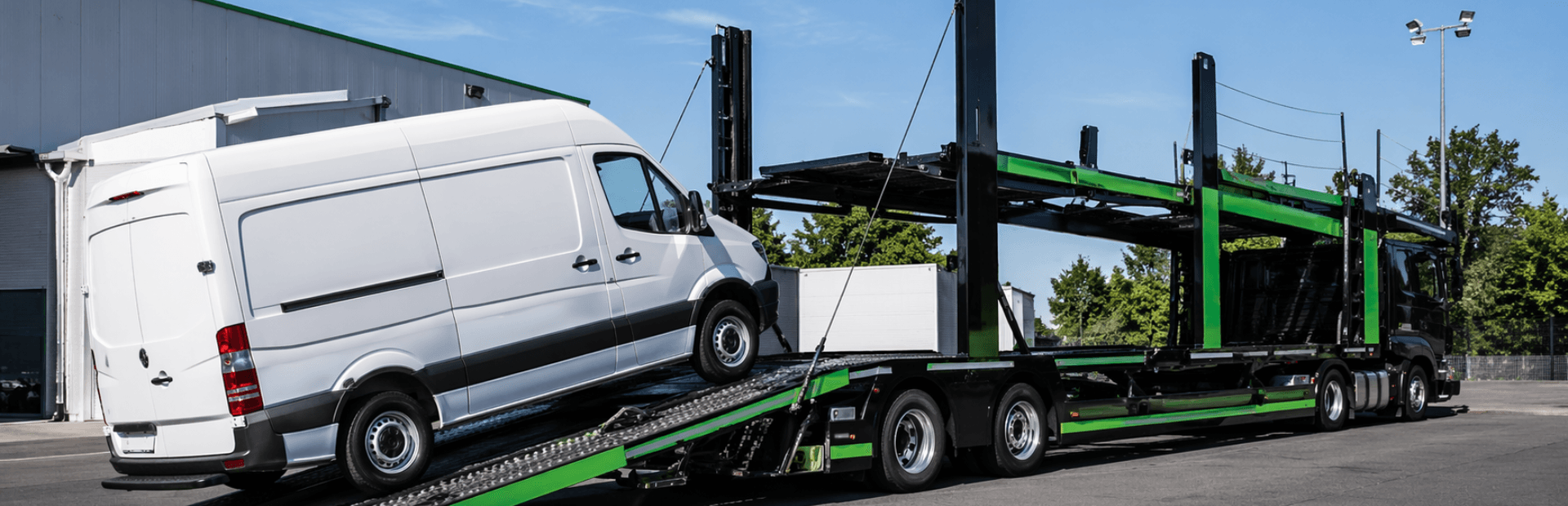
Cross country van shipping from coast to coast typically averages between $1,400 and $2,200 for open transport. If you are moving a high-value asset, choosing enclosed vs open transport will add roughly 40% to 60% to that baseline.
|
Distance Range |
Estimated Cost |
Per-Mile Rate |
|
0 - 500 Miles |
$550 - $950 |
$1.50 - $2.50 |
|
500 - 1,500 Miles |
$950 - $1,600 |
$0.85 - $1.20 |
|
1,500+ Miles |
$1,400 - $2,500 |
$0.55 - $0.80 |
While affordable vehicle transport often points toward terminal-to-terminal shipping, many businesses prefer door-to-door service. Dropping a van at a terminal might save a few bucks, but you lose time and risk potential storage fees if the vehicle isn't picked up immediately.
What Extra Fees Look Like in Practice
You need to keep an eye out for "hidden" costs that can bloat your van delivery services bill. If your van is a "high-top," expect an oversized vehicle surcharge. Carriers must also account for fluctuating fuel prices through a fuel surcharge, which is standard across most auto transport services.
-
Oversized Surcharge: Typically $150–$400 for high-roof models.
-
Non-Running Fee: If the van doesn't drive, expect an extra $150 for winch service.
-
Expedited Shipping: Premiums for guaranteed pickup dates.
To stay protected, always verify your carrier’s authority. You can check their FMCSA status and MC number to ensure they are legally permitted to move your equipment across state lines. Understanding these details helps you secure the most reliable car carrier services without getting hit by surprise line items later.
Open vs. Enclosed Transport - Which One Makes Sense for a Van?
Choosing between transport methods isn't about luxury; it is about protecting your overhead.
In the world of auto transport services, the mechanics are simple. Open transport uses those massive, multi-car trailers you see on the interstate, while enclosed transport places your vehicle inside a literal "box" on wheels.
For a van, the choice is often dictated by height. Many enclosed trailers have height restrictions that simply cannot accommodate a high-roof cargo van, making car carrier services of the open variety the default for larger fleets.
|
Factor |
Open Transport |
Enclosed Transport |
|
Cost |
Baseline Pricing |
40% – 60% Premium |
|
Weather Protection |
Exposed to elements |
100% Shielded |
|
Availability |
High (90% of carriers) |
Limited for vans |
|
Best For |
Standard work vans |
Luxury or custom builds |
|
Delivery Speed |
Faster (more trucks) |
Slower (fewer routes) |
When Enclosed Transport Is Worth the Extra Cost
While more expensive, certain vehicle transport options demand the extra shield of a hard-sided trailer. If your van is essentially a rolling vault of high-end equipment, the premium is often cheaper than an insurance deductible.
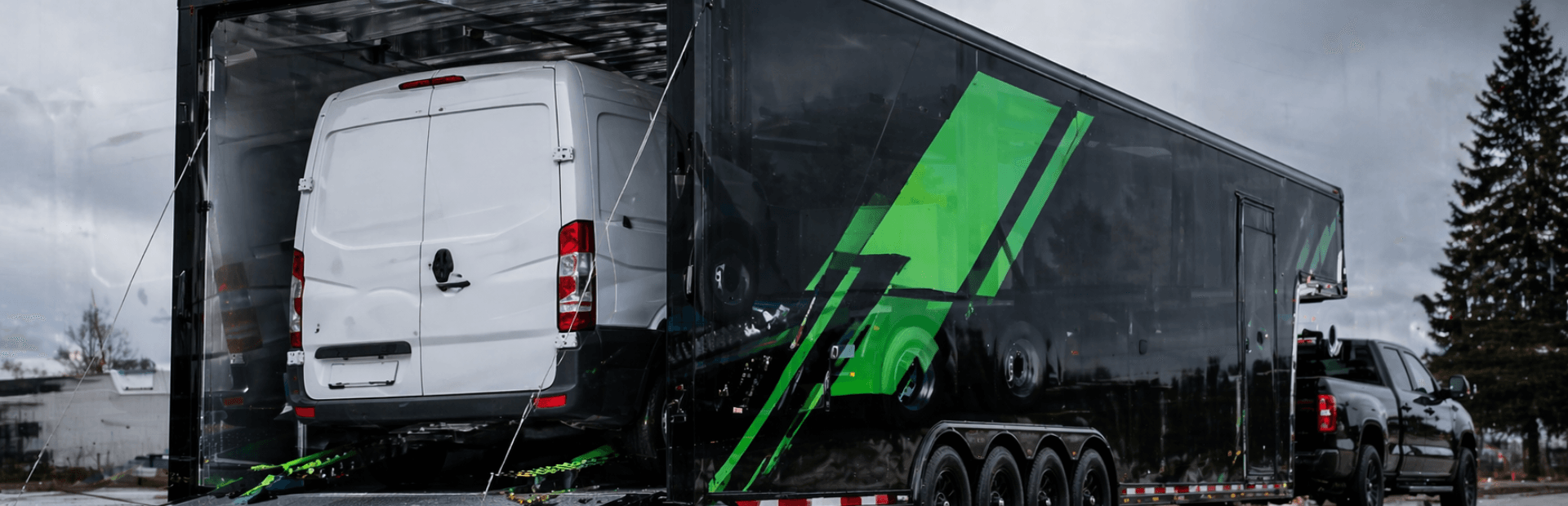
You should consider enclosed shipping if you are moving:
-
Custom Wraps: Brand-new vinyl graphics that shouldn't risk rock chips.
-
Specialty Racks: Vans with expensive, roof-mounted solar arrays or specialized tools.
-
High-Value Assets: Custom camper conversions or mobile medical units.
-
Enclosed Premium: Expect to pay 40% to 60% more than standard open rates.
Why Open Transport is Usually the Better Bet
For most businesses, enclosed vs open transport is an easy win for the open trailer. If your van is a standard workhorse meant for the road, it is already built to handle rain, wind, and road debris.
Spending an extra $800 to "protect" a Ford Transit that will spend its life in a parking lot usually doesn't make financial sense. Most reliable car shipping companies suggest open transport for vans because it is faster to book and far more budget-friendly for your bottom line.
If you are curious about how these trucks manage such heavy loads, you can check out this guide on multi-vehicle transport to see the logistics in action.
Regulations You Need to Know Before Shipping a Commercial Van
Shipping a business asset is not the same as moving the family sedan. When you engage in commercial vehicle transport, you are moving equipment that often falls under a different set of legal and safety standards.
The primary reason van shipping regulations matter is that these vehicles frequently straddle the line between "light" and "heavy" duty. If your van is outfitted with permanent racks or heavy machinery, it might be reclassified by the carrier or state authorities, changing the entire logistics profile of the move.
One major point of confusion for many business owners is whether they can ship a cargo van with tools or inventory still inside. While it is tempting to use the van as a shipping container, most auto transporters are strictly prohibited from hauling household goods or loose commercial freight due to weight limits and licensing restrictions.
Federal and State-Level Rules That Apply
The Department of Transportation (DOT) has a very clear ceiling for standard auto trailers. Most car carrier services operate under a gross vehicle weight rating (GVWR) that limits individual vehicle weights to ensure the entire trailer stays under the 80,000-pound federal limit for the interstate.
Weight Limit: Most standard carriers cap individual vehicles at 10,000 lbs. Extended wheelbases or high-roof models can easily push a van over this limit once upfitted.
When it comes to interstate vehicle shipping, state borders bring their own hurdles:
-
California: Known for strict emissions and length requirements that can limit which trucks are allowed to enter the state.
-
Texas: Requires specific permits for oversized or over-width vehicles that exceed standard lane dimensions.
-
Florida: Often has high-volume port regulations that affect delivery to coastal cities.
If a carrier moves your van without the proper oversized permits, you could face significant delays if the truck is sidelined at a weigh station. Worse, the liability for any fines often trickles down to the owner if the vehicle's weight or dimensions were misrepresented during the logistics for van transport planning phase.
Insurance Requirements During Transport
You need to understand that standard carrier liability is not "full coverage." Most auto transport services offer a basic level of protection that covers damage caused by the carrier’s negligence, but it is rarely enough for a fully-loaded work van.
Standard carrier insurance is often capped at a specific dollar amount per pound or a total cargo limit of $100,000 for the entire trailer. If that trailer is carrying nine other vehicles, your slice of that pie is thin.
-
Supplemental Insurance: Recommended if your van has more than $5,000 in built-in shelving or specialized tools.
-
Gap Coverage: Vital if you still have a high-value lease or loan on the vehicle.
-
On-Site Inspection: Always take photos before the van is loaded; insurance claims are nearly impossible to win without "before" evidence.
Shipper's Secret: Standard carrier liability is often based on the vehicle's weight, not its actual replacement value.
Before you sign any contract, verify the company's status through the FMCSA Company Data portal. Seeing their safety record and insurance filings in black and white is the only way to ensure your heavy vehicle shipping needs are in professional hands.
How to Choose the Right Van Shipping Company
Finding a partner to handle your shipping a work van project is about more than just finding the lowest price. The industry is crowded, and what separates top-tier vehicle shipping companies from the fly-by-night operations is transparency and accountability.
You need to understand the relationship between brokers and carriers. Most of the van delivery services you find online are brokers entities that find a driver for you, rather than the actual company owning the trucks. Both serve a purpose, but you need to know who is ultimately responsible for your asset.

Keep your eyes peeled for these red flags when reviewing your options to ship a cargo van:
-
Unusually Low Bids: If a quote is $400 lower than everyone else, they likely won't find a carrier to actually pick it up.
-
Vague Insurance Language: They should provide specific dollar amounts, not just "fully insured."
-
No FMCSA Registration: If they can't provide an MC number, walk away immediately.
-
Deposit Pressure: Never pay a significant deposit before you have a signed contract and a carrier assigned.
The Right Questions to Ask Before Booking
Before you commit your budget to freight van shipping, you need to interview the provider. Use this checklist to vet any company that reaches out to you:
-
Are you a broker or a direct carrier? (Know who you are paying).
-
What is your FMCSA MC number? (Vital for verification).
-
What is the carrier's insurance limit per vehicle? (Ensure it covers the van's total value).
-
What is your pickup window—and what happens if it shifts? (Logistics change; you need a backup plan).
-
Does your quote cover door-to-door, and what counts as inaccessible? (High-roof vans struggle in tight residential cul-de-sacs).
You can verify any company's credentials in under two minutes by using the FMCSA search tool. Just plug in their name or MC number to see their current operating status and safety rating.
Finally, don't settle for the first number you hear. Getting at least three van shipping quotes is the only way to identify the true market rate for your route. For a deeper look at how to navigate these choices, check out our comprehensive auto transport review platform to see how specific companies stack up in the real world.
Preparing Your Commercial Van for Shipment
Most business owners treat commercial van shipping as a "set it and forget it" task, but skipping the prep work is where most damage claims and expensive delays originate.
If the carrier arrives and your van is overflowing with loose cargo or leaking oil, they can refuse the load, which spikes your total van transport cost due to dry-run fees.

You need to take specific steps to ensure your vehicle is ready for the rigors of the road before the truck pulls into your lot:
-
Documentation: Have your registration and insurance papers ready for the driver to verify.
-
Fluid Levels: Check for leaks; a van dripping transmission fluid onto the cars below it is a liability nightmare.
-
Fuel Level: Keep the tank at about a quarter full to reduce unnecessary weight while still allowing for loading and unloading.
-
Loose Items: Remove all toll tags, loose tools, and aftermarket GPS units that aren't permanently bolted down.
Removing custom external accessories like specialized ladder racks or oversized side mirrors is also a smart move. Most auto transport services operate on thin margins of clearance; if an unbolted rack hits a bridge or another vehicle, the carrier's insurance often won't cover it because it was an "aftermarket modification."
The most critical part of your prep is the vehicle condition report, often called the Bill of Lading. You must walk around the van with the driver and mark down every existing scratch or dent.
Take high-resolution photos of all four sides, the roof, and the interior. If you discover a new dent after delivery, these photos are your only evidence to win a dispute. This is standard practice for reliable car shipping companies that value transparency.
Finally, manage your expectations regarding the timeline. While vehicle transport options vary, the distance is the ultimate deciding factor for when your work van will arrive at the new job site.
|
Distance |
Estimated Transit Time |
Notes |
|
0 - 500 Miles |
1 - 3 Days |
Usually direct delivery without stops. |
|
500 - 1,500 Miles |
3 - 5 Days |
Driver may have other pickups/drop-offs. |
|
1,500 - 3,000 Miles |
6 - 10 Days |
Subject to weather and mandatory driver rest. |
If you are moving an older vehicle or a project van, make sure to read our guide on how to ship a non-running vehicle so you aren't hit with surprise winch fees at the last minute.
Clearing Up the Common Hurdles
Moving a commercial asset brings up specific concerns that don't apply to a standard commuter car. Here are the most frequent logistical puzzles business owners face when coordinating van transport across state lines.
Is Cross Country Van Shipping Safe For High-Roof Models?
Yes, but you must specify the exact height. Most open carriers can accommodate high-roof vans, though they require specific positioning on the trailer. Always provide accurate dimensions to avoid a driver refusing the load at your doorstep.
How Do I Find Affordable Vehicle Transport For A Heavy Work Van?
The best way to keep costs down is to book at least two weeks in advance and choose terminal-to-terminal shipping. You can also find the cheapest car shipping by comparing quotes from carriers that specialize in oversized loads.
Can I Ship A Work Van With Tools And Inventory Inside?
Technically, most carriers prohibit this due to FMCSA weight regulations and theft liability. If you must leave items inside, they usually must be below the window line and weigh less than 100 pounds. Check auto transport insurance guides for details.
What Are The Standard Van Shipping Regulations For Interstate Moves?
Carriers must have a valid DOT number and specific cargo insurance for commercial weights. If your van is exceptionally wide or long, the carrier may need to secure "Oversized Load" permits for certain states like California or New York.
Where Can I Get Accurate Van Shipping Quotes For A Fleet?
Most companies offer bulk discounts for shipping multiple units. You should request a custom quote that accounts for the specific wheelbase and height of your fleet to ensure the pricing remains consistent across all your vehicles.
Moving Your Business Forward with Confidence
Shipping a commercial van isn't complicated once you know what drives the van transport cost and what rules apply. The confusion usually comes from comparing van shipping quotes that aren't actually quoting the same level of service.
To ensure a smooth move, focus on three things: verifying the carrier's credentials, understanding what their insurance actually covers, and preparing the van properly before pickup. If you do nothing else, get three quotes, confirm their registration with the FMCSA, and document the vehicle condition thoroughly before handing over the keys.
Ready to see how affordable vehicle transport fits into your business budget? Get a transparent van shipping quote from our team to compare licensed carriers and secure a reliable rate for your next move.