


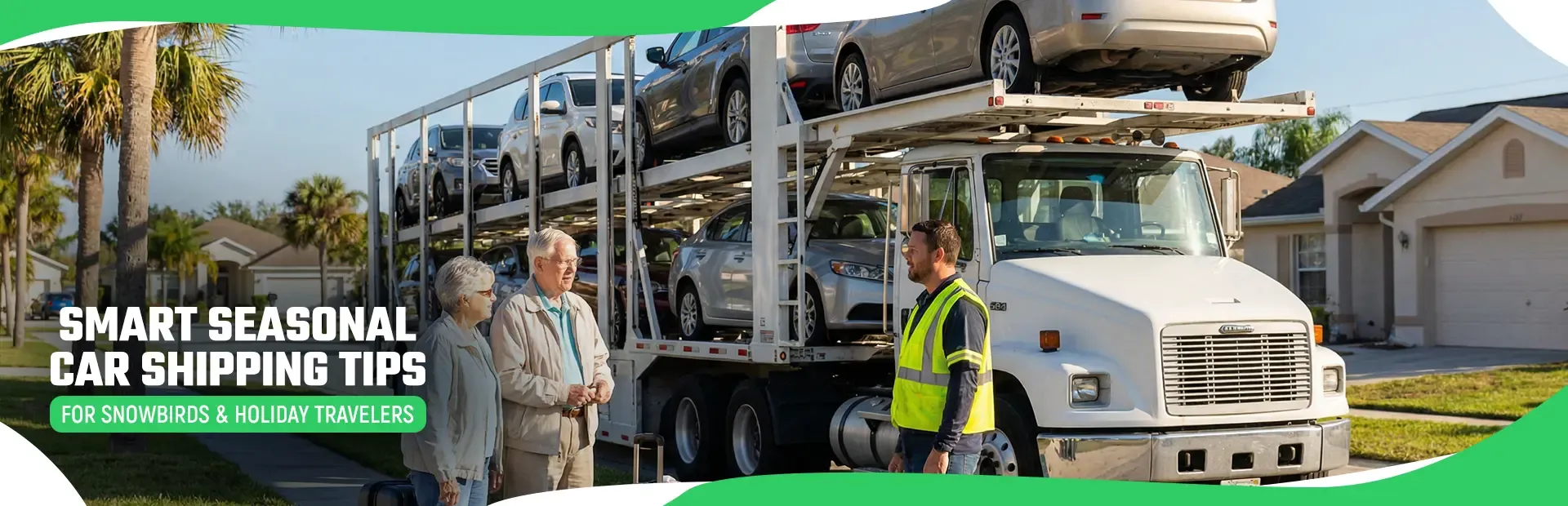
Seasonal Car Shipping Tips for Snowbirds and Vacationers

Seasonal Car Shipping Tips for Snowbirds and Vacationers

Transportvibe
June 13, 2025
5 min read

Seasonal Car Shipping Tips for Snowbirds and Vacationers

  Whether you're heading to sunny Florida for the winter or planning an extended vacation across the country, shipping your car can make your seasonal move easier and safer. At Transportvibe, we help thousands of snowbirds, retirees, and vacationers navigate the auto transport process every year. In this guide, we’ve gathered expert tips to help you prepare, save money, and avoid common mistakes.

Table of Contents

  • What Is Seasonal Car Shipping?
  • Who Needs Seasonal Car Relocation?
  • When Should You Book?
  • Choosing the Right Shipping Method
  • Open vs Enclosed Transport for Snowbirds
  • Cost-Saving Tips for Seasonal Car Shipping
  • How to Prepare Your Vehicle
  • Avoiding Common Pitfalls
  • FAQs About Seasonal Car Shipping
  • Final Thoughts


What Is Seasonal Car Shipping?

Seasonal car shipping refers to moving your vehicle based on recurring lifestyle patterns or extended vacations. Common scenarios include:

  • Snowbirds relocating south for the winter
  • Students traveling home for summer
  • Vacationers staying out of state for weeks or months
  • Seniors moving between residences in different seasons

Instead of driving long distances, seasonal shipping offers a safer and more convenient option.

Who Needs Seasonal Car Relocation?

1. Snowbirds

Retirees or long-term travelers who move south for warmer weather during the winter months.

2. Vacationers

Planning a two-month stay in California or Arizona? Shipping your car gives you freedom without renting one long-term.

3. Students

College students moving between campus and home during breaks often prefer to ship their vehicles instead of long drives.

4. Military Families

Those relocating temporarily for deployments or assignments may need seasonal transport.

When Should You Book?

We recommend booking 2–4 weeks in advance to ensure availability and better rates. Peak Booking Times:

  • Fall (Sept–Nov): Snowbirds heading south
  • Spring (Mar–May): Snowbirds returning north
  • Summer Break: Vacation traffic and student relocations

Transportvibe Tip: Avoid holidays and long weekends for pickup and delivery when demand spikes.

Choosing the Right Shipping Method


Door-to-Door Transport

Most popular for seasonal moves. Your car is picked up and delivered as close to your addresses as possible.

Terminal-to-Terminal Shipping

Cheaper option, but you’ll need to drop off and pick up your car at designated locations.

Expedited Shipping

Ideal if you’re working on a tight timeline and need fast delivery.

Bonus Option: Ask about storage services if your arrival and delivery dates don’t align.

Open vs Enclosed Transport for Snowbirds


Feature Open Carrier Enclosed Carrier
Price More affordable 30–60% more expensive
Protection Exposed to elements Protected from weather/debris
Best For Everyday vehicles Luxury/classic/high-value cars

Open carriers are best for most snowbirds and vacationers. Enclosed transport is worth considering for rare or expensive vehicles.

Cost-Saving Tips for Seasonal Car Shipping

  1. Book Round-Trip Shipping – Some carriers offer discounts for scheduling both directions in advance.
  2. Ship During Off-Peak Days – Mid-week pickups (Tues–Thurs) can be cheaper.
  3. Choose Terminal-to-Terminal – Save on pickup/drop-off fees if you can travel.
  4. Use Open Transport – Budget-friendly unless your car needs extra protection.
  5. Bundle With a Friend – Two cars = possible multi-car discount.
  6. Use Transportvibe’s Free Quote Tool – Compare top-rated shippers instantly.


How to Prepare Your Vehicle

  • Clean the car (inside and out)
  • Take photos from all angles
  • Remove all personal items
  • Check tire pressure and fluid levels
  • Disable alarm and keep gas tank 1/4 full
  • Ask for a copy of the carrier’s insurance certificate

Avoiding Common Pitfalls

  • Don’t book too late — prices rise fast
  • Avoid unlicensed carriers — check FMCSA registration
  • Don’t leave valuables in the car — not insured
  • Watch the weather when scheduling pickups
  • Don’t skip the Bill of Lading inspection — it protects you

FAQs About Seasonal Car Shipping

  Q1: How far in advance should I schedule seasonal car transport? A: Ideally 2–4 weeks before your planned move. Early booking helps lock in lower rates and ensures availability. Q2: Can I pack personal items in my car during transport? A: Most carriers allow small items under 100 lbs, but they are not covered by insurance. Always confirm in advance. Q3: Is enclosed transport worth it for seasonal shipping? A: Only if your car is high-value, luxury, or vintage. Otherwise, open transport works well for most. Q4: What if I need storage before pickup or after delivery? A: Some companies offer short-term storage. Ask about it when you request a quote. Q5: Are seasonal rates more expensive? A: Yes, especially in fall and spring. Book early and be flexible to save. Q6: How long does it take to ship my car? A: Typically 5–10 days cross-country, 2–5 days for shorter distances.

Final Thoughts

Seasonal car shipping is a smart alternative to long, stressful drives — especially for snowbirds and vacationers. With proper planning, flexible scheduling, and a trusted carrier, you can enjoy your seasonal lifestyle without worrying about how your car will get there. At Transportvibe, we specialize in seasonal auto transport and work with top-rated carriers nationwide. Get a Free Seasonal Car Shipping Quote and prepare for your next adventure with confidence.

Related articles

JUN 15, 2025
Military Vehicle Shipping Services for PCS Moves

Military Vehicle Shipping Services for PCS Moves

TRANSPORTVIBE

Military Vehicle Shipping Services for PCS Moves PCS (Permanent Change of Station) moves can be stressful for military families, especially when it comes to relocating vehicles. Whether you're moving across the country or overseas, transporting your privately owned vehicle (POV) doesn’t have to be complicated. At Transportvibe, we’ve helped thousands of service members understand their military car shipping options. In this guide, you’ll learn about military auto transport services, how POV shipping works, what it costs, and how to choose the best car shipping company for your PCS move in 2025. Table of Contents What Is Military Vehicle Shipping? When Do Military Members Need Auto Transport? Can the Military Ship My Car for Free? Privately Owned Vehicle (POV) Eligibility How Much Does Military Car Shipping Cost? Timeline for PCS Vehicle Transport Best Shipping Methods for Military Moves How to Choose a Military Auto Transport Company Required Documents for PCS Auto Transport Tips to Save on Military Car Shipping FAQs About Military Vehicle Shipping Final Thoughts What Is Military Vehicle Shipping? Military vehicle shipping refers to the process of relocating a service member’s personal vehicle during a PCS (Permanent Change of Station) move. This can be handled either by the government (under certain conditions) or through out-of-pocket arrangements with a licensed auto transport company. Military members often require auto transport when: Deploying to another state or country Moving between bases (CONUS or OCONUS) Transferring duty stations with dependents Needing to ship more than one vehicle When Do Military Members Need Auto Transport? You’ll likely need to ship your car if: You’re receiving PCS orders to a location too far to drive You’re flying to your new base and can’t take your POV You own more than one vehicle and the government only ships one You’re stationed overseas and need your vehicle transported to a port Can the Military Ship My Car for Free? Yes, under certain conditions. If you’re ordered to an OCONUS (Outside Continental U.S.) duty station such as Hawaii, Alaska, Germany, or Japan, the Department of Defense may cover the cost of shipping one POV per service member. You’ll need to: Be active duty or a full-time National Guard/Reserves member Have a valid set of PCS orders Ship a vehicle that meets weight and dimension restrictions Transportvibe Tip: Always check the official DoD guidelines or contact your transportation office (TO) for eligibility. Privately Owned Vehicle (POV) Eligibility Your car must meet these basic criteria: Owned or leased by the service member or dependents Operable and safe to drive Under size and weight limits (typically < 20 feet long and < 7 feet high) Not classified as commercial or oversized Common POVs include: Sedans SUVs Pickups under 7,000 lbs Motorcycles (with special handling) How Much Does Military Car Shipping Cost? If you’re paying out of pocket for CONUS (continental U.S.) shipping: Distance Avg. Cost (Open Carrier) Avg. Cost (Enclosed Carrier) 500 miles $500 – $750 $900 – $1,200 1,000 miles $800 – $1,100 $1,300 – $1,700 2,000+ miles $1,100 – $1,500 $1,600 – $2,200 High-volume keywords used : military auto transport rates, military car shipping cost, PCS vehicle relocation. Timeline for PCS Vehicle Transport Military car shipping usually takes 5 to 10 days , depending on the route and availability. Timeline Tips: Book at least 3–4 weeks in advance Be flexible with pickup and delivery dates Choose door-to-door or terminal delivery based on convenience If you're moving overseas, allow 4–8 weeks for international shipping. Best Shipping Methods for Military Moves 1. Open Carrier Shipping Most affordable. Suitable for everyday vehicles. 2. Enclosed Carrier Shipping Recommended for luxury or classic cars. 3. Terminal-to-Terminal Shipping Cheapest option, but requires drop-off and pickup at terminals. 4. Door-to-Door Shipping Most convenient. The driver comes to your base or residence. How to Choose a Military Auto Transport Company Look for companies that specialize in military PCS car transport , are FMCSA licensed , and offer: Military discounts Flexible pickup windows Full insurance coverage Real customer reviews Use platforms like Transportvibe to compare providers and check ratings. Required Documents for PCS Auto Transport Copy of military PCS orders Valid government-issued ID Vehicle registration and title (or lease) Insurance proof Power of attorney (if someone else is handling shipment) Tips to Save on Military Car Shipping Ask for Military Discounts – Many companies offer 5–15% off. Use Open Transport – It's cheaper and safe for most POVs. Book Round-Trip if Returning – Some carriers offer bundled deals. Ship from Terminal – Reduces door-to-door fees. Compare Quotes on Transportvibe – See reviews and rates instantly. Everything You Need to Know: Military Car Shipping Q1: Will the military pay to ship both of my cars? A: No. The DoD usually only pays to ship one POV. Additional vehicles must be shipped at your own expense. Q2: Can I ship personal items in my car? A: Most carriers prohibit this. Some allow <100 lbs, but it's not insured. Always confirm with the company. Q3: What happens if my car is damaged during transport? A: Reputable carriers carry cargo insurance. You must inspect your vehicle on delivery and file a claim immediately if needed. Q4: Is door-to-door shipping available for military bases? A: Yes, most carriers can access bases or arrange close pickup/drop-off if base access is restricted. Q5: How long does PCS car shipping take? A: Within the U.S., most shipments take 5–10 days. International moves may take 4–8 weeks depending on port clearance. Q6: Is enclosed transport better for military POVs? A: Only if you’re shipping a high-value vehicle. Most military POVs are safely shipped via open carriers. Final Thoughts Military car shipping doesn’t have to be stressful. By understanding your entitlements, choosing the right auto transport company, and planning early, you can ship your vehicle with confidence during your PCS move. At Transportvibe , we specialize in military vehicle shipping services and help service members across the country find safe, affordable transport options. Get a Free Military Car Shipping Quote and make your PCS relocation smoother.

JUN 11, 2025
Price Comparison: Dealer vs Personal Vehicle Shipping

Price Comparison: Dealer vs Personal Vehicle Shipping

TRANSPORTVIBE

Price Comparison: Dealer vs Personal Vehicle Shipping Shipping a vehicle isn’t a one-size-fits-all experience. Whether you're buying a car from a dealership or shipping your personal vehicle across the country, the costs, processes, and benefits differ significantly. At Transportvibe , we help users make informed transport decisions. In this comprehensive guide, we compare dealer vs personal vehicle shipping costs — with real-world factors, benefits, and what to expect in 2025. Table of Contents What Is Dealer Vehicle Shipping? What Is Personal Vehicle Shipping? Key Differences Between Dealer and Personal Auto Transport Cost Breakdown: Dealer vs Personal Shipping Factors That Influence Pricing Pros & Cons of Dealer Shipping Pros & Cons of Personal Shipping Which Option Is More Reliable? Saving Tips for Both Scenarios FAQs About Dealer vs Personal Car Shipping Final Verdict What Is Dealer Vehicle Shipping? Dealer shipping refers to auto transport services organized by a dealership. This typically occurs: When delivering new or used vehicles to customers Moving cars between dealership locations Transporting vehicles from auctions or manufacturers Dealerships often ship multiple vehicles at once using large open carriers, which helps reduce cost per unit. What Is Personal Vehicle Shipping? This refers to individuals booking auto transport for: Relocation (job moves, military PCS, retirement) College or seasonal travel Snowbird migration Selling or buying cars privately online (e.g., Carvana, eBay Motors) These shipments often involve single vehicles , customized pickup windows, and door-to-door service. Key Differences Between Dealer and Personal Auto Transport Feature Dealer Shipping Personal Shipping Volume Multiple cars per load One or two vehicles Price per car Lower due to bulk deals Higher for individual Scheduling Fixed routes & windows Flexible pickup/delivery Service Type Terminal-based or batch Often door-to-door Paperwork Handled by dealer team Owner involvement needed Cost Breakdown: Dealer vs Personal Shipping (2025 Averages) Distance Dealer Cost per Vehicle Personal Shipping Cost 500 miles $350 - $500 $500 - $700 1,000 miles $500 - $750 $800 - $1,100 2,000+ miles $700 - $950 $1,100 - $1,500 Note: Dealer pricing benefits from multi-car loads and pre-set scheduling. Personal shipments are priced higher for flexibility and one-off service. Factors That Influence Pricing Distance : Longer distances cost more, though per-mile rates drop over 1,000 miles. Carrier Type : Open carriers are cheaper; enclosed shipping adds 30–60%. Route Popularity : Major metro routes are more affordable. Vehicle Type : Larger vehicles (SUVs, trucks) cost more. Seasonal Demand : Summer and snowbird season increase rates. Delivery Type : Door-to-door is more expensive than terminal delivery. Pros & Cons of Dealer Shipping Pros: Lower cost per vehicle Faster booking for standard routes Handled by experienced dealership staff Less administrative work for the end customer Cons: Less flexibility in pickup/delivery Typically not customized for your schedule Terminal delivery may require extra travel Pros & Cons of Personal Shipping Pros: Flexible scheduling Door-to-door convenience Personalized service and updates Easier for relocation or private sale scenarios Cons: Higher costs (especially for long distances) More responsibility in booking & paperwork Delays if carrier tries to fill a one-off route Which Option Is More Reliable? Dealer Transport is more consistent for bulk movement and auction-to-dealer logistics. Best for volume moves. Personal Transport is better for customization, door-to-door preferences, and communication with the driver. Reliability depends more on carrier quality than on the shipping type. Use platforms like Transportvibe to read verified reviews. Saving Tips for Both Scenarios Book Early : Lock in lower rates before peak season. Be Flexible : Open to alternate dates for better pricing. Use Open Carriers : More cost-effective unless your vehicle needs enclosed transport. Compare Multiple Quotes : Use Transportvibe to compare vetted companies. Bundle Vehicles : If shipping two or more cars, ask for a volume discount. FAQs About Dealer vs Personal Car Shipping Q1: Is it always cheaper to ship through a dealer? A: Usually yes, but only if you’re part of a multi-car load. Personal shipping can match dealer rates if you're flexible. Q2: Can I ask a dealer to handle my personal shipping? A: Some dealerships offer this service, but it may be limited to specific routes or inventory. Q3: Does personal shipping come with insurance? A: Yes. All FMCSA-certified carriers must carry cargo and liability insurance. Still, ask for the Certificate of Insurance (COI). Q4: What if I’m buying a car from a dealership out of state? A: Many dealers include transport in the sale price or offer discounted shipping options through preferred carriers. Q5: Can I ship a leased vehicle? A: Yes, but you’ll need permission from the leasing company. Always check for mileage or condition-related clauses. Final Verdict In 2025, the gap between dealer and personal vehicle shipping costs still exists — but the right choice depends on your goals. Choose dealer shipping for low cost and bulk transport needs. Choose personal shipping for flexible, door-to-door convenience. Whatever you decide, Transportvibe helps you compare transparent quotes and connect with reliable, insured carriers. Get Your Free Quote Now and choose the smartest way to ship your next vehicle.