



Los Angeles ranks as the #1 car shipping destination in the United States, according to Ship a Car Inc. That puts the LA to Chicago route on one of the busiest auto transport corridors in the country, with strong carrier availability and faster pickup windows year-round.
In 2026, shipping a car from California to Illinois on an open carrier runs $1,200 to $1,900. Enclosed shipping costs more. Transit runs 4 to 12 days depending on service type and season.
Whether you're relocating for work, a snowbird heading back to the Midwest, a dealer moving inventory, or shipping a classic to a show, this guide covers real 2026 costs and what to watch before you book.
Ready to compare verified carriers for this route? Get your free LA to Chicago shipping quote on Transportvibe and book with confidence.
What Does It Cost to Ship a Car from LA to Chicago in 2026?
The route covers roughly 2,015 miles. That puts it in long-haul territory, where the cost per mile drops compared to short-distance shipments. But total spend still adds up fast, and the range is wider than most people expect.
Open transport numbers below are sourced from moveBuddha's 2026 aggregated carrier data for this specific route. Enclosed rates vary by carrier and require a direct quote.
|
Transport Type |
Estimated Range |
Best For |
|
Open carrier (standard) |
$1,200–$1,900 |
Everyday vehicles, relocators, dealers |
|
Open carrier (expedited) |
$1,600–$2,100 |
Job start dates, PCS orders, firm deadlines |
|
Enclosed carrier (standard) |
From $1,700 |
Classics, luxury vehicles, exotics |
|
Enclosed carrier (expedited) |
From $2,000 |
High-value cars with hard delivery windows |
Open car shipping from Los Angeles to Chicago

Most vehicles moving from LA to Chicago go open. Carriers running this corridor use 8 to 10 vehicle open trailers, which means your car shares space with other shipments heading the same direction. Your vehicle is exposed to the elements — road debris, dust, weather — but on a high-traffic corridor like I-80, that's not a real concern for everyday vehicles.
Open shipping is also the fastest to book on this route. High carrier volume means pickup assignment typically happens within 24 to 72 hours of your window opening.
Who should book open transport:
-
Sedans, SUVs, crossovers, and trucks in daily use
-
Relocators and students moving cross-country
-
Dealers moving standard inventory
-
Anyone prioritizing cost over maximum protection
Open car shipping works for the vast majority of vehicles on this route. If your car is a daily driver worth under $40,000, this is the right call.
Enclosed car shipping from LA to Chicago

Classic car owners, snowbirds shipping a high-value second vehicle, exotic collectors, and car show organizers use enclosed. The trailer carries 2 to 6 cars. Your vehicle is fully protected from weather, debris, and UV exposure. Most enclosed carriers also run air-ride suspension systems, which matters for low-clearance vehicles.
When enclosed makes sense:
-
Collector and vintage cars considered irreplaceable
-
Luxury or sports cars where cosmetic damage is expensive to repair
-
Custom paint, body work, or modified vehicles
-
Motorcycles and low-clearance exotics
Enclosed vehicle shipping on this route has fewer active carriers than open. Book 3 to 4 weeks out to avoid a scramble, especially from May through August.
For a full price comparison between the two options, this breakdown of open vs enclosed transport costs is worth reading before you commit.
What Actually Changes Your Quote on This Route
Two shippers, same route, same dates — quotes that differ by $300. Here's what's moving the number.
Vehicle size and weight
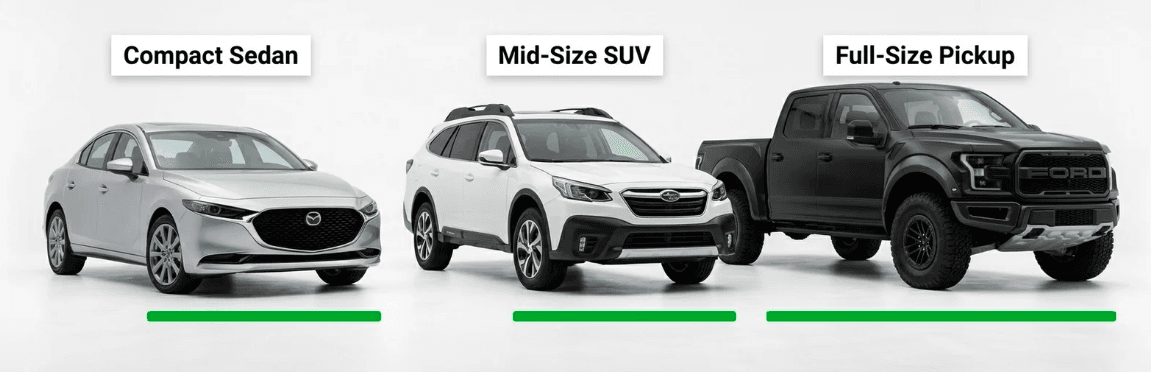
A compact sedan and a full-size pickup are not priced the same. According to Nexus Auto Transport's cost analysis, mid-size SUVs and crossovers add $50 to $150 over a sedan quote on the same route. Full-size trucks and heavy SUVs add $100 to $300. Larger vehicles take up more trailer space and weigh more, which affects fuel cost on a 2,000-mile haul.
Pickup flexibility

Demand a pickup within 24 hours and you pay a premium. Give a carrier a 5 to 7 day window and you compete on price with other shippers — which brings your quote down. The more flexible you are, the better rate you get.
How far ahead you book
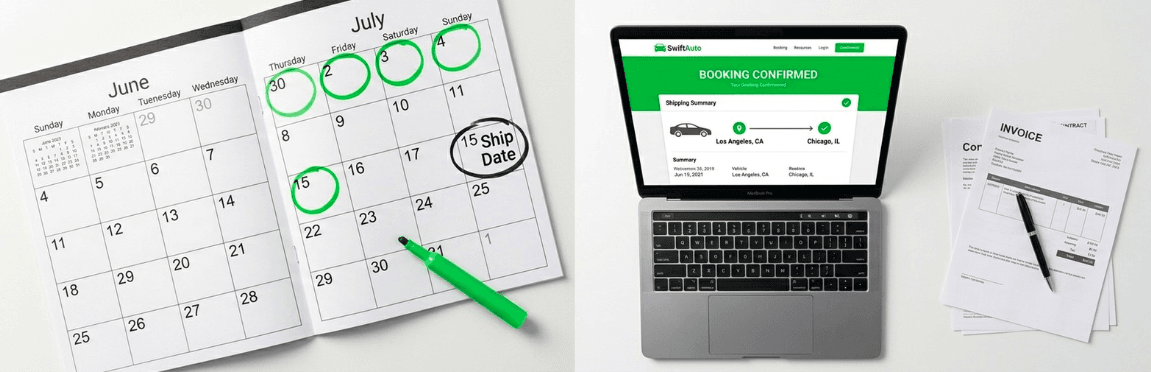
Last-minute bookings, especially in summer, run 15 to 25% higher than advance bookings. Planning 2 to 4 weeks out consistently delivers better rates. During peak season, 4 to 6 weeks is smarter.
Fuel pricing in California
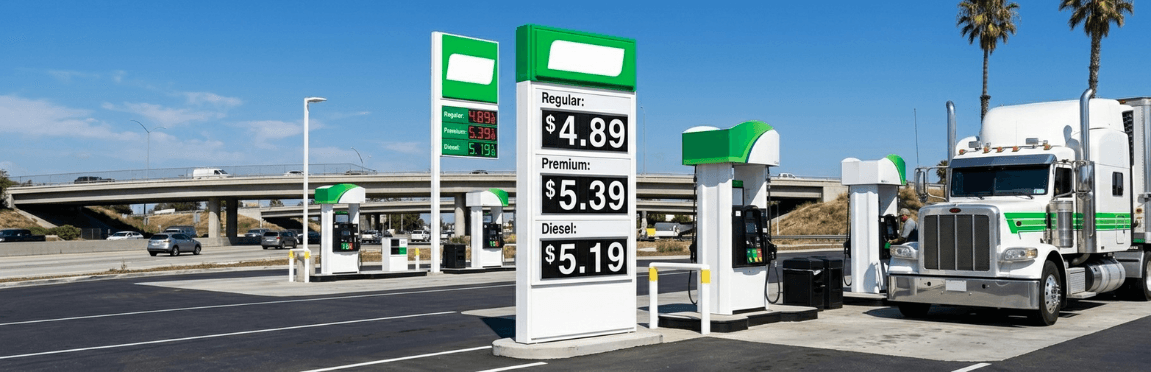
Carriers factor fuel surcharges into their quotes. California consistently runs some of the highest fuel prices in the country. When gas spikes, LA-originating routes tend to rise with it.
To understand exactly which factors affect your specific quote, this breakdown of 5 pricing variables explains what you can and can't control. Also worth reading: why car shipping prices increase the closer you get to your pickup date — a pattern that catches a lot of shippers off guard.
Door-to-Door vs Terminal Shipping on the LA to Chicago Route
Most shippers on this route choose door-to-door. The carrier picks up your vehicle at your address in LA and delivers to your address in Chicago, or as close as a multi-car trailer can legally get.
Terminal shipping means you drop your car at a designated lot near LA and collect it from a lot near Chicago. The quote is lower. Whether it's actually cheaper depends on the full picture.
According to uShip's shipping cost guide, terminal-to-terminal typically runs $150 to $250 less than door-to-door on long-haul routes. But storage fees start the moment your car arrives and you haven't collected it, at $25 to $35 per day at most facilities.
The route-specific issue: Chicago-area terminals are not downtown. Most are in suburbs like Joliet, Cicero, or Melrose Park, 20 to 45 minutes from the city. A round-trip to retrieve your vehicle can cost $80 to $120 in ride-shares — which erodes most of the terminal savings.
|
Factor |
Door-to-Door |
Terminal-to-Terminal |
|
Base cost |
Higher |
$150–$250 less |
|
Convenience |
Pickup at your address |
Requires 2 trips |
|
Storage risk |
None |
$25–$35/day after arrival |
|
Chicago terminal access |
Flexible |
Mostly suburban, 20–45 min out |
|
Best for |
Most shippers |
Flexible shippers with their own transport |
For most shippers on this route, door-to-door is the right call. Learn more about how door-to-door car transport works, including what to expect on pickup day.
You can also read Transportvibe's full terminal-to-terminal vs door-to-door comparison for a complete breakdown.
How Long Does It Take to Ship a Car from LA to Chicago?
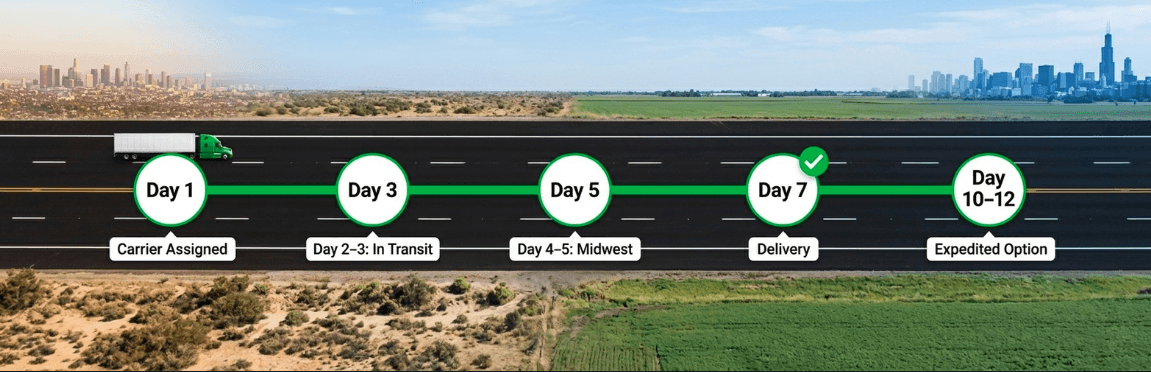
Direct answer: 4 to 12 days for standard service. 2 to 5 days for expedited.
The route covers 2,015 miles. Under FMCSA Hours of Service regulations, commercial drivers are limited to 11 driving hours per day. That puts the driving time at 2 to 3 days — but your car is one of 8 to 10 on the trailer, with other deliveries before yours.
|
Service Type |
Estimated Transit |
Book When |
|
Standard open carrier |
5–7 days |
Standard relocations, flexible timelines |
|
Expedited open |
2–4 days |
Job start dates, PCS orders, leases |
|
Standard enclosed |
6–9 days |
Classic/luxury cars with flexible delivery |
|
Expedited enclosed |
3–5 days |
Car shows, hard delivery windows |
What adds time beyond the driver's schedule:
-
Midwest weather. I-80 through Iowa and Indiana ices heavily from November through March. Build buffer time into winter shipments.
-
Multi-stop routes. Other pickups and deliveries happen before yours.
-
Carrier assignment delay. A narrow pickup window can slow assignment by 1 to 2 days.
For a deeper look at what affects transit timing, this car shipping time guide covers what most shippers underestimate.
Best Time to Book Your LA to Chicago Shipment
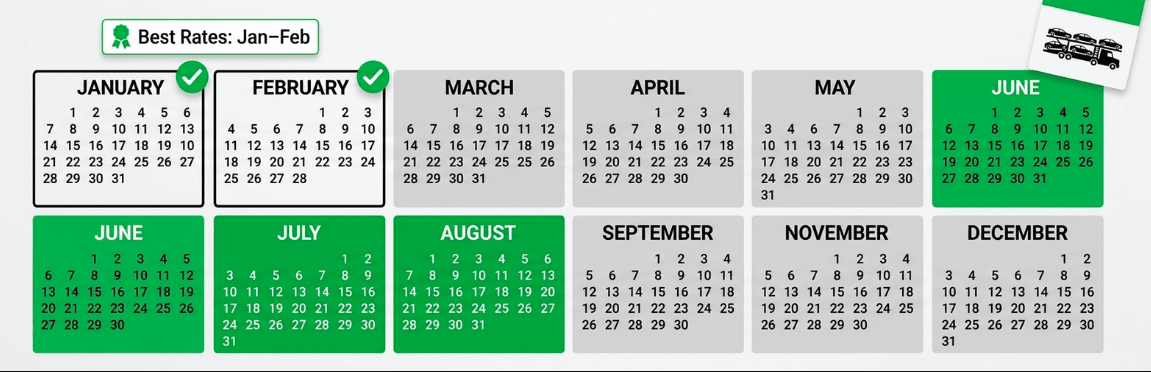
This corridor has real seasonal pricing patterns. Carrier demand shifts depending on time of year, and your quote moves with it.
According to Nova Auto Transport's seasonal pricing analysis, summer months — June through August — see rates run 10 to 20% above the annual average. In peak weeks, the jump can reach 30%. Summer is when students relocate, families move, and snowbirds return north.
|
Season |
Demand Level |
Price Impact |
Recommended Lead Time |
|
Jan–Feb |
Low |
Best rates of the year |
1–2 weeks |
|
Mar–May |
Rising |
5–10% above Jan baseline |
2–3 weeks |
|
Jun–Aug |
Peak |
10–30% above baseline |
4–6 weeks |
|
Sep–Oct |
Moderate |
Returning to baseline |
2–3 weeks |
|
Nov–Dec |
Low |
Near Jan levels |
1–2 weeks |
Snowbirds returning to Illinois in spring — typically April through May — create a demand spike specifically on the LA-to-Midwest direction. If that's your situation, book 3 to 4 weeks out at minimum.
January and February are consistently the cheapest months to ship on this route. If your timeline has any flexibility at all, that window is worth targeting.
For a complete picture on saving money by timing your shipment, see the best time of year to ship a car. And for practical booking tactics, 7 seasonal shipping secrets covers moves most shippers skip.
Top Car Shipping Companies for the LA to Chicago Route
Not every broker covers the LA-to-Chicago corridor with the same carrier density. Some have strong networks on I-80 and I-40. Others post competitive quotes but struggle to assign a carrier quickly on this specific route.
Before you book anyone, pull their FMCSA registration. Every legitimate carrier has a USDOT number and MC number. You can verify both in the FMCSA carrier search tool. If a company refuses to share their MC number, you have your answer.
What to check before you commit
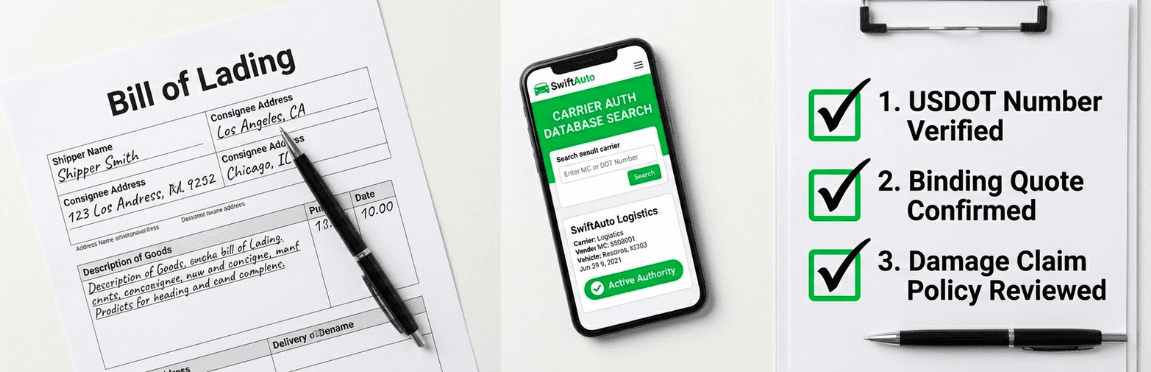
Three questions that matter for this route:
1. Is the quote binding or an estimate? A binding quote locks your price. An estimate is a starting point that can change when a carrier gets assigned. The gap between those two is where most complaints on this corridor originate. Ask before you pay a deposit.
2. What carrier will actually pick up your vehicle? Brokers assign your shipment to a carrier through a load board. They don't drive the trucks. Ask which carrier is assigned before your pickup window opens. If they can't tell you, push for it.
3. What's the damage claim process? Federal law requires a bill of lading at pickup. Document every existing scratch, ding, and scuff on that form before you hand over the keys. It's the only record that counts if something happens in transit.
Carriers worth comparing for this route
Three brokers with consistent carrier coverage on the LA-to-Chicago corridor, based on verified shipment data:
Sherpa Auto Transport: stands out for its Price Lock Promise. Sherpa guarantees your quoted price is the price you pay. If the assigned carrier demands more, Sherpa covers the difference up to $300. On a route where bait-and-switch pricing is a common complaint, that guarantee removes real risk. Sherpa holds a 4.8 out of 5 average across more than 2,000 Google reviews.
AmeriFreight: runs a large carrier network for cross-country routes and offers an AFta (Allied Fidelity Total Assurance) plan for $50 to $100 extra. The plan covers up to $2,000 of your insurance deductible if transit damage isn't fully covered by the carrier's policy. They hold an A+ BBB rating and report 96% customer satisfaction across verified surveys.
Ship A Car Direct: uses a pre-vetted carrier model, meaning they screen carriers before allowing them onto the platform. That reduces damage incidents on long-haul routes. Their tracking updates are more reliable than most for a shipment this far.
Verify FMCSA registration regardless of brand recognition. For a broader comparison of companies operating on this route, Transportvibe's Q1 2026 best car shipping companies review uses verified shipment data, not ad placement.
How to Get a Quote and Book Your LA to Chicago Shipment

The actual booking process takes 10 to 15 minutes. Most delays happen because shippers go in unprepared.
What to have ready before you start:
-
Vehicle year, make, model, and current mileage
-
Running or non-running status — non-running requires a winch fee
-
Any modifications that affect dimensions: lift kits, oversized tires, custom body work
-
Your preferred pickup window — wider windows get you better rates
-
Origin and destination addresses, including access restrictions
The process, step by step:
-
Get at least 3 quotes. One quote tells you nothing about market rate on this corridor. Three gives you a real baseline.
-
Verify FMCSA registration for every broker. Two minutes at the carrier lookup tool.
-
Confirm whether the quote is binding. If it's not, ask specifically what triggers a price change.
-
Read the bill of lading before your pickup date. Check the damage claim window (typically 24 to 48 hours after delivery) and the deposit refund terms.
-
Document your vehicle at pickup. Photos from every angle, dated and timestamped. Sign the bill of lading only after every existing mark is recorded.
-
Get the carrier's direct contact before your window opens. Don't depend on a broker's relay system for time-sensitive updates on a 2,000-mile shipment.
For the common errors that first-time shippers make on long-haul routes, this guide on car shipping mistakes to avoid covers what actually goes wrong — and how to prevent it.
What People Ask Before Booking This Route
These are the questions drivers, dealers, relocators, and first-timers ask most before shipping a car from LA to Chicago. Short answers. No fluff.
How much does it cost to ship a car from Los Angeles to Chicago in 2026?
Shipping a car from Los Angeles to Chicago costs $1,200 to $1,900 for open transport in 2026. Enclosed runs higher. Final price shifts with vehicle size, season, and how far in advance you book. Get a free quote.
How long does it take to ship a car from LA to Chicago?
The LA to Chicago car shipping transit time is typically 4 to 12 days. Expedited shipping cuts that to 2 to 5 days. Weather delays, route stops, and FMCSA driver hours regulations all affect delivery timing.
Is open or enclosed transport better for the LA to Chicago route?
Open transport is cheaper and works fine for most standard vehicles. Enclosed is better for classic cars, luxury vehicles, or anything over $50,000. For everyday sedans and SUVs, open car shipping is the practical choice.
What is the cheapest way to ship a car from Los Angeles to Chicago?
The cheapest way is open carrier with a flexible 7 to 10 day pickup window, booked 2 to 3 weeks in advance. Terminal-to-terminal shipping also cuts costs by $75 to $150 versus door-to-door.
Can I track my car during shipping from LA to Chicago?
Yes. Most reputable LA to Chicago auto transport companies provide GPS tracking or regular status updates by phone or email. Ask your broker about tracking options before you sign the bill of lading.
Which Option Fits Your Situation?
The right call depends on who you are and what you're shipping.
Relocating for work or school — Open carrier, standard service, door-to-door. Book 2 to 3 weeks out. Budget $1,200 to $1,900.
Snowbird returning to Illinois — Open works for a standard vehicle. Go enclosed if it's a second high-value car. Spring demand builds fast — book at least 3 weeks ahead.
Classic or exotic car owner — Enclosed, non-negotiable. Budget from $1,700 and plan for longer booking windows.
Car show organizer — Expedited enclosed. Book the moment your show date is confirmed. A one-day delay on an expedited shipment gets expensive fast.
Military PCS — Expedited open if orders are short-notice. The military vehicle relocation service covers PCS-specific needs.
Dealer moving inventory — Open carrier, flexible window, terminal pickup if a facility is near your lot. Reduces per-unit cost on repeat shipments.
Senior shippers — Door-to-door only. Pick a broker with real phone support. Tracking an app update on a vehicle 2,000 miles away should not be your problem.
The honest short version: open transport at $1,200 to $1,900 handles most situations on this route in 4 to 12 days. Enclosed and expedited cost more and are worth it when your situation calls for them.
Compare real carrier rates for the LA to Chicago route on Transportvibe — verified reviews, real 2026 pricing, and your free quote ready in minutes.


