



Choosing a reliable car shipper is difficult. This Sonic Auto Transport Review examines the speed and service of the Costa Mesa, California-based broker to see if they deliver as promised.
Since its launch in 2020, Sonic Auto Transport has focused on shipping for dealerships, military families, and private owners. They operate as a licensed and insured broker, connecting you with carriers across the United States.
Many customers choose them because they promise faster pickups than standard competitors. We looked at their pricing, reliability, and real-world results to see if they truly offer a speed advantage. This review cuts through the marketing to show how they handle long-distance moves and vehicle safety.
Planning your next move? You can get a quick quote from top-rated providers to compare prices and find the fastest shipping options for your specific vehicle.
Sonic Auto Transportation, Also Known As Sonic Auto Transport — Full Review
If you've searched for this company and landed on pages using two different names, you're not confused — both refer to the same business. Sonic Auto Transportation and Sonic Auto Transport are the same company, operating under USDOT number 3437626 and MC number 1115582, and using the legal entity Crystal Car Shipping Inc., based in Costa Mesa, California.
The name variation persists across review platforms, shipping forums, and search results because the company uses "Sonic Auto Transport" in some marketing contexts while its registered business name and BBB profile carry the longer form, "Sonic Auto Transportation." Customers tend to write whichever version they heard from an agent or saw on paperwork, which is why sonic auto transportation reviews and sonic auto transport reviews appear side by side online for the same business.
- Company positioning. Sonic launched in June 2020, targeting private owners, military families, and dealership accounts. They've grown quickly for a relatively young broker, accumulating a substantial review footprint across BBB, Trustpilot, and Google within five years of operation.
- How they operate. Sonic Auto Transportation is a licensed auto transport broker, not a carrier. They do not own trucks. When you book, they source an independent driver from a nationwide carrier network who physically moves your vehicle. Understanding this broker-versus-carrier structure matters before you read any Sonic Auto Transportation review, because service quality depends on two parties, not one.
- Shipping coverage. They handle domestic vehicle shipping across all 50 states, including Hawaii. Hawaii shipments require ocean freight coordination, which involves additional logistics beyond the standard door-to-door model, something worth confirming with their team directly.
- Where they stand. Sonic Auto Transport has a visible, mixed review record. Positive reviews frequently cite responsive agents during the booking phase. Critical Sonic Auto Transport reviews cluster around price increases after the initial quote and communication delays once a carrier is en route. Both patterns are consistent with how broker-based vehicle shipping works at scale.
Ship With Sonic: How The Ordering Process Works
If you decide to ship with Sonic, the process follows the standard broker model for interstate vehicle shipping — but a few steps carry more risk than they appear.

- Quote request. You submit your route, vehicle type, preferred dates, and transport type (open or enclosed) through their website or by phone. The initial auto transport quote is a market estimate based on current route demand. It is not a locked price.
- Booking confirmation. Accepting the quote triggers a deposit payment, typically collected once a carrier is assigned. The deposit secures your order in their system and activates carrier sourcing.
- Carrier assignment. Sonic posts your shipment to a network of independent carriers. A licensed driver who's already running your route accepts the job. This step is where price changes most commonly occur: if no carrier accepts the posted rate, the broker may request a higher price to attract a driver. This is the single most common complaint in Sonic Auto Transport reviews, and it's an industry-wide dynamic, not unique to Sonic.
- Pickup scheduling. Once a carrier accepts, you receive a pickup window — typically 1 to 2 days, along with the driver's contact information. Confirm your vehicle location and availability directly with the driver.
- Vehicle inspection. At pickup, you and the carrier complete a Bill of Lading documenting pre-existing damage. Photograph everything before the driver loads the vehicle. This document is your primary protection if a damage claim arises.
- Transit communication. During transport, you communicate directly with the carrier for location updates. Sonic's support line handles escalations, but day-to-day transit questions go to the driver.
- Final delivery. The driver delivers to your specified address, you inspect the vehicle against the Bill of Lading, and pay the remaining balance in cash or certified funds, before signing off.
For Hawaii shipments, the process includes an additional ocean freight leg. Confirm the port handoff details and documentation requirements with Sonic before booking a Hawaii move.
Is Sonic Auto Transportation Legit? Verification And BBB Rating
Yes — Sonic Auto Transportation is a legitimately registered and operating business. It holds active federal broker authority and is accredited by the Better Business Bureau. That said, "legit" and "problem-free" are not the same thing, and the record here warrants a closer look.
Sonic Auto Transportation has been in business since June 2020, operates under USDOT number 3437626 and MC number 1115582, registered to Crystal Car Shipping Inc. You can verify current status, insurance filings, and authority type directly through the FMCSA's SAFER database. As of this writing, the brokerage holds active authority. Also, the
They are licensed as a broker, not a carrier. Federal law requires auto transport brokers to maintain a surety bond and carrier liability insurance on file with the FMCSA. These are baseline legal requirements, not differentiators — but their presence confirms the business operates within the regulated framework.
Sonic Auto Transportation's BBB file opened in May 2021, and the company earned BBB accreditation in July 2023, about three years after launch. The company holds a B rating from the Better Business Bureau. The rating reflects 154 complaints filed over the reporting period, which is a meaningful volume for a brokerage of this size. A/B rating indicates the BBB found the company generally responsive to complaints, but the volume of filings signals recurring friction points that new customers should review before booking.
Sonic Auto Transportation reviews across BBB, Google, and third-party platforms follow a consistent pattern: higher ratings cluster around smooth bookings where the initial price held; lower ratings correlate with last-minute price increases and carrier communication gaps. This split is common among brokers who rely on open-market carrier bidding.
The company is legitimate by every verifiable measure - registered, bonded, and accredited. The caution points are operational, not legal: price adjustments after deposit, agent availability during active shipments, and the degree to which the broker advocates for you once a carrier is assigned. Read several Sonic Auto Transportation reviews across multiple platforms before committing to a quote.
Sonic Auto Transport Pricing Structure: Service Charges, Deposits, and Hidden Cost Risks
Interstate car shipping prices in 2026 generally fall between $600 and $1,800. You will find that car shipping cost per state varies because several shifting factors dictate your final bill.
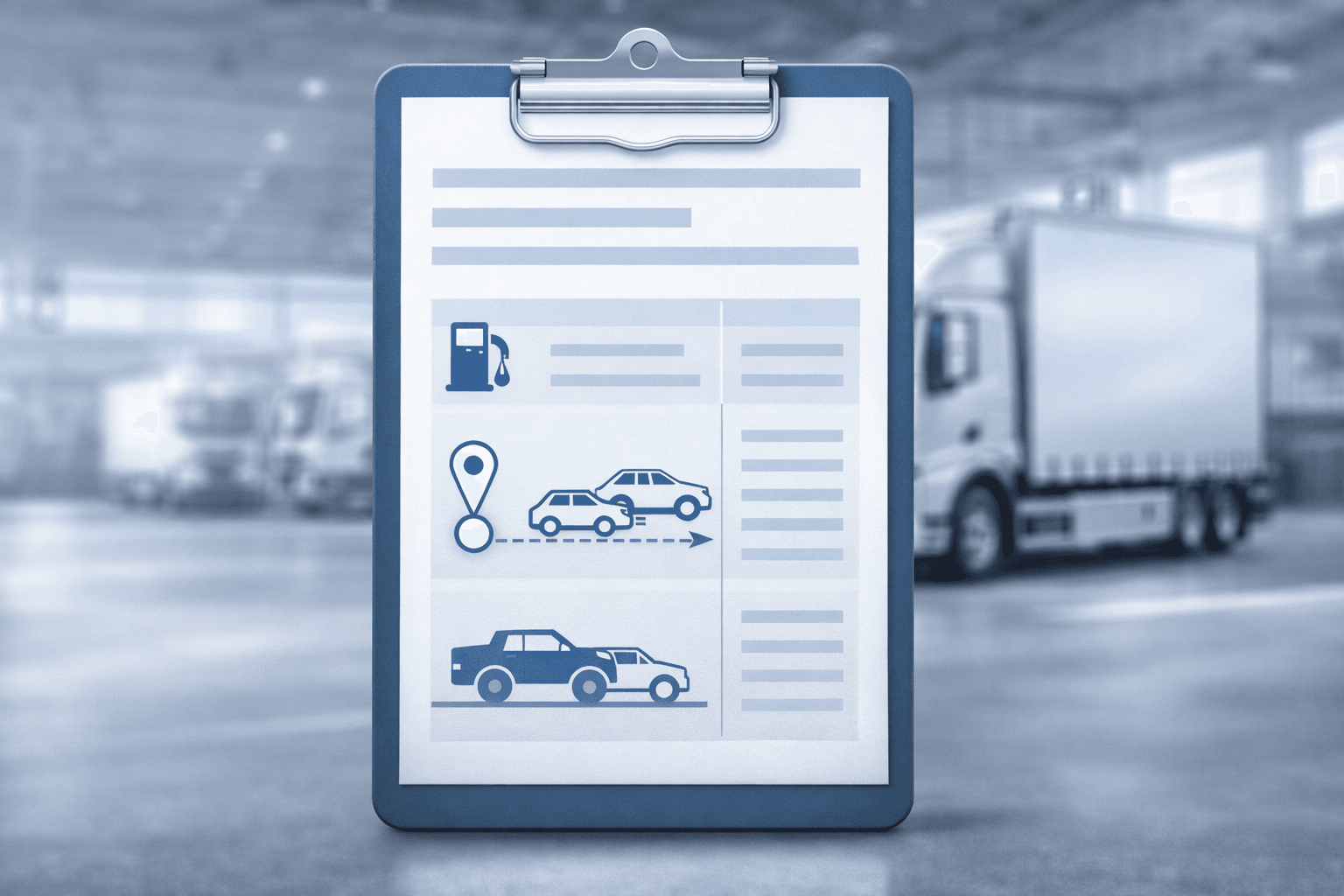
Distance is the most obvious factor, but your specific route demand and the time of year matter just as much. Large SUVs and trucks cost more to move than sedans because they add weight and occupy more trailer space.
-
Fuel Costs: Rapid changes in diesel prices often lead to fuel surcharges.
-
Carrier Type: Choosing an open carrier is the cheapest way to ship a car compared to enclosed options.
-
Route Geography: Picking up or dropping off in rural areas increases the price due to the extra miles a driver must travel off the main highway.
You should expect a two-part payment system. Most brokers require a deposit at the time of booking or once a carrier is assigned, with the remaining balance paid in cash or certified funds upon delivery.
Broker pricing is rarely "locked in" like a retail purchase. Since brokers do not own a fleet, they must negotiate with independent haulers who bid on your shipment.
Competitive bidding can save you money if your route is popular. However, it also brings the risk of last-minute price adjustments if no driver accepts the initial low quote.
Sonic may offer lower rates than large national fleets because they have more flexibility to find small, hungry owner-operators. Conversely, direct carriers often provide more predictable pricing because they control their own schedules and overhead.
Before you book, get a quote to see how current market trends affect your specific move. Understanding these hidden car shipping fees helps you avoid surprises when the driver arrives.
Delivery Speed Analysis: Is Sonic Auto Transport Actually Fast and Reliable?
When you book cross-country transport, you should expect a transit time of 7 to 10 days for distances over 2,500 miles. Sonic Auto Transport leverages a broker network to find drivers already moving along your specific route, which can sometimes shave a day off the industry average.
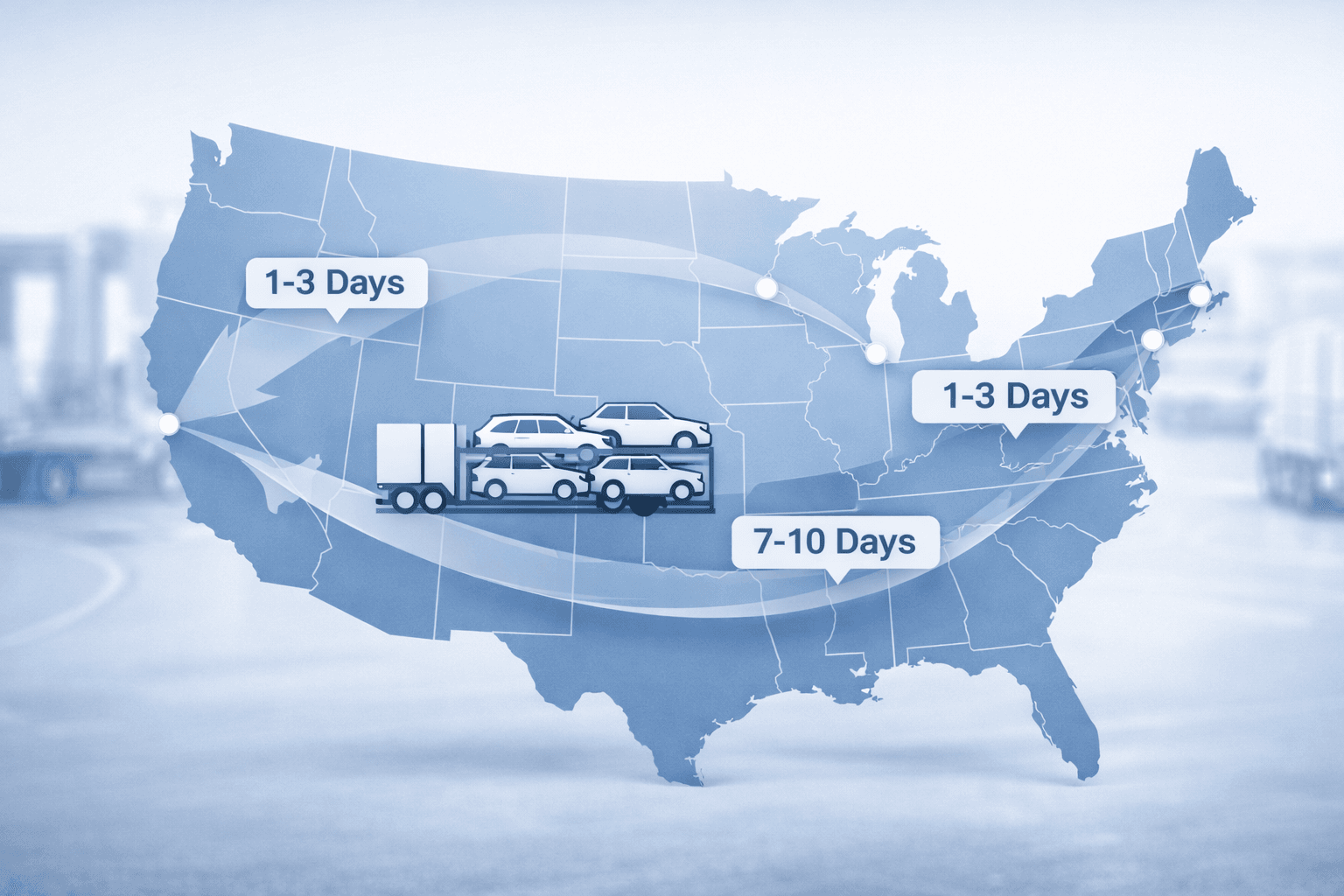
East Coast to West Coast moves are the most common long-haul requests. While the truck is in motion, drivers typically cover 400 to 500 miles per day, meaning a trip from New York to California usually lands in that 7 to 10-day window.
Regional shipments move much faster. If you are shipping a car between neighboring states or within a 500-mile radius, your vehicle will likely arrive within 1 to 3 days after pickup.
Standard service usually requires a 3 to 5-day window for a driver to arrive at your door. Shipping between major hubs like Los Angeles and Dallas is faster than shipping to rural or remote locations.
Expect slower turnaround times during the summer peak or when "snowbirds" move south for the winter.
Weather conditions and strict federal FMCSA hours-of-service regulations for drivers can also impact your delivery date. No company can legally bypass these safety rules, so beware of any "guaranteed" speed claims that sound too good to be true.
If you are in a rush, you can pay more for expedited shipping. This service prioritizes your vehicle for the next available trailer, often resulting in a pickup within 24 to 48 hours.
The Sonic Auto Transports speed is competitive with industry averages, but like any broker, they are at the mercy of carrier availability. To better understand these timelines, you can check our guide on car shipping time reasons to see what else might slow down your move.
Sonic Auto Transportation Customer Complaints (And How The Company Responds)
Reviewing customer feedback reveals a clear pattern for this California-based broker. Many users highlight a smooth booking process and praise specific agents for their responsive communication. You will often see mentions of "friendly service" and "professionalism" in five-star testimonials, particularly when the transport goes exactly as planned.
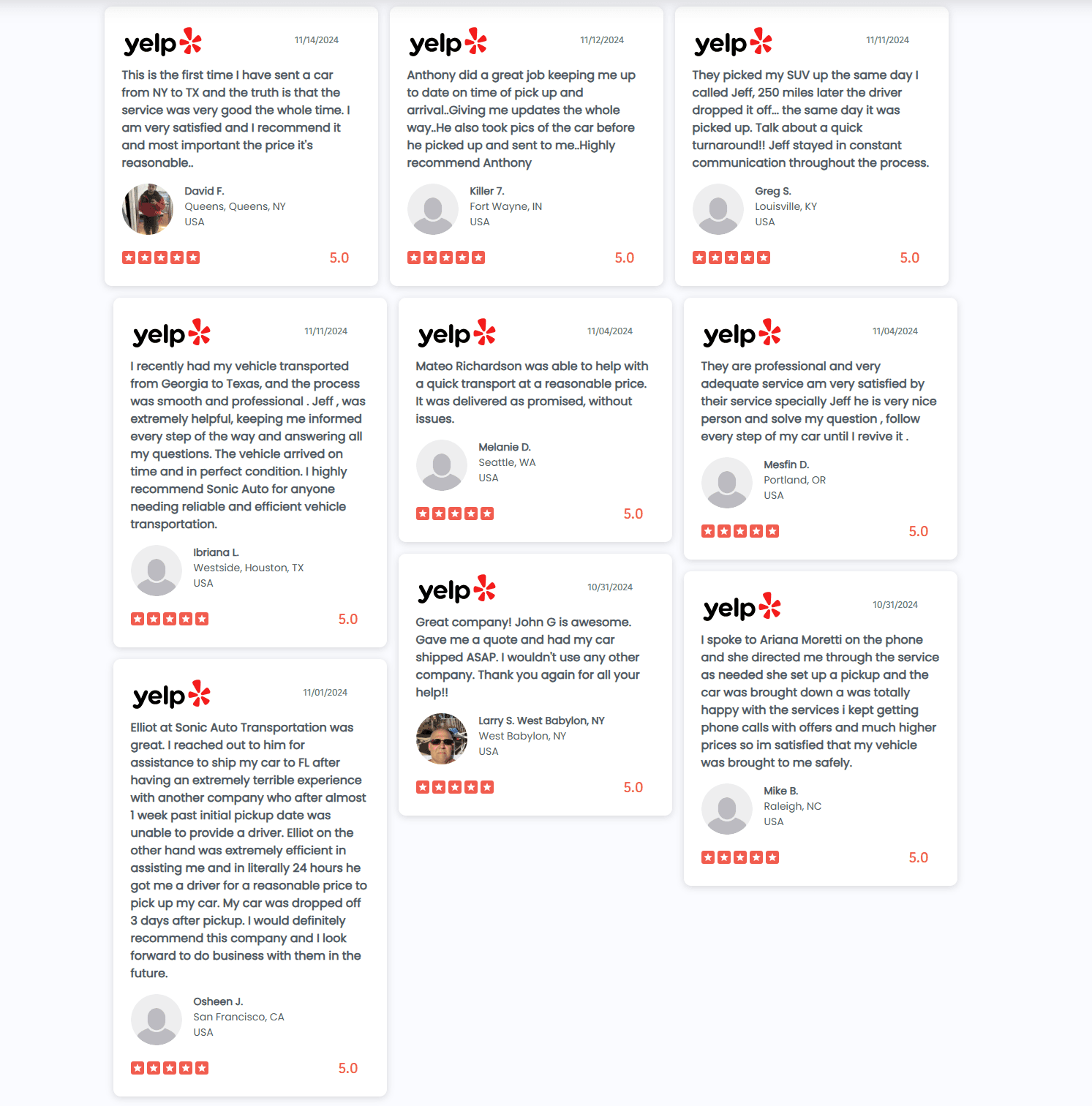
The most common positive themes include competitive initial pricing and a streamlined digital interface. Customers who are new to shipping often appreciate the hand-holding provided by agents during the carrier assignment phase.
-
Service Strengths: High marks for agent accessibility and clear explanations of the process.
-
Reliability: Frequent praise for vehicles arriving in the same condition they were picked up.
-
Pricing: Many find their quotes to be on the lower end of the market average.
However, across BBB filings, Trustpilot, and Google reviews, Sonic Auto Transportation complaints follow a small set of recurring patterns. None of them are unusual for a broker-model vehicle shipper. but their frequency and consistency are worth understanding before you commit a deposit.
Price Increases After Booking
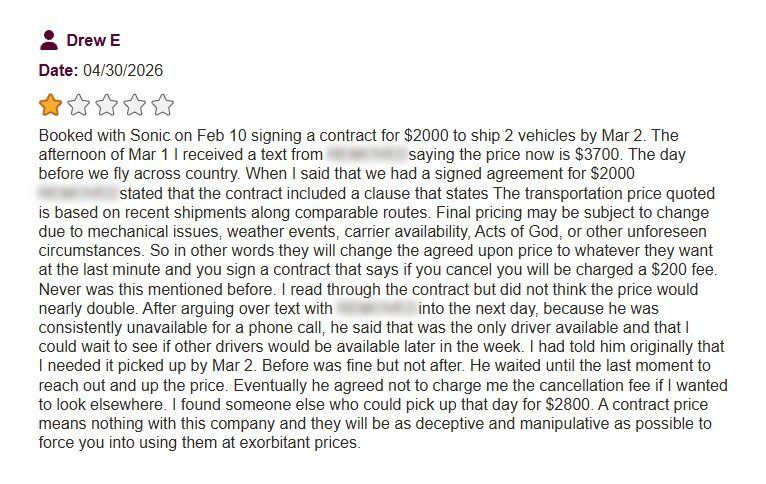
This is the most documented issue in Sonic Auto Transportation reviews. Multiple customers report quotes that rose significantly between signing and carrier assignment. One reviewer booked two vehicles for $2,000 and received notice the day before a cross-country move that the price had increased to $3,700. Another saw a quote jump from $640 to $1,125. Sonic's contract includes a clause noting that quoted prices may change due to carrier availability, route demand, or unforeseen circumstances, language that is standard across the broker industry but that customers report not fully registering at the time of signing. If a carrier won't accept the posted rate, the broker either raises the price or loses the booking. That's the structural reality of open-market carrier bidding.
Delayed Pickup And Carrier Assignment
Several reviewers report that originally scheduled pickup dates changed with little advance notice. Carrier availability on specific routes — particularly Florida-to-California and similar long-haul corridors can be thin, and driver shortages push timelines. A 3.5-star reviewer noted their quote rose from $1,000 to $1,900 on an FL-to-CA run due to driver shortage, but acknowledged the final price was still competitive against other companies and that delivery was on time.
Communication Gaps
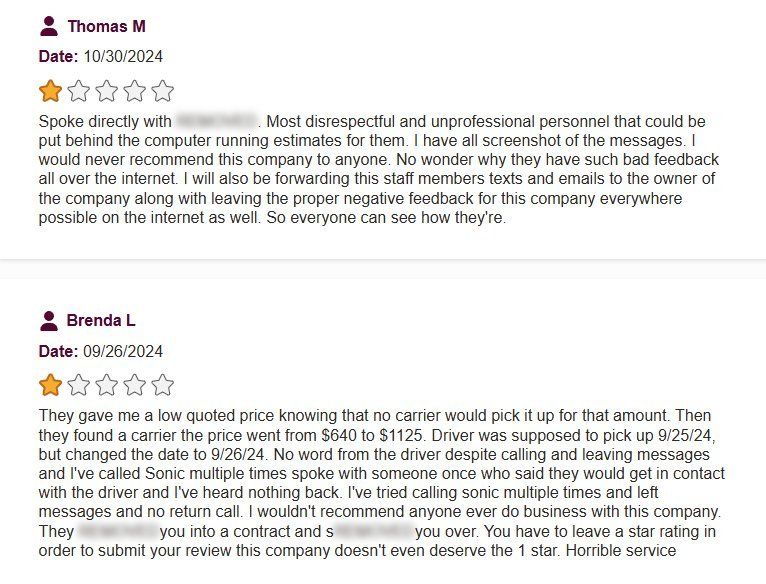
A recurring theme in lower-rated Sonic Auto Transport reviews is difficulty reaching agents once a shipment is in motion. Calls going to voicemail, delays in callback, and lack of proactive updates during transit appear across multiple platforms. This tends to reflect the brokerage model's inherent limits: once the carrier is assigned, Sonic's direct visibility into transit status depends on the driver's own communication habits.
How the Company Responds
Based on available BBB records, Sonic Auto Transportation responds to the majority of filed complaints. The BBB accreditation, earned in July 2023, requires a demonstrated commitment to resolving disputes in good faith. In at least one documented case, the company waived a cancellation fee when a customer chose to rebook elsewhere after a price dispute. That said, responses to complaints tend to point back to contract language rather than offer proactive resolution.
Who Should Use Sonic Auto Transport
Deciding on a shipping partner involves matching their strengths to your specific situation. This broker is a top choice for people who want to save money and have a few days of wiggle room in their calendar. Because they tap into a massive network, they can often find a spot on a truck that a single-fleet company might miss.
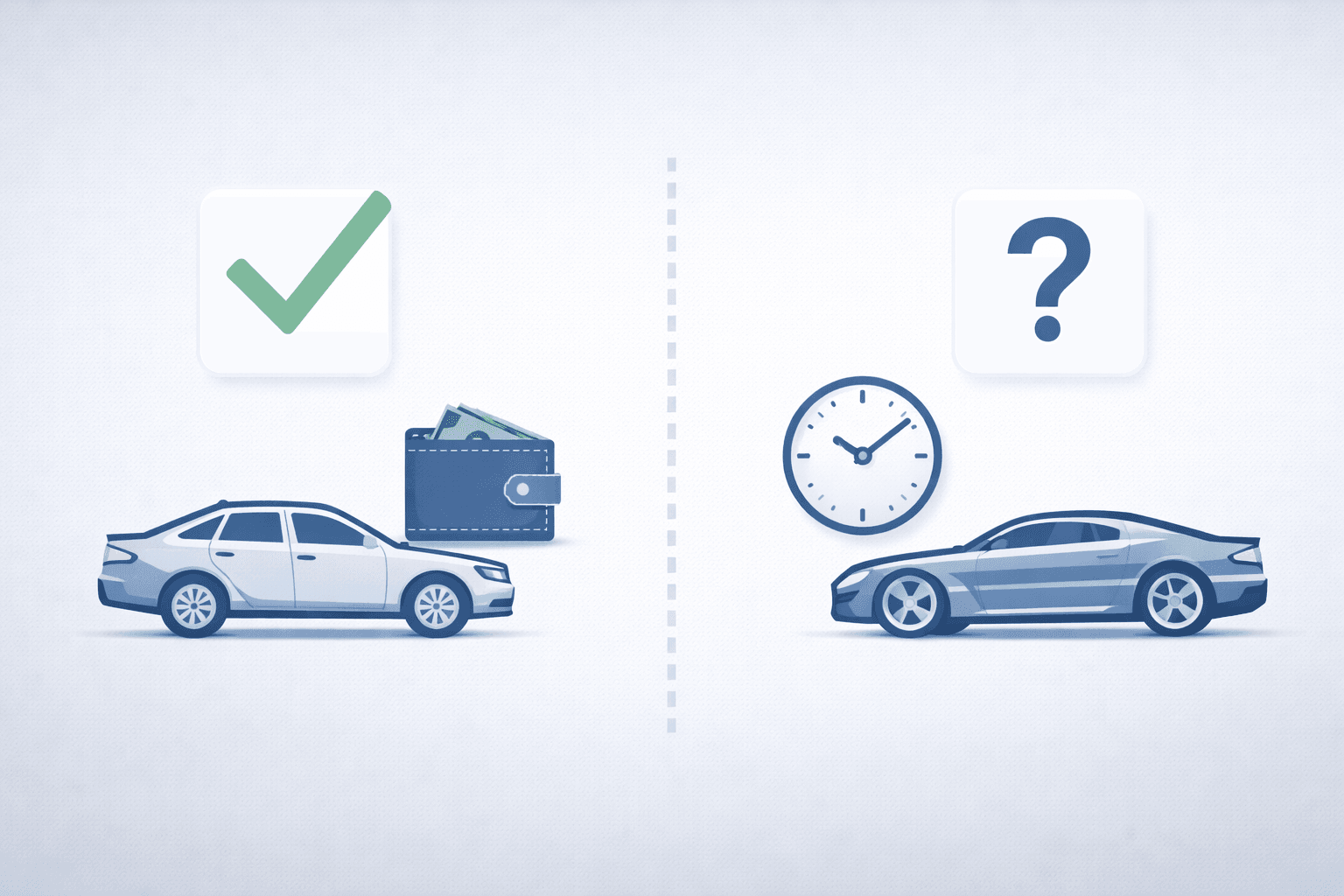
You should book with them if:
-
You are watching your wallet: If you want a competitive rate for a standard move, their bidding system works in your favor.
-
Your schedule is flexible: You have a window of 3 to 5 days for pickup and don't mind a slight shift in delivery.
-
You are moving a standard car: If you need open car shipping for a daily driver, their process is straightforward.
-
You are relocating long-distance: They specialize in state-to-state moves, making them a great resource for home relocation services.
You might want an alternative if:
-
Your deadline is non-negotiable: If you must have your car on a specific Tuesday at 2 PM, a broker's bidding process might be too unpredictable for you.
-
You own a "garage queen": For rare collectors or six-figure luxury cars, you may prefer a company that offers a guaranteed luxury car transport service with a fixed price.
-
You hate price shifts: If the idea of a carrier asking for an extra $100 to cover a route change stresses you out, look for a carrier with a flat-rate fleet.
Sonic serves everyone from dealerships to military families. They provide a vital bridge in the industry, but they work best when you understand that they are the coordinators, not the drivers. Before you sign anything, always check a DOT and an MC number for the actual truck coming to your house.
What Smart Shippers Still Want to Know
Before you book with any car shipping company, a few practical questions usually come up. Below are direct, no-nonsense answers to concerns many U.S. customers research before choosing Sonic.
Is Sonic Auto Transportation the same as Sonic Auto Transport?
Yes. Sonic Auto Transportation and Sonic Auto Transport are the same company, operating out of Costa Mesa, California under the legal entity Crystal Car Shipping Inc. The two names appear interchangeably across review platforms and search results, which is why both sonic auto transportation reviews and sonic auto transport reviews refer to the same business.
Is Sonic Auto Transportation legit?
Yes. Sonic Auto Transportation is a licensed auto transport broker registered with the FMCSA under USDOT number 3437626 and MC number 1115582. It holds active broker authority, maintains BBB accreditation, and has been in operation since 2020. Customers should review its B rating and complaint history before booking.
How do I ship a car with Sonic?
Request a quote online or by phone, then pay a deposit once a carrier is assigned. A driver is sourced from Sonic's carrier network and contacts you with a pickup window. The remaining balance is paid at delivery. Prices can change between the initial quote and carrier assignment if route demand shifts.
What's Sonic Auto Transportation's BBB rating?
Sonic Auto Transportation holds a B rating from the Better Business Bureau and has been BBB accredited since July 2023. The rating reflects 154 complaints filed during the reporting period. The BBB considers the company's complaint responsiveness when calculating the score.
Does Sonic Auto Transportation ship cars internationally?
Sonic Auto Transportation primarily handles domestic U.S. vehicle shipping. For Hawaii, they coordinate ocean freight as part of the route. For overseas destinations, confirm directly with their team whether they broker international shipments or whether you'll need a separate freight forwarder.
Is Sonic Auto Transport legit and registered with the FMCSA?
Yes. Sonic Auto Transport operates as a licensed broker and must comply with FMCSA regulations. You can verify registration status through the official FMCSA database for added peace of mind.
Does Sonic Auto Transport guarantee pickup and delivery dates?
No auto transport broker can legally guarantee exact dates. Sonic provides pickup windows and estimated delivery timeframes, but carrier availability, weather, and route demand can affect scheduling.
Can I ship a non-running vehicle with Sonic Auto Transport?
Yes, but you must disclose it upfront. Inoperable vehicles require specialized equipment, which increases cost and may extend carrier assignment time.
Does Sonic Auto Transport offer military or seasonal relocation discounts?
Discount availability varies. It’s best to ask directly during the quote process to confirm current promotions or relocation-specific pricing.
What happens if my car is damaged during shipping with Sonic Auto Transport?
Damage claims are handled through the carrier’s cargo insurance policy. Always document the vehicle’s condition on the Bill of Lading and take photos before and after delivery.
Is Sonic Auto Transport the Right Move?
Evaluating this broker requires balancing their high marks in customer service with the inherent volatility of the broker-carrier model.
Recapping their speed, Sonic generally aligns with industry standards, delivering most cross-country shipments within 7 to 10 days. Their reliability is bolstered by an active compliance standing; you can verify their credentials by searching their USDOT number 3437626 on the official FMCSA website.
Pricing transparency is where the experience can vary. While many customers enjoy rates about 8% lower than the market average, others report last-minute price hikes once a carrier is actually assigned.
-
Is it fast? Yes, their large network allows for competitive transit times, provided a carrier accepts the initial quote quickly.
-
Is it affordable? Generally, yes, but be prepared for the "broker gap"—the difference between an initial estimate and the final carrier's price.
-
Is it trustworthy? They are a bonded broker in good standing, though you must read the fine print regarding "non-guaranteed" quotes.
You should book with Sonic if you are a budget-conscious mover with a flexible window. They are particularly well-suited for standard and long-distance relocations where cost is the primary driver.
Before making a final decision, use the FMCSA Company Data portal to cross-reference any carrier Sonic assigns to your order. We also strongly recommend that you get a quote from at least two other providers to ensure you are getting the most transparent deal for your specific route.