



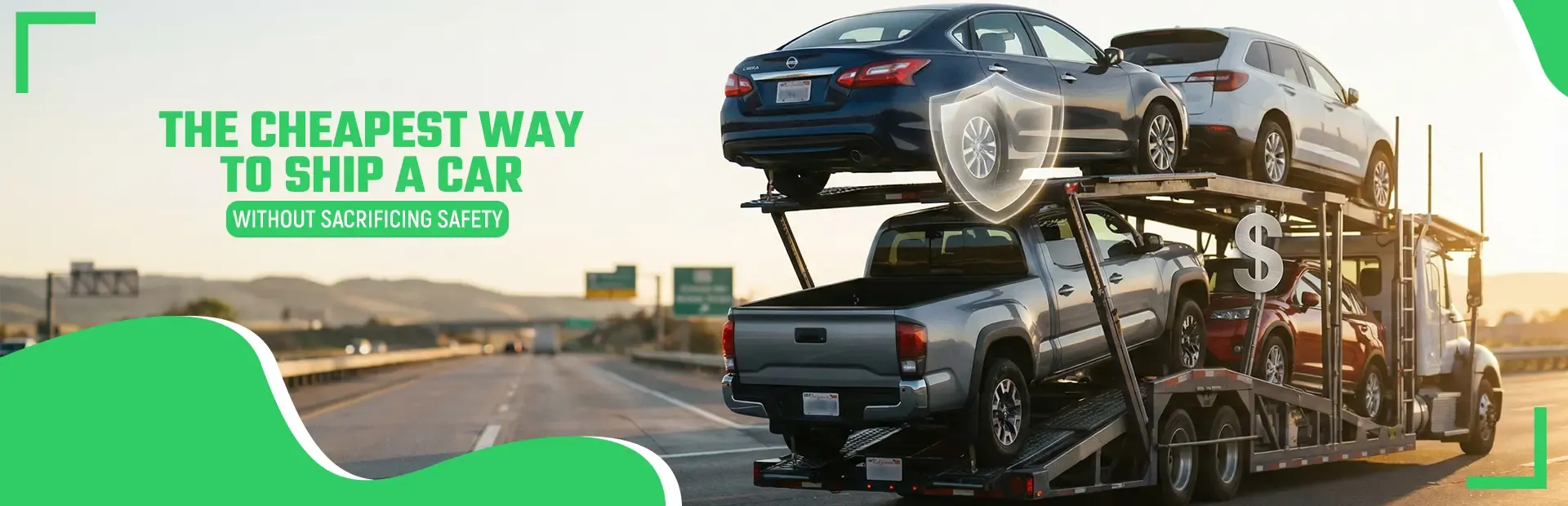
The cheapest way to ship a car without sacrificing safety is usually choosing open carrier cheap shipping and opting for terminal to terminal auto transport.
It's a huge myth that affordable car shipping means taking a risk. You don't have to give up security just to find a budget auto transport service. Actually, many top-rated companies offer great low cost car shipping options. For a lot of people, figuring out the cheapest way to ship car across country can feel like a stressful puzzle, especially when comparing quotes. The secret to finding genuinely car delivery cheap service involves knowing a few key moves. We're here to show you how to save money on car shipping by pointing out the smart choices, not the risky ones. You deserve a reliable, quality service that fits your budget.
Ready to see how much you can save on safe transport?Get your affordable car shipping quotes today and compare top-rated, budget auto transport carriers for your next move.
How Much Does It Really Cost to Ship a Car in the U.S.?
The total cost to ship a car changes a lot depending on a few key details. The national average is usually around $1,150, but your price could be anywhere from $400 to over $1,800. If you are looking for the cheapest way to ship a car, understanding these factors is your first step.
What factors affect car shipping prices?
- Distance and Delivery Route: Longer trips have a higher total cost, but the price per mile actually drops a lot. Shipping a car 500 miles might cost you $1.40 per mile, while a 2,500-mile cross-country trip could be closer to $0.60 per mile. This is why you need to know how to get cheapest car shipping quotes for your specific route.
- Type of Transport (Open vs. Enclosed): Open carrier cheap shipping is always the most budget-friendly choice. Enclosed shipping costs 30% to 50% more, as it offers premium protection.
- Vehicle Size and Weight: Bigger, heavier vehicles take up more space and fuel, so they cost more. Shipping an SUV is pricier than shipping a sedan.
- Pickup/Delivery Type: Choosing terminal to terminal auto transport often provides a discounted vehicle delivery rate because it saves the driver time compared to door-to-door service.
- Seasonality and Fuel Prices: Peak moving seasons, like summer and "snowbird" season (fall/spring), mean higher demand and higher rates. You can find truly cheap auto transport options in the winter off-season.
Average Car Shipping Costs by Distance
| Distance Range | Estimated Cost | Cost Per Mile |
| 0–500 miles | $400–$700 | $1.00–$1.40 |
| 500–1000 miles | $650–$950 | $0.80–$1.00 |
| 1000–2000 miles | $900–$1,300 | $0.60–$0.80 |
| 2000+ miles | $1,200–$1,800 | $0.50–$0.70 |
How do prices vary by route and location?
Prices vary a lot based on demand. Popular city-to-city routes, like shipping from Los Angeles to New York, usually have more carriers available, which creates competition and lowers the cost. Rural routes or less-traveled coastal routes cost more because carriers have to go out of their way, increasing fuel and time costs.
You need to look for economy car shipping USA options that follow a major interstate. This is your best shot at saving money on long distance car shipping. If you want to dive deeper into pricing, check out this guide on 5 factors that determine your car shipping quote.
What Is the Cheapest Way to Ship a Car Across the Country?
Relocating your vehicle nationwide doesn't have to decimate your budget. Discovering the cheapest way to ship a car across the country requires strategic planning, primarily leveraging open carrier auto transport and understanding the key differences between service types.
This comprehensive guide, specifically for the US market, breaks down the most affordable car shipping options, comparing terminal-to-terminal versus door-to-door services and providing essential tips to help you secure the lowest possible auto transport quote for your family sedan or SUV. Use this information to make an informed decision on your upcoming long-distance move.
Most Affordable Option for Car Shipping
The undisputed king of budget auto transport is the open carrier shipping method. This is the industry standard, favored by dealerships and manufacturers, making it the most accessible and cost-effective choice when your main priority is securing the lowest price for your long-distance vehicle transport.
How open carrier shipping works:
- The Setup: Your vehicle is loaded onto an open, multi-car trailer—the same kind you routinely see hauling cars on US interstate highways. These trailers typically have two decks and can transport between seven and ten vehicles at a time.
- The Process: Cars are secured to the trailer using chains or straps on the tires. Since the trailer is open, the loading and unloading process is quick and straightforward. The carrier driver will perform an inspection (Bill of Lading) with you at pickup and another at delivery to document your vehicle’s condition.
- The Efficiency: The high capacity of open carriers (up to 10 vehicles) is the main factor driving down the price. The fuel, labor, tolls, and maintenance costs for the truck are simply divided among more customers, achieving significant economies of scale.
Open carrier transport is a staple of cheap car shipping because it represents the most efficient use of a carrier’s resources. The trailers are lighter, less expensive to purchase and maintain than their enclosed counterparts, and are far more readily available.
This increased supply and operational efficiency translate directly into lower prices for you, the consumer. For the vast majority of standard, everyday vehicles, the level of protection offered is entirely adequate for a cross-country move.
| Pros of Open Car Shipping | Cons of Open Car Shipping |
| Lower Cost: Typically $300–$600 less than enclosed transport. | Exposure to Weather: Vehicle is fully exposed to rain, sun, snow, and ice. |
| Faster Scheduling: High availability means quicker pickup times. | Road Debris Risk: Minor risk of dust, dirt, or small rock chips. |
| Wide Availability: More carriers and routes are available nationwide. | Less Security: Visible to the public; not ideal for high-value items. |
Terminal-to-Terminal Vs. Door-to-Door
Beyond the carrier type, your choice of pickup and delivery service significantly impacts your overall car shipping quote. The trade-off is simple: maximum convenience costs more, while a bit of extra effort on your part can lead to a more affordable car shipping rate.
Terminal-to-terminal auto transport is a service where you drop your vehicle off at a designated, secure storage facility (the terminal) near your origin city, and you pick it up from a similar terminal near your destination city. These hubs are usually located in or near major metropolitan areas, often close to airports or shipping routes. The carrier is only responsible for the long-haul transport between the two terminals, eliminating the need for them to navigate residential streets.
Terminal-to-terminal shipping is consistently a more cost-effective car shipping option. While the exact discount varies by route and company, it’s common to see a price reduction of 5% to 15% compared to door-to-door service.
- Why it's cheaper: Carriers save time, fuel, and labor by avoiding detours and traffic in residential areas. They can quickly load and unload vehicles at a centralized hub.
- The Hidden Cost to Consider: Remember to factor in your own costs, such as gas, tolls, or rideshares, to get your car to and from the terminals. If the terminal is far from your home, the savings might be negligible.
| Service Type | Cost Implication | Convenience Level |
| Terminal-to-Terminal | Lower base price, often the cheapest car shipping method. | Requires drop-off and pickup logistics on your end. |
| Door-to-Door | Higher cost due to personalized service. | Highest convenience; carrier comes to your specified location. |
This service is perfect for customers who are prioritizing the absolute lowest price and have a flexible schedule.
- Students moving for the semester who have time before classes start.
- Long-distance moves where cost is the primary concern and proximity to a major metro area makes a terminal convenient.
- Flexible delivery windows where a few extra days in transit or waiting at the terminal won't cause an issue (just be aware of potential storage fees if you delay pickup).
Should you avoid enclosed transport if you’re on a budget?
For a budget-conscious consumer, enclosed auto transport should generally be avoided for an everyday vehicle. While it provides the highest level of protection, its significantly higher cost undermines the goal of securing the cheapest way to ship a car across the country.
The price difference is substantial because enclosed carriers are specialized equipment with limited capacity (typically 1–7 cars) and higher operational expenses.
- Open Transport: Represents the baseline, most affordable auto transport cost.
- Enclosed Transport: Expect to pay 40% to 60% more than the open carrier rate. For instance, if open transport costs $1,000, enclosed will likely be $1,400 to $1,600 or more.
This significant premium is for maximum protection—not a budget price.
If you are shipping a slightly nicer vehicle but can't justify the full enclosed price, there are a few options that offer a middle ground on auto transport cost:
- Shared Multi-Car Enclosures: These carriers, often called multi-car enclosed auto transport, are cheaper than a private, single-car enclosure (which is the most expensive). By sharing space with other vehicles, you get the protection for a lower cost per vehicle.
- Soft-Sided Enclosures: Some open carriers may use tarps or plastic sheeting to cover the sides, offering some protection from dust and dirt without the full weight and cost of a hard-sided trailer. Always verify the level of insurance and protection before booking.
While typically not considered cheap car shipping, enclosed transport is a necessary investment to protect assets. The extra cost is justified only for certain types of vehicles where the potential repair cost far outweighs the shipping premium.
| Vehicle Category | Why Enclosed is Recommended |
| Luxury Vehicles | Brands like Bentley, Ferrari, or high-end models, where a paint chip drastically reduces value. |
| Vintage or Classic Cars | Irreplaceable vehicles where weather or debris exposure could cause significant damage. |
| Delicate Vehicles | Custom-painted, modified, or low-clearance vehicles that require a hydraulic liftgate (not a ramp) for safe loading. |
For most vehicles, open transport is the best balance of cost and safety. To learn more about selecting the right level of coverage, check out our article on Understanding auto transport insurance. For further details on national carrier safety records, visit the Federal Motor Carrier Safety Administration (FMCSA) website.
Ready to secure the cheapest way to ship a car across the country? Get your free, no-obligation auto transport quote today and lock in the best rate for your open carrier, terminal-to-terminal shipment. Don't wait—prices can fluctuate!
How Can You Save Money on Car Shipping Without Compromising Safety?
Planning a cross-country move or vehicle purchase? Discover essential strategies to secure budget auto transport and reduce your overall car shipping cost across the USA.
Learn the secrets to finding the cheapest car shipping quotes online, leveraging seasonality, and choosing smarter logistics like economy car shipping USA options, all while maintaining a safe and reliable vehicle transport experience.
Book During Off-Peak or Slower Seasons
Timing your vehicle's shipment is one of the most powerful tools in controlling your overall car shipping cost. The auto transport industry operates on the basic principle of supply and demand, which fluctuates dramatically with the calendar. By shipping during off-peak times, you align your needs with periods of lower demand, giving you the upper hand in negotiations for a better rate.
The greatest opportunities for budget auto transport and securing the cheapest car shipping quotes online typically fall into two main windows:
- Winter Slowdown (January–March): Right after the busy holiday season, carrier demand plummets. Many "snowbirds" (people moving south for winter) have already completed their transit, and fewer people are moving nationally. This period often presents the lowest rates of the year, although you must be prepared for potential minor, weather-related delays on northern routes.
- Late Fall (September–November): Once the back-to-school rush and summer vacation traffic subside, the market softens considerably. This sweet spot offers a beneficial combination of lower prices and generally mild weather nationwide, minimizing the chance of major delays compared to deep winter.
| Season | Typical Demand | Average Price Trend | Key Consideration |
| Summer (Peak) | Highest | Up to 30% higher | Book 3-4 weeks out for the best spot |
| Fall (Off-Peak) | Low to Moderate | Lower / Balanced | Ideal for better rates and weather |
| Winter (Low Peak) | Lowest (excluding holidays) | Lowest | Potential for weather delays |
Summer (June-August) and major holidays (like Christmas, New Year's, and Thanksgiving) are considered peak season, leading directly to inflated rates. The surge in demand is driven by several key factors:
- Family Relocations: Summer is the most popular time for families to move while children are out of school, dramatically increasing the number of vehicles needing transport.
- College/Military Moves: Students and military personnel (PCS moves) are often moving to and from new locations, creating pockets of high demand on certain routes.
- Carrier Availability: Many drivers take time off around major holidays, reducing the overall capacity of available trucks precisely when demand is at its highest.
Planning your move outside of these high-demand times is the single most effective way to realize significant savings on your long-distance car shipping needs.
Compare Quotes from Multiple Budget Auto Transport Carriers
Securing a great deal on car transport services hinges on smart comparison shopping. The price for moving a vehicle across the country can vary wildly between companies and brokers, even for the same route and service type. Do not accept the first quote you receive; a little legwork here can save you hundreds on your budget auto transport budget.
To maximize your savings, you need a streamlined, apples-to-apples comparison process.
- Use a Simple Online Tool: Start with a few reputable online quote calculators. Enter your vehicle details (make, model, year) and the exact pickup/delivery locations (zip codes).
- Specify Open Transport: Unless you own a classic or luxury vehicle, requesting quotes for standard open auto transport is the most cost-effective solution and should be your default choice to get a baseline economy car shipping USA price.
- Be Consistent: Ensure you provide identical information—same dates, same vehicle condition (running or non-running), and same method (e.g., terminal-to-terminal)—to every carrier. Inconsistent information will result in misleading quotes.
In the auto transport industry, quotes can differ significantly based on a carrier's current route optimization and available truck space. We strongly recommend gathering and reviewing quotes from at least three to five different, well-rated companies. This high-volume comparison will help you identify the true market rate for your route and easily filter out any suspiciously low offers, which are often a red flag for unreliable service.
The single biggest pitfall in finding cheap vehicle shipping is the bait-and-switch quote. A low initial price might hide mandatory extra costs. Before you commit, thoroughly examine the terms:
| Cost Factor | What to Verify Before Booking |
| Deposit/Upfront Fee | Is it a small, non-refundable dispatch fee, or a large, non-refundable deposit? |
| Total Price | Is the price guaranteed/binding, or a non-binding estimate that could change? |
| Insurance Coverage | What is the total liability coverage? Does it cover the full replacement value of your specific vehicle? |
| Hidden Fees | Are there separate fees for fuel surcharges, road tolls, or operational status (if non-running)? |
Always get a complete, itemized breakdown in writing. Ready to start saving? Contact us to get a transparent, binding quote for your next long-distance car shipping service and see how our rates compare!
Choose Flexible Pickup and Delivery Dates
In the highly dynamic world of vehicle transport, a fixed date is a costly constraint. Trucking logistics depend on maximizing the efficiency of every mile, which means consolidating loads and minimizing empty travel time. When you offer a carrier a window of flexibility, you make it significantly easier for them to fit your vehicle into an already optimized route, and they reward this convenience with a lower price.
Think of the carrier's truck as a jigsaw puzzle. A rigid pickup date of "Monday at 9:00 AM" forces the carrier to schedule their entire route around that one small window. This often results in a less efficient journey, potentially leaving truck space unfilled for miles. Conversely, providing a flexible 3- to 5-day window for pickup allows the carrier's dispatcher to:
- Combine Loads: Group your car with other vehicles traveling a similar route, filling the truck more efficiently.
- Optimize Routes: Adjust the pickup order to minimize out-of-the-way detours, saving fuel and time.
- Reduce Deadhead Miles: Minimize the distance a truck drives without a full load, which directly lowers the operational cost of the trip.
This reduction in logistical cost for the carrier is then passed on to you as a lower car shipping cost.
When carriers offer economy car shipping USA or budget auto transport options, they are often relying on a flexible schedule to make the logistics work. This is particularly effective for cross-country routes where volume allows for easier consolidation.
- Long-Distance Savings: The longer the distance, the more critical this flexibility becomes, as it allows for greater route optimization potential.
- Lower Priority, Lower Price: You essentially agree to let your vehicle be a "filler" load. While this means you might wait a few extra days for pickup compared to an expedited, premium service, the trade-off is a significantly cheaper rate.
Opt for Terminal-to-Terminal or Shared Carrier Routes
When prioritizing the lowest possible car shipping cost, sacrificing some convenience is a necessary trade-off. The most budget-friendly vehicle transport options are those that minimize the carrier’s time, fuel, and labor costs associated with residential drop-offs. Opting for terminal-to-terminal service or securing a spot on a shared carrier route can unlock substantial savings.
The concept of a shared carrier route—which is essentially any open auto transport—is fundamental to securing a low car shipping quote.
- Cost Spreading: An open carrier transporting 7 to 10 vehicles is distributing the total operational cost (fuel, labor, tolls) across all customers on board. This makes open auto transport substantially cheaper than dedicated services like enclosed auto transport.
- Terminal Efficiency: With terminal-to-terminal shipping, the carrier drives to a central drop-off/pickup hub in a major metro area. This saves the driver the significant time and hassle of navigating congested, narrow residential streets and cul-de-sacs often encountered with door-to-door delivery. This efficiency translates directly into a more favorable budget auto transport rate.
Many budget auto transport carriers and brokers specialize in high-volume, shared-haul logistics. They are masters of consolidation, constantly seeking to fill every available spot on their trucks.
- Terminal Benefits: While door-to-door is the most convenient, terminal-to-terminal is generally $100–$200 cheaper because it eliminates the carrier's "last mile" travel risk and time commitment. However, you must factor in the cost and time of getting your vehicle to and from the terminal yourself. Our article on Terminal-to-Terminal vs. Door-to-Door Car Shipping offers a detailed breakdown.
- Negotiation Leverage: If you are flexible on your timing and route and willing to use a major terminal near your location, you hold strong leverage. Always ask the company if they offer a shared-haul discount or a reduced rate for using their primary terminal locations.
Choosing these cost-effective methods, especially when paired with open car shipping, is the definition of economy car shipping USA. It allows us to keep our trucks full and our prices competitive, ensuring you get the most value for your dollar without compromising the security of your vehicle while on the road. For more information on safely storing your car before transport, visit the U.S. Department of Transportation website regarding carrier safety and licensing.
What Are the Safest Cheap Auto Transport Options?
As the complexity of modern logistics allows for greater customization, the common concern shifts from simply finding a service to identifying the safest cheap auto transport options without compromising security. Balancing budget constraints with reliable transit for your vehicle requires understanding the most cost-effective yet dependable methods in the U.S.
The industry-standard choice that offers both affordability and extensive availability is Open Auto Transport.
- This method is approximately 30-60% cheaper than enclosed shipping because carriers can haul more vehicles, optimizing fuel and space costs.
- While your car is exposed to road elements, it is statistically a very safe method, which is why it's the primary choice for new car dealerships.
- For standard sedans, SUVs, and everyday-use vehicles, open transport provides a pragmatic balance of low car shipping costs and proven reliability.
To further reduce expenses and maintain safety, consider:
| Cost-Saving Tactic | Safety Implication |
| Terminal-to-Terminal Shipping | Less convenient but more affordable, your vehicle is stored securely at a dedicated terminal while awaiting transit. |
| Flexible Dates | Scheduling during off-peak seasons or with a wider window often lowers the price, giving the carrier more time to arrange optimal, safe routing. |
Always prioritize a fully licensed and insured auto transport company—checking their USDOT credentials. The lowest quote is not worth the risk of an uninsured carrier.
When Is the Best Time to Book Cheap Car Transport?
Having established the numerous advantages of utilizing professional auto transport services, the natural next step for budget-conscious consumers is determining the optimal time to secure a favorable rate. Strategically timing your booking can lead to substantial savings on your final car shipping cost.
To lock in cheap car transport, remember that pricing is highly susceptible to the ebb and flow of industry demand.
- Advance Booking: Plan to secure your reservation at least 2-4 weeks before your intended first available shipping date. This lead time provides brokers and carriers like ours with the flexibility required to group your vehicle with others efficiently, minimizing the need for expedited shipping premiums.
- The Seasonal Sweet Spot: The most affordable months to ship your car are generally during the late fall and winter—specifically January and February, once the "Snowbird" rush has passed. Conversely, the peak moving season of summer (May through August) sees the highest rates.
- Flexibility is Fiscally Responsible: Offering your carrier a wider, flexible pickup window (e.g., a three-to-five-day span) significantly increases the likelihood of getting a lower rate, as it allows the truck driver to optimize their route. To further explore the factors impacting your quote, please see our detailed guide on car shipping cost.
By booking during an off-peak month and allowing a flexible schedule, you are positioned to get the best deal for your vehicle transport needs.
Common Concerns About Vehicle Relocation
Our goal is to ensure a smooth, transparent process from the moment you request a quote for your auto transport service to the final vehicle delivery. Here are the answers to the most frequent inquiries from our customers.
What is the cheapest way to ship a car cross country for a regular sedan?
The most budget-friendly option is open car transport on a standard multi-car carrier. Combining this with flexible dates and a terminal-to-terminal service, if available, offers the lowest possible shipping cars cost.
What documents do I need to ship a car in the USA if I am the owner?
For domestic vehicle transport, you only need to provide the keys and sign the Bill of Lading (BOL), which acts as the contract and vehicle condition report. No title or registration is required.
How long does it actually take to ship a car from state to state?
For an average cross-country route (coast-to-coast), transit time is typically 7 to 10 days. Shorter regional moves can take as little as 1 to 3 days, depending on route demand and the carrier's schedule.
Do I have to be present for vehicle pickup and delivery, or can I designate a friend?
You or a designated representative (age 18+) must be present for both pickup and delivery. This is essential to inspect the vehicle and sign the Bill of Lading, protecting both you and the car transport company.
How much gas should I leave in my car for transport on an open carrier?
You should ensure your car's fuel tank is no more than one-quarter full. This is a safety requirement for transport and helps prevent the carrier from exceeding the strict federal weight limits on the truck.
What is the difference between open and enclosed auto transport service?
Open auto transport is cheaper and faster, as your vehicle rides on an open-air trailer. Enclosed auto transport is more expensive but provides full protection from weather and road debris for classic or luxury vehicles.
Is my personal property covered by the auto transport company’s cargo insurance?
No. Federal regulations prohibit the carrier from transporting household goods and any personal items left inside the car are not covered by their cargo insurance. Please remove all belongings before shipment.
The Road Ahead: Secure Your Vehicle Relocation
Choosing a trustworthy auto transport service is essential for a smooth move. By opting for a professional carrier, you save yourself the stress, time, and hidden costs of a long road trip, while protecting your vehicle from unnecessary wear and tear.
Whether you need a low-cost, open carrier or the full protection of enclosed auto transport for your high-value car, we provide reliable, insured, door-to-door service across the US. We handle all the logistics so you can focus on settling into your new home. Trust the experts for a secure delivery.Ready to start your stress-free car shipping journey? Get A Quote today.