


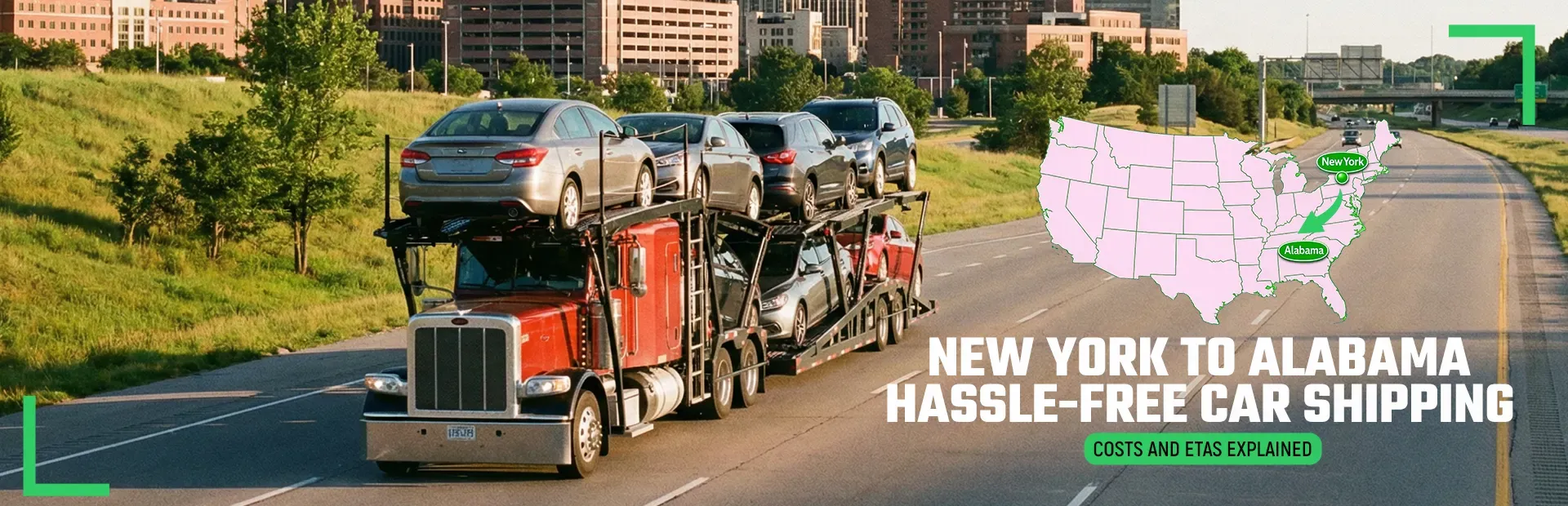
Top 5 Tips for Hassle-Free New York to Alabama Car Shipping: Costs and ETAs Explained

Top 5 Tips for Hassle-Free New York to Alabama Car Shipping: Costs and ETAs Explained

Transportvibe
December 09, 2025
22 min read

Seamlessly navigating the process of New York to Alabama car shipping starts with expert planning. 

Whether you're moving for a career opportunity, a new adventure, or simply to get your vehicle to its new home, finding a reliable car shipping company at a reasonable car shipping cost is paramount. 

This guide is your ultimate resource for simplifying the logistics of shipping a car cross-country. We’ll break down the essentials, offer pro tips for getting the best car shipping quotes, and help you avoid common pitfalls. Our goal is to empower you with the knowledge to make an informed decision for your vehicle's journey, from preparation to delivery.

Ready to start your hassle-free car transport? Explore Transportvibe services and get a free car shipping quote now!

Understanding the Basics of New York to Alabama Car Shipping

Before you start searching for a car shipping company, it's vital to have a clear picture of the two most critical factors: cost and time. This section will provide an extensive overview of what you can expect for both, helping you set realistic expectations for your car transport journey.

The average distance for this popular auto transport route is approximately 1,000 to 1,200 miles, depending on your specific pickup and drop-off locations. For example, the distance from New York City, NY, to Birmingham, AL, is around 962 miles, while a trip to Mobile, AL, from NYC is closer to 1,196 miles. This distance, along with other key variables, directly impacts your final car shipping quotes.

What is the Average Cost?

The average cost to New York to Alabama car shipping generally falls between $950 and $1,700 for a standard sedan on an open transport car shipping carrier. This price range is an estimate and can fluctuate based on several factors. Shipping a larger vehicle like an SUV or truck will cost more, typically between $1,200 and $2,100, because it takes up more space and adds more weight to the transport truck.

Key factors that influence the car shipping cost include:

  • Distance: The mileage between the pickup and delivery points is a primary cost driver.
  • Vehicle Size & Weight: Larger, heavier vehicles require more space and fuel, increasing the price.
  • Transport Type: Choosing an Understanding the Basics of New York to Alabama Car Shipping.
  • Time of Year (Seasonal Demand): Prices are often higher during peak moving seasons, such as summer and the end of the year, due to increased demand for auto transport services.
  • Fuel Prices: Fluctuations in diesel fuel costs directly impact a carrier's operating expenses, which can be reflected in your auto transport quote.
  • Location: Shipping to and from major metropolitan areas is typically cheaper than to and from rural or hard-to-reach places.

Here is a table with estimated costs and times for popular routes between New York and Alabama car shipping:

Route (From NY to AL) Estimated Cost (Open Transport) Estimated Transit Time
New York City, NY to Birmingham, AL $984 - $1,704 2 - 7 days
New York City, NY to Mobile, AL $1,121 - $1,754 2 - 8 days
New York City, NY to Huntsville, AL $1,037 - $1,689 2 - 7 days
New York City, NY to Montgomery, AL $998 - $1,712 2 - 8 days

What is the Estimated Time of Arrival (ETA)?

The estimated transit time for New York to Alabama car shipping is typically 2 to 8 days. The exact delivery time depends on the total mileage, the driver's route, and potential delays. Car carriers generally travel an average of 500 miles per day, but this can vary.

Factors that can affect the ETA include:

  • Route and Distance: The longer the distance, the more time the trip will take.
  • Weather and Road Conditions: Unforeseen events like winter storms or heavy traffic can cause delays.
  • Carrier Schedule: The driver may have other pickups and drop-offs along the route, which can affect the schedule.
  • Service Type: Expedited shipping is available for a premium fee if you need your vehicle delivered faster.

When you receive a car shipping estimate, the transit time provided is usually a range. It's important to understand that the driver will be traveling along a dedicated car shipping route and may not be able to provide an exact arrival time until they are closer to the destination. Open communication with your car transport company or auto transport broker is essential for a smooth delivery.

Top 5 Tips To Ease Your Car Shipping Journey From New York to Alabama

Whether you're relocating for work, moving to a new home, or simply need to transport a vehicle for a family member, the journey of New York to Alabama car shipping can seem daunting. This in-depth guide is designed to provide you with five essential, expanded tips that cover every stage of the process. 

We will dive deep into understanding car shipping costs, finding and vetting the most reliable car shipping company, and executing a smooth and stress-free auto transport experience. By the time you're finished reading, you'll have a clear roadmap for a successful long-distance move.

Tip 1: Know Your Costs—Understanding the Factors Beyond Open vs. Enclosed Car Shipping

When you begin your search for a car shipping quote, the first and most fundamental decision you'll face is the type of carrier. This choice dramatically impacts your final car shipping cost and the level of protection your vehicle receives. However, many other factors contribute to the total price, and understanding them is key to avoiding surprises.

  • Open Transport: Open car shipping most popular and budget-friendly option for cross country car shipping. Your vehicle is secured on a multi-car trailer, similar to the ones you see delivering new cars to dealerships. This method is highly efficient, as carriers can transport multiple vehicles at once, which keeps the price low. It's an excellent choice for standard, everyday sedans, SUVs, and trucks. While the cars are exposed to the elements and potential road debris, statistically, damage is rare. The trade-off for the competitive pricing is the minimal risk of a rock chip or road grime, which can typically be washed off at the destination..
  • Enclosed Transport: Enclosed car shipping is more of a premium service that provides a fully covered trailer, offering the highest level of security and protection. Your vehicle is completely shielded from weather, dirt, and road debris, making it the ideal choice for luxury, classic, vintage, or high-value vehicles. This can also be a good choice for new vehicles that you want to keep in pristine condition. This added protection comes at a higher car shipping cost, often 50% to 75% more than open transport. The price is higher because enclosed carriers typically hold fewer vehicles and are a more specialized service.

For more on this, check out our blog post on open vs enclosed carrier types. 

Beyond the carrier type, several other variables heavily influence your auto transport quote. These include:

  • Vehicle Size and Weight: A larger or heavier vehicle, such as an oversized truck or a large SUV, will take up more space and weigh down the carrier more than a compact car. This requires more fuel and logistical planning, thus increasing the price. Be sure to provide the exact make, model, and year for the most accurate estimate.
  • Distance and Route: The journey from New York to Alabama is approximately 1,000 to 1,200 miles, depending on the specific cities. A longer distance naturally leads to a higher total cost, though the price per mile often decreases on longer routes. Shipments between major metropolitan areas (like New York City to Birmingham) are typically best for fast and cheap car shipping than shipments to rural, less-trafficked locations.
  • Time of Year: The season plays a significant role. Summer is the busiest season for moving, which drives up demand and, consequently, prices. Winter can also be more expensive due to hazardous weather conditions (e.g., snow and ice in New York) that can delay transport. Spring and fall are often considered the most stable seasons for pricing.
  • Vehicle Condition: If your vehicle is inoperable (meaning it can’t be driven, steered, or braked), it will require special equipment like a winch to get it on and off the trailer. This adds labor and time, resulting in an additional fee.

Tip 2: Master the Art of Getting Accurate Car Shipping Quotes

The best way to avoid hidden fees and unexpected charges is to be a well-informed consumer from the very beginning. Getting accurate and transparent car shipping quotes is an art, not a simple task. Here is a detailed guide to getting the most precise car shipping estimates possible:

  • Provide a Comprehensive Information Packet: Your quote is only as good as the information you provide. Be prepared to give your vehicle's make, model, year, and its specific condition (operable or inoperable). Mention any modifications, such as oversized tires, a spoiler, or a roof rack, as these can affect the space your vehicle occupies on the trailer. You must also provide the exact pickup and delivery addresses. Providing a zip code is a good start, but the specific address helps carriers determine if a large truck can safely and legally access your home. If a residential street is too narrow, a carrier may require you to meet at a nearby, accessible location.
  • Compare Multiple Quotes from Reputable Sources: Never settle for the first quote you receive. Requesting estimates from at least three to five reputable car shipping companies is an industry best practice. This allows you to not only compare pricing but also to evaluate the communication style, responsiveness, and overall service of each company. Use this process to identify market averages and be wary of quotes that are significantly lower than others, as this can be a red flag for hidden fees.
  • Understand the Fine Print and What's Included: When you receive a shipping quote, look beyond the total price. Clarify whether the quote is binding or non-binding. A binding quote is a firm price, while a non-binding one is an estimate that can change. Ask for a detailed, itemized breakdown of all fees. Some common fees to look out for include:
    • Fuel Surcharges: Due to volatile gas prices, some companies add a surcharge that may not be included in the initial quote.
    • Rural Location Fees: As mentioned, if your pickup or delivery location is in a remote area, an additional fee may apply.
    • Seasonal Surcharges: Some companies may add a fee during peak seasons like summer.
    • Expedited Service Fees: If you need a faster delivery timeline, a premium will be charged.
    • Insurance Coverage: Ensure you understand the level of insurance provided. Most companies provide a certain amount of coverage, but you may need to purchase additional, more comprehensive coverage for higher-value vehicles.

Tip 3: Finding and Vetting the Best Car Shipping Companies

Choosing the right car shipping company is the single most critical step in ensuring a stress-free experience. A reliable and trustworthy partner is the key. When looking for a trusted auto transport company, look for these key indicators:

  • Check Licensing and Insurance (The FMCSA SAFER System): A legitimate company will be registered with the Federal Motor Carrier Safety Administration (FMCSA). You can use the FMCSA's SAFER system to verify their credentials. This is a powerful, free tool. Simply enter the company's USDOT number or MC number to access their "Company Snapshot." This snapshot provides valuable data, including their operating status, safety ratings, crash history, and most importantly, their insurance and licensing status. Look for an "Active" operating status and make sure their insurance coverage is current. If a company is a broker, the SAFER system will also show that information.
  • Read Customer Reviews and Complaints: While a company's website will only show positive testimonials, independent review sites like the Better Business Bureau (BBB) and Google Reviews offer a more balanced perspective. Look for genuine feedback from recent customers. Pay attention to how companies respond to both positive and negative reviews. A company that actively engages with and resolves customer complaints is a strong indicator of good customer service and accountability in the vehicle shipping industry. Be cautious of companies with an overwhelming number of negative car shipping reviews or a consistent pattern of complaints about hidden fees or damaged vehicles.
  • Distinguish Between a Broker and a Carrier: This is a crucial distinction that affects your expectations.
    • A Carrier is the company that physically transports your car on their own truck. When you work directly with a carrier, you have direct contact with the person handling your vehicle.
    • A Broker is a company that acts as an intermediary. They do not own the trucks but instead arrange the transport for you by finding a carrier from their network. Brokers are great for finding a competitive price and handling the logistics, but your direct contact will be with the broker, not the driver. Both can be good options, but understanding the difference will help you set realistic expectations for communication and pricing. You can read more about this on our services page.

Tip 4: The Essential Pre-Shipping Checklist

Proper preparation is a simple way to prevent damage and delays. Following this detailed checklist for your car transport from New York to Alabama will save you headaches down the road.

  • Clean Your Car Thoroughly: A clean car is essential for a proper inspection. A clean exterior makes it easier for you and the driver to spot any pre-existing scratches, dents, or damage. A clean interior allows you to confirm that all personal items have been removed.
  • Document Your Vehicle's Condition: Before the driver arrives, take high-quality, time-stamped photos and videos of your car from every angle—the exterior, the roof, the undercarriage, and the interior. Focus on any existing scratches or blemishes. This photographic evidence is your best defense in the unlikely event of a dispute over new damage. Record the current mileage and the fuel level.
  • Remove All Personal Belongings: This is a critical step. Most auto transport carriers prohibit shipping personal items due to insurance regulations and federal laws. The carrier's insurance does not cover any personal items in the car. Remove all valuables, loose objects, and anything from the trunk, as these can shift during transit and cause damage. An exception is often made for a single box of non-valuable items, but you should always confirm this with the company beforehand.
  • Check Fluids and Tire Pressure: Ensure your car is in good working order. Check the fluid levels (oil, coolant, brake fluid), make sure the battery is fully charged, and inflate the tires to the correct pressure. Keeping your gas tank no more than one-quarter full can help reduce the vehicle's overall weight, which in turn can lower the cost of the car shipping journey.
  • Secure Loose Parts and Disable the Alarm: Fold in side mirrors, remove aftermarket antennas, and secure any other loose accessories like roof racks. For convertible cars, ensure the top is securely latched. Disable your car alarm to prevent it from going off during transit, which can be an annoyance for the driver and other vehicles. If you use an electronic toll pass, remove it from the car to avoid being charged for the truck's tolls.
  • Make an Extra Set of Keys: Provide the driver with a single set of keys to the vehicle. It's a good idea to have a spare set for yourself, just in case.

Tip 5: What to Do on the Day of Pickup and Delivery

The day of pickup and delivery are the final, critical steps of the vehicle shipping process. Being prepared for these two events is essential.

  • The Bill of Lading (BOL): Your Most Important Document: At pickup, you and the driver will perform a joint inspection of the car. The driver will have a document called a Bill of Lading (BOL), which serves as a detailed inspection report and a receipt. You must carefully inspect the car with the driver and ensure any existing scratches, dents, or imperfections are clearly noted on the BOL. Once you both agree, you will sign it. This signed BOL is your record of the vehicle's condition before transport. For an in-depth look at what this document entails, refer to this guide on the Bill of Lading.
  • Expect a Flexible Timeline: Car transport drivers have to manage multiple pickups and drop-offs along their route. This means they often operate on a window of time (e.g., a 4-hour window) for pickup and delivery, not an exact hour. Maintain open communication with your driver and be flexible with your schedule. Most companies will provide you with the driver's contact information so you can coordinate directly.
  • Prepare Your Locations: Ensure both the pickup and delivery locations are easily accessible for a large, heavy car carrier. This means a wide street with no low-hanging branches, power lines, or tight turns. If a residential street is too narrow or inaccessible, you may need to arrange to meet the driver at a nearby large parking lot, such as a shopping center or a public lot, for the car delivery.
  • Post-Delivery Inspection and Payment: Upon delivery, you must perform another thorough inspection of the vehicle before signing the final BOL and paying the driver. Use your pre-shipping photos and videos to compare the car's condition. If you find new damage, it is absolutely critical that you note it on the BOL and take new, clear, dated photos of the damage. This is the only way to file a successful insurance claim. The remaining payment for the transport is typically due at this time, often in cash or a certified check.
  • Filing a Claim (If Necessary): If you discover new damage and have noted it on the BOL, contact the shipping company immediately to begin the claims process. The carrier is typically responsible for damage that occurred while the vehicle was in their care. You will need to provide the BOL, your pre-shipping photos, and the new photos of the damage. Obtain a repair estimate from a reputable body shop to support your claim.

What to Do After Your Car Arrives in Alabama

Once your vehicle shipping journey is complete and your car is safely in your driveway, you're not quite done. There are a few final, but crucial, steps to ensure your transition to Alabama is seamless.

1. Perform a Detailed Post-Delivery Inspection (Again)

Your on-the-spot inspection with the driver is the most important step for a potential insurance claim, but you should also do a more detailed check once the driver has left. Take the car for a short test drive to check for any new mechanical issues or unusual noises. Check all the fluid levels once again to ensure they haven't changed. This is also a good time to make sure any accessories you left on the vehicle, like the spare tire or tools, are still present and accounted for. While it's highly unlikely you'll find new issues that weren't obvious at the initial car delivery, this final check provides peace of mind.

2. Clean and Wash the Car

After a long journey from New York, your car will almost certainly be covered in road grime, dust, and other debris, especially if you opted for open transport. A thorough wash and vacuum will not only restore its shine but also give you one last opportunity to do a final inspection for any subtle cosmetic issues that might have been missed in the rush of the auto transport delivery.

3. Handle Paperwork and Final Payments

You've already signed the Bill of Lading (BOL) and made your final payment to the driver, but you should now file all your documentation in a safe place. Keep the BOL, your pre-shipping photos, and a copy of the company's contract with you. This is your comprehensive record of the entire car shipping process. Having this paperwork organized and accessible is crucial for your personal records, especially if you have to pursue a claim.

4. Update Your Auto Insurance and Vehicle Registration

Since you've moved to a new state, you'll need to update your auto insurance and vehicle registration. Contact your insurance company to update your policy with your new Alabama address. You should do this as soon as possible after your car arrives to ensure you're fully covered. Next, visit your local Alabama DMV or license office to register your vehicle in the state. This process typically requires your title, proof of insurance, and an updated driver's license. The DMV website can provide a full list of required documents to make this step a breeze.

Ready to Begin Your Car Shipping Journey?

The process of shipping a car can seem complex, but with the right information and a trusted partner, it can be a smooth and stress-free experience. If you're ready to get started, you can get an instant, no-obligation car shipping quote to see how affordable auto transport can be for you. Get a free instant Car Shipping Quote.

The "What Ifs": Handling Delays, Damages, and Other Issues

Even with a perfect plan and a reputable car shipping company, unexpected issues can sometimes arise. Knowing how to react to these "what if" scenarios is key to a stress-free vehicle shipping experience.

What If My Car is Delayed?

Delays in auto transport are common and are often caused by factors outside of the carrier's control. Severe weather, road closures, or even truck mechanical issues can all affect the delivery timeline.

  • Communicate, Don't Panic: Your first step should always be to contact your car shipping company or the driver directly. They should be able to provide you with an updated estimated time of arrival (ETA).
  • Track Your Vehicle: If available, take advantage of the company's tracking service. This can help you monitor your vehicle's progress and stay informed.
  • Plan Ahead: As noted in our previous tips, it’s best to maintain a flexible schedule for both pickup and car delivery. If a delay occurs, having a backup plan (like arranging for a friend to meet the truck) can be a lifesaver.

What If My Car is Damaged During Transport?

This is a very rare occurrence, but if it happens, you need to be prepared. This is where your diligent pre-shipping documentation becomes invaluable.

  • Document EVERYTHING on the Bill of Lading (BOL): As outlined in Tip 5, the most crucial step is to note any new damage on the BOL before you sign it. Be specific, clear, and take photos right away. Without this documentation, it is almost impossible to file a successful claim.
  • Do Not Sign a "Clean" BOL: Never sign a BOL that states the vehicle has no new damage if you have found any. This is your only official record of the car’s condition upon delivery.
  • File an Insurance Claim Immediately: Once you have signed the BOL with the damages noted, contact your car shipping company immediately to start the claims process. You’ll need to provide your signed BOL and the photos you took. For a more detailed look at the claims process, this guide from the FMCSA provides a great overview of your rights.

Customer Queries On New York to Alabama Car Shipping

Here are some commonly asked questions and answers on shipping car quote from New York to Alabama on costs, timing, and process for a smooth transport.

How can I get a reliable car shipping quote from New York to Alabama without hidden fees?

Provide detailed vehicle information and exact addresses to multiple companies. Always ask if the quote is binding and get a breakdown of potential fees, like fuel or rural surcharges.

What's the difference between a car shipping broker and a carrier and which should I choose?

A broker finds a carrier from their network to transport your car. A carrier directly transports your vehicle. The best choice depends on your budget and communication preference.

What should I do if my vehicle is not running and needs to be shipped?

You must tell the company if your vehicle is inoperable. Non-running cars require special equipment, like a winch, which adds a fee to the cost. Not disclosing this upfront can cause delays and extra charges.

Is it safe to leave personal items inside my car during long-distance auto transport?

It's best to remove all personal belongings as they are not covered by the carrier's insurance. They can also shift during transit and cause interior damage.

How can I track my car delivery status from New York to Alabama?

Most companies offer a tracking service or provide the driver's contact info. Call them for updates on your car's location and estimated arrival time.

What is a Bill of Lading and why is it so important for my car shipping?

The Bill of Lading (BOL) is a vital document that records your car's condition at pickup and delivery. It's your only official proof for filing a successful insurance claim.

Start Your Seamless Auto Transport Journey

Transporting a vehicle from a bustling metropolis like New York to the heart of Alabama might seem like a headache, but it doesn't have to be! 

At Transportvibe, we're dedicated to making your car shipping from New York to Alabama journey easy and stress-free. The key to a successful car shipment is arming yourself with the necessary information to navigate each step with confidence.

By mastering these crucial aspects, you can manage the entire operation with confidence, minimizing stress and ensuring your vehicle arrives safely. Ready to get started? Get a Quote from Transportvibe!

Related articles

DEC 10, 2025
9 Smart Ways to Save on Cost-Effective RV Transport Services & Boat Shipping

9 Smart Ways to Save on Cost-Effective RV Transport Services & Boat Shipping

TRANSPORTVIBE

It’s no secret that finding reliable RV transport services and understanding the final boat shipping cost can be stressful. Did you know that with a few simple steps, you can save hundreds or even thousands on large vehicle transport? Many people overpay for oversized vehicle transport because they're not aware of how pricing works. This guide reveals nine smart, cost-effective solutions for shipping RVs and boats, helping you find affordable RV transport and get the best deal. We'll show you how to find cheap RV shipping options and compare boat transport companies so you feel confident in your choice. Ready to find the best rates for your oversized vehicle? Discover the cost of shipping a boat or RV with a free, no-obligation quote today. Understanding the Basics of RV & Boat Transport The first step to finding a cost-effective solution is knowing what you're dealing with. RV transport services , regulated by federal bodies like the FMCSA , are different from boat shipping in key ways. RVs are exclusively hauled on land, often using specialized trailers or a "drive-away" service. This type of large vehicle transport is a straightforward, land-based operation. Boat shipping, on the other hand, can be more complex, sometimes requiring both land and sea legs. This multi-modal approach is a major factor in the final boat shipping cost. When it comes to the actual move, you have options. For RVs, you can choose open or enclosed vehicle transport. Open carriers are the most common and affordable. For more protection, an enclosed transportation is best. Boats are hauled on special trailers, but very large vessels may need to be transported by water, a specialized form of yacht and boat shipping . Here are key factors that impact the price and give you a better idea of how much it costs to ship a boat or RV: Distance: The longer the trip, the higher the cost to ship a boat or RV. Size & Weight: A larger oversized vehicle transport naturally requires more resources. Transport Type: Open transport is a great cheap RV shipping option compared to enclosed. Seasonality: Rates change with the seasons. It's often cheaper to ship during the off-season. Read more about seasonal car shipping tips . Pickup/Delivery Location: Shipping to and from major cities is less expensive than to remote areas. Vehicle Condition: A non-running vehicle may have a higher rate due to the need for a winch or special equipment. Understanding these basic differences and cost factors is the first step toward finding affordable RV transport and securing a great deal on your RV and boat shipping needs. Hidden Costs You Should Know About While a quote provides a starting number, a few factors can silently increase your final boat shipping cost. Understanding these hidden fees is key to finding a truly affordable RV transport service. Fuel surcharges and tolls are common variables. Fuel prices can change daily, so many companies add a surcharge to account for this. Similarly, tolls along the route can add up, especially on a long-distance oversized vehicle transport. You can learn more about how gas prices affect shipping costs . Another important factor is insurance. The carrier's insurance may have limits, leaving you with coverage gaps. For example, they might not cover personal belongings inside the vehicle or minor cosmetic damage. It’s smart to ask specific questions about what is and isn't covered by their policy. Your personal car insurance might offer some protection, but it's a good idea to check if your auto transport is covered by insurance . Finally, RV and boat shipping costs fluctuate with the seasons. During peak travel times, demand for RV transport services increases. This rise in demand can drive up prices, even for the same route and vehicle. This is one of the most unpredictable variables for large vehicle transport. By keeping these factors in mind, you can ask the right questions and avoid surprises. This helps you get the best possible transport experience. 9 Smart Ways to Save on RV & Boat Shipping Finding cost-effective solutions for shipping RVs and boats doesn't have to be a guessing game. By understanding the ins and outs of large vehicle transport, you can significantly reduce your RV transport services and boat shipping cost. These smart strategies help you secure affordable RV transport and discover cheap RV shipping options, ensuring you get the best deal on oversized vehicle transport. 1. Book Early to Lock in Better Rates One of the simplest yet most effective ways to save on your RV and boat shipping is to plan ahead. Booking your RV transport services or boat shipping cost well in advance gives you access to better rates and more flexibility. When demand is lower, companies are more likely to offer competitive pricing to fill their schedules. Last-minute bookings, especially for large vehicle transport, often come with premium charges due as carriers have less time to optimize their routes and schedules. Think of it like booking a flight – the closer to the departure date, the higher the price. Aim to book at least 2-4 weeks out for standard moves. For peak seasons or unusual routes, give yourself even more time, perhaps 4-6 weeks. This proactive approach allows boat transport companies and RV hauling services to plan more efficiently, which translates into savings for you. Early booking also gives you ample time to compare different providers and find the best fit for your oversized vehicle transport needs without feeling rushed. This strategy is crucial for anyone looking for cost-effective solutions for shipping RVs and boats. 2. Choose the Right Transport Method Selecting the appropriate transport method directly impacts your boat shipping cost and overall RV transport services expense. For RV and boat shipping, you generally have a few options, each with its own price point. For RVs, open car shipping is usually the most economical. Your RV will be transported on an open trailer, exposed to the elements, much like how new cars are delivered to dealerships. If you need more protection from road debris and weather, enclosed vehicle shipping is available, but it comes at a higher price. This is often preferred for luxury or classic RVs, where the added protection justifies the increased large vehicle transport cost. For boats, you might choose between trailer transport over land or, for very large vessels, potentially water transport. Land transport is typically more common and often a more affordable RV transport option for many boats. Consider the value of your vessel and the distance it needs to travel when making this decision. The goal is to balance protection with budget, ensuring your oversized vehicle transport is handled safely without overspending. 3. Compare Multiple Transport Companies Never settle for the first quote you receive, especially when dealing with RV transport services or calculating boat shipping cost. The market for large vehicle transport is competitive, with many boat transport companies and RV hauling services vying for your business. To find cost-effective solutions for shipping RVs and boats, it's essential to gather quotes from several different providers. Use platforms like Transportvibe to compare ratings, reviews, and pricing easily. Each company uses its own pricing model, and factors like their current route schedule, available equipment, and driver availability can all influence your quote. Some companies might specialize in certain types of oversized vehicle transport, offering better deals on RV and boat shipping specifically. When comparing, ensure you are looking at apples-to-apples quotes. Verify that all fees, insurance coverage, and services are included. This due diligence can uncover significant savings and help you identify the most affordable RV transport option. This comparison process is key to understanding "how much does it cost to ship a boat or RV" accurately and ensuring you're getting a fair price. 4. Be Flexible with Pickup and Delivery Dates Flexibility is a powerful tool when trying to lower your RV transport services and boat shipping cost. Carriers often have specific routes they run and prefer to fill their trailers as efficiently as possible. If you can be flexible with your pickup and delivery dates, you give the large vehicle transport company more leeway to fit your RV and boat shipping into an existing, optimized route. Being able to offer a window of a few days for pickup or delivery, rather than a single specific date, can result in a more favorable oversized vehicle transport rate. Less urgent shipments are often cheaper because they allow carriers to consolidate loads and reduce dead mileage. This strategy aligns well with finding cheap RV shipping options and generally affordable RV transport. Always discuss your flexibility with the transport company when requesting a quote. They may offer a lower rate for a wider pickup window. This approach can be particularly beneficial for non-time-sensitive moves, helping you save money without compromising the quality of your RV hauling services. 5. Optimize Pickup & Drop-off Locations The specific locations for pickup and drop-off can significantly impact your boat shipping cost and overall RV transport services expense. Shipping to or from major metropolitan areas or accessible transport hubs is generally more cost-effective than requesting service in remote or hard-to-reach locations. Carriers prefer to stick to main routes and easily accessible areas. Deviating from these routes for oversized vehicle transport adds extra mileage, time, and fuel, all of which get passed on to you. If possible, consider meeting the carrier at a mutually convenient, easily accessible location near a major highway or city. This could be a large parking lot or a truck stop. By optimizing your pickup and drop-off points, you can reduce the logistical challenges for the large vehicle transport company, which in turn reduces your overall RV and boat shipping expenses. This strategy is a practical way to find cost-effective solutions for shipping RVs and boats and makes your shipment more attractive to carriers looking for efficient routes. 6. Prepare Your Vehicle Properly to Avoid Extra Charges Proper preparation of your RV or boat is crucial for avoiding unexpected fees and ensuring a smooth RV transport services experience. Before your oversized vehicle transport, make sure to follow the carrier's guidelines closely. This might include: Emptying personal belongings: Most carriers do not insure personal items left inside an RV. Remove anything valuable or fragile. Securing loose parts: For boats, this means securing covers, removing antennas, and ensuring all hatches are latched. For RVs, lock all compartments, secure awnings, and check for any loose exterior items. Disconnecting utilities: Turn off propane tanks, disconnect batteries, and drain water tanks (freshwater, gray water, black water) to reduce weight and prevent freezing in colder climates. Checking fluid levels: Ensure there's enough fuel to move the vehicle on and off the trailer, but don't fill the tank completely, as this adds unnecessary weight. Documentation: Have all necessary paperwork ready, including registration and proof of ownership. Failing to properly prepare your vehicle can lead to delays, additional labor charges, or even refusal of service, increasing your boat shipping cost or RV hauling services expense. Taking these steps is a simple way to contribute to cost-effective solutions for shipping RVs and boats. 7. Take Advantage of Seasonal Discounts The timing of your RV and boat shipping can significantly influence the final boat shipping cost or RV transport services expense. Demand for large vehicle transport often fluctuates with the seasons, creating opportunities for savings during off-peak times. Generally, late fall and winter (excluding major holidays) tend to be slower periods for oversized vehicle transport. Snowbirds often move their RVs and boats south in the fall and north in the spring, making those seasons peak times. If your schedule allows, consider shipping during the quieter months. This is when boat transport companies and RV hauling services might offer discounts or more competitive rates to keep their fleets busy. For example, if you're not in a rush, shipping your RV in January instead of October could result in cheap RV shipping options. Always inquire about seasonal pricing variations when getting quotes. Being strategic with your timing is an excellent way to find affordable RV transport and take advantage of market dynamics. This is a smart approach for anyone looking for cost-effective solutions for shipping RVs and boats. 8. Bundle Services if You’re Shipping Multiple Vehicles If you need to move more than just one oversized vehicle transport item, bundling your shipping needs can lead to substantial savings. Many RV transport services and boat transport companies offer discounts when you book multiple large vehicle transport units at once. This could include shipping both your RV and a boat, or even multiple boats or RVs if you're a car shop dealer or have a collection . From a carrier's perspective, loading multiple items from the same customer or location is more efficient. It reduces their pickup and drop-off time, streamlines logistics, and makes their route more profitable. Because of this increased efficiency, they are often willing to pass some of those savings on to you in the form of a discounted overall RV and boat shipping rate. When requesting quotes, clearly state that you have multiple items for large vehicle transport. Ask about any multi-vehicle discounts or special pricing available. This strategy is particularly effective for businesses or individuals with diverse RV hauling services needs, significantly lowering the total boat shipping cost or RV transport services expense. 9. Verify Insurance to Avoid Hidden Expenses Understanding the insurance coverage for your RV and boat shipping is paramount to avoiding significant hidden expenses later on. While reputable RV transport services and boat transport companies carry insurance, the specifics of that coverage can vary widely. It’s crucial to know exactly what is covered and what is not before your oversized vehicle transport begins. Ask for proof of insurance and review the policy details. Pay close attention to: Coverage limits: Is the declared value of your RV or boat fully covered? Deductibles: What amount are you responsible for in case of a claim? Types of damage covered: Does it include minor cosmetic damage, or only major structural issues? Exclusions: Are there any circumstances under which your vehicle wouldn't be covered? For example, some policies exclude personal items inside the vehicle. Consider whether you need supplemental insurance, perhaps from your own marine or RV insurance policy, to cover any gaps. Never assume full coverage. Clarifying these points beforehand prevents disputes and unexpected costs if damage occurs. This proactive approach ensures your large vehicle transport is protected, giving you peace of mind and protecting your investment from unforeseen boat shipping cost additions. You can learn more about what's covered and what's not in car shipping insurance in the USA . Red Flags to Avoid When Choosing a Transport Company Choosing a company for your RV and boat shipping requires careful attention. Not all RV hauling services or boat transport companies are created equal. Watch out for these red flags to protect your oversized vehicle transport from a bad experience. Unrealistically Low Quotes: If a quote seems too good to be true, it likely is. Shady companies often offer an extremely low initial large vehicle transport price, then add hidden fees or raise the cost at the last minute. Always get multiple quotes to spot these tactics. Lack of Proper Licensing: A reputable company will have the necessary licenses and insurance. Before booking, ask for their credentials. This ensures they are a legitimate operation. You can find licensed and reviewed boat transport companies and more on our site. Poor Customer Reviews: The experiences of past customers are a powerful indicator. Read online reviews carefully on sites like ours to see if other people had issues with communication, delays, or hidden fees. We provide detailed reviews for companies . Avoiding these pitfalls is a crucial step in securing a stress-free large vehicle transport experience. Common Queries on RV & Boat Shipping Getting a great deal on your oversized vehicle transport is just one part of the journey. Many people have questions about the process itself. Here are some of the most common things people ask about RV and boat shipping. How much does it cost to ship a boat or RV? The boat shipping cost can vary widely based on several factors, like the size of the vehicle, the distance, and the transport method. The best way to get an accurate number is to get a free quote with a few key details about your shipment. Is RV and boat shipping explained step by step? Yes. The process begins with getting a quote and booking your shipment. Then, you prepare your vehicle for transport. The carrier picks it up and delivers it to the destination. Finally, you inspect your vehicle and sign the bill of lading to complete the job. What's the process for shipping a non-running RV or boat? Shipping a vehicle that doesn’t run requires a specialized carrier with a winch to pull it onto the trailer. It may also need to be a flatbed. Always mention that your vehicle is non-running when you get a quote, as it can add to the final RV transport services cost due to the extra equipment and labor needed. How long does RV and boat shipping take? Transit times depend mostly on distance. A cross-country trip can take anywhere from 7 to 14 days. Shorter trips might only take a few days. Factors like traffic, weather, and the driver's schedule can all affect the delivery time. Are there different types of boat transport companies? Yes. The industry is made up of carriers who own and operate their own trucks and brokers who coordinate shipments for you by finding a carrier in their network. Both can be a good choice, but it’s important to understand the difference when you book. You can read more about Do I need any special paperwork to ship my RV or boat? For domestic transport within the USA, you usually only need proof of ownership, such as the vehicle title or registration. A copy of your driver’s license is also standard. The carrier will provide a bill of lading, which serves as a receipt and condition report for the vehicle. What is the best time of year for affordable oversized vehicle transport? The cheapest time to ship is typically during the off-season. Demand for RV hauling services and boat transport companies is lower in late fall or winter, which can result in more competitive rates and better availability for your shipment. Your Next Steps to Smart RV & Boat Transport Finding cost-effective solutions for shipping RVs and boats is a matter of knowing the right strategies. By applying these nine tips, you can take control of your RV transport services and avoid overpaying for the final boat shipping cost. Remember, finding affordable RV transport is about more than just the lowest number. It’s about vetting companies and making smart choices that lead to a smooth experience. A little planning goes a long way to ensure your large vehicle transport is handled safely and within your budget. By understanding how to find cheap RV shipping options and what to look for, you can feel confident in your decision. Ready to find the best rates for your oversized vehicle? Find out how much it costs to ship a boat or RV with a free, no-obligation quote today.

DEC 09, 2025
5 Hidden Car Shipping Fees to Watch Out for When Booking a Car Transport Service

5 Hidden Car Shipping Fees to Watch Out for When Booking a Car Transport Service

TRANSPORTVIBE

Why did your car shipping fees just jump by 30%? It's a question thousands of customers ask every year when faced with unexpected costs. While getting an affordable auto transport service might seem like the goal, the reality is that many quotes are designed to hide significant charges. From last-minute fuel surcharges to a surprise fee for a non-running car, auto transport hidden charges can turn a great deal into a costly mistake. Our guide will help you spot these surprise costs when shipping a car and ensure you're getting true car shipping price transparency. Don't get caught off guard—learn what to watch for and how to protect your budget. Ready to find a transport service that is transparent and reliable? Explore our comprehensive directory of reviewed companies today! What Are Hidden Fees & Why Do They Exist? Hidden fees in auto transport are additional, often unexpected, auto transport charges that are not included in the initial quote you receive. They can dramatically increase your final bill, turning a seemingly great deal into a costly surprise. These fees exist for several reasons, stemming from a combination of complex logistics, fluctuating market conditions, and, unfortunately, deceptive business practices. The root of these fees often lies in the desire of some companies to offer an enticingly low initial car shipping fee to get you to commit. They capitalize on the fact that most customers don’t fully grasp the numerous variables influencing car transport pricing. Here's a breakdown of the primary reasons these hidden car shipping fees are so prevalent: Logistical Complexity and Unforeseen Variables Unlike shipping a small package, moving a car is a large-scale logistical operation. Factors that are difficult to predict upfront can impact the cost. These include: Route Challenges: The carrier's route can be affected by weather conditions, road closures, or traffic. A detour or a delay might be necessary, and some companies pass these costs on to the customer. Vehicle-Specific Needs: A standard quote assumes a standard vehicle. If your car is oversized, has a lift kit, or is a classic with low ground clearance, it may require special equipment or a different type of carrier. Failure to disclose this upfront can lead to a surprise charge at the time of pickup. Market Fluctuations and Seasonal Demand The auto transport industry is a real-time market driven by supply and demand. Fuel Surcharges: The cost of diesel fuel is a significant operational expense for carriers. When fuel prices spike, a company may add a sudden fuel surcharge, a common source of unexpected car shipping costs. Seasonal Pricing: As demand increases during peak moving seasons (e.g., summer, holidays, or "snowbird" season), car shipping fees naturally rise. Some quotes may not account for this, presenting a low price in a different season and then raising it when you're ready to book. Lack of Transparency This is where the line between an honest logistical challenge and a deceptive business practice becomes blurred. Vague Quotes: Some companies provide a quote with little to no detail, leaving out line items for insurance, taxes, or other common fees. This lack of detail allows them to claim these were not included in the initial estimate. The "Deposit Trap": A company might ask for a substantial, non-refundable deposit based on a very low quote. When they can't find a carrier to take the job at that price, they will demand more money. If you refuse, you lose your deposit. Understanding these underlying reasons is the first step toward avoiding them. Always ask for a detailed, written quote that clarifies all potential extra costs in car shipping and confirms that all factors, from fuel to location, are included. Ready to find a transparent transport company? Avoid the guesswork by checking out honest, unbiased reviews from real customers. To learn more about the specifics of your car's shipping costs, you can use online resources like the Federal Motor Carrier Safety Administration (FMCSA) database to verify a company's safety and registration, which is a great way to start your research on a reputable company. The Difference Between a Broker and a Carrier When navigating the world of auto transport charges, one of the most crucial distinctions to understand is the difference between a broker and a carrier. Though often used interchangeably by customers, their roles are fundamentally different, and choosing between them can significantly impact your experience, the final price, and your exposure to unexpected car shipping costs. Feature Auto Transport Carrier Auto Transport Broker Primary Role Physically transports vehicles. Acts as an intermediary, connecting customers with carriers. Ownership Owns and operates a fleet of trucks. Does not own trucks; works with a network of carriers. Pricing Sets its own rates based on internal costs and routes. Negotiates rates with multiple carriers to find the best deal for you. Communication Direct line of communication with the company and often the driver. Acts as a single point of contact between you and the carrier. Flexibility Less flexible. Limited by its specific routes and availability. More flexible. Can find a carrier for almost any route and schedule. Vetting You must vet the company directly. Should vet carriers for you, ensuring they are properly licensed and insured. The Carrier: The Direct Mover A carrier is the company that actually owns the trucks and employs the drivers who physically transport your vehicle. When you book directly with a carrier, you are dealing with the company responsible for the entire physical shipment. Pros of Using a Carrier: Direct Accountability: You have a direct line of communication with the company responsible for your car. This can provide greater peace of mind and direct answers to questions about its location or status. Potentially Lower Cost: By cutting out the middleman, you may save money. The price you are quoted is a direct reflection of the company's costs, without an added broker fee. Expertise on Specific Routes: Many carriers specialize in certain routes (e.g., cross-country or specific state-to-state routes). This expertise can lead to more efficient and reliable service on that route. Cons of Using a Carrier: Limited Flexibility: Carriers are bound by their routes and truck availability. If their trucks are not running your specific route at the time you need, they simply cannot help you. Harder to Find: Many smaller carriers don't have extensive marketing budgets or websites, making them difficult to find and vet on your own. The Broker: The Matchmaker A broker is a logistics company that connects you with a carrier. They have a network of carriers and use online platforms called "load boards" to post your shipment details for carriers to bid on. Pros of Using a Broker: Unmatched Flexibility: Brokers can find a carrier for virtually any route and timeline. Their large network increases the likelihood of finding an available truck, even for less common destinations. Time Savings: Instead of calling dozens of carriers to compare car shipping fees, you get a single point of contact who does the legwork for you. Vetting and Support: Reputable brokers pre-screen carriers for proper licensing and insurance. They also handle the logistics and can act as an advocate for you if a problem arises with the carrier. Cons of Using a Broker: Risk of Hidden Fees: This is where many of the hidden car shipping fees originate. A broker might lowball a quote to get your business, then struggle to find a carrier willing to do the job for that price. This often leads to a last-minute price hike to cover the difference. Less Direct Control: You are one step removed from the person physically transporting your car. If the broker’s communication is poor, you may feel out of the loop. The decision between a broker and a carrier depends on your priorities. For those who value a hands-on approach and direct control, a carrier is a good fit. If convenience, flexibility, and a single point of contact are more important, a reputable broker is a great option. Related Article: For a deeper dive into the specific signs that you're working with a broker, check out our guide: 5 Key Signs You're Dealing with a Car Transport Broker . 5 Car Transport Service Hidden Fees to Watch Out In times of need or emergency, auto transport charges can be complex. Although an initial quote may seem to cover car transport pricing, many customers are surprised by unexpected shipping costs that increase the final bill. Here are the five most common hidden fees and how to spot them. 1. The "Bait-and-Switch" Quote The most notorious scam in the industry, the "bait-and-switch" involves a company quoting an unrealistically low price to secure your business. The offer seems like a fantastic deal—a truly affordable auto transport service—but once you pay a deposit and your vehicle is booked, the company reveals a "last-minute complication." This sudden issue, which could be anything from a "route change" to a "new fuel surcharge," requires you to pay a significantly higher amount to get your car on the truck. The company banks on the fact that you're now committed and have little time to find another transporter. To avoid this, always be skeptical of quotes that are drastically lower than others. The golden rule is to get at least three quotes and compare them. If one stands out as suspiciously cheap, it's likely a trap. A reputable company will provide a detailed, itemized quote upfront, ensuring car shipping price transparency. 2. Fees for Inoperable or Modified Vehicles A standard quote assumes a standard, working vehicle. Any deviation from this can result in a hefty hidden fee. This is a common source of extra costs in car shipping and can catch you by surprise. Non-Running Vehicles: If your car is inoperable—meaning it can’t be started or driven—it will require specialized equipment like a winch to be loaded onto the carrier. This extra labor and equipment come with a fee that can range from $150 to $500 or more. Modified Vehicles: Does your truck have a lift kit? Does your classic car have low ground clearance? These seemingly minor details can impact how the vehicle is loaded. Cars that don’t fit on a standard ramp or require special handling to avoid damage will incur additional charges. Weight & Contents: Carriers have strict weight limits. Loading your vehicle with personal belongings can increase its weight beyond the limit, leading to an unexpected fee. Most companies prohibit this practice entirely for liability reasons. Pro Tip: Always be upfront and honest about your vehicle's condition and any modifications when requesting a quote to get accurate vehicle shipping costs. This is one of the best ways to avoid surprise costs when shipping a car. 3. Fuel Surcharges & Seasonal Rate Hikes While some companies include these in their transparent car transport pricing, others do not. This lack of transparency is a major source of auto transport hidden charges. Fuel Surcharges: Diesel fuel is a carrier's primary expense. When fuel prices spike, many companies add a fuel surcharge to their base rate to cover the increased cost. This surcharge can be added after you've booked your service, leaving you to foot a much larger bill. Seasonal Rate Hikes: The auto transport industry is subject to supply and demand. During peak moving seasons, such as summer and winter when "snowbirds" head south, demand for carriers skyrockets. Quotes received in the off-season may not hold up during these busy periods, leading to higher-than-expected car shipping fees. Don't get caught off guard by a sudden price increase! Our detailed guides on seasonal shipping can help you plan your move at the most cost-effective time. 4. Insurance Gaps and Hidden Liability Costs A low car shipping fee can often signal a lack of comprehensive insurance. Many customers assume full coverage is included, but that's not always the case. Some auto transport hidden charges come from inadequate insurance. Insufficient Cargo Insurance: A carrier might only carry the minimum required cargo insurance, which may not be enough to cover the full value of your vehicle in the event of major damage. The Fine Print: The hidden fees in auto transport contracts often specify what is not covered. For example, damage to tires, glass, or pre-existing conditions may be excluded. If damage occurs, you could be left to pay for repairs out of pocket. External Link: Before you sign, review the carrier's insurance details. You can verify a company's insurance and legal status through the Federal Motor Carrier Safety Administration (FMCSA) database. 5. Location and Timing Even if you choose a "door-to-door" service, factors related to your pickup and delivery locations can add to your car transport pricing. Remote Locations: Carriers operate on major routes to maximize efficiency. If your pickup or drop-off location is in a remote or rural area, the carrier may charge an extra fee to go off-route. This is a classic source of extra charges for car shipping delivery. Inaccessible Roads: Large car carriers can't navigate narrow residential streets. If your address is on a street with low-hanging trees or tight turns, the carrier will have to meet you at a nearby, accessible location, which might incur a fee for the extra hassle. Expedited Shipping: Need your car moved in a hurry? Requesting an expedited service can significantly increase your car transport pricing. This is a common and legitimate fee, but some companies may not be transparent about how much more it will cost, especially if they are trying to offer an initial low quote. Ready to find a carrier that's transparent with their pricing? Get an accurate, upfront quote that accounts for all potential costs and start your journey without the worry of a surprise bill. Queries Users Might Have About Hidden Car Transport Cost Is the cheapest quote always the best option for auto transport? No, a quote that is significantly lower than others is a major red flag. While everyone wants an affordable auto transport service, an unrealistically low price is often a bait-and-switch tactic to secure your business before adding extra costs in car shipping. It's always best to compare quotes from several companies to find a fair, market-rate price. How can I verify a company’s credentials and reputation? Reputable companies should be transparent. Ask for their USDOT and MC numbers, which you can use to verify their legal authority, licensing, and insurance on the Federal Motor Carrier Safety Administration (FMCSA) website. Checking reviews on multiple third-party platforms is also essential to spot complaints about hidden car shipping fees. Does my vehicle's condition affect the final price? Yes, absolutely. A standard quote is for an operable vehicle. If your car is non-running, heavily modified, or has special needs (e.g., a low-hanging spoiler), it will require extra labor and equipment. Being upfront about these details helps you get an accurate quote and avoid surprise costs when shipping a car at pickup. What's the best time of year to get the lowest shipping costs? The car transport pricing is a dynamic market driven by supply and demand. You can typically find lower rates during the off-peak seasons, such as late autumn or early spring. Summer and winter months are often more expensive due to high demand (e.g., "snowbird" season) and challenging weather conditions. Are my personal belongings covered by the carrier's insurance? No. The carrier's insurance policy covers only the vehicle itself. Shipping personal items inside your car is generally prohibited and can lead to additional fees or even the refusal of service. Any damages to personal belongings are not covered, so it’s crucial to remove all valuables before transport. What does "door-to-door" service actually mean? A: Door-to-door auto transport service means the carrier will pick up and drop off your vehicle as close to your specified address as legally and safely possible. Carriers are large vehicles that cannot always navigate narrow streets, tight turns, or residential restrictions. In such cases, the driver will meet you at a nearby, accessible location, which may be a source of an extra charge for car shipping delivery. Is it mandatory to pay a deposit upfront? A small deposit is common and necessary to book your shipment and secure a carrier. However, be wary of companies that demand a large, non-refundable deposit or require full payment upfront. Legitimate companies typically only collect the remaining balance upon delivery of your vehicle. Ship with Confidence and Clarity Navigating auto transport charges doesn't have to be a guessing game. You are now equipped to spot common hidden car shipping fees and demand true car shipping price transparency. Remember, an affordable auto transport service is one that is upfront about all potential vehicle shipping costs. By asking the right questions and verifying credentials, you can avoid a surprise bill and ensure a smooth, worry-free shipment. Ready to get a transparent quote? Get started with our network of reputable carriers today and get a quote today.