


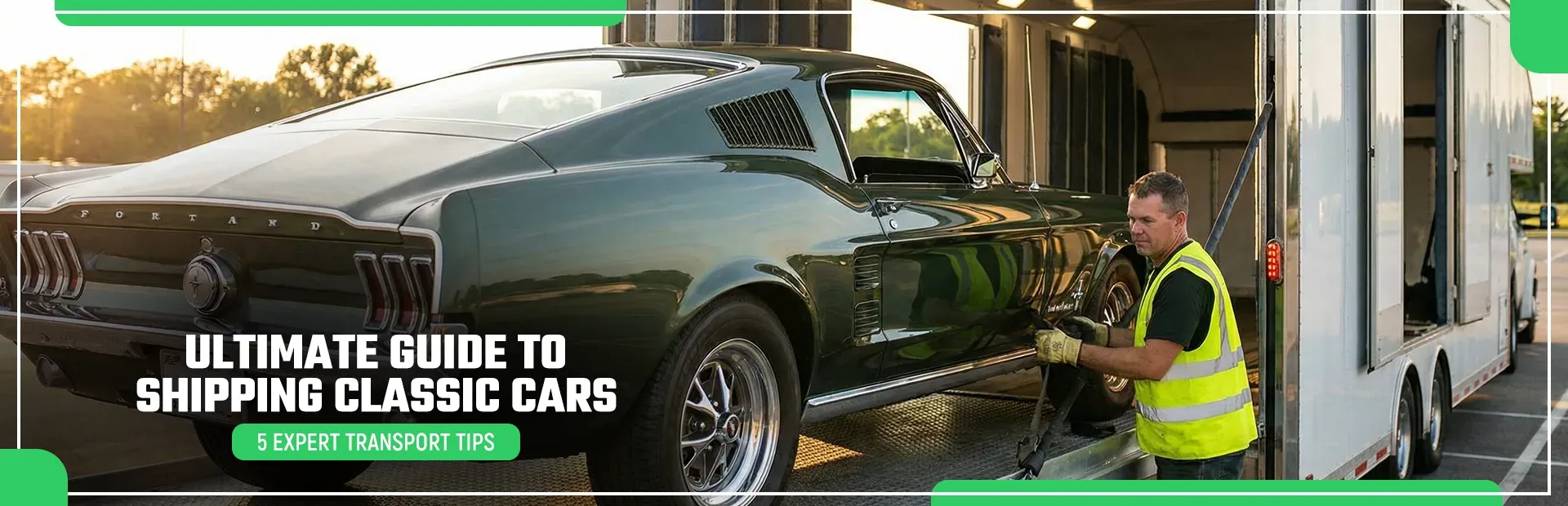
The Ultimate Guide to Shipping Classic Cars: 5 Expert Tips from Transport Professionals

The Ultimate Guide to Shipping Classic Cars: 5 Expert Tips from Transport Professionals

Transportvibe
August 26, 2025
14 min read

Shipping classic cars is a specialized process that demands expertise, care, and precision to protect your prized vehicle. Unlike standard vehicles, classic cars hold immense sentimental and financial value, making classic car transport a unique challenge. Whether you’re relocating a vintage beauty or sending it to a car show, choosing the best way to ship a classic car is critical to avoid damage and ensure peace of mind. 

At Transportvibe, we understand the complexities of selecting reliable classic vehicle transport companies near you. That’s why we provide honest reviews and ratings to ensure safe, reliable shipping for your classic car. Our mission is to simplify this process with transparent reviews and expert insights, empowering you to make informed decisions. 

This comprehensive guide to shipping classic cars offers expert tips for classic car shipping, from selecting enclosed classic car shipping services to preparing a vintage car for shipping. Learn how to navigate costs, insurance, and logistics with confidence.

Why Shipping Classic Cars is Different from Regular Vehicles

Shipping classic cars requires specialized care due to their unique value and fragility. Unlike regular vehicles, classic car transport demands expertise to ensure safe delivery.

Classic cars are often decades old, with delicate parts prone to damage. Safe classic car transport solutions prioritize protection to preserve their condition and worth.

Their high financial and sentimental value makes shipping classic cars a high-stakes process. Damage during transit could result in costly repairs or irreplaceable loss.

Driving classic cars long distances risks wear, breakdowns, or accidents. Professional classic car transport mitigates these risks, ensuring vehicles arrive in pristine condition.

Here’s why shipping classic cars differs from regular vehicles:

  • Age and Fragility: Classic cars have sensitive components like vintage upholstery or rare mechanical parts, requiring enclosed classic car shipping services to shield them from elements.
  • High Value: Often valued at tens or hundreds of thousands, classic cars need robust classic car shipping insurance advice to cover potential damages.
  • Customization: Many classics have unique modifications (e.g., low ground clearance), necessitating expert tips for classic car shipping to accommodate special handling.
  • Emotional Significance: Owners view classics as heirlooms, making safe classic car transport solutions critical to avoid distress from mishandling.
  • Rarity: Replacement parts for classic cars are scarce, so preparing a vintage car for shipping is essential to prevent damage during transit.

Choosing the best way to ship a classic car involves partnering with classic vehicle transport companies near you that understand these nuances. 

Choosing the Right Classic Car Transport Company

Selecting a reliable company for shipping classic cars is crucial to ensure your vehicle’s safety. Transportvibe simplifies this by offering honest reviews of classic vehicle transport companies.

Classic car transport requires specialized expertise due to the vehicles’ value and fragility. A reputable provider ensures safe classic car transport solutions tailored to your needs.

Here’s how to choose the best company for shipping classic cars:

  • Experience in Classic Car Transport: Look for companies with a proven track record in shipping classic cars. They should understand the unique needs of vintage vehicles, like low clearance or non-operational status.
  • Reputation and Reviews: Research customer feedback on platforms like Transportvibe for unbiased insights. Verified reviews highlight reliability and expertise in classic car transport.

Learn more about choosing the right review platform in Comparing User Experiences Across BBB, Trustpilot & Transportvibe: Which Review Platform Should You Trust?.

  • Licensing and Certifications: Confirm the company holds valid USDOT and MC numbers. These ensure compliance with federal regulations for safe classic car transport solutions.
  • Classic Car Shipping Insurance Advice: Ensure the provider offers adequate insurance coverage. Verify policies to protect your vehicle’s full value during classic car transport.
  • Specialized Equipment: Choose companies offering enclosed classic car shipping services for maximum protection. Enclosed carriers shield your vehicle from weather and road debris.
  • Transparent Pricing: Request detailed quotes to understand costs for shipping classic cars. Avoid companies with hidden fees to ensure the best way to ship a classic car.
  • Customer Support: Opt for providers with responsive communication. They should address concerns and provide updates throughout the classic car transport process.
  • Local Expertise: Search for classic vehicle transport companies near me for personalized service. Local providers may offer faster response times and regional knowledge.

Due diligence prevents costly mistakes when shipping classic cars. Classic car shipping insurance advice is critical to safeguard your investment. Always verify coverage details and document your vehicle’s condition before transport.

Transport Options for Classic Cars: Enclosed vs. Open Carriers

Choosing the right method for shipping classic cars ensures your vehicle’s safety and value. Transportvibe guides you to the best way to ship a classic car.

Classic car transport requires careful consideration of carrier types. Enclosed and open carriers offer distinct benefits for safe classic car transport solutions.

Enclosed Carrier Option

Enclosed classic car shipping services provide maximum protection for valuable vehicles. They shield classic cars from weather, debris, and road hazards during transport.

  • Enhanced Security: Enclosed carriers offer locked, fully covered trailers, reducing theft risks. This is ideal for high-value or rare classic car transport.
  • Weather Protection: Enclosed trailers safeguard against rain, dust, and UV exposure. They ensure safe classic car transport solutions in adverse conditions.
  • Climate-Controlled Options: Some enclosed carriers regulate temperature and humidity. This protects sensitive vintage cars during long-distance shipping.
  • Cost Considerations: Enclosed classic car shipping services cost more (20-40% higher than open). They’re worth it for irreplaceable vehicles needing expert tips for classic car shipping.
  • Limited Capacity: Enclosed trailers carry fewer vehicles, ensuring personalized handling. This minimizes movement and damage risks during classic car transport.

Open Carrier Option

Open carriers are a cost-effective choice for shipping classic cars in specific scenarios. However, they expose vehicles to external elements, requiring careful evaluation.

  • Affordability: Open carriers are cheaper, making them tempting for budget-conscious owners. They suit less valuable or well-maintained classic cars.
  • Availability: Open carriers are more common among classic vehicle transport companies. They’re easier to book for shorter routes.
  • Risks to Consider: Exposure to weather, road debris, and potential scratches is higher. This may not align with safe classic car transport solutions.
  • Suitability: Best for short distances or less sensitive vehicles. Always inspect and document your car’s condition before shipping.
  • Insurance Needs: Verify classic car shipping insurance advice for open transport. Adequate coverage is essential to protect against potential damage.

Door-to-door enclosed classic car shipping services offer convenience, while terminal-to-terminal options may save costs. Choose based on your vehicle’s needs and expert tips for classic car shipping.

How Much Does It Cost to Ship a Classic Car?

Understanding the cost of shipping classic cars is essential for budgeting your transport. Transportvibe provides transparent insights to find the best way to ship a classic car.

Classic car transport costs vary based on several factors. Knowing these helps ensure safe classic car transport solutions without unexpected expenses.

  • Distance and Route: Longer distances increase costs, typically $0.48–$2.75 per mile for classic car transport. Complex routes with rural areas may raise prices.
  • Vehicle Size and Condition: Larger or non-operational classic cars require specialized equipment. This increases shipping classic cars costs due to handling needs.
  • Transport Method: Enclosed classic car shipping services cost 20-40% more than open carriers. They offer superior protection for safe classic car transport solutions.
  • Seasonal Demand: High demand in summer or winter weather impacts pricing. Booking during off-peak times can lower costs for shipping classic cars.
  • Fuel Prices: Fluctuating fuel costs affect classic car transport rates. Check current market trends to anticipate expenses.
  • Additional Services: Door-to-door delivery or expedited shipping adds to costs. These ensure convenience for classic vehicle transport companies.

Average costs for shipping classic cars range from $500–$2,000 for domestic routes. International shipping may exceed $5,000, depending on customs and transport type.

Transparency is key when evaluating how much does it cost to ship a classic car. Request detailed quotes from classic vehicle transport companies to avoid hidden fees.

Classic car shipping insurance advice is crucial to protect your investment. Ensure coverage matches your vehicle’s value for peace of mind during transport.

Get accurate quotes for classic car transport! Visit Transportvibe to compare trusted classic vehicle transport companies near you for safe, affordable shipping.

Preparing a Vintage Car for Shipping: Step-by-Step Guide

Preparing a vintage car for shipping is critical to ensure safe classic car transport solutions. Proper preparation protects your vehicle and simplifies the classic car transport process.

Shipping classic cars requires attention to detail to avoid damage. Follow this guide to make the best way to ship a classic car seamless and secure.

Step 1: Clean Your Vehicle

Wash your classic car thoroughly before shipping classic cars. A clean car makes it easier to spot damage during inspections.

Step 2: Document the Condition

Take detailed photos and videos of your car’s interior and exterior. This supports classic car shipping insurance advice if claims are needed.

Step 3: Remove Personal Items

Clear all personal belongings from the vehicle. Classic vehicle transport companies may not cover lost or damaged items.

Step 4: Secure Loose Parts

Remove or secure loose accessories like spoilers or antennas. This prevents damage during classic car transport and ensures safety.

Step 5: Check Fluid Levels

Reduce fuel to a quarter tank to meet safety regulations. Ensure oil, coolant, and other fluids are topped off for shipping classic cars.

Step 6: Inspect for Leaks

Check for fluid leaks under the car. Address issues to avoid complications with classic vehicle transport companies.

Step 7: Disable the Battery

Disconnect or disable the battery for non-operational cars. This ensures safe classic car transport solutions during transit.

Step 8: Check Tires and Brakes

Ensure tires are properly inflated and brakes are functional. This helps handlers move the car safely during classic car transport.

Step 9: Secure Convertible Tops

For convertibles, ensure the top is securely fastened. Use enclosed classic car shipping services for added protection.

Step 10: Communicate Special Needs

Inform the transport company of unique features like low clearance. Expert tips for classic car shipping emphasize clear communication.

Proper preparation minimizes risks and ensures a smooth classic car transport experience. Documenting the process supports classic car shipping insurance advice for peace of mind.

Classic Car Shipping Insurance Advice: Protecting Your Investment

Shipping classic cars demands robust insurance to safeguard your valuable investment. Classic car transport requires coverage that matches your vehicle’s unique worth.

Standard insurance from classic vehicle transport companies near you often covers basic damages but may not fully protect high-value classic cars. Verify that the policy reflects your car’s appraised value to ensure safe classic car transport solutions.

Supplemental insurance is often necessary for shipping classic cars, especially for rare or restored vehicles. Discuss options with your provider to secure comprehensive protection tailored to your needs.

Documenting your car’s condition before classic car transport is critical. Take photos and videos to support claims, aligning with expert tips for classic car shipping.

Verify the transport company’s insurance credentials and ask for a certificate of insurance. This ensures the best way to ship a classic car with confidence in coverage.

Understand the claims process before shipping classic cars to avoid surprises. Know how to file a claim and the timeline for resolution if damage occurs.

Enclosed classic car shipping services often include higher insurance limits, offering added security. Confirm coverage details to protect your investment during transit.

Transportvibe’s reviews help identify classic vehicle transport companies near you with reliable insurance policies. Choose providers with transparent terms for peace of mind.

Classic car shipping insurance advice emphasizes proactive steps to protect your vehicle. Thorough preparation and verification ensure a worry-free classic car transport experience.

Expert Tips for Classic Car Shipping Success

Shipping classic cars requires expertise to ensure your vehicle arrives safely. Follow these expert tips for classic car shipping to achieve safe classic car transport solutions.

Here are some expert tips that you help you to ship classic cars: 

Book Enclosed Classic Car Shipping Services Early

Booking enclosed classic car shipping services early is critical for securing availability. High-demand seasons fill up quickly, so plan ahead to ensure the best way to ship a classic car with maximum protection.

Communicate Special Vehicle Needs Clearly

Clear communication of special needs, like low ground clearance or non-operational status, prevents mishandling during classic car transport. Inform classic vehicle transport companies near you about unique requirements to avoid delays or damage.

Monitor Weather and Route Conditions

Monitoring weather and route conditions enhances safe classic car transport solutions. Check forecasts and discuss potential risks with your provider to protect your vehicle during shipping classic cars.

Verify Classic Car Shipping Insurance Advice

Verifying classic car shipping insurance advice ensures your investment is covered. Confirm the policy matches your car’s value and document its condition to support claims, aligning with expert tips for classic car shipping.

Choose Local Reputable Classic Vehicle Transport Companies

Choosing reputable classic vehicle transport companies is essential for a smooth experience. Transportvibe’s reviews help you select trusted providers skilled in shipping classic cars, ensuring reliability and transparency.

These expert tips for classic car shipping streamline the process and minimize risks. By following them, you ensure your vehicle is handled with care and professionalism.

Common Mistakes to Avoid When Shipping Classic Cars

Shipping classic cars requires careful planning to ensure safe classic car transport solutions. Avoid these common mistakes to protect your vehicle during classic car transport.

  • Choosing Price Over Quality: Opting for the cheapest provider risks poor service or damage. Select reputable classic vehicle transport companies for reliable shipping classic cars.
  • Skipping Insurance Checks: Failing to verify classic car shipping insurance advice can leave your vehicle unprotected. Confirm coverage matches your car’s value before transport begins.
  • Inadequate Vehicle Preparation: Neglecting to prepare a vintage car for shipping increases damage risks. Follow expert tips for classic car shipping, like documenting condition and securing parts.
  • Ignoring Weather Impacts: Not checking weather or seasonal conditions can harm your car. Plan with searching “classic vehicle transport companies near me” on google to ensure safe transit timing.

Avoiding these pitfalls ensures the best way to ship a classic car. Transportvibe’s reviews help you choose trusted providers for a secure classic car transport experience.

Things May Come In Your Mind About Shipping Classic Cars

How much does it cost to ship a classic car?

Costs range from $500–$2,000 domestically, depending on distance and enclosed classic car shipping services. Get quotes from classic vehicle transport companies from your area for accuracy.

What is the best way to ship a classic car?

Enclosed classic car shipping services offer maximum protection. They shield vehicles from weather and debris, ensuring safe classic car transport solutions.

Can non-operational classic cars be shipped?

Yes, but inform classic vehicle transport companies in advance. Specialized equipment ensures safe handling during classic car transport.

How long does classic car transport take?

Transit times vary (3-10 days domestically) based on distance and route. Check with providers for precise estimates when shipping classic cars.

What insurance is needed for shipping classic cars?

Verify coverage matches your car’s value. Follow classic car shipping insurance advice to document condition and secure supplemental policies if needed.

How do I prepare a vintage car for shipping?

Clean, document, and secure your car. Preparing a vintage car for shipping minimizes risks and supports insurance claims.

How do I find reliable classic vehicle transport companies near me?

Use Transportvibe’s reviews to compare trusted providers. Expert tips for classic car shipping ensure you choose reputable companies. If you find them helpful, drop a review too. 

Ensuring a Smooth Classic Car Transport Experience

Shipping classic cars demands careful planning and trusted providers to protect your valuable vehicle. By choosing reputable classic vehicle transport companies near you, you ensure safe classic car transport solutions. Proper preparation, selecting enclosed classic car shipping services, and verifying classic car shipping insurance advice are key to success. Expert tips for classic car shipping, like booking early and communicating special needs, minimize risks. 

Transportvibe simplifies the process with transparent reviews, helping you find the best way to ship a classic car. Whether domestic or international, prioritize reliability and expertise for peace of mind. Plan ahead, document your car’s condition, and partner with professionals to safeguard your investment during classic car transport. Get a quote today.

Related articles

AUG 26, 2025
The Ultimate Guide to Shipping a Car to Another State: Step-by-Step with Quotes and Paperwork

The Ultimate Guide to Shipping a Car to Another State: Step-by-Step with Quotes and Paperwork

TRANSPORTVIBE

Relocating your vehicle across the country shouldn't be a source of stress. Shipping a car to another state is a smart, secure way to get your vehicle where it needs to be. Whether you're planning a big move from New York to Alabama car shipping, or need Maryland to Florida car shipping, understanding the process is key. This comprehensive car shipping guide is your roadmap to a smooth experience. We’ll walk you through everything from getting accurate car shipping quotes to preparing your car for its journey. You'll learn how to choose the right cross-country car shipping company and handle all the necessary paperwork. Ready to simplify your move? Explore our detailed car transport guide to see how our services can make your relocation effortless. Shipping vs. Driving: The Real Cost and Time Comparison When deciding between shipping a car to another state and driving it yourself, the real cost goes far beyond fuel. Many assume driving is cheaper, but when you factor in hidden expenses and lost time, cross-country car shipping often makes more sense. Take a look at the cost breakdown - Expense Type Driving Yourself Shipping a Car Across Country Fuel & Tolls $250–$600 Included in the car shipping cost Lodging & Meals $150–$500 (multi-day trips) $0 Vehicle Wear & Tear $200–$400 (maintenance, depreciation) $0 Time Off Work $200–$800+ (lost wages) $0 Total $800–$2,300 $800–$1,500 average car shipping quote If we consider the timing - Driving 1,500–3,000 miles can take 3–7 days depending on route, weather, and stops. Shipping my car to another state frees up your schedule — you only arrange pickup and delivery. Long drives add mileage depreciation, which can lower resale value. With today’s car shipping rates, especially for state-to-state transport, the financial gap between driving and shipping a car cross country is smaller than most expect — and shipping saves days of travel and stress. Step-by-Step Guide to Shipping a Car to Another State Navigating state-to-state car shipping can feel overwhelming without a clear plan. This detailed, step-by-step car shipping guide walks you through everything — from comparing car shipping quotes and selecting a reputable carrier to preparing paperwork and ensuring safe delivery. Whether you’re booking cross-country car shipping or a shorter move, follow these proven steps to make the process smooth, cost-effective, and stress-free. Step 1: Researching and Understanding Your Options Before you get a single quote, it's crucial to understand your choices. A quick search for shipping a car to another state will show you there are several ways to get your vehicle from point A to point B. The more you know, the better your decision will be. Primary Methods of Car Shipping Open Car Shipping: This is the most common and cost-effective option. Your car is transported on an open-air trailer, like the ones you see on the highway. While it’s efficient, your vehicle is exposed to the elements. For more details, explore our guide on Open Car Shipping . Enclosed Vehicle Shipping: For luxury, classic, or exotic cars, an enclosed trailer offers maximum protection from weather and road debris. It comes at a higher price, but the peace of mind is often worth it. Check out our breakdown of Enclosed vs. Open Carrier costs to see which is right for you. Door-to-Door vs. Terminal-to-Terminal Door-to-Door: The carrier picks up and drops off your vehicle as close to your specified addresses as possible. This is the most convenient and common service for cross country car shipping. Terminal-to-Terminal: You drop your car off at a designated terminal and pick it up at another. This is typically cheaper but requires extra coordination on your end. Step 2: Getting Car Shipping Quotes and Understanding the Cost Knowing how to get and compare car shipping quotes is the key to securing a good deal and avoiding scams. What Factors Influence Your Car Shipping Cost? Your car shipping cost isn't a fixed number. Several factors play a role: Distance: The longer the distance, the higher the cost. Vehicle Type: Larger vehicles like SUVs and trucks cost more to ship than smaller sedans. Shipping Method: Enclosed transport is always more expensive than open transport. Seasonality: Peak moving seasons, like summer, can lead to higher rates due to increased demand. Route Popularity: A route like New York to Alabama car shipping may be more affordable than a less common one, like California to West Virginia car shipping. When searching for a car shipping estimate, use online quote calculators and contact multiple companies. Be ready to provide your vehicle make, model, year, and pickup/delivery locations for the most accurate quote. A great tip is to get at least 3 different quotes for comparison. Always clarify what your car shipping quote includes. Does it cover fuel surcharges, taxes, and insurance? Be wary of companies with extremely low quotes, as they often have hidden fees. Step 3: Choosing the Right Car Shipping Company Choosing a reliable company is the most important part of shipping a car to another state. A good company provides peace of mind and excellent service. Red Flags to Watch Out For: Unrealistic Prices: If a car shipping quote seems too good to be true, it probably is. Large Upfront Deposits: Legitimate companies rarely require a large deposit before a driver is assigned. Poor Communication: A lack of responsiveness or vague answers to your questions is a major warning sign. Before you book, check online reviews on trusted platforms. On Transportvibe, we believe in providing honest, unbiased reviews from real customers. This helps you avoid common pitfalls and find the best companies for your needs. Make sure any company you consider is registered with the Federal Motor Carrier Safety Administration (FMCSA) and has a valid USDOT number. This ensures they are legally authorized to operate and carry the required insurance. Don’t choose a company blindly. Explore our extensive database of transport company reviews and ratings to make an informed choice. Step 4: Preparing Your Vehicle for Transport Proper preparation is vital for a smooth process. A little effort here can prevent headaches down the road. Do: Wash your car thoroughly to easily spot any existing damage. Check your tire pressure, battery, and fluid levels. Remove all personal items from the vehicle. Leave no more than a quarter tank of gas to reduce weight. Do Not: Leave personal items or valuable possessions inside. Fill the gas tank. Leave toll tags or transponders active. This is your most important safeguard. Take clear, well-lit photos and videos of your entire vehicle from all angles. Note any existing dents, scratches, or issues. This evidence is crucial if you need to file an insurance claim later. The Bill of Lading is the most important document in the process. It's a contract between you and the carrier. Before your vehicle is loaded, you'll sign it after inspecting the car with the driver. It documents your vehicle's condition at pickup and is your reference for the final inspection. Step 5: The Pickup and Transit Process Once your car is prepped, the next step is the actual pickup and journey. The driver will perform a final inspection and mark any existing damage on the Bill of Lading. You and the driver will both sign this document, and you'll receive a copy. Make sure the document accurately reflects your pre-shipping photos. Most modern cross country car shipping companies offer some form of tracking. This can be through a mobile app, text message updates, or direct communication with the driver. This gives you peace of mind and allows you to monitor your car's progress. While carriers strive for on-time delivery, delays can happen due to bad weather, traffic, or unforeseen mechanical issues. Stay in touch with your shipping company for updates, and be patient; safety is the priority. For more information, read about who is responsible if a car is delayed in delivery . Step 6: The Final Delivery and Post-Shipping Inspection The journey is almost over, but this final step is critical to ensure your car arrived safely. When the driver arrives, be ready with your copy of the Bill of Lading. Meet the driver and be prepared to inspect your vehicle thoroughly. This is the most critical part of the delivery process. Do a complete walk-around of your vehicle in daylight. Compare its current condition to your pre-shipping photos and the Bill of Lading. If you find any new damage, no matter how small, you must note it on the Bill of Lading before signing. This is your only chance to document the issue. Take photos of the new damage and immediately contact the shipping company to begin the claim process. Tips for Saving Money While Shipping A Car Across Country You don't have to break the bank to ensure your cross country car shipping is safe and successful. With some smart planning, you can significantly lower your car shipping cost while still trusting your vehicle is in good hands. Book Early: Last-minute bookings almost always come with a premium. Securing your transport 2-4 weeks in advance gives carriers more time to plan their route and allows you to lock in a lower car shipping quote. This flexibility is key to saving money. Be Flexible with Your Dates: Carriers often have more availability during certain times of the month or week. By providing a flexible window for pickup and delivery, you give the company a better chance to fit your vehicle into an existing route, leading to a cheaper car shipping estimate. Choose Open Transport: For most standard vehicles, open-air shipping is a perfectly safe and reliable option. This method is significantly cheaper than enclosed transport because carriers can fit more vehicles on a single trailer. You only need to consider enclosed transport if you are shipping a classic vehicle or a high-end luxury car. Opt for Terminal-to-Terminal Shipping: While door-to-door shipping is convenient, it is also more expensive. By choosing terminal-to-terminal service, you can reduce costs because the carrier doesn't have to make a special detour. It requires a bit more effort on your end, but the savings can be substantial. Compare Multiple Quotes: Never settle for the first quote you receive. Get several car shipping quotes from different companies to see the range of prices and services available. This comparison ensures you find a balance between an affordable rate and a reliable provider. Avoid Peak Seasons: The cost of shipping a car rises during high-demand periods like the summer months and major holidays. If your schedule allows, plan your shipment for the off-season (late fall or winter) to take advantage of lower demand and rates. This can be particularly useful for seasonal travelers, such as "snowbirds," who can book their transport in advance. Prepare Your Vehicle Properly: Taking the time to properly prepare your car can help you avoid unexpected fees. This includes removing all personal items, as carriers are not legally able to haul household goods. Additionally, a clean car makes it easier to document existing damage and avoid disputes over new scratches. Ready to find a great deal without the stress? Get a free, no-obligation quote today to compare options and find the best car shipping rates for your needs. Special Cases in Cross Country Car Shipping While the standard process works for most vehicles, some situations require special considerations. Understanding these exceptions will help you navigate your unique cross country car shipping needs with confidence. Shipping a Non-Running Vehicle: A vehicle that doesn't start or run presents a unique challenge. You will need to inform the shipping company upfront, as it requires specialized equipment like a winch to load and unload the car. This will likely increase your car shipping cost, but it's essential for a smooth transport. For more guidance, see our article on how to ship a non-running vehicle . Shipping Luxury or Classic Cars: If you are transporting a high-value vehicle, you should always choose enclosed transport. This method provides maximum protection from weather and road debris. It's a critical safety measure to protect your investment, and it's well worth the additional cost. Read our tips on shipping classic or luxury cars for more details. Modified Vehicles: Vehicles with modifications, such as lifted trucks, low-profile sports cars, or those with custom parts, require careful handling. You must notify the transport company of any modifications that could affect loading, clearance, or tie-down points. Failing to do so could lead to complications or even damage. Shipping a Car with Personal Items: Although most companies have a strict policy against this, some carriers might allow a small amount of personal belongings (typically under 100 lbs) in the trunk. However, these items are not covered by the carrier’s insurance. It's always best to ship personal belongings separately to avoid any issues or liability. Car Shipping to or from Remote Locations: Car shipping to another state with a major city as the origin or destination is usually straightforward. However, if your pickup or drop-off location is in a rural or remote area, it can affect your car shipping prices. Carriers may charge more for the extra mileage and time required to reach these locations. No matter how unique your vehicle or situation is, we believe you should have all the information to make an informed decision. FAQ on Shipping a Car to Another State How much does it cost to ship a car from Maryland to Florida? The average cost of shipping a car from Maryland to Florida typically ranges from $850 to $1,500. This price can vary significantly based on factors like the vehicle's size, the specific pickup and drop-off locations, and the time of year. For instance, shipping during the popular "snowbird" season may be more expensive. The quickest transit time is generally around 2-5 days for this route. How long does it take to ship a car across the USA? The transit time for shipping a car cross country can vary widely, but coast-to-coast journeys usually take between 7 and 14 days. Shorter distances, such as shipping a car from Louisiana to California, typically take 4-7 days. The exact timeframe depends on the distance, weather, traffic, and the number of stops on the carrier's route. Is it safe to ship a car from Louisiana to California? Yes, shipping a car from Louisiana to California with a reputable auto transport company is a very safe option. Professional carriers use secure trailers and are fully insured. By properly vetting companies and documenting your vehicle's condition before pickup, you can ensure a reliable and secure transport. The risk of damage is minimal with a professional service. Can I ship a car without a title? This is a common question, especially for those handling vehicles for family members or purchasing a car from a private seller. Generally, you do not need the original title to ship a car. However, you will need to provide proof of ownership, such as a bill of sale or notarized letter from the owner. Some companies may have stricter policies, so it’s essential to confirm with your chosen provider. For more details on this topic, read our guide on shipping a car without the title . What's the difference between a car shipping broker and a carrier? This is a crucial distinction. A car shipping broker acts as a middleman. They find a carrier for your shipment, handling all the logistics. A car carrier, on the other hand, is the company that physically transports the vehicle. Working with a broker can save you time and provide more options, while working directly with a carrier can sometimes result in a lower price. Can I put personal items in my car when it's being shipped? Most auto transport companies have a strict policy against this due to federal regulations. However, some may allow a small amount of personal items (typically under 100 lbs) in the trunk. It is critical to confirm this with your specific carrier, as personal items are usually not covered by the carrier's insurance. To avoid any issues, it’s best to ship all your belongings separately. What should I do if my car is delayed in transit? Delivery dates are almost always estimates, so a delay is not uncommon. If your vehicle is delayed, the first step is to stay in contact with the shipping company or the carrier directly. They should be able to provide updates on the new estimated arrival time. You can learn more about what to do in our article on who is responsible if a car is delayed in delivery . Making an Informed Decision with Transportvibe Successfully shipping a car to another state is a manageable process when you have the right information. By following these steps—from understanding your options and getting accurate car shipping quotes to preparing your vehicle and knowing what to expect on delivery day—you can ensure a stress-free experience. The key is thorough research and making an informed choice about your cross country car shipping provider. At Transportvibe, our mission is to empower you with the transparent and reliable information you need. We believe choosing a car shipping company should be simple, and our resources are here to help you every step of the way. With a clear plan, your vehicle will be on its way safely and securely. Your journey to a smooth, transparent, and informed auto transport experience starts here. Get your free car shipping quote from Transportvibe today!

AUG 18, 2025
Understanding Cross Country Car Shipping: Essential Quotes, Timelines, and Costs Explained

Understanding Cross Country Car Shipping: Essential Quotes, Timelines, and Costs Explained

TRANSPORTVIBE

Moving a car cross country is often more cost-effective than driving it yourself. This surprising fact challenges the common assumption that shipping a car is a luxury. We’ll show you how to navigate cross-country car shipping by understanding the car shipping costs and quotes involved. Our guide simplifies the entire process, helping you find cheap car shipping and the best car shipping companies without the usual hassle. You’ll learn how a car shipping calculator provides an accurate car shipping estimate, and how to choose the right services for your needs. Ready to get started? Find out the cost of shipping a car and get your instant, free quote now. Is Shipping A Car Cross Country Right For You? Is a long, cross-country drive part of your plan, or are you looking for an easier solution? The decision to ship a car is a practical one. Shipping a car cross country is a choice many people make when relocating, buying a vehicle out of state, or even sending a car to a student at college. For more on this, read our guide on how to ship your car for college or work . The alternative of driving can be time-consuming and stressful. Consider these scenarios. If you are moving for a job, your time is valuable. Driving takes days or weeks. Cross country car shipping lets you fly to your new home and settle in sooner. If you are buying a classic car, driving it across the country risks weather damage and wear. Professional transport keeps it safe. The car shipping cost often balances out against the expenses of a long road trip, including gas, hotels, and food. You also avoid putting extra miles on your car. The choice to ship is not just about convenience; it's about protecting your time, money, and vehicle. Understanding car shipping cost and how it’s calculated Your car shipping cost is not a fixed price. It is a dynamic figure that changes based on many factors. Getting an accurate car shipping quote requires understanding what influences the final price. This guide breaks down the main drivers of car shipping rates and estimates. Key Factors Affecting Your Car Shipping Estimate A precise car shipping estimate depends on several variables. Knowing these helps you get the best price for shipping a car across the country. Distance: The longer the distance, the higher the total price. However, the cost per mile often decreases on longer routes. For example, a 2,000-mile trip might have a lower per-mile rate than a 500-mile trip. Vehicle Type and Size: Larger vehicles take up more space on the transport truck and weigh more. Shipping a large SUV will cost more than shipping a small sedan. This is a common and simple rule for all car shipping services. Transport Method: You have a choice between open and enclosed transport. Open transport is the standard and cheapest option. Enclosed transport is more expensive but offers extra protection from weather and road debris. For more on this, read our blog on enclosed vs. open carrier costs. Time of Year: Demand for car shipping changes with the seasons. Prices are often higher in the summer and during peak moving seasons. Booking your shipment in the winter can save you money. Location: Shipping to or from major metropolitan areas is often cheaper. Transporting a car to a remote or rural location adds to the total car shipping cost due to extra mileage and time. Gasoline Prices: Fuel costs are a significant part of a carrier's operating expenses. Fluctuations in gasoline prices directly impact the price of your shipment. As of August 2025, U.S. retail gasoline prices are around $3.118 per gallon (U.S. Energy Information Administration). This is a factor to watch when planning your budget. Potential Extra Fees When you receive a car shipping quote, it’s essential to look for any hidden fees. These can change your final car shipping prices. Inoperable Vehicles: If your car does not run, it needs special equipment to load and unload. This adds to the labor and equipment costs. Expedited Service: Standard timelines for cross country car shipping are 5-14 days. If you need faster delivery, a company can offer expedited service, which costs more. For a full breakdown of what you can expect to pay, read our detailed guide on how much car shipping costs in the USA. A Breakdown Of Car Shipping Services From a car shipping provider's perspective, offering a range of services is key to meeting customer needs. We provide multiple options, each designed for different budgets, vehicle types, and timelines. Understanding these services helps you make the best choice for your shipment. Open vs. Enclosed Transport This is the most fundamental choice you will make for your car shipping services. Each method serves a different purpose. Open Transport Open car shipping is the most common and affordable shipping option. Your vehicle is loaded onto an open-air trailer, typically with other cars. It is the industry standard for most shipments. Ideal for: Standard sedans, SUVs, and trucks. This is the best choice for most customers looking to balance cost and service. Protection: The car is exposed to the elements, such as rain, sun, and road debris. Enclosed Transport In enclosed vehicle shipping , your vehicle is transported inside a sealed trailer. This option protects the car from all outside elements and road hazards. Ideal for: Luxury cars, classic vehicles, or exotic cars. It is for customers who require the highest level of protection. Cost: This service costs more than open transport due to the specialized trailers and limited capacity. For a detailed cost comparison, read our blog: Is it worth paying more for enclosed vs. open carrier costs ? Door-to-Door vs. Terminal-to-Terminal This choice determines where your car is picked up and delivered. Door-to-Door The transport truck picks up your vehicle from a specific address and delivers it directly to your chosen destination address. This is the most convenient and popular service. Benefit: You don’t need to handle drop-offs or pickups at a remote location. The driver coordinates with you directly. Limitation: The driver needs to have safe, legal access to the locations. Tight turns or narrow streets can sometimes require meeting in a nearby parking lot. Terminal-to-Terminal You drop off your vehicle at a designated shipping terminal and pick it up from another terminal near your destination. Benefit: This can sometimes be cheaper, as it saves the driver time and mileage. Limitation: This option requires more work on your part. You must arrange transportation to and from the terminals, which can add time and effort to your schedule. Get competitive, free quotes from top-rated companies and start planning your stress-free vehicle transport today. How To Get An Accurate Car Shipping Quote Getting a precise car shipping quote is the first step in planning your transport. As professionals in the sector, we know that accuracy depends entirely on the information you provide. A reliable car shipping estimate is built on specific details, not broad assumptions. Here is the professional process for obtaining a fair and honest quote. The Information Required For A Quote To provide you with an accurate car shipping quote, we need a few key pieces of information. This data directly influences the final car shipping prices. Vehicle Information: The year, make, and model of your vehicle are essential. This helps determine its size, weight, and value. We also need to know if the vehicle is operable. Shipping a non-running car requires special equipment and will affect the cost of shipping a car. Pickup and Delivery Locations: We need the full addresses or at least the city and state for both locations. This allows us to calculate the mileage and route. Transporting a car from a major city to another will likely result in a different car shipping rate than shipping to a remote town. Desired Transport Dates: The flexibility of your schedule impacts the price. The more flexible you are, the better the car shipping rates we can offer. Booking well in advance is always a good strategy for finding affordable options. Service Type: You must specify whether you want open or enclosed transport. Open transport is cheaper, but enclosed provides maximum protection. This choice will significantly impact your final car shipping estimate. After providing this information, you will receive several car shipping quotes or a range of prices. This is not a single, final offer. Your next critical step is to review these quotes carefully to ensure you get the best value for your needs. The Importance Of Comparison Once you've received your car shipping quote, it’s time to compare. Do not accept the first car shipping quote you get. Compare multiple quotes: A reputable broker will provide quotes from multiple carriers. This allows you to review different car shipping prices and services. Question low-ball offers: If a quote seems too good to be true, it likely is. Unusually low car shipping quotes often lead to unexpected delays or hidden fees later on. Check the details: Ensure all quotes are for the same service type and include all fees. A detailed quote is a sign of a transparent company. Don't settle for the first quote. Use Transportvibe to compare multiple company reviews and services to find the perfect fit for your cross-country move. Cross Country Car Shipping: Complete Step-by-Step Guide Cross country car shipping involves a coordinated effort between you, the broker, and the carrier. While the process may initially seem complex, understanding each step ensures a smooth and stress-free experience. This comprehensive guide breaks down everything you can expect from booking to delivery. Step 1: Booking and Confirmation The booking phase is where you finalize all details and officially engage a shipping company. Transparency about your vehicle's condition and thorough understanding of contract terms are essential for success. To get started, Obtain Quotes : Begin by requesting detailed car shipping quotes from reputable service providers to compare pricing and services. Carrier Review : Your service provider will match your shipment with an appropriate carrier. Take time to review the carrier's safety record, insurance coverage, and customer reviews. Detail Confirmation : Confirm all critical information including pickup and delivery dates, exact locations, and complete vehicle specifications. Be sure to disclose if your vehicle is inoperable, as this significantly affects shipping costs. For non-running vehicles, consult our detailed guide: How to Ship a Non-Running Vehicle . Secure Your Booking : Most companies require a deposit to reserve your shipping slot, with the remaining balance typically due upon delivery. Step 2: Preparing Your Car For Transport Properly preparing your car for transport is a crucial step in ensuring a smooth and damage-free cross country car shipping experience. A little effort on your end can prevent headaches and potential claims later. Follow this essential checklist before the carrier arrives. Clean Your Car: Wash the exterior and clean out the interior. A clean car makes it easier for both you and the driver to spot any existing dings, dents, or scratches during the inspection. Remove Personal Belongings: All personal items, including chargers, toll passes, and CDs, must be removed. The carrier’s insurance does not cover belongings inside the car, so remove everything to avoid loss or theft. Document Existing Damage: Take detailed, timestamped photos of your car from all angles. Note any pre-existing damage, no matter how small. This serves as your personal record and a reference against the Bill of Lading. Leave a Quarter Tank of Fuel: Your car needs just enough fuel to be driven on and off the transport truck. A quarter-full tank is the industry standard. This reduces weight and potential fire hazards. Check Fluids and Tires: Make sure your battery is charged, and all fluids are at safe levels. Check your tires to ensure they are properly inflated. This is especially important for long-distance transport. Secure Loose Parts: Remove any non-factory accessories like spoilers, antennas, or detachable fairings. Fold in your side mirrors and retract the antenna to prevent damage in transit. Step 3: Vehicle Pickup and Inspection Pickup day marks the official transfer of your vehicle to the carrier. This critical step centers around one essential document: the Bill of Lading (BOL). The documentation and preparations you need to take are, Driver Communication : The carrier will contact you several hours before the scheduled pickup to confirm timing and location details. Bill of Lading Process : This document serves as the legal foundation of your shipment. The driver conducts a comprehensive inspection of your vehicle's exterior and interior, meticulously documenting any existing damage, scratches, or dents. Both you and the driver must sign this document, creating an official record of your vehicle's pre-shipping condition. Independent Documentation : Take detailed photographs of your vehicle from multiple angles before loading. Use these images alongside the BOL as your reference points. This documentation becomes crucial evidence should any disputes arise. Vehicle Loading : Once the BOL is properly signed and all documentation is complete, your vehicle is carefully loaded onto the transport truck. Step 4: Transit Period With your vehicle loaded and en route, the focus shifts to maintaining communication and preparing for delivery. To keep track of your shipment, do - Shipment Tracking : Your service provider will provide tracking information or direct contact details for status updates throughout the journey. Ongoing Communication : Maintain regular contact with the carrier's dispatch team to receive updated delivery windows. Be aware that schedules may shift due to weather conditions, traffic delays, or regulatory requirements. Step 5: Delivery and Final Inspection Your vehicle has reached its destination. This final phase involves careful inspection and completion of all necessary paperwork. When the shipment is delivered - Arrival Notification : The driver will contact you several hours before the estimated arrival time to coordinate the final delivery. Vehicle Unloading : Your vehicle is carefully unloaded at the predetermined delivery location. Comprehensive Final Inspection : Conduct a thorough examination of your vehicle, comparing its current condition against the original BOL and your pre-shipping photographs. Look for any new damage, however minor. Final Documentation : If you discover any new damage, document it clearly on the final BOL before signing. This signed document is essential for filing insurance claims. Learn more about coverage options: Car Shipping Insurance in the USA . Payment Completion : Final payment for your cross country car shipping service is typically made at delivery, usually in cash or certified check. So, your key success tips are in short - Always read and understand all contract terms before signing Maintain detailed photographic records throughout the process Keep all documentation organized and easily accessible Communicate promptly with all parties involved Plan for potential schedule adjustments due to external factors Following this structured approach ensures your cross-country car shipping experience proceeds smoothly from start to finish, giving you confidence and peace of mind throughout the entire process. Choosing The Best Car Shipping Companies For Cross Country Car Shipping Shipping a car cross country requires selecting the right carrier to ensure safe, reliable transport. With numerous companies offering car shipping services, finding quality providers at competitive car shipping rates demands careful evaluation. Ready to ship your vehicle safely? Get your free car shipping quote and compare trusted carriers today. The best car shipping companies share key characteristics that distinguish them from mediocre options. First, verify proper FMCSA licensing , DOT numbers, and comprehensive insurance coverage. Legitimate carriers willingly provide these credentials and maintain excellent safety ratings. Second, evaluate pricing transparency. Quality providers offer detailed car shipping quotes without hidden fees, with estimates matching final costs within 10-15%. Be cautious of car shipping prices significantly below market average, as this often indicates cut corners or surprise charges. Consider service flexibility including open carrier transport, enclosed options for luxury vehicles, and door-to-door delivery. Research customer reviews across multiple platforms, focusing on consistent service quality and professional communication patterns. Discover top-rated providers with verified reviews. Compare car shipping companies for reliable service. Avoid companies with unusually low pricing, missing credentials, or high-pressure sales tactics. Get multiple quotes and ensure all terms are documented in writing. For detailed pricing insights, review our comprehensive car shipping cost breakdown. Make informed decisions with expert guidance. Explore our complete car transport guide for additional tips. Common Questions About Shipping a Car Cross Country How long does shipping a car across the country take? The average timeline for shipping a car across country is 7 to 14 days. This depends on the distance and the route. Bad weather or unexpected road closures can cause delays. What is the average cost of shipping a car? The cost of shipping a car varies widely. It depends on the vehicle size, distance, and transport type. A reliable car shipping estimate for a cross-country trip can range from $800 to $1,500. Are car shipping rates fixed or do they change? Car shipping rates are not fixed. They fluctuate based on fuel prices, seasonal demand, and the specific route. Booking during off-peak times like winter can often lead to better car shipping prices. What information do I need for a good car shipping estimate? You need your vehicle’s year, make, and model. You also need the exact pickup and delivery locations. A correct car shipping estimate also requires knowing if the car is operable. How do I find the best car shipping companies? Start by researching online. Look for companies with high ratings and transparent pricing. Check their licensing through the FMCSA. Reading customer reviews helps you find the best car shipping companies for your needs. What are some tips for finding cheap car shipping? Book your shipment in advance. Be flexible with your pickup and delivery dates. Choose open transport over enclosed. These steps can help you find more affordable cheap car shipping options. Is my vehicle insured during car shipping? Yes, your vehicle is insured while in transit. The carrier’s insurance covers potential damage. However, it does not cover personal items left inside the car. Making Your Car Shipping Decision Easy Cross country car shipping does not have to be a confusing process. This guide has given you the tools to understand the factors that impact your car shipping cost. You now know how to get an accurate car shipping quote, what to expect during the shipment process, and how to prepare your vehicle. By following these steps, you can make a confident and informed decision, saving you time and stress. Ready to find the right company? Get your free quotes now and book your hassle-free transport with confidence.