





Sixty-five percent of Fortune 500 companies are legally incorporated in Delaware, according to the Delaware Division of Corporations. That corporate concentration keeps the state in constant motion — executives transferring, employees relocating, dealerships moving inventory. Most of them need their vehicles moved, too.
Delaware car shipping looks manageable until you try to book it. The state is small. But it sits on the I-95 corridor, one of the highest-volume auto transport routes on the East Coast. Carriers run through daily. That doesn't mean they stop where you need them to.
This guide covers what car shipping in Delaware actually costs, which routes are competitive, which companies service this state, and what to do before your car gets picked up. Get a Delaware shipping quote from carriers with verified reviews on TransportVibe.
How Much Does Delaware Car Shipping Cost?
Cost is the first question most people ask. It should also be the last thing you confirm — because a quote that changes at pickup isn't a quote, it's an opening offer.
Delaware car shipping costs range based on four things: where you're going, how far out you book, which carrier type you pick, and whether your pickup is near a major interstate. Understanding each one before you request quotes is the difference between a fair price and an inflated one.
What Drives The Price Up Or Down

No single factor controls the final number. It's always a combination.
-
Distance and route density. Short hauls like New York to Delaware run cheap because carriers pass through that corridor daily. Long hauls like Delaware to Texas cost more because fewer carriers run the full length.
-
Carrier type. Open carrier is the standard option. Enclosed runs 40–60% higher but provides full protection from weather and road debris. Most everyday vehicles don't need enclosed. Some absolutely do.
-
Vehicle size. A full-size truck or SUV takes more deck space than a compact sedan. That difference shows up in the quote.
-
Booking lead time. Last-minute bookings drive prices up by 15–25% on most Delaware routes. Two weeks is the realistic minimum buffer. Three to four weeks if you're shipping during peak season.
-
Pickup flexibility. Door-to-door costs more than terminal pickup. But for most people, the convenience is worth the difference — especially if the terminal is an hour away.
-
Season. Florida routes spike in fall and spring. Northeast corridors see summer surges as students and job changers move.
According to the American Trucking Associations, fuel expenses are one of the most volatile operational costs for carriers — and those costs feed directly into your quote when markets shift. The same route can vary by $200–$400 depending on when you book.
For a full breakdown of what goes into car shipping pricing nationally, see how much does car shipping cost in the USA.
For open carrier specifics and availability on Delaware routes, see open car shipping.
Cost By Route
The ranges below come from verified carrier quotes logged on TransportVibe in 2025–2026. They reflect standard open and enclosed rates for a mid-size sedan. Oversized vehicles, motorcycles, and non-running cars will quote higher.
|
Route |
Avg. Distance |
Open Carrier Range |
Enclosed Carrier Range |
Typical Transit |
|
New York to Delaware |
~110 miles |
$250 – $450 |
$400 – $650 |
1 – 2 days |
|
Delaware to New York |
~110 miles |
$250 – $450 |
$400 – $650 |
1 – 2 days |
|
Florida to Delaware |
~1,200 miles |
$800 – $1,200 |
$1,250 – $1,700 |
4 – 6 days |
|
Delaware to Texas |
~1,600 miles |
$950 – $1,400 |
$1,450 – $1,950 |
5 – 7 days |
Source: TransportVibe verified carrier quotes, 2025–2026. Prices are ranges and will vary by season, vehicle type, and exact location.
The Florida routes are the most price-volatile. The snowbird windows — Delaware to Florida in October and November, Florida back to Delaware in March and April — add roughly 15–25% on top of the base rate. Book 3–4 weeks early during those months.
The Main Routes In And Out Of Delaware
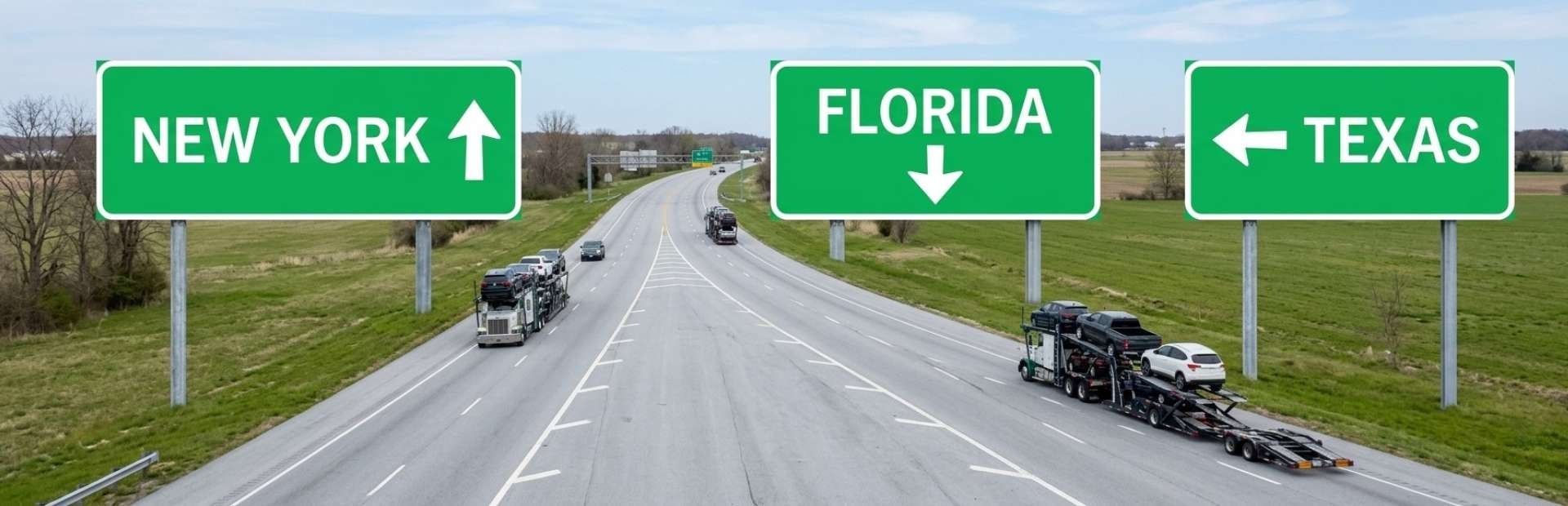
Delaware's position on the I-95 corridor is both an advantage and a trap. The Federal Highway Administration designates I-95 as one of the country's Primary Freight Network corridors — some of the highest carrier density on the East Coast passes through this state every day. The advantage is availability. The trap is assuming that means your specific address is automatically covered.
Here's how the four major routes actually play out.
New York to Delaware and back: This is the most carrier-dense Delaware corridor. New York to Wilmington is roughly 110 miles. Carriers run it as part of larger Northeast loops — Boston to DC, Philadelphia to Baltimore. That competition keeps prices down and transit times to 1–2 days. You'll have the most options here and the least lead time pressure.
Florida to Delaware and back: This is snowbird territory, full stop. Florida to Delaware and back again runs on a predictable seasonal cycle. Demand spikes in fall heading south and spring heading north. During those windows, prices climb and booking windows shrink fast. Outside peak season, this route is significantly cheaper and easier to book on short notice.
Delaware to Texas: The longest common haul from Delaware, roughly 1,600 miles to the Dallas-Houston area. Fewer carriers run the full route directly — many consolidate loads across multiple East Coast states before heading west. Budget 5–7 days for transit and book 2–3 weeks out. Price sensitivity on this run is high. Small changes in booking timing create meaningful cost differences.
The geography issue: Not all of Delaware is equal for carrier access. Wilmington, Newark, and Dover sit near major interstates and get regular pickups. Rural Sussex County, beach communities like Rehoboth Beach, and the lower half of the state sit off the primary carrier paths. Off-highway pickups may add $50–$150 to your quote or require a longer wait for a carrier heading that direction.
|
Route |
Typical Transit |
Carrier Frequency |
Recommended Booking Window |
|
New York ↔ Delaware |
1 – 2 days |
Daily |
1 – 2 weeks |
|
Florida ↔ Delaware |
4 – 6 days |
Several per week |
3 – 4 weeks (peak) / 2 weeks (off-peak) |
|
Delaware → Texas |
5 – 7 days |
Weekly or less |
2 – 3 weeks minimum |
For snowbirds managing the Delaware–Florida seasonal run, seasonal car relocation covers the service options in detail. For the Florida side of the equation, car shipping Florida: costs and times gives you the full picture on that corridor. And if you're working the New York end, 7 car shipping New York tips covers what to watch for on that stretch.
Open Vs. Enclosed Car Transport In Delaware

Most Delaware shipments move on open carriers. The I-95 corridor has some of the highest open carrier density on the East Coast, which keeps pricing competitive and transit times predictable on the main routes.
Enclosed is a different calculation entirely. The price is higher. The question is whether what you're protecting justifies the premium.
Why open carrier works for most people:
Open carriers run Delaware routes daily. They're fast, well-established, and the default for standard passenger vehicles. A 4-year-old family sedan or a daily driver doesn't need the added cost of enclosed transport. Insurance coverage on open carriers is standard, and reputable carriers handle these loads without incident routinely.
When enclosed is the only reasonable choice:
The 40–60% price premium on enclosed isn't optional for some vehicles and situations. It's the floor.
-
You own a classic, collectible, or exotic vehicle
-
Your car's current market value exceeds $50,000
-
You're shipping to or from a car show — damage to a show vehicle carries real financial and competitive consequences
-
You're moving a motorcycle and want protection from road debris and weather exposure during transit
-
You need carrier insurance to reflect your vehicle's actual replacement value
-
You're shipping near the Delaware coast where salt-spray exposure during loading and transit is a realistic concern
For a detailed cost comparison between the two options, open vs. enclosed transport cost breaks down the numbers by route and vehicle type.
According to the Insurance Information Institute, standard personal auto insurance policies often exclude coverage for damage that occurs during third-party transport. That gap matters. Don't assume your existing coverage follows your car onto a carrier without checking your policy first.
For enclosed transport availability on Delaware routes, see enclosed vehicle shipping.
Best Car Shipping Companies In Delaware
Not every company with national coverage gives Delaware the same attention. The I-95 corridor brings carriers through constantly, but rural areas, southern Sussex County, and off-highway addresses require companies that specifically dispatch to this state — not just pass through it.
What To Verify Before You Book
This checklist takes about 10 minutes. Skipping it can cost far more than that if something goes wrong.
-
FMCSA registration. Every licensed carrier must be registered with the Federal Motor Carrier Safety Administration. Check their MC number before you sign anything.
-
Cargo insurance minimum. $100,000 cargo coverage is the industry standard. Ask for a Certificate of Insurance in writing — not a verbal confirmation. If they can't produce one, walk away.
-
Verified reviews specific to Delaware. National averages can mask weak regional performance. Look for carriers with reviews from actual Delaware shipments, not just generic 5-star ratings from other markets.
-
No large upfront deposit. Reputable brokers don't require significant payment before pickup. Deposit-heavy quotes are a consistent red flag in this industry.
-
Written price lock. A quoted range of "$800–$1,100" means you're looking at their ceiling on your worst day. Get the final price in writing before your car is loaded.
Run every carrier's DOT number through the FMCSA carrier database. It shows their licensing status, insurance record, and safety violation history. Two minutes of research here eliminates the most common Delaware car shipping scams before they start.
Companies Worth Considering For Delaware Routes
The four companies below have verified reviews from actual Delaware shipments on TransportVibe, ordered by TrustScore. TrustScores are updated in real time on the platform — click a company name to see their current rating and shipment-specific reviews.
|
Company |
Known For |
Best Use Case |
Services |
|
Price-lock guarantee |
Northeast corridor, NY–DE |
Open + Enclosed |
|
|
Multiple discount tiers, long-haul network |
DE–TX and FL–DE routes |
Open + Enclosed |
|
|
Pricing transparency, communication scores |
NY–DE corridor, short notice |
Open + Enclosed |
|
|
Enclosed and time-sensitive moves |
Classic, exotic, show vehicles |
Enclosed specialist |
Rankings based on TrustScore and verified shipment reviews on TransportVibe. Verified Partner status on this platform indicates a commercial relationship — it does not affect ranking or editorial content.
For a broader comparison of top carriers currently rated across Delaware routes, see best car shipping companies on TransportVibe.
Who Actually Ships Cars Through Delaware, And What Each Person Needs
Delaware draws a specific mix of people, and their shipping situations don't all look the same. Here's who actually uses Delaware car shipping services — and what each group needs to know before booking.
Relocating for work or school: Wilmington is a banking and financial services hub. The University of Delaware in Newark pulls students in and out every semester. The greater Philadelphia metro area routes a significant volume of professional moves through Delaware as well. If you're moving on a deadline — a job start date, a semester move-in — book at least 2 weeks out. Less than that and your carrier options shrink considerably.
Military (Dover AFB): Dover Air Force Base is one of Delaware's largest employers and a consistent source of PCS moves. PCS shipments require specific documentation and often military-specific carrier experience. Most reputable companies offer a military discount — get it confirmed in writing, not verbally. For dedicated guidance, military vehicle relocation covers the service side, and military car shipping guide walks through the documentation and logistics. Military OneSource is the official DoD resource for PCS entitlement checks and vehicle shipping options.
If you're shipping from Dover to Texas — one of the most common long-haul PCS routes out of Dover AFB — budget extra lead time. The DE–TX corridor has limited direct carriers and a 5–7 day transit window at minimum.
Snowbirds: Delaware to Florida in October–November. Florida back to Delaware in March–April. If this is your routine, booking lead time is the only cost lever you actually control. Peak season bookings made 3–4 weeks out run significantly cheaper than last-minute quotes on the same route. Guide to snowbird car shipping covers the full seasonal strategy.
Car dealership owners: Dealer-to-dealer shipping, auction transport, and multi-vehicle hauling run under commercial insurance terms that differ from personal shipping contracts. Don't use a personal auto transport broker for commercial volume — the liability structure is different. TransportVibe's dealer vehicle transport solutions page covers the right carrier type and documentation requirements.
Classic or exotic car owners: Enclosed transport, full stop. If your vehicle has collector or replacement value, the open carrier risk isn't worth the savings. Look for white-glove pickup carriers familiar with show venues — the Dover Speedway area and Rehoboth attract events that move high-value cars regularly.
Seniors: Door-to-door is the practical default. Terminal pickup requires your own transport to get there, which defeats the purpose for many senior shippers. TransportVibe's senior-friendly auto shipping option covers door-to-door carriers specifically suited to this need.
Motorcycle riders: Open air works fine on most Delaware I-95 routes. Enclosed is worth it for long hauls or show bikes. Always confirm the carrier's tie-down method before booking — improper securing causes most motorcycle transit damage, and that's a claim dispute you don't want to navigate.
What To Do Before Your Car Gets Picked Up In Delaware
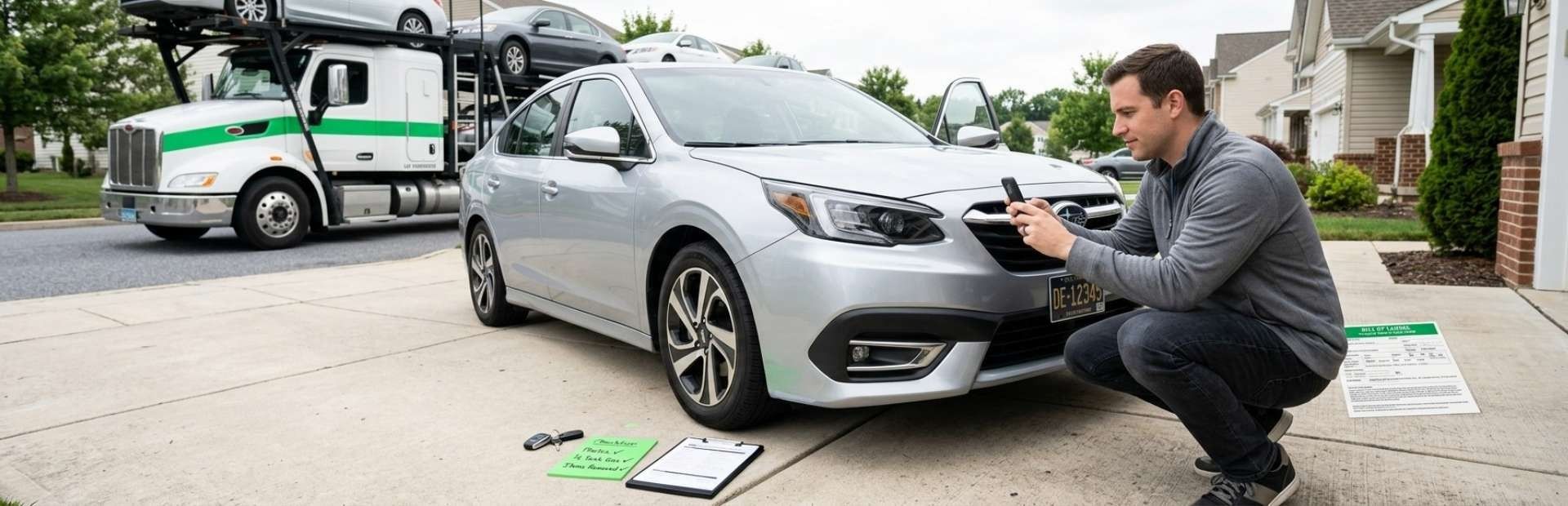
Most damage disputes and billing conflicts in car shipping trace back to preparation failures — not carrier negligence. Here's how to avoid being on the losing side of that dispute.
Before The Driver Arrives
-
Remove all personal items from the car. Carriers are not insured for belongings left inside the vehicle, and some states explicitly prohibit personal items in transported cars. This includes the trunk.
-
Leave roughly a quarter tank of gas. Enough to drive the car onto and off the carrier. Not enough to add unnecessary weight or become a concern during transit.
-
Photograph every angle of the vehicle before the driver shows up. All four sides, the roof, the undercarriage if accessible, and any existing damage — dents, chips, scratches. Date-stamp every image. This is your primary evidence if a dispute comes up at delivery.
-
Write down the odometer reading somewhere other than your phone.
-
Check for fluid leaks and verify tire pressure is correct. Carriers can refuse a vehicle with active leaks, and showing up with flat tires creates a problem on both sides.
-
Disable the car alarm or leave the key fob accessible to the driver. An alarm triggering mid-transport creates real complications.
-
Make sure the car runs. Non-operable vehicles require special loading equipment and cost more to ship. If your car doesn't start, disclose that before booking — not at pickup.
At Pickup — The Bill Of Lading
According to the Cornell Law School's Legal Information Institute, a Bill of Lading is a legally binding document that describes the condition of freight at the time of handoff between parties. In car shipping, it's your contract and your protection.
Go through it with the driver before you sign. Every existing scratch, dent, chip, or scuff needs to be listed. If something is missing from the form, add it before you hand over the keys. If the driver disagrees, photograph the area again in their presence. Anything not documented on the Bill of Lading at pickup is extremely difficult to dispute at delivery.
Take the same photos at delivery, before the car leaves the carrier. If new damage appears, note it on the delivery Bill of Lading before signing. Do not sign a clean delivery form on a car with new damage — that signature ends your leverage.
For a broader list of what first-timers get wrong, see 10 car shipping mistakes to avoid and car shipping insurance in the USA. The insurance guide covers exactly what carrier liability covers — and where your personal policy ends.
For added protection during transit, see covered vehicle transport.
What Delaware Shippers Ask Before Booking
These are the questions that come up most before moving a car in or out of Delaware. Direct answers, no padding.
How Much Does It Cost To Ship A Car From New York To Delaware?
Shipping a car from New York to Delaware typically costs $250–$450 on open carrier for the ~110-mile route. Enclosed runs $400–$650. Final price depends on season, vehicle size, and booking timing. Get verified quotes on TransportVibe.
How Long Does Delaware Car Shipping Take — And What Affects The Timeline?
Most Delaware car shipping takes 1–2 days from New York, 4–6 days from Florida, and 5–7 days from Texas. Transit time depends on route distance, carrier availability, and whether your pickup is near a major interstate.
What Are The Best Car Shipping Companies In Delaware Based On Verified Reviews?
Based on verified shipment reviews on TransportVibe, top-rated Delaware car shipping companies include Sherpa Auto Transport, AmeriFreight, SGT Auto Transport, and Nexus Auto Transport. Always check FMCSA registration and read route-specific reviews before booking.
Is Open Or Enclosed Transport Better For Shipping A Car To Delaware?
Open carrier works for most standard vehicles. It's cheaper and carriers run Delaware routes daily. Go enclosed if you're shipping a classic, luxury, or high-value car worth more than $50,000. See open vs. enclosed car shipping.
How Far In Advance Should I Book Car Shipping From Delaware To Texas?
Book Delaware to Texas car shipping at least 2–3 weeks in advance. The route is roughly 1,600 miles with limited direct carriers. Last-minute bookings add 15–25% to the cost. Lock in your quote early and in writing.
Ready To Ship? Here's How To Make The Call
Delaware car shipping is one of the more carrier-competitive markets on the East Coast — particularly on the New York corridor. That keeps pricing reasonable and transit times short on the short-haul routes. The Florida and Texas runs are a different story. Fewer direct carriers, longer transit, and peak-season surges make those corridors more expensive and more sensitive to how far out you book.
Three decisions settle most of it:
Open or enclosed? Open carrier for standard daily drivers. Enclosed for classics, exotics, motorcycles heading to shows, and any vehicle where the cost of damage outweighs the premium for protection.
When are you booking? New York to Delaware can be arranged in 1–2 weeks. Florida and Texas routes need 2–3 weeks minimum, 3–4 weeks during peak windows. Book late and you'll pay for it.
Did you verify the carrier? Run the MC number. Get cargo insurance in writing. Lock the price before pickup. If a company resists any of those three, that's the answer.
TransportVibe shows you verified reviews from actual Delaware shipments — not aggregated national ratings. Read real outcomes from real routes, compare carriers side by side, and book based on data.
Compare verified Delaware car shipping companies and get your quote — real reviews, locked-in pricing, no last-minute surprises.


