


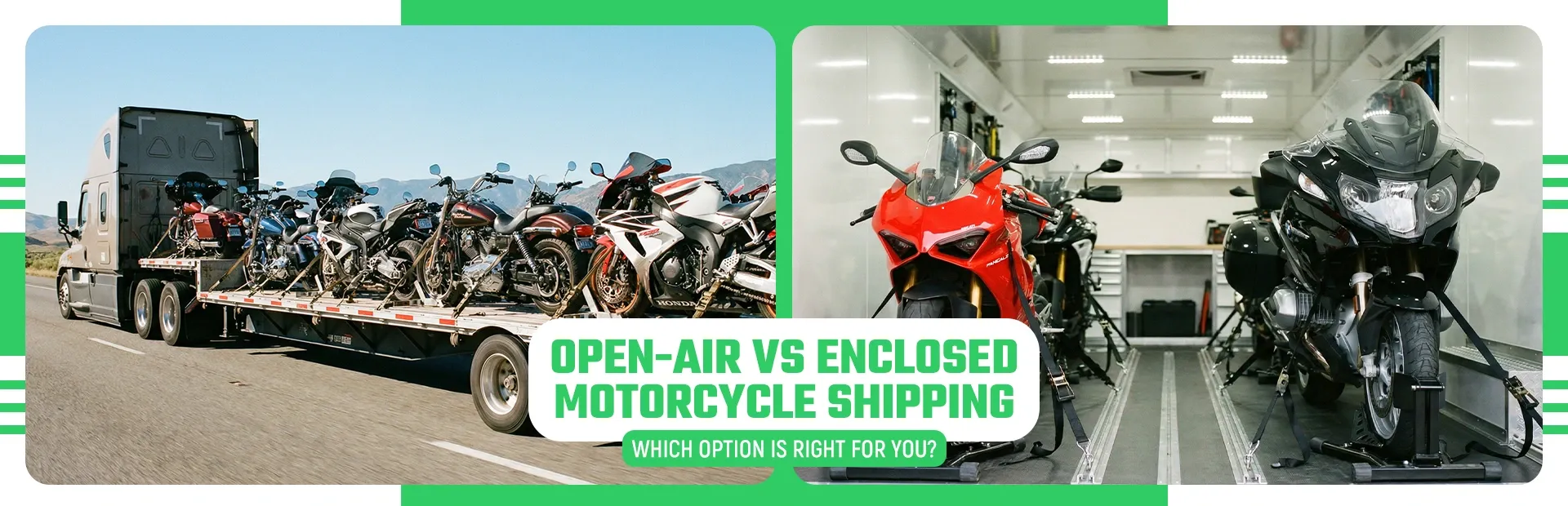
Motorcycle Shipping Options: Open-Air vs Enclosed

Motorcycle Shipping Options: Open-Air vs Enclosed

Transportvibe
June 02, 2025
5 min read

Whether you're a cross-country rider, collector, or seller, shipping your motorcycle safely is a top priority. But with two primary methods to choose from — open-air and enclosed shipping — how do you decide which is right for you? At Transportvibe, we break down everything you need to know about both options so you can make a confident, cost-effective decision when it comes to motorcycle transport in the USA. In this comprehensive guide, we’ll compare open-air and enclosed motorcycle shipping in terms of cost, safety, service type, transit time, insurance, and more.

Table of Contents

  • What Is Open-Air Motorcycle Shipping?
  • What Is Enclosed Motorcycle Shipping?
  • Cost Comparison: Open-Air vs Enclosed
  • Safety and Protection
  • Availability and Accessibility
  • Transit Time and Scheduling
  • Ideal Use Cases for Each Method
  • Insurance and Risk Management
  • Pros and Cons Recap
  • Real-Life Scenarios
  • How to Choose the Right Option
  • Transportvibe Recommendations
  • Final Thoughts

What Is Open-Air Motorcycle Shipping?

Open-air motorcycle shipping involves loading your bike onto a flatbed or two-tier trailer exposed to the elements. It’s similar to how cars are transported in bulk by dealerships.

Key Features:

  • Most affordable option
  • Carried on open trailers
  • Secured with tie-downs or wheel chocks
  • May be grouped with multiple bikes or vehicles

Open-air shipping is typically used for:

  • Daily use motorcycles
  • Local or regional moves
  • Budget-conscious shippers

At Transportvibe, we list dozens of trusted open-air motorcycle carriers with strong track records and excellent customer reviews.

What Is Enclosed Motorcycle Shipping?

Enclosed motorcycle shipping places your bike inside a hard-sided trailer or container. These vehicles are fully enclosed, protecting your motorcycle from weather, road debris, and potential damage.

Key Features:

  • Highest level of protection
  • Carried in single or multi-unit enclosed trailers
  • Ideal for luxury, vintage, or high-value bikes
  • May include soft straps, lift gates, and custom crating

Enclosed shipping is often preferred by collectors, dealerships, or anyone shipping a bike long-distance during extreme weather seasons.

Cost Comparison: Open-Air vs Enclosed

Open-Air Shipping:

  • Cost Range: $300 – $700
  • Factors Affecting Price: distance, weight, fuel prices, rural access

Enclosed Shipping:

  • Cost Range: $600 – $1,200
  • Why Higher Cost? Specialized equipment, fewer bikes per trip, longer loading/unloading time

Transportvibe Tip: If your bike is worth under $5,000 and you're shipping it under 500 miles, open-air is typically the better financial choice.

Safety and Protection

Open-Air:

  • Exposed to rain, sun, snow, and road debris
  • Risk of minor cosmetic damage (e.g., dust, scratches)
  • Secured with tie-downs; quality varies by carrier

Enclosed:

  • Fully protected from elements
  • Soft straps, padding, and custom racks prevent movement
  • No weather or debris exposure

Verdict: For weather-sensitive, luxury, or classic bikes, enclosed transport offers peace of mind.

Availability and Accessibility

Open-air shipping is more widely available across the country. More carriers use open trailers, especially for general transport routes. Enclosed carriers are less common and may require advanced booking.

Enclosed carriers often:

  • Serve premium or niche markets
  • Have more limited routes
  • Require earlier scheduling, especially during peak seasons

Transportvibe Insight: If you're on a tight timeline, open-air may offer faster booking.

Transit Time and Scheduling

Open-Air:

  • Faster to schedule
  • May have more frequent departure dates
  • Sometimes longer in transit due to multiple stops

Enclosed:

  • Fewer departures
  • Often shorter in-transit times due to fewer loads
  • Premium carriers may offer direct or expedited options

Recommendation: If timing is critical, consider enclosed expedited shipping services.

Ideal Use Cases for Each Method

Open-Air Shipping Is Best For:

  • Standard motorcycles, cruisers, dirt bikes
  • Owners on a budget
  • Short-distance moves (under 1,000 miles)
  • Repeat seasonal riders (e.g., snowbirds)

Enclosed Shipping Is Best For:

  • Vintage, rare, or custom-built motorcycles
  • New bike deliveries
  • Cross-country shipping
  • Bad-weather seasons (e.g., winter, monsoon regions)

Insurance and Risk Management

All FMCSA-licensed carriers must provide basic insurance. However, coverage limits vary by carrier and transport type.

Open-Air Coverage:

  • Often lower policy caps ($10,000 – $25,000)
  • May exclude cosmetic damage

Enclosed Coverage:

  • Higher value protection ($50,000 – $100,000+)
  • Broader coverage scope

Transportvibe Tip: Always ask for the Certificate of Insurance (COI) and request additional coverage if needed.

Pros and Cons Recap

Feature Open-Air Shipping Enclosed Shipping
Cost Lower Higher
Protection Basic Premium
Availability High Moderate
Insurance Lower coverage High-value coverage
Transit Time Moderate Faster (in some cases)
Best for Budget/local rides Valuable/rare motorcycles

Real-Life Scenarios

Scenario 1: Budget Rider Shipping Cross-Country

  • Bike: 2018 Honda Shadow
  • Distance: 1,200 miles
  • Best Option: Open-air for affordability

Scenario 2: Collector Sends Custom Chopper to Show

  • Bike: Handbuilt chopper, valued at $40,000
  • Distance: 800 miles
  • Best Option: Enclosed shipping with insurance add-on

Scenario 3: College Student Relocating

  • Bike: Yamaha R3
  • Distance: 300 miles
  • Best Option: Open-air with basic insurance

Scenario 4: Dealership Delivers New Harley

  • Bike: 2025 Harley-Davidson CVO
  • Distance: 1,500 miles
  • Best Option: Enclosed carrier with white-glove service

How to Choose the Right Option

Ask yourself:

  • What’s the value of my motorcycle?
  • How far am I shipping it?
  • Am I concerned about weather or paint damage?
  • Is time or cost more important to me?

Then:

  1. Compare quotes from both open and enclosed carriers.
  2. Review the fine print on insurance and timelines.
  3. Use a trusted platform like Transportvibe to view verified reviews.

Transportvibe Recommendations

We recommend enclosed shipping for:

  • Bikes valued over $10,000
  • Shipments during winter months
  • Collector and limited-edition motorcycles

For everyone else, open-air remains a safe, reliable, and budget-friendly option — especially if you book through vetted carriers. Use our quote tool to compare real-time pricing, delivery estimates, and carrier ratings for both enclosed and open-air motorcycle shipping.

Final Thoughts

Choosing between open-air and enclosed motorcycle shipping doesn’t have to be difficult. It comes down to your priorities — budget, protection, and timing. At Transportvibe, we simplify your decision by giving you direct access to:

  • Trusted carrier reviews
  • Transparent quotes
  • Detailed service breakdowns

Ready to ship your motorcycle? Get Your Free Quote Now and explore your best transport options today.

Related articles

JUN 07, 2025
AmeriFreight Review: How They Rank in 2025

AmeriFreight Review: How They Rank in 2025

TRANSPORTVIBE

AmeriFreight Review: How They Rank in 2025 In the ever-evolving auto transport industry, choosing a reliable and affordable shipping company is key to a stress-free experience. AmeriFreight auto transport has been a longstanding player in the U.S. car shipping market — but how do they stack up in 2025? At Transportvibe, we analyzed their pricing, service options, customer reviews, and competitive position to help you make an informed decision. In this in-depth AmeriFreight auto transport review , we’ll walk you through everything you need to know. Table of Contents AmeriFreight Review Services Offered by AmeriFreight Cost & Pricing Transparency How AmeriFreight Auto Transport Works AmeriFreight Customer Experience Pros and Cons of AmeriFreight AmeriFreight vs Other Car Shipping Companies Who Should Use AmeriFreight Auto Transport? Transportvibe Expert Score for AmeriFreight Final Verdict on AmeriFreight in 2025 AmeriFreight Review AmeriFreight is a Georgia-based auto transport broker founded in 2004. Over the past two decades, they’ve built a reputation as a reliable option with strong customer service and a wide national network of vetted carriers. Key Details: Type: Licensed broker (not a carrier) Headquarters: Peachtree City, GA FMCSA Registration: Yes DOT Number: 2230931 MC Number: 600841 AmeriFreight handles thousands of vehicle shipments annually and holds an A+ BBB rating. In 2025, they continue to rank among the top 5 most searched auto transport brands. Services Offered by AmeriFreight AmeriFreight auto transport offers a broad selection of shipping solutions: 1. Open Car Transport Their most popular and budget-friendly service. Ideal for standard vehicles. 2. Enclosed Auto Shipping Provides added protection for luxury, exotic, and classic cars. 3. Door-to-Door Shipping They arrange pickup and delivery directly to your specified locations when available. 4. Military Car Shipping Discounted rates for active-duty military personnel. 5. Motorcycle Shipping Specialized partners for safe motorcycle transport. 6. Snowbird & Seasonal Relocation Designed for seasonal travelers looking to ship vehicles between states. Bonus: They offer an AFta PLAN (Addendum to the freight shipping agreement) for gap insurance and damage claim assistance. Cost & Pricing Transparency AmeriFreight does not guarantee fixed prices upfront. Instead, they operate on a bidding model , where your quote is a starting point and actual carrier pricing may vary. Cost Breakdown (Average Ranges in 2025): Sedan (Open Carrier): $700 – $1,000 (Cross-country) SUV (Open Carrier): $850 – $1,200 Enclosed Shipping: Add 30–50% to open carrier rates They offer three tiers of pricing: Tier Description Economy Lowest price, longer wait time for carrier matching Priority Faster booking with higher chance of quick pickup First Class Highest price, expedited shipping, best for tight windows Transportvibe Tip: Always confirm your final price and timeline in writing before booking. Bidding can cause prices to fluctuate unexpectedly. How AmeriFreight Auto Transport Works AmeriFreight operates as a broker, meaning they connect you with FMCSA-certified carriers. Here’s how the typical process flows: Request a Quote: Via phone or online form Choose a Price Tier: Economy, Priority, or First Class Carrier Assignment: AmeriFreight contacts carriers to match your route and timeframe Dispatch & Pickup: You get notified when a carrier accepts the job Delivery: Upon arrival, complete inspection and sign Bill of Lading They also provide 24/7 shipment updates and have a mobile-friendly tracking portal. AmeriFreight Customer Experience AmeriFreight receives generally positive feedback in 2025 across all major review platforms: Platform Rating (2025) Notable Comments BBB A+ Strong dispute resolution and customer support Trustpilot 4.4/5 Great communication, but some report price hikes Google Reviews 4.6/5 Reliable for cross-country transport Transportvibe 4.5/5 Good for first-timers and military families Most Common Praises: Responsive and polite customer service Fair damage claim policy (AFta PLAN) Discount options for seniors, students, military Most Common Complaints: Unexpected final price increases Some delivery delays (typically weather-related) Real User Review (2025): “AmeriFreight made shipping my Tesla from California to Florida incredibly smooth. I upgraded to the Priority plan and my car was picked up in 2 days. No hidden fees.” – Kevin M., Verified via Transportvibe Pros and Cons of AmeriFreight Pros: Multiple pricing tiers for different budgets Strong insurance coverage options Responsive and knowledgeable agents Nationwide availability Great support for military and seniors Cons: Pricing not fixed (bidding-based) No instant online booking Some variability in carrier quality AmeriFreight vs Other Car Shipping Companies Feature AmeriFreight Montway Sherpa RoadRunner Fixed Pricing ❌ ❌ ✅ ❌ Insurance Add-On ✅ (AFta PLAN) ✅ ✅ ✅ Carrier Vetting ✅ ✅ ✅ ✅ Price Tiers ✅ ❌ ❌ ❌ Best For Budget/First-Time Premium/Volume Transparent Pricing Fast Booking Who Should Use AmeriFreight Auto Transport? AmeriFreight is a solid choice for: First-time shippers looking for flexibility Military personnel who need PCS vehicle moves Budget-conscious customers open to price variance People shipping coast-to-coast or cross-country Not ideal for: Shippers who need guaranteed fixed rates Urgent last-minute moves without budget flexibility Transportvibe Expert Score for AmeriFreight Category Score (out of 5) Pricing Transparency 3.5 Service Variety 4.5 Customer Support 4.7 Claims Process 4.2 Overall Value 4.4 Total Score: 4.4 / 5 – Recommended by Transportvibe Final Verdict on AmeriFreight in 2025 AmeriFreight continues to be one of the most reliable and accessible car shipping brokers in 2025. Their flexible pricing, responsive support, and wide carrier network make them ideal for many types of shippers, especially first-timers and military families. However, if you’re looking for guaranteed pricing or instant digital booking, you may want to compare them with fixed-price providers like Sherpa Auto Transport. Ultimately, AmeriFreight’s longevity and customer-centric model speak volumes. With proper planning and tier selection, they remain a top contender for auto shipping needs in 2025. Get Your Quote Now: Use our free comparison tool to see how AmeriFreight stacks up against other top transport companies.

JUN 01, 2025
Who Is Responsible if a Car Is Delayed in Delivery?

Who Is Responsible if a Car Is Delayed in Delivery?

TRANSPORTVIBE

When you ship a vehicle across the U.S., you expect it to arrive on time. But what happens when it doesn't? Car delivery delays are not uncommon, and they often leave shippers asking a critical question: who’s responsible? At Transportvibe, we connect thousands of customers to reliable auto transport services every year, and delivery delays are one of the most frequently asked-about issues. In this guide, we’ll break down what causes delays, who is legally and practically responsible, and how you can protect yourself when shipping a car. Table of Contents Common Causes of Car Delivery Delays Responsibilities of Auto Transport Carriers Broker Accountability in Delivery Delays What Role Does the Customer Play? What Does the Bill of Lading Say? Legal Protection and Insurance Coverage Real-Life Scenarios Explained Tips to Avoid Delivery Delays How to File a Complaint or Claim Final Thoughts Common Causes of Car Delivery Delays Before pointing fingers, it’s important to understand the typical reasons why a car might not arrive on time. These include: 1. Traffic and Road Conditions Accidents, detours, and construction zones can significantly alter timelines. 2. Weather Delays Storms, snow, or hurricanes can make routes dangerous or impassable. 3. Mechanical Issues Breakdowns with the carrier truck itself are rare but can cause major slowdowns. 4. Driver Hours and FMCSA Compliance Federal Motor Carrier Safety Administration (FMCSA) limits how many hours a driver can operate in a day. Delays often occur when a driver reaches their daily limit. 5. Scheduling Conflicts Sometimes, delays are caused by prior deliveries or pickups running late, especially with multi-load carriers. 6. Customer Issues In some cases, the pickup or delivery party is unavailable, or gives the wrong address, resulting in delays. Responsibilities of Auto Transport Carriers Carriers are the direct service providers . They are responsible for: Picking up and delivering vehicles as scheduled Maintaining communication about any changes or delays Complying with FMCSA regulations Safely transporting your vehicle with proper care However, most carriers do not guarantee exact delivery dates . Instead, they provide a delivery window (e.g., 3–5 days). As long as delivery happens within that time frame, there is no breach of agreement. If delays go beyond the agreed window without justification, the carrier may be considered at fault. Still, legal liability often depends on the terms in the contract and the Bill of Lading (BOL) . Broker Accountability in Delivery Delays Auto transport brokers act as the middleman , helping you find a carrier. While brokers don't operate trucks, they are responsible for: Vetting carriers for reliability and insurance Providing accurate quotes and timelines Communicating clearly with both the customer and the carrier If a broker fails to: Inform you of potential delivery issues Provide accurate ETA Replace an unreliable carrier ...then they may bear shared responsibility for delays. This is especially true if their failure caused you to miss a critical deadline (e.g., military relocation, lease end). TransportVibe Tip: Always work with FMCSA-registered brokers with transparent customer reviews and cancellation policies. What Role Does the Customer Play? Customers have responsibilities too. Failing to meet them can cause delays or void damage claims. You are responsible for: Being available for vehicle pickup and drop-off Providing accurate location details Ensuring your vehicle is ready for transport (e.g., keys, documentation, fuel level) If the delay is caused by the customer (no one home, inaccurate address), the responsibility falls on the shipper — not the carrier. What Does the Bill of Lading Say? The Bill of Lading (BOL) is the legally binding contract between you and the carrier. It outlines: Pickup and delivery windows Condition of the vehicle Liability clauses in case of delay, damage, or cancellation Most BOLs contain a force majeure clause , which frees carriers from responsibility for delays caused by uncontrollable events (e.g., natural disasters, labor strikes, war). Read the BOL thoroughly before signing. If delivery dates are vague or not mentioned, clarify it with the carrier before agreeing. Legal Protection and Insurance Coverage Auto transport companies must carry liability insurance, but this usually only covers vehicle damage , not delivery delays. If you're shipping a high-value car or working under tight deadlines, consider: Gap insurance for delay-related costs Rental reimbursement if you need a vehicle during the delay Guaranteed pickup/delivery services (offered at extra cost) Some premium carriers offer shipping guarantees, which may entitle you to partial refunds or credits if they fail to meet a contracted delivery window. Real-Life Scenarios Explained Scenario 1: Delayed Due to Snowstorm Responsibility: Not the carrier. Weather delays are often covered under force majeure. Best Action: Monitor weather forecasts and communicate with your carrier in advance. Scenario 2: Carrier Breaks Down and Delivers 4 Days Late Responsibility: Carrier, but protected under mechanical failure clause in BOL. Best Action: Contact broker for alternate carrier if available. Scenario 3: Customer Not Available at Delivery Responsibility: Customer. You may be charged for rescheduling or storage. Best Action: Assign a representative if you can’t be there. Scenario 4: Broker Assigns Unreliable Carrier Responsibility: Shared between broker and carrier. Best Action: Use platforms like TransportVibe to read carrier reviews. Tips to Avoid Delivery Delays Here are proactive ways to reduce the risk of car delivery delays: Book in Advance Booking 2–4 weeks ahead helps secure reliable carriers. Ask for a Tight Window Request clear pickup and delivery ranges. Avoid vague "5–10 day" ranges. Use Enclosed Transport for Urgent Deadlines Enclosed trucks often serve fewer customers and have faster routes. Track Weather Patterns Avoid shipping during snow seasons, hurricanes, or known storm routes. Verify Carrier Reviews Use TransportVibe to compare companies and read verified ratings. Get It in Writing Ensure delivery windows, cancellation terms, and refunds are included in your contract or BOL. Stay in Communication Provide updated contact info, be responsive, and keep in touch with both broker and driver. How to File a Complaint or Claim If you believe a delay was due to negligence or breach of contract, take these steps: Contact the Carrier First Ask for a written explanation of the delay. Contact the Broker Ask for assistance in resolving the issue. Good brokers will step in to mediate. Submit a Complaint to FMCSA Visit the FMCSA website and file a formal complaint. Keep all documentation. Leave a Review on TransportVibe Help others by sharing your experience. Seek Legal Advice (for severe cases) For financial damages or breach of contract, consider consulting a transportation attorney. Final Thoughts So, who is responsible if a car is delayed in delivery? The answer depends on the contract, the cause of the delay, and the communication between the shipper, broker, and carrier. At Transportvibe , our goal is to help you avoid uncertainty by connecting you with top-rated, FMCSA -compliant auto transport providers. Use our platform to: Compare real reviews Read service terms in plain English Get transparent, accurate quotes Need peace of mind for your next car shipment? Get Your Free Quote Now and find the most reliable auto transport companies in the USA.