


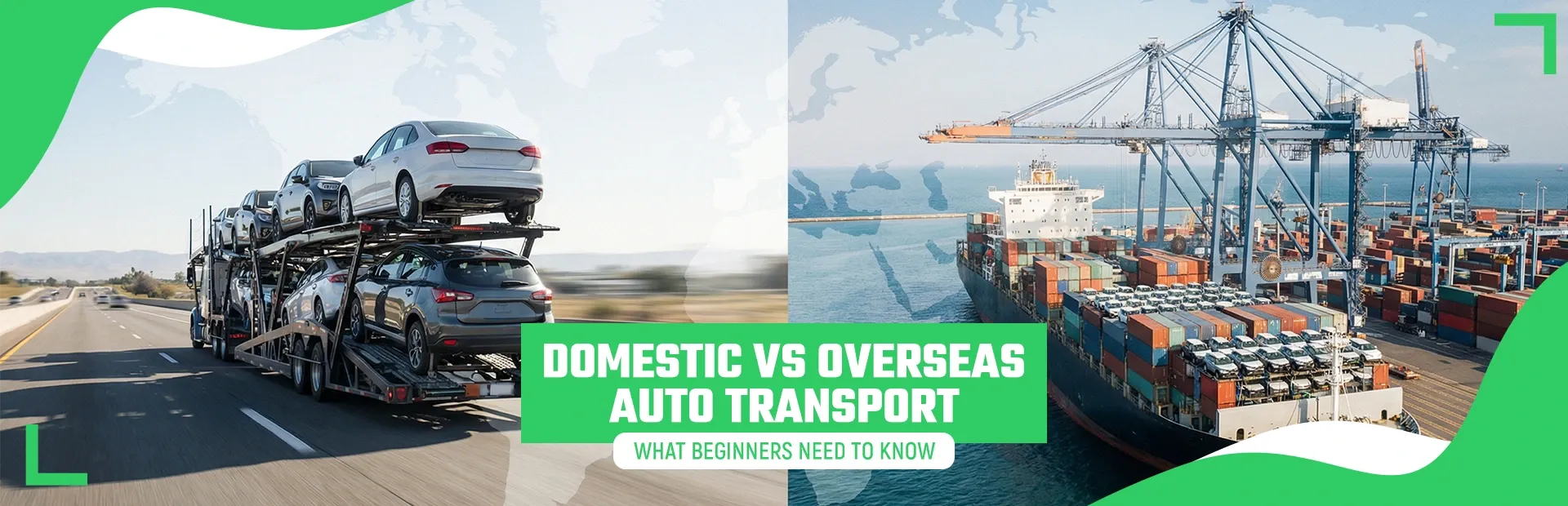
Beginner’s Guide to Domestic vs International Auto Transport

Beginner’s Guide to Domestic vs International Auto Transport

Transportvibe
May 27, 2025
4 min read

Shipping a vehicle can be a major part of relocating, purchasing, or selling a car. But not all auto transport services are the same. There are key differences between domestic auto transport—moving a car within the USA—and international auto transport, which involves shipping vehicles across borders or overseas.

In this beginner’s guide, you’ll learn what sets the two apart, what documents and regulations apply, how much it costs, and what kind of services are best for your situation. Whether you're sending a car from New York to California or from Germany to the USA, this article will help you understand which type of transport best suits your needs.

What Is Auto Transport?

Auto transport is the process of moving vehicles from one location to another using professional shipping carriers. It's commonly used for:

  • Relocation
  • Online car purchases
  • Classic and luxury car shipping
  • College or military moves

There are two primary categories:

  • Domestic Auto Transport: Vehicle transport within the United States.
  • International Auto Transport: Vehicle transport between different countries.

Why It’s Important to Know the Difference

Understanding the distinction helps you:

  • Choose the right type of service
  • Prepare the necessary paperwork
  • Avoid customs delays and extra fees
  • Plan your budget more effectively
  • Comply with legal and regulatory requirements

The more you know, the fewer surprises you’ll face when shipping a vehicle across state lines or international borders.

What This Guide Covers

Here’s what we’ll explain in this guide:

  1. What makes domestic and international transport different
  2. Key paperwork and legal compliance required for each
  3. Available transport methods and services
  4. Cost differences and timelines
  5. When to choose each option
  6. Final steps to make the best decision

Main Differences Between Domestic and International Auto Transport

1. Shipping Distance & Scope

  • Domestic: Transport within the continental USA
  • International: Transport between countries (e.g., Germany to USA, or USA to Canada)

International auto transport often involves ships or planes, whereas domestic uses trucks and rail.

2. Paperwork & Documentation

Domestic Shipping:

  • Bill of lading
  • Vehicle title or registration
  • Proof of insurance

International Shipping:

  • Bill of sale
  • Title and export/import forms (DOT HS-7, EPA 3520-1, CBP 7501)
  • Passport or residency ID
  • Customs declarations

International transport requires significantly more paperwork due to import/export laws.

3. Shipping Methods

Domestic International
Open carrier (most common) Roll-On/Roll-Off (RoRo)
Enclosed carrier (luxury cars) Container shipping (secure)
Flatbed or tow-away Air freight (fastest, costly)

4. Cost & Pricing Structure

  • Domestic: $500–$1,500 based on distance, size, and carrier type
  • International: $1,000–$5,000+ including customs, taxes, and insurance

Domestic transport is simpler and more affordable. International shipping includes customs fees, inspection, port charges, and sometimes vehicle modifications.

5. Delivery Timeline

Domestic International
1–10 business days 3–8 weeks (ocean freight)
Door-to-door service Port-to-port or port-to-door
Real-time tracking Limited tracking

6. Legal Compliance

Domestic:

  • FMCSA (Federal Motor Carrier Safety Administration) rules
  • No customs or import regulations

International:

  • Must meet U.S. DOT and EPA standards if importing to the USA
  • Subject to foreign laws when exporting

Vehicles under 25 years old must be compliant with USA safety/emissions rules or imported through a Registered Importer.

7. Insurance & Tracking

  • Domestic: Basic carrier liability, often real-time GPS tracking
  • International: Marine cargo insurance is highly recommended; tracking may be limited to port updates

Summary Table

Category Domestic Transport International Transport
Distance Within USA Between countries
Documentation Basic (title, bill of lading) Extensive (customs, DOT, EPA)
Cost $500–$1,500 $1,000–$5,000+
Delivery Time 1–10 days 3–8 weeks
Compliance Needed Minimal High (DOT, EPA, customs)
Insurance Optional Strongly recommended
Shipping Type Truck-based Ocean/air + customs

When Should You Use Domestic vs. International Auto Transport?

Choose Domestic Auto Transport if:

  • You’re moving within the USA
  • You bought a car from another state
  • You're shipping a vehicle to a student or military base
  • You need fast and affordable transport

Choose International Auto Transport if:

  • You’re moving overseas or returning to the USA
  • You’re importing a rare or vintage vehicle
  • You’re relocating for work or retirement
  • You’re exporting a car to a buyer abroad

Improve Your Auto Transport Decision Today

Knowing whether you need domestic or international transport is key to avoiding delays, unexpected costs, and regulatory issues.

Final tips:

  • For USA-only vehicle transport, go with a trusted domestic carrier
  • For international shipping, research customs, use marine insurance, and prepare documents early
  • Always compare quotes and check carrier reviews before booking

At Transportvibe, we specialize in helping you find the most trusted auto transport companies within the USA. Whether it’s open carrier or enclosed service, our platform simplifies your car shipping decision.

Get a Free Quote on Transportvibe.com and find the best-rated domestic auto transport providers today!

Related articles

MAY 31, 2025
2025 Trends in Auto Transport: What Shippers Should Know

2025 Trends in Auto Transport: What Shippers Should Know

TRANSPORTVIBE

The U.S. auto transport industry is shifting gears fast in 2025. With the rise of electric vehicles, evolving logistics tech, and changing consumer demands, car shippers need to stay ahead to make smart decisions. At Transportvibe , our mission is to bring you expert insights and trusted guidance. Whether you’re a first-time shipper or a logistics pro, understanding these emerging trends can save you time, money, and stress. Let’s explore the biggest auto transport trends shaping 2025 — and how they affect your next shipment. Table of Contents EV Shipping Goes Mainstream Real-Time Tracking Becomes the Norm Faster Delivery With Smart Routing AI-Powered Pricing & Quoting Increased Demand for Enclosed Transport Sustainable Logistics: Carbon Neutrality in Focus Focus on Customer Experience Rise of Peer-to-Peer Transport Marketplaces Expansion of Regional Micro-Carriers Final Thoughts EV Shipping Goes Mainstream The demand for electric vehicle (EV) transport has skyrocketed in 2025. As EV adoption expands across the U.S., more shippers are requesting specialized carriers with charging support, temperature control, and knowledgeable EV handlers. The Biden administration's continued push for EV infrastructure has led to more people buying electric vehicles across the country. According to BloombergNEF, EVs are projected to make up 35% of new car sales by the end of 2025. This directly increases the demand for transport companies that can handle the unique requirements of electric cars. What this means for you: If you're shipping an EV, choose a carrier experienced in lithium battery safety and EV-specific protocols. Some providers also offer onboard battery monitoring to ensure your vehicle is transported safely and arrives with enough charge. TransportVibe lists top-rated EV-capable shippers in all 50 states. Real-Time Tracking Becomes the Norm Gone are the days of vague delivery windows. In 2025, most auto transport carriers offer GPS-based real-time tracking as a standard feature. Consumers now expect instant updates and ETA predictions similar to Uber or Amazon. Modern tracking tools allow users to get SMS alerts, map views of their shipment, and even estimated arrival adjustments based on weather or road conditions. This is part of a wider trend of transparency and control. What this means for you: Shippers should only consider companies that offer detailed tracking dashboards or mobile apps with live updates. It helps eliminate guesswork and provides peace of mind throughout the process. Faster Delivery With Smart Routing AI and predictive logistics tools are helping carriers optimize routes like never before. By analyzing traffic, weather, and delivery patterns, smart routing software ensures minimal delays and faster deliveries. A 2024 study by McKinsey showed that companies using predictive route planning reduced transport times by up to 22%. In 2025, this is becoming the new standard. What this means for you: Expect shorter transport timelines — especially if you choose carriers that use route optimization software. Also, expedited shipping is becoming more accessible with less margin for error. AI-Powered Pricing & Quoting Dynamic pricing tools powered by AI are transforming the quote process. In 2025, many top-rated carriers offer instant, fair market pricing based on real-time data (e.g., route demand, fuel prices, vehicle type). This means no more waiting for manual quotes or being overcharged due to outdated pricing models. AI now allows customers to receive transparent, data-backed rates within seconds. What this means for you: Get faster, more accurate quotes by using platforms like TransportVibe that aggregate and compare quotes across AI-driven carriers. It also helps to lock in prices in advance before seasonal spikes. Increased Demand for Enclosed Transport Luxury car sales and collectible markets are booming. Combine this with the growth of EVs, and it’s no surprise that enclosed transport is gaining popularity in 2025. Enclosed carriers protect vehicles from dust, rain, snow, and road debris. For high-value vehicles, this added protection is a must. More shippers are willing to pay a premium for enclosed options, even for shorter distances. What this means for you: Consider enclosed shipping for any vehicle that holds sentimental or financial value. It provides superior protection and is now more widely available nationwide thanks to increased demand. Sustainable Logistics: Carbon Neutrality in Focus Environmental awareness is influencing auto transport. Many carriers are now adopting carbon offset programs and offering eco-friendly shipping routes. Companies are investing in fuel-efficient trucks, hybrid fleets, and partnerships with offsetting organizations. Government incentives for green logistics providers have also increased. What this means for you: Look for carriers that highlight sustainability credentials or carbon-neutral shipping options. It’s good for the planet and increasingly preferred by eco-conscious consumers. Focus on Customer Experience With growing competition in the auto transport sector, customer service is becoming a key differentiator. In 2025, top carriers are offering better digital experiences, faster response times, and comprehensive pre-shipment guidance. From responsive support chats to personalized quote follow-ups, companies are doubling down on creating frictionless, high-trust customer experiences. What this means for you: Prioritize companies with strong reputations, verified reviews, and human support. TransportVibe highlights carriers with excellent customer satisfaction scores. Rise of Peer-to-Peer Transport Marketplaces Just as Airbnb disrupted hospitality, peer-to-peer auto transport platforms are gaining traction. These services connect shippers directly with independent carriers, often at lower prices. While still evolving, these platforms are growing fast due to their flexible pricing, faster service, and community-driven ratings. What this means for you: P2P platforms may offer cost savings but require careful vetting. Use platforms like TransportVibe to read verified reviews and ensure you’re dealing with insured, FMCSA-compliant drivers. Expansion of Regional Micro-Carriers In 2025, more local and regional micro-carriers are entering the market to serve last-mile auto transport needs. These operators specialize in short-distance shipping, offering faster and more affordable service within states or metro areas. What this means for you: If you’re moving a vehicle within 200-300 miles, consider regional carriers listed on TransportVibe. They may offer better rates and timelines than national brokers. Final Thoughts The auto transport industry in 2025 is smarter, faster, and more transparent than ever. By embracing these trends — from EV support to AI pricing and real-time tracking — you’ll ensure a smoother, more informed shipping experience. At Transportvibe, we stay ahead of every shift in the transport industry so you don’t have to. Use our trusted reviews, state-by-state guides, and quote comparison tools to make confident decisions. Need to ship your car, motorcycle, or RV this year? Get Your Free Quote Now and see why thousands trust Transportvibe.

MAY 25, 2025
Montway Auto Transport Review: Pros, Cons, & Ratings

Montway Auto Transport Review: Pros, Cons, & Ratings

TRANSPORTVIBE

If you're searching for a reliable car shipping company in the USA, you've likely come across Montway Auto Transport. With thousands of customer reviews, nationwide coverage, and competitive pricing, Montway has emerged as one of the most recognized names in the auto transport industry. But is it really the best fit for your vehicle shipping needs? In this TransportVibe review, we dive deep into Montway Auto Transport’s strengths, weaknesses, service quality, customer satisfaction, pricing, and more—so you can decide with confidence. About Montway Auto Transport Founded in 2006, Montway Auto Transport is a Chicago-based auto transport broker that facilitates both open and enclosed vehicle shipping across all 50 U.S. states, including Hawaii and Alaska. While they do not own their own trucks, they coordinate with a vast network of vetted carriers to move everything from family sedans and SUVs to luxury, classic, and inoperable vehicles. Their website offers instant quotes, 24/7 customer support, and detailed shipment tracking. They also serve corporate relocations, dealerships, and military members—adding to their appeal as a versatile shipping partner. Services Offered by Montway Montway provides a comprehensive range of auto shipping services, including: Open Car Transport: The most affordable and popular method, where vehicles are transported on open-air trailers. Enclosed Car Shipping: For luxury, classic, or high-value vehicles needing added protection from the elements. Expedited Shipping: Prioritized pickup and delivery for time-sensitive moves. Door-to-Door Service: Direct pickup and delivery to your specified locations. International Shipping: Montway offers overseas transport options, including to/from Hawaii and international ports. They also work with: Auto dealerships Military relocations College students Online car buyers and sellers Montway Pros: What Customers Love Nationwide & Hawaii/Alaska Shipping Unlike many competitors, Montway services all 50 states—including hard-to-ship routes like Hawaii and Alaska. Competitive Pricing with Instant Quotes Their online quote calculator is fast and transparent. While not always the cheapest, Montway often offers a solid balance between affordability and service quality. Wide Carrier Network With over 15,000 vetted carriers in their system, Montway can typically accommodate most vehicle types, schedules, and destinations. Real-Time Tracking & Customer Support Their shipment tracking is detailed and includes updates via email or text. They also offer 24/7 support, which is a major bonus in an industry often known for poor communication. Insurance Coverage All transports include basic cargo insurance, and Montway gives you the option to purchase supplemental insurance. Montway Cons: Where They Fall Short Broker Status Means Limited Control Montway is not a carrier—they’re a broker. This means they rely on third-party transport companies to do the actual shipping. As a result, the quality can sometimes vary depending on which carrier you're matched with. Some Reports of Delays While the majority of shipments are on time, several customer reviews mention delays in both pickup and delivery. Upfront Payment Option Not Always Available Montway sometimes requires full payment at booking, depending on your route and service type. This can be a downside for those who prefer to pay on delivery. Inconsistent Communication from Some Carriers Although Montway itself offers great customer service, not all of their partnered carriers communicate well—leading to mixed customer experiences. Customer Ratings: What Are People Saying? Montway has amassed over 70,000 reviews across platforms like Google, BBB, Trustpilot, and TransportReviews. Here’s a snapshot: Platform Avg. Rating Review Volume Google 4.6/5 3,500+ Trustpilot 4.3/5 10,000+ Better Business Bureau (BBB) A+ (4.2/5) 1,200+ TransportReviews 4.7/5 8,000+ Top praises include professionalism, speed, and ease of booking. Common complaints cite surprise delays, inconsistent communication, and issues with third-party carriers. Montway Pricing: What to Expect Montway’s pricing is generally mid-range—cheaper than premium providers but often slightly above budget brokers. Factors that affect your price include: Distance (longer = more cost-effective per mile) Vehicle type (luxury, inoperable, oversized cost more) Shipping method (enclosed vs open) Timing (seasonal demand, expedited requests) Sample Montway Quotes (as of 2025): Route Vehicle Type Shipping Type Estimated Cost Los Angeles to NYC Sedan Open $1,150 Miami to Chicago SUV Open $950 Texas to California Truck Enclosed $1,400 Florida to Hawaii (Port) Sedan Roll-on/Roll-off $2,000 All prices are subject to change based on market demand. How Montway Compares to Competitors Feature Montway uShip A1 Auto Transport RoadRunner Nationwide Coverage ✅ ✅ ✅ ✅ Instant Online Quotes ✅ ❌ (Auction) ✅ ✅ Enclosed Shipping Option ✅ ✅ ✅ ✅ In-House Carrier Fleet ❌ (Broker) ❌ Some ❌ Hawaii/Alaska Shipping ✅ ❌ ✅ ❌ Trustpilot Rating 4.3 4.0 4.4 4.1 Montway stands out for coverage and transparency but may not offer as much control over the specific carrier compared to in-house fleets. Is Montway Auto Transport Right for You? Choose Montway if you: Want a reliable broker with strong reviews Need nationwide or Hawaii shipping Prefer easy booking and online quotes Are shipping a standard vehicle and value service quality Consider alternatives if you: Prefer working with a carrier (not a broker) Are extremely price-sensitive and want to compare auctions (e.g., uShip) Need guaranteed pickup dates for time-sensitive shipments Transportvibe's Verdict Montway Auto Transport is a solid choice for most U.S. auto shipping needs. It combines competitive pricing with quality service and industry-leading transparency. While some variability exists due to their broker model, Montway’s proactive customer support and tech-forward platform make them a top-tier provider in the car shipping landscape. FAQs About Montway Auto Transport Q: Does Montway ship non-running vehicles? Yes. They can ship inoperable vehicles, though it will cost more due to special equipment. Q: How do I track my shipment with Montway? You’ll get a tracking link or real-time updates via text/email. Q: Can I choose my carrier? Generally no, but you can make requests. Montway selects from vetted partners. Q: Is Montway insured? Yes, all shipments come with basic cargo insurance. Additional coverage is available. Q: How far in advance should I book? Book 1–2 weeks in advance for best availability and pricing. Final Thoughts Montway Auto Transport delivers a balance of price, professionalism, and nationwide accessibility—making it one of the more dependable brokers in the industry. While there are occasional hiccups with third-party carriers, most customers report positive experiences, timely deliveries, and helpful support. If you're planning to ship your car, truck, SUV, or luxury vehicle anywhere in the U.S., Montway deserves a spot on your shortlist. Ready to Compare Montway with Other Top Auto Transporters? Visit Transportvibe.com to explore verified reviews, pricing breakdowns, and state-by-state shipping guides.