


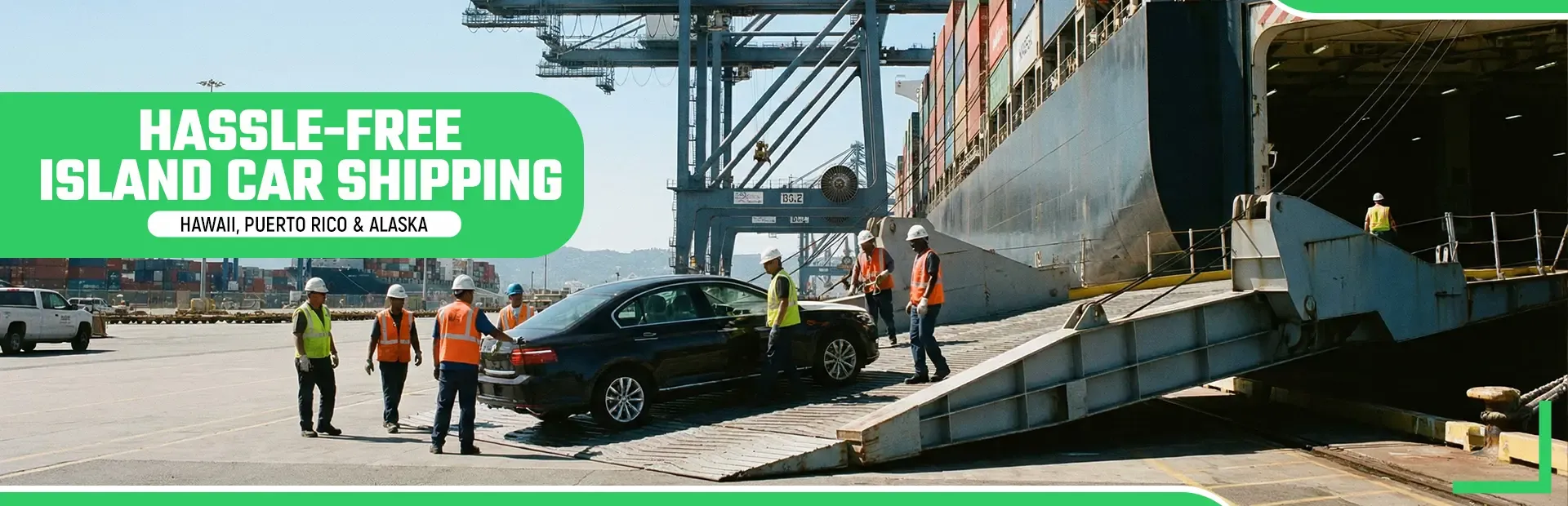
7 Essential Tips for Hassle-Free Island Car Shipping (Hawaii, Puerto Rico & Alaska)

7 Essential Tips for Hassle-Free Island Car Shipping (Hawaii, Puerto Rico & Alaska)

Transportvibe
December 11, 2025
17 min read

Have you ever thought about sailing your car on a ship to paradise? 

Island car shipping isn't a fantasy; it's a reality for thousands of Americans moving to or from Hawaii, Puerto Rico, and Alaska. Navigating overseas car shipping can feel overwhelming, but with the right island auto transport services, it's a smooth process. 

This guide provides best practices for shipping your car to an island, helping you understand what to know before shipping a car overseas. Whether it's a permanent move or a seasonal relocation, we'll provide you with smooth transport tips for island car shipping, ensuring a stress-free journey for your vehicle.

Ready to get started on your hassle-free journey? Our affordable car transport to Alaska and islands services are ready to help. Get a quote today to receive a free, no-obligation estimate!

Why People Ship Cars to Islands

Many choose to ship their vehicle for practical or personal reasons. It's often the most logical choice when relocating to a new location. People also opt for island car shipping to take a vehicle they already own and love with them.

Here are the most common reasons:

  • Permanent Relocation: You're moving your family to a new island home.
  • Military Transfer: Military members on a Permanent Change of Station (PCS) order often utilize car shipping to Alaska or other overseas bases. Learn more about these specific military vehicle shipping services.
  • Extended Stay: For "snowbirds" or those taking a long-term vacation.
  • Vehicle Sales & Purchases: Sourcing a specific or specialty vehicle from the mainland.

The convenience of vehicle shipping to islands can outweigh the cost of local buying. You get to keep your current car, avoiding the hassle of selling it and then buying a new one. This saves you from the complex process of finding a new car in an unfamiliar place.

Plus, you can avoid the high prices of vehicles on the islands. The cost of buying a car in places like Hawaii and Puerto Rico is often higher due to freight and import fees.

This table highlights the contrast:

Cost Factor Shipping a Car Buying Locally
Initial Price You pay a one-time shipping fee (starting from $1,500). You pay for the vehicle plus local taxes and fees.
Selection & Variety Unlimited access to the entire U.S. market. Limited to what is available at local dealerships.
Overall Cost Often more affordable than purchasing on the island. New and used cars are generally more expensive due to rising costs on the islands.

Shipping your car can offer peace of mind. Knowing your car will be there when you arrive is a huge benefit. Learn more about the challenges of shipping a car to Alaska or Hawaii.

Understanding Island Car Shipping Basics

Island car shipping involves specialized methods to get your vehicle across the ocean. The main options are designed for different needs and budgets. Understanding them is key for vehicle shipping overseas.

Here are the primary methods:

  • Roll-on/Roll-off (RoRo): Your vehicle is driven onto a large vessel and secured. This is a standard and usually more affordable method for overseas car shipping. It's like a multi-story parking garage on a ship.
  • Container Shipping: Your car is placed inside a sealed container, often shared with other vehicles (consolidated) or exclusively for your car. This offers more protection but costs more. You can learn more about RoRo vs. Container Shipping here.

Shipping timeframes vary significantly. A trip to Hawaii car shipping can take weeks, depending on the departure port. Puerto Rico auto shipping generally has shorter transit times from the East Coast. Car shipping to Alaska routes often involves specific ports in the Pacific Northwest. Factors like weather, customs, and port congestion all play a role.

Cost factors for island auto transport services include:

  • Distance: Longer routes mean higher costs.
  • Vehicle Size: Larger vehicles take up more space.
  • Shipping Method: Container shipping is pricier than Roll-on/Roll-off (RoRo) shipping.
  • Seasonality: Peak moving seasons can impact pricing.

Each island destination has unique logistical considerations. Routes for car shipping to Guam also follow similar overseas transport principles.

Key Factors That Influence Shipping Costs

The price of island car shipping depends on several key variables. Knowing these helps you get the most affordable quote for overseas car shipping.

  • Distance and Port: The route from your pickup location to the destination port, whether it's for Hawaii car transport or Puerto Rico auto shipping, directly impacts cost. Longer routes mean higher fuel and labor expenses. The location of the pickup and drop-off ports also matters. Shipping from a major city is usually cheaper than from a rural area.
  • Vehicle Size and Condition: Larger and heavier vehicles take up more space on the carrier, increasing the price. If your vehicle is non-running, it will cost more due to the special equipment required to load and unload it.
  • Seasonality: Costs fluctuate with demand. Shipping during peak seasons, such as summer or winter holidays, can be more expensive. You can often find a more affordable car transport to Alaska and islands by booking during the off-season.
  • Add-ons: Services like door-to-port or expedited delivery add to the final price. These conveniences can provide smooth transport tips for island car shipping, but they come at a premium. Choosing port-to-port can save you money if you're flexible.

To get a clear idea of your potential costs, it's best to use a specialized tool. If you get quotes from various auto transport companies, you might see a difference in pricing for the same service. This is because brokers and carriers charge differently. To better understand these pricing factors, read our detailed blog on how car shipping cost calculators work.

Pro Tips for Hassle-Free Car Shipping

Moving your vehicle to an island destination requires careful planning and smart decisions. These smooth transport tips for island car shipping are designed to help you navigate the process. Follow these best practices for shipping your car to an island to ensure a seamless experience, whether you're dealing with Hawaii car transport, Puerto Rico auto shipping, or car shipping to Alaska.

Tip 1 – Choose a Licensed & Experienced Carrier

Your choice of carrier is the most important decision you will make. It can determine if your vehicle shipping to islands experience is stress-free or full of problems. A reputable company brings transparency and expertise to the table, which is vital for overseas car shipping.

Always verify that a company is licensed. In the USA, this means checking for a valid license from the Federal Motor Carrier Safety Administration (FMCSA). This ensures the company operates legally and follows federal regulations. Don’t trust a company that can’t prove its credentials. You can also read honest, unbiased reviews on a platform like Transportvibe to see what other customers say.

Experience is key, especially for these challenging routes. A company that specializes in car shipping to Hawaii or Puerto Rico understands the unique logistics. They are familiar with the ports, understand the specific paperwork, and know how to handle any potential issues that may arise with car ferry transport. This expertise is invaluable and helps prevent unexpected delays or costs.

The difference between a great shipping experience and a bad one often comes down to who you choose. Make sure they have a proven track record. 

Tip 2 – Compare Quotes the Smart Way

Getting a quote is the first step, but understanding it is just as important. The goal is to find affordable car transport to Alaska and islands without sacrificing service quality. Not all quotes are created equal.

When you receive a quote, look for hidden fees. Some companies might add charges for things like fuel surcharges, terminal fees, or insurance later. A reliable company will provide a clear, all-inclusive price up front.

Pay close attention to the difference between a binding and a non-binding quote. A binding quote is a fixed price. The carrier cannot change it unless you change the details of the shipment. A non-binding quote is an estimate. The final price could be higher depending on market conditions. Always ask which type of quote you are receiving to avoid surprises.

Always get multiple quotes from different companies. This helps you compare not just the price, but also the services offered. You can see which companies offer the best value for your specific needs. Use a service like Transportvibe to get multiple quotes in one place, saving you time and effort.

Tip 3 – Understand Port-to-Port vs. Door-to-Port Services

Understanding the different delivery options is critical for island auto transport services. The method you choose directly affects both the cost and the convenience of your shipment.

  • Port-to-Port: This is the most common and often the most budget-friendly option. You drop your vehicle off at a designated port and pick it up at the destination port. This option is popular for Puerto Rico auto shipping and Hawaii car transport because it streamlines the overseas portion of the journey. It’s ideal if you live near a major port and can handle the final leg of the journey yourself.
  • Door-to-Port: With this service, the carrier picks up your vehicle from your home or a specific location and delivers it to the departure port. This adds convenience but also cost. It's great if you live far from a major port and want to avoid a long drive.

For car shipping to Alaska, a door-to-port service often makes more sense. Alaska’s vast, rugged landscape and limited port access make it more challenging to handle the transport yourself. The added cost for door-to-port service can save you from a lot of logistical headaches.

Tip 4 – Prepare Your Car for Shipping

Proper preparation is one of the most important smooth transport tips for island car shipping. A little work now can save you big trouble later.

  • Clean and Inspect: Wash your car thoroughly. This makes it easier to spot any pre-existing scratches or dents during the pre-shipping inspection. Take detailed photos of your vehicle from all angles. This documentation serves as proof in the event of any damage claims.
  • Remove Personal Items: Carriers do not allow personal items in the car. This is a strict rule due to federal and maritime regulations. Remove all belongings, including chargers, toll passes, and any valuables. Leaving items inside can lead to delays and extra fees.
  • Documentation and Keys: Hand over all necessary documents, including proof of ownership, and a spare set of keys. You may need a notarized letter if there is a lien on the vehicle.
  • Gas and Battery: Keep the gas tank no more than a quarter full. This is a safety regulation. Also, make sure your car’s battery is fully charged and in good working condition. The car must be capable of starting and driving on and off the vessel.

Tip 5 – Plan Ahead for Seasonal Demand

Timing is everything, especially when it comes to vehicle shipping to islands. Seasonal demand can cause prices to increase and timeframes to extend.

  • Peak Seasons: Summer and the end-of-year holidays are the busiest times for Hawaii car transport. Many people move during the summer, and students or vacationers ship vehicles for the holidays. Puerto Rico auto shipping sees similar patterns. During these times, carriers have less available space, leading to higher prices.
  • "Snowbird" Season: The winter months are busy for car shipping to Alaska as people move for work or new life adventures. This "snowbird" season also impacts routes to warmer climates like Hawaii.

To ensure you get the best price and a smooth experience, book your shipment well in advance. Aim to book at least 4-6 weeks before your desired shipping date. This gives you time to compare quotes and secure a spot on a vessel at a fair price.

Tip 6 – Know the Customs & Documentation Rules

The paperwork for overseas car shipping can be tricky. Knowing the requirements beforehand is a key part of what to know before shipping a car overseas.

  • Proof of Ownership: You will need your vehicle's original title or a certified copy. If you have a lien, you need a letter of authorization from the lien holder.
  • Photo ID: A valid government-issued photo ID is required.
  • Puerto Rico Auto Shipping: While Puerto Rico is part of the USA, it has its own customs and tax system. You will need to complete a C-745 form for vehicle importation. The original title, registration, and a bill of lading are also needed.
  • Hawaii and Alaska: Shipments to these states are considered domestic moves, so they don’t require the same federal customs forms. However, you will still need a valid title, vehicle registration, and your driver’s license. Always check with the carrier and the local DMV for any additional documentation for vehicle shipping that might be required.

Tip 7 – Get Insurance Coverage You Can Trust

Don’t assume your regular car insurance will cover the journey. Most standard policies do not. This is a critical point for island auto transport services.

  • Carrier Insurance: Most transport companies provide basic insurance coverage. However, it's often limited and only covers damage caused by the carrier’s negligence. It might not cover a scratch or a dent that occurs during transit unless you can prove it was the carrier’s fault.
  • Third-Party Insurance: For complete peace of mind, consider a separate policy from a third-party provider. This specialized car shipping insurance can cover a wider range of damages, regardless of fault. It's often worth the extra cost for valuable or classic cars.

Before you sign anything, ask the carrier for a clear explanation of what their insurance policy covers. Get it in writing and read the fine print. This helps you avoid financial surprises if something goes wrong.

Ready to start your hassle-free island car shipping journey? Compare quotes from top-rated companies and read authentic customer reviews to make an informed decision. Get a Quote and find the best company for your vehicle transport needs!

Red Flags to Watch Out For

Navigating the world of island auto transport services can be confusing. Knowing what to look for is a key part of what to know before shipping a car overseas. Avoiding these red flags can save you from a stressful experience.

  • Too-Good-to-Be-True Pricing: If a quote for island car shipping seems far cheaper than all the others, it's a major red flag. This low price often comes with hidden fees that are added later, or it's a sign of a fraudulent company.
  • Unlicensed Shippers or Brokers: Always verify a company’s license. A legitimate auto transport company or broker should have a valid license number from the Federal Motor Carrier Safety Administration (FMCSA). Also, check the DOT and the MC number of the broker. This ensures they are legally authorized to operate. Without a license, you have no legal protection if something goes wrong.
  • Poor Communication and Vague Contracts: A reliable company provides clear, straightforward information. Be cautious of shippers who are difficult to contact, offer generic responses, or decline to provide a detailed contract. A vague contract can leave you vulnerable to unexpected charges or changes to your service.

For more information on finding a reputable company, read our guide on 5 Key Signs You're Dealing with a Car Transport Broker.

Quick Checklist for Hassle-Free Shipping

Following these best practices for shipping your car to an island will make the entire process easier. Here is a quick, step-by-step summary to guide your vehicle shipping to islands journey.

Before Shipment:

  • Choose a licensed and experienced transport company.
  • Get multiple quotes and understand your contract.
  • Prepare your vehicle by cleaning it, removing personal items, and documenting its condition.
  • Ensure all your paperwork, including title and ID, is in order.

During Shipment:

  • Communicate with the carrier to track the progress of your vehicle.
  • Be aware of the estimated delivery timeframe.

After Shipment:

  • Meet the driver and perform a thorough post-shipment inspection. Note any new damage on the Bill of Lading.
  • Take a moment to check your car's fluids and tire pressure before you drive off.

By following these smooth transport tips for island car shipping, you can make your vehicle’s journey to its new home simple and stress-free. For a comprehensive guide, check out our tips on how to ship a car across the USA.

Common Curiosities About Island Car Shipping

We receive many questions about island car shipping. Here are some of the most common queries to help you prepare for your vehicle’s journey.

How long does it take for a car to ship to Hawaii or Puerto Rico?

The timeframe can vary widely based on your starting location. A shipment from the West Coast to Hawaii can take around 7 to 14 days at sea. Puerto Rico auto shipping from the East Coast generally takes less time. The total process, including transit to the port and processing time, can take several weeks.

Can I find truly affordable car transport to Alaska and islands even during peak season?

It is possible to find affordable car transport to Alaska and islands during peak seasons, but it requires flexibility. Booking well in advance is the best strategy. Carriers often increase prices as demand rises, so securing your spot early can lock in a better rate and help you avoid a last-minute price hike.

Is it possible to ship personal belongings inside my car when using vehicle shipping overseas?

No, you cannot ship personal belongings inside your vehicle. This is a strict rule due to safety regulations and insurance policies. Any items left in the car, even a spare tire or a car seat, will likely need to be removed before shipment. The carrier is not responsible for these items.

How far in advance should I book my island auto transport services?

It’s highly recommended that you book your island auto transport services at least 4 to 6 weeks before your desired shipping date. This provides a buffer for any potential delays and allows you to compare multiple quotes without feeling rushed. Booking early is a crucial step for a smooth experience.

What is the difference between shipping a car to Guam and a car shipping to Alaska?

The key difference lies in the type of transport. Car shipping to Guam is a truly international overseas shipment requiring specific customs forms and documentation. Conversely, a car shipping to Alaska is considered a domestic move, and the process is simpler as it doesn’t involve international customs clearance.

Do I need special car insurance, and what to know before shipping a car overseas about coverage?

It’s important to know that most personal car insurance policies do not cover damages during transit. The carrier’s insurance is often limited and only covers their own negligence. For complete protection, you should consider purchasing a separate, specialized transport insurance policy. Car shipping insurance in the USA is designed to cover a wider range of potential issues.

Can I track my vehicle once it's on the ship for island car shipping?

Yes, most reputable carriers offer some form of tracking. Once your vehicle is on board, they will provide you with a booking number that allows you to monitor its progress. You can often see which port it is at and get an estimated time of arrival. This provides peace of mind throughout the entire overseas car shipping process.

Your Island Adventure Awaits

Shipping a car to an island like Hawaii, Puerto Rico, or Alaska might seem like a complex journey, but with the right island car shipping partner, it’s a smooth, stress-free process. By choosing a reputable company and preparing your vehicle properly, you can ensure a seamless transition. 

The key is to find reliable overseas car shipping that fits your budget and timeline. Don't let the logistics of car shipping to Alaska or any other island destination stop you. With the right knowledge, you can confidently take on this essential part of your move.

Ready to find the perfect carrier for your vehicle? Get a Quote today and start your journey with a hassle-free experience!

Related articles

DEC 14, 2025
7 Step Guide for Hassle-Free Shipping Used Car Online Delivery After a Purchase

7 Step Guide for Hassle-Free Shipping Used Car Online Delivery After a Purchase

TRANSPORTVIBE

Did you know nearly 70% of car buyers now complete their purchase online? Shipping used car after an online purchase can feel daunting. This auto shipping guide offers peace of mind. Buying a vehicle sight-unseen, whether from eBay Motors, Carvana, or a local Facebook Marketplace, means entrusting its journey to someone else. This guide provides information on how to ship a used car bought online safely, making your online car delivery experience smooth. We cut through the confusion, offering practical tips for used car transport. Avoid common pitfalls and ensure your new ride arrives without a hitch. Ready to find reliable transport for your recently purchased used car? Get a personalized estimate now! The Rise of Online Car Delivery The used car market has changed. Buying a vehicle online is no longer a risk; it is a smart, common practice. A need for transparency and convenience drives this shift. Digital platforms like Carvana and Vroom have revolutionized how people buy cars. They offer a huge inventory and transparent pricing, all from your home. This convenience is a game changer for used car transport. Instead of spending days driving to pick up a car, you can have it delivered directly to your driveway. This is the new standard. Benefits of car shipping online purchase over in-person pickup: Saves Time and Money: Avoid flights, gas, hotels, and vehicle wear and tear. You can even use this time to get your garage ready for the new car. Wider Selection: Your search isn't limited to local dealerships. You can find the exact vehicle you want, anywhere in the country. Reduced Stress: Let professionals handle the logistics. This is key for a hassle-free online car delivery. Major players like Carvana and Vroom have perfected the process. However, Vroom car delivery has stopped its operation in 2024, but you can still purchase cars from its subsidiary, CarStory . After your purchase, they coordinate the used car transport directly to you. It's a simple, reliable system. Want to learn more about the vehicle shipping process? Check out our comprehensive guide to cross-country car shipping . This trend has transformed the auto industry. Buying a car online is easier than ever. And getting it delivered is a seamless part of the process. Things to Know Before Shipping Used Car When you buy a used car online, it’s easy to get excited and overlook crucial details. Many first-time buyers make the same mistakes. They fail to understand the logistics of online car delivery. First, never assume the company you purchased from is the one doing the used car transport. Many online sellers, like Carvana or CarStory, use third-party carriers. It's smart to ask who will be handling your vehicle. Next, get familiar with the paperwork. The process can’t start without the right documents. This is a vital part of a step-by-step guide to online car shipping. Here is a checklist of key documents: Bill of Sale: This is your proof of purchase. It shows you are the new owner. Vehicle Title: The title proves legal ownership. For new purchases, you’ll be the new name on the title. Insurance: The transport company has its own cargo insurance. You should also check with your personal auto insurance provider. Some policies offer coverage during transit. Bill of Lading: This is the most important document. It is a detailed report of the vehicle's condition at pickup. Both you and the driver must sign it. Take your own photos and videos, too. This protects you if any damage occurs during the used car transport. For an in-depth look at what's covered, see this guide on car insurance filing requirements . Knowing what to expect and having your paperwork ready makes a huge difference. Being prepared for shipping used car is the best way to avoid problems. Step-by-Step Guide for Hassle-Free Online Car Delivery Navigating the logistics of shipping used car after an online purchase does not have to be stressful. This auto shipping guide provides a step-by-step guide to online car shipping, ensuring your used car transport is smooth and worry-free. Get ready for a seamless online car delivery experience, whether you are shipping a car from eBay Motors or using Carvana car shipping. Tip 1 – Research Reliable Used Vehicle Transport Services Choosing the right used vehicle transport service is critical for a smooth experience. Your car's journey depends on the reliability of the company you select. Cutting corners here can lead to delays, damages, or even scams. This is often where buyers seeking the cheapest way to ship a car purchased online run into trouble. Red flags in shady shipping companies often include: Unbelievably Low Prices: If a quote seems too good to be true, it probably is. Very low prices often mean hidden fees, poor service, or uninsured carriers. Lack of Proper Licensing: All reputable carriers and brokers must be registered with the Federal Motor Carrier Safety Administration (FMCSA). You can check their Motor Carrier (MC) number. Poor Online Reviews or No Reviews: Look beyond just star ratings. Read what people say. Look for patterns of complaints about damage, delays, or communication issues. Be wary of companies with no online presence or only overly positive, vague reviews. Demanding Upfront Payment in Full: Most legitimate companies require a deposit, but rarely the entire payment upfront. High-pressure sales tactics pushing for full payment should raise a warning. Vague or Non-Existent Contracts: A clear, written agreement outlining services, costs, timelines, and insurance is essential. If a company avoids providing one, walk away. No Physical Address or Only a P.O. Box: Reputable businesses typically have a physical location. Investing time in researching a trustworthy used car transport provider saves you money and headaches. Don't rush this step. It's the foundation for a hassle-free online car delivery. Check out our detailed reviews of top auto transport companies to help with your decision. Tip 2 – Get Multiple Shipping Quotes Online Finding the cheapest way to ship a car purchased online doesn't mean sacrificing quality. It means being smart and comparing options. Different carriers have different routes, schedules, and pricing structures. Getting multiple quotes helps you understand the market rate and find the best value for your used car transport. Tools and platforms to compare costs: Online Quote Calculators: Many reputable auto transport companies offer instant online quotes. These tools usually ask for your pickup and delivery locations, vehicle type, and desired shipping date. Brokerage Platforms: Auto transport brokers work with a network of carriers. They can often get you several quotes from different providers with one request. This simplifies the comparison process. Direct Carrier Websites: If you have specific carriers in mind, visit their websites directly for quotes. This can sometimes offer a slightly lower price by cutting out the broker's fee, but requires more individual research. When comparing quotes for your car shipping online purchase, consider more than just the final price. Look at: Included Services: Does the quote include door-to-door delivery, or will you need to meet the carrier at a terminal? Insurance Coverage: What level of insurance is provided, and what are the deductibles? Estimated Delivery Time: How long will the online car delivery take? Does this fit your schedule? Payment Terms: What deposit is required, and when is the remaining balance due? Remember that prices for shipping a used car can vary based on the time of year, fuel costs, and the specific route. Being flexible with your dates can sometimes lead to savings. Use our car shipping cost calculator to get an accurate estimate and compare options effectively. Tip 3 – Verify Transporter Credentials & Insurance Confirming licensing and coverage is vital for safe car delivery. You are entrusting your newly purchased vehicle to a third party. Ensuring they are legitimate and insured protects your investment. This is a critical step in how to ship a used car bought online safely. Every reputable auto transport company in the USA must be registered with the Federal Motor Carrier Safety Administration ( FMCSA ). They will have a Motor Carrier ( MC ) number. This number is your key to verifying their credentials. Here is how to confirm their legitimacy: FMCSA Website: Visit the FMCSA SAFER system website. Enter the company's MC number or USDOT number. This site provides detailed safety records, complaint history, and insurance information. Check for Active Authority: Ensure the company's operating authority is "Active." If it's "Inactive" or "Revoked," avoid them. Insurance Verification: The FMCSA site also shows their insurance filings. Confirm they have active Bodily Injury and Property Damage (BI/PD) insurance, as well as cargo insurance. Review Their Insurance Policy: Ask the transport company for a copy of their insurance certificate. Understand what is covered, what is excluded, and the deductible amount. Basic carrier liability usually covers damage due to negligence during transit. Do not just take their word for it. Always verify independently. A legitimate company will be transparent and willing to provide all necessary documentation. This due diligence protects you from potential scams and ensures your used car transport is handled by a professional, accountable service. For more insights into car shipping insurance, consider reading about car shipping insurance in the USA . Tip 4 – Choose the Right Shipping Method When arranging used car transport, selecting the correct shipping method is important. The two primary options are open transport and enclosed transport . Each has its own benefits and cost implications. This choice impacts the protection your vehicle receives during online car delivery. Open Transport Your vehicle is loaded onto an open trailer, exposed to the elements. This is the most common and typically the cheapest way to ship a car purchased online. Pros: Cost-effective, widely available, faster scheduling due to more carriers. Cons: Vehicle is exposed to road grime, weather, and potential minor debris. Best For: Standard used cars, everyday vehicles, and buyers focused on budget. Enclosed Transport Your vehicle is shipped inside a fully enclosed trailer, protecting it from all external elements. Pros: Maximum protection from weather, road debris, and theft. Ideal for delicate or high-value vehicles. Cons: More expensive, less availability, potentially longer pickup times. Best For: Luxury cars, classic vehicles, exotic models, custom builds, or any car where pristine condition upon arrival is paramount. When to use enclosed shipping for luxury or rare models: If you have purchased a high-value car, such as a vintage collector's item, a luxury sedan, or a custom-built vehicle, enclosed transport is highly recommended. The added cost is a small price for safeguarding against scratches, chips, or environmental damage during transit. It provides peace of mind for your valuable investment. Consider the value of your vehicle and your budget. For most car shipping online purchase scenarios involving standard used cars, open transport is sufficient. For anything special, choose enclosed. Compare options for open versus enclosed vehicle shipping to make an informed choice. Tip 5 – Prepare Your Car Before Pickup Properly preparing your vehicle before pickup is a crucial step in a step-by-step guide to online car shipping. This preparation ensures a smooth process and protects your vehicle during used car transport. Skipping these steps can lead to complications or damage. Here are the essential steps for your online car delivery: Clean Your Car Thoroughly: Wash the exterior and clean the interior. This makes it easier to spot any existing damage before loading. Document Existing Damage: Take detailed photos and videos of your car from all angles. Note any scratches, dents, or chips. Date-stamp these images. This serves as vital proof of condition before shipment, protecting you from disputes later. Remove Personal Belongings: Auto transport companies are not licensed to carry household goods. Remove all personal items, including electronics, important documents, and anything valuable. The only exceptions are factory-installed equipment. Reduce Fuel to 1/4 Tank: A lighter vehicle is safer and cheaper to transport. Keep just enough fuel for the driver to load and unload the car. Check Fluid Levels: Ensure all fluids (oil, coolant, brake fluid) are at appropriate levels. This prevents issues during transit. Secure Loose Parts: Remove or secure any aftermarket accessories like spoilers, roof racks, or antennas. Fold in side mirrors. Disable Alarm System: Provide instructions to the driver on how to disable it if necessary. An activated alarm can drain the battery. Provide All Keys: Give the driver all sets of keys. They will need them to move the vehicle on and off the trailer. Inform About Non-Running Vehicles (If Applicable): If your purchased used car is not running, inform the transport company beforehand. They will need special equipment like a winch. Learn more about how to ship a non-running vehicle . Following these preparation steps will help facilitate a truly hassle-free online car delivery and protect your investment. Tip 6 – Track the Shipment Modern carriers allow you to monitor your online car delivery in real time. This capability provides peace of mind and keeps you informed about your used car transport. Gone are the days of uncertainty once your car leaves the pickup location. Most reputable used vehicle transport service providers offer tracking options: GPS Tracking: Many carriers equip their trucks with GPS devices. They provide customers with a login to a tracking portal. You can see your car's location on a map as it moves. Text or Email Updates: You might receive automated notifications at key stages: pickup confirmed, in transit, nearing delivery, and delivered. Direct Communication with Driver: Some companies provide the driver's contact information. This allows direct communication for updates or estimated arrival times. Use this responsibly; avoid excessive calls. Customer Service: If real-time tracking is not available, or if you have questions, their customer service team should be able to provide updates. Tracking your shipping a used car gives you control. You know exactly when to expect your vehicle. This helps you plan for its arrival. It also lets you address any potential delays proactively. Knowing your car's location reduces anxiety. It reinforces that your car shipping online purchase is progressing as planned. Before confirming your online car delivery service, ask about their tracking capabilities. Choose a company that offers transparent and accessible updates. This is a key part of ensuring a hassle-free online car delivery experience. Tip 7 – Inspect the Car Upon Arrival The final inspection protects you from disputes. This is the most crucial step in your online car delivery process. Even if the used car transport seemed flawless, a thorough inspection is non-negotiable. This prevents issues with how to ship a used car bought online safely. Here’s what to do: Inspect Immediately with the Driver Present: Do not let the driver leave before you have completed your inspection. Use Your Pre-Shipment Documentation: Compare the car’s current condition against the photos and videos you took before pickup. Check for any new scratches, dents, or damage. Check All Areas: Look at the exterior, interior, undercarriage (if possible), and tires. Make sure nothing is missing or broken. Note Any Discrepancies on the Bill of Lading: If you find any new damage, clearly mark it on the Bill of Lading (BOL). Be specific about the location and type of damage. Both you and the driver must sign this document. If there is damage and you do not note it on the BOL, it will be very difficult to file a claim later. How to File a Claim if Damage Occurs: Document Thoroughly: Take new, detailed photos and videos of the damage. Get clear shots of the affected areas. Notify the Carrier Immediately: Contact the transport company as soon as possible, ideally within 24-48 hours. Follow their specific claim procedure. Submit Required Forms: The carrier will provide claim forms. Fill them out accurately and completely. Include all supporting documentation: your pre-shipment photos, the signed BOL noting the damage, and estimates for repair. Be Patient: The claims process can take time. Cooperate with the insurance adjusters. A diligent final inspection and proper documentation are your best defense. They ensure accountability and protect your rights after shipping a used car. Don't skip this vital step for a truly hassle-free online car delivery. Want to learn more about your rights? Read about your rights if a car shipping company cancels last minute . Ready for a smooth and secure online car delivery? Explore our wide range of services to find the perfect transport solution for your new vehicle! Special Cases of Online Car Delivery Online marketplaces add a unique layer to the shipping process. Here's a breakdown of what to expect with special cases of online car delivery. eBay Motors Car Shipping eBay Motors is a massive marketplace, but it doesn't handle used car transport itself. The buyer is responsible for arranging vehicle shipping. You'll need to find a professional used vehicle transport service. The seller is responsible for meeting the carrier for pickup. Make sure you have all the necessary paperwork, like the title and bill of sale, before the car is picked up. Facebook Marketplace Car Shipping Facebook Marketplace is a peer-to-peer platform. The transaction is solely between you and the seller. Facebook Marketplace car shipping requires extra diligence. The seller may not have experience with used car transport. You will have to coordinate directly with them. Be cautious of scams. The Federal Trade Commission offers helpful tips on avoiding scams when buying a car online. The key is clear communication. Work out the logistics with the seller before you finalize the purchase. Ready to get a quote for your used car? Explore your options for seamless auto shipping . Your Online Auto Shipping Queries Answered Navigating the logistics of buying a car online can raise a lot of questions. Here are the most common inquiries people have when arranging car shipping online purchase. What is the cheapest way to ship a car purchased online? The most affordable method is typically open-air transport. This is because these carriers can haul multiple vehicles at once, making the cost per car lower. To save even more, be flexible with your pickup and delivery dates and book during the off-season. How to ship a used car bought online safely? The safest way is to hire a reputable transport company. Check their customer reviews on platforms like Transportvibe, ensure they are licensed and insured, and get a clear bill of lading before the car is moved. You should also take photos of the car's condition right before it is loaded. How do I prepare for a step-by-step guide to online car shipping? Start by getting multiple quotes from different carriers. Once you book, clean your car and remove all personal items. Be sure to document the vehicle's condition with photos and get an inspection report from the driver at both pickup and delivery. This process protects both you and the carrier. What do I need to know before shipping a car bought online? You need to know the exact details of the car and its condition, including any existing damage. You should also understand the seller's role in the process and confirm all paperwork, like the title and bill of sale, is ready before the transport company arrives. What's the difference between broker vs. carrier pricing? A broker acts as a middleman, connecting you with a network of carriers, while a carrier directly owns the trucks. Brokers often provide more competitive quotes because they have a wider pool of drivers to choose from. A carrier may have a fixed price. You can learn more about this in our blog on how broker vs. carrier pricing differs . Is it legal to ship a car without the title? Generally, no. Most reputable transport companies and states require proof of ownership, which is typically the vehicle's title or a notarized power of attorney from the owner. You need to confirm that all the legal paperwork is in order before the car is moved. Check out this guide on shipping a car without the title for more information. How long does it take to get a car shipped from a marketplace? The timeline varies based on distance, time of year, and the type of transport. A coast-to-coast delivery can take 7-14 days, while shorter distances can be quicker. It's best to discuss an estimated timeframe with the transport company before booking your shipment A Final Word on Your Online Car Delivery Navigating car shipping online purchase doesn't have to be stressful. By following these smart tips, you can ensure your online car delivery is a smooth, worry-free process. From understanding the nuances of shipping a used car from platforms like eBay Motors to preparing your vehicle for pickup, a little preparation goes a long way. Our goal is to make your used car transport simple and transparent. Ready to get your new ride on the road? Compare quotes from top-rated carriers and book your transport today!

DEC 10, 2025
9 Smart Ways to Save on Cost-Effective RV Transport Services & Boat Shipping

9 Smart Ways to Save on Cost-Effective RV Transport Services & Boat Shipping

TRANSPORTVIBE

It’s no secret that finding reliable RV transport services and understanding the final boat shipping cost can be stressful. Did you know that with a few simple steps, you can save hundreds or even thousands on large vehicle transport? Many people overpay for oversized vehicle transport because they're not aware of how pricing works. This guide reveals nine smart, cost-effective solutions for shipping RVs and boats, helping you find affordable RV transport and get the best deal. We'll show you how to find cheap RV shipping options and compare boat transport companies so you feel confident in your choice. Ready to find the best rates for your oversized vehicle? Discover the cost of shipping a boat or RV with a free, no-obligation quote today. Understanding the Basics of RV & Boat Transport The first step to finding a cost-effective solution is knowing what you're dealing with. RV transport services , regulated by federal bodies like the FMCSA , are different from boat shipping in key ways. RVs are exclusively hauled on land, often using specialized trailers or a "drive-away" service. This type of large vehicle transport is a straightforward, land-based operation. Boat shipping, on the other hand, can be more complex, sometimes requiring both land and sea legs. This multi-modal approach is a major factor in the final boat shipping cost. When it comes to the actual move, you have options. For RVs, you can choose open or enclosed vehicle transport. Open carriers are the most common and affordable. For more protection, an enclosed transportation is best. Boats are hauled on special trailers, but very large vessels may need to be transported by water, a specialized form of yacht and boat shipping . Here are key factors that impact the price and give you a better idea of how much it costs to ship a boat or RV: Distance: The longer the trip, the higher the cost to ship a boat or RV. Size & Weight: A larger oversized vehicle transport naturally requires more resources. Transport Type: Open transport is a great cheap RV shipping option compared to enclosed. Seasonality: Rates change with the seasons. It's often cheaper to ship during the off-season. Read more about seasonal car shipping tips . Pickup/Delivery Location: Shipping to and from major cities is less expensive than to remote areas. Vehicle Condition: A non-running vehicle may have a higher rate due to the need for a winch or special equipment. Understanding these basic differences and cost factors is the first step toward finding affordable RV transport and securing a great deal on your RV and boat shipping needs. Hidden Costs You Should Know About While a quote provides a starting number, a few factors can silently increase your final boat shipping cost. Understanding these hidden fees is key to finding a truly affordable RV transport service. Fuel surcharges and tolls are common variables. Fuel prices can change daily, so many companies add a surcharge to account for this. Similarly, tolls along the route can add up, especially on a long-distance oversized vehicle transport. You can learn more about how gas prices affect shipping costs . Another important factor is insurance. The carrier's insurance may have limits, leaving you with coverage gaps. For example, they might not cover personal belongings inside the vehicle or minor cosmetic damage. It’s smart to ask specific questions about what is and isn't covered by their policy. Your personal car insurance might offer some protection, but it's a good idea to check if your auto transport is covered by insurance . Finally, RV and boat shipping costs fluctuate with the seasons. During peak travel times, demand for RV transport services increases. This rise in demand can drive up prices, even for the same route and vehicle. This is one of the most unpredictable variables for large vehicle transport. By keeping these factors in mind, you can ask the right questions and avoid surprises. This helps you get the best possible transport experience. 9 Smart Ways to Save on RV & Boat Shipping Finding cost-effective solutions for shipping RVs and boats doesn't have to be a guessing game. By understanding the ins and outs of large vehicle transport, you can significantly reduce your RV transport services and boat shipping cost. These smart strategies help you secure affordable RV transport and discover cheap RV shipping options, ensuring you get the best deal on oversized vehicle transport. 1. Book Early to Lock in Better Rates One of the simplest yet most effective ways to save on your RV and boat shipping is to plan ahead. Booking your RV transport services or boat shipping cost well in advance gives you access to better rates and more flexibility. When demand is lower, companies are more likely to offer competitive pricing to fill their schedules. Last-minute bookings, especially for large vehicle transport, often come with premium charges due as carriers have less time to optimize their routes and schedules. Think of it like booking a flight – the closer to the departure date, the higher the price. Aim to book at least 2-4 weeks out for standard moves. For peak seasons or unusual routes, give yourself even more time, perhaps 4-6 weeks. This proactive approach allows boat transport companies and RV hauling services to plan more efficiently, which translates into savings for you. Early booking also gives you ample time to compare different providers and find the best fit for your oversized vehicle transport needs without feeling rushed. This strategy is crucial for anyone looking for cost-effective solutions for shipping RVs and boats. 2. Choose the Right Transport Method Selecting the appropriate transport method directly impacts your boat shipping cost and overall RV transport services expense. For RV and boat shipping, you generally have a few options, each with its own price point. For RVs, open car shipping is usually the most economical. Your RV will be transported on an open trailer, exposed to the elements, much like how new cars are delivered to dealerships. If you need more protection from road debris and weather, enclosed vehicle shipping is available, but it comes at a higher price. This is often preferred for luxury or classic RVs, where the added protection justifies the increased large vehicle transport cost. For boats, you might choose between trailer transport over land or, for very large vessels, potentially water transport. Land transport is typically more common and often a more affordable RV transport option for many boats. Consider the value of your vessel and the distance it needs to travel when making this decision. The goal is to balance protection with budget, ensuring your oversized vehicle transport is handled safely without overspending. 3. Compare Multiple Transport Companies Never settle for the first quote you receive, especially when dealing with RV transport services or calculating boat shipping cost. The market for large vehicle transport is competitive, with many boat transport companies and RV hauling services vying for your business. To find cost-effective solutions for shipping RVs and boats, it's essential to gather quotes from several different providers. Use platforms like Transportvibe to compare ratings, reviews, and pricing easily. Each company uses its own pricing model, and factors like their current route schedule, available equipment, and driver availability can all influence your quote. Some companies might specialize in certain types of oversized vehicle transport, offering better deals on RV and boat shipping specifically. When comparing, ensure you are looking at apples-to-apples quotes. Verify that all fees, insurance coverage, and services are included. This due diligence can uncover significant savings and help you identify the most affordable RV transport option. This comparison process is key to understanding "how much does it cost to ship a boat or RV" accurately and ensuring you're getting a fair price. 4. Be Flexible with Pickup and Delivery Dates Flexibility is a powerful tool when trying to lower your RV transport services and boat shipping cost. Carriers often have specific routes they run and prefer to fill their trailers as efficiently as possible. If you can be flexible with your pickup and delivery dates, you give the large vehicle transport company more leeway to fit your RV and boat shipping into an existing, optimized route. Being able to offer a window of a few days for pickup or delivery, rather than a single specific date, can result in a more favorable oversized vehicle transport rate. Less urgent shipments are often cheaper because they allow carriers to consolidate loads and reduce dead mileage. This strategy aligns well with finding cheap RV shipping options and generally affordable RV transport. Always discuss your flexibility with the transport company when requesting a quote. They may offer a lower rate for a wider pickup window. This approach can be particularly beneficial for non-time-sensitive moves, helping you save money without compromising the quality of your RV hauling services. 5. Optimize Pickup & Drop-off Locations The specific locations for pickup and drop-off can significantly impact your boat shipping cost and overall RV transport services expense. Shipping to or from major metropolitan areas or accessible transport hubs is generally more cost-effective than requesting service in remote or hard-to-reach locations. Carriers prefer to stick to main routes and easily accessible areas. Deviating from these routes for oversized vehicle transport adds extra mileage, time, and fuel, all of which get passed on to you. If possible, consider meeting the carrier at a mutually convenient, easily accessible location near a major highway or city. This could be a large parking lot or a truck stop. By optimizing your pickup and drop-off points, you can reduce the logistical challenges for the large vehicle transport company, which in turn reduces your overall RV and boat shipping expenses. This strategy is a practical way to find cost-effective solutions for shipping RVs and boats and makes your shipment more attractive to carriers looking for efficient routes. 6. Prepare Your Vehicle Properly to Avoid Extra Charges Proper preparation of your RV or boat is crucial for avoiding unexpected fees and ensuring a smooth RV transport services experience. Before your oversized vehicle transport, make sure to follow the carrier's guidelines closely. This might include: Emptying personal belongings: Most carriers do not insure personal items left inside an RV. Remove anything valuable or fragile. Securing loose parts: For boats, this means securing covers, removing antennas, and ensuring all hatches are latched. For RVs, lock all compartments, secure awnings, and check for any loose exterior items. Disconnecting utilities: Turn off propane tanks, disconnect batteries, and drain water tanks (freshwater, gray water, black water) to reduce weight and prevent freezing in colder climates. Checking fluid levels: Ensure there's enough fuel to move the vehicle on and off the trailer, but don't fill the tank completely, as this adds unnecessary weight. Documentation: Have all necessary paperwork ready, including registration and proof of ownership. Failing to properly prepare your vehicle can lead to delays, additional labor charges, or even refusal of service, increasing your boat shipping cost or RV hauling services expense. Taking these steps is a simple way to contribute to cost-effective solutions for shipping RVs and boats. 7. Take Advantage of Seasonal Discounts The timing of your RV and boat shipping can significantly influence the final boat shipping cost or RV transport services expense. Demand for large vehicle transport often fluctuates with the seasons, creating opportunities for savings during off-peak times. Generally, late fall and winter (excluding major holidays) tend to be slower periods for oversized vehicle transport. Snowbirds often move their RVs and boats south in the fall and north in the spring, making those seasons peak times. If your schedule allows, consider shipping during the quieter months. This is when boat transport companies and RV hauling services might offer discounts or more competitive rates to keep their fleets busy. For example, if you're not in a rush, shipping your RV in January instead of October could result in cheap RV shipping options. Always inquire about seasonal pricing variations when getting quotes. Being strategic with your timing is an excellent way to find affordable RV transport and take advantage of market dynamics. This is a smart approach for anyone looking for cost-effective solutions for shipping RVs and boats. 8. Bundle Services if You’re Shipping Multiple Vehicles If you need to move more than just one oversized vehicle transport item, bundling your shipping needs can lead to substantial savings. Many RV transport services and boat transport companies offer discounts when you book multiple large vehicle transport units at once. This could include shipping both your RV and a boat, or even multiple boats or RVs if you're a car shop dealer or have a collection . From a carrier's perspective, loading multiple items from the same customer or location is more efficient. It reduces their pickup and drop-off time, streamlines logistics, and makes their route more profitable. Because of this increased efficiency, they are often willing to pass some of those savings on to you in the form of a discounted overall RV and boat shipping rate. When requesting quotes, clearly state that you have multiple items for large vehicle transport. Ask about any multi-vehicle discounts or special pricing available. This strategy is particularly effective for businesses or individuals with diverse RV hauling services needs, significantly lowering the total boat shipping cost or RV transport services expense. 9. Verify Insurance to Avoid Hidden Expenses Understanding the insurance coverage for your RV and boat shipping is paramount to avoiding significant hidden expenses later on. While reputable RV transport services and boat transport companies carry insurance, the specifics of that coverage can vary widely. It’s crucial to know exactly what is covered and what is not before your oversized vehicle transport begins. Ask for proof of insurance and review the policy details. Pay close attention to: Coverage limits: Is the declared value of your RV or boat fully covered? Deductibles: What amount are you responsible for in case of a claim? Types of damage covered: Does it include minor cosmetic damage, or only major structural issues? Exclusions: Are there any circumstances under which your vehicle wouldn't be covered? For example, some policies exclude personal items inside the vehicle. Consider whether you need supplemental insurance, perhaps from your own marine or RV insurance policy, to cover any gaps. Never assume full coverage. Clarifying these points beforehand prevents disputes and unexpected costs if damage occurs. This proactive approach ensures your large vehicle transport is protected, giving you peace of mind and protecting your investment from unforeseen boat shipping cost additions. You can learn more about what's covered and what's not in car shipping insurance in the USA . Red Flags to Avoid When Choosing a Transport Company Choosing a company for your RV and boat shipping requires careful attention. Not all RV hauling services or boat transport companies are created equal. Watch out for these red flags to protect your oversized vehicle transport from a bad experience. Unrealistically Low Quotes: If a quote seems too good to be true, it likely is. Shady companies often offer an extremely low initial large vehicle transport price, then add hidden fees or raise the cost at the last minute. Always get multiple quotes to spot these tactics. Lack of Proper Licensing: A reputable company will have the necessary licenses and insurance. Before booking, ask for their credentials. This ensures they are a legitimate operation. You can find licensed and reviewed boat transport companies and more on our site. Poor Customer Reviews: The experiences of past customers are a powerful indicator. Read online reviews carefully on sites like ours to see if other people had issues with communication, delays, or hidden fees. We provide detailed reviews for companies . Avoiding these pitfalls is a crucial step in securing a stress-free large vehicle transport experience. Common Queries on RV & Boat Shipping Getting a great deal on your oversized vehicle transport is just one part of the journey. Many people have questions about the process itself. Here are some of the most common things people ask about RV and boat shipping. How much does it cost to ship a boat or RV? The boat shipping cost can vary widely based on several factors, like the size of the vehicle, the distance, and the transport method. The best way to get an accurate number is to get a free quote with a few key details about your shipment. Is RV and boat shipping explained step by step? Yes. The process begins with getting a quote and booking your shipment. Then, you prepare your vehicle for transport. The carrier picks it up and delivers it to the destination. Finally, you inspect your vehicle and sign the bill of lading to complete the job. What's the process for shipping a non-running RV or boat? Shipping a vehicle that doesn’t run requires a specialized carrier with a winch to pull it onto the trailer. It may also need to be a flatbed. Always mention that your vehicle is non-running when you get a quote, as it can add to the final RV transport services cost due to the extra equipment and labor needed. How long does RV and boat shipping take? Transit times depend mostly on distance. A cross-country trip can take anywhere from 7 to 14 days. Shorter trips might only take a few days. Factors like traffic, weather, and the driver's schedule can all affect the delivery time. Are there different types of boat transport companies? Yes. The industry is made up of carriers who own and operate their own trucks and brokers who coordinate shipments for you by finding a carrier in their network. Both can be a good choice, but it’s important to understand the difference when you book. You can read more about Do I need any special paperwork to ship my RV or boat? For domestic transport within the USA, you usually only need proof of ownership, such as the vehicle title or registration. A copy of your driver’s license is also standard. The carrier will provide a bill of lading, which serves as a receipt and condition report for the vehicle. What is the best time of year for affordable oversized vehicle transport? The cheapest time to ship is typically during the off-season. Demand for RV hauling services and boat transport companies is lower in late fall or winter, which can result in more competitive rates and better availability for your shipment. Your Next Steps to Smart RV & Boat Transport Finding cost-effective solutions for shipping RVs and boats is a matter of knowing the right strategies. By applying these nine tips, you can take control of your RV transport services and avoid overpaying for the final boat shipping cost. Remember, finding affordable RV transport is about more than just the lowest number. It’s about vetting companies and making smart choices that lead to a smooth experience. A little planning goes a long way to ensure your large vehicle transport is handled safely and within your budget. By understanding how to find cheap RV shipping options and what to look for, you can feel confident in your decision. Ready to find the best rates for your oversized vehicle? Find out how much it costs to ship a boat or RV with a free, no-obligation quote today.