



6 Smart Ways To Track Car During Shipping With GPS & Real-Time Updates

6 Smart Ways To Track Car During Shipping With GPS & Real-Time Updates

Transportvibe
September 17, 2025
17 min read

What if you could follow your car's journey across the country with the same ease as tracking a pizza delivery? That's the powerful peace of mind offered by modern auto transport GPS tracking services. Gone are the days of anxiously waiting for a phone call with vague updates. 

Today, real time car shipping updates provide unprecedented transparency, helping to alleviate customer concerns about safety, potential delays, or rerouting. This guide will reveal six smart and effective ways to track car during shipping, ensuring you stay in the know from pickup to delivery. From unique car shipping tracking number systems to personal GPS devices, we'll show you the best ways to monitor your vehicle.

Ready to find the right company for a stress-free shipment? 

Use Transportvibe to compare and choose from top-rated auto transport carriers for your specific vehicle, whether it's an RV, a motorcycle, or your family car. Find reliable transporters and get a quote today!

Why It’s Important to Track Car During Shipping

When you hand over your vehicle to an auto transport company, you’re entrusting a valuable asset to someone else’s care. The ability to track car during shipping isn't just a convenience; it's a critical component of a secure and stress-free transport experience. Modern auto transport GPS tracking services have transformed the industry, moving it from a "set it and forget it" model to one of complete transparency and accountability.

Here's a detailed look at why real time monitoring is so essential for both you and the carrier:

Unrivaled Peace of Mind

The primary benefit of vehicle tracking updates is psychological. Knowing exactly where your car is at all times—from the moment it's loaded onto the carrier until it reaches its destination—removes the anxiety and uncertainty that once accompanied vehicle shipping. This is especially true for long-distance moves, such as cross-country car shipping or even an extended relocation across the USA.

Enhanced Security and Theft Prevention

While rare, vehicle theft or unauthorized use can occur. By leveraging auto transport tracking services, you can set up geofence alerts that notify you if your vehicle deviates from its planned route. In the event of an unexpected stop or rerouting, real time alerts allow you to contact the carrier immediately, providing an extra layer of protection. This is a powerful feature that goes beyond simple location checks.

Proactive Issue Management and Transparency

real time car shipping updates give you the power to identify and address issues before they become major problems.

  • Traffic & Weather Delays: Is your car stuck in a snowstorm or heavy traffic? Live updates will show you the exact reason for the delay, allowing you to adjust your own schedule accordingly.
  • Carrier Communication: If you notice a prolonged stop or a route change, you can proactively reach out to the customer support team with specific data points, making the conversation more efficient and effective. This transparency builds immense trust in the auto transport company.

Accurate Planning and Faster Responses

For customers, the ability to check online vehicle shipping updates with a car shipping tracking number means you can plan for your vehicle’s arrival with precision. This is particularly useful for coordinating vehicle pickup, securing a parking spot, or making sure someone is available to receive the car. For carriers, the data helps them manage their fleet more efficiently, optimizing routes and reducing fuel costs.

This proactive approach ensures a smoother delivery and a more reliable service overall. To learn more about navigating the complexities of the industry, check out our guide on best auto transport service in the USA.

Whether you're shipping a classic car or a daily driver, the importance of tracking is undeniable. It transforms a potentially stressful process into a well-informed, controlled, and confident experience for everyone involved.

6 Smart Ways to Track Car During Shipping

When you're entrusting your vehicle to a carrier, the peace of mind that comes from knowing its exact location is priceless. Modern auto transport tracking services provide unparalleled visibility. These smart methods leverage technology to offer you real time car shipping updates and a hassle-free experience.

1. Auto Transport GPS Tracking Systems

Many of the most reliable GPS enabled auto transport carriers have integrated advanced GPS technology directly into their fleet management systems. These systems provide live, satellite-accurate location data. You can often access this information through a secure customer portal, a dedicated app, or a web-based dashboard, allowing you to monitor your vehicle's progress at any time.

  • How it works: A GPS device on the carrier truck sends location data to the company’s central system, which is then made available to you.
  • Benefits: Direct access to real time updates, highly accurate location information, and the ability to view the entire route history.

This is the most direct and reliable method of tracking your vehicle. To ensure you're working with a company that prioritizes this level of transparency, consider visiting our company review pages. Get a quote and compare top-rated auto transport companies with genuine customer reviews to find the perfect match for your needs.

2. Car Shipping Tracking Number

Similar to how you track a package from Amazon, many auto transport companies assign a unique car shipping tracking number to each vehicle as soon as it's dispatched. This ID is your key to unlocking a wealth of online vehicle shipping updates through the carrier's website.

How It Works: Enter the unique ID on the carrier's website to see the latest status.

Best For: Customers who prefer a simple, web-based check without needing to download a separate app.

It's a universal and straightforward method that provides all essential updates, including pickup status, in-transit location, and estimated delivery time.

Ensuring you stay informed about your vehicle's journey from the comfort of your web browser.

This method is particularly useful for tracking cross-country car shipping where frequent updates on major checkpoints are crucial.

This method is particularly useful for tracking cross-country car shipping where frequent updates on major checkpoints are crucial.

3. GPS Tracking Devices Installed in Vehicle

For ultimate control and an independent source of information, some customers choose to place their own personal GPS tracker inside their car before transport. These small, battery-powered devices offer GPS tracking options for auto transport companies & customers alike, but they give the customer full control.

  • Benefits: You get updates directly to your phone, independent of the carrier's system. You can set custom alerts for geofencing or unauthorized movement. This is a popular way to track your car during relocation USA.
  • Cost & Setup: Devices vary in price, but most are affordable and easy to install. They are often plug-and-play into your car's OBD-II port, which is an increasingly popular way to monitor a vehicle’s status.

Always inform your carrier that you have a tracker installed. This can provide an extra layer of security and peace of mind for both parties.

4. Best Apps to Track Vehicle Shipping

The convenience of a smartphone app is unmatched for today's tech-savvy consumer. The best apps to track vehicle shipping provide real time push notifications, live maps, and often a direct line of communication with the driver.

Key Features:

  • Live Map: See a visual representation of your vehicle’s current location.
  • Push Notifications: Get instant alerts for pickup, delays, and arrival.
  • ETA: Accurate estimated time of arrival that updates dynamically.

These car shipping tracking apps and tools are a hallmark of modern, customer-centric carriers and can be a deciding factor when choosing an auto transport company. 

If you’re preparing a non-running vehicle for shipment, these apps are also a great way to coordinate with the driver and ensure a smooth pickup and delivery process. You can find more information on preparing your vehicle in our guide on shipping a non-running vehicle.

5. Real time Vehicle Tracking Updates via SMS & Email

Not everyone wants to download another app. For customers who prefer simplicity, many carriers offer real time updates while a car is being shipped directly to their phone or email inbox.

  • How it works: As the carrier reaches key milestones (e.g., leaving the origin terminal, crossing a state line, arriving at a destination), an automated message is sent to your preferred contact method.
  • Simple & Effective: This method requires no special apps or logins. It's especially useful for long-distance shipping and those who want a simple, no-fuss way to stay informed.

While less detailed than a live GPS map, these notifications still provide crucial vehicle tracking updates and are a great option for basic tracking.

6. 24/7 Customer Support + Tracking Assistance

Sometimes, the best technology is a human on the other end of the line. For customers who prefer direct communication, a carrier with 24/7 customer car shipment tracking USA support is invaluable.

  • Human Touch: A live agent can provide personalized shipment tracking process for vehicle delivery explanations, troubleshoot issues, and give you an update even if a digital system is experiencing technical difficulties.
  • Reliability: This method ensures you always have access to information, no matter the time of day or night. It's a perfect backup option if you're not a fan of technology or if you encounter signal issues in rural areas.

When you're moving a car from a remote area, having access to human support can make all the difference. 

To read more about why this level of support matters, you can check out this article on the benefits of 24/7 customer service in modern business. This approach is a sign of a company that truly cares about its customers' peace of mind.

Common Challenges in Vehicle Tracking & Solutions

In the world of auto transport and logistics, advanced vehicle tracking has become an industry standard, offering customers greater peace of mind and operational transparency. However, even the most sophisticated systems encounter obstacles that can disrupt the flow of information. Understanding these common challenges is crucial for both carriers and customers to navigate the complexities of long-distance vehicle shipping.

Here are some common problems in vehicle tracking and their solutions - 

GPS Signal Interruption

GPS tracking relies on a clear line of sight to satellites. Physical barriers like tall buildings, mountains, tunnels, or heavy clouds can cause a temporary signal loss, resulting in a break in tracking data and inaccurate location updates.

Solution: The most effective way to combat signal loss is a multifaceted approach. Modern systems use a combination of GPS satellite and cellular network technology. 

If the GPS signal is lost, the device can switch to cell towers for an approximate location. For a more robust experience, systems should store tracking points during signal loss and upload them as soon as connectivity is restored.

Delayed or Infrequent Updates

Some GPS devices do not provide true real time tracking, instead updating every 15 to 60 minutes to save power. This can be confusing for customers expecting constant visibility, as a vehicle might appear stopped when the tracker is simply waiting for its next scheduled update.

Solution: The best solution is transparency. A reputable carrier should clearly state the frequency of their tracking updates, managing customer expectations from the start. 

A good solution is a hybrid system that uses low-frequency updates by default but allows for on-demand, immediate updates when requested by the customer.

Lack of Driver Communication

While technology provides information, it cannot replace human communication. If a carrier relies solely on automated tracking, unexpected delays—such as a flat tire, traffic, or a rest break—might not be proactively communicated, leaving the customer uninformed.

Solution: Technology must be supplemented by a strong service culture. Carriers should have a strict policy requiring drivers to immediately report any significant status changes. 

A reliable carrier will also provide a dedicated customer service team and direct contact for the driver, ensuring a person is always available to provide an accurate update.

Don't just track, stay informed. Find a reliable company from Transportvibe’s listed companies and get real time updates and peace of mind on every journey.

Inaccurate Estimated Time of Arrival (ETA)

ETAs are estimates based on various factors. However, unforeseen events like road closures, mechanical issues, or severe weather can render an ETA inaccurate, significantly affecting the delivery timeline.

Solution: A good logistics company uses an advanced system that integrates live traffic, weather data, and analytics for accurate ETAs. The true solution, however, is for the carrier to be proactive. 

If a delay occurs, the company should automatically send an updated ETA via text, email, or a mobile app notification, ensuring the customer is always aware of the most current schedule.

Tracking System Downtime

As with any technology, a tracking platform can experience technical issues or server downtime. This can temporarily make the entire system unavailable, preventing both the carrier and customer from accessing critical shipment information.

Solution: Carriers should select a tracking provider with a proven uptime record and reliable technical support. They must also have a contingency plan in place. For instance, if the digital portal is down, a backup system of manual updates via phone or email should be used. The carrier must be prepared to handle these situations to ensure business continuity.

Additional Tips for Monitoring Your Vehicle During Auto Transport

Effective tracking isn't just about the technology; it's also about smart preparation and proactive communication. By taking a few extra steps before, during, and after your vehicle is on the road, you can significantly enhance your monitoring experience and ensure a smooth delivery.

Here are some essential tips for a stress-free shipment:

Always Confirm Tracking Method Before Booking

When you're in the process of choosing a carrier, don't assume that all companies offer the same level of tracking. Ask specific questions about their auto transport tracking services.

  • Do they use GPS enabled auto transport carriers?
  • Will you be given a car shipping tracking number?
  • Do they have a dedicated app or customer portal for online vehicle shipping updates?
  • This due diligence is crucial, especially when considering how to choose an auto transport broker or a direct carrier. It will help you manage your expectations and select a service that aligns with your needs for transparency.

Save Your Tracking Information and Contacts

Once your booking is confirmed, immediately save all critical information in a safe and accessible place. This includes your car shipping tracking number, the name of your driver, and the direct contact number for customer support. 

This is the best way to track your car during relocation USA, ensuring you have immediate access to information if an issue arises.

Ask About Remote or Rural Delivery Points

While most of the USA has excellent cellular coverage, there can be "dead zones" in rural areas or across vast stretches of highway. If your pickup or delivery location is in a remote area, ask the carrier about their plan for these situations. 

Some carriers use satellite-based GPS systems to ensure consistent updates, even when cellular signal is unavailable. This is an important consideration for anyone shipping a vehicle to or from an off-the-grid location.

Document Everything

Before the carrier arrives, take detailed photos and videos of your car's exterior and interior. Note the exact mileage and fuel level on the Bill of Lading. 

This documentation is your best defense against potential damage claims and provides a clear baseline for comparison when your car is delivered.

Stay in Touch

Even with advanced real time car shipping updates, maintaining open communication with your driver and the carrier’s support team is a good practice. A quick check-in can clarify an unexpected delay or confirm an estimated time of arrival. This human element can add a layer of comfort that technology alone cannot provide.

For more helpful tips on how to prepare your vehicle for shipping and what to expect during the process, you can explore our blog on leading logistics companies and their offerings.

General Queries About Vehicle Tracking

Find answers to frequently asked questions about common vehicle tracking challenges in auto transport. Learn about solutions for GPS issues, delayed updates, and inaccurate ETAs.

How do I start the shipment tracking process?

Once your vehicle is booked for transport, the auto transport company will provide you with a unique tracking number or booking ID. This is your key to the entire shipment tracking process for vehicle delivery. You will use this ID to access online portals or apps to follow your car's journey.

Can I get real-time updates while my car is being shipped?

Yes, most modern carriers offer real time updates while car is being shipped. These systems are designed to provide near-instantaneous information on your vehicle's location and status, ensuring you are always informed.

What is the best way to track your car during relocation USA?

The best way to track your car during relocation USA is to use the online portal or app provided by your carrier. These dedicated platforms are built to provide accurate and up-to-date information, making it easy for you to monitor your vehicle during auto transport.

How do auto transport companies use GPS to track cars?

How auto transport companies use GPS to track cars is by equipping their trucks or the vehicles themselves with small GPS devices. These devices communicate with satellites to determine the exact location and transmit that data back to a central server, which then updates your tracking interface.

What are live tracking tools for auto transport customers?

These are the digital resources, like a website or a mobile app, that allow you to see your vehicle's progress on a map in real time. These live tracking tools for auto transport customers are a standard part of modern auto transport services.

Where can I find a step by step guide to tracking a shipped car?

Your auto transport company should provide a step by step guide to tracking a shipped car when you book your shipment. The process is generally simple: receive your tracking number, log into the carrier's platform, and view your car's progress on the map.

What are the different GPS tracking options for auto transport companies?

The GPS tracking options for auto transport companies vary, but typically include either hardwired GPS units on the transport truck or mobile apps on the driver's phone. Both methods are designed to provide accurate location data for efficient monitoring.

Can you provide a summary of car shipping tracking apps and tools explained?

Car shipping tracking apps and tools explained are software platforms that consolidate your vehicle’s GPS data into a user-friendly interface. They are a convenient way to get real time updates while car is being shipped, see your car's location history, and view your estimated arrival time.

How do I monitor my vehicle during auto transport if I don't have a tracking number?

Without a tracking number, you will need to contact the company directly via phone or email to monitor your vehicle during auto transport. The representative will be able to provide you with a manual update on its location.

How do I track your car shipment online in USA if my carrier doesn't have an app?

If your carrier does not have a dedicated app, they will likely provide a web portal. This is the primary method to track your car shipment online in USA and provides the same tracking functionality as an app from any device with an internet connection.

Navigating Your Fleet's Future

As we've explored, implementing a robust vehicle tracking system is crucial for modern logistics. To track car during shipping, common challenges like signal loss or changing ETAs in auto transport can arise, being informed about these issues is the first step to effective fleet management. 

The right GPS tracking technology provides invaluable real time insights, enhancing operational efficiency and improving security. By choosing a comprehensive vehicle tracking solution, you're not just tracking vehicles; you're gaining control and optimizing every delivery. 

Don't let uncertainty slow you down. For a deeper discussion on a tailored solution for your business, contact our experts today and get the best quote on the market. We're ready to help you drive success!
Related articles

SEP 18, 2025
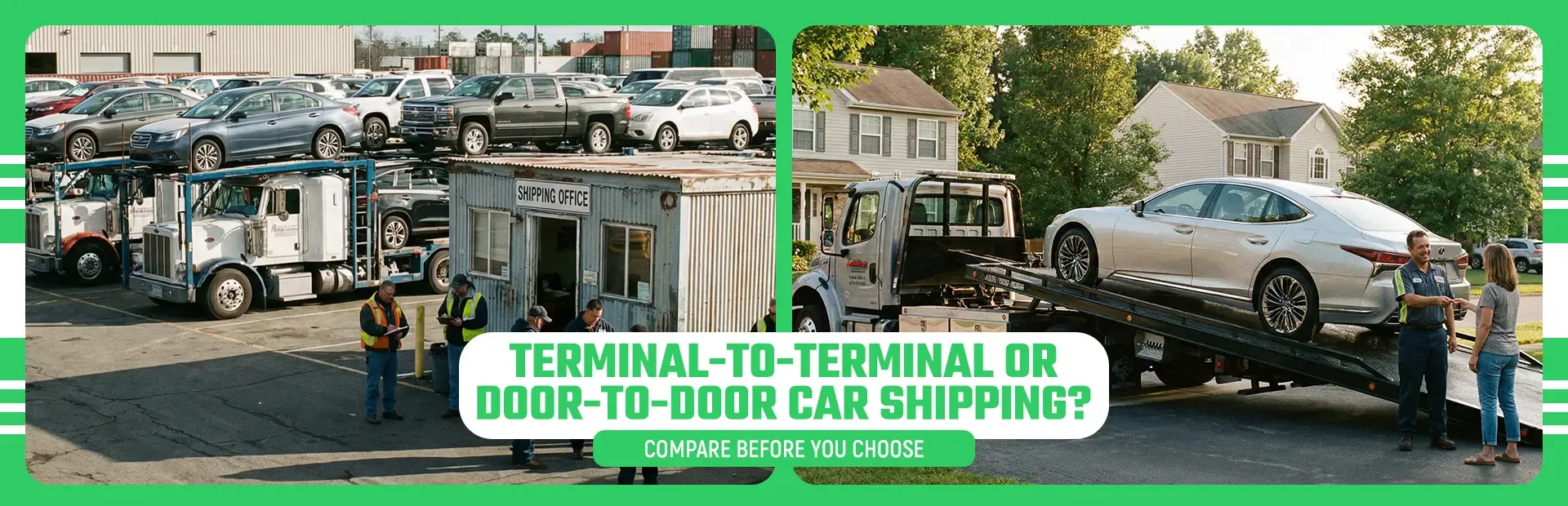
Terminal-to-Terminal vs. Door-to-Door Car Shipping: Key Differences Explained

Terminal-to-Terminal vs. Door-to-Door Car Shipping: Key Differences Explained

TRANSPORTVIBE

Deciding how to ship your car can feel like a puzzle. One of the biggest choices you'll face is between door-to-door car shipping and terminal-to-terminal car shipping. These two main methods of auto transport offer very different experiences, and understanding their core differences is key to making the right decision for your vehicle and budget. While door-to-door auto transport offers unparalleled convenience, terminal-to-terminal auto transport can often be the most budget-friendly option. This guide will break down how each method works, comparing their costs, convenience, and suitability for various situations. By the end, you'll have a clear understanding of which car delivery method best fits your needs. Ready to find the right car shipping solution for you? Get a quote today and compare options for everything from a sedan to a motorcycle. Get a quote for your car shipping today. Understanding Car Shipping Basics Auto transport, also known as car shipping or vehicle transport, is the process of professionally moving a vehicle from one location to another, typically over long distances. Instead of driving the vehicle themselves, individuals or businesses hire a specialized company to handle the logistics. This service is a major component of the freight and logistics industry, and it plays a vital role in national and global trade. Why People Use Car Shipping Services People rely on car shipping services for a variety of reasons, prioritizing safety, efficiency, and convenience over the stress and cost of a long-distance drive. Relocation: A person moving for a new job or to a new state often finds it impractical to drive their car across the country. Shipping a car saves them time and the expense of gas, food, and lodging. Buying/Selling a Vehicle: When a buyer or seller is in a different state, auto transport is the easiest way to complete the transaction without a long road trip. Seasonal Travel: "Snowbirds" and college students frequently ship their vehicles to and from seasonal residences or campuses. This type of seasonal car relocation is a popular option. Protecting a Vehicle: Owners of luxury, classic, or exotic vehicles use enclosed car shipping to protect their cars from road debris, weather, and wear and tear. Military Moves: Military personnel often require reliable and efficient vehicle transport for a Permanent Change of Station (PCS) move. Common Types of Vehicle Transport There are two primary ways vehicles are transported via truck: open and enclosed carriers. These methods offer different levels of protection and come with varying price points. Open Car Shipping Open Car Shipping is a common and economical form of vehicle transport. Your car is loaded onto an open trailer, similar to what you'd see transporting vehicles to a dealership. While it's a very reliable method, your vehicle is exposed to the elements (sun, rain, dust) and road debris. Enclosed Car Shipping For those seeking maximum protection, enclosed vehicle shipping is the preferred choice. Your car is transported inside a covered trailer, shielding it completely from weather and road conditions. This method is often used for high-value vehicles, classic cars, or newly purchased cars. It is a more expensive option due to the specialized equipment and lower carrying capacity of the trucks. You can learn more about this in our article about enclosed vehicle shipping. The choice between open and enclosed transport directly impacts the cost and security of your shipment. It's a critical decision that depends on your vehicle's value and your personal comfort level. A great way to get started is to use a free online car shipping cost calculator explained , which will provide an estimate based on your specific needs. Additionally, you can find a lot of useful information about the industry from a reputable third-party source like the Federal Motor Carrier Safety Administration ( FMCSA ) to ensure the company you choose is properly licensed and insured. Door-to-Door Car Shipping Explained Door-to-door auto transport is a premium shipping service where a professional carrier picks up your vehicle from your specified location and delivers it directly to your destination. The pick-up and drop-off points can be your home, your office, or any other private address that is safe and accessible for the large transport truck. This method eliminates the need for you to drive to and from a distant terminal, saving you significant time and hassle. The driver will work with you directly to schedule a convenient time for both pickup and delivery. Door-to-Door Car Shipping Process The process for door-to-door car transport is designed to be as seamless as possible: Booking and Scheduling: You receive a quote and book your shipment. The transport company assigns a carrier and provides you with their contact information. You and the driver then coordinate a specific pickup window. Vehicle Preparation: You prepare your car by cleaning it, removing personal items, and leaving a quarter tank of gas. You should also document its current condition with photos. Pickup: The driver arrives at your designated pickup location. Together, you perform a thorough inspection of the vehicle, noting any existing damage on a Bill of Lading (BOL). You hand over the keys and sign the BOL, officially transferring custody of the vehicle to the carrier. Transit: Your car is securely loaded onto the carrier (either open or enclosed) and begins its journey. Throughout the transit, you can often receive updates from the driver or through an online tracking system. Delivery: The driver contacts you as they approach the destination. You meet them at the specified delivery address, inspect the vehicle one last time to ensure no new damage has occurred, and sign the final BOL. Once complete, you make the final payment and receive your keys back. Key Benefits of Door-to-Door Shipping The appeal of door-to-door car delivery lies in its many advantages: Unmatched Convenience: It is the most effortless way to move a vehicle. You don't have to worry about the logistics of dropping off or picking up your car from a terminal. Time-Saving: By eliminating the need for a long drive and the waiting periods at terminals, door-to-door auto shipping saves you valuable time. This is especially beneficial for busy professionals or families on a tight schedule. Enhanced Security: With fewer handoffs and no time spent in a storage facility, your car is at a lower risk of damage or theft. It remains in the care of a single driver for the majority of its journey, offering better accountability. Direct Communication: You have a direct line of communication with the driver, allowing for real-time updates and more flexible scheduling. Possible Limitations and Challenges While highly convenient, door-to-door transport does have a few potential drawbacks to consider: Higher Cost: This service is generally more expensive than terminal-to-terminal shipping due to the personalized route planning and direct service. Accessibility Issues: The large trucks used for auto transport can have difficulty navigating narrow residential streets, cul-de-sacs, or areas with low-hanging trees. If this is the case, the driver may ask to meet you at a nearby, easily accessible location like a grocery store or a large public parking lot. Scheduling Flexibility: While the service is flexible, the pickup and delivery windows can be subject to delays from traffic, weather, or unexpected road closures. It's important to be available and have a flexible schedule on those days. Despite the issues, it is the gold standard for a stress-free vehicle relocation, offering a direct, end-to-end service that minimizes your involvement and maximizes convenience. Terminal-to-Terminal Car Shipping Explained Terminal-to-terminal auto transport involves the movement of a vehicle between two specific, designated locations—the origin terminal and the destination terminal. Think of these terminals as hubs or large, secure parking lots where cars are stored until a carrier is ready to transport them. You, the customer, are responsible for dropping your vehicle off at the origin terminal and picking it up from the destination terminal. This method allows carriers to consolidate shipments and optimize their routes, which is why it's typically a cheaper option. How Terminal-to-Terminal Car Shipping Works The process for terminal-to-terminal vehicle shipping requires more customer involvement but follows a clear and straightforward path: Drop-Off: You drive your vehicle to the specified origin terminal on an agreed-upon date. A terminal representative will conduct a vehicle inspection and complete the necessary paperwork, including the Bill of Lading (BOL). Storage: Your car will be stored at the terminal, often in a secure, monitored lot, until a carrier has a full load of vehicles heading toward your destination. Transit: Once the carrier is full, your vehicle is loaded onto the truck (usually an open carrier) and transported to the destination terminal. Pickup Notification: Upon your vehicle's arrival at the destination terminal, you will be notified that it is ready for pickup. Pickup: You must arrange transportation to the destination terminal to retrieve your vehicle. You will perform a final inspection and sign the BOL to confirm delivery. Key Benefits of Terminal-to-Terminal Shipping Choosing terminal-to-terminal auto transport comes with several distinct benefits, making it an attractive option for many customers: Cost Savings: The primary advantage of this method is its affordability. By allowing carriers to streamline their routes and transport multiple vehicles from a single location, operational costs are reduced, and these savings are passed on to the customer. Flexibility: This method offers a different kind of flexibility. You don't have to coordinate with a driver's schedule for pickup and delivery. Instead, you can drop off your car at the terminal when it's convenient for you and pick it up when you're ready, within a specified window. This is especially useful for those with non-traditional work schedules. Accessibility: For those living in areas with restricted access for large trucks (e.g., narrow city streets or remote rural locations), a terminal provides a practical and accessible drop-off point, bypassing the need for a large truck to navigate difficult residential areas. Possible Limitations and Challenges Before you commit to terminal-to-terminal car shipping, be aware of these potential limitations: Less Convenience: The main drawback is the inconvenience of having to drop off and pick up your vehicle yourself, which adds extra time and travel expenses. Potential Delays: Your vehicle may have to wait at the terminal for several days or even longer until a carrier's truck is full, which can lead to extended delivery times. This contrasts with the more direct route of door-to-door service. Storage Fees: Most terminals offer a few days of free storage, but if you cannot pick up your vehicle promptly, you may incur daily storage fees that can quickly offset the initial cost savings. Increased Handling and Exposure: Your vehicle is handled multiple times (at drop-off, loading, unloading, and pickup) and is exposed to the elements while waiting in the open terminal lot, which could increase the risk of minor damage. It's crucial to inspect your vehicle thoroughly at both the origin and destination terminals. In contrast to the personalized service of door-to-door shipping, terminal-to-terminal car shipping is a more structured and often more budget-friendly method. This system can be an excellent choice for individuals with flexible schedules, such as car dealers or garage owners, who prioritize cost savings over convenience. Get a quote and start your car delivery to home vs terminal journey with a trusted partner from Transportvibe. Key Differences Between the Two Methods When evaluating door-to-door vs terminal-to-terminal car shipping, understanding the core distinctions is crucial. The choice between these two car shipping pickup options comes down to balancing car shipping convenience vs cost, as well as factors like time, security, and personal responsibility. Here is a detailed comparison of the key differences to help you decide which service is the best fit for your needs. Service Convenience and Accessibility Feature Door-to-Door Car Shipping Terminal-to-Terminal Car Shipping Convenience The highest level of convenience. The carrier picks up and delivers your vehicle directly to your specified address. This eliminates all extra driving for the customer. Requires more effort from the customer, who must drop off and pick up the vehicle at a designated terminal. This adds personal travel time and costs. Accessibility Dependent on the location's accessibility for large trucks. Car shipping services door pickup is not always possible on narrow streets. Drivers may require meeting you at a nearby, accessible location. Not dependent on home or office accessibility. You simply need to be able to get your car to the terminal, which is usually located in a major city or industrial area. When it comes to car delivery to home vs terminal, door-to-door is the clear winner for convenience. While the driver may not be able to pull right up to your front door, the service is designed to be as close to your chosen location as possible, making the entire process far less burdensome. Time and Scheduling Flexibility Feature Door-to-Door Car Shipping Terminal-to-Terminal Car Shipping Timeframe Typically faster. Transit time is more direct and less prone to waiting periods since the vehicle is picked up and routed immediately. Generally slower. There can be significant terminal pickup car shipping delays while the vehicle waits at the terminal for a full truckload. This can add several days or even a week to the total transit time. Scheduling Requires you to be available at the time of pickup and delivery. While a window is given, flexibility is necessary to accommodate the driver's schedule. Offers more flexibility for drop-off and pickup. You can leave your car at the terminal within their business hours, and pick it up at your convenience once it arrives (within the free storage period). The speed and convenience of door-to-door auto transport often justify its higher price. This is particularly true for those on a tight deadline, such as military members on a PCS move or families with a non-negotiable relocation date. You can learn more about how transit times vary by reading our guide on Long Distance Vehicle Transport . Safety and Security Considerations Feature Door-to-Door Car Shipping Terminal-to-Terminal Car Shipping Security Fewer points of transfer mean fewer opportunities for damage or theft. The vehicle is in the driver's custody from pickup to delivery, providing a higher level of accountability. More points of handling and storage. The car is moved by terminal staff and stored in an open lot, which can expose it to potential risks like theft or vandalism. Condition The vehicle is picked up and delivered in a more controlled environment (your home), reducing the risk of minor damage from other cars or staff movements. The vehicle is stored with many other cars, increasing the chance of minor dings, dents, or scratches while being moved around the lot by terminal staff. While many people ask, "Is terminal car shipping safe?", the answer is that it's generally secure, but the added handling does increase the risk of minor, non-catastrophic damage. When comparing the safety of door-to-door vs terminal car shipping, the former offers a more secure experience due to reduced handling and no open-lot storage. This is a significant factor for owners of high-value or sentimental vehicles. Insurance and Liability Coverage Feature Door-to-Door Car Shipping Terminal-to-Terminal Car Shipping Coverage The carrier's cargo insurance covers your vehicle from the moment it is loaded until it is offloaded at the destination. The insurance is typically more straightforward due to the single-carrier journey. The carrier's insurance covers the vehicle only while it is in transit. Your vehicle's liability and insurance coverage while it is stored at the terminal can be complex and may require you to check with your personal insurance provider. Liability Liability for any damage is clear, as it rests with the single carrier and is noted on the BOL. Liability can be less straightforward. If damage occurs at the terminal, it may be covered by the terminal's insurance, but the terms can vary. It's crucial to understand these details before shipping. For detailed information on what is and isn't covered during transport, it is recommended to read a comprehensive guide on Car Shipping Insurance in the USA . This helps to clarify your rights and the carrier's responsibilities. Customer Responsibility and Involvement Feature Door-to-Door Car Shipping Terminal-to-Terminal Car Shipping Involvement Minimal customer involvement is required. You simply need to be present at pickup and delivery. The transport company handles the rest of the logistics. Significant customer involvement. You are responsible for driving the vehicle to the origin terminal and arranging transportation to pick it up from the destination terminal. Preparation In both cases, you must prepare your vehicle for transport. This includes ensuring a quarter tank of gas, and no personal belongings are in the vehicle. The difference lies in the hands-on logistics of drop-off and pickup. In both cases, you must prepare your vehicle for transport. The key difference lies in the additional logistics you must manage, such as coordinating your drop-off and pickup schedule to avoid storage fees and travel to and from the terminals. For many, the low-involvement nature of door-to-door car transport reviews is a major highlight, as it completely eliminates the need to navigate the complexities of a long-distance drive or the hassles of terminal logistics. Cost Analysis: Which Option Saves You More? When it comes to car shipping convenience vs cost, the financial aspect is often the deciding factor for many customers. While terminal-to-terminal car shipping is widely known for its affordability, a closer look at the door-to-door vs terminal shipping price difference reveals a more nuanced picture. Understanding all the factors, including potential hidden fees, is essential to determine the true cost of each method. Factors Affecting Door-to-Door Costs The door-to-door auto shipping cost is influenced by a range of factors that are unique to this personalized service. Since a carrier must dedicate a portion of their route to a specific residential location, the price is higher to account for the time and fuel spent on this customized journey. Here are the key factors that contribute to the final price: Distance and Route: The total mileage is the most significant factor. Longer distances will naturally cost more. Vehicle Size and Weight: Larger or heavier vehicles take up more space and weight on the carrier, increasing the cost. Carrier Type: Enclosed vehicle shipping is considerably more expensive than open transport due to the added protection and the smaller number of vehicles an enclosed trailer can carry. Location Accessibility: If your pickup or delivery location is difficult for a large truck to access (e.g., a rural area with unpaved roads or a tight urban street), the carrier may charge an extra fee to compensate for the added time and effort. Time of Year: Peak seasons (summer and holidays) often see higher demand, leading to increased prices. Shipping during off-peak times can lead to a lower door-to-door auto shipping cost. Factors Affecting Terminal-to-Terminal Costs The lower terminal car shipping cost is a direct result of the method's operational efficiency. By centralizing vehicle drop-offs and pickups, carriers can optimize their routes and transport more vehicles with fewer logistical challenges. However, the final price can still be impacted by several variables: Distance and Route: Like door-to-door, the distance between the two terminals is the primary cost driver. Vehicle Size and Weight: Larger vehicles still command a higher price due to the space they occupy on the trailer. Carrier Type: While most terminal-to-terminal services use open carriers, some may offer enclosed options for an added fee. Storage Fees: This is a crucial factor to consider. While terminals typically offer a few days of free storage, delays in your schedule can lead to accumulating daily storage fees that can quickly erode the initial savings. Hidden Fees to Watch Out For Whether you choose door-to-door car shipping or terminal-to-terminal car shipping, it's vital to be aware of potential hidden fees that can inflate your final bill. Always ask for a detailed quote that includes all charges to avoid surprises. Here are some common fees to look for: Expedited Shipping: If you need your vehicle delivered faster than the standard timeframe, the carrier will charge a premium for priority auto shipping. Inoperable Vehicle Fee: Transporting a non-running vehicle requires special equipment like a winch, leading to an extra charge. Storage Fees: As mentioned, terminal services may charge a fee for storing your car if you don't pick it up within the allotted free period. Fuel Surcharges: Due to fluctuating fuel prices, some companies may add a fuel surcharge to the final bill. You can learn more about how gas prices affect car shipping costs in our detailed guide. Broker vs. Carrier Fees: Some companies are brokers, not carriers, and their pricing might differ. It's a good idea to understand how broker vs carrier pricing differs and why to ensure you are getting a fair price. Understanding these costs will help you determine the cheapest door-to-door car shipping option for your needs, or if terminal-to-terminal truly provides the most significant savings for your specific situation. Door-to-Door and Terminal-to-Terminal Car Shipping: Which is Right for You? Choosing between door-to-door car shipping and terminal-to-terminal car shipping isn't about one being inherently better than the other; it’s about finding the right fit for your unique situation. The ideal choice depends on your location, budget, schedule, and personal priorities. Here’s a breakdown of which method is best for different types of customers. Best for Urban Residents For those living in a bustling city, the choice can be tricky. Door-to-door auto transport offers incredible convenience, but it has a major potential drawback: accessibility. Many urban areas have narrow streets, traffic restrictions, or limited parking that make it difficult or illegal for large car carriers to operate. The driver may need to meet you at a nearby parking lot or main street, which is a key part of the pros and cons of door-to-door car shipping. Terminal-to-terminal auto transport, on the other hand, can be a more predictable choice. Terminals are typically located near major urban centers, making them easy to access via a short drive. You avoid the stress of trying to coordinate a large truck in a crowded city, which can be a relief for many city dwellers. Best for Rural Residents Residents in rural or remote areas face the opposite challenge of their urban counterparts. Terminal-to-terminal auto transport can be inconvenient, as the nearest terminal might be hundreds of miles away. This adds significant personal travel time and costs, potentially negating the savings of this method. Door-to-door car shipping is often the most practical and cost-effective solution for rural customers. While the driver may still require a meeting point on a main road, it eliminates the need for you to take a full day off to drive your car to and from a distant terminal. This is a primary reason why choosing door-to-door car transport often leads rural customers to this option. Best for Long-Distance Moves Long-distance relocations are where the benefits of professional car shipping truly shine, and the choice between the two methods becomes a matter of priorities. Door-to-door auto transport is the premium choice for a stress-free cross-country move. It saves you from a grueling, multi-day road trip, along with all the associated costs of gas, lodging, and food. It also minimizes wear and tear on your vehicle. Terminal-to-terminal car shipping can be a good option for those looking to save money on a cross-country move. However, you must be prepared for the added time and effort of managing the logistics at both ends of the journey. For more insights on this, read our comprehensive guide on cross-country car shipping . Best for Seasonal Vehicle Shipping (Snowbirds, Students, etc.) For "snowbirds" and college students who ship their cars on a regular, seasonal basis, the choice is often driven by a desire for a low-hassle process. Door-to-door auto transport is the preferred method for many seasonal shippers. The convenience of having the vehicle picked up from your home in one state and delivered to your seasonal residence in another is a major time and energy saver. It allows you to travel by plane without worrying about a long drive through changing weather conditions. For more details on this, explore our seasonal car relocation service page. Terminal-to-terminal can be a viable alternative for budget-conscious students or those who live close to a terminal and have the flexibility to manage drop-off and pickup. Best for Budget-Conscious Customers If your primary goal is to find the most affordable way to ship your car, the answer is usually straightforward. Terminal-to-terminal car shipping is almost always the cheapest car shipping method. By cutting out the personalized pickup and delivery service, you save money on driver time and fuel. This is ideal for those who are willing to put in the extra time and effort to save a few hundred dollars. However, when calculating the true cost, you must include the time and money you will spend driving to and from the terminals. In some cases, the total expenditure might make the slightly higher door-to-door auto shipping cost a better value overall. What You Must Know About Terminal-to-Terminal And Door-to-Door Car Shipping What is the cheapest car shipping method? Generally, terminal-to-terminal car shipping is the most cost-effective method. The savings come from the carrier's ability to optimize routes and carry more cars from a central location, reducing operational costs that are then passed on to you. Is terminal-to-terminal shipping always slower? Yes, terminal-to-terminal auto transport is typically slower than door-to-door. This is because your vehicle may have to wait at the terminal until a carrier's truck is full, leading to terminal pickup car shipping delays that can extend the overall delivery timeline. Is door-to-door car shipping better than terminal-to-terminal? Whether door-to-door car shipping is better depends entirely on your priorities. If convenience, speed, and minimal effort are your main concerns, door-to-door is the superior choice. If you are on a tight budget and have a flexible schedule, terminal-to-terminal might be a better value. How do I know if door-to-door is available in my area? The availability of car shipping services door pickup depends on the accessibility of your location. Large transport trucks need a wide, clear path to operate safely. If you live on a narrow street or a remote road, you may need to meet the driver at a nearby, more accessible location. Which method offers better insurance coverage? Both door-to-door and terminal-to-terminal car shipping include standard carrier cargo insurance. However, with door-to-door, the vehicle is handled less and is in the care of a single driver for the journey, which can lead to a more straightforward claims process if damage occurs. Is terminal car shipping safe? Yes, terminal car shipping is safe in that vehicles are stored in monitored, secure facilities. However, the added handling during drop-off, storage, and loading can slightly increase the risk of minor damage compared to a direct, door-to-door shipment. Can I switch from terminal-to-terminal to door-to-door mid-shipment? It is generally not possible to switch your shipping method mid-journey. Once your vehicle is with the carrier and the route is set, any change would require re-routing, new contracts, and additional fees, which is a rare occurrence. Choosing Your Best Auto Transport Option Deciding between door-to-door car shipping and terminal-to-terminal car shipping is a personal choice that balances convenience against cost. While the direct, personalized service of door-to-door auto transport offers unparalleled ease and speed, the more affordable terminal-to-terminal auto transport is ideal for those who are budget-conscious and have flexible schedules. Both methods are safe and reliable, and understanding the core differences—from accessibility to pricing—is the key to making an informed decision. Ultimately, the best choice depends on your specific needs, location, and the value you place on time versus money. Ready to find out which method is right for your vehicle? Compare a range of options and find the perfect fit. Get a quote for your car shipping today and let Transportvibe help you make the right choice.

SEP 17, 2025
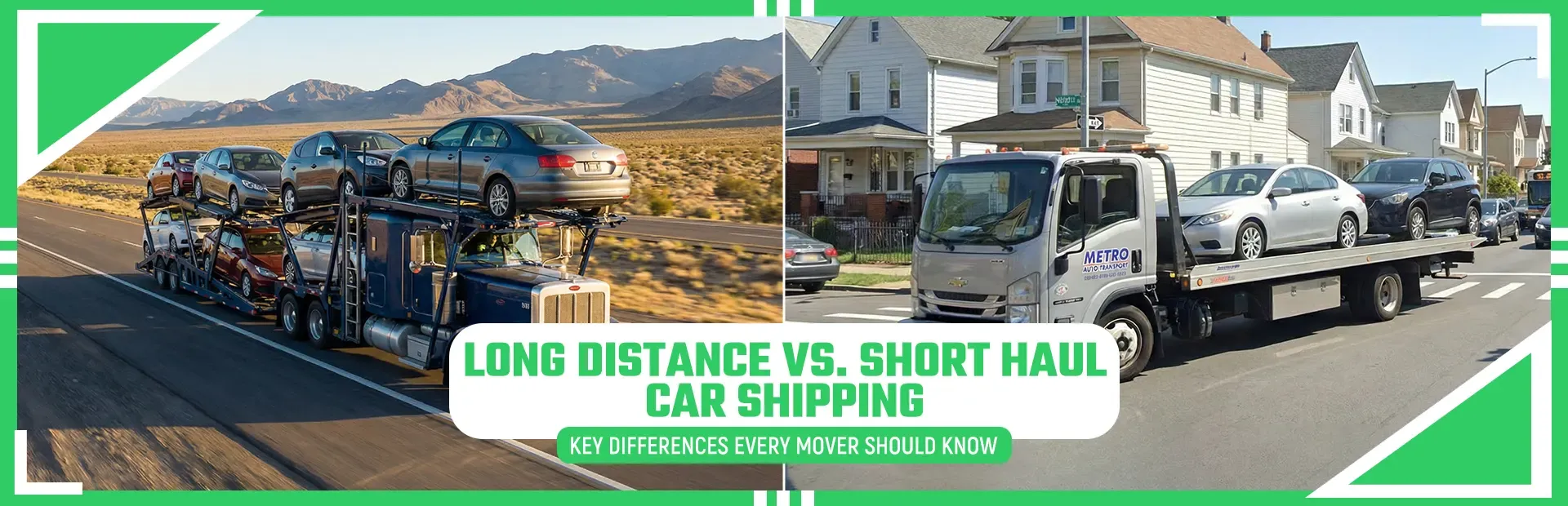
Long Distance Car Shipping vs. Short Haul: Which Option Fits Your Move Best?

Long Distance Car Shipping vs. Short Haul: Which Option Fits Your Move Best?

TRANSPORTVIBE

Driving cross-country might seem like a rite of passage, but for many, long distance car shipping is a far better solution. Whether you’re relocating for a new job or moving a college student back home, understanding the difference between long distance car shipping and short haul auto transport is crucial for a stress-free move. This guide will help you navigate the complexities of each option, from cost and convenience to scheduling and carrier availability. We’ll break down the key differences between interstate vehicle shipping and local car movers, providing a clear guide to choosing between local and interstate auto transport. By the end, you’ll know which option best fits your specific needs. Ready to find the best transport option for your move? Explore our comprehensive services and get a free, no-obligation quote today! What is Long Distance Car Shipping? Long distance vehicle shipping is a specialized service for interstate vehicle shipping or cross country car transport. This option is for moving a vehicle over a significant distance, typically over 300 miles. It is the go-to solution for individuals and families relocating to a new state, snowbirds moving south for the winter, or for buying and selling vehicles from across the country. Unlike local short haul auto transport, long distance vehicle shipping requires extensive logistical planning and a network of national carriers. Common Use Cases Long distance shipping is a popular choice for a variety of major life events that require moving a vehicle across states. Military Relocations (PCS Moves): For military members and their families who are frequently transferred to new bases, professional military vehicle relocation services are essential to ensure a smooth transition. Corporate Job Transfers: When a job requires a move to another state, shipping a car is a practical way to save time and reduce the stress of a lengthy drive. Seasonal Residents: "Snowbirds" who travel between a northern and southern home each year often rely on seasonal car relocation services. Buying/Selling Cars: It is a common practice to ship classic or specialty vehicles purchased from an out-of-state auction or private seller. Benefits of Long Distance Car Shipping Choosing to ship your car over a long distance offers considerable advantages that can outweigh the initial cost. Ultimate Convenience: Shipping your car allows you to fly to your new destination, saving you from spending days on the road. This is especially beneficial for long trips when you have other logistical items to handle. You can learn more about this in our vehicle transport for long distance relocation guide. Reduced Wear and Tear: Driving a vehicle thousands of miles adds significant mileage and stress on the engine, tires, and other components. By shipping, you preserve your car's value and avoid the costs of potential repairs. Flexible Carrier Options: Long distance car shipping offers a wider range of services, including both open vehicle shipping and enclosed vehicle shipping . This is particularly important for owners of luxury, exotic, or classic cars who want maximum protection from the elements and road debris. Cost-Effective for Long Trips: When you factor in the combined expenses of gas, meals, and hotel stays for a multi-day cross-country drive, professional interstate vehicle shipping can often prove to be the more economical choice. A recent study by the U.S. Department of Transportation found that the average cost of driving can be significantly higher than shipping when factoring in gas, lodging, and vehicle depreciation. Downsides of Long Distance Shipping While highly beneficial, long distance shipping does come with its own set of challenges that you should be aware of. Longer Transit Times: The most significant downside is the time it takes for your vehicle to arrive. Cross country car transport can take anywhere from 5 to 10 days, or even longer, depending on the route, weather conditions, and unforeseen delays. Higher Overall Cost: The total price of long distance car shipping is higher than a short haul move due to the distance, fuel consumption, and labor involved. While it can be more cost-effective than driving yourself, it is a considerable upfront expense. For a detailed breakdown, check out our car shipping cost calculator explained. Complex Scheduling: Because carriers operate on set, multi-state routes, scheduling can be less flexible than with local car movers. Your pickup and delivery windows might be broader, requiring more planning on your end. Ready to ship a vehicle for your business? From dealerships to corporate fleets, we provide seamless dealer vehicle transport solutions tailored to your professional needs. What is Short Haul Auto Transport? Short haul auto transport, also known as short distance car shipping, refers to moving vehicles over a limited distance, typically under 200-300 miles. This type of transport is best suited for local and regional car transport, such as relocating a vehicle within the same state or to a nearby state. It's the ideal choice for those who want to avoid the hassle of a short road trip but don't need the extensive logistics of a cross-country move. The carriers specializing in these routes are often referred to as local car movers. Common Use Cases Short haul transport is used in a variety of situations where a full long distance car shipping solution isn't necessary. These moves are characterized by their short duration and proximity. College Students: Transporting a student's car to a nearby campus at the beginning of the semester or back home for the summer. Local Dealerships: Moving vehicles between different dealership locations, or from an auction to their lot. Residential Relocations: People who are moving a short distance, but have a lot of other moving parts to manage and prefer not to drive their vehicle themselves. Specialty Vehicle Transport: Shipping a classic or luxury car to a local car show or a mechanic within the same region. Benefits of Short Haul Car Shipping Short haul auto transport offers several distinct advantages, primarily centered around speed and simplicity. Faster Delivery Times: The shorter distance means your vehicle will arrive much sooner, often within the same day or 1-2 days. This is a significant advantage over the longer transit times of cross country car transport. Lower Overall Cost: While the per-mile cost can be higher, the overall price of a short haul move is considerably less than a long-distance one. Flexible Schedules: It's often easier to arrange for specific pickup and drop-off times with local car movers because their routes are less complex than those of national carriers. Convenience: You can avoid the stress of navigating unfamiliar local traffic, saving you time and effort. This is particularly useful for urban moves where driving can be a major headache. Downsides of Short Distance Shipping Despite its benefits, short haul transport does have some potential drawbacks to consider. Higher Cost per Mile: A key point of car shipping cost comparison, short haul moves can have a higher price per mile. This is because carriers need to cover the costs of loading and unloading for a shorter, less profitable trip. This is a crucial point to understand when evaluating which is cheaper long distance vs short haul car shipping. Limited Carrier Availability: Not all carriers are willing to take on very short routes. Many professional carriers focus on lucrative long-distance routes, which can make finding a carrier for a very short trip a bit more challenging. Potential for Delays: While delivery is fast once a carrier is secured, the initial scheduling can sometimes take longer if a carrier isn't readily available for your specific short route. For more on the factors affecting transport, read about how gas prices affect car shipping costs . Limited Service Options: Unlike long-distance transport which offers a wide array of options, such as enclosed vehicle shipping, short haul may have fewer specialized carriers available. You can also refer to external resources like the Federal Motor Carrier Safety Administration (FMCSA) for more information on carrier regulations and safety ratings. Long Distance vs. Short Haul Shipping: Key Differences Explained Understanding the difference between long distance and short haul auto transport is the most critical step in planning your vehicle relocation. This section provides a clear car shipping cost comparison, explains how delivery times differ, and details carrier availability for each option. This short haul vs long haul auto shipping guide will help you make a confident, well-informed decision. Distance & Coverage When comparing local vs nationwide car shipping, distance is the primary factor. Short Haul Auto Transport: This service is regional, covering trips typically under 300 miles. Think of it as local car movers operating within the same state or to a neighboring state. Long Distance Car Shipping: This is for interstate vehicle shipping and cross country car transport. It can span thousands of miles, taking your vehicle from one end of the country to the other, like a long distance vehicle shipping route from California to Florida. The geographical scope determines the type of carrier and the logistics involved. Short haul is often simple, while long haul is a much more complex logistical operation. Car Shipping Cost Comparison It's a common misconception that shorter trips are always cheaper per mile. The cost difference short haul vs long haul car transport is significant. Short Haul: The per-mile cost for short distance car shipping is often higher. Carriers have fixed costs for pickup and delivery, and when these are spread over a short distance, the rate per mile increases. Long Haul: The per-mile cost is lower for longer distances. As a carrier moves across the country, they can fill their trailer with multiple cars, making the trip more profitable and allowing them to offer a better rate per mile. Factor Short Haul Long Haul Cost per Mile Higher (e.g., $1.50 - $2.50) Lower (e.g., $0.50 - $1.00) Total Cost Lower overall Higher overall For a comprehensive breakdown, consider using an online car shipping cost calculator explained. You may find that shipping a car can be more cost-effective than driving yourself when factoring in all the hidden costs, as detailed by sources like AAA . Delivery Time & Scheduling The time it takes to transport your vehicle is a major difference between the two options. Short Haul: Delivery is very fast. Your vehicle may arrive the same day or within 1-2 days. This makes it a great option if you need your car quickly. Long Haul: This involves longer transit times, typically 5-10 days or even more, depending on the exact route and the carrier's schedule. This is a crucial factor for those on a tight moving deadline. Carrier Availability The type of carrier and their availability vary greatly between these services. Short Haul: Finding a carrier for very short routes can sometimes be challenging, as many carriers prefer to maximize their earnings on longer hauls. This is a primary reason why you might struggle to get a competitive quote for a very short trip, as only local car movers may be available. Long Haul: The market for long distance car shipping is robust, with a wide selection of national and specialized carriers. This offers more auto transport options for short distance moves across states and a better chance of finding a carrier that fits your specific needs. This includes specialized services like enclosed vehicle shipping for luxury cars or military vehicle relocation. Want to see what other people think? Check out our company reviews for national and regional carriers. Cost Breakdown – Which is Cheaper? When it comes to car shipping cost comparison, the question of which is cheaper—long distance car shipping or short haul auto transport—isn’t as straightforward as it seems. While a longer trip will always have a higher total cost, the per-mile rate is the key to understanding the pricing structure. The Higher Per-Mile Cost for Short Trips Short distance shipping is more expensive per mile because of the fixed costs involved in every transport job. Fixed Costs: Carriers have a base cost for every pickup and delivery, regardless of the distance. This includes the time spent loading and unloading the vehicle, completing paperwork, and the administrative effort of booking the job. Fuel and Labor: A carrier’s truck consumes a significant amount of fuel, and the driver’s time is valuable. For a short, 150-mile trip, these costs are spread over a small distance, leading to a higher rate per mile. For a longer trip, these costs are distributed over a much larger distance, making the per-mile rate much more economical. This is a critical insight for anyone looking for short distance car shipping explained. Scenarios: 150-Mile vs. 1,500-Mile Move To illustrate the cost difference short haul vs long haul car transport, let's look at two common scenarios. Scenario 150-Mile Move 1,500-Mile Move Type Short Haul Auto Transport Long Distance Car Shipping Typical Cost per Mile $1.50 - $2.00+ $0.50 - $0.75 Estimated Total Cost $225 - $300 $750 - $1,125 What It Covers Local car movers within the same state. Interstate vehicle shipping, often coast-to-coast. Ideal For Quick, local moves; avoiding a short drive. Cross country car transport; major relocations. As you can see, while the short trip is cheaper overall, the long-distance trip offers a significantly better per-mile value. This helps clarify which is cheaper long distance vs short haul car shipping and highlights the economies of scale that favor longer routes for carriers. For a more detailed look at how various factors, like vehicle type and season, impact pricing, check out our in-depth car shipping cost calculator explained . For those looking to save money, it’s also important to compare the cost of shipping to the cost of driving. When you factor in gas, lodging, meals, and the wear and tear on your vehicle for a moving car across states long haul transport USA, shipping can often be the smarter financial decision. How to Decide the Best Option for Your Move Choosing between long distance car shipping and short haul auto transport can feel overwhelming, but it doesn't have to be. The best choice for your move depends on your specific circumstances, including the distance, your budget, and your timeframe. This guide will help you weigh the pros and cons of long distance vehicle shipping against its short haul counterpart, providing a clear guide to choosing between local and interstate auto transport so you can make a confident decision. Factors to Consider Before you book a carrier, it’s essential to consider these key factors that will directly influence your choice. Distance of your relocation: This is the most obvious factor. Are you moving from one city to another within the same state (short haul) or embarking on cross country car transport (long haul)? Short hauls are typically under 300 miles, while long hauls can be thousands of miles. Timeframe flexibility: How quickly do you need your car? Short distance car shipping offers faster delivery, often in just 1-2 days. Long distance car shipping can take a week or more. If you need your vehicle on a tight schedule, this is a crucial point to consider. Budget: While long distance vehicle shipping has a higher overall price, driving yourself can incur significant costs in gas, lodging, and food, not to mention the wear and tear on your vehicle. Compare these expenses carefully to see which option is truly cheaper for your specific move. For more on this, check out our car shipping cost in the USA guide. Vehicle Type: If you're shipping a luxury or classic car, you might prefer the extra security of enclosed transport, which is more widely available for long distance car shipping routes. A regular, everyday vehicle may be perfectly fine on an open carrier for either a long or short haul. Checklist for Choosing Right Option Use this simple checklist to quickly determine the best option for your move. Your Situation Recommended Option Why? Are you moving within the same state? Short Haul Auto Transport Ideal for local car movers; faster and more straightforward. Are you relocating across states? Long Distance Car Shipping Perfect for interstate vehicle shipping; more cost-effective than driving yourself on a long trip. Do you need quick delivery? Short Haul Auto Transport Your vehicle can arrive in 1-2 days, saving you from a rushed drive. Are you moving car across states long haul transport USA? Long Distance Car Shipping This is the most efficient and safest way to move a vehicle over a great distance without the hassle of a road trip. A useful external resource for making a decision can be found on sites like Move.org , which offers extensive guides and checklists for relocating, including advice on auto transport. Your Guide to Long Distance and Short Haul Auto Transport What's the main difference between local and interstate auto transport? The primary difference lies in distance and scope. Local car movers handle short-distance car shipping within a state, while interstate vehicle shipping involves moving a car across states long haul transport USA. Is a short distance car shipping worth the cost? Short distance car shipping explained shows that while the per-mile cost is higher, it saves time and hassle. It is often worth it to avoid a tedious short drive. Is it cheaper to drive myself for a long haul move? While the upfront cost of long distance car shipping is higher, it often saves money on gas, lodging, and vehicle wear-and-tear, making it more cost-effective. How does a carrier's availability affect my options? Regional vs national car transport availability can impact your choice. Local car movers might be harder to book for very short trips, while national carriers have broader availability. What factors influence the cost of my transport? The cost is based on many factors, including distance (long distance vs short haul shipping), vehicle size, time of year, and your chosen carrier type (open vs. enclosed). What are the pros and cons of long distance vehicle shipping? The pros of long distance vehicle shipping are convenience and reduced vehicle stress. The cons include higher total cost and longer delivery times. How do I choose between local and interstate auto transport? To choose the best option, you must consider your specific needs. Look at your budget, timeline, and the distance of your move. This will help you decide if you need short haul auto transport or a longer solution. Choosing Your Best Auto Transport Solution In the end, there is no one-size-fits-all answer for vehicle transport. Your decision between long distance car shipping and short haul auto transport should be a personalized one, based on your specific needs. While cross country car transport is ideal for major relocations and offers significant time savings, short distance car shipping is the most efficient choice for local and regional moves. By weighing the car shipping cost comparison, delivery times, and personal convenience, you can make the right decision for a seamless and stress-free experience. Ready to see how affordable your car shipping can be? Get a free quote today and find the perfect solution for your move.