

Car haulers average about $500 per car, according to Super Dispatch's 2026 industry report, which shows carriers earned more than $5 billion moving nearly 10 million vehicles in 2025. Yearly pay for a company car carrier driver lands around $96,000, with a median of $1,850 a week across active job postings in Lanefinder's October 2026 pay benchmark.
That $500 is gross, though. Fuel, insurance and broker fees all take a bite before anything hits the bank, and owner-operators pay every one of those bills themselves.
Earnings vary because of trailer types, route density, and whether you are a company driver or an owner-operator. Gross revenue looks impressive, but net profit per car is what matters. You must account for mileage rates, high fuel costs, insurance premiums, and deadhead miles that eat into your margins. This article calculates realistic income scenarios to show you exactly what hits your bank account.
Are you looking for reliable transport for your own vehicle? Get a free quote today from our trusted network of top-rated haulers to ensure your car arrives safely and on time.
How Much Do Car Haulers Make Per Car?
Your earnings in the auto transport industry depend heavily on your trailer setup and the distance you travel.
To understand how much do car haulers make per car, you must distinguish between the gross payment from a broker and your final net profit. International shipping rates vary based on your destination, local taxes, and whether you use a solo container or a shared rack. For domestic hauls, your car hauler pay shifts based on whether you choose open or enclosed equipment.

Open Carrier Per-Car Earnings (7–9 Car Capacity)
If you operate a standard multi-car trailer, your car hauler salary comes from volume rather than high individual rates. In the current 2026 market, open transport rates typically range from $0.45 to $0.60 per mile for long-distance routes. For a 1,000-mile shipment, a 9-car hauler might generate $6,000 in gross revenue, which averages out to roughly $667 per vehicle.
However, you must subtract significant overhead to find your true car hauler income. Fuel costs often exceed $1.00 per mile, and insurance premiums for a large fleet can cost thousands each month. When you allocate these expenses, your net income per car might drop to $150 or $200. Broker fees also eat into your payout, often taking 10% to 15% before the load even hits your trailer.
To maximize what auto transporters make, you must keep your trailer full and minimize empty miles. You can check official safety records through the FMCSA to ensure you remain compliant while scaling your operations. Efficient route planning is the only way to ensure your car transport guide benefits your bottom line.
Enclosed Carrier Per-Car Earnings (2–6 Car Capacity)
Drivers focusing on luxury or classic vehicles often see a higher auto hauler salary per unit. Enclosed transport commands a premium, with rates often reaching $1.50 to $2.50 per mile. On an 800-mile trip, an enclosed trailer might gross $1,800 for a single high-value vehicle. This is significantly higher than open carrier rates because you provide protection from weather and road debris.
While the revenue per car is higher, your costs are also steeper. You will pay more for specialized cargo insurance and hydraulic liftgate maintenance. Financing an enclosed trailer is also more expensive than a standard open rack. Despite these costs, the net per-car margin is usually better because you are moving "white-glove" freight.
Your final car hauler owner operator pay depends on how well you optimize your return trips. Deadhead miles can kill the profitability of a high-paying enclosed load. If you are curious about specific regional rates, looking at car shipping Florida data can help you plan your next move. Always verify a company's DOT and MC number before booking sub-haulers to protect your reputation.
Are you moving a high-value vehicle and need expert care? Check our company reviews to find the best-rated enclosed transporters
Car Hauler Salary vs Owner-Operator Income
Whether you work for a major carrier or run your own rig, your financial outcome depends on the balance between gross revenue and overhead. For those looking to scale, international pricing depends on shipping method, destination country, taxes, and container type. In the domestic market, the gap between a car hauler salary and car hauler owner operator pay is wide, but so is the responsibility.

Company Driver Auto Hauler Salary Structure
Most company drivers in the United States earn an auto hauler salary between $65,000 and $114,000 per year. You typically see pay structured in two ways: per-mile rates or a percentage of the load revenue. Mileage-based pay often ranges from $0.45 to $0.75 per mile, while percentage agreements usually give you 25% to 35% of what the broker pays the company.
When you calculate how much do car haulers make per car under a percentage model, a $1,000 load might net you $300 for that single vehicle. Weekly take-home pay for consistent OTR drivers often lands between $1,200 and $2,000. You also benefit from company-paid insurance, detention pay for long wait times at auctions, and performance bonuses that protect your steady income without the stress of maintenance costs.
Owner Operator Car Hauler Pay And Expense Breakdown
As an owner-operator, your car hauler income looks massive on paper, often grossing $200,000 to $350,000 annually. However, you are responsible for every cent of overhead. Fuel is your largest variable expense, frequently costing $60,000 to $80,000 per year depending on diesel prices. You must also budget for commercial insurance, which for new authorities can exceed $20,000 annually.
Your actual net car hauler pay after truck payments, tires, and repair reserves often lands between $70,000 and $150,000. Many operators use 6 smart ways to track car during shipping to maintain high service standards and secure better-paying loads. Before starting, use FMCSA Company Data to research market trends and ensure your business model stays profitable against rising operational costs.
Are you planning to launch your own hauling business? Visit our resources page to find detailed guides on how to choose the best auto transport service and manage your fleet effectively.
Route Selection And State Demand: How Geography Changes Per-Car Earnings
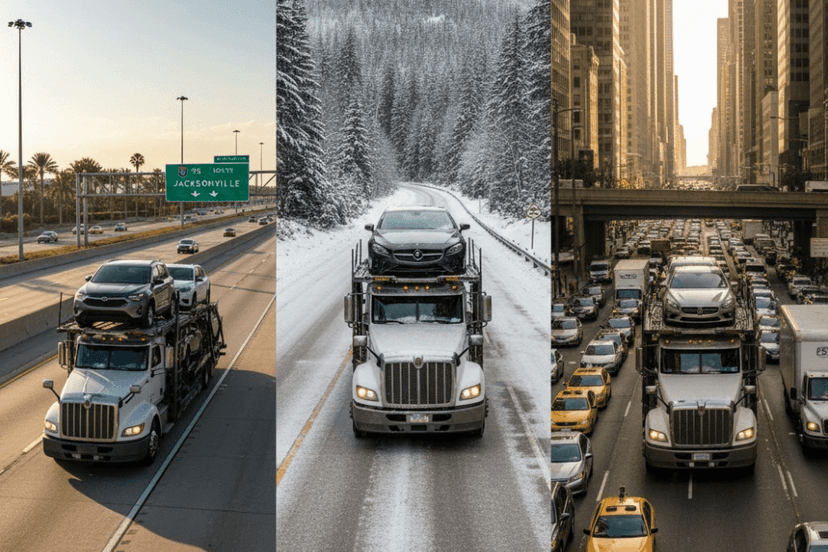
Route selection dictates your final profit more than the total miles on your odometer. High-density corridors, such as California to Texas or Florida to the Northeast, offer consistent volume but often lower per-mile rates due to heavy competition. You can often maximize how much do car haulers make per car by targeting seasonal shifts.
Seasonal snowbird routes see a massive spike in winter rates. In late October, moving a vehicle from New York to Florida commands a premium, whereas the return trip North might pay significantly less. Many drivers find a higher car hauler income by focusing on Midwest auction and dealership concentrations, where steady volume from cities like Chicago and Detroit keeps trailers full year-round.
Remote states like Montana or Wyoming present a different challenge. While limited outbound freight means you might face deadhead miles, the per-mile premiums for inbound cars are often much higher. You must weigh these high rates against urban congestion in places like New York City, where traffic reduces your daily delivery capacity and eats into your car hauler pay.
Geography also affects your overhead in ways many new drivers overlook:
-
Fuel Prices: Operating in California or the Northeast can cost you $0.50 more per gallon than in the South.
-
Rural Drop-offs: Delivering to a farm in Nebraska takes more time per vehicle than dropping five cars at a suburban dealer vehicle transport solutions hub.
-
Insurance Costs: Some states have higher litigation risks, which can influence the premiums you pay for cargo coverage.
-
Regulatory Compliance: Differing state weight limits and toll costs, especially on the I-95 corridor, reduce per-car profitability.
For a real route comparison, consider a haul from Florida to New York versus Illinois to Georgia. The Florida run might gross more during peak season, but the tolls and fuel costs in the Northeast can leave you with a lower net auto hauler salary than a simpler run through the Southeast.
Always check FMCSA Company Data to see how top carriers optimize their lanes. Understanding these patterns is key to figuring out how much do auto transporters make in various regions of the United States.
3-Car, 6-Car, And 9-Car Hauling Business Income Projections
Your choice of equipment defines your overhead and determines how much do car haulers make per car. A 3-car wedge setup is the entry point for many, while a 9-car stinger is the goal for high-volume interstate operations. Each model has a unique break-even point and specialized costs that dictate your final car hauler income.

3-Car Hauling: The Hotshot Model
Running a 3-car wedge with a one-ton dually truck is a popular starting point for a car hauling business.
-
Revenue: You can expect to gross between $3,000 and $5,000 per week.
-
Mileage: Most operators cover 6,000 to 8,000 miles per month with a frequent load turnover.
-
Costs: Your fixed monthly costs, including a truck payment and insurance, average $2,500 to $3,500.
-
Variable Expenses: Fuel is your biggest hit, often costing $0.40 to $0.50 per mile.
-
Net Income: After all expenses, a solo operator often nets $5,000 to $7,000 per month.
-
Break-even: You typically need to move 8 to 10 cars per month just to cover your basic operating costs.
6-Car Enclosed: The Specialty Niche
Moving into a 6-car enclosed trailer shifts your focus to high-value luxury exotic car shipping.
-
Premium Rates: You command $1.50 to $2.00 per mile per car, significantly higher than open transport.
-
Impact: Your insurance premiums will double because of high cargo values, often exceeding $2,000 monthly.
-
Equipment: A 6-car enclosed trailer can cost $100,000+, leading to higher financing payments.
-
Net Margin: While volume is lower, your profit per vehicle is superior, often netting $10,000+ monthly if you stay in high-demand corridors like California to Florida.
9-Car Open: The Long-Haul Powerhouse
The 9-car stinger is the standard for maximizing how much do auto transporters make on interstate routes.
-
Volume: In a 10,000-mile monthly scenario, you can gross $25,000 to $35,000.
-
Fuel Allocation: A fully loaded semi gets roughly 6.5 MPG, meaning fuel can eat 30% of your gross.
-
Maintenance: You must set aside at least $0.15 per mile for tires and major engine repairs.
-
Final Take-home: Even with high revenue, your car hauler salary after repairs and downtime often lands between $9,000 and $14,000 per month.
Scaling to a Small Fleet
Moving from a solo owner-operator to a fleet owner changes the math. Your per-car margins often shrink due to additional payroll taxes, workers' comp, and hired-driver insurance. However, high fleet utilization rates allow you to capture more of the market. Always verify your drivers' credentials through the FMCSA Company Data portal to protect your investment as you grow.
Do you need to move multiple vehicles for a dealership or a private collection? Request a custom quote and see why we are a top-rated choice for dealer vehicle transport solutions across the country.
Key Cost Drivers That Determine True Car Hauler Income Per Vehicle
Net profit is the only metric that matters when calculating how much do car haulers make per car. While your gross revenue might look impressive, several shifting expenses decide what remains in your pocket at the end of the month. You must manage these variables carefully to maintain a high car hauler salary.
-
Fuel Expenses: Diesel is your largest variable cost, often eating 25% to 35% of your gross revenue. At current 2026 prices, you are likely spending $0.50 to $0.70 per mile depending on your rig's efficiency.
-
Commercial Insurance: This is your largest fixed expense. New authorities often pay $15,000 to $22,000 annually for liability and cargo coverage. Spreading this cost across fewer vehicles significantly lowers your per-car margin.
-
Maintenance and Repairs: You should set aside at least $0.20 per mile for maintenance cycles. Unexpected repair risks, like a blown turbo or hydraulic failure on your trailer, can wipe out a week of car hauler pay instantly.
-
Depreciation: Your truck and trailer lose value with every mile. Savvy owners calculate depreciation into their operating costs to ensure they have funds for equipment replacement.
-
Broker Commissions: Brokers typically take 10% to 20% off the top. Negotiating better rates or working directly with manufacturers is the best way to increase how much do auto transporters make.
-
Deadhead Miles: Driving empty to pick up a load is a profit killer. Poor backhaul planning can turn a high-paying outbound trip into a break-even week.
-
Equipment Capacity: A 9-car trailer is more efficient than a 3-car wedge because you spread fixed costs like insurance and permits across more units.
-
Oversized Vehicles: Hauling large SUVs or lifted trucks reduces your total car count. You must charge a premium for these units to offset the lost space on your deck.
-
Time Efficiency: Time spent waiting at auctions or slow dealership lots reduces your delivery capacity. Efficient scheduling keeps your wheels turning and your car hauler income growing.
-
Market Cycles: Economic downturns or spikes in interest rates affect vehicle sales, which directly impacts load availability and per-mile rates.
To stay profitable, you need to understand the nuances of the industry, such as avoiding common car shipping mistakes that lead to delays. Many drivers find that specializing in enclosed vehicle shipping helps protect their margins during slow market cycles. Always keep your paperwork in order by checking the FMCSA for the latest regulatory updates.
Industry Realities: Common Curiosities About Auto Transport Pay
Earning a living on the road involves more than just driving; it requires a deep understanding of market rates and operational costs. These common queries highlight the specific financial details that determine long-term success for professional transporters in 2026.
How Much Do Car Transporters Make On Short-Haul Dealership Routes?
Short-haul drivers often earn between $300 and $600 per day by completing multiple local runs. While the per-mile rate is higher, traffic and loading times can limit your total daily vehicle count.
How Much Do Auto Transporters Make When Hauling Non-Running Auction Cars?
Inoperable vehicles command a $100 to $200 premium because they require specialized winching equipment. This extra fee offsets the additional labor and time needed to load and unload cars that cannot move under their own power.
How Much Do Car Haulers Make Per Car On Cross-Country Military Moves?
Military relocation contracts often pay $800 to $1,200 per vehicle. These steady military vehicle relocation loads provide reliable volume, though strict FMCSA compliance and specific delivery windows are mandatory for maintaining these high-paying government contracts.
What Is The Typical 3 Car Hauling Business Income For Regional Operators?
A regional 3-car operation typically nets $5,000 to $7,500 monthly after expenses. Success depends on minimizing deadhead miles and using 6 smart ways to track car during shipping to build trust with repeat clients.
How Much Does Car Transporters Make When Specializing In Snowbird Seasons?
During peak seasonal shifts, transporters can see rates jump by 30% or more. Moving vehicles for vacationers often yields a higher car hauler pay per unit than standard commercial freight during the winter months.
Is Car Hauling Profitable Per Car In Today’s Market?
Car hauling remains a viable business, but your success depends on your ability to separate gross revenue from net profit. On average, open carriers net between $150 and $250 per car, while enclosed models can exceed $500 per unit for luxury vehicles. You must focus on route density and trailer capacity to offset high fuel and insurance costs.
While a car hauler salary for company drivers offers stability around $65,000 to $114,000, car hauler owner operator pay can reach much higher levels through operational efficiency. Ultimately, how much do car haulers make per car on average is decided by how well you control your overhead. Independent ownership offers more freedom but requires strict management of maintenance and deadhead miles to stay ahead.
Are you ready to ship? Get a free quote today to connect with professional haulers who understand the value of your vehicle and provide reliable service nationwide.