


Enclosed vs Open Carrier Costs: Is It Worth Paying More?

Enclosed vs Open Carrier Costs: Is It Worth Paying More?

Transportvibe
May 14, 2025
5 min read

When shipping a vehicle, one of the biggest decisions you'll make is choosing between open carrier auto transport and enclosed auto transport. While both are widely used across the U.S. for car shipping, they come with distinct differences in pricing, protection, and practicality. This guide by Transportvibe—a trusted leader in auto transport reviews—is designed to help you make a smarter, more informed decision. We provide real comparisons, verified reviews, and car shipping insights to help you confidently choose the right shipping method.

What is Open Carrier Transport?

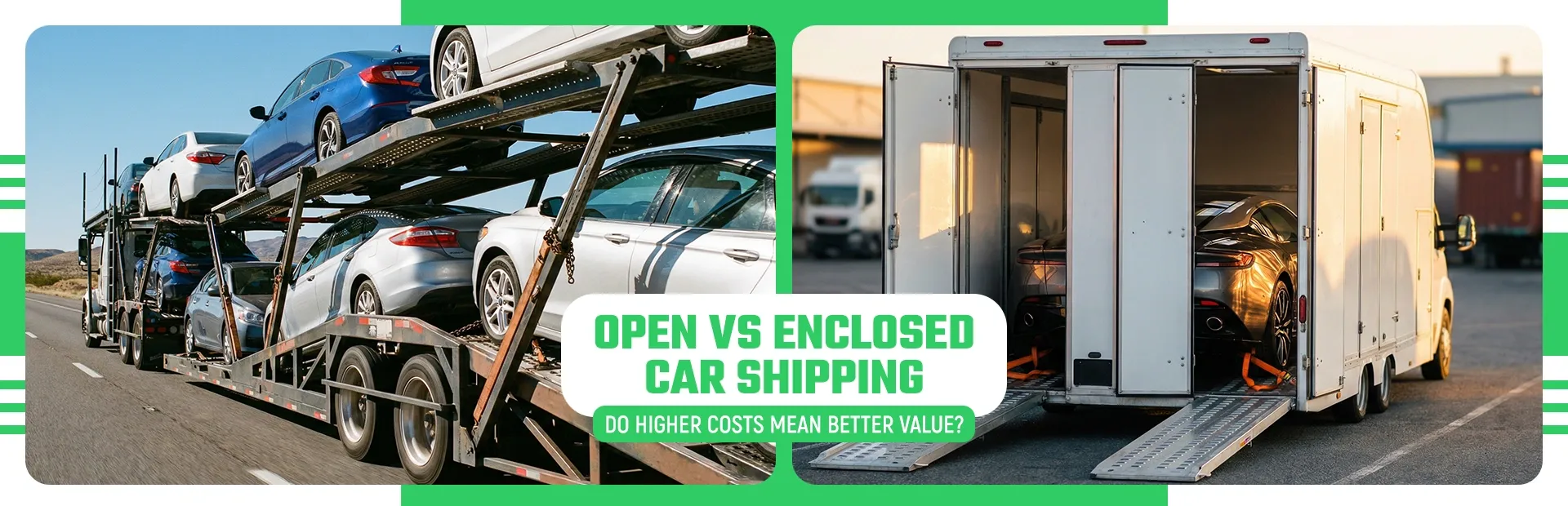
Open carrier shipping is the most common and cost-effective method of auto transport. Cars are loaded onto an open-air trailer, usually holding 7–10 vehicles. These trucks are the same kind you often see on highways delivering new cars to dealerships. Pros:

  • Most affordable vehicle shipping method
  • Widely available across all U.S. regions
  • Faster scheduling and pickup times
  • Suitable for most standard vehicles

Cons:

What is Enclosed Carrier Transport?

Enclosed car shipping involves placing your vehicle inside a covered trailer—either soft-sided or hard-sided—offering maximum protection. These carriers typically transport 1–6 vehicles at a time. Pros:

  • Complete protection from weather and debris
  • Better security and privacy
  • Ideal for luxury car shipping, exotic cars, or collector vehicles
  • Often includes white-glove service

Cons:

  • More expensive (30% to 60% higher than open transport)
  • Fewer carriers offer this premium option
  • May take longer to schedule

Cost Comparison: Open vs. Enclosed Transport

Route (Example) Open Transport Enclosed Transport
NY to LA (Sedan) $1,100 $1,600–$1,800
FL to TX (SUV) $950 $1,400–$1,600
IL to AZ (Luxury Car) $1,050 $1,500–$1,700

Note: Rates vary depending on season, carrier, route, and vehicle type.

When Is Enclosed Car Shipping Worth It?

You should consider enclosed transport if:

  • You own a vehicle valued over $50,000
  • You're shipping a classic car, antique car, or vintage vehicle
  • Your vehicle has custom modifications
  • You're concerned about weather or road conditions
  • You're attending a car show or exhibit

When Open Transport Makes More Sense

Open auto transport is the smart choice when:

  • You're shipping a standard sedan, SUV, or truck
  • You're on a budget
  • You’re not concerned about minor cosmetic exposure
  • You need quicker pickup times

Weather Considerations for Car Shipping

Enclosed carriers are especially helpful during:

  • Winter car transport: Protection from snow, salt, and ice
  • Spring pollen season: Keeps paint clean
  • Heavy rain or hail seasons: Prevents water or hail damage

Timing & Availability

  • Open carriers: Easier to book on short notice
  • Enclosed carriers: Require more lead time due to limited availability

Insurance Coverage Differences

  • Most open carriers carry $100,000 to $150,000 in cargo insurance per load
  • Enclosed carriers often provide $250,000 to $500,000+ per vehicle
  • Ask for proof of insurance and coverage details before booking your car shipping service

Customer Experience & Service Quality

Enclosed transport often includes:

  • Fewer vehicle transfers
  • Door-to-door car shipping
  • Professional loading and strapping
  • Real-time tracking and personalized support

Open transport services may:

  • Include terminal drop-off/pickup
  • Offer less personalized support
  • Load/unload vehicles more frequently along the route

Final Cost Factors to Consider in Auto Transport

  1. Distance: The farther the destination, the greater the price gap between open and enclosed.
  2. Vehicle Value: More expensive vehicles benefit more from enclosed shipping.
  3. Urgency: Expedited enclosed shipping can cost double the regular price.
  4. Season: Summer and winter are peak periods; enclosed pricing rises faster than open during these times.
  5. Route Popularity: Rural or less-traveled routes may have fewer enclosed options.

Tips for Choosing the Right Car Shipping Option

  • Know your vehicle’s value and factor in emotional as well as financial cost.
  • Get quotes for both open and enclosed car shipping to understand the cost difference.
  • Check carrier reputation, licensing, and reviews (look for MC and USDOT numbers).
  • Use Transportvibe to find vetted, FMCSA-compliant auto transport carriers.

Real Customer Scenarios

Scenario 1: “I’m moving my 2017 Toyota Camry from Chicago to Miami. I don’t need enclosed.” ✅ Use open transport. Scenario 2: “I’m relocating a 1969 Mustang for a car show in Las Vegas.” ✅ Use enclosed transport. Scenario 3: “My Tesla Model S is going from California to New York in January.” ✅ Enclosed recommended for protection from winter hazards. Scenario 4: “I have a 2015 Honda Civic and need cheap, fast delivery to Texas.” ✅ Open transport is your best bet.

Expert Insight on Auto Shipping Services

At Transportvibe, we understand that not all car shipping decisions are about price alone. We’re a dedicated platform built to help customers across the U.S. compare auto transport companies, read verified reviews, and choose the shipping solution that’s best for their needs. While enclosed auto transport comes at a premium, it offers priceless peace of mind for high-value or specialty vehicles. For everyday cars, open transport is the go-to option for affordability and efficiency. If you're unsure which method is best, contact multiple providers and review your priorities: cost, vehicle type, timing, and protection level.

Conclusion: Is Enclosed Transport Worth It?

Yes—if your car is valuable, vulnerable, or sentimental. Otherwise, open carrier auto transport gets the job done safely and at a better price point for most everyday vehicle needs. When deciding between enclosed vs. open car shipping, always consider what matters most: protection, timing, or price. In either case, the most important choice you make is choosing a reputable and insured car shipping company. Use Transportvibe to explore both options, compare quotes, and read verified reviews to make your decision with confidence. We’re here to drive the truth in auto transport reviews.

Related articles

MAY 16, 2025
Are Online Auto Transport Reviews Trustworthy? What to Look For?

Are Online Auto Transport Reviews Trustworthy? What to Look For?

TRANSPORTVIBE

When you’re planning to ship a vehicle, choosing the right auto transport company can feel confusing fast. The industry includes thousands of brokers and carriers, and many of them advertise the same promises: “best price,” “fast pickup,” and “fully insured.” Because of that, most customers rely on online reviews to decide who they can trust. But here’s the problem: reviews are not always reliable. Some reviews come from real customers who shipped a car and want to share their experience. Others are posted by marketers, fake accounts, or even competitors trying to manipulate a company’s reputation. That’s why it’s not enough to look at star ratings alone. You need to understand how reviews work in the auto transport industry, what real feedback looks like, and which platforms are actually trustworthy. At Transportvibe , we specialize in verified auto transport reviews and company comparisons. This guide breaks down exactly how to spot fake reviews, how to find reliable ones, and how to use them to choose the right company with confidence. Why Reviews Matter So Much in Car Shipping Auto transport is different from ordering a product online. You’re not buying something that gets delivered in a box. You’re paying someone to take your car—often worth thousands or tens of thousands of dollars—and move it across the country. That means your experience depends heavily on things you can’t see upfront, such as: How reliable the company’s carrier network is How honest their pricing model is Whether they communicate during delays How they handle damage claims In other words, you’re not just paying for transportation—you’re paying for trust and accountability. Reviews matter because they reveal what happens after a customer books. They can show whether the company actually delivers on its promises or whether problems appear once money is involved. A strong review often answers questions like: Did the car get picked up on time? Did the final price match the quote? Was the driver professional? Did the company stay responsive during transit? If something went wrong, did they solve it or disappear? The Truth: Fake Reviews Are Common in Auto Transport Unfortunately, fake reviews are more common in auto transport than many people realize. This happens because the industry is highly competitive and price-driven. Companies know that customers often choose based on rating averages. If a broker has a 4.8-star rating and another has a 3.9-star rating, most people will pick the higher one—even if the lower-rated company is actually more honest. Some companies try to “fix” their reputation by: Paying for 5-star reviews Posting reviews from employees or fake accounts Offering discounts in exchange for positive ratings Flooding review platforms after bad feedback Reporting negative reviews to get them removed This is why Transportvibe emphasizes verified reviews and real shipping documentation. Red Flags That Often Signal Fake or Manipulated Reviews It’s not always easy to spot fake reviews, but there are patterns that show up repeatedly. Too Many 5-Star Reviews in a Short Time Real customers leave reviews gradually. If you see 20–50 perfect reviews posted within the same week, that often suggests a review campaign. Generic Praise With No Details Fake reviews are usually vague because the reviewer never shipped a car. They often use phrases like: “Amazing company!” “Very professional!” “Best shipping service ever!” Real customers usually mention specifics such as the route, timeline, or vehicle. A Profile With No Normal “Middle Ground” Authentic companies usually have a mix of experiences: Most are positive Some are neutral A few are negative If a company has nothing but perfect reviews, or nothing but angry reviews, something may be off. Identical Reviews Across Platforms Copy-pasted reviews are common. If the same wording appears on Google, Trustpilot, and another site, it may not be genuine. Missing Verified Reviewer Signals Platforms that allow anonymous reviews without proof are easier to manipulate. Verification does not guarantee truth, but it makes fraud harder. What Real Auto Transport Reviews Look Like Real reviews usually feel more human. They often include both positives and small issues, because real shipping is rarely flawless. Authentic reviews tend to include details such as: Pickup and delivery locations (example: “Austin to Phoenix”) Shipping dates or timeframe Vehicle type (sedan, SUV, classic car, motorcycle) Whether transport was open or enclosed How communication went during pickup and delivery They also often describe real-life complications such as: Weather delays Pickup window changes Traffic or driver availability issues Last-minute scheduling adjustments Most importantly, real reviews usually explain how the company handled the situation. That’s the difference between a good company and a bad one. A great company isn’t always perfect—but they stay honest, responsive, and fair. The Most Trustworthy Review Platforms (And Why) Not all review websites are created equal. Some are better at preventing fraud and verifying customers. Here’s how the major platforms compare: Transportvibe Transportvibe is designed specifically for auto transport. Instead of being a general review site, we focus on: Verified shipping-based reviews Manual fraud screening Category-based performance scoring Auto transport-specific comparisons Because the platform is industry-specific, the reviews tend to be more relevant and more detailed. Google Reviews Google is useful because it has large volume. However, it’s also one of the easiest platforms to manipulate. Fake reviews can appear, and it can be difficult to verify who actually shipped a vehicle. Trustpilot Trustpilot provides more structure than Google, and companies can respond publicly. That’s useful, but some companies heavily “manage” their review flow by encouraging only happy customers to post. BBB (Better Business Bureau) BBB is valuable for a different reason. It’s not just about ratings—it’s about complaint patterns. If you want to know whether a company has a history of unresolved disputes, BBB is a strong source. Reddit and Quora These platforms can provide very honest discussions. People often share detailed stories and warnings. However, they are not verified, and anyone can post anonymously. How to Use Reviews Effectively (Not Emotionally) A common mistake customers make is reading reviews emotionally. One bad review can scare you away, and one perfect review can convince you too quickly. The smarter approach is to read reviews like evidence. Focus on Trends, Not One-Off Stories Every company will eventually have a delayed shipment or a difficult route. One negative review doesn’t mean the company is bad. But if 15 people report the same problem—such as sudden price increases—that’s a serious warning sign. Sort by Most Recent Auto transport performance changes quickly. Companies grow, change staff, change dispatch teams, or shift pricing strategies. Recent reviews show what the company is like right now. Pay Attention to Pricing Language A review that says, “My final price was $200 higher than quoted” is not automatically a red flag. What matters is whether the company: Explained it upfront Asked for approval Offered alternatives Transparent companies communicate price changes early. Dishonest brokers surprise customers after booking. Compare at Least Two Platforms If a company looks amazing on one platform but has serious complaints elsewhere, dig deeper. Consistency across platforms is one of the strongest trust signals. Why Transportvibe Reviews Are More Reliable Transportvibe was built to solve one of the biggest problems in auto transport: customers can’t easily tell who is trustworthy. Instead of showing only star ratings, Transportvibe focuses on meaningful review quality. Our system includes: Verified review submission Manual moderation for suspicious patterns Performance scoring across real shipping categories Clear comparisons between companies Transportvibe ratings go deeper than “good” or “bad.” We evaluate companies based on what customers actually care about: Did the quote match the final price? Was pickup on time? Was communication consistent? Was damage handled fairly? Did the company stay accountable when problems happened? This gives customers a more realistic view of what they can expect. Case Study Examples: What Reviews Reveal Detailed reviews are valuable because they show how companies behave under pressure. Example 1: Montway Auto Transport A customer shipping a luxury car mentioned that the vehicle was delayed due to weather, but Montway provided daily updates and stayed honest about the situation. This type of review is valuable because it shows how a company communicates when something goes wrong. Example 2: AmeriFreight Auto Transport A customer reported a small quote difference but explained that AmeriFreight communicated the change before assigning a carrier and allowed approval. This is a key sign of transparency. Example 3: A Bait-and-Switch Broker A customer reported being quoted $599, then being told no carrier was available unless they paid $200 more. When this pattern appears repeatedly, it’s one of the strongest warning signs in the industry. Transportvibe Tools That Help You Avoid Bad Experiences Reviews are powerful, but customers also need practical tools. Transportvibe includes: FMCSA lookup guidance (to confirm licensing and insurance) Company comparison pages Route-based pricing calculators First-time shipper guides Category recommendations for specialized shipping This helps customers make decisions based on evidence—not marketing claims. Final Thoughts Auto transport reviews are essential—but only if they are real, recent, and relevant. The best way to protect yourself is to look beyond star ratings and focus on: Detailed, specific reviews Verified feedback Repeated patterns Transparent pricing experiences Consistency across multiple platforms At Transportvibe, our mission is simple: drive the truth in auto transport reviews. Whether you’re shipping a car coast-to-coast, relocating for work, moving a luxury vehicle, or arranging seasonal transport, verified reviews and trusted comparisons make it easier to choose the right company with confidence. Visit Transportvibe to explore verified reviews, compare companies, and find the best car shipping solution for your needs.

MAY 14, 2025
Best Time of Year to Ship a Car in the USA (and How to Save Money)

Best Time of Year to Ship a Car in the USA (and How to Save Money)

TRANSPORTVIBE

Shipping a car across the United States can be a smooth experience when timed right. Seasonal demand, weather patterns, fuel prices, and carrier availability all impact the cost and convenience of car shipping. In this comprehensive guide, we’ll explore the best times of the year to ship a car, how each season affects the process, and the best strategies to save money while ensuring your vehicle arrives safely and on time. Seasonal Overview: When Is the Best Time to Ship a Car? Each season presents unique advantages and challenges for auto transport. Here's a breakdown: Winter (December to February) Pros: Lower demand can lead to better pricing; fewer shipments overall. Cons: Weather delays due to snow and ice, especially in northern and midwestern states; limited carrier availability in certain regions. Best For: Snowbirds relocating to Florida, Arizona, or California; people with flexible timelines who want to avoid peak pricing. Spring (March to May) Pros: Mild weather improves delivery reliability; moderate demand keeps pricing reasonable. Cons: Prices begin to rise heading into summer. Best For: First-time shippers, students moving for college, military relocations. Summer (June to August) Pros: High availability of carriers; fast scheduling and broad coverage. Cons: Peak season pricing due to high demand; competition for booking slots. Best For: Urgent moves, long-distance relocations, and returning snowbirds. Fall (September to November) Pros: Demand decreases after summer; carriers offer more flexible pricing; great weather conditions for transport. Cons: Carrier supply starts to decline as holidays approach. Best For: Budget-minded shippers, college students returning home, used car purchases. How to Save Money When Shipping a Car Saving on car shipping requires a bit of strategy. Use these expert tips: Be Flexible with Pickup & Delivery Dates Flexible dates allow brokers and carriers to optimize route planning and offer better deals. Choose Open Carrier Transport Open transport is typically 30–50% less expensive than enclosed options and still safe for most vehicles. Avoid Peak Shipping Times Skip late spring through summer and the holiday season to avoid rate spikes. Book Your Shipment in Advance Booking 2–4 weeks ahead gives you better access to affordable rates and reliable carriers. Compare Quotes from Multiple Providers Don’t settle for the first offer—use comparison tools or marketplaces to get 3–5 quotes. Use Terminal-to-Terminal Shipping If convenience is not a top concern, this option can save you money in areas where terminals are available. Ship During Shoulder Seasons Mid-fall (October–November) and early spring (March–April) typically offer the best rates. Avoid Last-Minute Bookings Emergency or same-week requests cost significantly more. Ask About Discounts Some companies offer deals for students, military personnel, multiple vehicles, or repeat customers. Work with a Licensed Broker Reputable brokers help you find competitive rates from vetted and insured carriers. Cost Range by Season (Estimates) Season Estimated Cost (Cross-Country, Sedan) Winter $900 – $1,300 Spring $1,000 – $1,400 Summer $1,200 – $1,600 Fall $950 – $1,300 These estimates are based on coast-to-coast shipments. Prices may vary based on distance, fuel costs, carrier type, and vehicle condition. Best Shipping Times by U.S. Region Northeast: Avoid shipping during snow-heavy months. Spring and fall are ideal due to moderate weather. Midwest: Similar to the Northeast. Watch for icy roads and shipping delays in winter. South: Shippable year-round, though pricing rises in winter due to snowbird demand. West Coast: Milder weather offers more flexibility; spring and fall remain optimal. Enclosed vs. Open Transport Timing Considerations Enclosed Transport: Best in winter to protect luxury or classic vehicles from snow and road debris. Open Transport : Works well in spring, summer, and fall when weather conditions are mild. Common Seasonal Routes Snowbird Routes: From New York/New Jersey/Pennsylvania to Florida or Arizona (peak activity in November and April). College Town Moves: Summer and early fall (August–September) see high student relocation volume. Auto Auction & Dealership Routes: Operate year-round but spike ahead of fiscal quarters. What Affects Pricing Regardless of Season? Beyond seasons, other pricing factors include: Distance: Cross-country costs more than regional moves. Vehicle Type: Larger vehicles like SUVs or trucks cost more to ship. Vehicle Condition: Non-operational cars require special equipment. Pickup/Dropoff Location: Rural areas may cost more due to limited carrier access. Pro Tips for Smooth Shipping Inspect Your Vehicle Before and After Shipment Take Photos of Vehicle Condition for Documentation Remove Personal Items and Disable Alarms Ensure Insurance Coverage is Verified in Writing Ask for the Carrier’s USDOT and MC Number Final Thoughts The best time to ship a car in the USA depends on balancing timing, budget, and risk tolerance. If you're looking to save money, the best periods are October through early December and late February through April . These shoulder seasons offer fewer weather disruptions and lower pricing. If timing is more important than budget, summer provides the fastest booking and delivery options—just be prepared for higher costs. No matter when you ship, planning ahead and working with reliable companies can reduce risk and expense. Visit Transportvibe to explore vetted auto transport providers, compare quotes, and find answers to all your car shipping questions.