




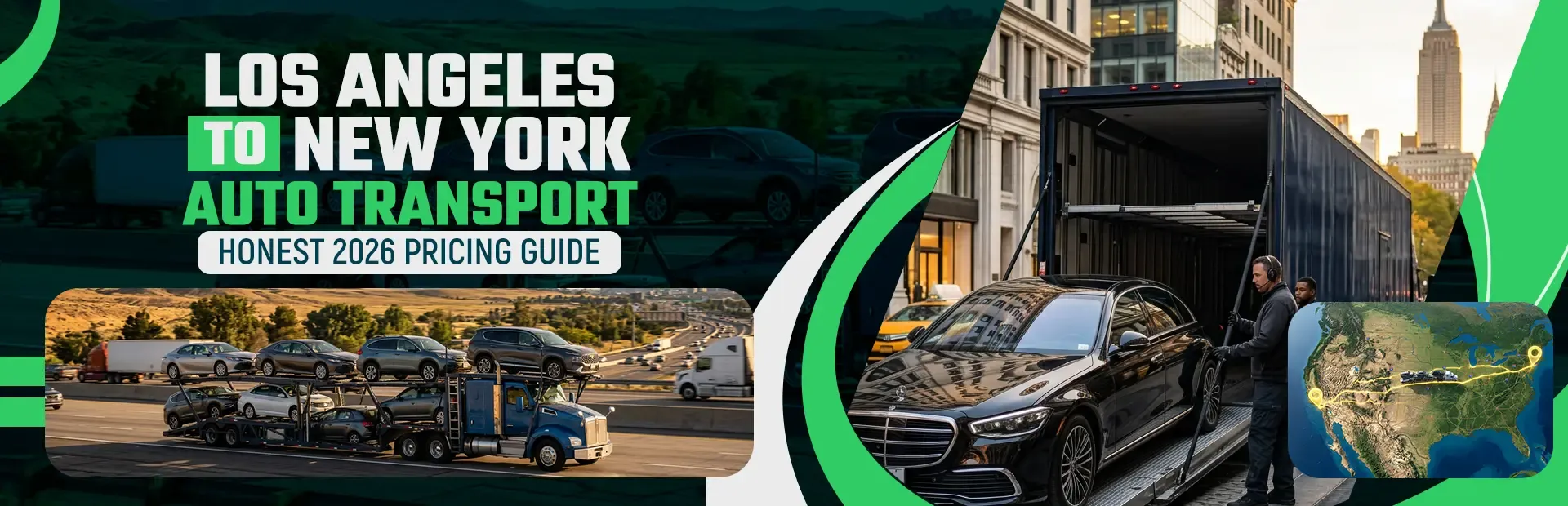
California ranked as the #1 outbound state in the U.S. for the second consecutive year, according to Allied Van Lines' 2025 Migration Report. A lot of those people fly. Their cars don't drive themselves.
The Los Angeles to New York corridor is one of the busiest auto transport lanes in the country. Both cities rank among the top 5 car shipping destinations nationwide. That means daily carrier departures, competitive pricing, and enough data to give you a straight answer on cost and timeline.
This guide covers real 2026 pricing, honest transit times, which companies actually deliver on this route, and what to confirm before you hand over a deposit.
Get your Los Angeles to New York auto transport quote today. Compare real carrier prices, read verified reviews, and book with confidence at Transportvibe.
How Much Does LA To New York Car Shipping Cost In 2026?
Most online quotes for this route start around $1,000. Some brokers advertise $800. That's the number designed to get you in the door — the actual price shifts once a carrier is assigned.
Here's what the real range looks like in 2026: $1,050 to $1,600 for a standard sedan or compact SUV on an open carrier. Enclosed transport runs $1,700 to $2,800 for most passenger vehicles, with higher numbers for large SUVs, trucks, and specialty cars.
Why is this route competitive on price? The LA to New York corridor sees daily carrier departures year-round. More trucks on the lane means more options for your shipment, which keeps pricing in check compared to less-traveled routes.
Open Carrier Pricing On The LA To NYC Run
|
Vehicle Type |
Open Carrier (2026 est.) |
Notes |
|
Standard sedan (Civic, Camry) |
$1,050 – $1,350 |
Most common vehicle on this route |
|
Compact/midsize SUV (RAV4, CR-V) |
$1,150 – $1,450 |
Slight premium for extra carrier space |
|
Full-size SUV (Tahoe, Expedition) |
$1,350 – $1,600 |
Larger footprint = higher cost |
|
Standard pickup truck |
$1,250 – $1,550 |
Height matters; confirm with broker |
|
Minivan |
$1,150 – $1,450 |
Similar to midsize SUV pricing |
Open carriers are the standard 9–10 car hauler trucks you see on highways daily. Your vehicle is exposed to weather and road debris, but damage rates on open transport are genuinely low, and liability coverage is typically built into the quoted price.
This option works for: everyday car owners, students shipping to college in New York, military members on PCS orders, dealerships moving stock, and anyone relocating east.
Explore open car shipping options for the LA to New York route.
When Enclosed Auto Shipping Is Worth The Extra Cost
Enclosed isn't always necessary. For a 2021 Toyota Camry, it's probably overkill. For a 1968 Chevrolet Camaro or a Porsche 911, it's just basic sense.
|
Factor |
Open Carrier |
Enclosed Carrier |
|
Protection from weather/debris |
No |
Yes |
|
Cost (sedan, LA to New York) |
$1,050 – $1,600 |
$1,700 – $2,800 |
|
Vehicles per load |
Up to 10 |
2–6 |
|
Transit time |
7–10 business days |
7–10 business days |
|
Best for |
Daily drivers, dealer stock |
Classics, exotics, high-value vehicles |
Vehicle types that should go enclosed on this route:
-
Vehicles with a market value over $50,000
-
Classic or collector cars, especially pre-1980 builds
-
Exotics and sports cars with low ground clearance
-
Custom bodywork or fresh paint jobs
-
Any vehicle you'd genuinely lose sleep worrying about on an open carrier
For car show organizers shipping to a New York event, enclosed is the standard. You're protecting the presentation, not just the paint.
Learn more about enclosed vehicle shipping for cross-country routes. For a side-by-side cost breakdown, open vs. enclosed transport cost has the numbers.
How Long Does It Take To Ship A Car From LA To New York?

The honest answer: 7 to 10 business days.
That covers the ~2,800-mile run from pickup in Greater Los Angeles to delivery in the New York metro area. Most shipments land within that window. Some arrive on day 6. A few stretch to day 12 if there's weather in the Midwest or the carrier has multiple stops before yours.
|
Service Type |
Estimated Transit Days |
Cost Premium |
|
Standard open carrier |
7–10 business days |
None (base price) |
|
Expedited open carrier |
4–7 business days |
30–50% above standard rate |
|
Standard enclosed |
7–10 business days |
None beyond enclosed rate |
|
Expedited enclosed |
5–7 business days |
30–50% above enclosed rate |
A few things that stretch the timeline:
FMCSA's Hours of Service regulations limit how many hours a driver logs per day. On a 2,800-mile run, that means 4–5 driving days minimum with mandatory rest stops factored in. Add loading and unloading time at each stop on the carrier's route, and 7–10 days is the honest window, not padding.
Snowbirds heading east from January through March should book 3 weeks out minimum. Seasonal demand on the California to New York lane spikes hard in those months. Last-minute bookings mean you're competing for spots on already-loaded trucks.
What "pickup window" actually means: most brokers quote a 1–3 day pickup window, not a guaranteed date. If your timeline is tight, ask specifically about expedited or first-available pickup — it costs more, but the certainty is worth it for some shippers.
For more context on why transit times vary on long-distance routes, car shipping time factors breaks it down.
What Actually Changes Your Auto Transport Quote On This Route
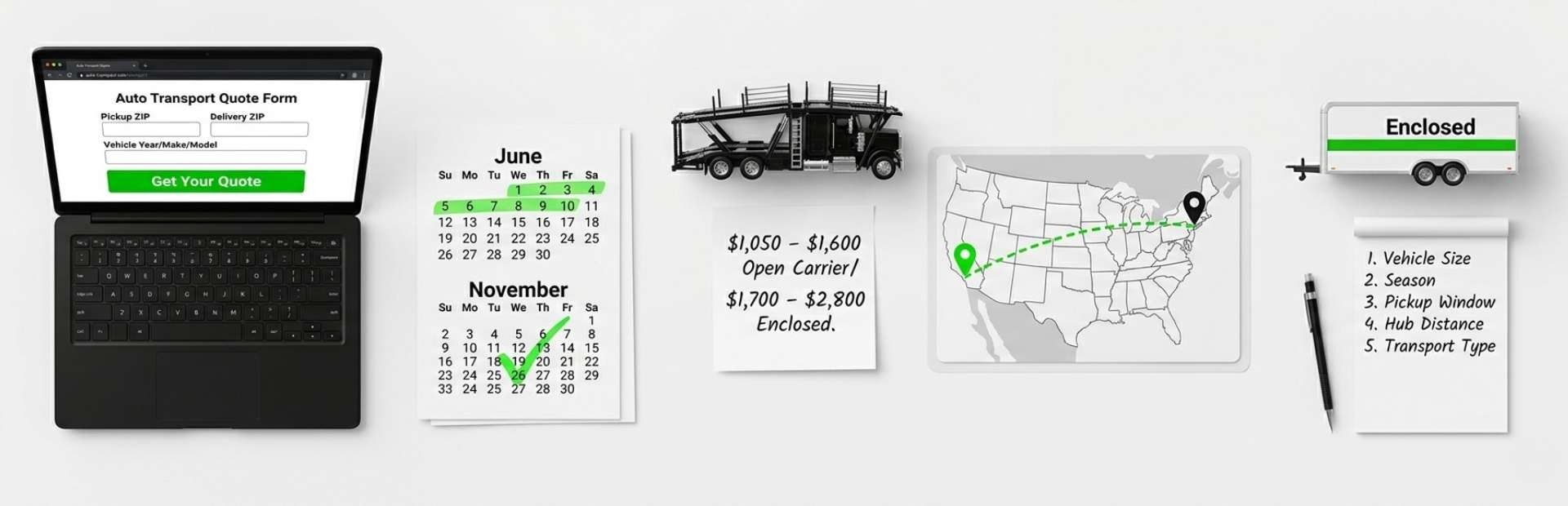
The price in an instant quote tool is a broker estimate. The confirmed price comes when an actual carrier agrees to pick up your vehicle. Those two numbers are often different — sometimes by $100, sometimes by $300.
Here's what moves the quote, and by how much.
In 2026, seasonal pricing swings on the LA to New York run can reach 20–30% above base rates during peak windows.
The 5 Biggest Cost Variables On The LA To NYC Run
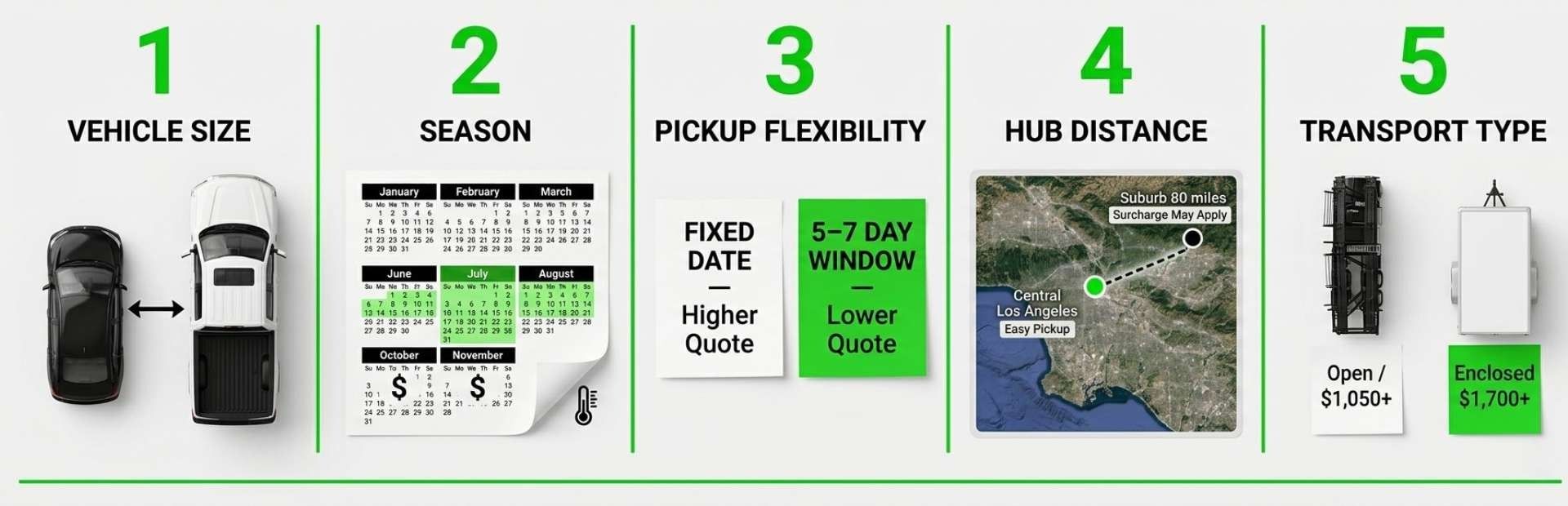
1. Vehicle size and weight. A full-size F-150 takes more carrier space than a Civic. Expect an extra $100–$300 for large trucks, vans, and full-size SUVs versus a standard sedan.
2. Time of year. Summer (June–August) is peak season. January–February sees elevated demand on this lane from snowbird relocations. Prices run 20–30% higher during those windows compared to October or November.
3. Pickup flexibility. Locking in a specific pickup date limits carrier options. Offer a 5–7 day window instead — most brokers will quote meaningfully lower with that flexibility.
4. Distance from carrier hubs. Central Los Angeles is easy to route. A pickup 90 minutes outside the city requires a detour and costs more. Same logic applies on the New York end.
5. Transport type. Enclosed adds 50–100% over open carrier pricing on this route. Already covered above, but the gap is wide enough to deserve a repeat mention.
For dealerships: if you're moving 5 or more vehicles, ask about commercial account pricing. Volume loads on open carriers typically come with rates that are well below standard retail.
Before paying any deposit, verify the broker's MC number with the FMCSA. A legitimate broker gives you that number without hesitation.
For a deeper breakdown, 5 factors that determine your car shipping quote covers what you can actually control.
How To Get A More Accurate Quote For This Route
Online calculators are useful starting points. They're not contracts.
The final price is only locked in when a carrier is dispatched. To get a quote that's close to what you'll actually pay, have this ready:
-
Vehicle year, make, model, and trim (weight and dimensions affect pricing)
-
Exact pickup ZIP code — not just "Los Angeles"
-
Exact delivery ZIP code in New York
-
Your preferred pickup window (flexible vs. specific date)
-
Whether the car runs under its own power (non-running vehicles cost more and require specialized equipment)
Ready to compare real numbers? Get your Los Angeles to New York auto transport quote at Transportvibe — no obligation, no lowball surprises.
Best Car Shipping Companies For The La To New York Route
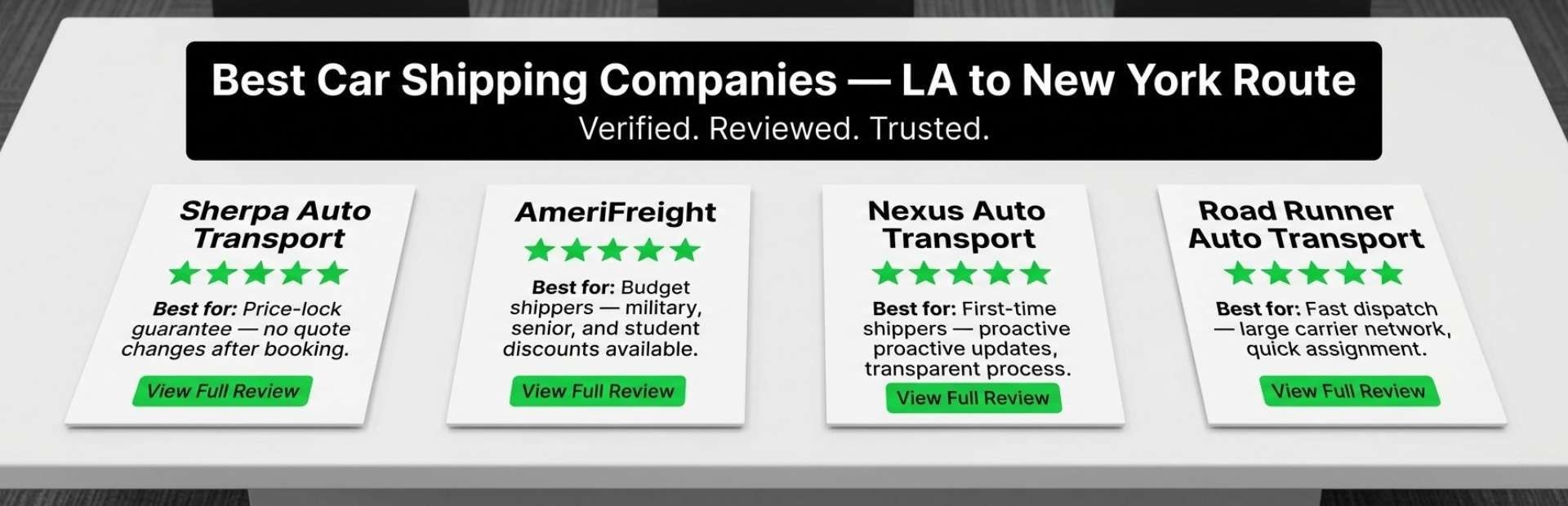
This route has no shortage of brokers competing for your deposit. Most are fine. A few use lowball quotes to secure payment, then take weeks to dispatch a carrier.
Most companies you'll quote are brokers — they match your shipment to a carrier through networks like Central Dispatch. The broker handles paperwork, insurance coordination, and customer communication. The driver works for a separate carrier company. That's not a problem. It's just how the industry operates.
What matters is whether the broker has a track record of dispatching quickly and communicating honestly.
|
Company |
Best For |
Notable Strength |
Review |
|
Sherpa Auto Transport |
Price-lock guarantee seekers |
Quote you get is the price you pay |
|
|
AmeriFreight |
Budget-conscious shippers |
Discount programs for military, seniors, students |
|
|
Nexus Auto Transport |
First-time shippers |
Proactive communication, straightforward process |
|
|
Road Runner Auto Transport |
Fast dispatch needs |
Large carrier network, quick assignment turnaround |
Sherpa Auto Transport runs a price-lock model. The quote you receive is the price you pay — no deposit-then-spike. That makes them a common pick for anyone who's been burned by lowball quotes on a previous shipment.
AmeriFreight is a strong option for price-sensitive shippers. They have discount programs for military, students, seniors, and returning customers. Dispatch isn't always the fastest on this lane, but pricing is transparent and they don't pull surprises.
Nexus Auto Transport scores well with first-time shippers. Their team sends updates on pickup and delivery without you having to chase them — which matters a lot when your car is somewhere in Ohio and you have no visibility into its progress.
Road Runner Auto Transport runs one of the larger carrier networks in the country. If fast dispatch on the LA to NYC lane is the priority, they're usually the quickest to assign a carrier.
Before booking with any company, verify their DOT and MC number at FMCSA's carrier lookup. Takes 30 seconds and tells you immediately if the company is legitimately licensed.
Red flags when getting quotes on this route:
-
Quote is 30%+ below every other broker you've contacted
-
No MC or DOT number provided when you ask
-
Pressure to pay a deposit before basic questions are answered
-
Can't tell you which carrier will actually move your vehicle
Door-To-Door Auto Transport On The La To Nyc Route: What It Actually Means
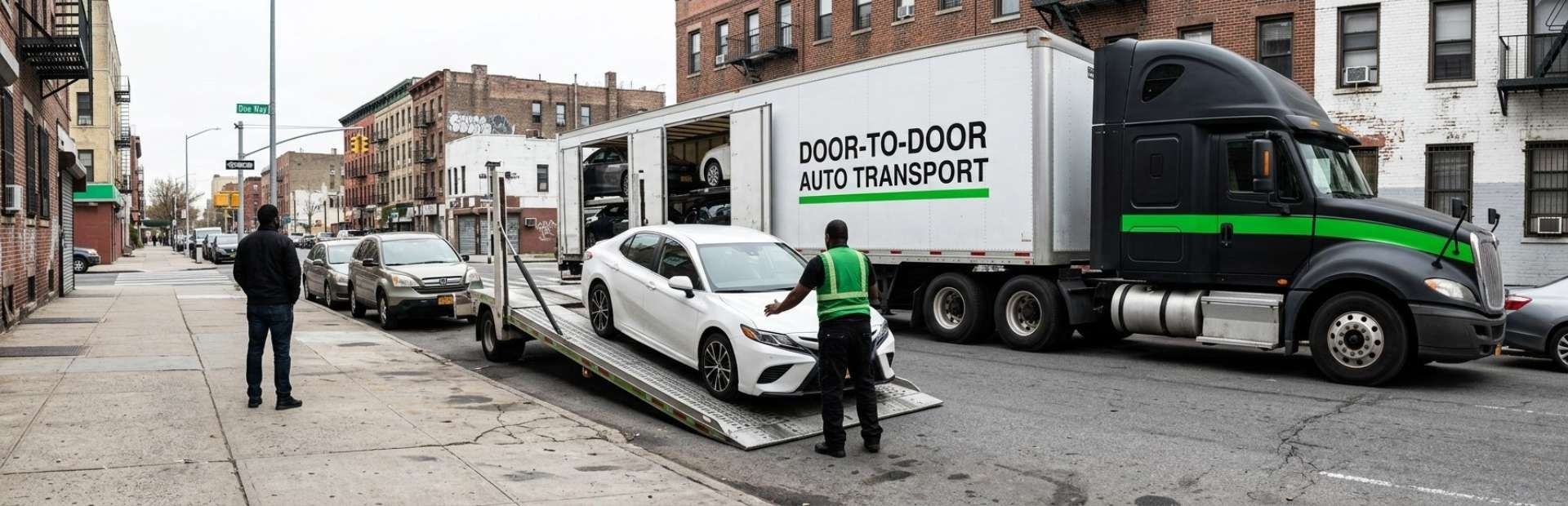
Most people picture the truck parking in front of their building. In Greater Los Angeles, that's usually accurate. Wide streets, accessible neighborhoods, and suburban areas that carriers run through daily.
New York is different.
Large transport trucks — 75+ feet — can't navigate every street in the five boroughs. Manhattan has width restrictions, low-clearance areas, and parking limitations that make standard carrier access complicated. In practice, your driver will get as close as physically possible and call you to meet them at a nearby accessible lot or open street. That still counts as door-to-door service.
|
Factor |
Door-to-Door |
Terminal-to-Terminal |
|
Convenience |
High — carrier comes to you |
Lower — you manage drop-off and pickup |
|
Cost |
Included in most quotes |
Often slightly cheaper |
|
Timeline |
Standard transit window |
Can add 2–4 days on each end |
|
Best for |
Most shippers |
Those who can't be present at pickup or delivery |
|
NYC-specific |
Driver may ask you to meet nearby |
Terminals available in New Jersey and outer boroughs |
Terminal shipping makes sense on the LA to New York run when:
-
You're flying out before the car is picked up and no one can hand off the keys
-
Your NYC delivery address is a tight residential street with no access for large vehicles
-
You want more predictability by working around fixed terminal hours
Before booking, ask your broker directly: "What's the closest your carrier can physically get to my delivery address?" A good broker gives you a straight answer. One that dodges the question is telling you something.
More on how pickup and delivery actually work: understanding door-to-door transport.
Special Vehicles On The LA To New York Route
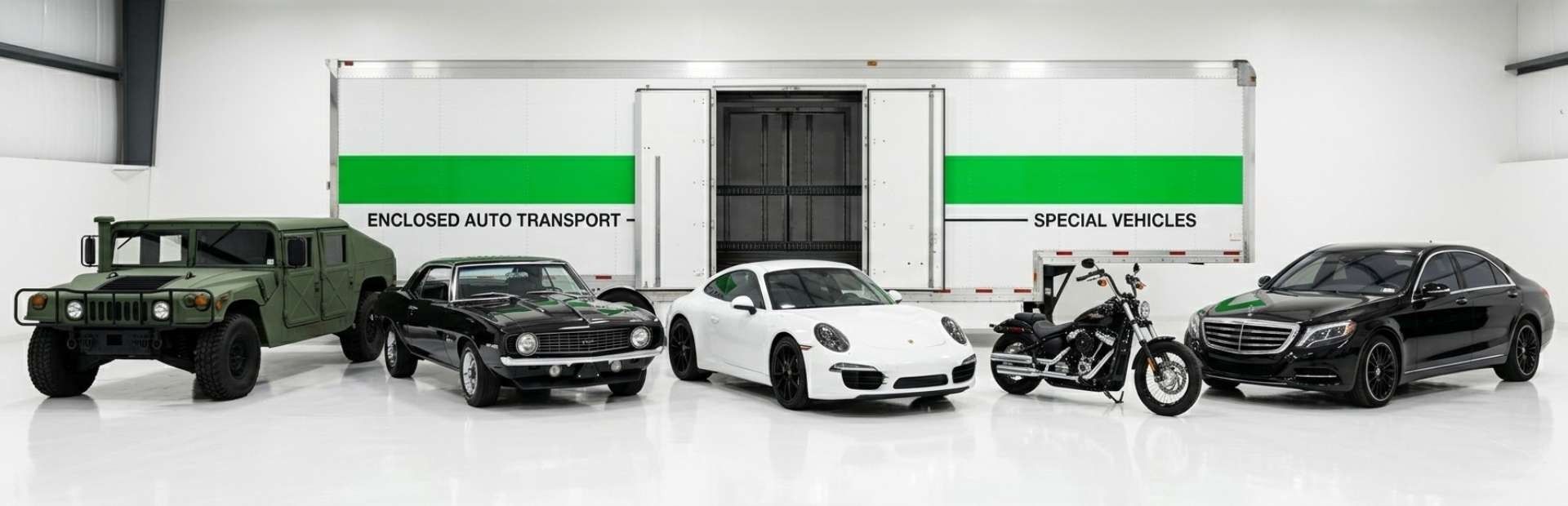
A 2023 Honda CR-V and a 1969 Mustang Fastback ship on the same corridor. They don't ship the same way.
Motorcycles: Open motorcycle transport exists, but it's not standard for a 2,800-mile run. Most reputable shippers on this route use enclosed carriers with soft-tie or wheel chock systems. If it's a custom build or a bike with aftermarket modifications, confirm the carrier's tie-down method before booking. Read about motorcycle shipping options — open air vs. enclosed.
Classic and vintage cars (pre-1980): Enclosed only, standard practice. Expect a pre-transport inspection report with photos from both the shipper and the carrier. Confirm the carrier has experience with low-ground-clearance vehicles — loading ramps and angle matter more than most people realize.
Exotic and luxury vehicles: Enclosed with GPS tracking if possible. Companies like Intercity Lines and Reliable Carriers have specific experience with high-value vehicles on long-distance routes. Ask whether the carrier has shipped your vehicle's make before.
Dealer stock: Standard open carriers, typically 6–10 vehicles per load. Volume pricing kicks in once you're moving 5 or more units. Most brokers with commercial accounts can put together dedicated load arrangements for higher volumes.
Military PCS vehicles: Open or enclosed depending on vehicle value. If someone else is handling pickup or delivery on your behalf, you'll need a Power of Attorney. AmeriFreight and Nexus both have military discount programs on this route. See military vehicle relocation for PCS-specific details.
Snowbirds and seniors: Seasonal relocation services run this corridor regularly, especially October through April. Book 3–4 weeks out if you're shipping before or after winter. Senior-friendly auto shipping handles the logistics so you're not chasing carriers on your own.
Car show organizers: If you're shipping to a New York area show, build in a 2-day buffer beyond the event date. Transit windows aren't guaranteed to the hour, and arriving a day late to a show you've been prepping for months is a bad situation. Enclosed with expedited service is the standard for show vehicles.
For more detail: tips for shipping classic or luxury cars in the U.S.
What Shippers Ask Most
If something wasn't clear from the guide above, it's probably answered here. These are the most common questions from people shipping a car from Los Angeles to New York.
How much does it cost to ship a car from Los Angeles to New York in 2026?
Open carrier shipping from Los Angeles to New York runs $1,050–$1,600 for a standard sedan in 2026. Enclosed auto shipping costs $1,700–$2,800. Prices vary by vehicle size, season, and pickup flexibility. Get an exact auto transport quote for your vehicle.
How long does it take to ship a car from LA to New York?
Standard transit time for the LA to New York car shipping route is 7 to 10 business days. Expedited open carrier service cuts that to 4–7 days, at a 30–50% cost premium.
Is open car transport safe for the LA to New York route?
Yes. Open car transport handles the majority of vehicles shipped on the LA to New York route, and damage rates are genuinely low. Standard carrier insurance covers your vehicle during cross-country transit.
What's the cheapest way to ship a car from California to New York?
Open carrier transport with a flexible 5–7 day pickup window, booked in October or November, gives you the lowest rate for California to New York vehicle transport. Locking in a specific date limits carrier options and drives prices up.
Do I need to be present when my car is picked up or delivered in New York?
Not necessarily. You can authorize someone else with a signed letter or Power of Attorney. For door-to-door auto transport in New York, many carriers allow key drop-off arrangements. Confirm the process with your broker before pickup day.
Before You Book Your LA to New York Auto Transport
You know the cost range. You have the transit timeline. You have a short list of companies worth trusting on this corridor.
Here's what to confirm before you pay a deposit.
-
Verify the broker's MC number with FMCSA. Takes 30 seconds. Do it before paying anything.
-
Get at least 3 quotes. The middle number is usually closest to reality. The lowest is almost always a lowball.
-
Ask for a pickup window, not a pickup date. A 5–7 day flexible window gets you better pricing and faster carrier dispatch.
-
Take timestamped photos of your car before pickup. Every angle, every existing scratch or dent. This is your baseline if a damage dispute comes up.
-
Read the carrier's insurance terms. Know the deductible, the coverage limit, and what the claims process actually looks like.
-
If your car is worth over $50,000, book enclosed. The cost difference is real. So is the peace of mind.
Most shipments on this route go smoothly. The ones that don't usually trace back to an unverified broker, a carrier that wasn't checked, or a shipper who didn't document their vehicle before handing over the keys.
The LA to New York run is one of the most active and well-serviced auto transport corridors in the country. Approach it like any other contract — verify, document, and ask the questions that matter — and it's one of the most routine cross-country shipments you can make.
Compare verified carriers for your Los Angeles to New York auto transport. Get honest quotes with no obligation — start at Transportvibe today.


