

Complete Broadway Auto Transport Review With Data-Driven Service Findings

Complete Broadway Auto Transport Review With Data-Driven Service Findings

Transportvibe
December 07, 2025
8 min read

Does Broadway Auto Transport offer reliable vehicle shipping? Our data shows they have a high overall customer rating, but you must know about the other side of the story as well.

Broadway Auto Transport is a broker offering nationwide service, including open and enclosed transport, with high positive scores on sites like Trustpilot. This company’s customer profile shows a major disconnect: users praise agents' communication, but others file complaints with the Better Business Bureau (BBB) over deposit refunds and sudden price hikes after the contract is signed.

Before you trust them with your vehicle, you need to see the full picture of their operations and safety data. You will get the facts here.

Ready to see how Broadway Auto Transport stacks up against the competition? Get the latest quote and compare services today before you book your next shipment.

Broadway Auto Transport - Company Overview

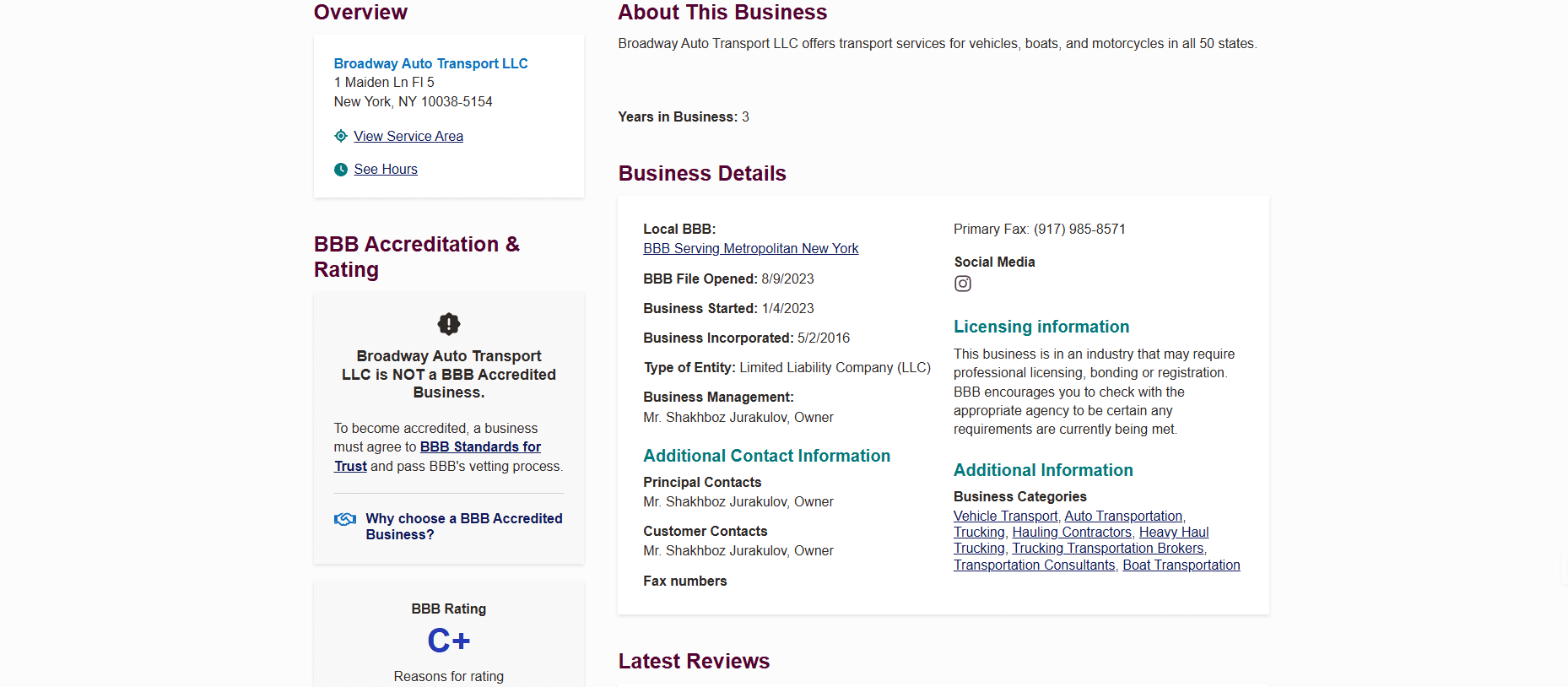
Broadway Auto Transport has been active for several years, though public records show different start dates. Some say 2016, but the Better Business Bureau (BBB) file was opened in 2023. The corporate location for Broadway Auto Transport LLC is 1 Maiden Lane, 5th Floor, in New York, NY.

When you check their records, you see a couple of key points.

  • DOT/MC Numbers: The company is registered with the FMCSA under USDOT 3990000 and MC-1496533. You can verify this safety data directly on the government's SAFER website.
  • Operating Status: The FMCSA lists the entity type as CARRIER with one power unit and one driver. However, the Operating Authority Status is marked NOT AUTHORIZED. This is a major flag you should consider.
  • Classification: Despite the carrier listing, Broadway Auto Transport operates primarily as an auto transport broker. This means they manage your shipment by contracting the job to an actual truck driver or carrier, rather than owning the trucks themselves. For more on this, check out our guide on how to choose the best auto transport service in the USA. 

As a broker, they leverage a large network of carriers. They handle national and long-haul routes, offering nationwide coverage across the United States. They aim to cover all 50 states for vehicles, motorcycles, and other equipment transport. This allows them to offer car shipping to any destination from state to state.

Company Structures Its Transport Process

When you need a quick quote, Broadway Auto Transport provides an online form and a direct phone number. They pull details like your vehicle type, origin, and destination to give you an initial price.

Dispatch and Assignment

The company operates as a broker, so they do not own the trucks. This means they must assign a carrier.

  • Carrier Assignment: Once you pay the deposit, Broadway Auto Transport uses its network to match your shipment with an independent truck carrier.
  • Dispatch Practices: You should receive an email notification as soon as a carrier is officially assigned, or "dispatched," to your order. This notification is critical because, according to their policy, you can cancel and get a full refund only if they have not yet dispatched the order.

Communication and Delays

Positive reviews highlight clear communication from the agents. But the process can have issues, which you need to plan for.

  • Schedule Changes: BBB complaints show that after a contract is signed, drivers often cannot meet the initial pickup time. They may try to delay the date or even demand a price increase to find a different carrier fast. This is why you must understand your rights if a car shipping company cancels at the last minute.
  • Timeline: After booking, expect to hear from them within a few days when a carrier is found. Delivery timelines vary, but typically run from two days for short hauls up to two weeks for cross-country routes. We strongly recommend you get familiar with what affects your final car shipping quote

Services Of Broadway Auto Transport

Broadway Auto Transport works to cover every standard vehicle shipping need. As a broker, they offer a wide range of options by using different carriers in their network and they have successfully moved 1300+ vehicle in more than 10 years in business. 

Transport Types

  • Open Carrier: This is the most common and cheapest option you can choose for everyday vehicles.
  • Enclosed Carrier: This option gives your vehicle maximum protection from road debris and weather. It is usually recommended for luxury, classic, or specialty cars. If you need this, learn more about open vs. enclosed car shipping costs.
  • Expedited Options: If you need your vehicle picked up fast, they advertise express car shipping services. This is not a guarantee, but it prioritizes your order in the dispatch process, often for an extra fee.

Specialty Shipments

Do you have something unusual to move? Broadway Auto Transport handles more than just standard sedans.

  • Non-Running Vehicles: They support non-running or inoperable cars, which require special equipment like a winch to load. Always disclose this upfront. For a guide, see how to ship a non-running vehicle.
  • Other Vehicles: They offer shipping for motorcycles, RVs, classic cars, and heavy equipment.
  • Limitations: While they handle heavy equipment, remember that all carriers have strict weight and size limits. If your vehicle is modified or oversized, you must provide accurate dimensions to avoid delays or unexpected fees.

Pricing & Billing Transparency

When you ship your car, the price is not fixed. It changes based on the distance, vehicle size, and the current demand for truck space. Enclosed transport for your vehicle will cost 30% to 60% more than standard open carrier shipping. This is because fewer carriers offer enclosed service.

Cost and Fees

  • Cost Samples: Customer reports show shipping costs ranging widely, with an average price near $730 for interstate moves. For example, a cross-country move from New York to California typically costs between $1,516 and $2,478.
  • Deposit Requirement: Broadway Auto Transport requires a non-refundable deposit to book your order. This fee is often $200-$300 and goes toward the broker’s fee, not the driver's total pay.

Refund Rules and Risks

This is where you need to pay close attention. Customer complaints to the BBB highlight a few common issues:

  • Price Hikes: Many customers report that the total price was raised suddenly by the carrier after the contract was signed. This is the bait-and-switch tactic you must watch out for.
  • Cancellations: If you cancel your shipping order after they assign a carrier, you lose your deposit. Broadway Auto Transport policy also states a $199.00 fee is assessed if you cancel at this stage. You should understand these fees before booking.

Customer Service Experience

Broadway Auto Transport receives highly polarized customer feedback. Many positive reviews highlight exceptional, professional service and clear communication from agents like Brian, Jim and Adam. Successful transports are often reported as smooth, quick, and stress-free, with vehicles delivered on time or early.
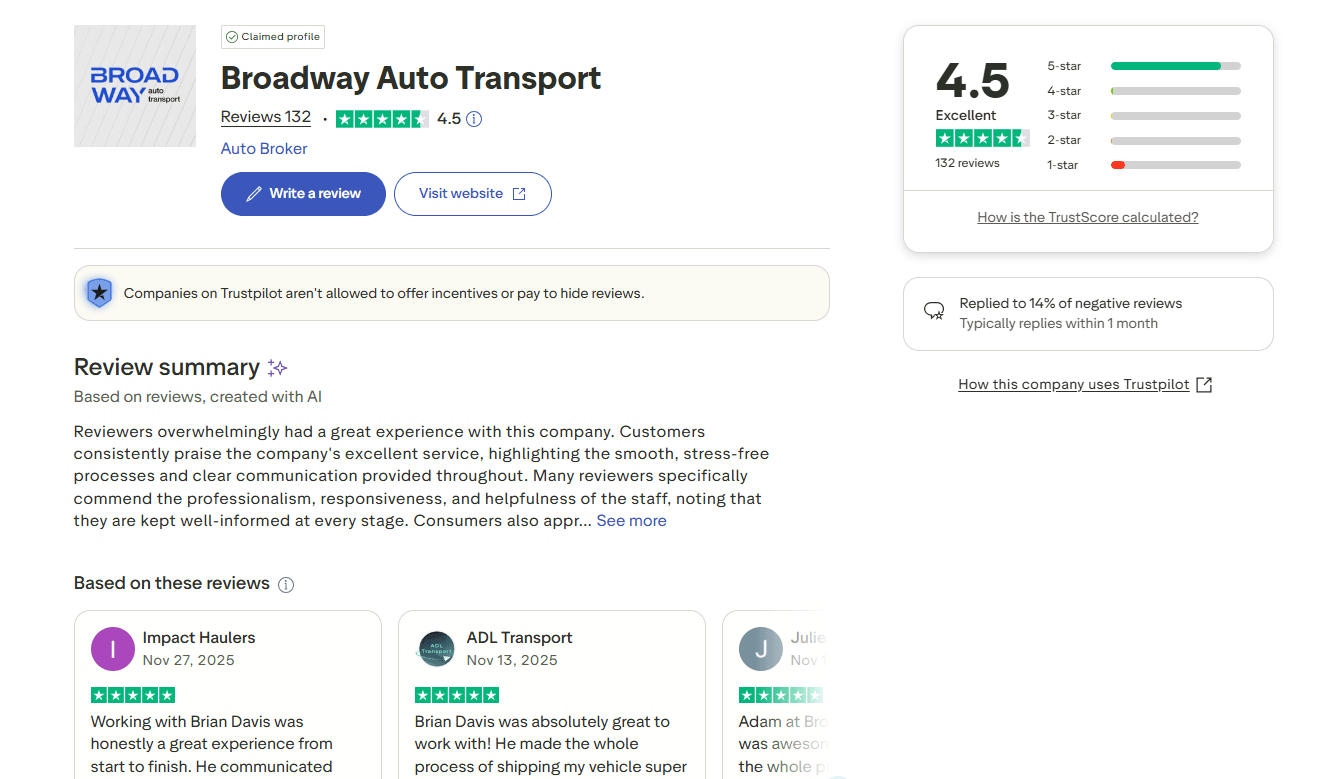
However, a serious, recurring issue is bait-and-switch pricing. Customers are quoted a low initial rate, but the price is significantly increased (often $200 to $500) just before pickup. This is linked to last-minute cancellations, as the company sometimes struggles to secure a carrier at the original, low price.

The service quality is inconsistent. A successful experience is highly dependent on the assigned agent and the realistic viability of the initial quote, which creates a significant risk for clients on strict schedules or budgets.

Crucial Questions Consumers Ask

Before you pay a deposit, you must have the answers to these five common queries about the shipping process and company policies.

How does Broadway Auto Transport handle a car damaged during shipping?

If damage occurs, you must report it on the Bill of Lading at delivery. As a broker, they help file the claim with the actual carrier’s insurance. Review our guide on car shipping insurance in the USA.

Is Broadway Auto Transport a fully licensed carrier or a broker?

They are listed as a carrier but operate primarily as an auto transport broker. This means they arrange transport and hire the driver. Check the FMCSA status yourself before you book.

Can I ship personal items inside my car with Broadway Auto Transport?

The standard answer is no. Carriers prohibit it due to liability and weight rules. If you pack items, they are not covered by insurance. You can read more about packing items in your car.

Where can I find unbiased customer reviews for Broadway Auto Transport?

Look beyond their website. Check consumer reports on platforms like BBB, Trustpilot, and Transportvibe. Comparing user experiences across review platforms helps you decide.

Are there any military or seasonal discounts available from Broadway Auto Transport?

Discounts are not always advertised directly. You need to ask your agent. They may offer better rates for military vehicle relocation or seasonal car relocation routes.

Should You Trust Broadway Auto Transport?

The data shows a split verdict for Broadway Auto Transport. On one hand, many users praise the agents for great communication and professionalism, which is vital in car shipping. On the other hand, the Better Business Bureau complaints about non-refundable deposits and sudden price hikes after booking are a serious risk you must consider.

Broadway Auto Transport reinforces their core role as an auto transport broker. So, as a reviewer our advice is simple: Use them, but proceed with knowledge. Always read the contract's refund terms twice before you sign or pay any money.

Do not settle for just one quote. Compare trusted, nationwide carriers and get competitive rates for your specific needs right now.

Related articles

DEC 09, 2025
5 Hidden Car Shipping Fees to Watch Out for When Booking a Car Transport Service

5 Hidden Car Shipping Fees to Watch Out for When Booking a Car Transport Service

TRANSPORTVIBE

Why did your car shipping fees just jump by 30%? It's a question thousands of customers ask every year when faced with unexpected costs. While getting an affordable auto transport service might seem like the goal, the reality is that many quotes are designed to hide significant charges. From last-minute fuel surcharges to a surprise fee for a non-running car, auto transport hidden charges can turn a great deal into a costly mistake. Our guide will help you spot these surprise costs when shipping a car and ensure you're getting true car shipping price transparency. Don't get caught off guard—learn what to watch for and how to protect your budget. Ready to find a transport service that is transparent and reliable? Explore our comprehensive directory of reviewed companies today! What Are Hidden Fees & Why Do They Exist? Hidden fees in auto transport are additional, often unexpected, auto transport charges that are not included in the initial quote you receive. They can dramatically increase your final bill, turning a seemingly great deal into a costly surprise. These fees exist for several reasons, stemming from a combination of complex logistics, fluctuating market conditions, and, unfortunately, deceptive business practices. The root of these fees often lies in the desire of some companies to offer an enticingly low initial car shipping fee to get you to commit. They capitalize on the fact that most customers don’t fully grasp the numerous variables influencing car transport pricing. Here's a breakdown of the primary reasons these hidden car shipping fees are so prevalent: Logistical Complexity and Unforeseen Variables Unlike shipping a small package, moving a car is a large-scale logistical operation. Factors that are difficult to predict upfront can impact the cost. These include: Route Challenges: The carrier's route can be affected by weather conditions, road closures, or traffic. A detour or a delay might be necessary, and some companies pass these costs on to the customer. Vehicle-Specific Needs: A standard quote assumes a standard vehicle. If your car is oversized, has a lift kit, or is a classic with low ground clearance, it may require special equipment or a different type of carrier. Failure to disclose this upfront can lead to a surprise charge at the time of pickup. Market Fluctuations and Seasonal Demand The auto transport industry is a real-time market driven by supply and demand. Fuel Surcharges: The cost of diesel fuel is a significant operational expense for carriers. When fuel prices spike, a company may add a sudden fuel surcharge, a common source of unexpected car shipping costs. Seasonal Pricing: As demand increases during peak moving seasons (e.g., summer, holidays, or "snowbird" season), car shipping fees naturally rise. Some quotes may not account for this, presenting a low price in a different season and then raising it when you're ready to book. Lack of Transparency This is where the line between an honest logistical challenge and a deceptive business practice becomes blurred. Vague Quotes: Some companies provide a quote with little to no detail, leaving out line items for insurance, taxes, or other common fees. This lack of detail allows them to claim these were not included in the initial estimate. The "Deposit Trap": A company might ask for a substantial, non-refundable deposit based on a very low quote. When they can't find a carrier to take the job at that price, they will demand more money. If you refuse, you lose your deposit. Understanding these underlying reasons is the first step toward avoiding them. Always ask for a detailed, written quote that clarifies all potential extra costs in car shipping and confirms that all factors, from fuel to location, are included. Ready to find a transparent transport company? Avoid the guesswork by checking out honest, unbiased reviews from real customers. To learn more about the specifics of your car's shipping costs, you can use online resources like the Federal Motor Carrier Safety Administration (FMCSA) database to verify a company's safety and registration, which is a great way to start your research on a reputable company. The Difference Between a Broker and a Carrier When navigating the world of auto transport charges, one of the most crucial distinctions to understand is the difference between a broker and a carrier. Though often used interchangeably by customers, their roles are fundamentally different, and choosing between them can significantly impact your experience, the final price, and your exposure to unexpected car shipping costs. Feature Auto Transport Carrier Auto Transport Broker Primary Role Physically transports vehicles. Acts as an intermediary, connecting customers with carriers. Ownership Owns and operates a fleet of trucks. Does not own trucks; works with a network of carriers. Pricing Sets its own rates based on internal costs and routes. Negotiates rates with multiple carriers to find the best deal for you. Communication Direct line of communication with the company and often the driver. Acts as a single point of contact between you and the carrier. Flexibility Less flexible. Limited by its specific routes and availability. More flexible. Can find a carrier for almost any route and schedule. Vetting You must vet the company directly. Should vet carriers for you, ensuring they are properly licensed and insured. The Carrier: The Direct Mover A carrier is the company that actually owns the trucks and employs the drivers who physically transport your vehicle. When you book directly with a carrier, you are dealing with the company responsible for the entire physical shipment. Pros of Using a Carrier: Direct Accountability: You have a direct line of communication with the company responsible for your car. This can provide greater peace of mind and direct answers to questions about its location or status. Potentially Lower Cost: By cutting out the middleman, you may save money. The price you are quoted is a direct reflection of the company's costs, without an added broker fee. Expertise on Specific Routes: Many carriers specialize in certain routes (e.g., cross-country or specific state-to-state routes). This expertise can lead to more efficient and reliable service on that route. Cons of Using a Carrier: Limited Flexibility: Carriers are bound by their routes and truck availability. If their trucks are not running your specific route at the time you need, they simply cannot help you. Harder to Find: Many smaller carriers don't have extensive marketing budgets or websites, making them difficult to find and vet on your own. The Broker: The Matchmaker A broker is a logistics company that connects you with a carrier. They have a network of carriers and use online platforms called "load boards" to post your shipment details for carriers to bid on. Pros of Using a Broker: Unmatched Flexibility: Brokers can find a carrier for virtually any route and timeline. Their large network increases the likelihood of finding an available truck, even for less common destinations. Time Savings: Instead of calling dozens of carriers to compare car shipping fees, you get a single point of contact who does the legwork for you. Vetting and Support: Reputable brokers pre-screen carriers for proper licensing and insurance. They also handle the logistics and can act as an advocate for you if a problem arises with the carrier. Cons of Using a Broker: Risk of Hidden Fees: This is where many of the hidden car shipping fees originate. A broker might lowball a quote to get your business, then struggle to find a carrier willing to do the job for that price. This often leads to a last-minute price hike to cover the difference. Less Direct Control: You are one step removed from the person physically transporting your car. If the broker’s communication is poor, you may feel out of the loop. The decision between a broker and a carrier depends on your priorities. For those who value a hands-on approach and direct control, a carrier is a good fit. If convenience, flexibility, and a single point of contact are more important, a reputable broker is a great option. Related Article: For a deeper dive into the specific signs that you're working with a broker, check out our guide: 5 Key Signs You're Dealing with a Car Transport Broker . 5 Car Transport Service Hidden Fees to Watch Out In times of need or emergency, auto transport charges can be complex. Although an initial quote may seem to cover car transport pricing, many customers are surprised by unexpected shipping costs that increase the final bill. Here are the five most common hidden fees and how to spot them. 1. The "Bait-and-Switch" Quote The most notorious scam in the industry, the "bait-and-switch" involves a company quoting an unrealistically low price to secure your business. The offer seems like a fantastic deal—a truly affordable auto transport service—but once you pay a deposit and your vehicle is booked, the company reveals a "last-minute complication." This sudden issue, which could be anything from a "route change" to a "new fuel surcharge," requires you to pay a significantly higher amount to get your car on the truck. The company banks on the fact that you're now committed and have little time to find another transporter. To avoid this, always be skeptical of quotes that are drastically lower than others. The golden rule is to get at least three quotes and compare them. If one stands out as suspiciously cheap, it's likely a trap. A reputable company will provide a detailed, itemized quote upfront, ensuring car shipping price transparency. 2. Fees for Inoperable or Modified Vehicles A standard quote assumes a standard, working vehicle. Any deviation from this can result in a hefty hidden fee. This is a common source of extra costs in car shipping and can catch you by surprise. Non-Running Vehicles: If your car is inoperable—meaning it can’t be started or driven—it will require specialized equipment like a winch to be loaded onto the carrier. This extra labor and equipment come with a fee that can range from $150 to $500 or more. Modified Vehicles: Does your truck have a lift kit? Does your classic car have low ground clearance? These seemingly minor details can impact how the vehicle is loaded. Cars that don’t fit on a standard ramp or require special handling to avoid damage will incur additional charges. Weight & Contents: Carriers have strict weight limits. Loading your vehicle with personal belongings can increase its weight beyond the limit, leading to an unexpected fee. Most companies prohibit this practice entirely for liability reasons. Pro Tip: Always be upfront and honest about your vehicle's condition and any modifications when requesting a quote to get accurate vehicle shipping costs. This is one of the best ways to avoid surprise costs when shipping a car. 3. Fuel Surcharges & Seasonal Rate Hikes While some companies include these in their transparent car transport pricing, others do not. This lack of transparency is a major source of auto transport hidden charges. Fuel Surcharges: Diesel fuel is a carrier's primary expense. When fuel prices spike, many companies add a fuel surcharge to their base rate to cover the increased cost. This surcharge can be added after you've booked your service, leaving you to foot a much larger bill. Seasonal Rate Hikes: The auto transport industry is subject to supply and demand. During peak moving seasons, such as summer and winter when "snowbirds" head south, demand for carriers skyrockets. Quotes received in the off-season may not hold up during these busy periods, leading to higher-than-expected car shipping fees. Don't get caught off guard by a sudden price increase! Our detailed guides on seasonal shipping can help you plan your move at the most cost-effective time. 4. Insurance Gaps and Hidden Liability Costs A low car shipping fee can often signal a lack of comprehensive insurance. Many customers assume full coverage is included, but that's not always the case. Some auto transport hidden charges come from inadequate insurance. Insufficient Cargo Insurance: A carrier might only carry the minimum required cargo insurance, which may not be enough to cover the full value of your vehicle in the event of major damage. The Fine Print: The hidden fees in auto transport contracts often specify what is not covered. For example, damage to tires, glass, or pre-existing conditions may be excluded. If damage occurs, you could be left to pay for repairs out of pocket. External Link: Before you sign, review the carrier's insurance details. You can verify a company's insurance and legal status through the Federal Motor Carrier Safety Administration (FMCSA) database. 5. Location and Timing Even if you choose a "door-to-door" service, factors related to your pickup and delivery locations can add to your car transport pricing. Remote Locations: Carriers operate on major routes to maximize efficiency. If your pickup or drop-off location is in a remote or rural area, the carrier may charge an extra fee to go off-route. This is a classic source of extra charges for car shipping delivery. Inaccessible Roads: Large car carriers can't navigate narrow residential streets. If your address is on a street with low-hanging trees or tight turns, the carrier will have to meet you at a nearby, accessible location, which might incur a fee for the extra hassle. Expedited Shipping: Need your car moved in a hurry? Requesting an expedited service can significantly increase your car transport pricing. This is a common and legitimate fee, but some companies may not be transparent about how much more it will cost, especially if they are trying to offer an initial low quote. Ready to find a carrier that's transparent with their pricing? Get an accurate, upfront quote that accounts for all potential costs and start your journey without the worry of a surprise bill. Queries Users Might Have About Hidden Car Transport Cost Is the cheapest quote always the best option for auto transport? No, a quote that is significantly lower than others is a major red flag. While everyone wants an affordable auto transport service, an unrealistically low price is often a bait-and-switch tactic to secure your business before adding extra costs in car shipping. It's always best to compare quotes from several companies to find a fair, market-rate price. How can I verify a company’s credentials and reputation? Reputable companies should be transparent. Ask for their USDOT and MC numbers, which you can use to verify their legal authority, licensing, and insurance on the Federal Motor Carrier Safety Administration (FMCSA) website. Checking reviews on multiple third-party platforms is also essential to spot complaints about hidden car shipping fees. Does my vehicle's condition affect the final price? Yes, absolutely. A standard quote is for an operable vehicle. If your car is non-running, heavily modified, or has special needs (e.g., a low-hanging spoiler), it will require extra labor and equipment. Being upfront about these details helps you get an accurate quote and avoid surprise costs when shipping a car at pickup. What's the best time of year to get the lowest shipping costs? The car transport pricing is a dynamic market driven by supply and demand. You can typically find lower rates during the off-peak seasons, such as late autumn or early spring. Summer and winter months are often more expensive due to high demand (e.g., "snowbird" season) and challenging weather conditions. Are my personal belongings covered by the carrier's insurance? No. The carrier's insurance policy covers only the vehicle itself. Shipping personal items inside your car is generally prohibited and can lead to additional fees or even the refusal of service. Any damages to personal belongings are not covered, so it’s crucial to remove all valuables before transport. What does "door-to-door" service actually mean? A: Door-to-door auto transport service means the carrier will pick up and drop off your vehicle as close to your specified address as legally and safely possible. Carriers are large vehicles that cannot always navigate narrow streets, tight turns, or residential restrictions. In such cases, the driver will meet you at a nearby, accessible location, which may be a source of an extra charge for car shipping delivery. Is it mandatory to pay a deposit upfront? A small deposit is common and necessary to book your shipment and secure a carrier. However, be wary of companies that demand a large, non-refundable deposit or require full payment upfront. Legitimate companies typically only collect the remaining balance upon delivery of your vehicle. Ship with Confidence and Clarity Navigating auto transport charges doesn't have to be a guessing game. You are now equipped to spot common hidden car shipping fees and demand true car shipping price transparency. Remember, an affordable auto transport service is one that is upfront about all potential vehicle shipping costs. By asking the right questions and verifying credentials, you can avoid a surprise bill and ensure a smooth, worry-free shipment. Ready to get a transparent quote? Get started with our network of reputable carriers today and get a quote today.

DEC 04, 2025
Is Trustline Carriers the Smart Choice For Your Vehicle Transport?

Is Trustline Carriers the Smart Choice For Your Vehicle Transport?

TRANSPORTVIBE

Is Trustline Carriers the smart choice for your vehicle transport? That depends on how they manage your shipment. The key fact is that Trustline Carriers operates as an active freight broker, not a direct carrier. This brokerage model is common. It accounts for most car shipments in the U.S.,but it changes how you must vet the company. We cut through the sales talk to explain their business model and show you exactly how to make a confident transport decision. Need an instant cost estimate for shipping your vehicle, motorcycle, or boat across the country? Compare transparent quotes and services now. Overview of Trustline Carriers Started in 2018, Trustline Carriers is a licensed freight broker, not a direct trucking company. They do not own or operate the trucks that move your vehicle. Instead, you pay Trustline Carriers to handle the logistics. They use their active brokerage authority (MC-1661496) to contract with a network of vetted independent truckers. Their headquarters are in Orlando, Florida, but they coordinate transport across the entire continental USA. Their operational model is straightforward. You get a quote for a door-to-door car delivery. Trustline then posts the load details to the industry-wide dispatch board. This method connects you with a carrier who has an open spot on their route. If you are shipping a specialty vehicle, they arrange for the correct equipment, like enclosed transport or open-air service. You can check their official broker status yourself on the FMCSA website using their USDOT number. Services Trustline Carriers Provides As a broker, Trustline Carriers provides a full suite of vehicle transport services across the United States. They handle standard, specialty, and inoperable vehicles by matching your needs to a carrier's capacity. You should understand the three main cost factors. Your final price depends on the method of transport (open vs. enclosed), the distance, and the route popularity. For instance, shipping from a major metro area like Los Angeles to Chicago costs less than a remote location in Montana. Quotes are generally valid for 7 to 14 days. They specialize in finding transport for challenging loads. This includes inoperable vehicles which often add an extra $150 to $400 to the cost, depending on the carrier's winch requirements. They also offer expedited service, which costs 15% to 30% more than a standard shipment but guarantees a quicker pickup window, typically within 24 to 48 hours. Trustline Carriers is particularly adept at handling specialized vehicle needs and seasonal routes, such as "snowbird" relocation from Northern states to Florida or Arizona. This requires a broker to have a wide network. Open Auto-Shipping Open auto-shipping is the most common and cost-effective method for your car transport. Your vehicle rides on a multi-car trailer, exposed to the same elements as it would be driving on the road. Carriers use these trailers for up to ten vehicles at a time, which keeps the price low. You should expect this service to cost 20% to 50% less than enclosed shipping. This is the standard choice for everyday sedans, trucks, and SUVs. If you choose this method, prepare your vehicle by reading our guide on preparing your car for open car shipping. Enclosed Auto-Shipping Choose enclosed auto-shipping to provide maximum protection for your vehicle. The car ships inside a fully covered trailer, shielding it from weather, road grime, and debris. This service is necessary for classics, luxury cars, or custom builds. Expect to pay a premium for this security, as rates are usually 40% to 60% higher than open transport. The carriers that offer this service are often specialized, and scheduling can sometimes take longer because fewer enclosed trailers are running specific routes. This service is essential if you are moving a high-value collector car . Door-To-Door Shipping Door-to-door shipping is standard practice for Trustline Carriers and most U.S. brokers. The carrier aims to pick up and drop off your vehicle as close to your specified addresses as possible. You do not have to drive to a terminal. The only limitations come from local laws, narrow streets, or HOA rules that prevent large trucks from accessing residential areas. If a large truck cannot reach your location, the driver will call you to arrange a safe, nearby meeting spot, usually a large parking lot. For tips on managing your vehicle delivery, review 6 smart ways to track car during shipping . Driveway Auto-Shipping Driveway auto-shipping is another term for the convenient door-to-door service. It means the trucker comes directly to your home's curb or driveway. Since most brokers offer this, it is not a unique benefit. You should focus on verifying the carrier's specific insurance and their safe driving record, which you can check using the official FMCSA data site . You must be present for the vehicle inspection at both pickup and delivery to sign the Bill of Lading and check for any existing damage. Shipping to Hawaii Shipping a vehicle to Hawaii is complex because it requires ocean freight in addition to land transport. Trustline Carriers coordinates with specialized terminals, primarily on the West Coast (California, Washington), which is where all vehicle transport to Hawaii originates. This type of transport uses Roll-on/Roll-off (RoRo) or container shipping and often takes 7 to 14 days just for the ocean leg. You will face specific requirements for vehicle cleaning, fuel level, and proper documentation. Understanding the entire logistics chain is key when dealing with shipping a car to another state , especially overseas. Shipping to Alaska Moving a car to Alaska presents unique logistical challenges due to the long distance and remote destination. Most transport goes through a major hub like Seattle. The service involves land transport to a port, and then either a marine ferry or container shipment. The total transit time for car transport to Alaska often exceeds two weeks. Because of the cold climate and remote routes, the cost is significantly higher than mainland shipping. We offer a resource to guide you through the logistics involved when you look into the ultimate guide to car shipping to Alaska . Do you need reliable, transparent information before committing to a broker? Read authentic customer experiences and ratings of transport companies across the nation before you book. Trustline Carriers Pricing Structure Trustline Carriers uses an online quote method. You enter your details, and they provide an estimated price. That quote includes two main cost components: the carrier pay (what the trucker gets) and the broker fee (what Trustline keeps). You should expect costs to vary significantly. Long-distance transport, like cross-country car shipping , has a lower cost per mile than a short-distance haul. Fuel prices, weather, and the popularity of the shipping lanes (e.g., I-95 corridor vs. rural routes) also cause price fluctuations . Trustline Carriers requires an upfront deposit, which is the broker fee. You pay the remaining balance—the carrier pay—directly to the driver upon delivery. Always confirm the final price before dispatch, because rates can change daily based on truck availability. This model is typical, but you should always compare how broker pricing differs from a direct carrier . Customer Communication And Support Good communication is critical with any broker, and Trustline Carriers handles this as your point of contact. Expect a detail response time for initial quotes, typically within 24 hours. However, transparency in updates can be challenging and public review portals show mixed thoughts from the people. On Reddit, we have found some negative review about Trustline carriers. Since Trustline relies on independent truckers, the accuracy of pickup and delivery estimates depends on the carrier's real-time location. However, it has some positive reviews too on Trustpilot. You may get a three-day window, but that window often narrows to four hours once the carrier is dispatched. We have a guide to help you manage this with who is responsible if a car is delayed in delivery . Dispute handling usually falls to the carrier's insurance for any damage claims . For service complaints or billing issues related to the broker fee, you contact Trustline Carriers directly. Always document any damage right on the Bill of Lading at drop-off. If a car gets damaged, you need to understand the process for guide to car damaged during shipping . Delivery Timelines And Vehicle Safety Pickup windows with Trustline Carriers are estimates. Since they use third-party drivers, the pickup window is typically 1 to 5 days from the "first available" date. Delivery windows usually fall within 3 to 10 days after pickup, depending on distance. The driver's route dictates the timing, so flexibility on your end helps. Damage occurrences are rare, but they happen. Most customer complaints about damages come down to disputes over the initial inspection. You must document your vehicle's condition carefully on the Bill of Lading. When damage occurs, the claim process goes through the carrier's cargo insurance, not through Trustline Carriers directly. Knowing how to choose the right shipper matters when vetting safety. What Other Customers Are Asking Here are the most common questions people have when considering this broker for their vehicle transport needs. Does Trustline Carriers offer storage options if I can't meet the driver? No, Trustline Carriers does not offer storage. You should plan to be present for the entire door-to-door delivery. Failure to coordinate can lead to the carrier charging you a re-delivery fee or possibly leaving the vehicle at a remote terminal. Can I pack personal items inside my car when using Trustline Carriers? Most carriers prohibit personal belongings due to liability and weight. You can usually place up to 100 pounds in the trunk, but you must confirm this with the carrier dispatch first. We recommend reviewing how to avoid 10 car shipping mistakes before packing anything. Does Trustline Carriers offer any guarantees on pickup dates? Trustline Carriers only offers an estimated pickup window, typically 1 to 5 days, unless you pay for expedited service. No broker guarantees a specific date. Always read your contract to understand the terms for delays or cancellations. Review our guide on 5 car shipping contract tips. What happens if the driver they assign cancels my shipment at the last minute? If the assigned carrier cancels, Trustline Carriers is responsible for finding a replacement carrier, often at the same rate. However, if the rate increases, you may need to approve the new, higher price to avoid a long delay. How can I check the insurance and safety ratings of the actual carrier they assign? You must ask Trustline Carriers for the assigned carrier's USDOT and MC numbers. Use those numbers on the FMCSA's website to check their safety history and active insurance coverage. Always verify this information yourself. Making Your Decision on Trustline Carriers Deciding on Trustline Carriers means you accept the active freight broker model. Focus your research on their price transparency and communication. Remember that Trustline Carriers coordinates the shipment, but an independent carrier moves your car. You must thoroughly vet the final carrier they assign using the FMCSA tools we discussed. They are a good option if you prioritize convenience and are willing to pay the fee for coordination. Compare their quote against other top brokers and carriers. Ready to compare prices and check customer reviews before booking your vehicle transport? Get transparent quotes from top-rated companies now.